IX.14.4 Pompeii. House of M. Obellius Firmus or Casa di MM. Obellii Firmi, pater et filius
or Casa del Conte di Torino.
Linked to IX.14.2 and IX.14.b. Excavated 1888, 1903, 1910.
In Notizie degli Scavi, 1905, (p.245-257) this is shown as Reg. III, Ins. 1.
1 2 3 4 5 6 7 8 9 10 11 12 Plan
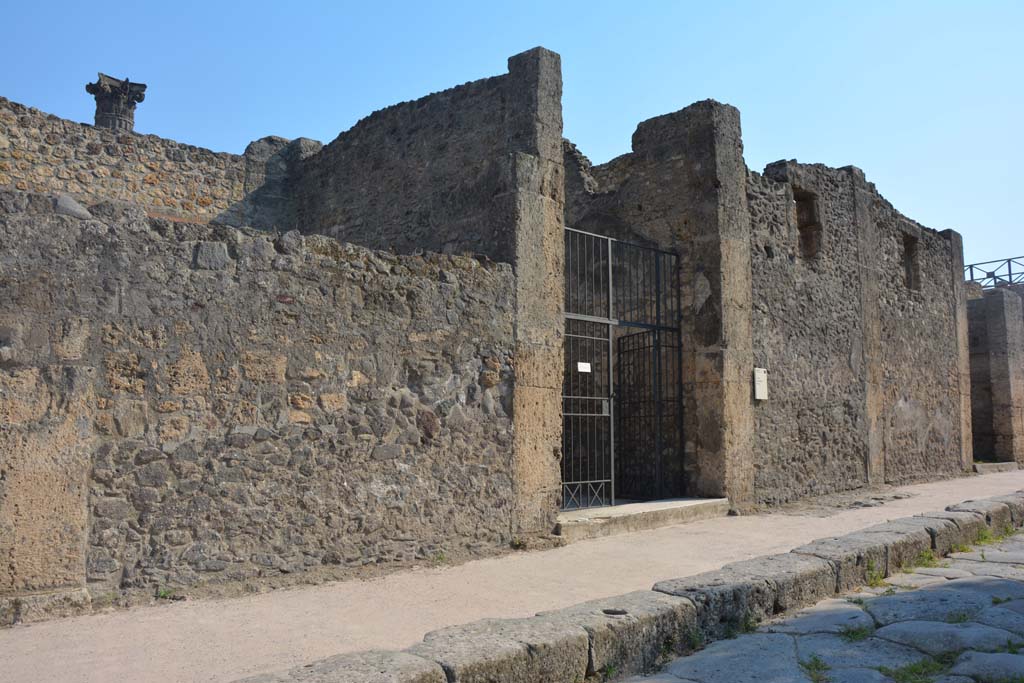
IX.14.4 Pompeii. July 2024.
Looking east along front façade towards entrance doorway on south side of Via di Nola. Photo courtesy of Johannes Eber.
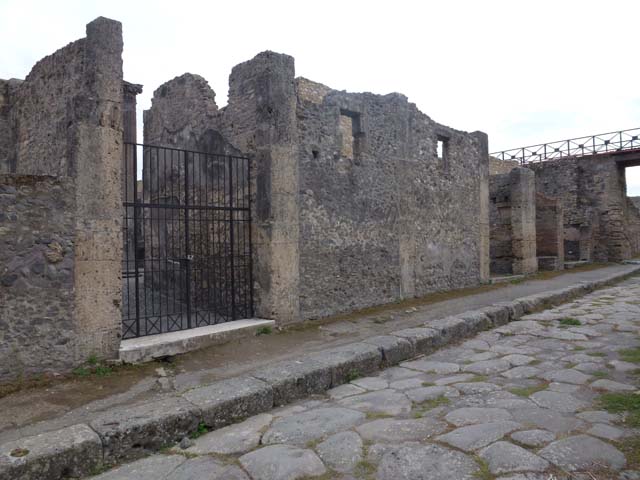
IX.14.4 Pompeii. July 2017. Looking west along front
façade.
Foto
Annette Haug, ERC Grant 681269 DÉCOR.
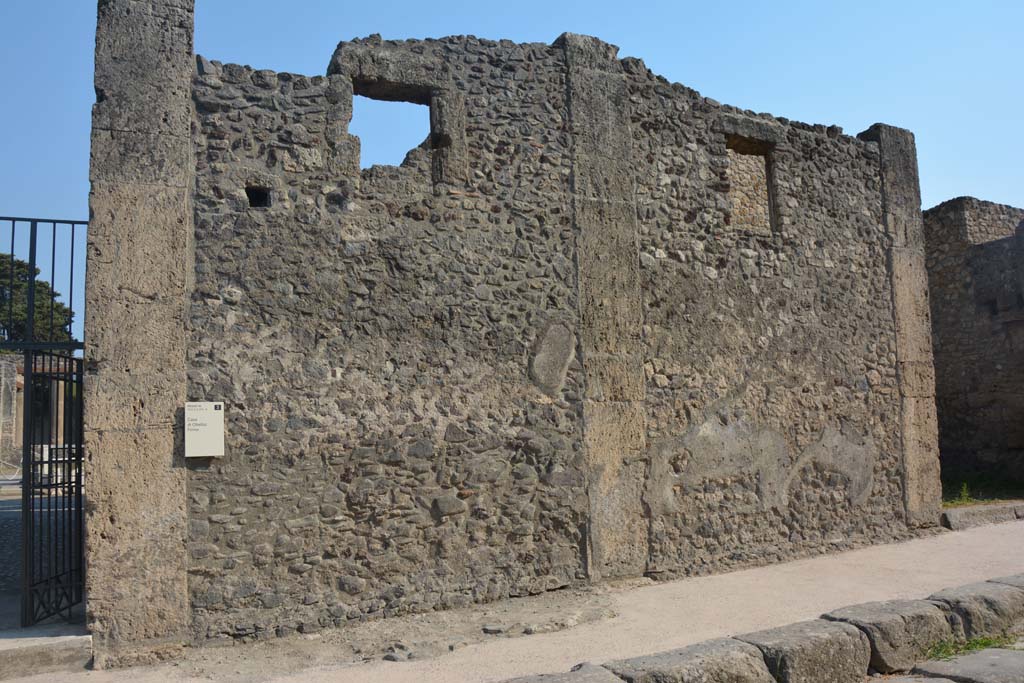
IX.14.4 Pompeii. September 2011. Looking south-west on Via di Nola, towards entrance doorway, on left.
IX.14.3, IX.14.2 and IX.14.1 can be seen, on the right. Photo courtesy of Michael Binns.
IX.14.4 Pompeii. July 2017. Front façade at west end of
entrance doorway.
Foto Annette Haug, ERC Grant 681269 DÉCOR.
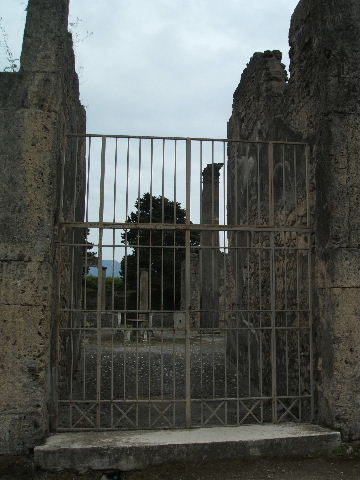
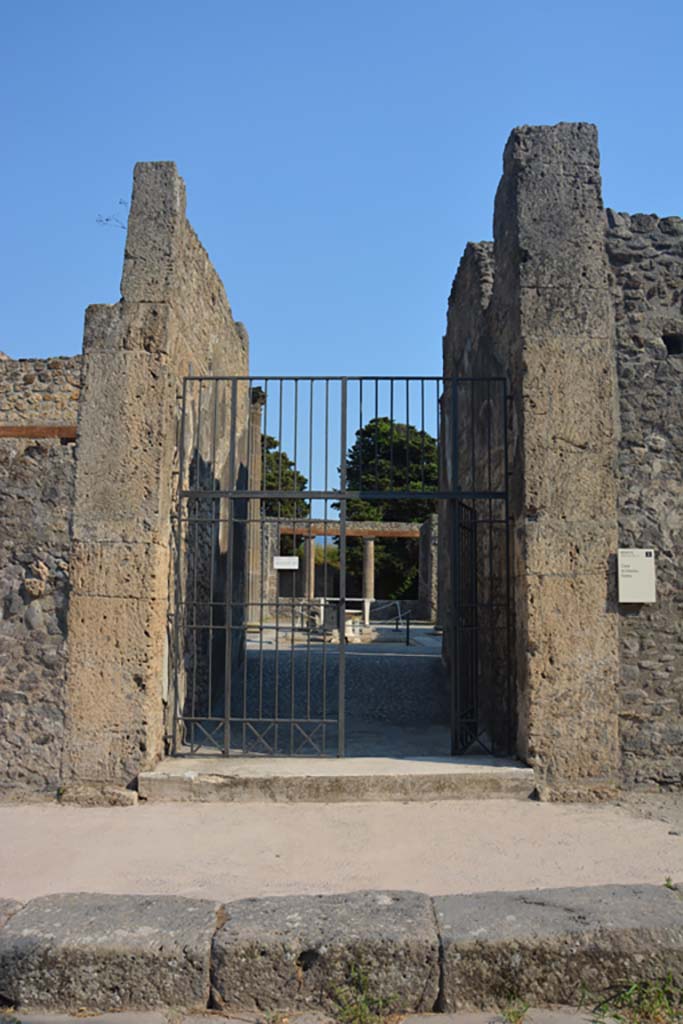
IX.14.4 Pompeii. July 2017. Looking south towards entrance
doorway.
Foto
Annette Haug, ERC Grant 681269 DÉCOR.
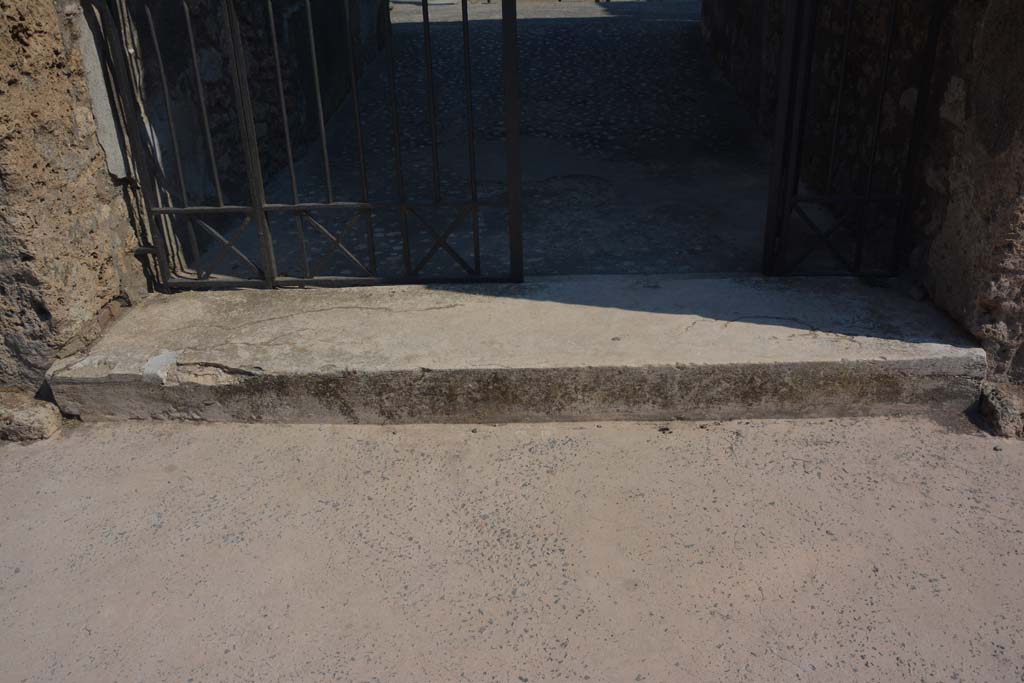
IX.14.4 Pompeii. May 2005. Entrance doorway, with wide travertine sill.
When excavated this doorway was found with its two large bronze door hinges, in situ.
The walls of the entrance corridor fauces A were of rough plaster.
The floor was made of mortar scattered with small fragments of marble.
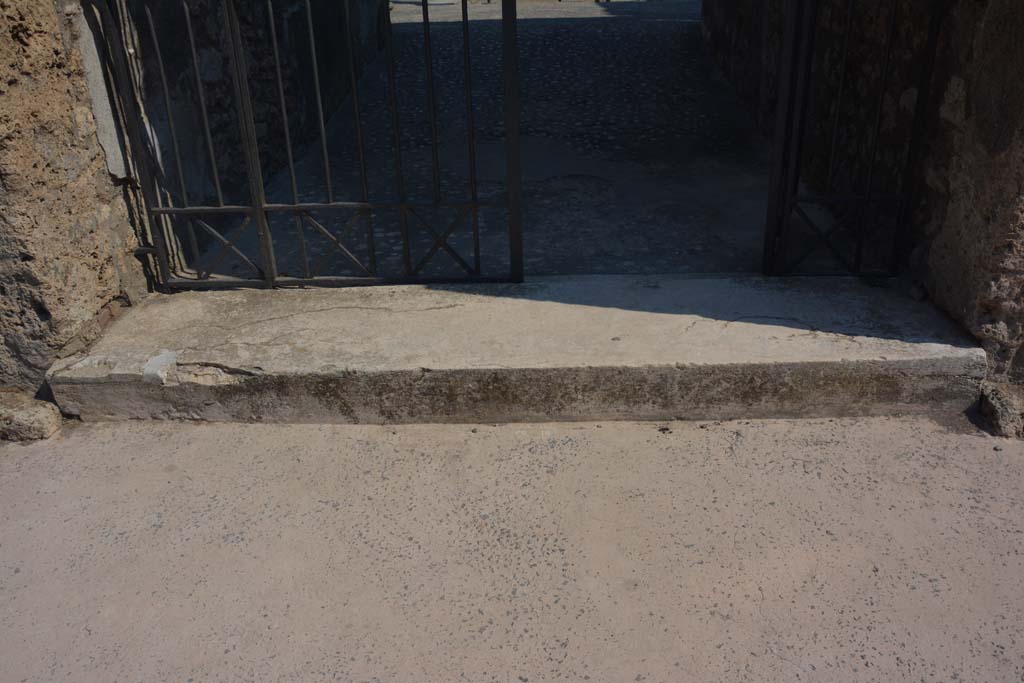
IX.14.4 Pompeii. July 2017. Looking south towards
wide travertine threshold/sill to entrance doorway.
Foto
Annette Haug, ERC Grant 681269 DÉCOR.
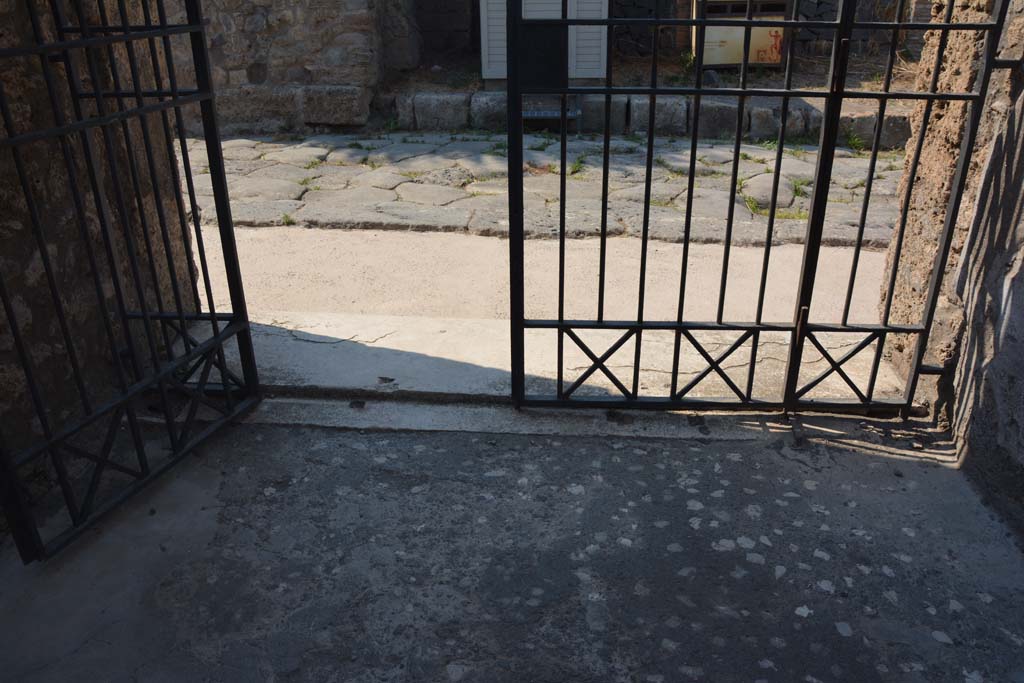
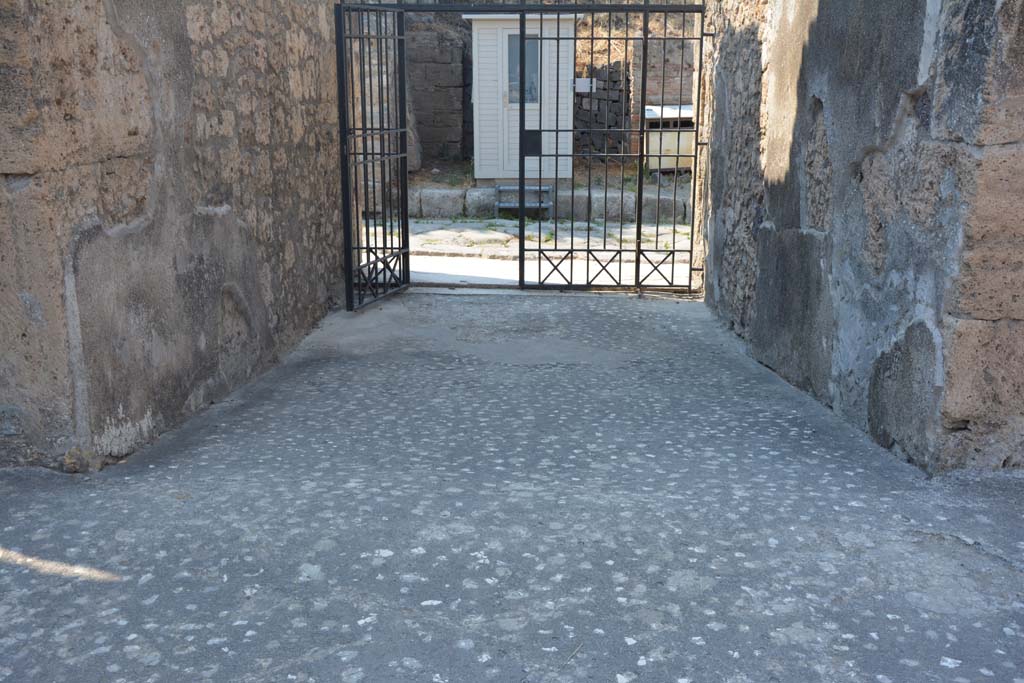
IX.14.4 Pompeii. July 2017. Looking north across flooring towards
entrance doorway from vestibule.
Foto Annette Haug, ERC Grant 681269 DÉCOR.
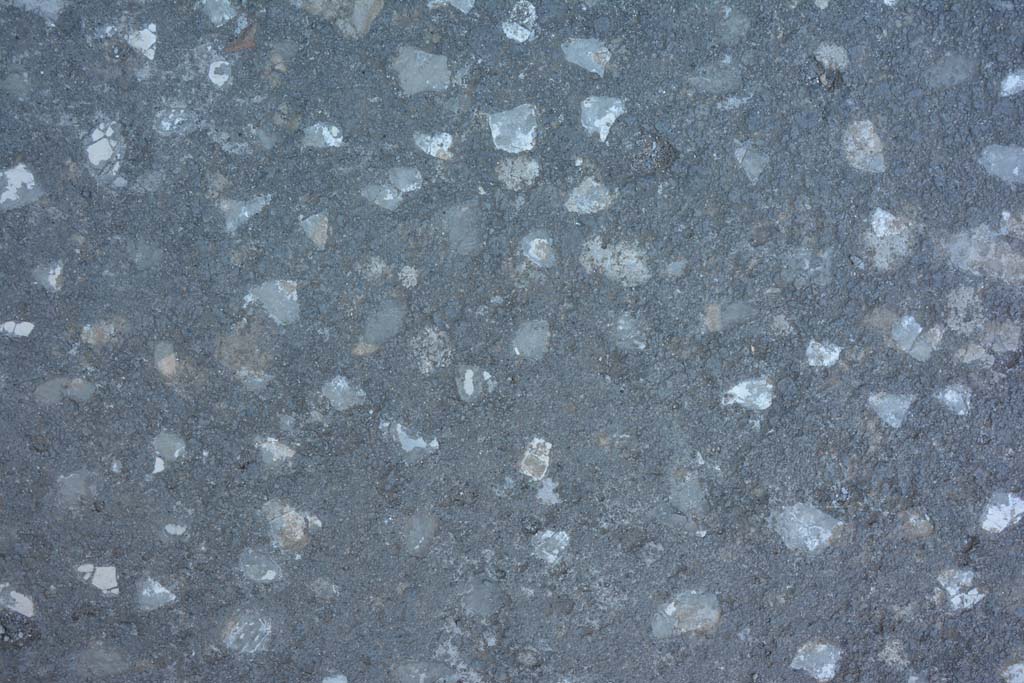
IX.14.4 Pompeii. July 2017. Looking north towards entrance
doorway across flooring in vestibule/entrance corridor.
Foto
Annette Haug, ERC Grant 681269 DÉCOR.
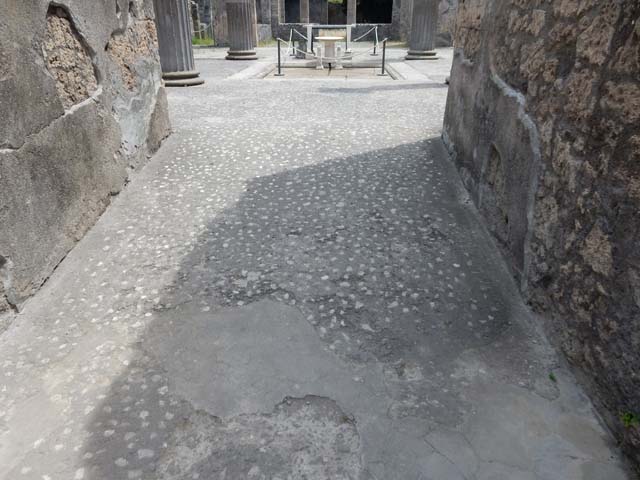
IX.14.4 Pompeii.
July 2017. Detail of flooring in vestibule/entrance corridor/atrium.
Foto Annette Haug, ERC Grant 681269 DÉCOR.
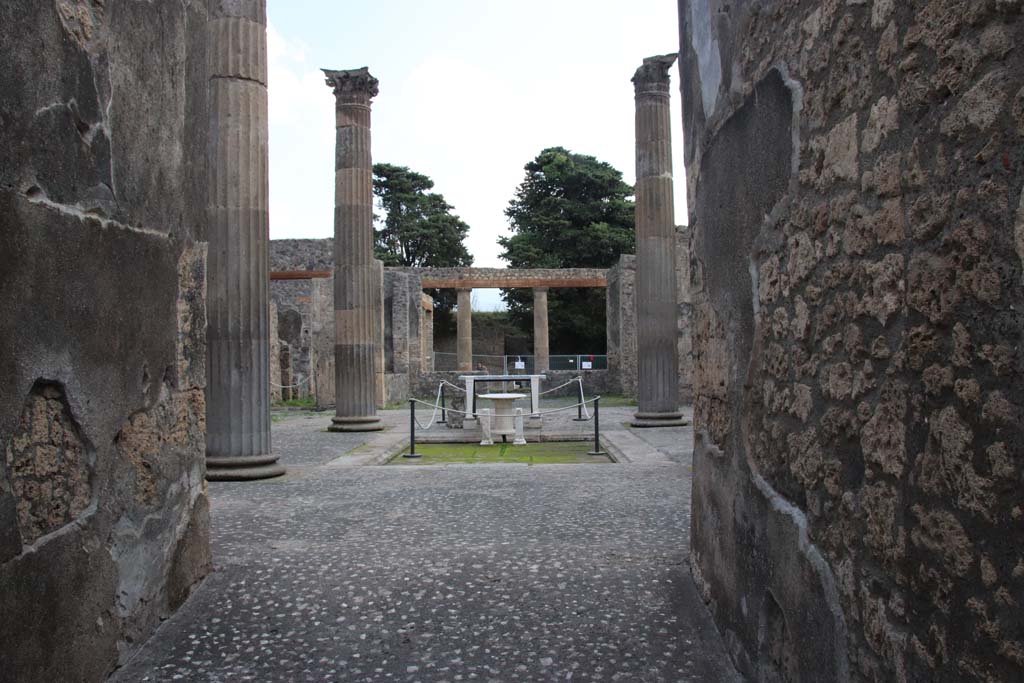
IX.14.4 Pompeii. May 2017. Looking south along flooring of entrance corridor towards atrium. Photo courtesy of Buzz Ferebee.
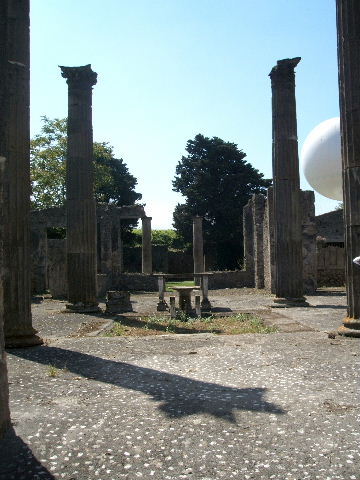
IX.14.4 Pompeii. September 2017. Looking south across
atrium from entrance corridor. Photo courtesy of Klaus Heese.
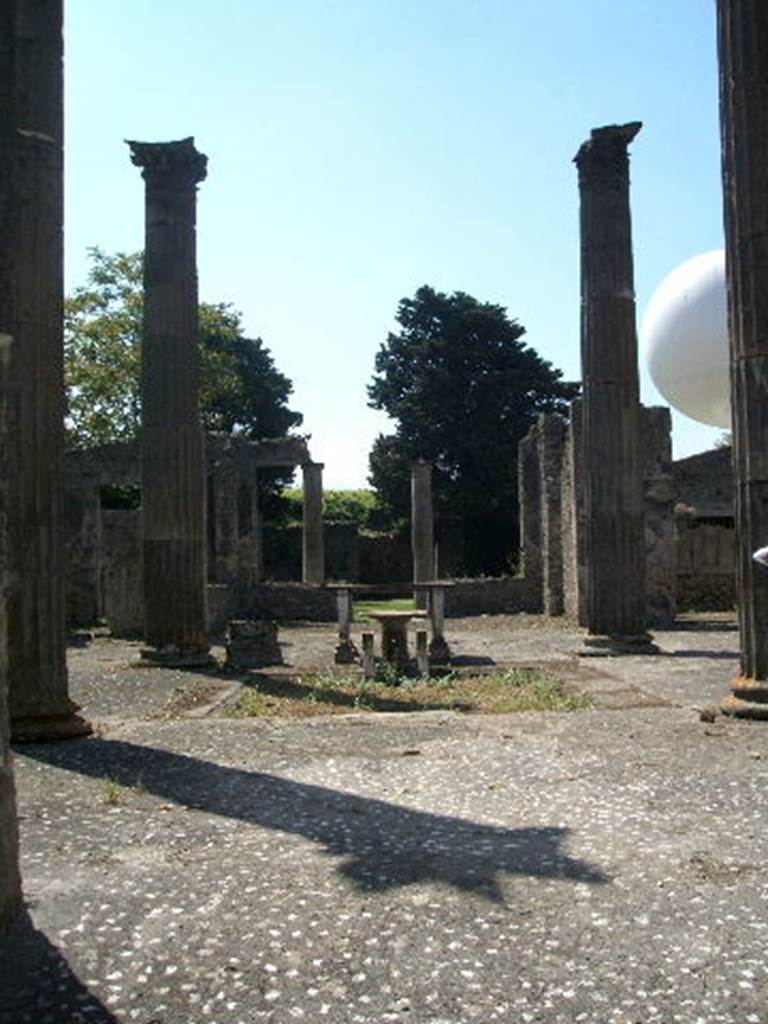
IX.14.4 Pompeii. July 2024.
Looking south across atrium from entrance corridor. Photo courtesy of Johannes Eber.
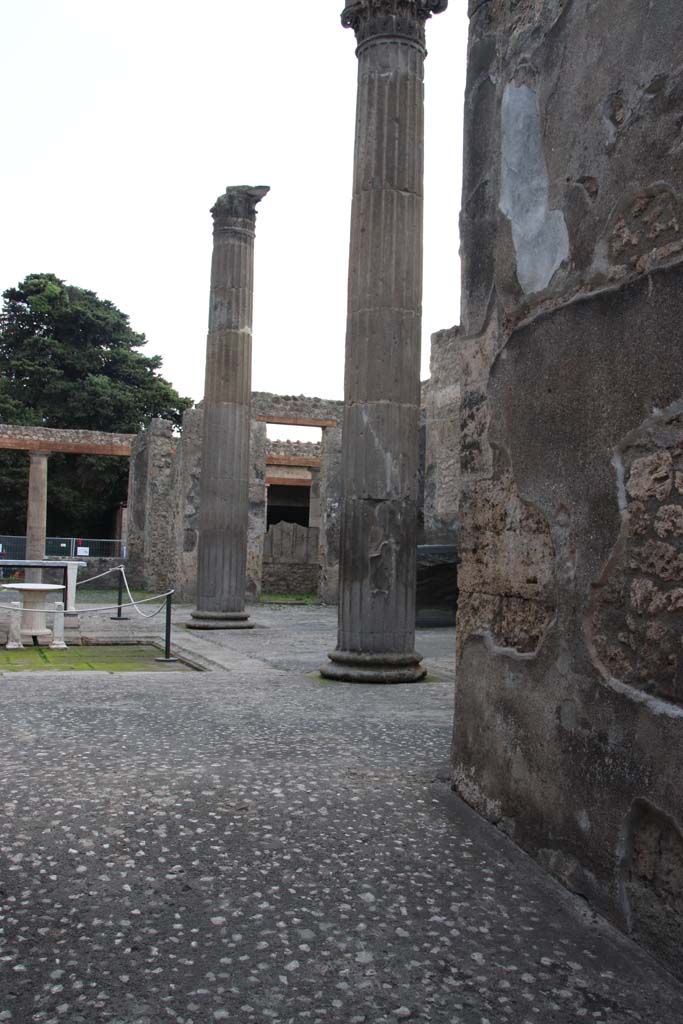
IX.14.4 Pompeii. May 2005. Tetrastyle atrium B, looking south.
The flooring of the atrium continued from the fauces and was made of small marble pieces scattered through the mortar.
The walls of the atrium were also of rough plaster.
According to Sogliano, this proved the house that was one of the most ancient in Pompeii, was being renovated and redecorated at the time of the disaster.
Without doubt, the rough plaster was destined to be painted but there was no time to begin it.
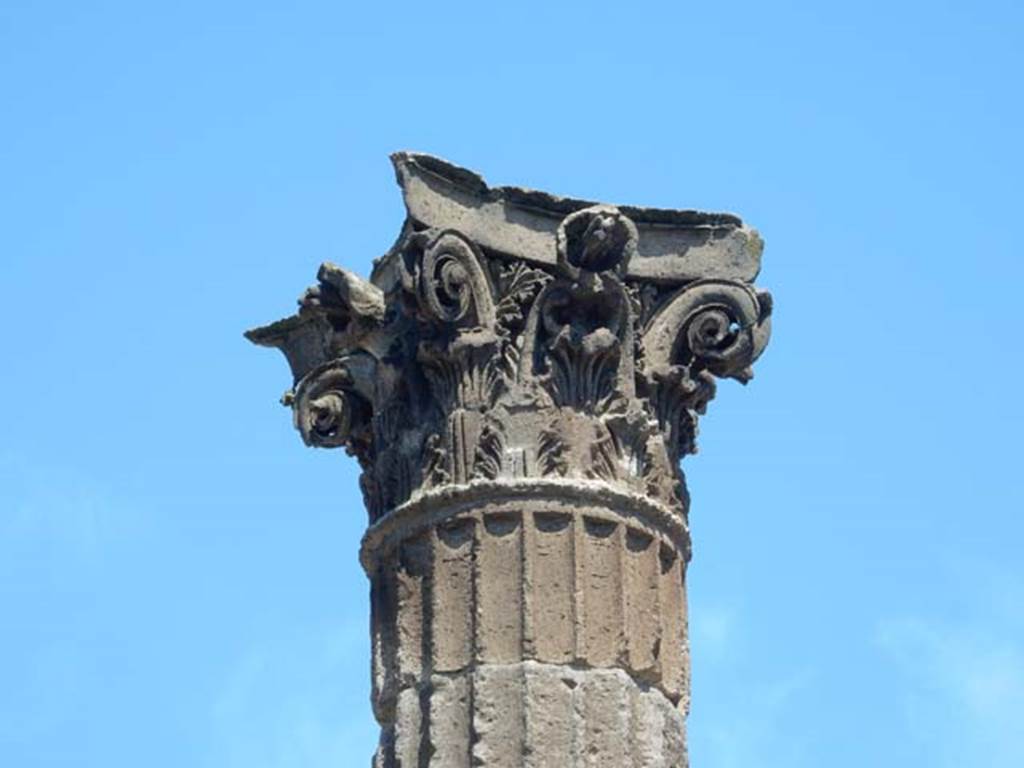
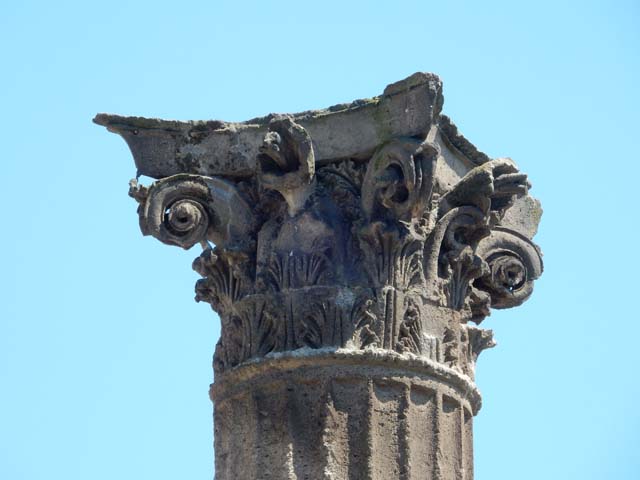
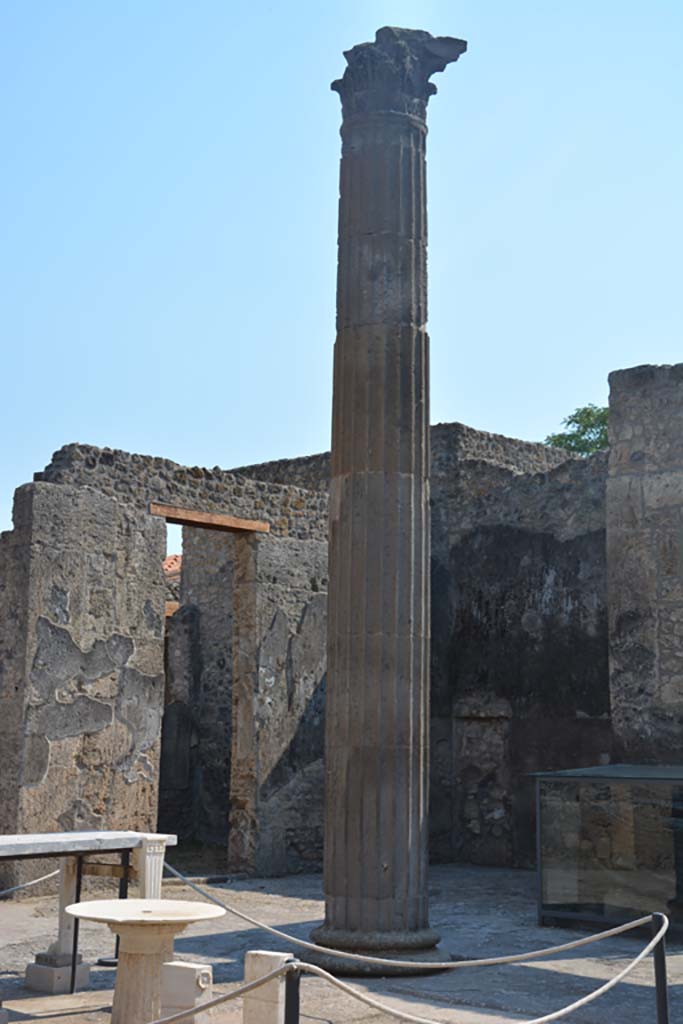
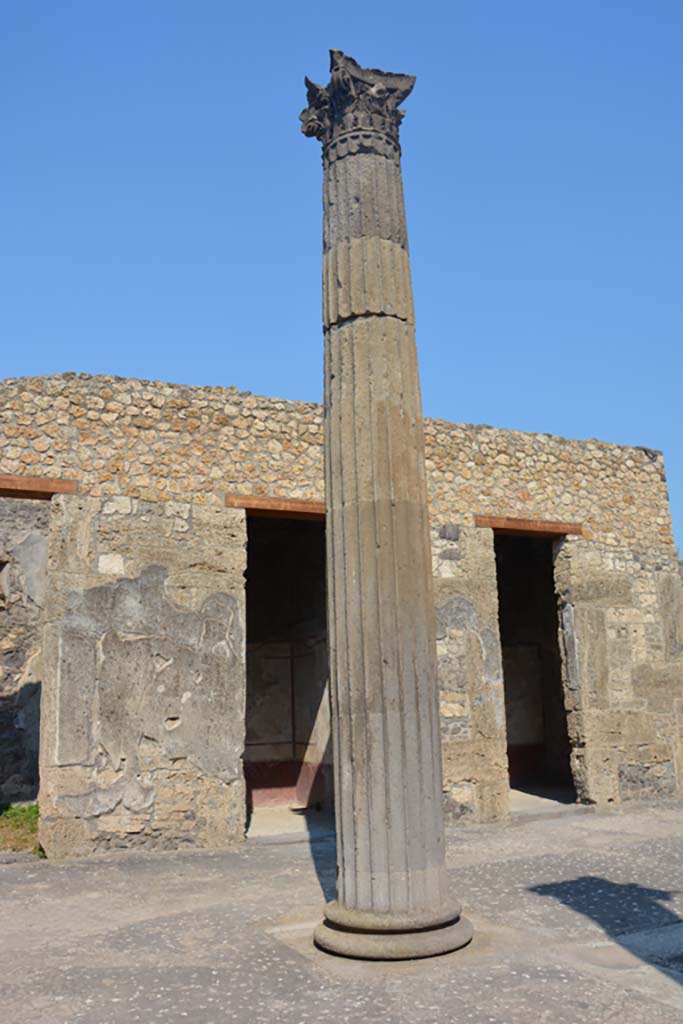
The four tall Corinthian columns were at all corners of the large impluvium.
The columns were 7.20m tall (taller than the ones in the House of the Silver Wedding, at 7.12m tall).
These columns gave the impression of the height and grandness of how the atrium must have looked.
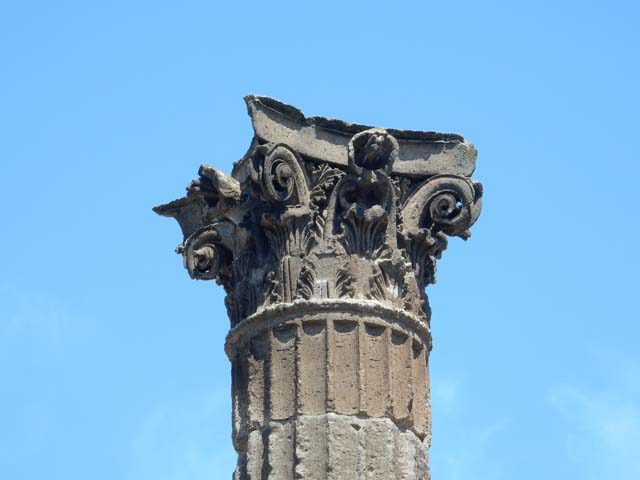
IX.14.4 Pompeii. July 2024.
Tetrastyle atrium B, looking towards the east side. Photo courtesy of Johannes Eber.
IX.14.4 Pompeii. September 2017.
Tetrastyle atrium B, looking towards the south-east from the entrance corridor/fauces.
Photo courtesy of Klaus Heese.
IX.14.4 Pompeii. September 2017.
Tetrastyle atrium B, looking towards the south-west side from the entrance corridor/fauces.
Photo courtesy of Klaus Heese.
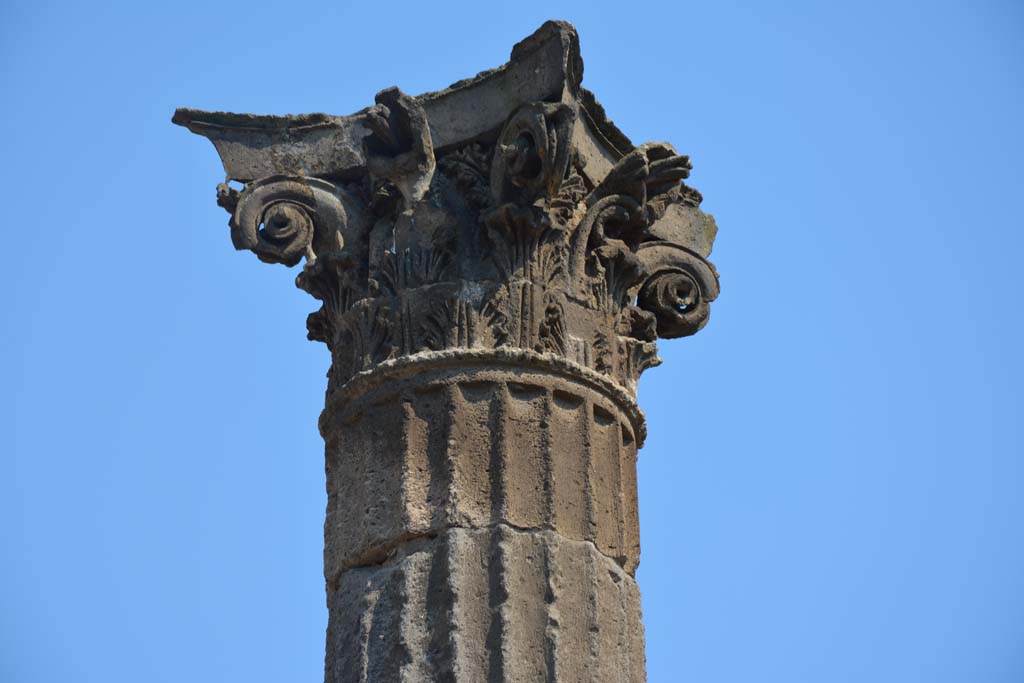
IX.14.4 Pompeii. May 2017. Tetrastyle atrium B, detail of capital above impluvium. Photo courtesy of Buzz Ferebee.
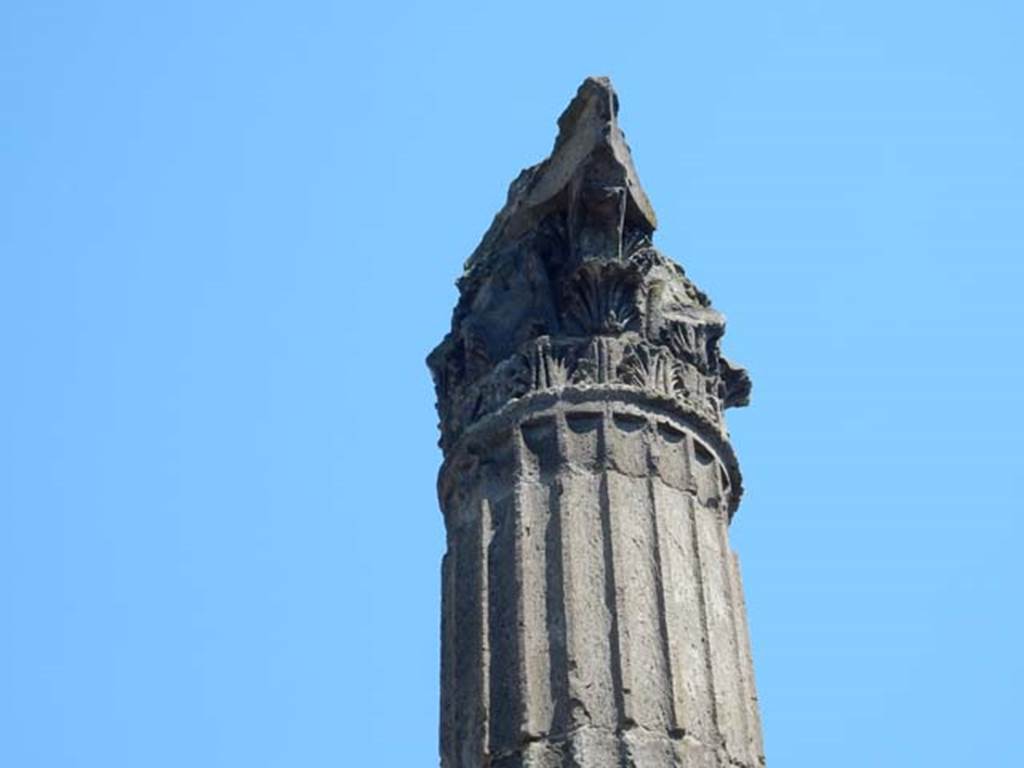
IX.14.4 Pompeii. May 2017. Tetrastyle atrium B, detail of capital above impluvium. Photo courtesy of Buzz Ferebee.
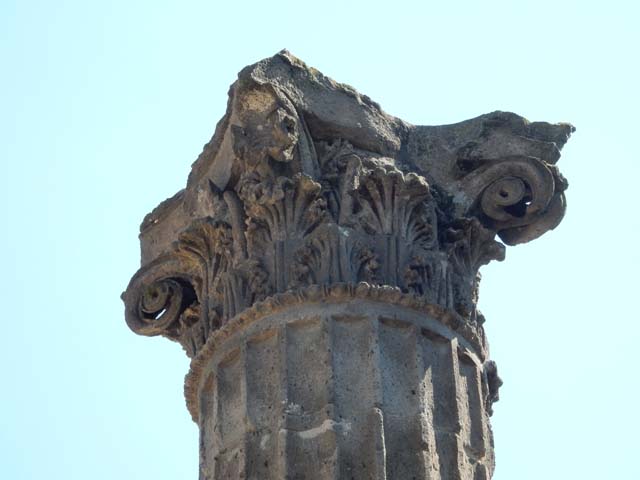
IX.14.4 Pompeii. July 2017. Tetrastyle atrium B,
detail of capital above impluvium.
Foto Annette Haug, ERC Grant 681269 DÉCOR.
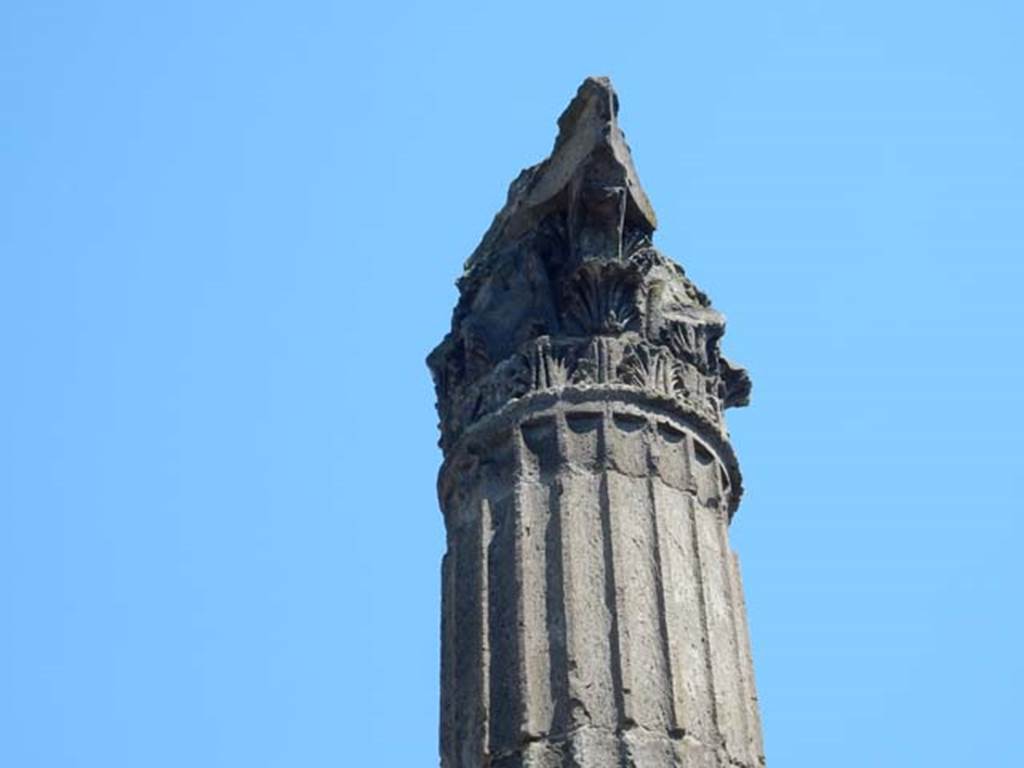
IX.14.4 Pompeii. May 2017. Tetrastyle atrium B, detail of capital above impluvium. Photo courtesy of Buzz Ferebee.
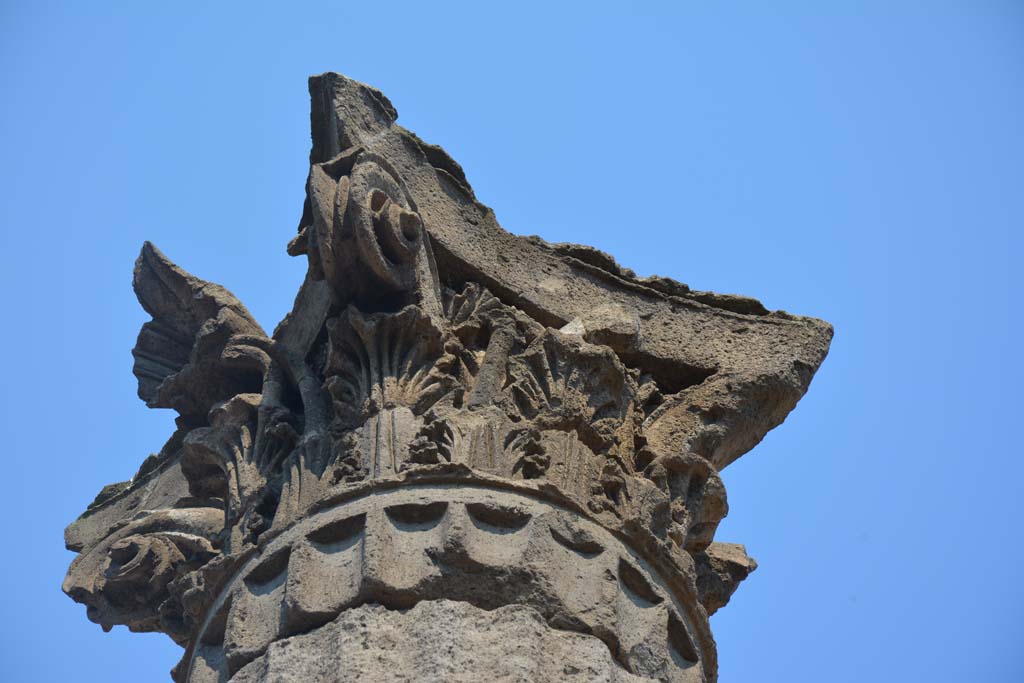
IX.14.4 Pompeii. May 2017. Tetrastyle atrium B, detail of capital above impluvium. Photo courtesy of Buzz Ferebee.
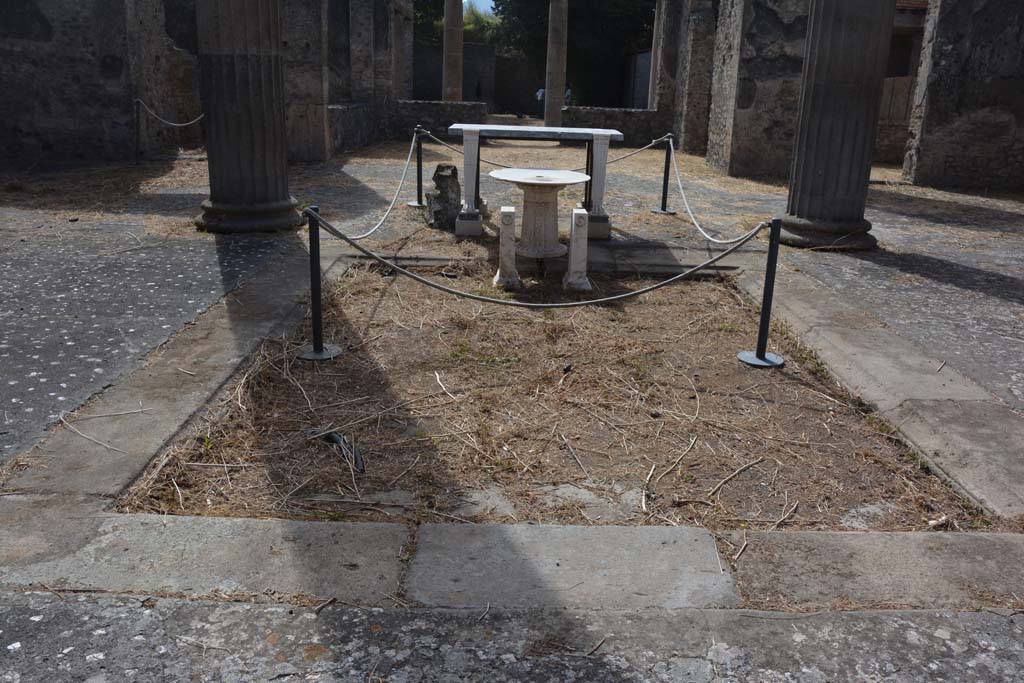
IX.14.4 Pompeii. July 2024.
Tetrastyle atrium B, detail of capital above impluvium.
Photo courtesy of Johannes Eber.
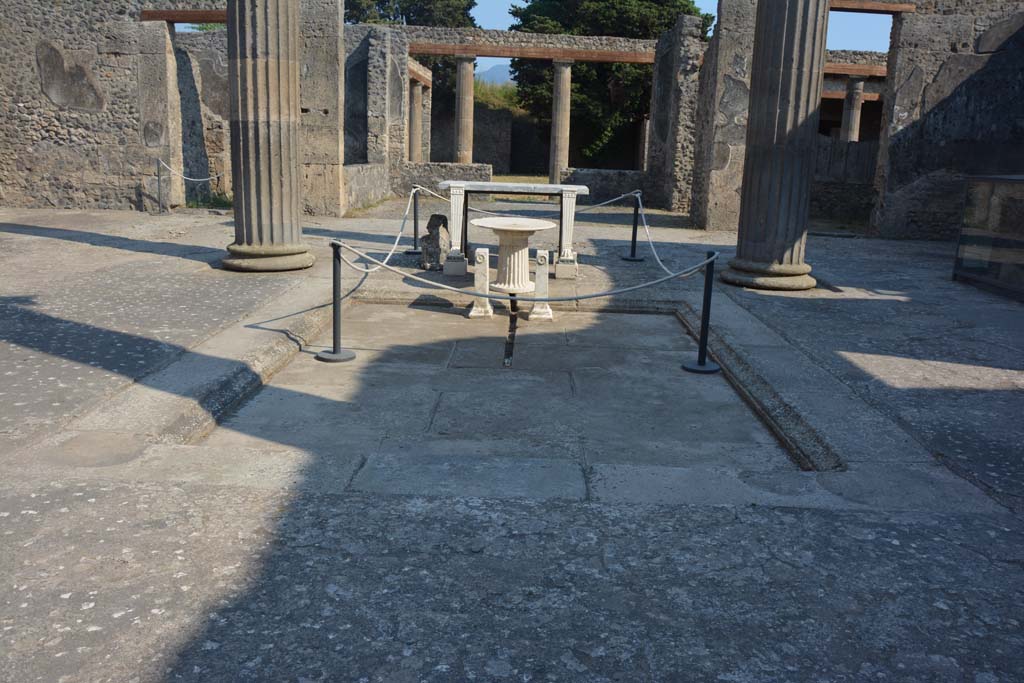
IX.14.4 Pompeii. May 2017. Tetrastyle atrium B, detail of capital above impluvium. Photo courtesy of Buzz Ferebee.
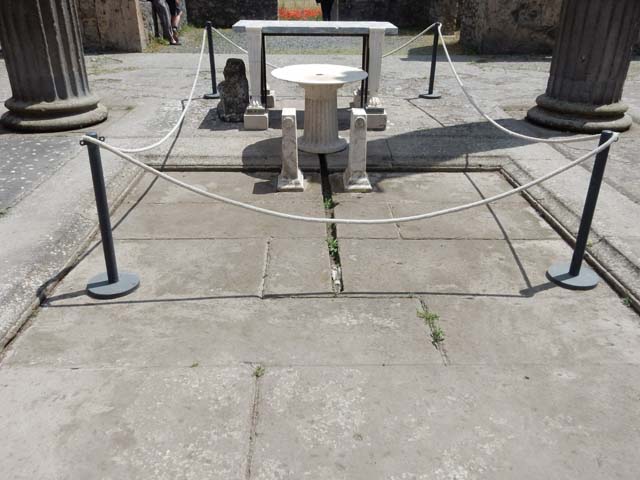
IX.14.4 Pompeii. July 2017. Tetrastyle atrium B,
detail of capital above impluvium.
Foto Annette Haug, ERC Grant 681269 DÉCOR.
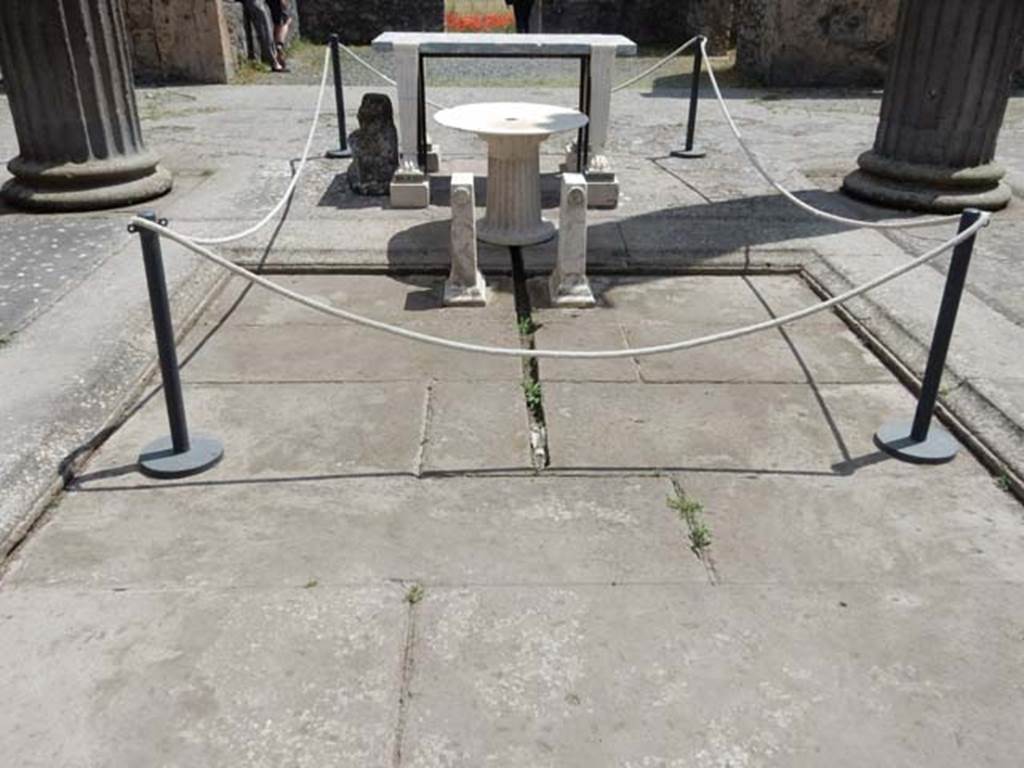
IX.14.4 Pompeii. September 2019. Looking south towards
impluvium in atrium.
Foto Annette Haug, ERC Grant 681269 DÉCOR.
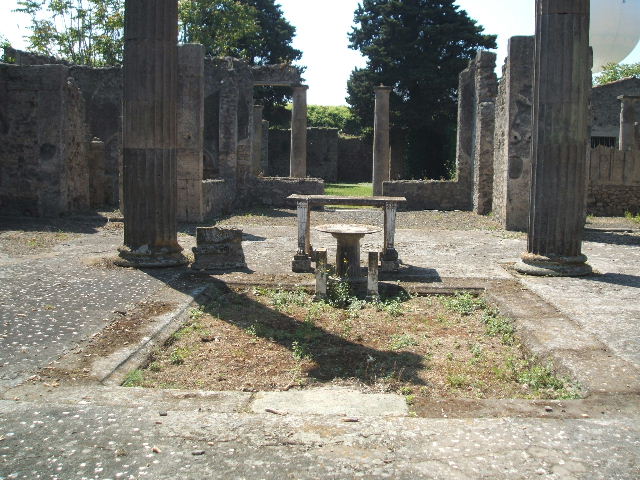
IX.14.4 Pompeii. June 2019. Tetrastyle atrium B, looking south across impluvium. Photo courtesy of Buzz Ferebee.
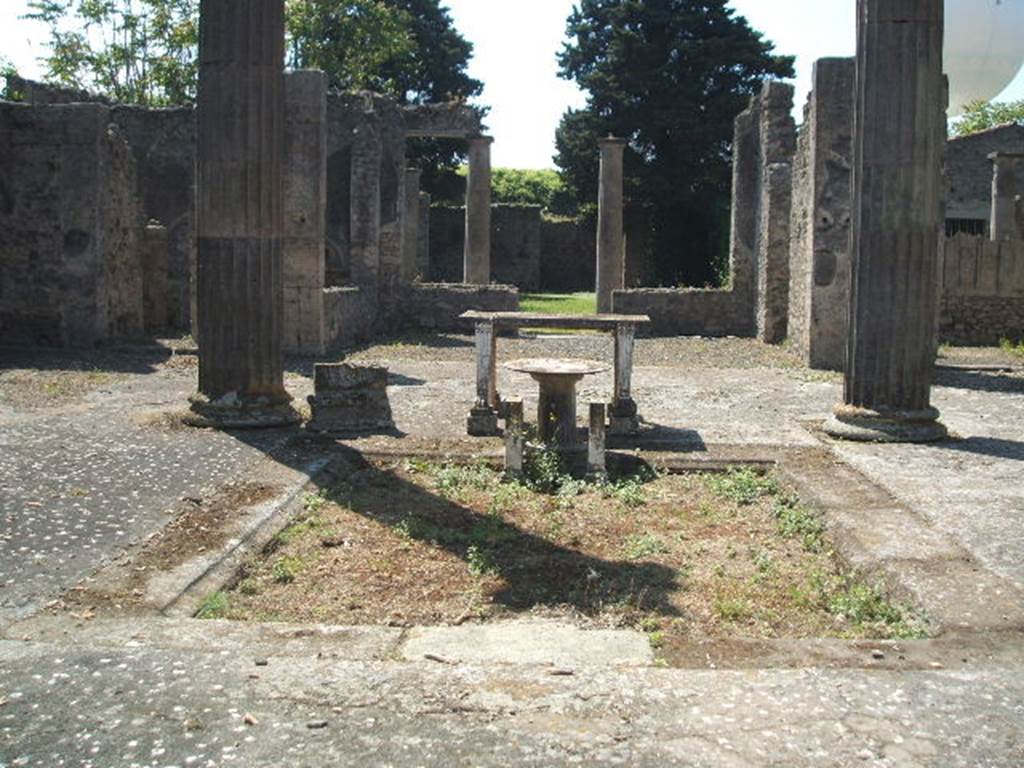
IX.14.4 Pompeii. July 2017. Looking south across atrium
towards impluvium.
Foto
Annette Haug, ERC Grant 681269 DÉCOR.
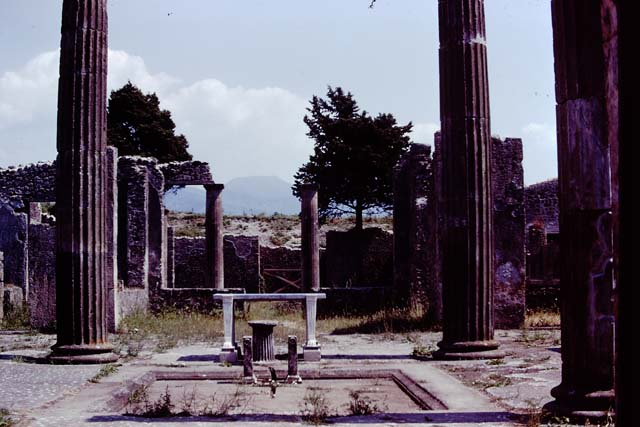
IX.14.4 Pompeii. July 2024.
Looking south across impluvium towards tablinum. Photo courtesy of Johannes Eber.
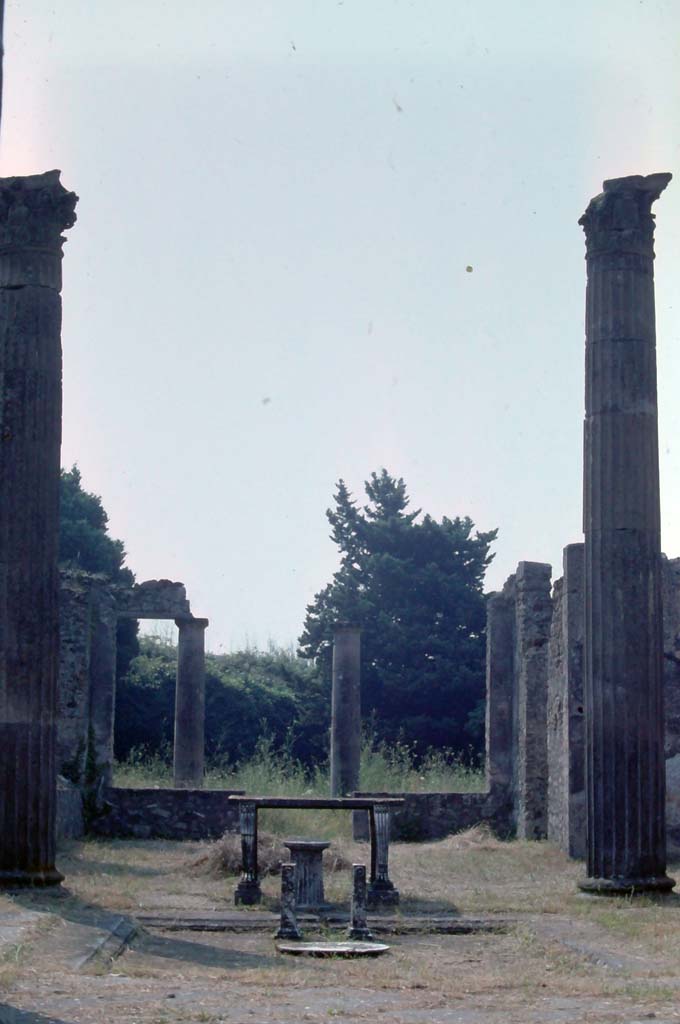
IX.14.4 Pompeii. May 2017. Looking south across impluvium in atrium. Photo courtesy of Buzz Ferebee.
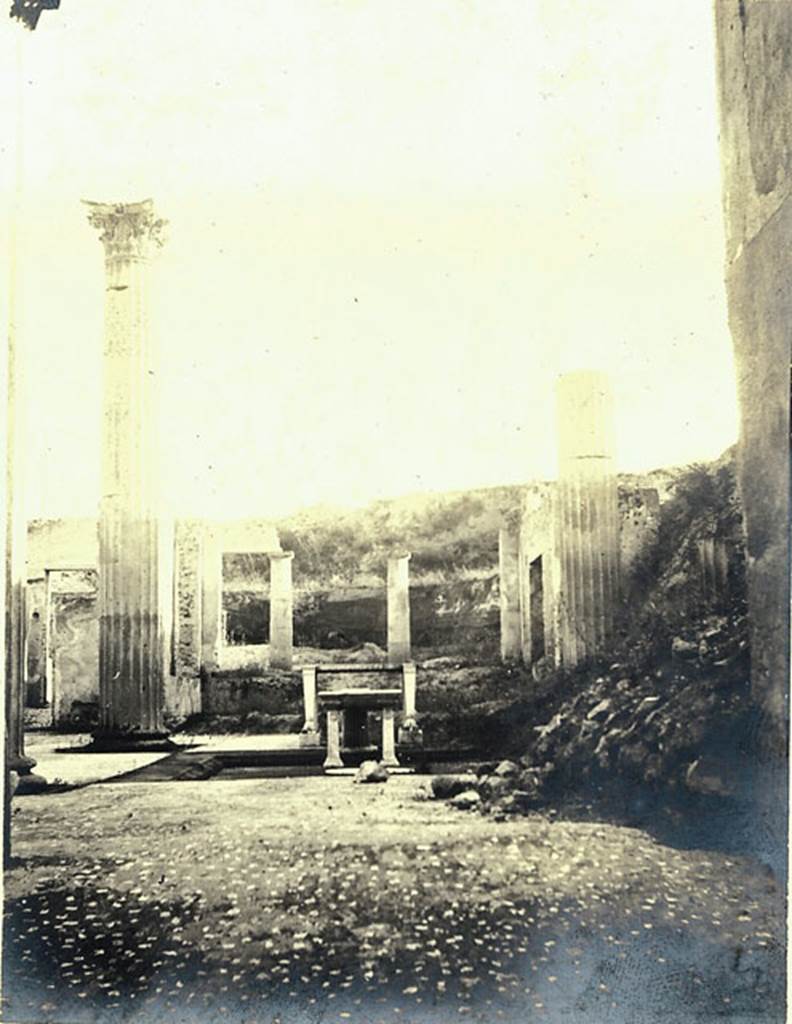
IX.14.4 Pompeii. May 2005.
Looking south across atrium towards tufa impluvium. In the centre was a circular marble fountain disc (a).
IX.14.4 Pompeii, 1978. Looking south across impluvium in atrium. Photo by Stanley A. Jashemski.
Source: The Wilhelmina and Stanley A. Jashemski archive in the University of Maryland Library, Special Collections (See collection page) and made available under the Creative Commons Attribution-Non-Commercial License v.4. See Licence and use details.
J78f0219
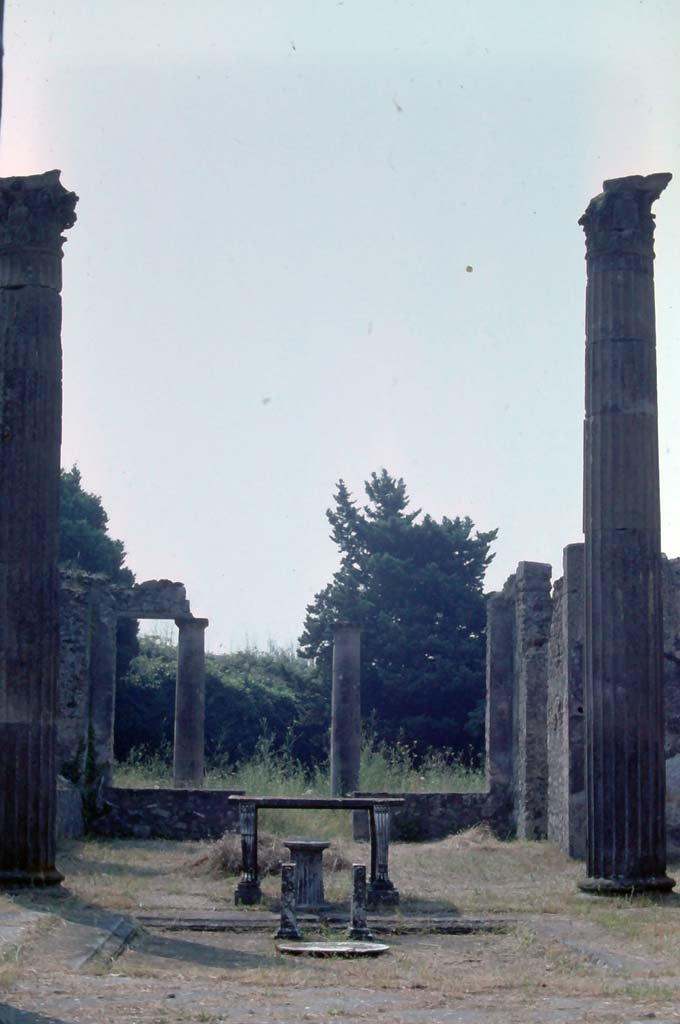
IX.14.4 Pompeii, 7th August 1976. Looking south across impluvium in atrium.
Photo courtesy of Rick Bauer, from Dr George Fay’s slides collection.
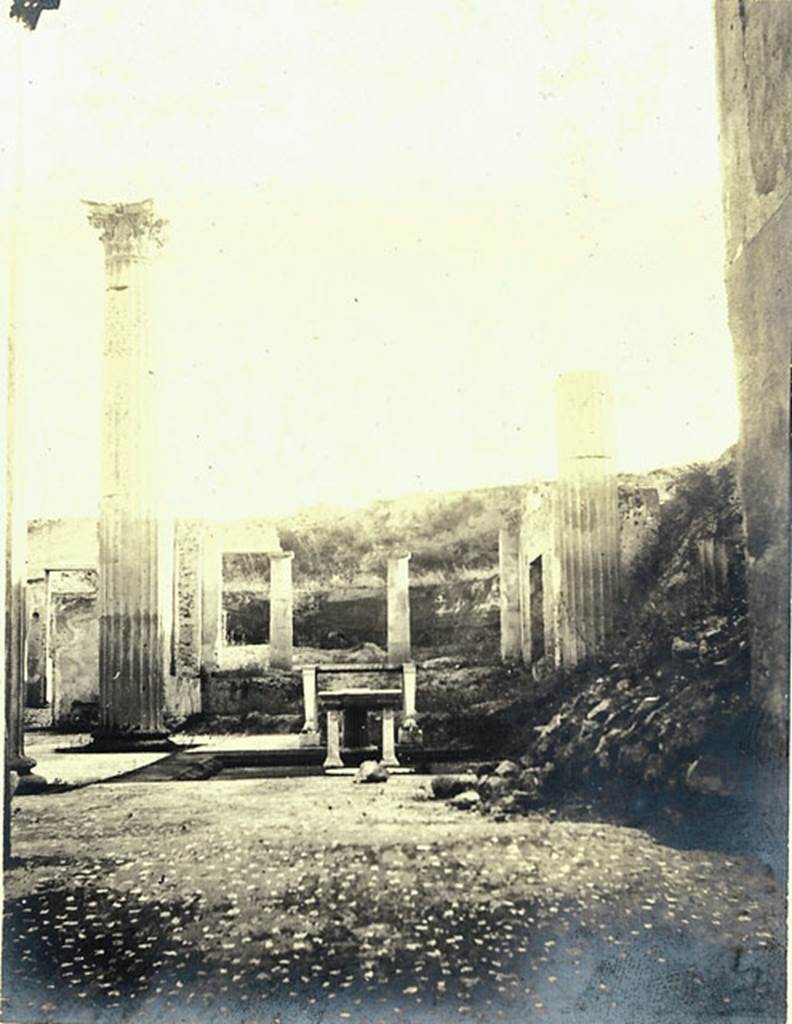
IX.14.4 Pompeii. About 1909. Tetrastyle atrium B under excavation. Photo courtesy of Rick Bauer.
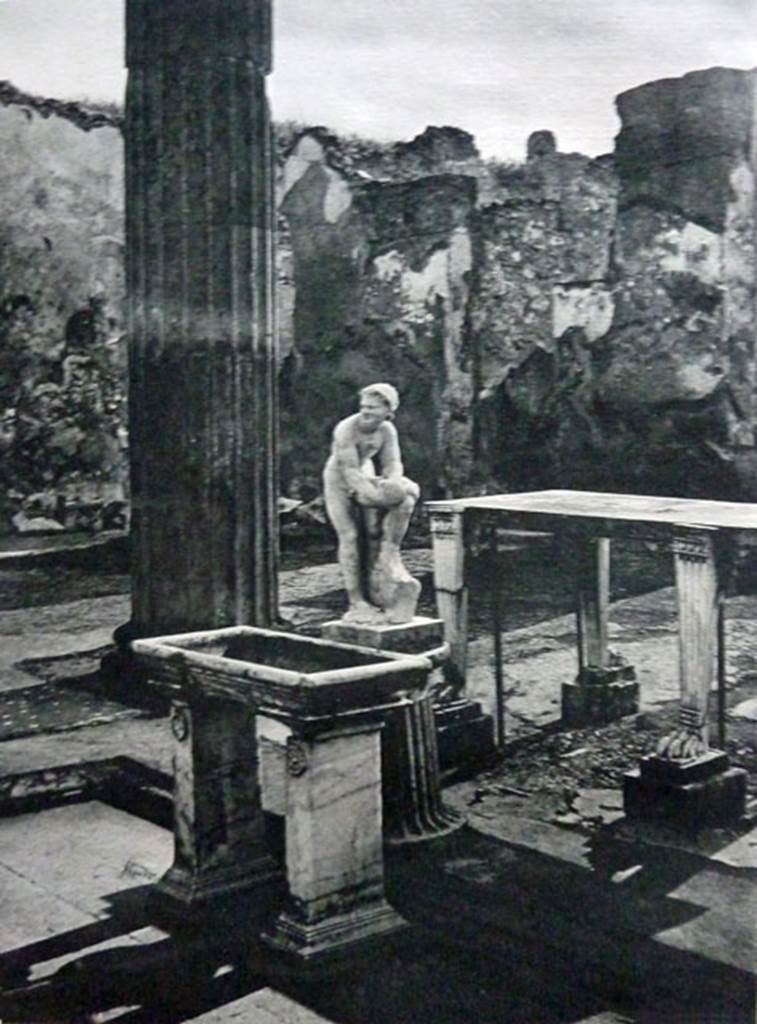
IX.14.4 Pompeii. Old undated photograph. Tetrastyle atrium B.
Impluvium with marble table (e), basin (d), puteal and satyr fountain statue (c).
IX.14.4 Pompeii. 1964.
Marble basin and satyr fountain statue from impluvium in atrium. Photo by Stanley A. Jashemski.
Source: The Wilhelmina and Stanley A. Jashemski archive in the University of Maryland Library, Special Collections (See collection page) and made available under the Creative Commons Attribution-Non-Commercial License v.4. See Licence and use details.
J64f1771
IX.14.4 Pompeii. About 1905. Fountain statue (c) of young Satyr.
See Notizie degli Scavi di Antichità, 1905, p. 249, fig. 4.
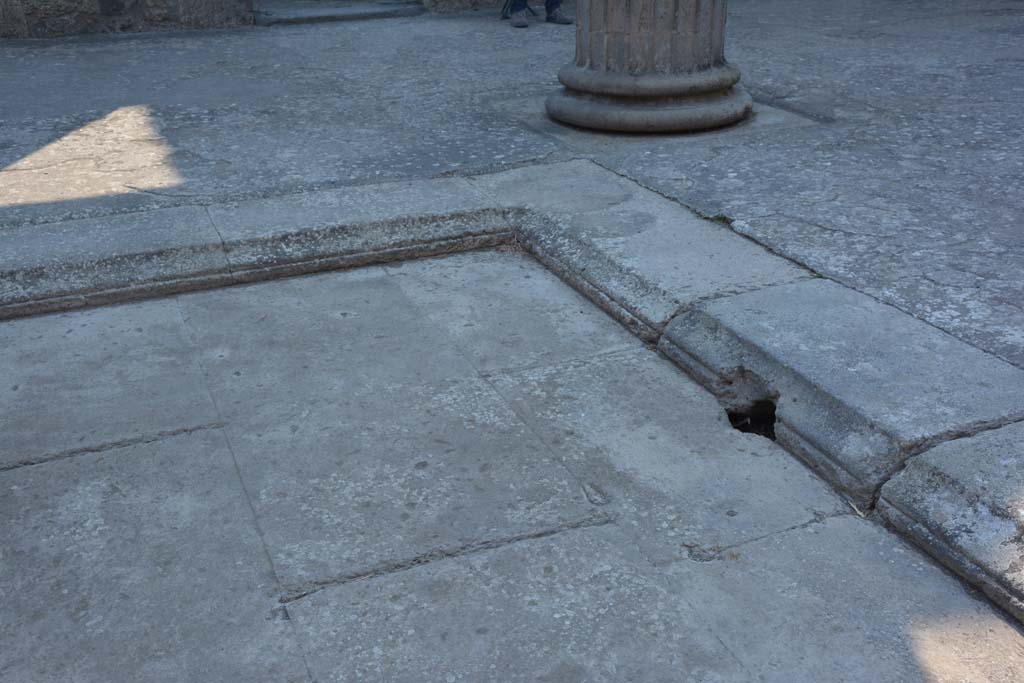
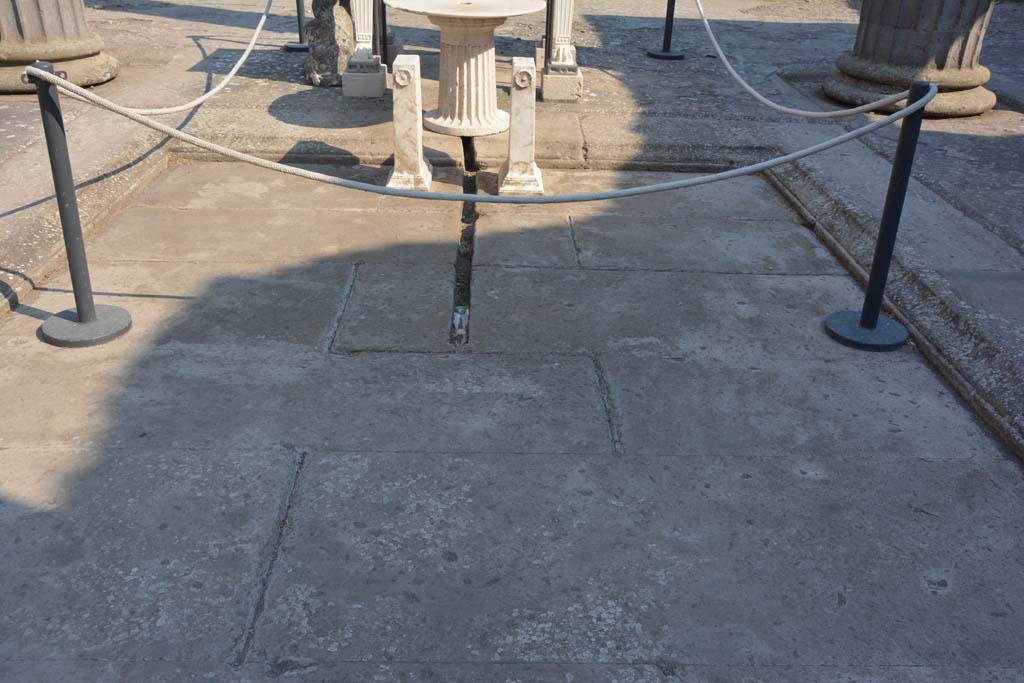
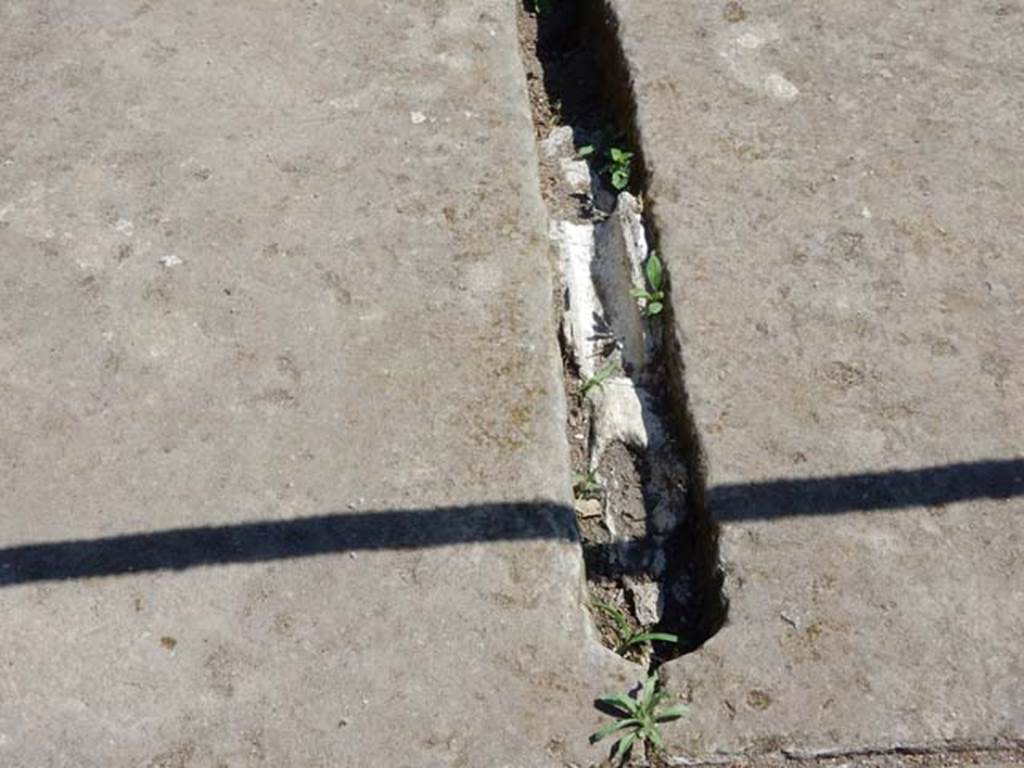
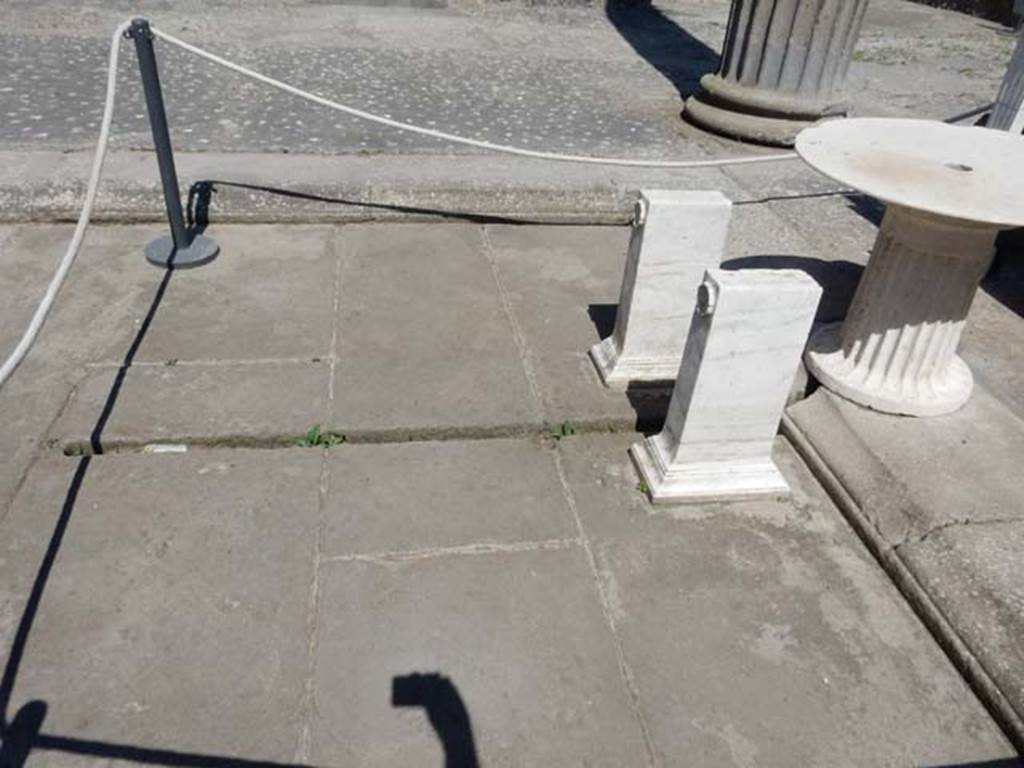
IX.14.4 Pompeii. July 2017. Looking towards impluvium with channel/conduit
in centre.
Foto Annette Haug, ERC Grant 681269 DÉCOR.
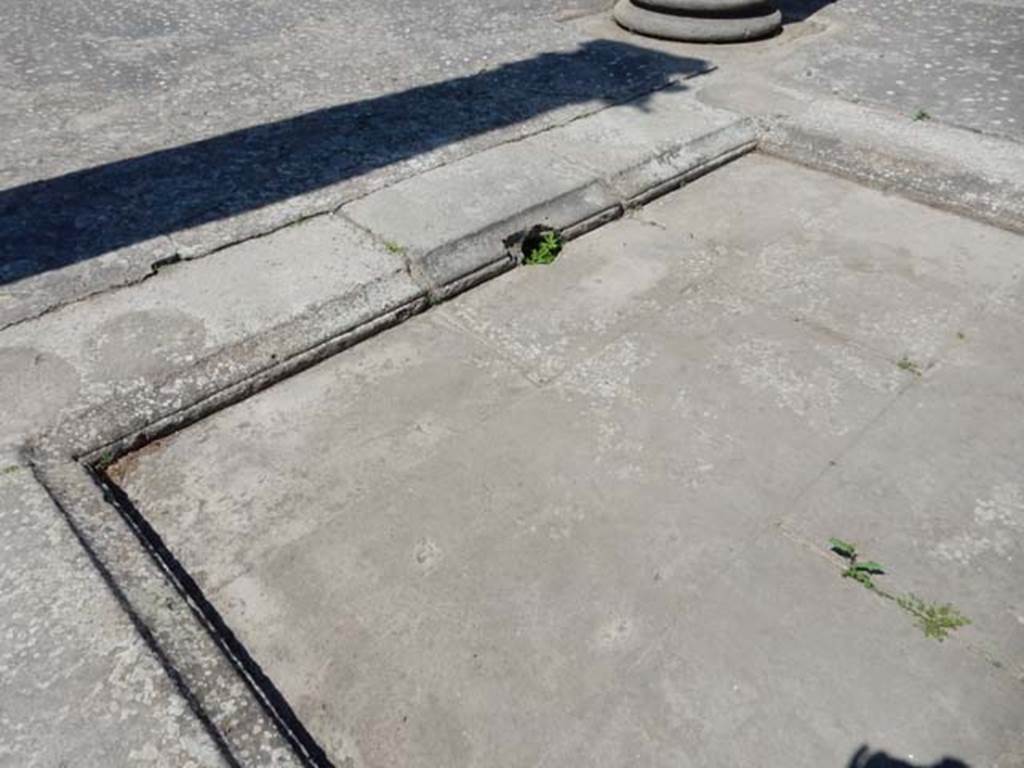
IX.14.4 Pompeii. May 2017. Detail of channel/conduit in centre of impluvium. Photo courtesy of Buzz Ferebee.
IX.14.4 Pompeii. May 2017. Looking east across impluvium with channel/conduit. Photo courtesy of Buzz Ferebee.
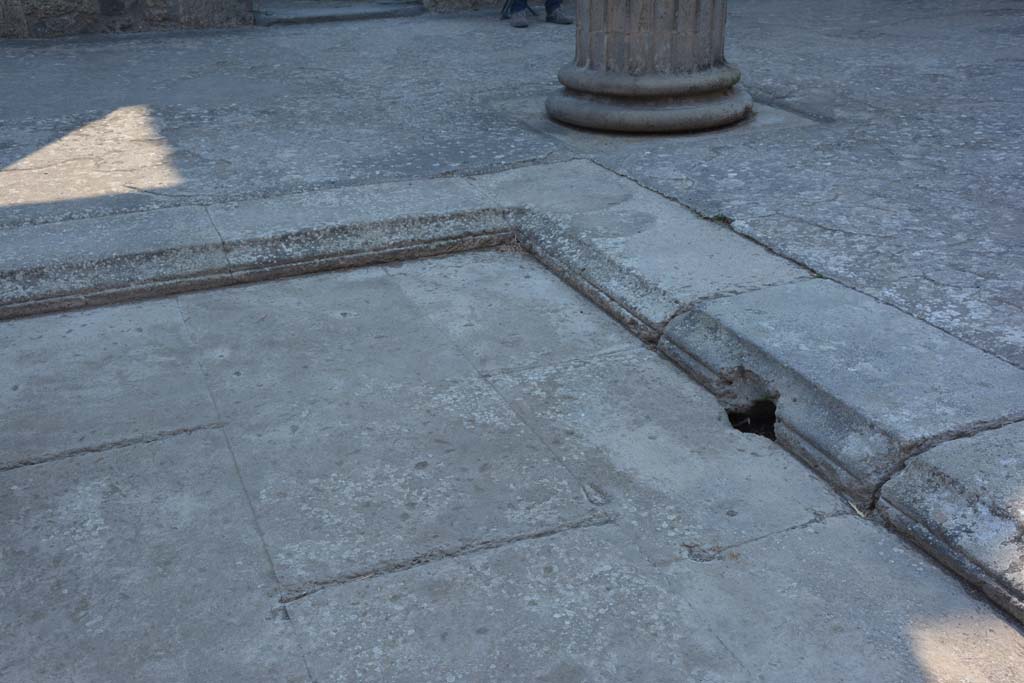
IX.14.4 Pompeii. July 2017. Detail of impluvium in
atrium.
Foto Annette Haug, ERC Grant 681269 DÉCOR.
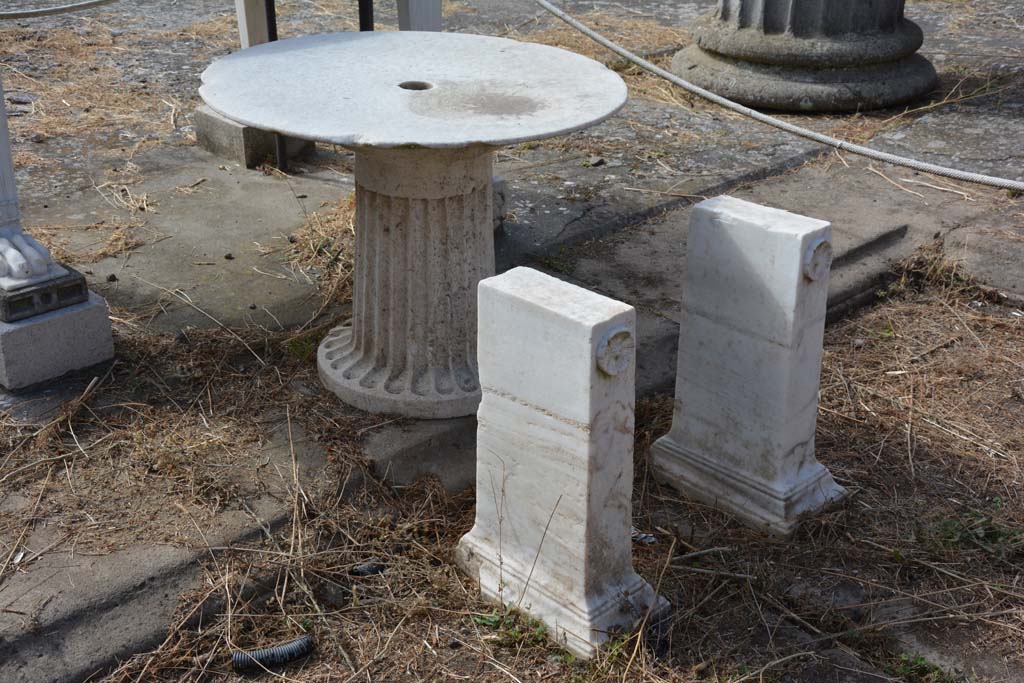
IX.14.4 Pompeii. May 2017. Detail of impluvium in atrium. Photo courtesy of Buzz Ferebee.
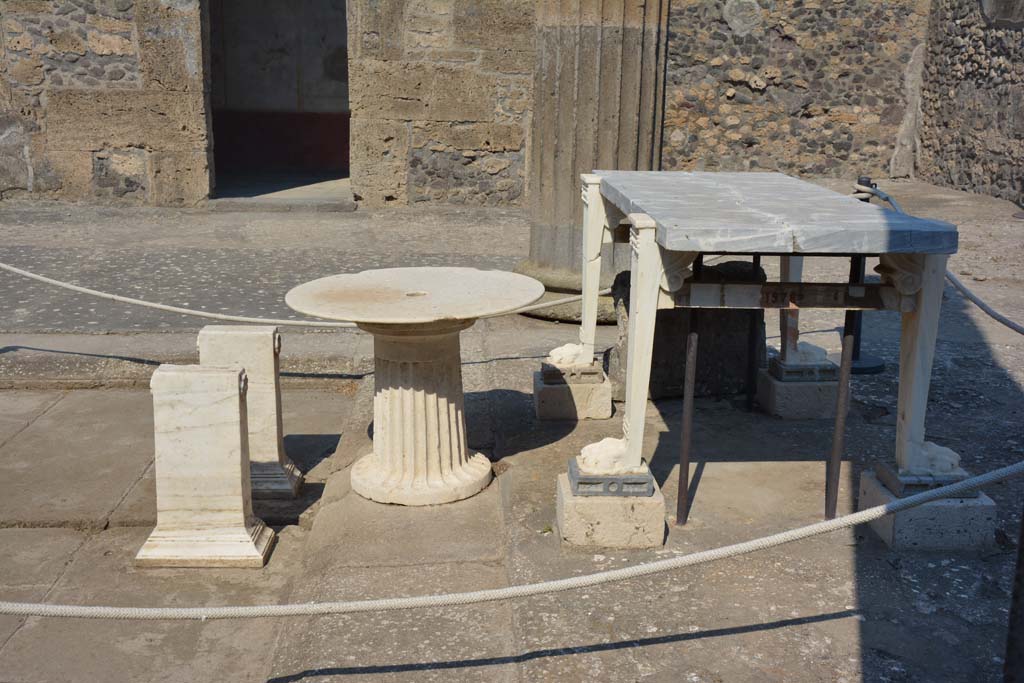
IX.14.4 Pompeii. July 2024. Items on south side of impluvium. Photo courtesy of Johannes Eber.
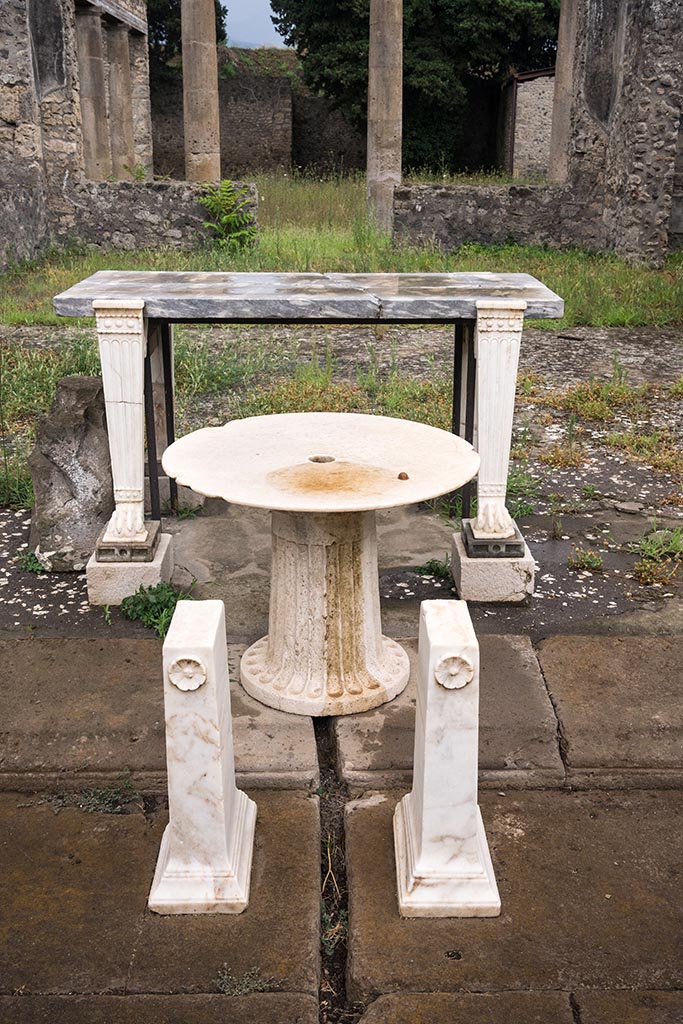
IX.14.4 Pompeii. July 2024.
Items on south side of impluvium, looking towards tablinum and peristyle.
Photo courtesy of Johannes Eber.
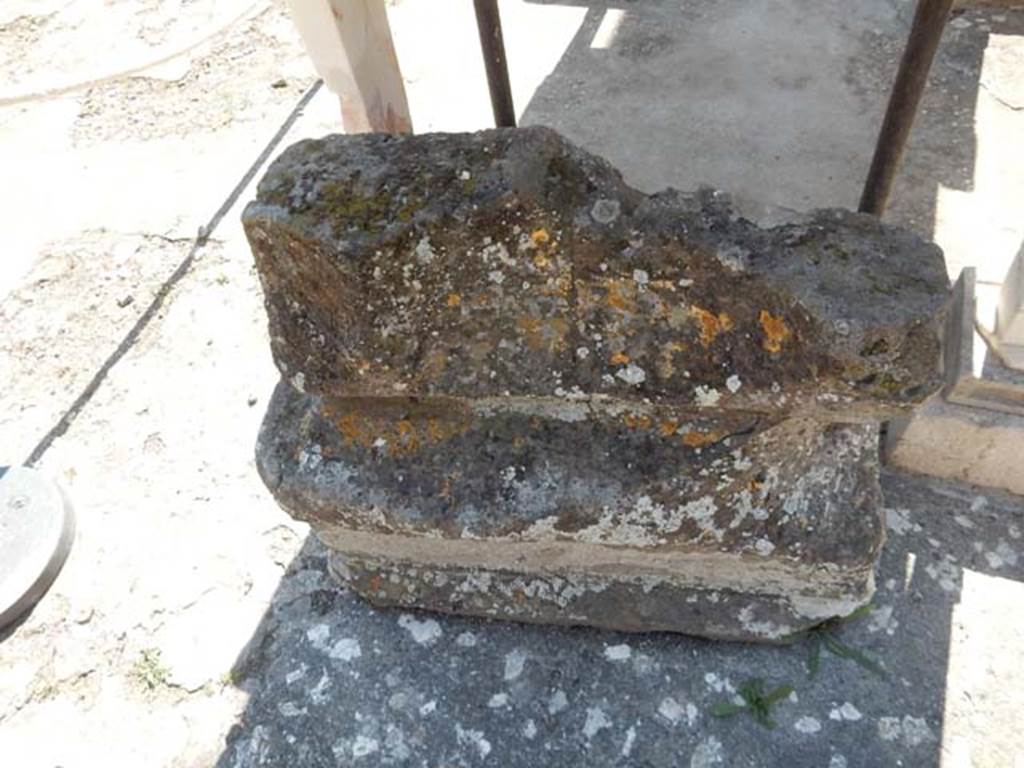
IX.14.4 Pompeii. July 2017. Items on south side of
impluvium.
Foto
Annette Haug, ERC Grant 681269 DÉCOR.
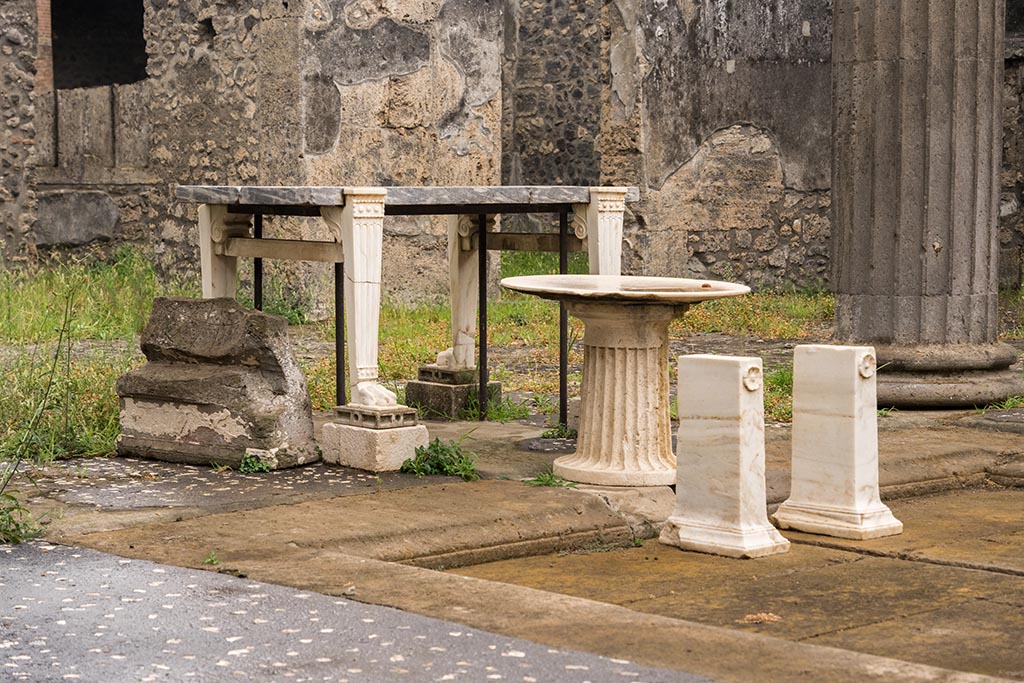
Looking south-west towards items on south side of impluvium, from east side. Photo courtesy of Johannes Eber.
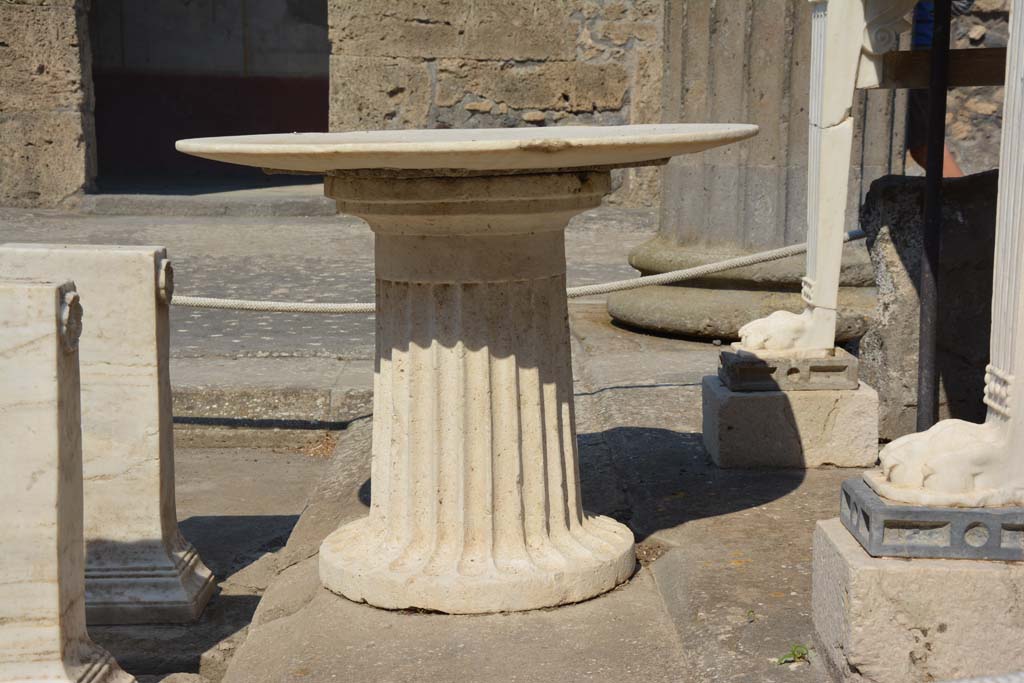
IX.14.4 Pompeii. May 2017. Items on south side of impluvium, from east side. Photo courtesy of Buzz Ferebee.
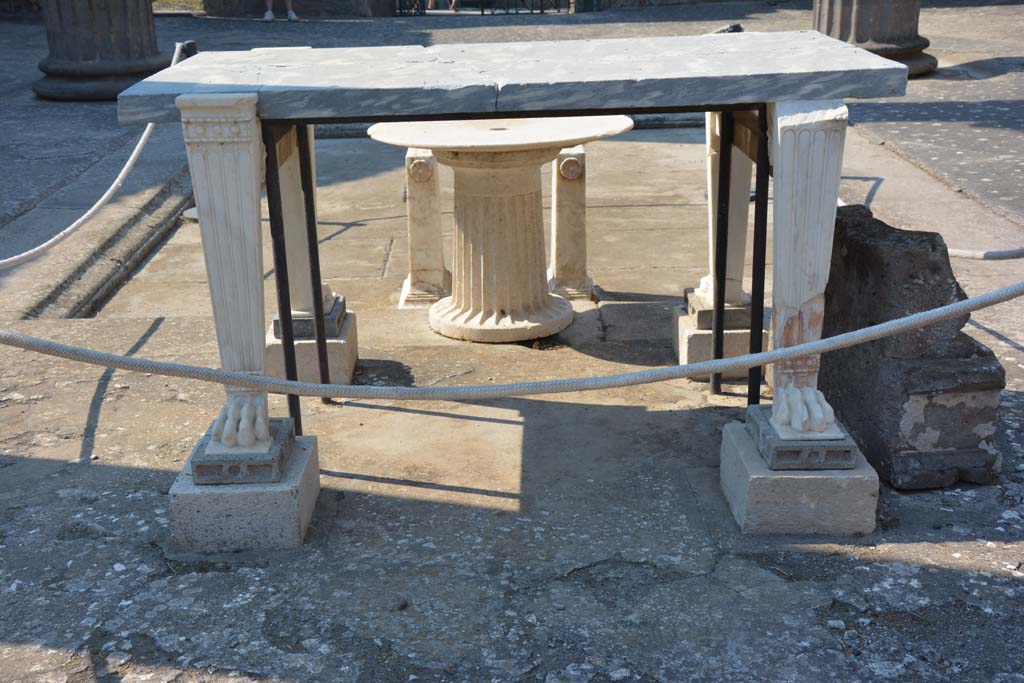
IX.14.4 Pompeii. September 2019. Looking west towards items
on south side of impluvium from east side.
Foto Annette Haug, ERC Grant 681269 DÉCOR.
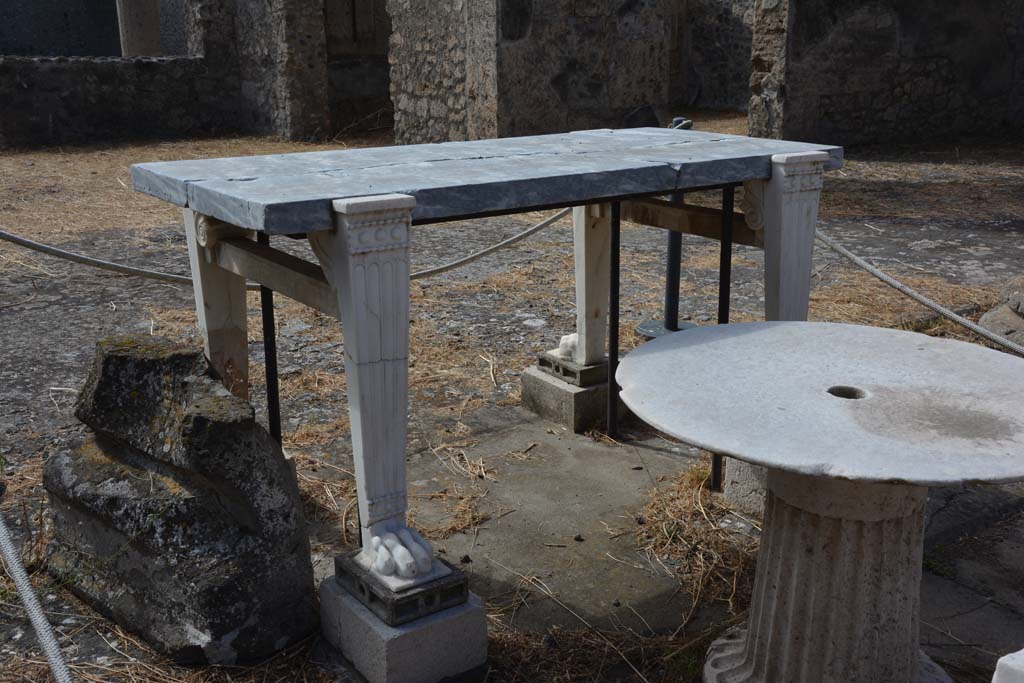
IX.14.4 Pompeii. September 2019. Items on south side
of impluvium, from east side.
Foto Annette Haug, ERC Grant 681269 DÉCOR.
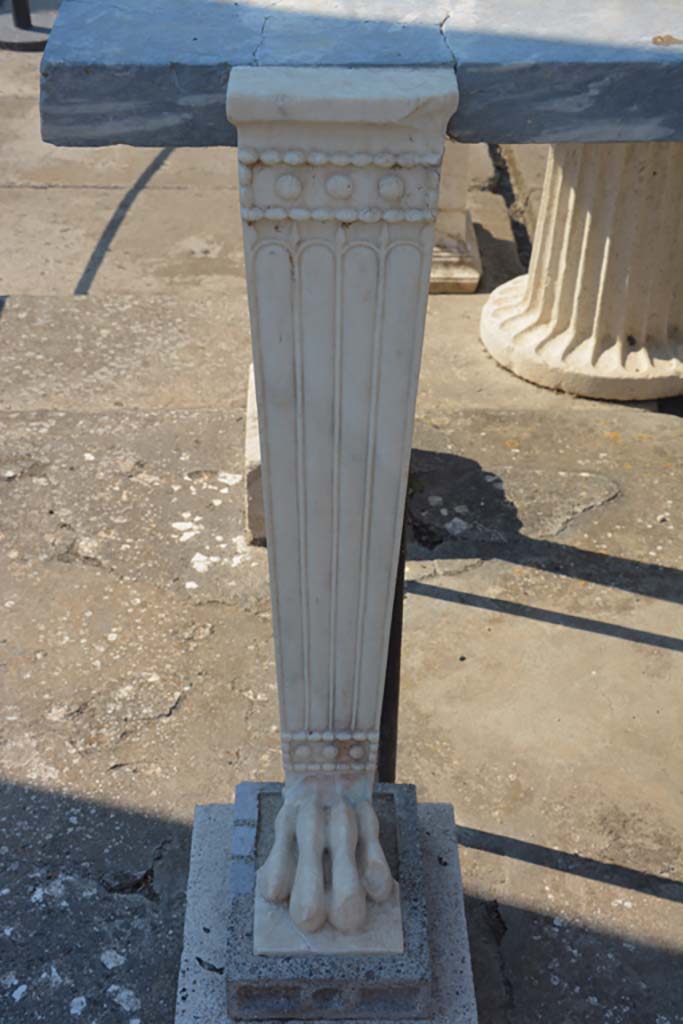
IX.14.4 Pompeii. May 2017. Item on east side of table. Photo courtesy of Buzz Ferebee.
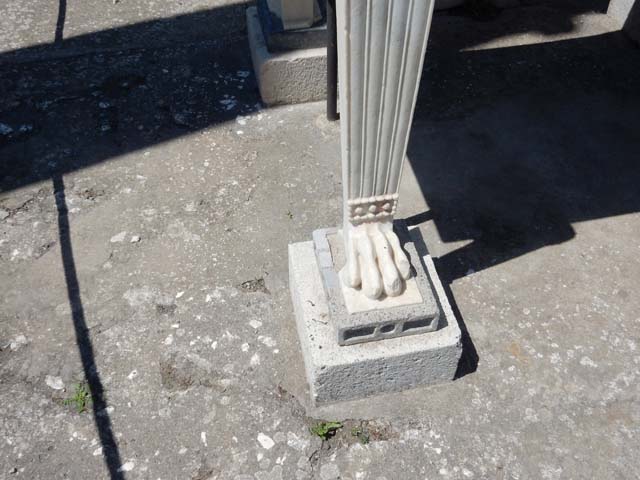
IX.14.4 Pompeii. July 2024. East side of table. Photo courtesy of Johannes Eber.
IX.14.4 Pompeii. July 2024.
Detail of front table leg on east side of table. Photo courtesy of Johannes Eber.
IX.14.4 Pompeii. July 2024. Circular marble fountain and detail of leg supports of a marble basin. Photo courtesy of Johannes Eber.
IX.14.4 Pompeii. May 2017. Detail of leg supports of marble basin, not shown. Photo courtesy of Buzz Ferebee.
IX.14.4 Pompeii. July 2017. Items on south side of
impluvium, from west side.
Foto Annette Haug, ERC Grant 681269 DÉCOR.

IX.14.4 Pompeii. July 2017. Detail of circular
marble fountain from impluvium, looking east from west side.
Foto Annette Haug, ERC Grant 681269 DÉCOR.
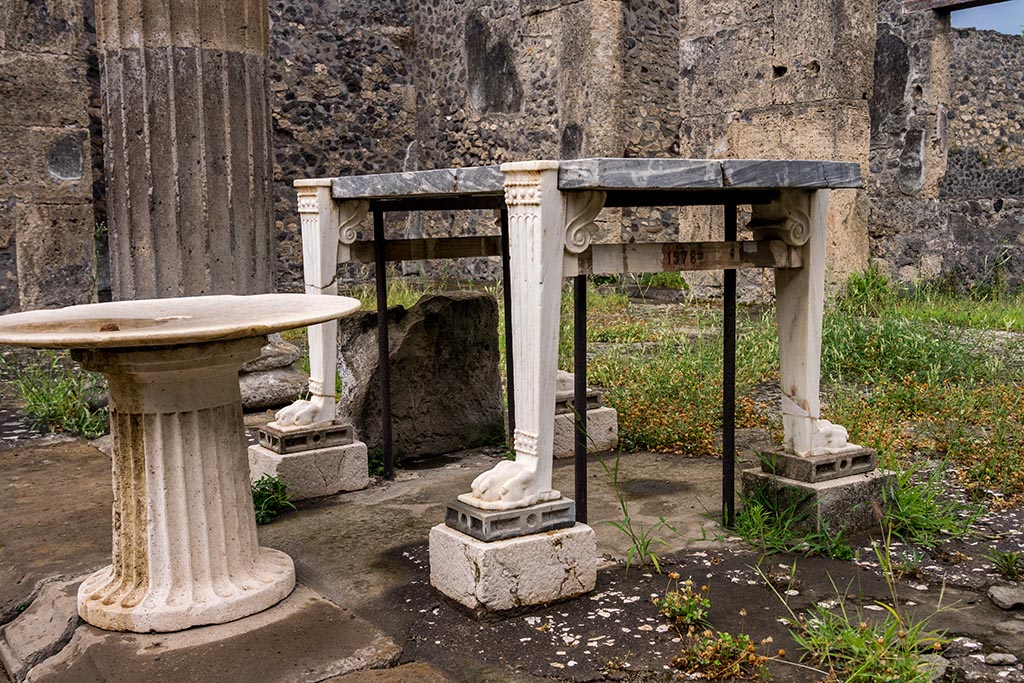
IX.14.4 Pompeii. July 2024. Looking east from west side of table. Photo courtesy of Johannes Eber.

Front table leg on west side of table. Photo courtesy of Johannes Eber.
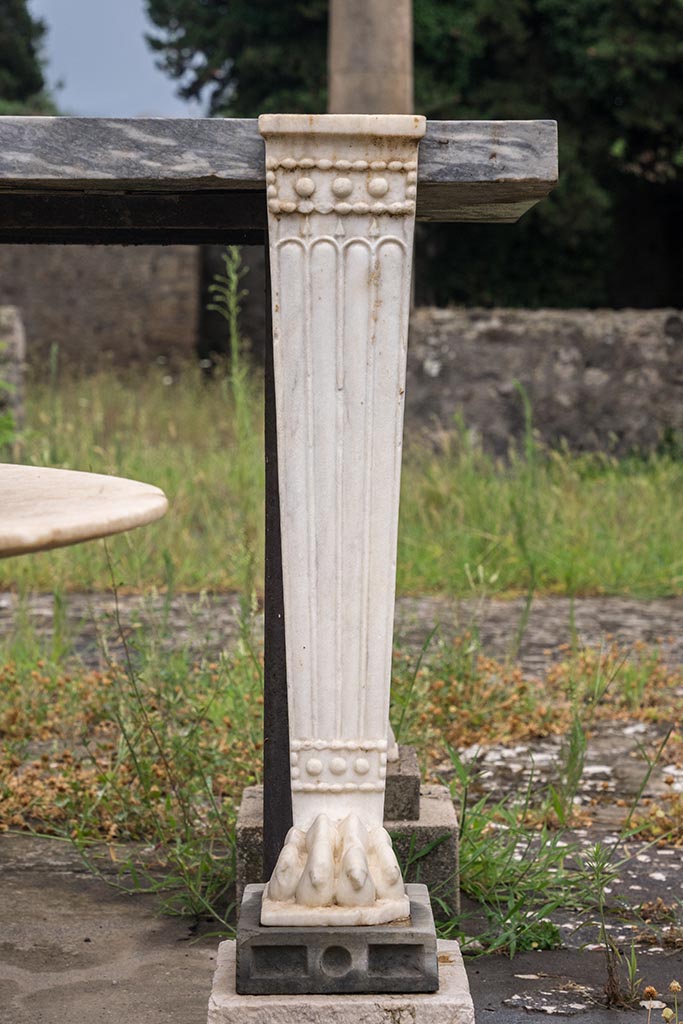
IX.14.4 Pompeii. July 2024.
Front table leg on west side of table. Photo courtesy of Johannes Eber.

Detail of front table leg on west side of table. Photo courtesy of Johannes Eber.
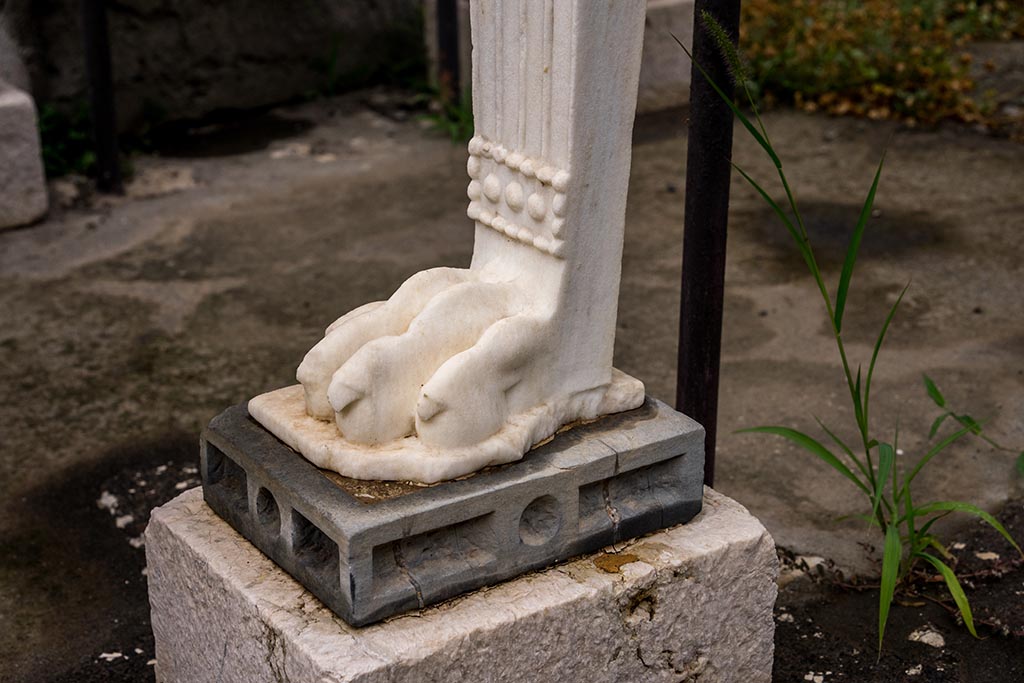
IX.14.4 Pompeii. July 2024. Lower front table leg on west side of table. Photo courtesy of Johannes Eber.

IX.14.4 Pompeii. July 2017. Looking north from rear of
table.
Foto Annette Haug, ERC Grant 681269 DÉCOR.

IX.14.4 Pompeii. May 2017. Table from south side of impluvium, looking north. Photo courtesy of Buzz Ferebee.
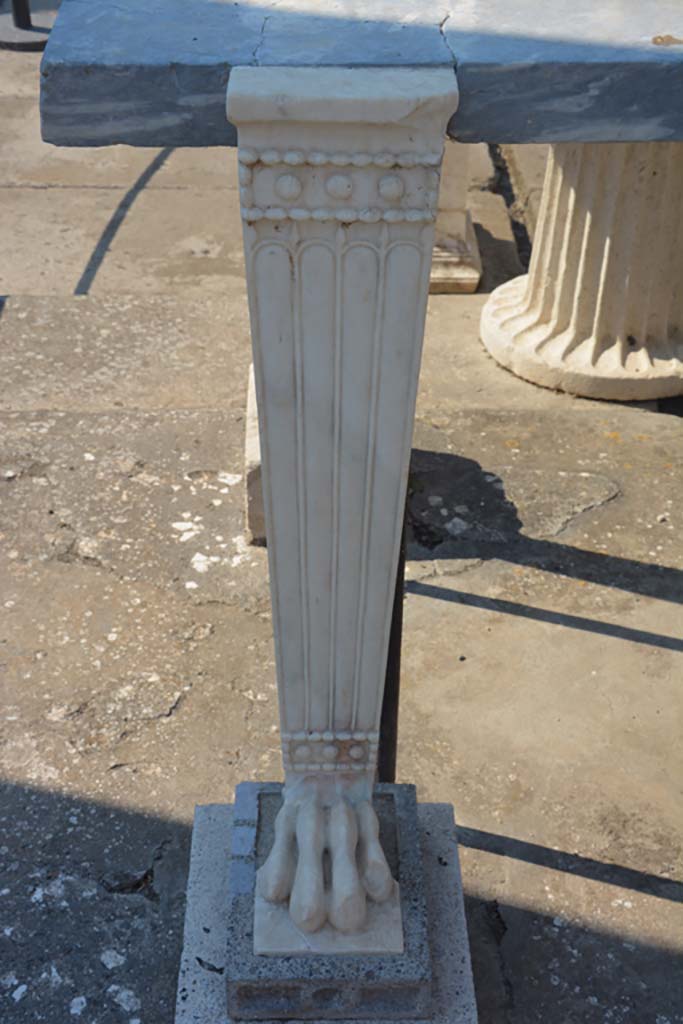
IX.14.4 Pompeii. July 2017. Table support from west end of
south side.
Foto Annette Haug, ERC Grant 681269 DÉCOR.
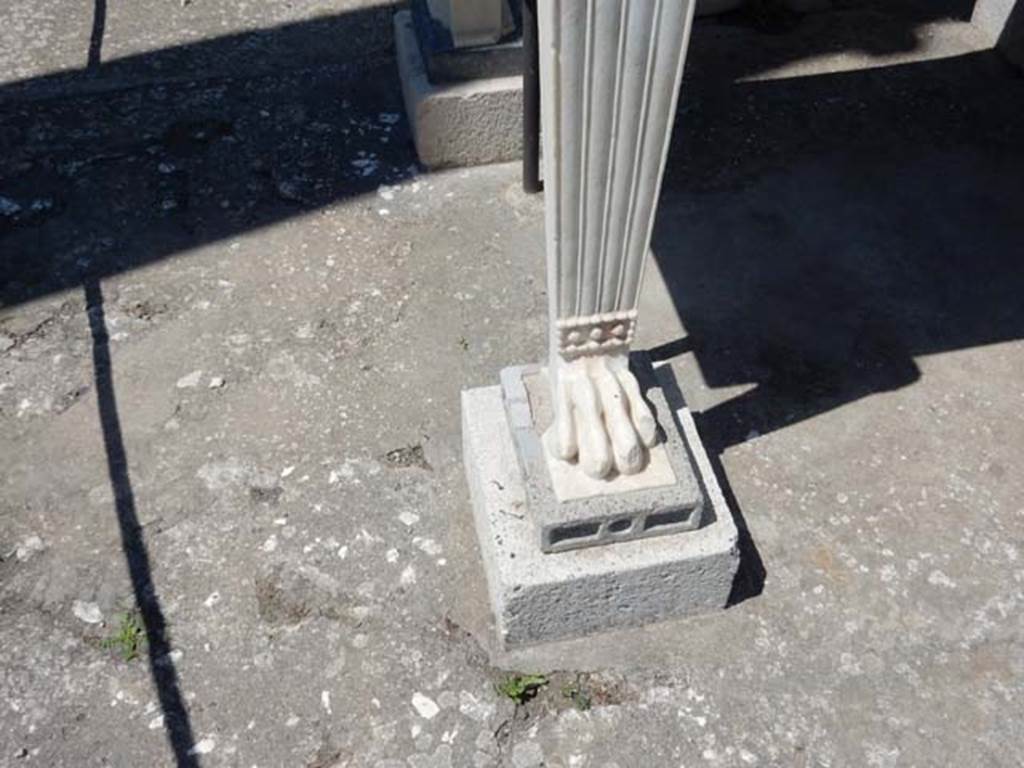
IX.14.4 Pompeii. May 2017. Table support and foot. Photo courtesy of Buzz Ferebee.
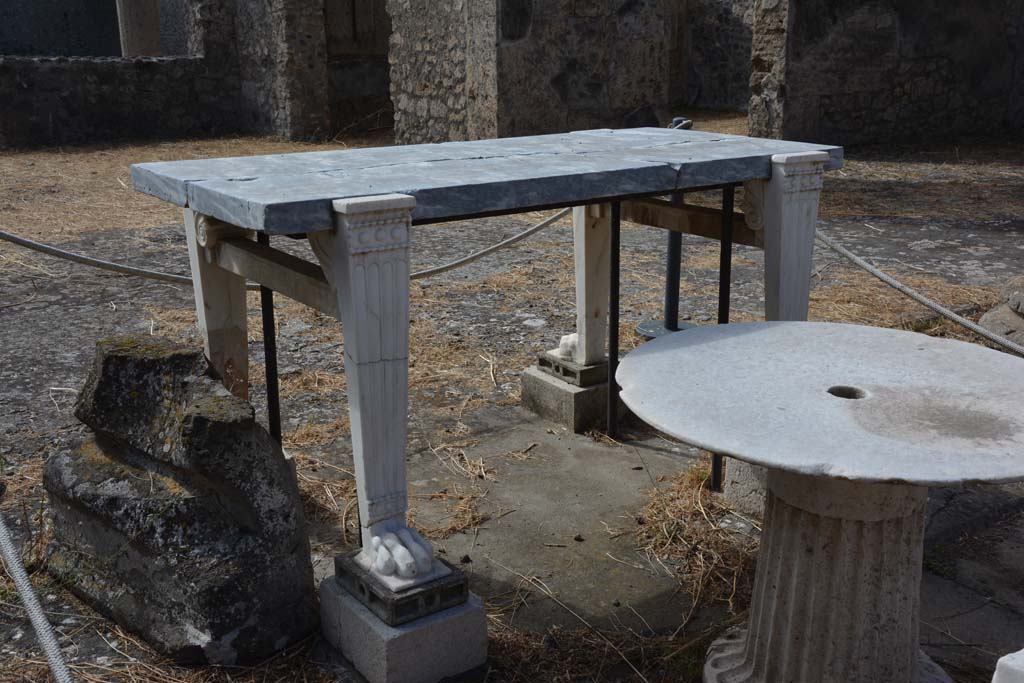
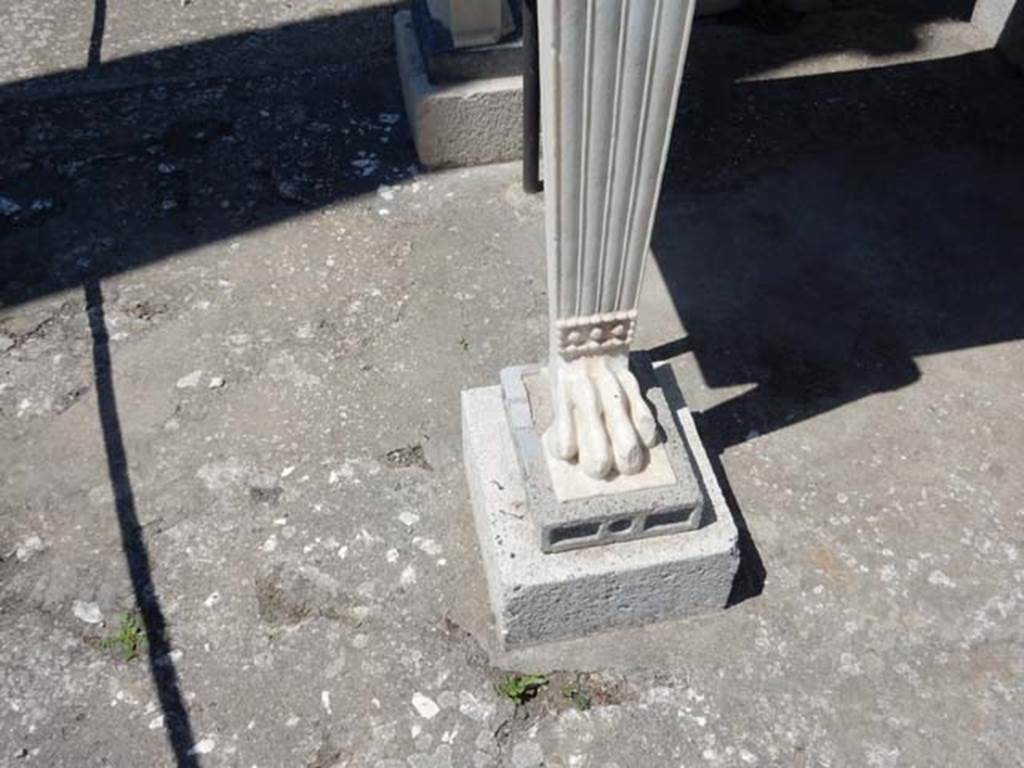
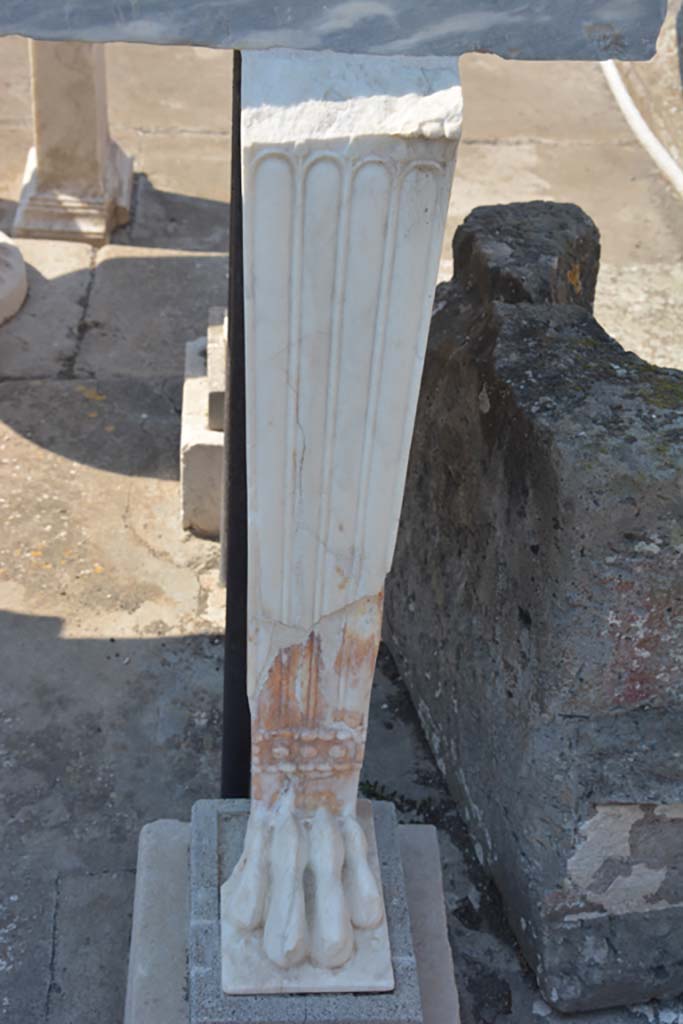
The table was topped in Bardiglio marble, held up on legs of white marble ending in a lion’s paw resting on a base of lava with marble inlays of contrasting colours, resting on a large base of cubed travertine marble.

IX.14.4 Pompeii. July 2017. Table support from east end of
south side.
Foto Annette Haug, ERC Grant 681269 DÉCOR.
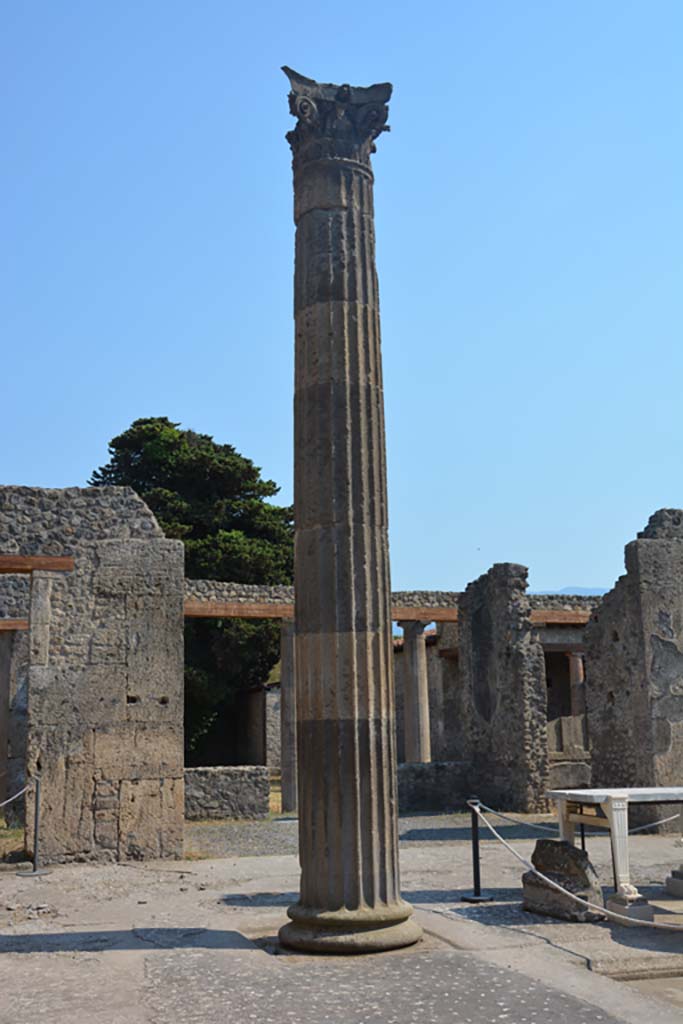
IX.14.4 Pompeii. July 2017. Column on south-east side of
impluvium in atrium.
Foto
Annette Haug, ERC Grant 681269 DÉCOR.

IX.14.4 Pompeii. July 2017. Column on south-west side of
impluvium in atrium.
Foto
Annette Haug, ERC Grant 681269 DÉCOR.
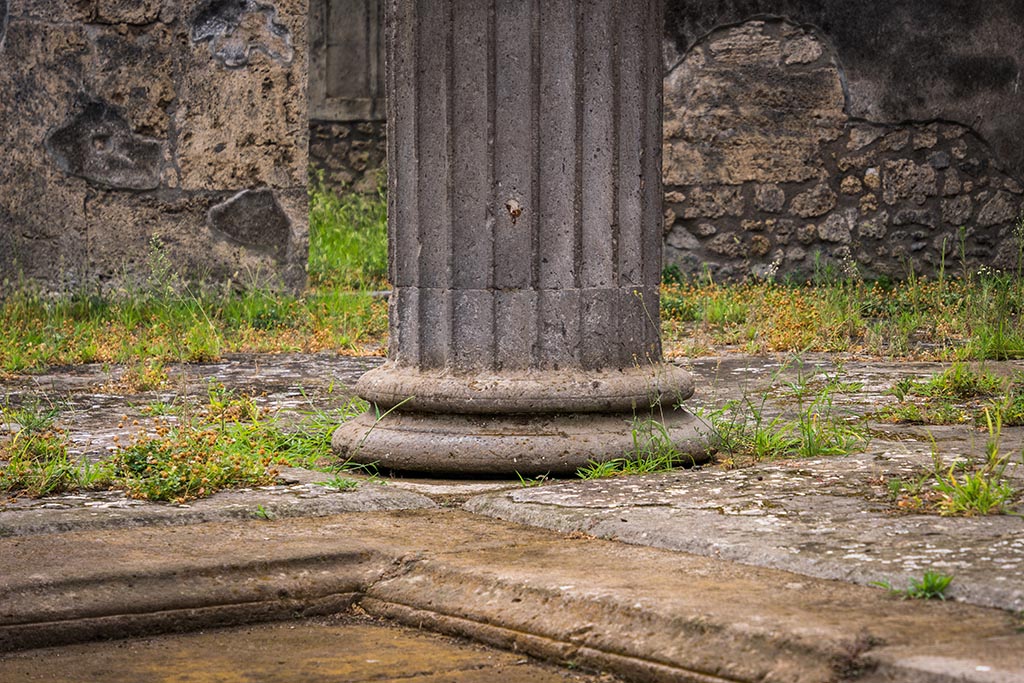
IX.14.4 Pompeii. July 2024. Base of column on south-west side of impluvium in atrium. Photo courtesy of Johannes Eber.

IX.14.4 Pompeii. July 2024. Detail of base of column on south-west side of impluvium in atrium. Photo courtesy of Johannes Eber.
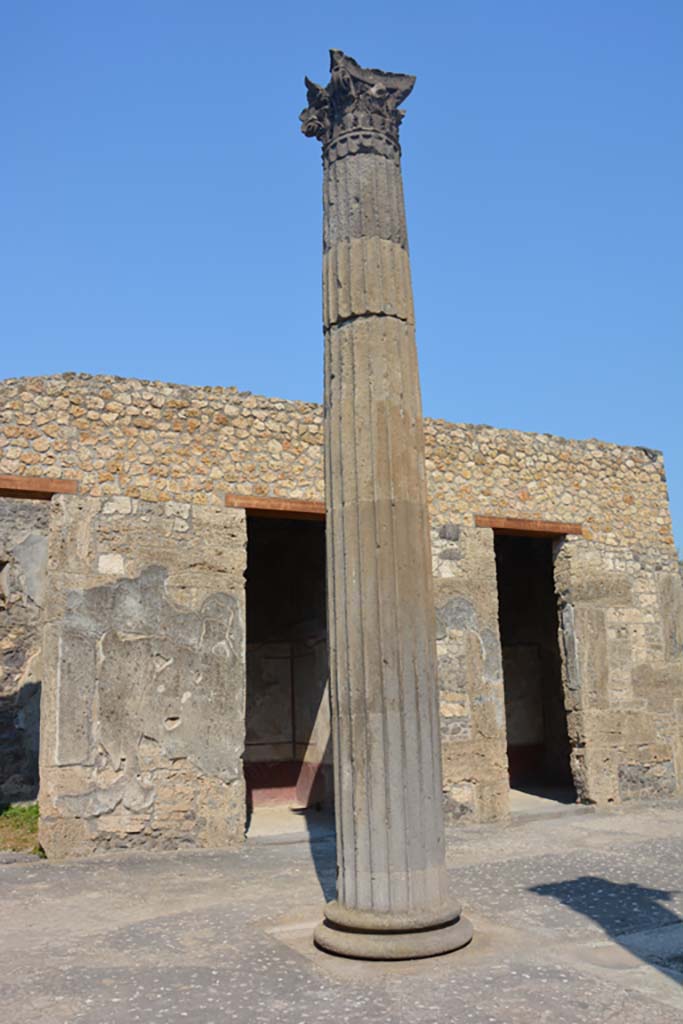
IX.14.4 Pompeii. July 2017. Column on north-east side of
impluvium in atrium.
Foto
Annette Haug, ERC Grant 681269 DÉCOR.
1 2 3 4 5 6 7 8 9 10 11 12 Plan