V.2.15
Pompeii. Casa di Giove or House of Jupiter.
Linked to V.2.16. Excavated
1883, 1891-93 and 2018.
Giove
1 Giove
2 Giove 3 Giove 4 Plan
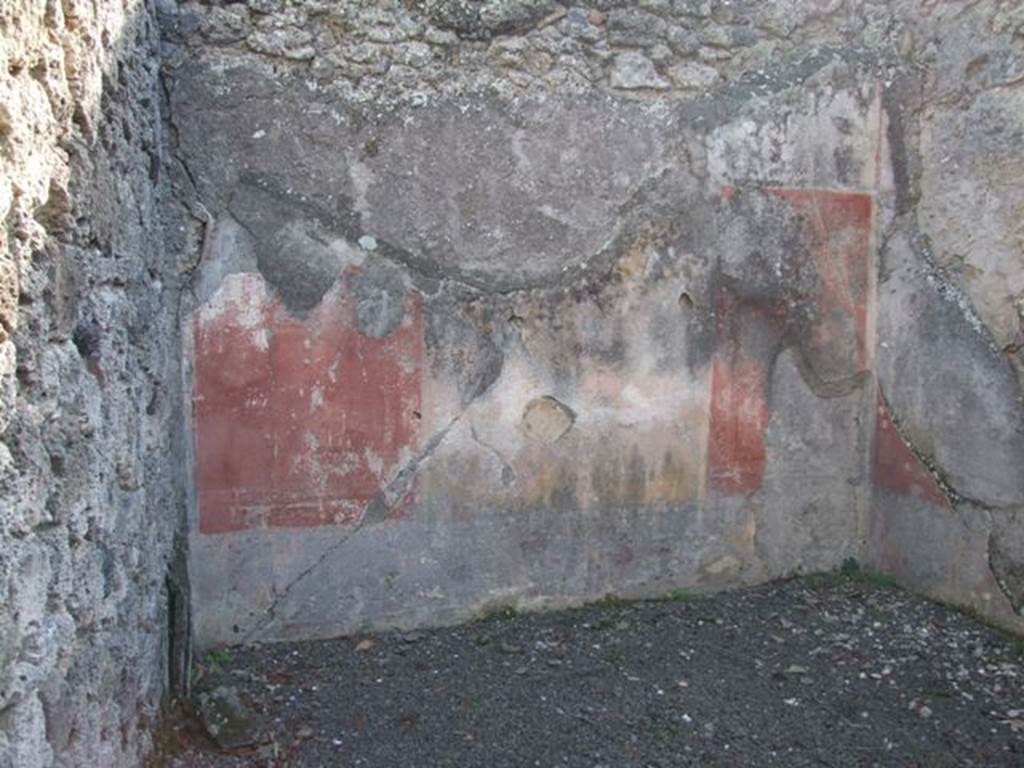
V.2.15 Pompeii. December 2007. Room 4, south wall.
According to NdS, on the south wall a painting of Narcissus (0.45high x 0.44wide) was found.
As usual, Narcissus was admiring his face in a pool, on his right was a cupid.
See Notizie degli Scavi di Antichità, 1891, (p.271)
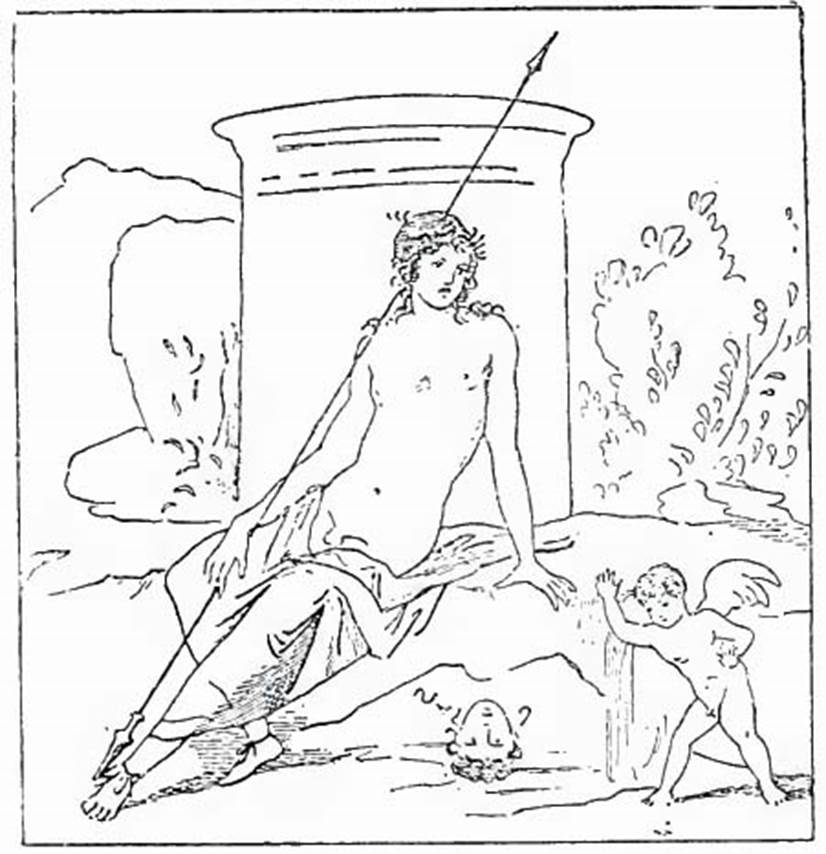
V.2.15 Pompeii. Room 4, south wall. Drawing of painting of Narcissus.
See Mitteilungen des Kaiserlich Deutschen Archaeologischen
Instituts, Roemische Abtheilung, Volume V, 1890, p. 272.
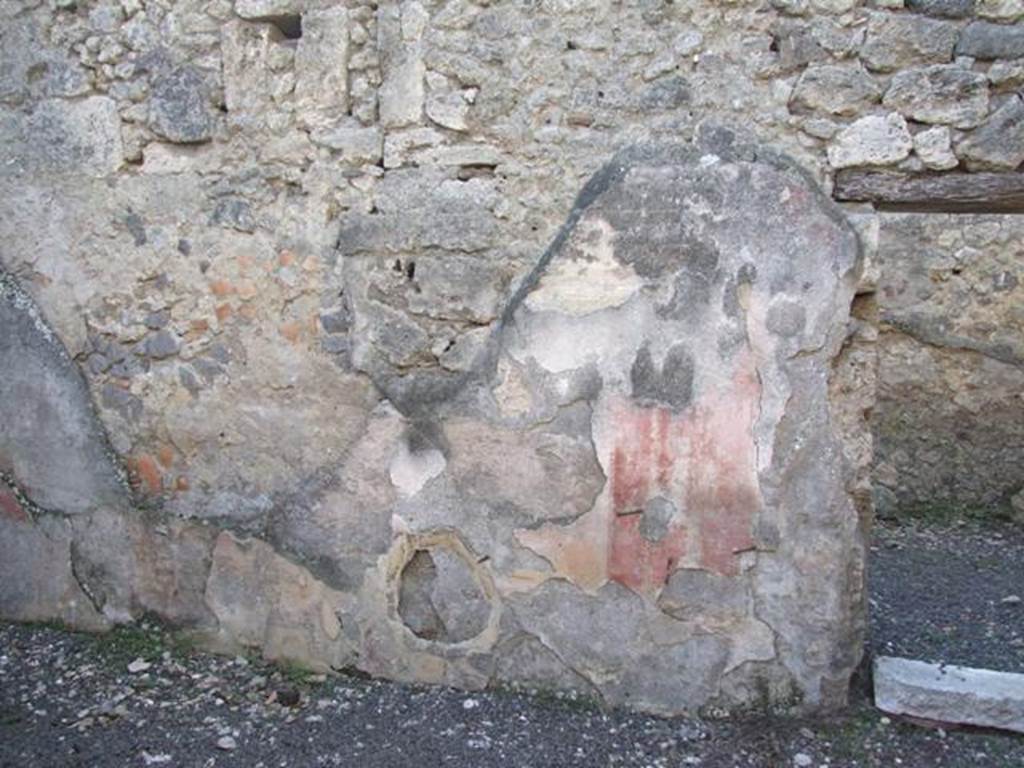
V.2.15 Pompeii. December 2007. Room 4, west wall and doorway to room 5.
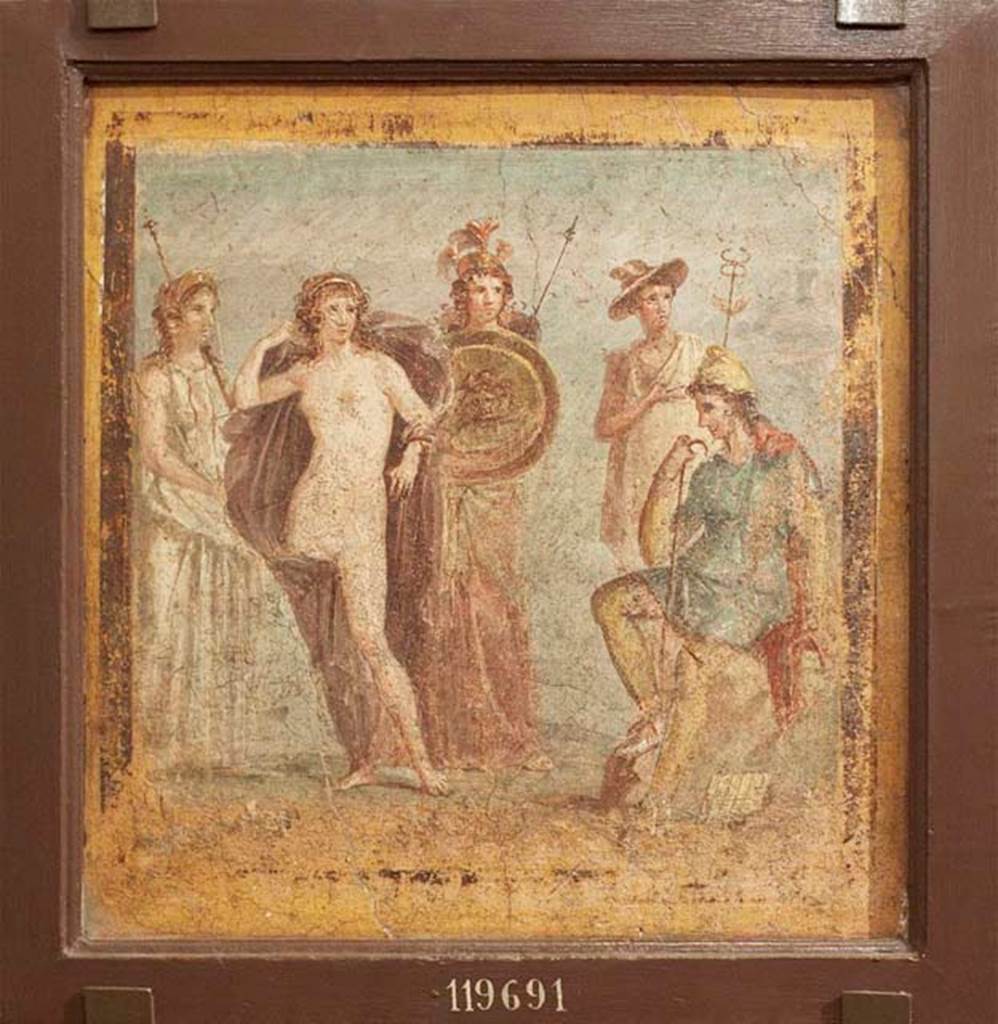
V.2.15 Pompeii. Room 4, west wall. Painting of the Judgement of Paris.
To the right is seated Paris in a thoughtful attitude, near him stands Hermes, pointing with his right hand to the three goddesses, who have come to Paris in order that he may settle their dispute as to which of them is the most beautiful.
Now in Naples Archaeological Museum. Inventory number 119691.
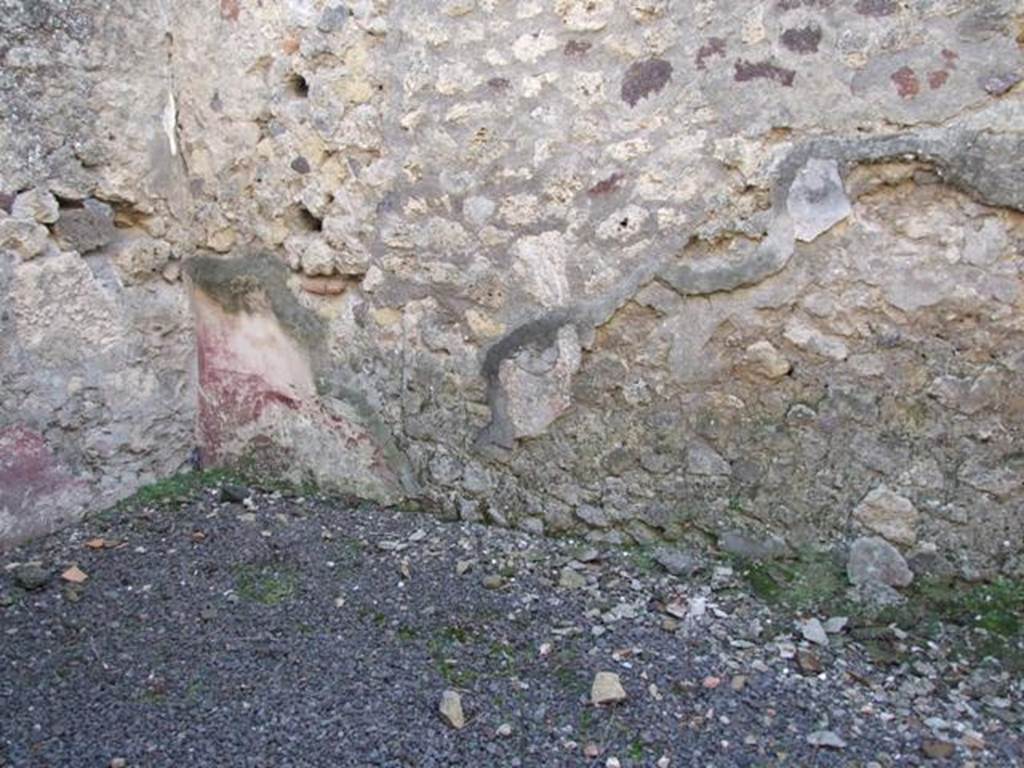
V.2.15 Pompeii. December 2007. Room 5, south-west corner.
According to NdS, this room in the south-west corner of the peristyle, was a storeroom.
It had white plastered walls and purple dado and was linked with room 4.
Perhaps originally it had been a cubiculum but then had been transformed into a storeroom.
This was apparent from the holes, drilled in the walls, for shelves.
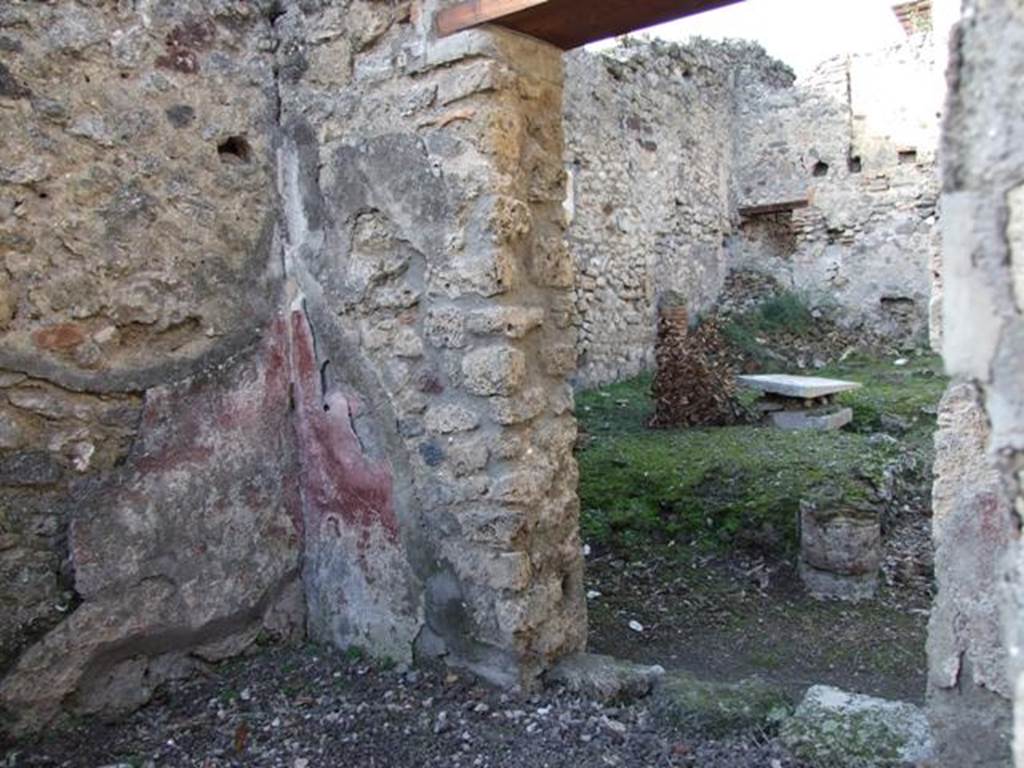
V.2.15 Pompeii. December 2007. Room 5, looking north to triclinium in peristyle.
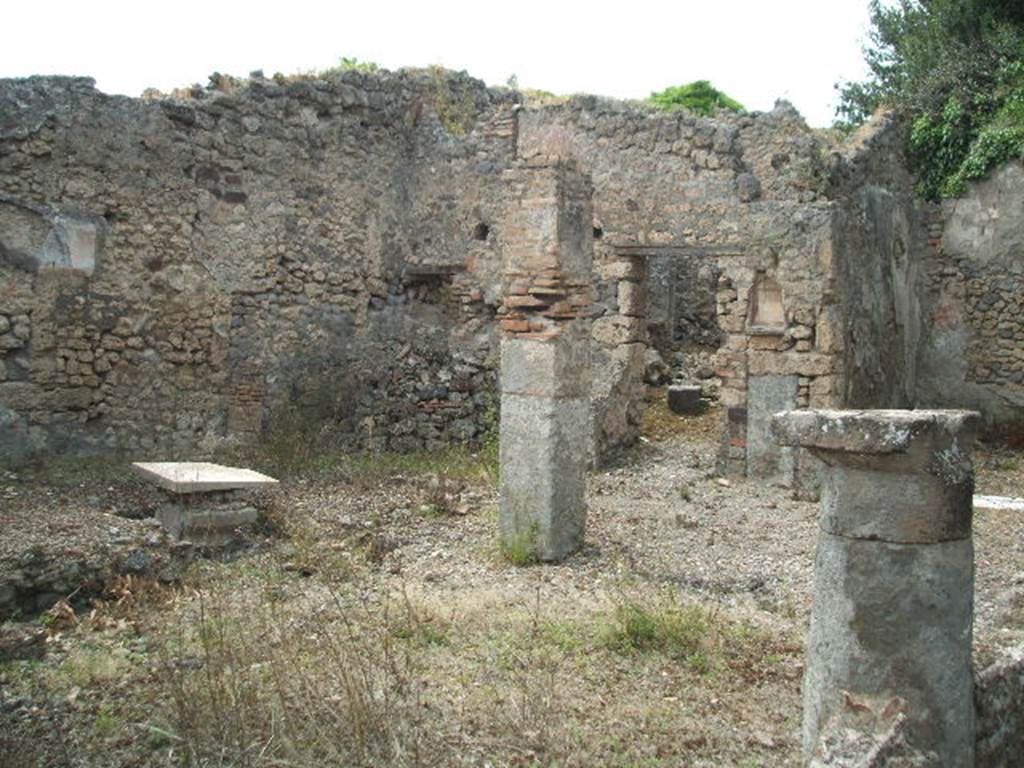
V.2.15 Pompeii. May 2005. Looking north-west across peristyle.
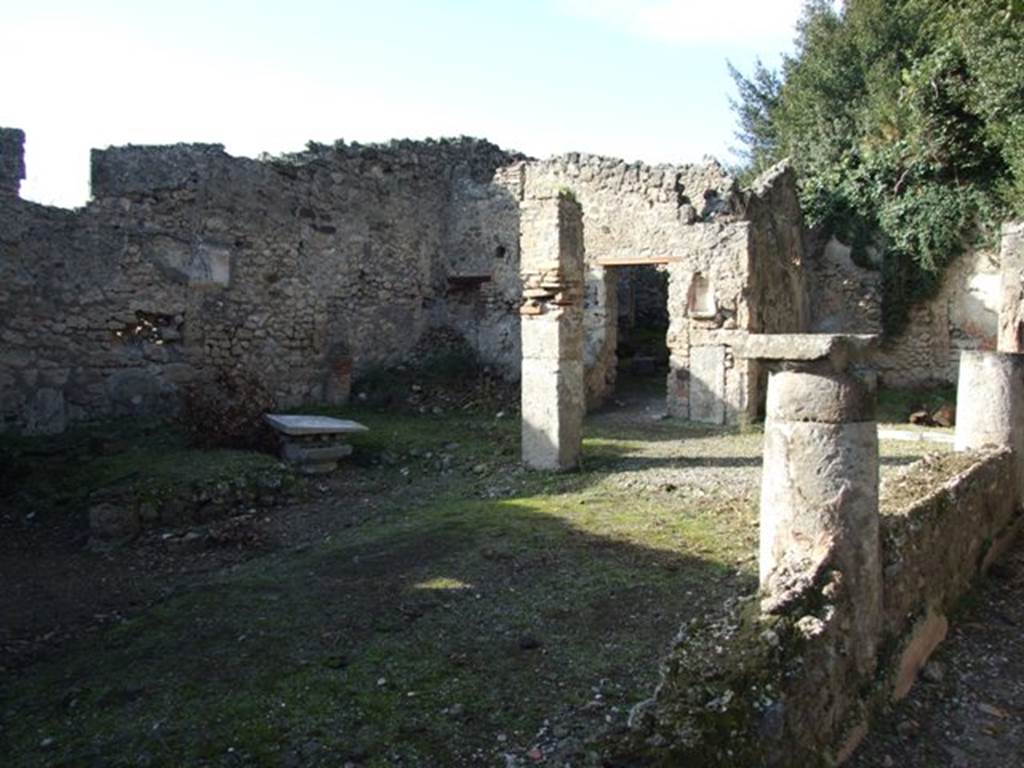
V.2.15 Pompeii. December 2007. Looking north-west across peristyle.
According to NdS, in the middle of the peristyle was the area for the flowers.
Near the west wall was a masonry triclinium which would have been protected by its own cover, perhaps a pergola.
The pergola would have been supported by four columns clad in yellow plaster on which were painted vine leaves and bunches of grapes.
The portico only surrounded the peristyle on its north and east sides.
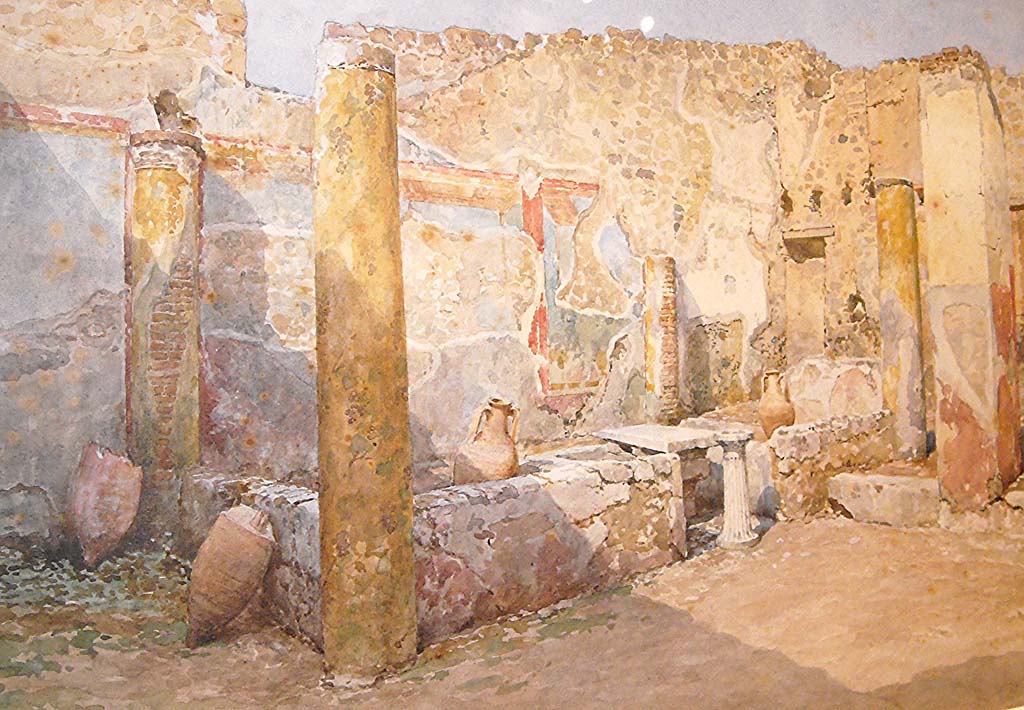
V.2.15 Pompeii. c.1914. Watercolour by Luigi Bazzani. Looking north-west across summer triclinium in peristyle.
Now in Naples Archaeological Museum, inventory number 139442.
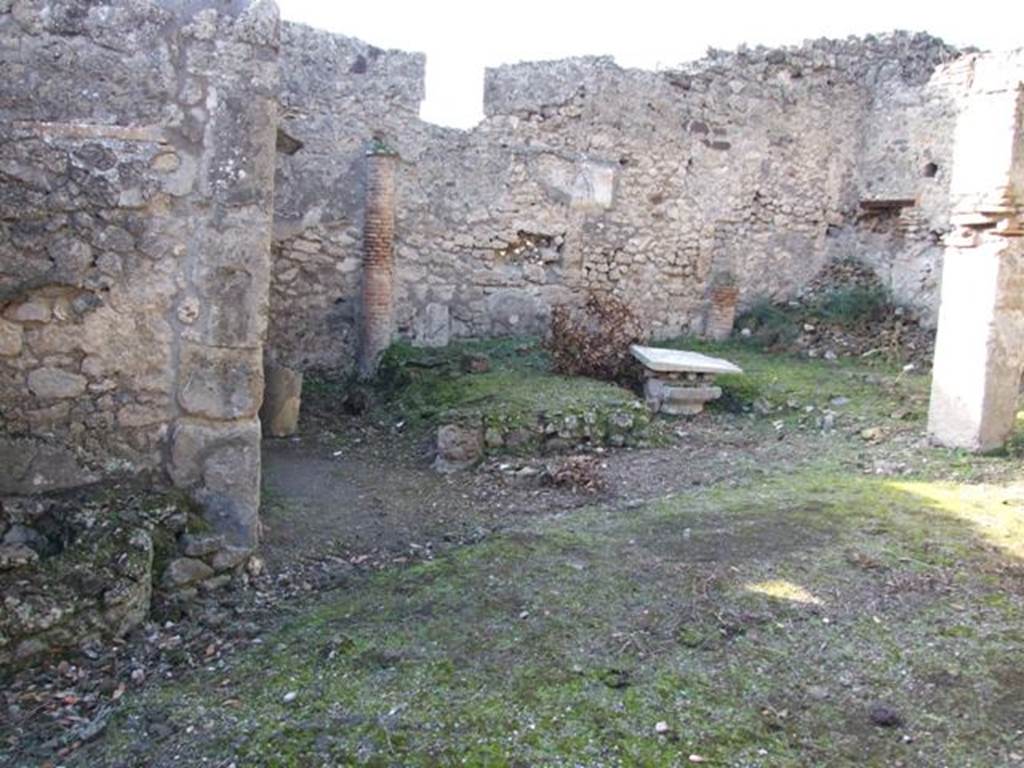
V.2.15 Pompeii. December 2007. Peristyle, looking west at remains of triclinium.
According to Jashemski –
“There was a narrow portico on the east supported by three columns which were joined by a low wall; the wider portico on the north in addition to the corner column was supported by a pillar. Between the corner column and the pillar stood a rectangular marble table mounted on two supports.
On the west, the garden was enclosed by a low wall which was shaped to leave room for the cistern-opening in the south-west corner.
There was a gutter along the outer edge of the garden.
Built against the west wall was a masonry triclinium (l. medius, 4.20m; l. imus and l. summus, 3.30m; a rectangular table between the couches 0.93 x 0.57m).
It was shaded by a pergola supported by two columns in front, two engaged columns at the rear.
The columns were covered in yellow stucco on which vines were painted.
The holes in which the little poles which supported the vines were inserted are still visible.”
See Jashemski, W. F., 1993. The Gardens of Pompeii, Volume II: Appendices. New York: Caratzas. (p.111).
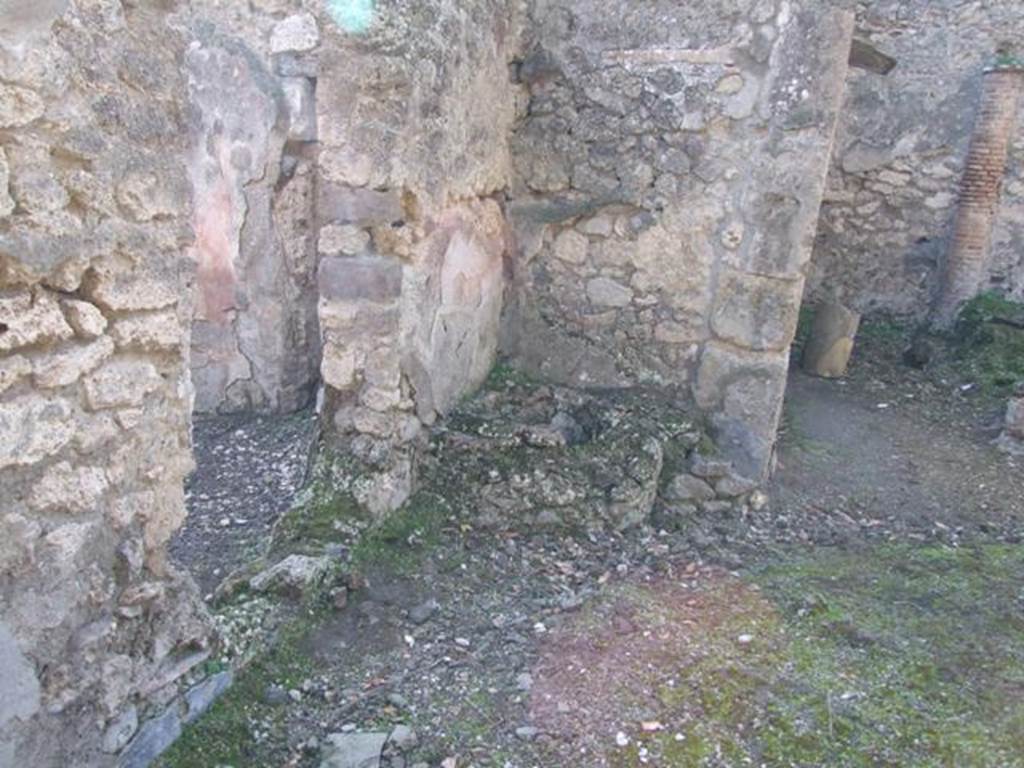
V.2.15 Pompeii. December 2007. Remains of circular stone feature in south-west corner of peristyle.
On the left is the wall with window in north wall of room 4, overlooking peristyle.
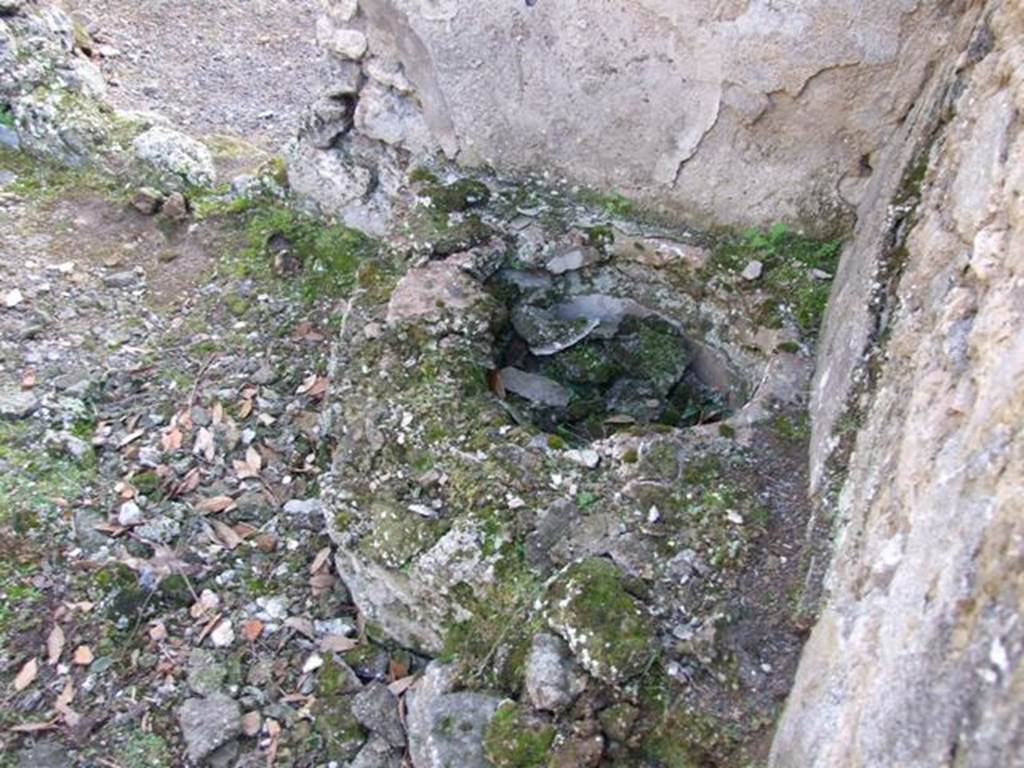
V.2.15 Pompeii. December 2007. Circular stone feature on south side of peristyle between rooms 4 and 5.
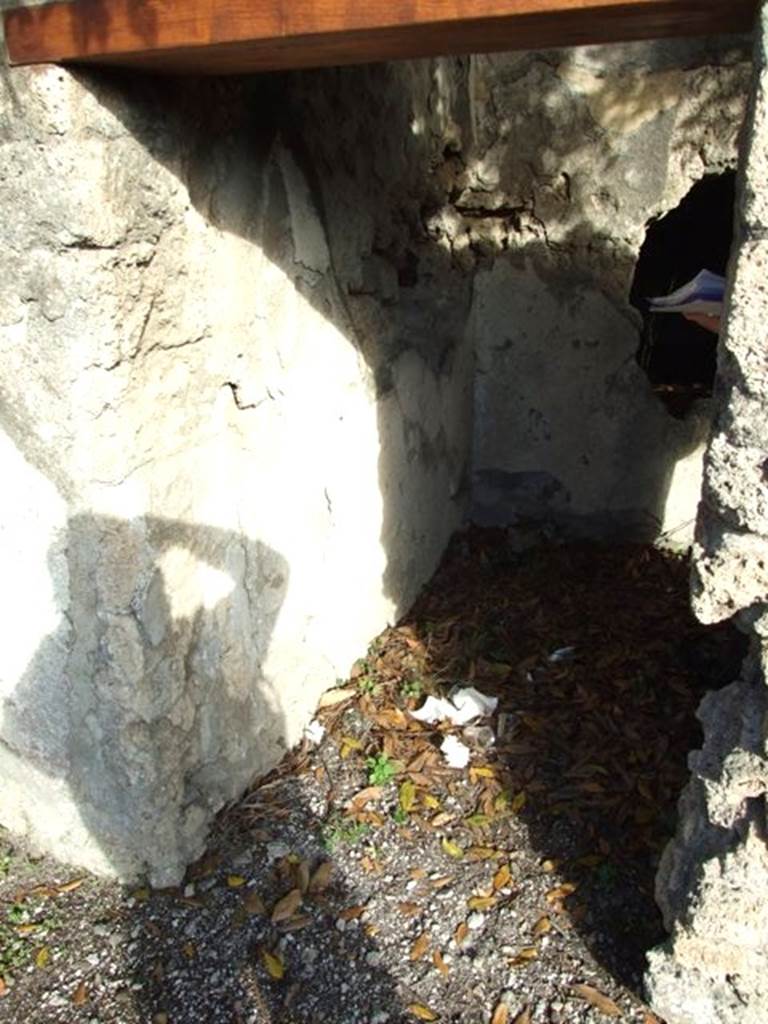
V.2.15 Pompeii. December 2007. Doorway to room 6, looking east.
According to NdS, on the east side of the peristyle was the doorway to a cubiculum.
Found in large red letters on the east wall, 0.45m high, was the word RODINVS.
Below, was a roughly painted life-sized red boar.
See Notizie degli Scavi di Antichità, 1896, (p.439)
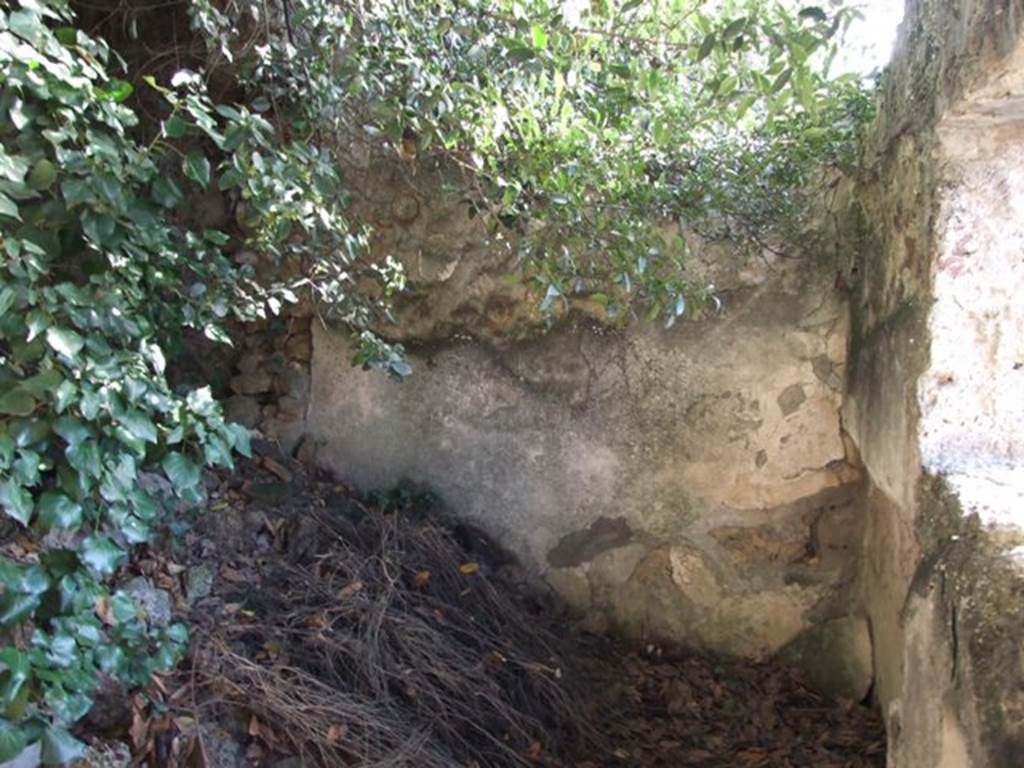
V.2.15 Pompeii. December 2007. Room 6, cubiculum, looking south.
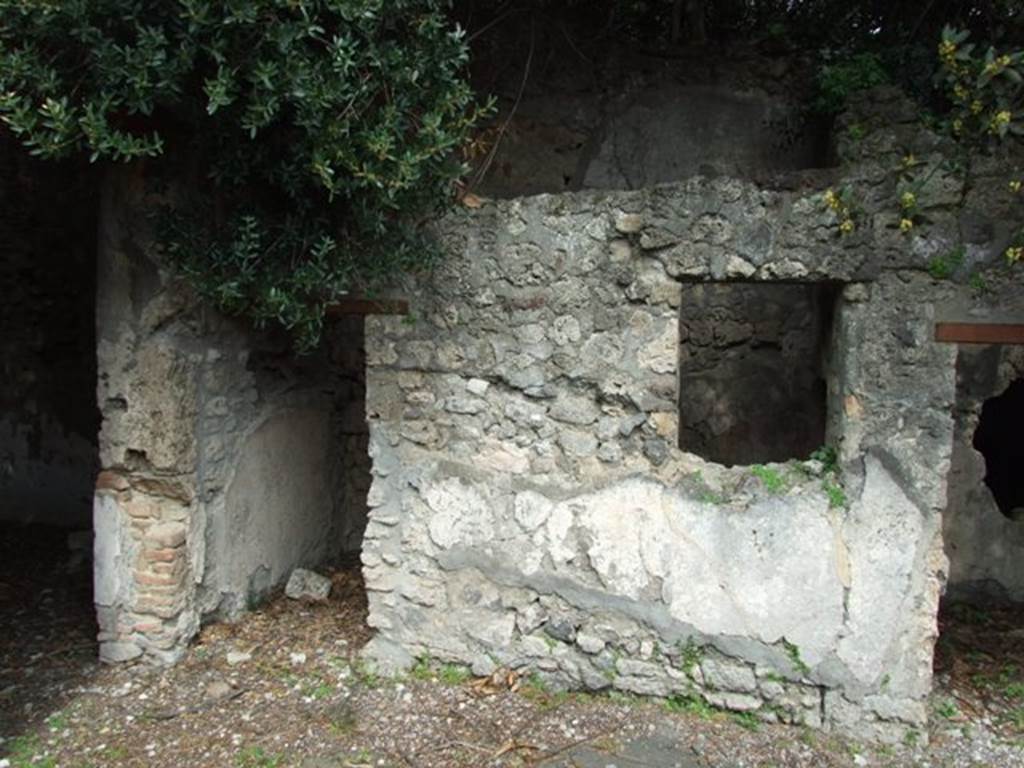
V.2.15 Pompeii. March 2009. Doorways to room 7a, room 7 and room 6, three cubicula on east side of peristyle.
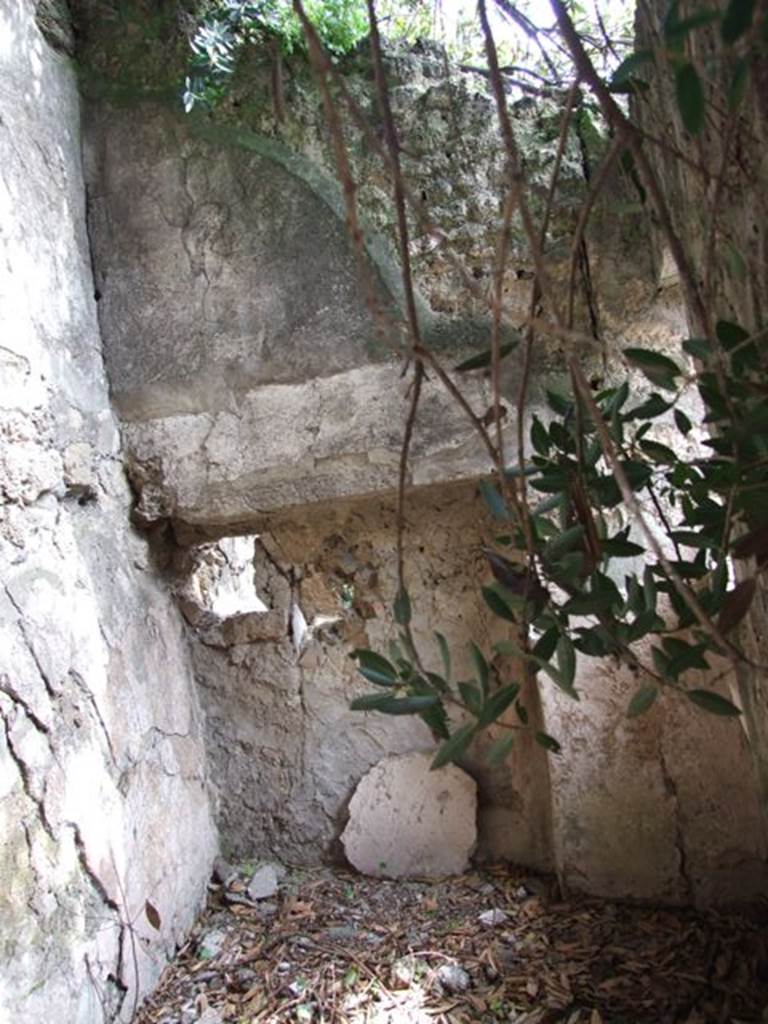
V.2.15 Pompeii. March 2009. Room 7, cubiculum, looking south.
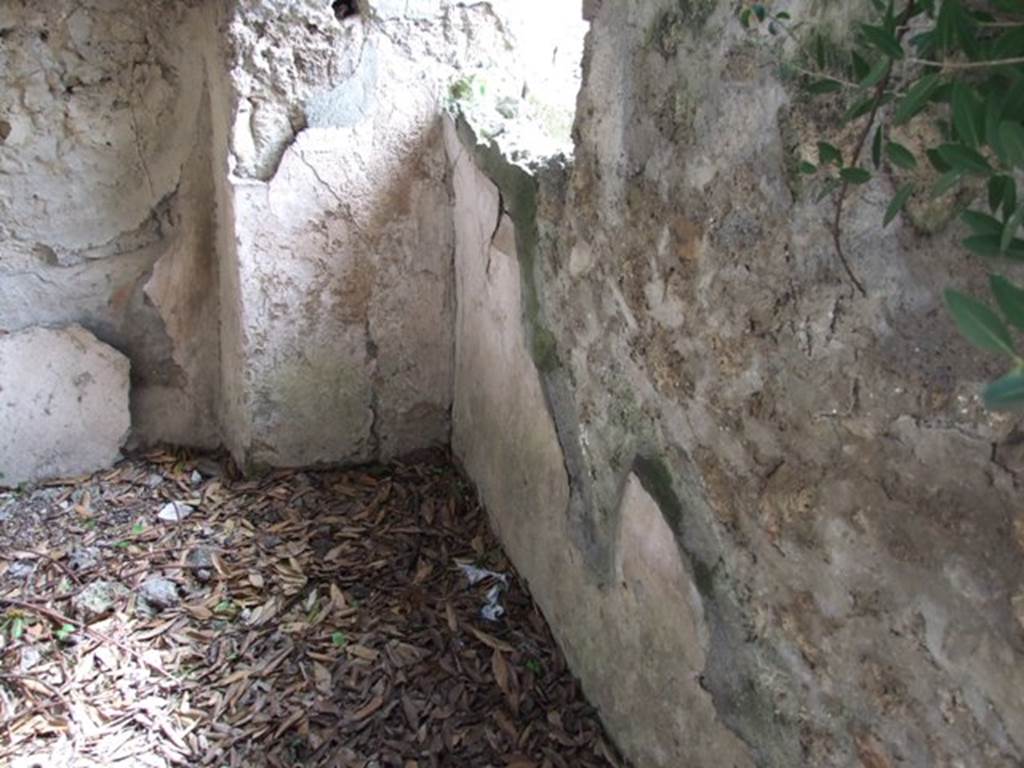
V.2.15 Pompeii. March 2009. Room 7, south-west corner.
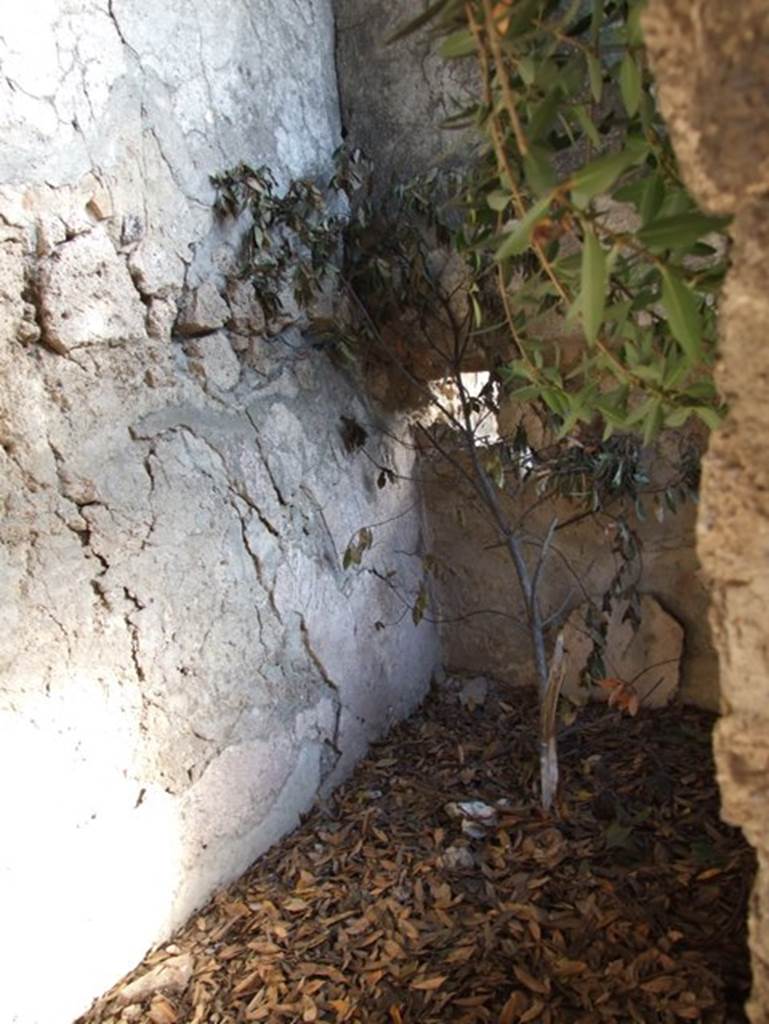
V.2.15 Pompeii. December 2007. Room 7, cubiculum, looking towards south-east corner.
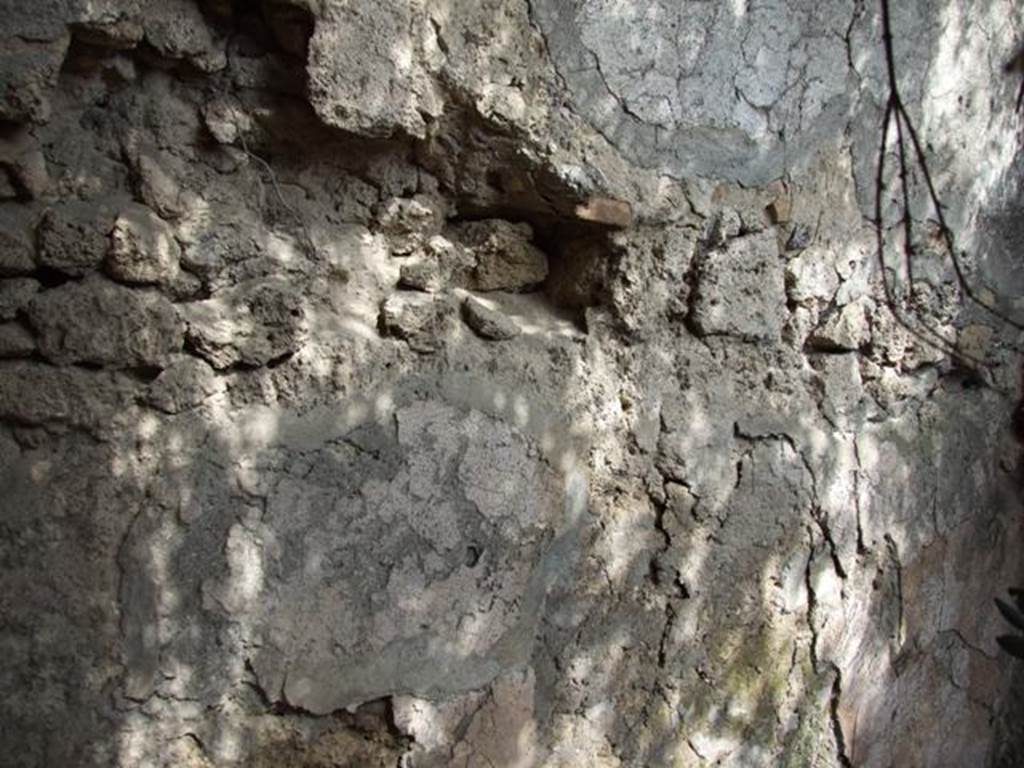
V.2.15 Pompeii. March 2009. Room 7, east wall.
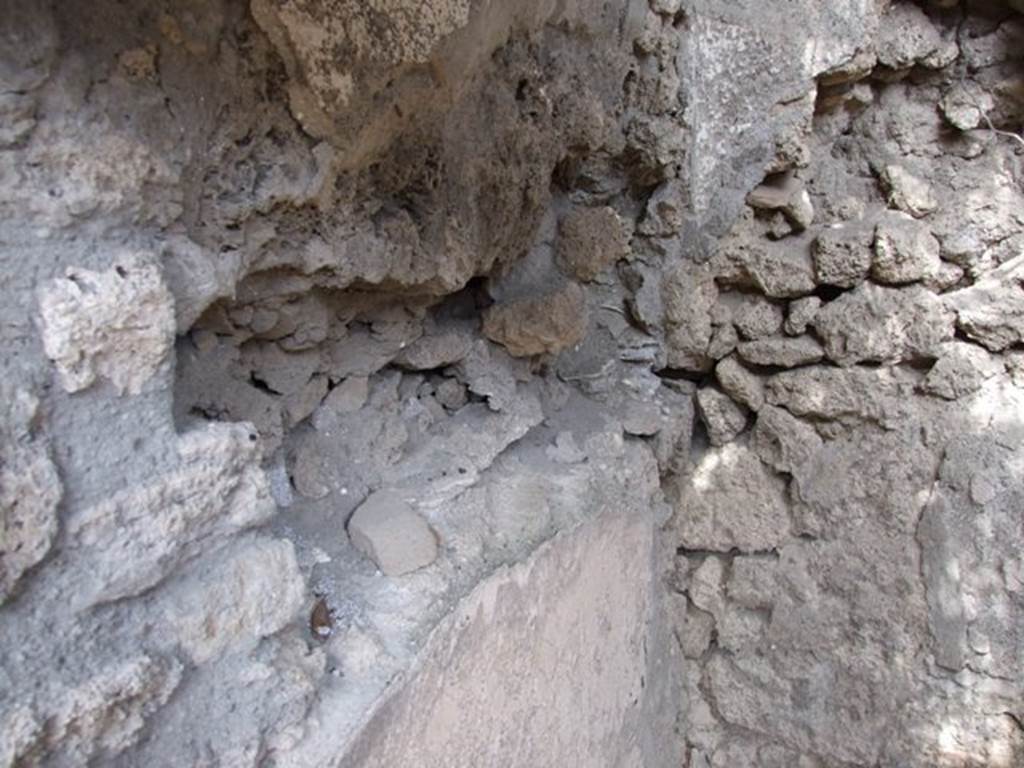
V.2.15 Pompeii. March 2009. Room 7, north-east corner.
Giove 1 Giove 2 Giove 3 Giove 4
Plan