HGW22 Pompeii. Herculaneum Gate West Side. Tomb of Naevoleia Tyche and C. Munatius Faustus.
Tomb of C. Munatius Atimetus. Tomb of Salvius? (Eschebach West 22, Kockel Süd 22).
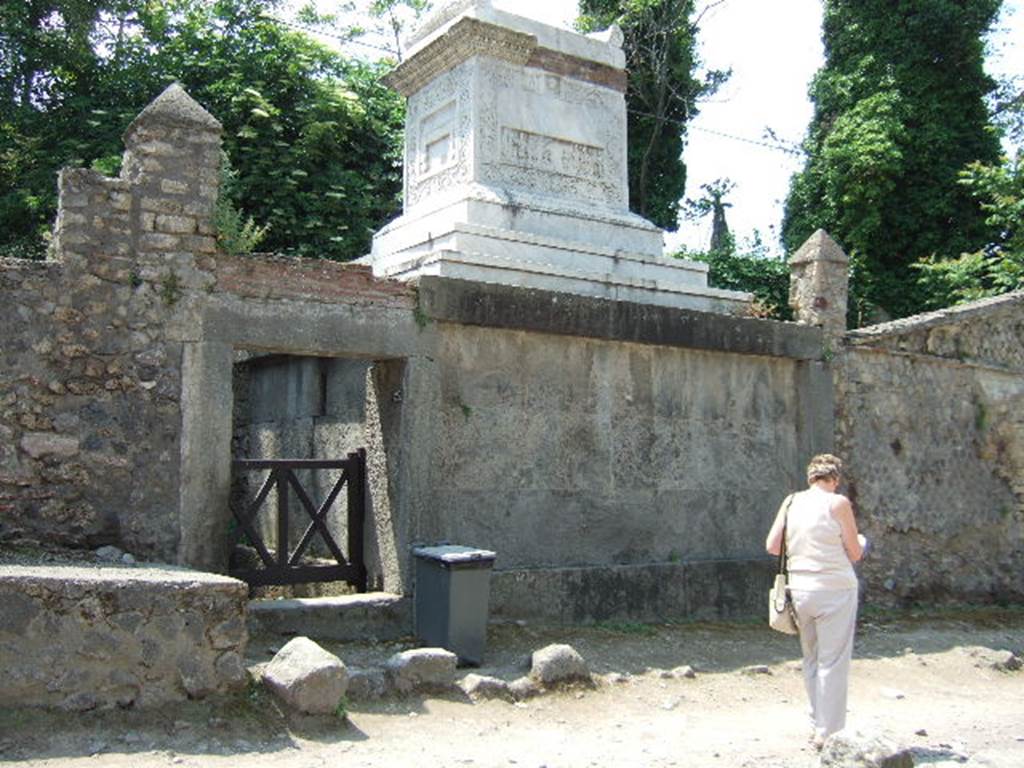
HGW22 Pompeii. May 2006. Front of tomb, looking west.
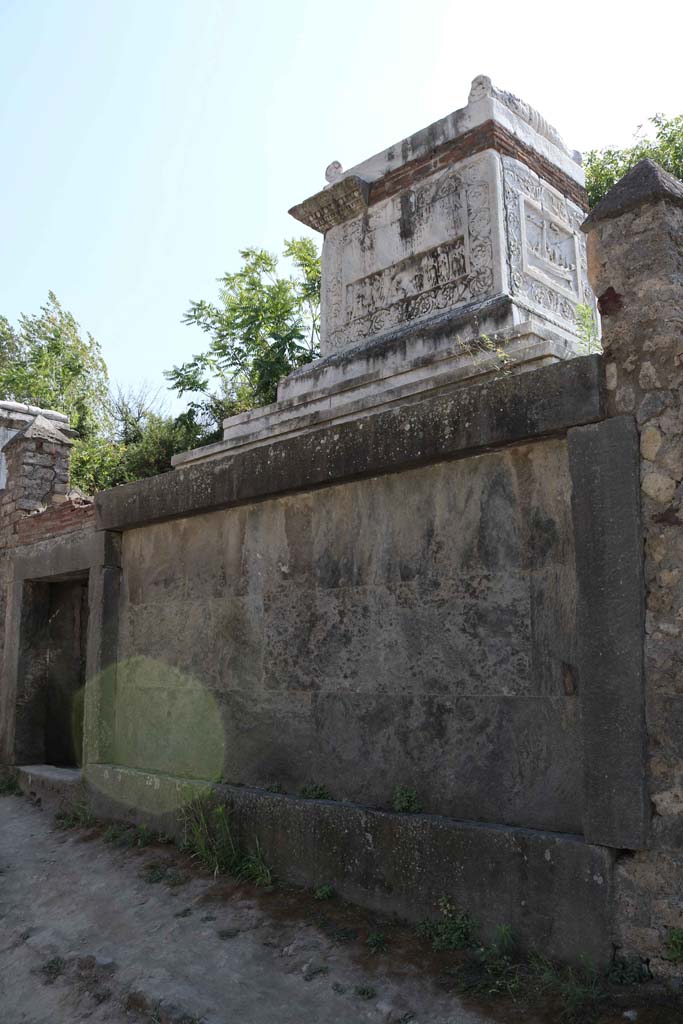
HGW22 Pompeii.
September 2019. Front of tomb.
Photo courtesy of Aude Durand.
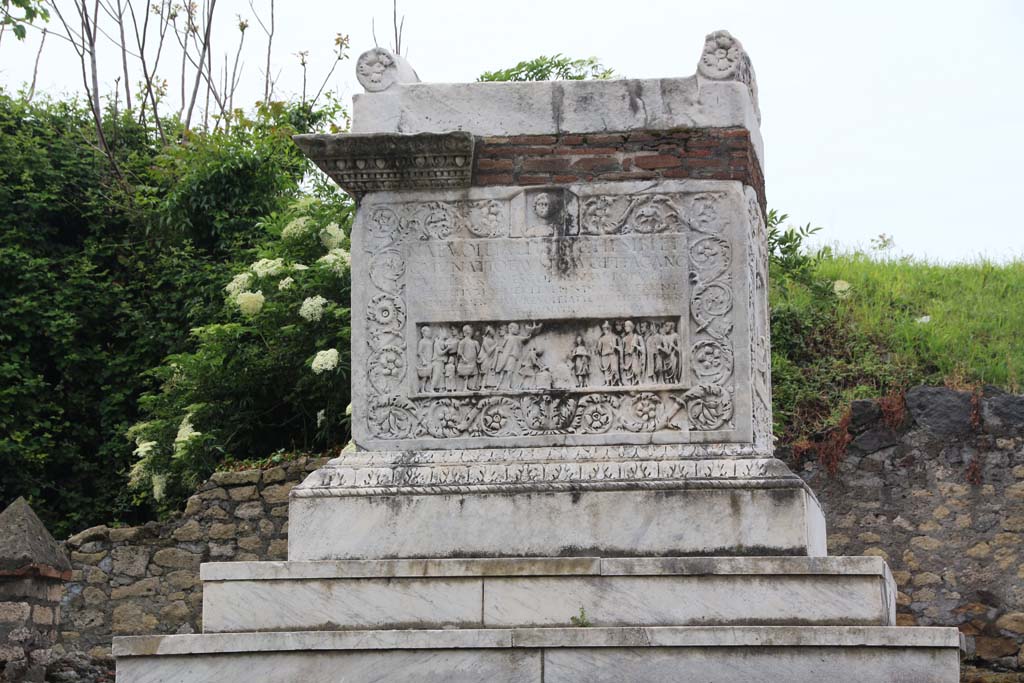
HGW22 Pompeii. April 2014. Front of
tomb, looking west. Photo
courtesy of Klaus Heese.
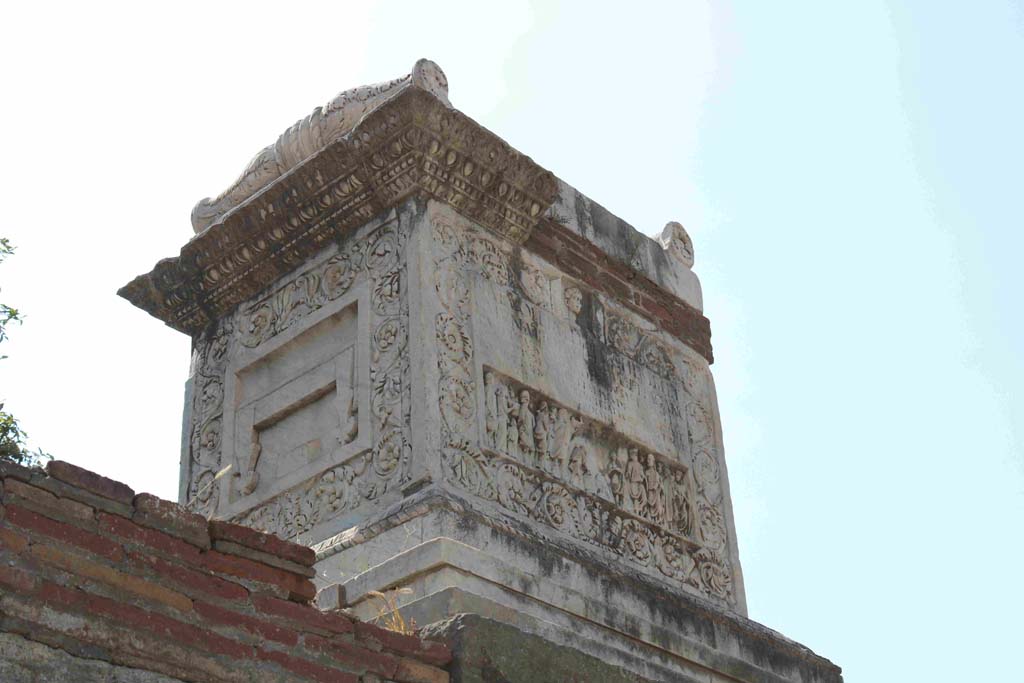
HGW22 Pompeii.
September 2019. Looking towards south, and east (front), side of tomb. Photo courtesy of Aude Durand.
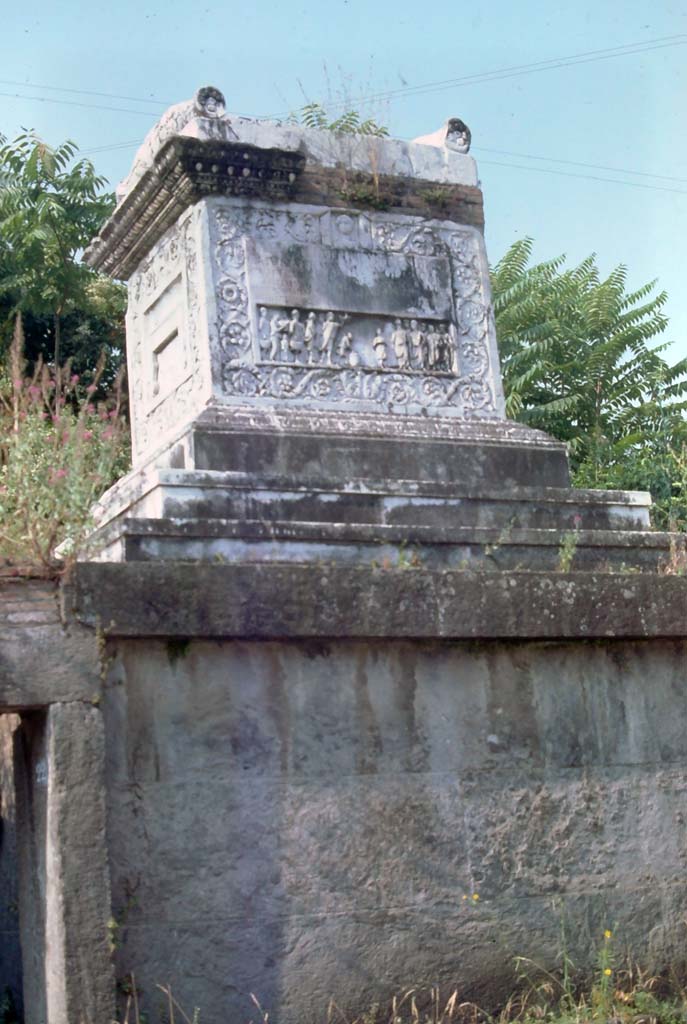
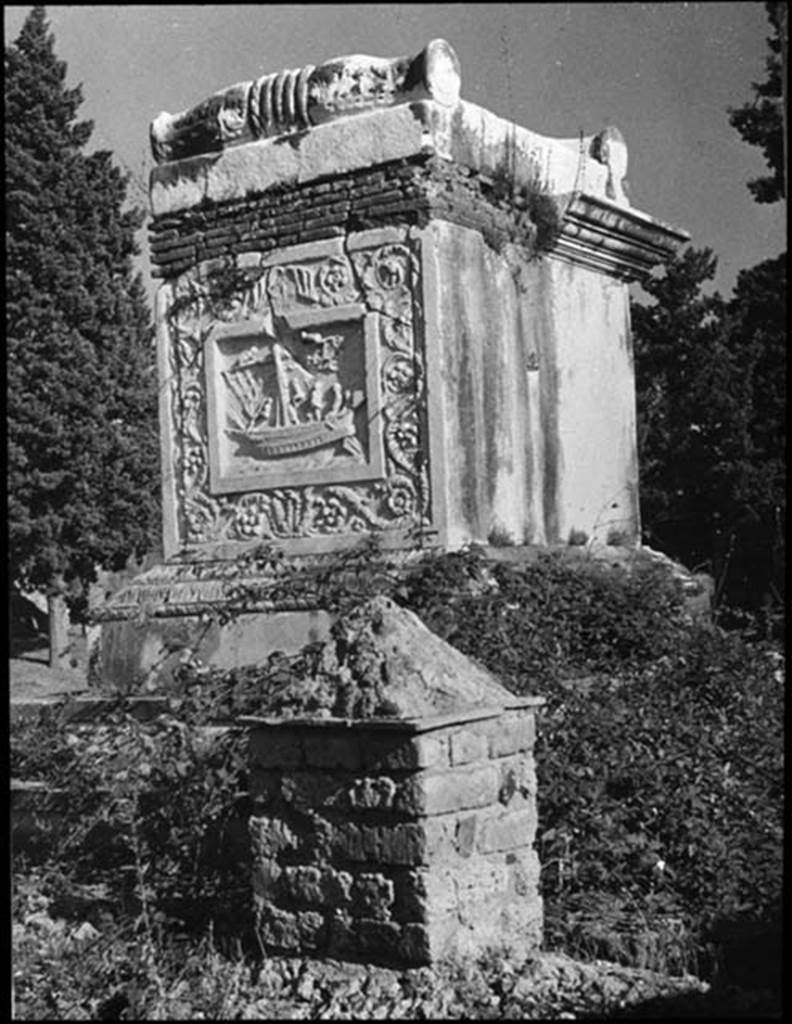
HGW22 Pompeii. August 1976. Looking west towards east (front) of
tomb on Via dei Sepolcri.
Photo courtesy of Rick Bauer, from Dr George Fay’s slides
collection.
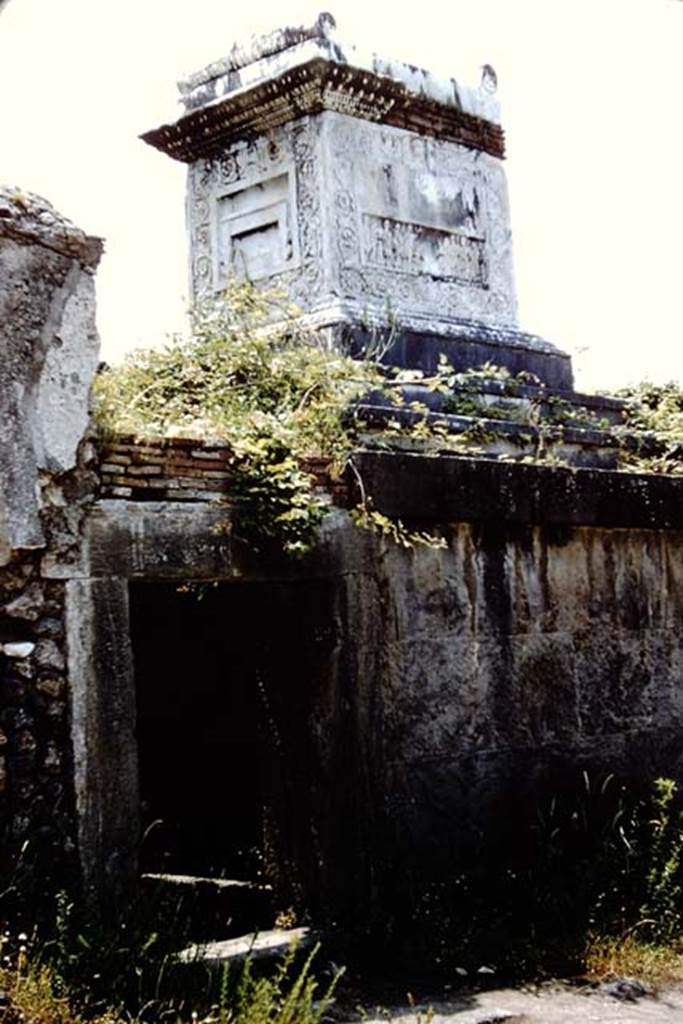
HGW22 Pompeii. 1961. Front, and south-east side, of tomb. Photo by Stanley A. Jashemski.
Source: The Wilhelmina and Stanley A. Jashemski archive in the University of Maryland Library, Special Collections (See collection page) and made available under the Creative Commons Attribution-Non Commercial License v.4. See Licence and use details.
J61f0626
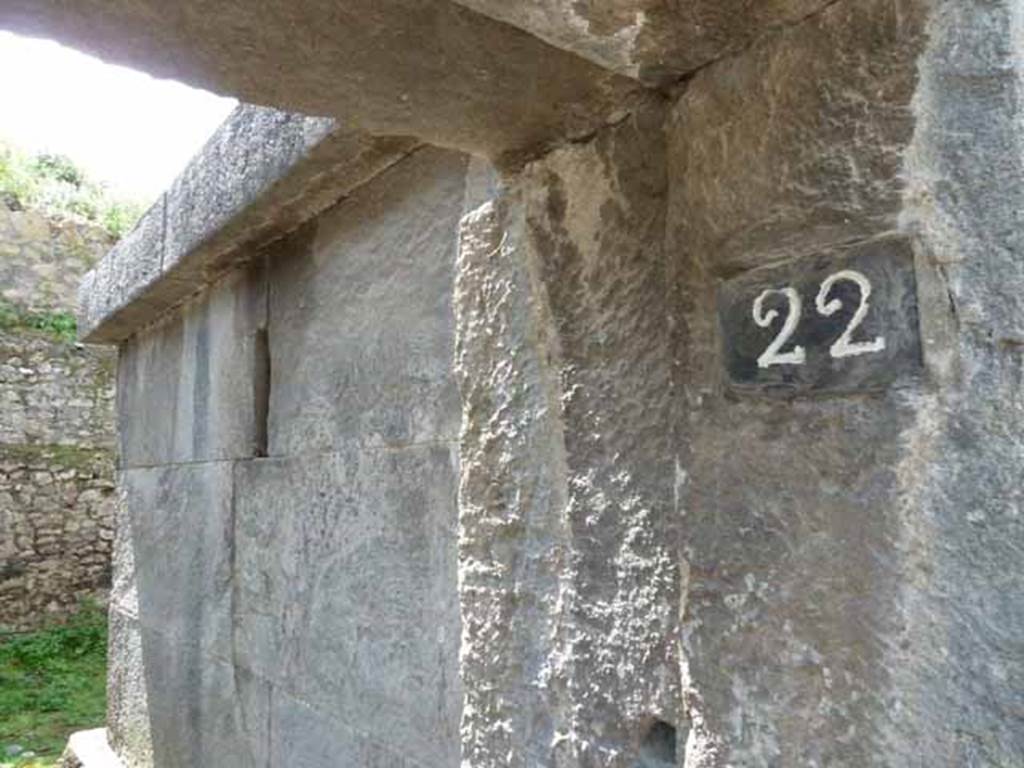
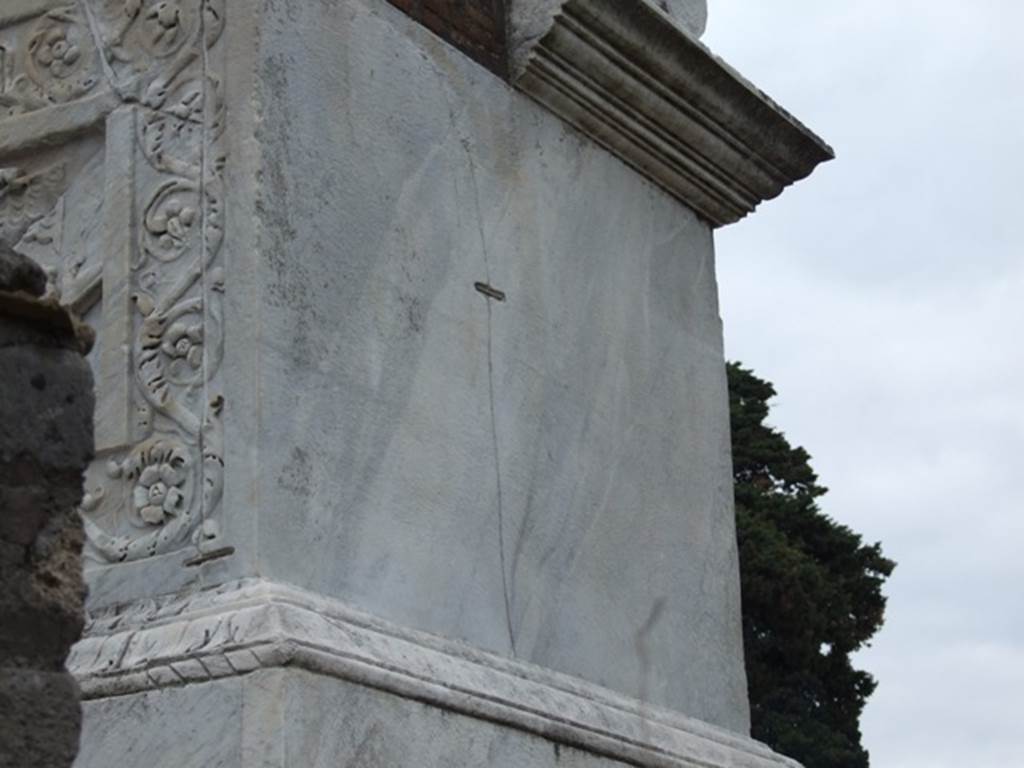
HGW22 Pompeii. May 2010. South side of base of tomb.
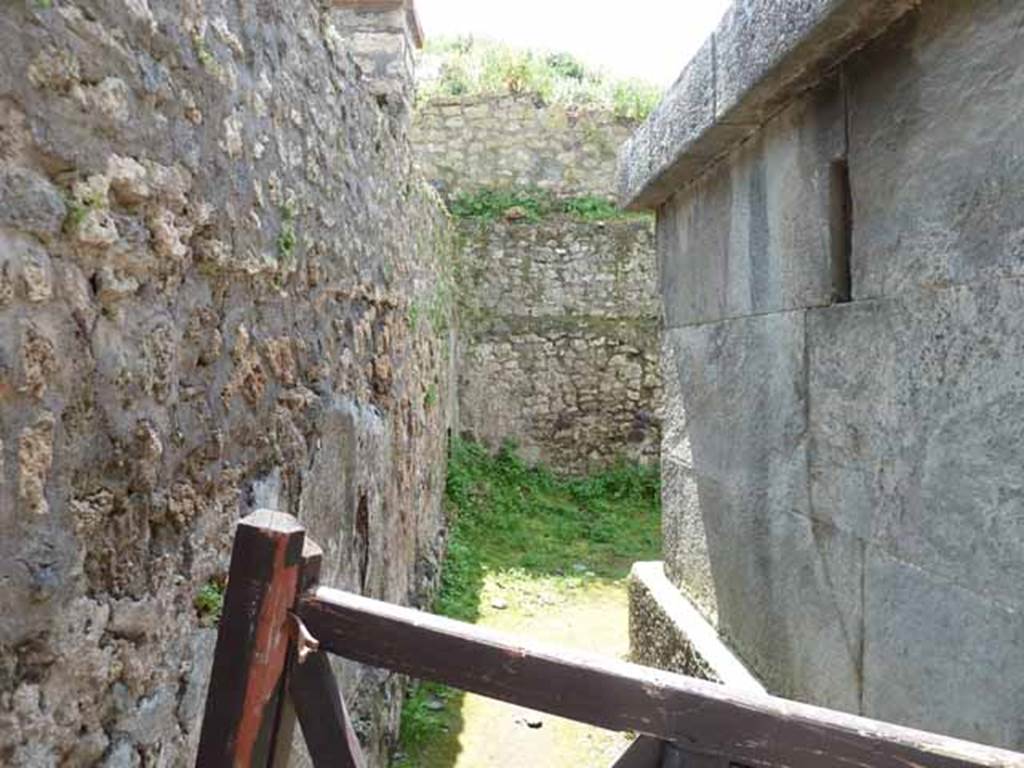
HGW22 Pompeii. May 2010. South side, looking west from front of tomb.
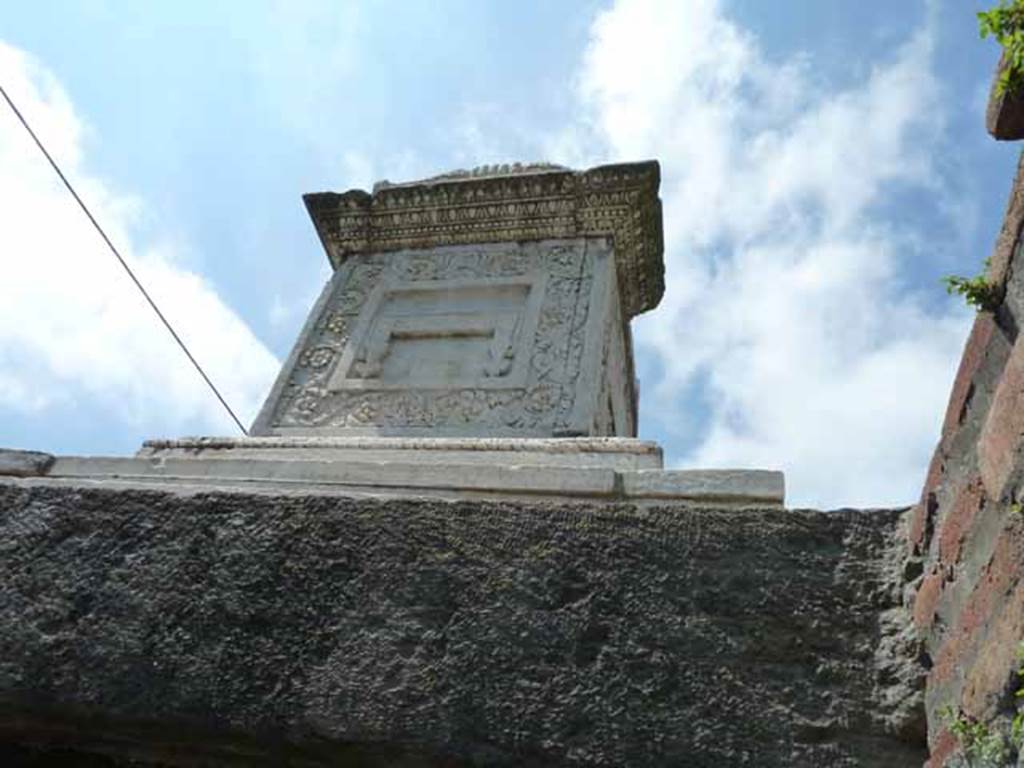
HGW22 Pompeii. May 2010. Upper south side.
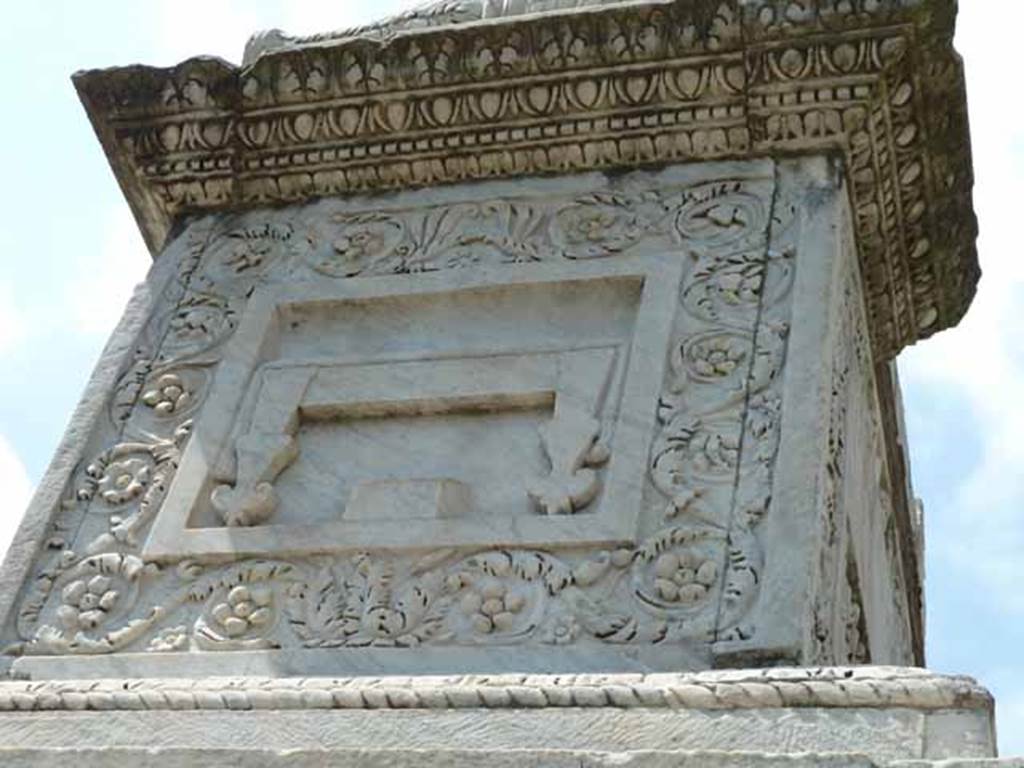
HGW22 Pompeii. May 2010. Marble carving with a bisellium on upper south side.
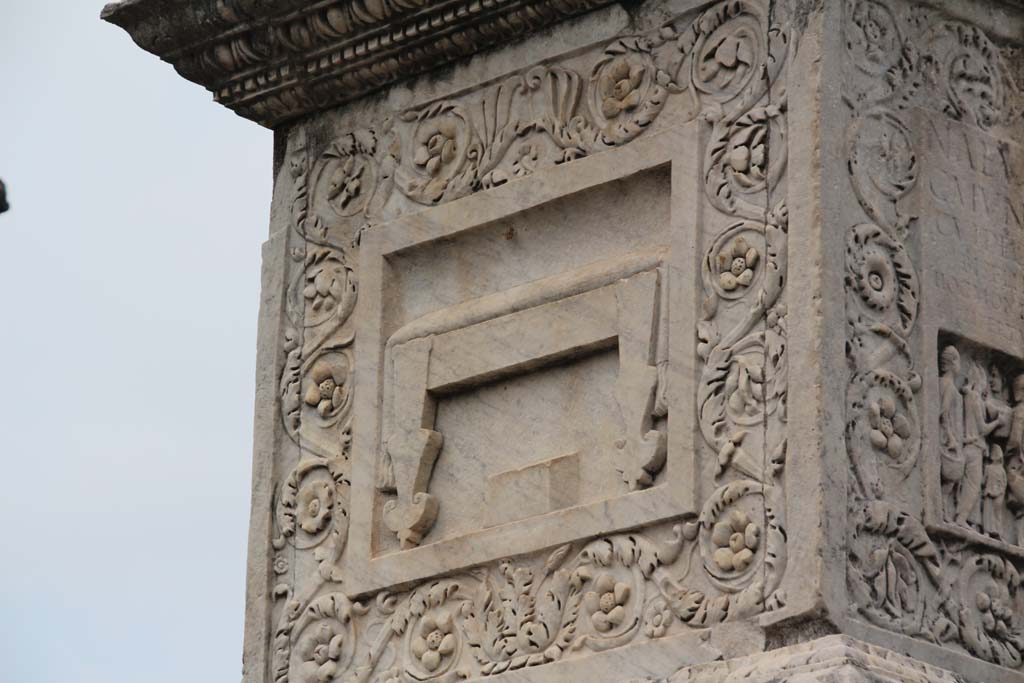
HGW22 Pompeii. April 2014. Marble
carving with a bisellium on upper south side. Photo courtesy of Klaus Heese.
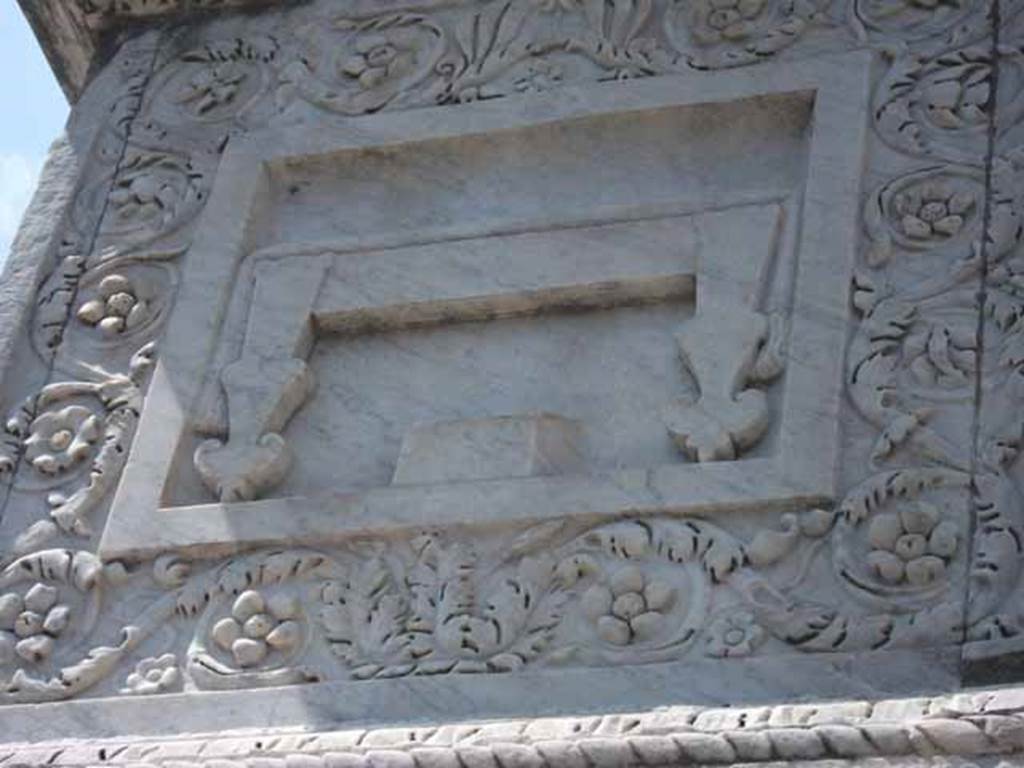
HGW22 Pompeii. May 2010. Detail of bisellium with footstool on upper south side.
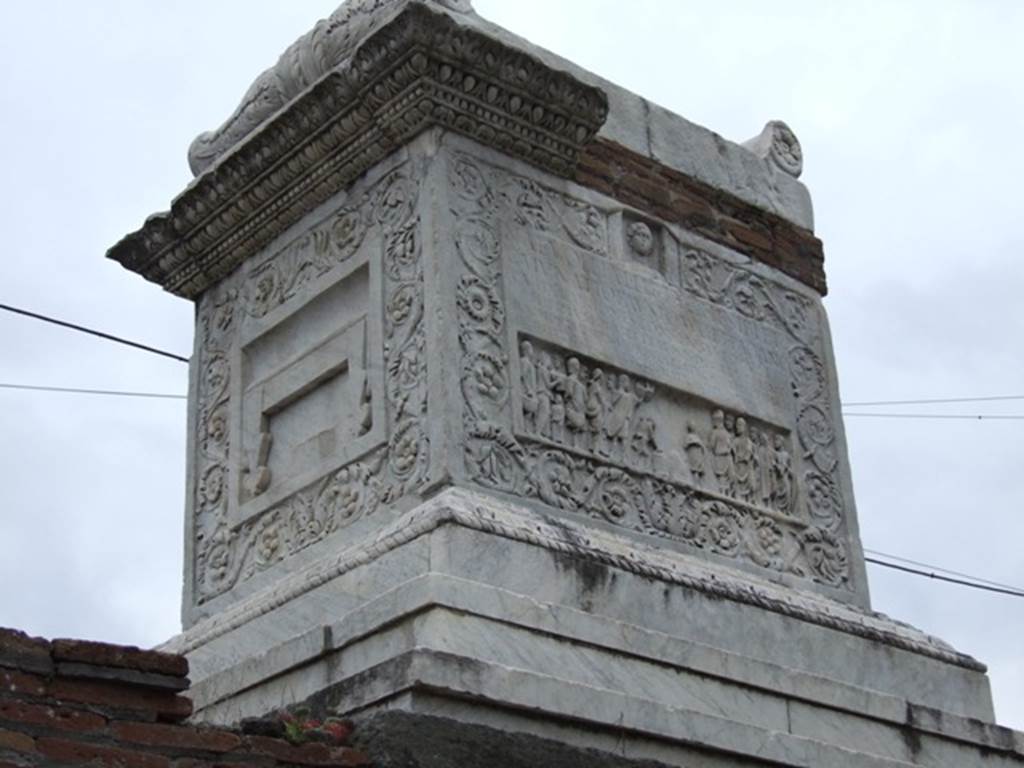
HGW22 Pompeii. December 2007. South and east upper sides.
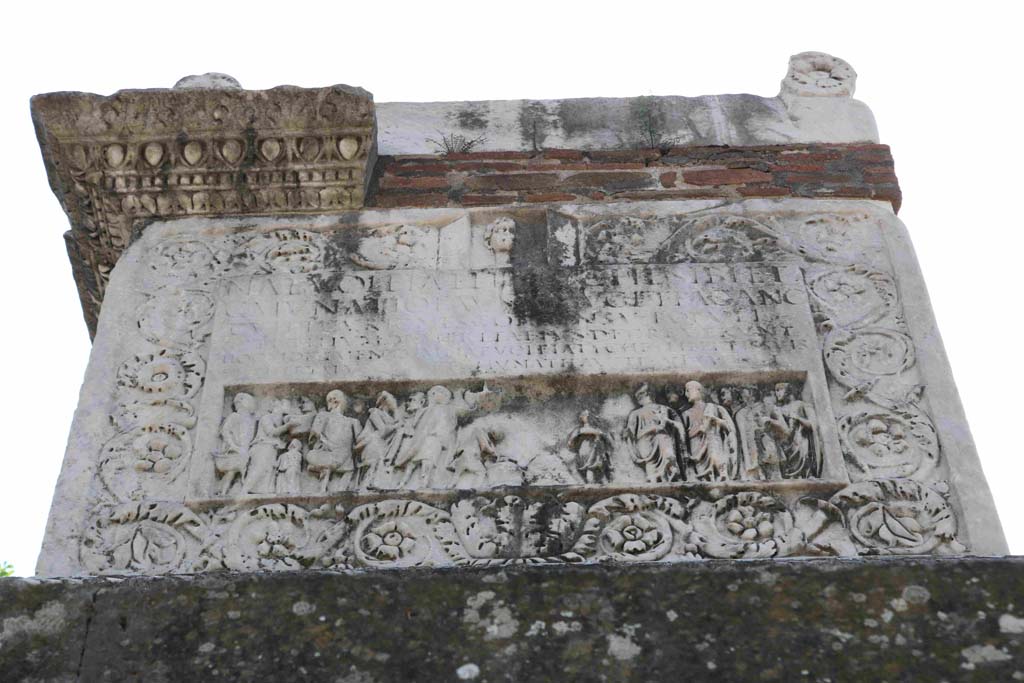
HGW22 Pompeii. September 2019. Front of tomb, looking west. Photo
courtesy of Aude Durand.
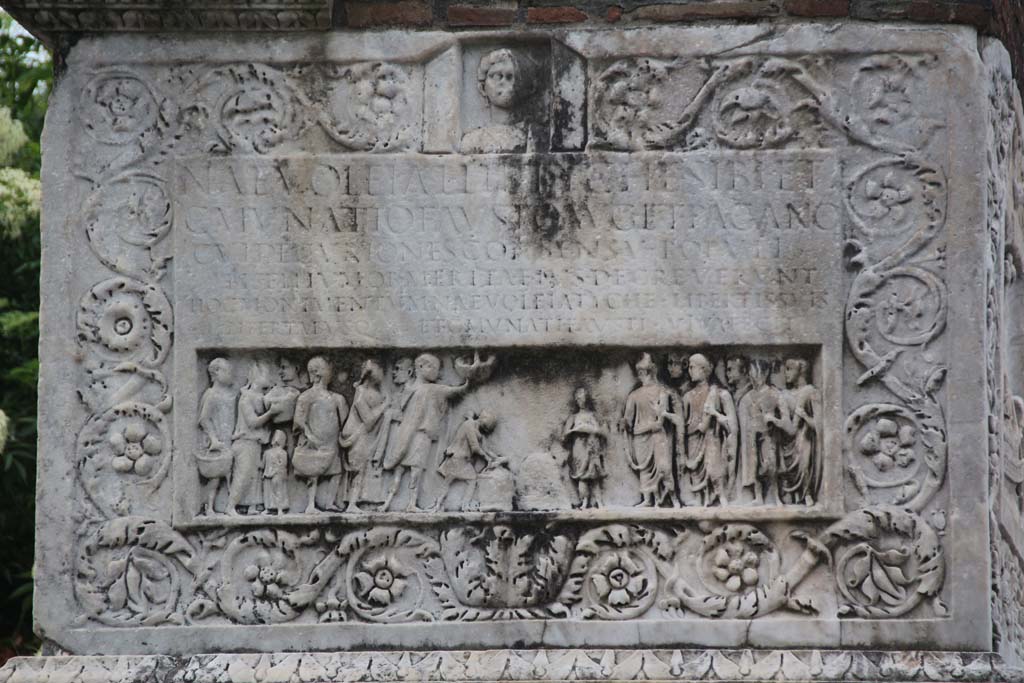
HGW22 Pompeii. April 2014. East upper
side. Photo courtesy of Klaus Heese.
![HGW22 Pompeii. December 2007. East side with carving of marble floral pattern, people and inscription.
On the panel above the people is the Latin inscription:
NAEVOLEIA . L LIB TYCHE SIBI ET
C. MVNATIO FAVSTO AVG ET PAGANO
CVI DECVRIONES CONSENSV POPVLI
BISELLIVM OB MERITA EIVS DECREVERVNT
HOC MONIMENTVM NAEVOLEIA TYCHE LIBERTIS SVIS
LIBERTABVSQ ET C. MVNATI FAVSTI VIVA FECIT.
According to Epigraphik-Datenbank Clauss/Slaby (See www.manfredclauss.de) this reads
Naevoleia L(uci) lib(erta) Tyche sibi et
C(aio) Munatio Fausto Aug(ustali) et pagano
cui decuriones consensu populi
bisellium ob merita eius decreverunt
hoc monimentum Naevoleia Tyche libertis suis
libertabusq(ue) et C(ai) Munati Fausti viva fecit [CIL X 1030]
Mau translated this as:
Naevoleia Tyche, freedwoman of Lucius Naevoleius, for herself and for Gaius Munatius Faustus, member of the Brotherhood of Augustus and suburban official, to whom on account of his distinguished services the city council, with the approval of the people, granted a seat of double width.
This monument Naevoleia Tyche built in her lifetime also for the freedmen and freedwomen of herself and of Gaius Munatius Faustus.
See Mau, A., 1907, translated by Kelsey, F. W., Pompeii: Its Life and Art. New York: Macmillan. (p. 422-3).](tombs%20hgw22_files/image026.jpg)
HGW22 Pompeii. December 2007. East side with carving of marble floral pattern, people and inscription.
On the panel above the people is the Latin inscription:
NAEVOLEIA L LIB TYCHE SIBI ET
C. MVNATIO FAVSTO AVG ET PAGANO
CVI DECVRIONES CONSENSV POPVLI
BISELLIVM OB MERITA EIVS DECREVERVNT
HOC MONIMENTVM NAEVOLEIA TYCHE LIBERTIS SVIS
LIBERTABVSQ ET C. MVNATI FAVSTI VIVA FECIT.
According to Epigraphik-Datenbank Clauss/Slaby (See www.manfredclauss.de) this reads
Naevoleia L(uci)
lib(erta) Tyche sibi et
C(aio) Munatio
Fausto Aug(ustali) et pagano
cui decuriones
consensu populi
bisellium ob
merita eius decreverunt
hoc monimentum
Naevoleia Tyche libertis suis
libertabusq(ue)
et C(ai) Munati Fausti viva fecit
[CIL X 1030]
Mau translated this as:
Naevoleia Tyche, freedwoman of Lucius Naevoleius, for herself and for Gaius Munatius Faustus, member of the Brotherhood of Augustus and suburban official, to whom on account of his distinguished services the city council, with the approval of the people, granted a seat of double width.
This monument Naevoleia Tyche built in her lifetime also for the freedmen and freedwomen of herself and of Gaius Munatius Faustus.
See Mau, A., 1907, translated by Kelsey, F. W., Pompeii: Its Life and Art. New York: Macmillan. (p. 422-3).
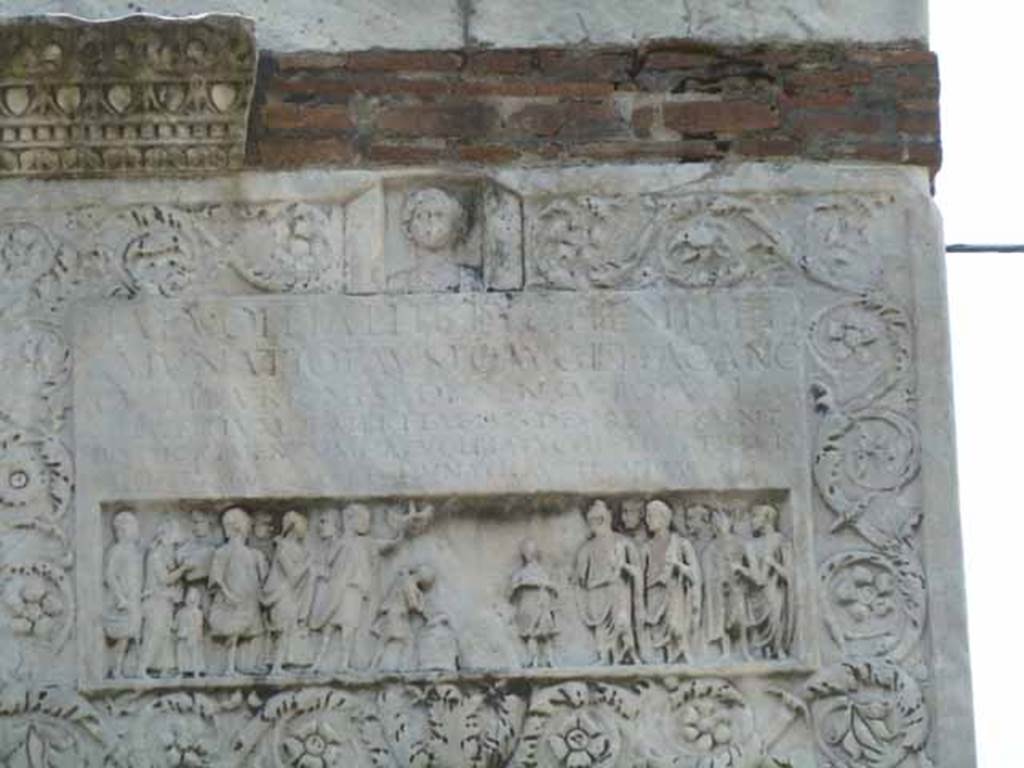
HGW22 Pompeii. May 2010. Detail from upper east side.
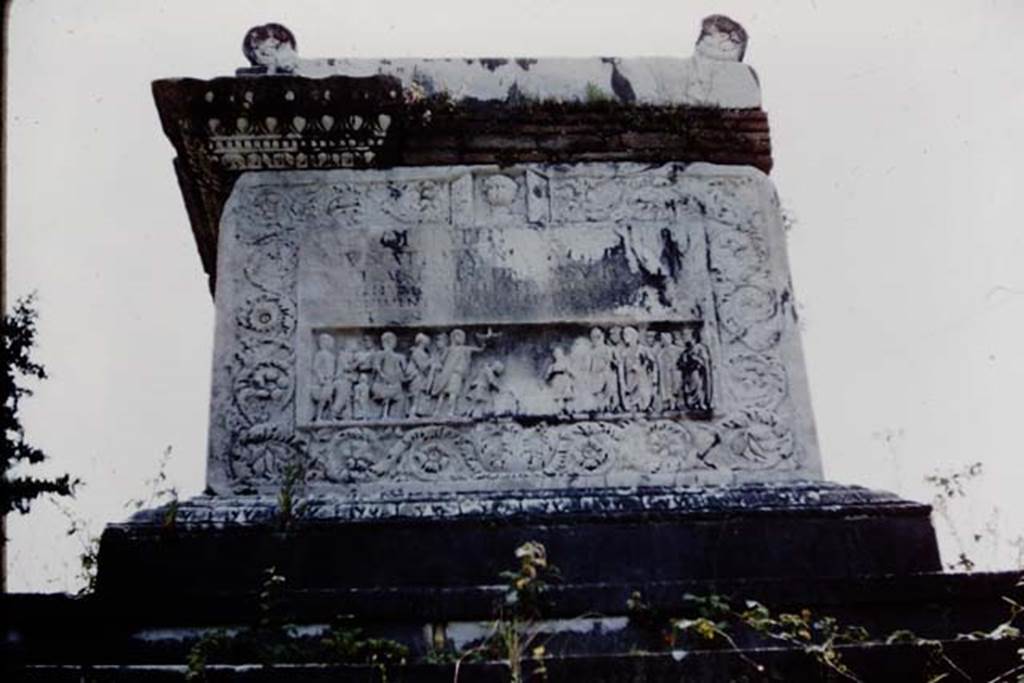
HGW22 Pompeii. 1961. Upper east side. Photo by Stanley A. Jashemski.
Source: The Wilhelmina and Stanley A. Jashemski archive in the University of Maryland Library, Special Collections (See collection page) and made available under the Creative Commons Attribution-Non Commercial License v.4. See Licence and use details.
J61f0627
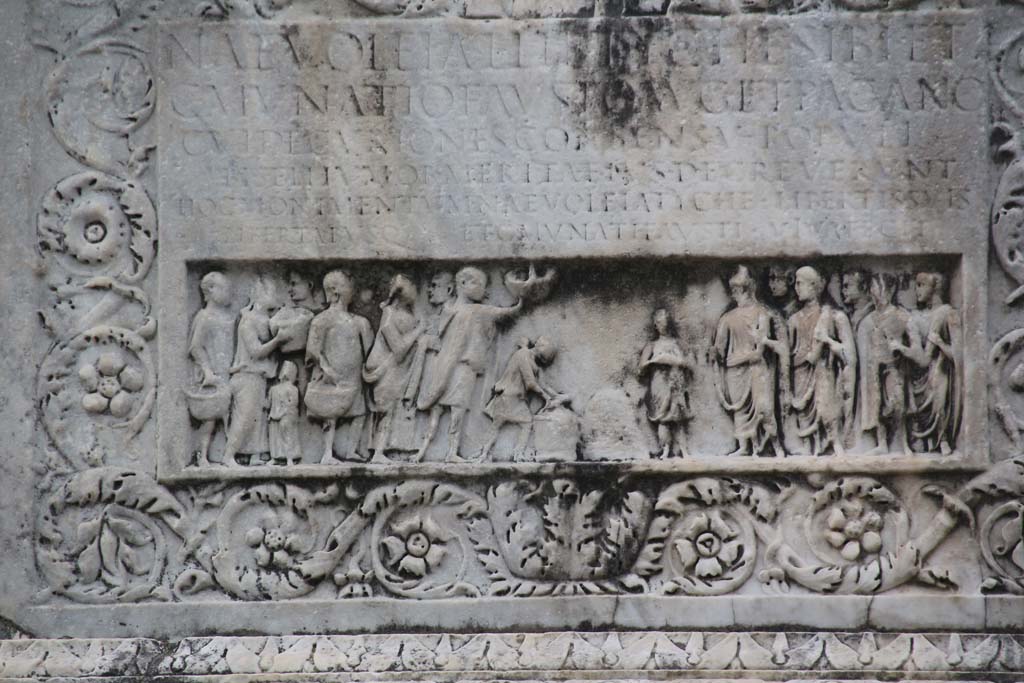
HGW22 Pompeii. April 2014. Detail
from upper east side. Photo courtesy of Klaus Heese.
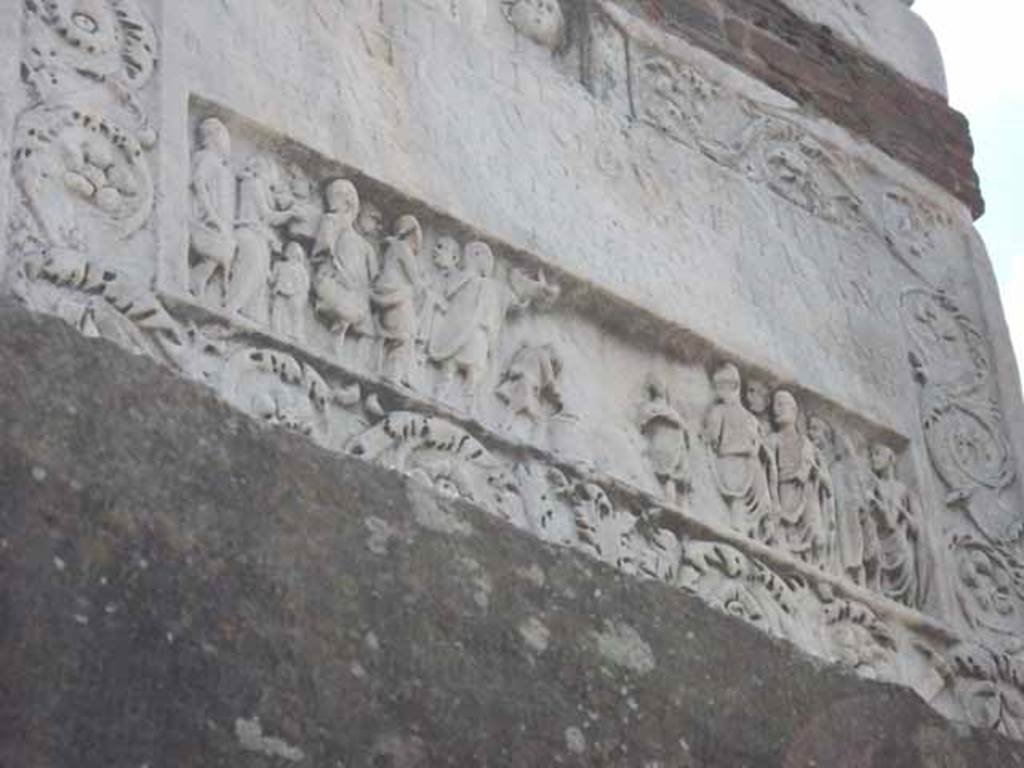
HGW22 Pompeii. May 2010. Detail from upper east side.
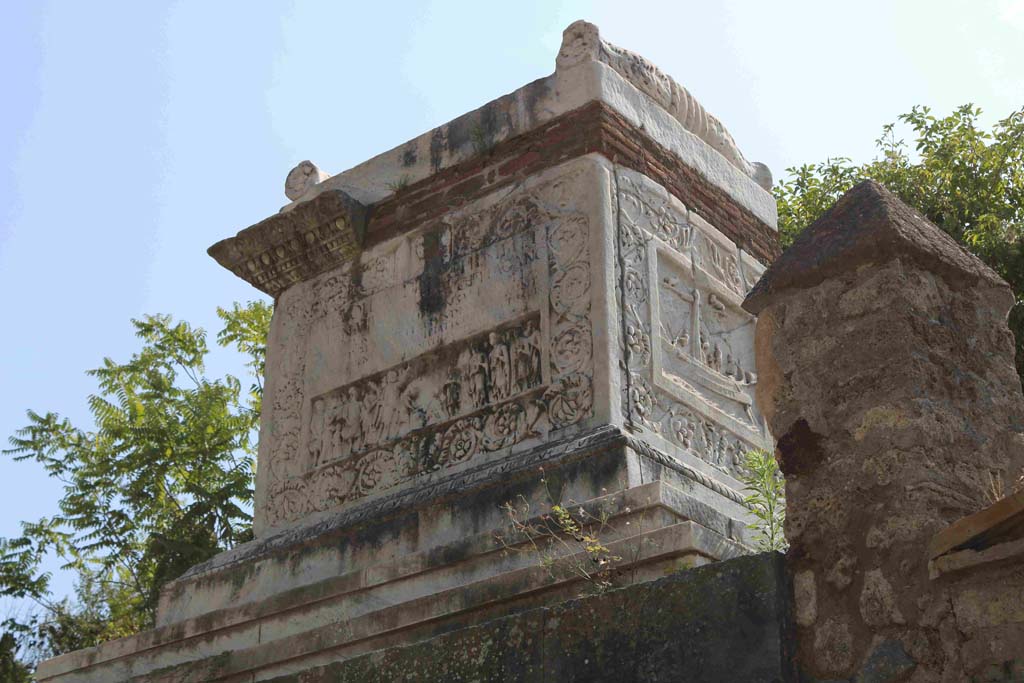
HGW22 Pompeii. September 2019.
Looking towards upper east (front) and north side of tomb. Photo courtesy of Aude Durand.
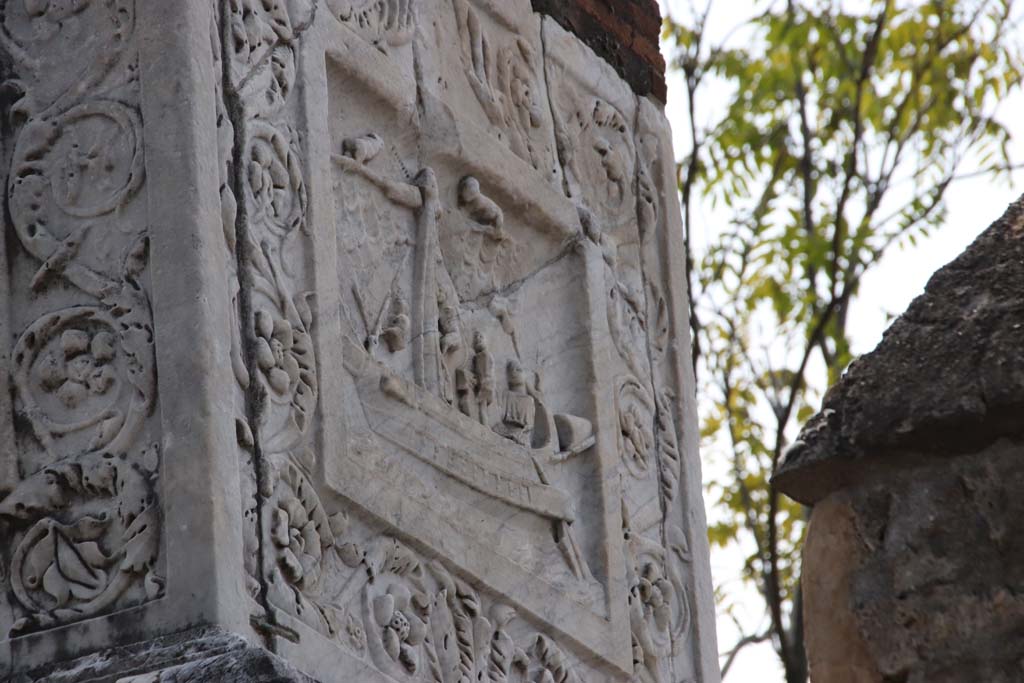
HGW22 Pompeii. September 2021. Upper north side with ship relief. Photo courtesy of Klaus Heese.
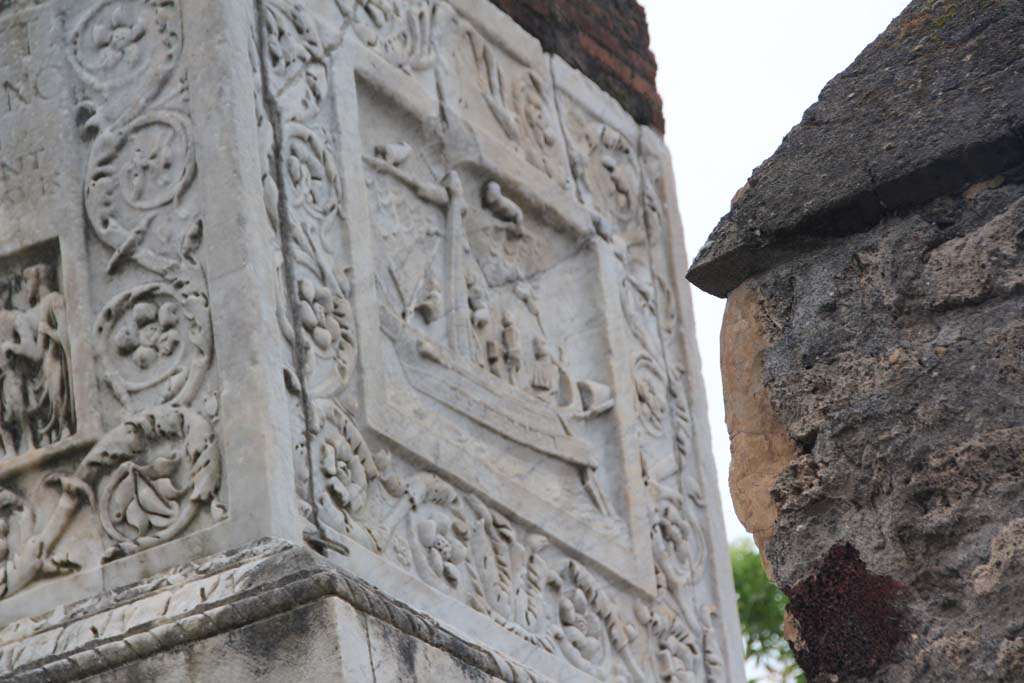
HGW22 Pompeii. April 2014. Upper north side with ship relief. Photo courtesy of Klaus Heese.
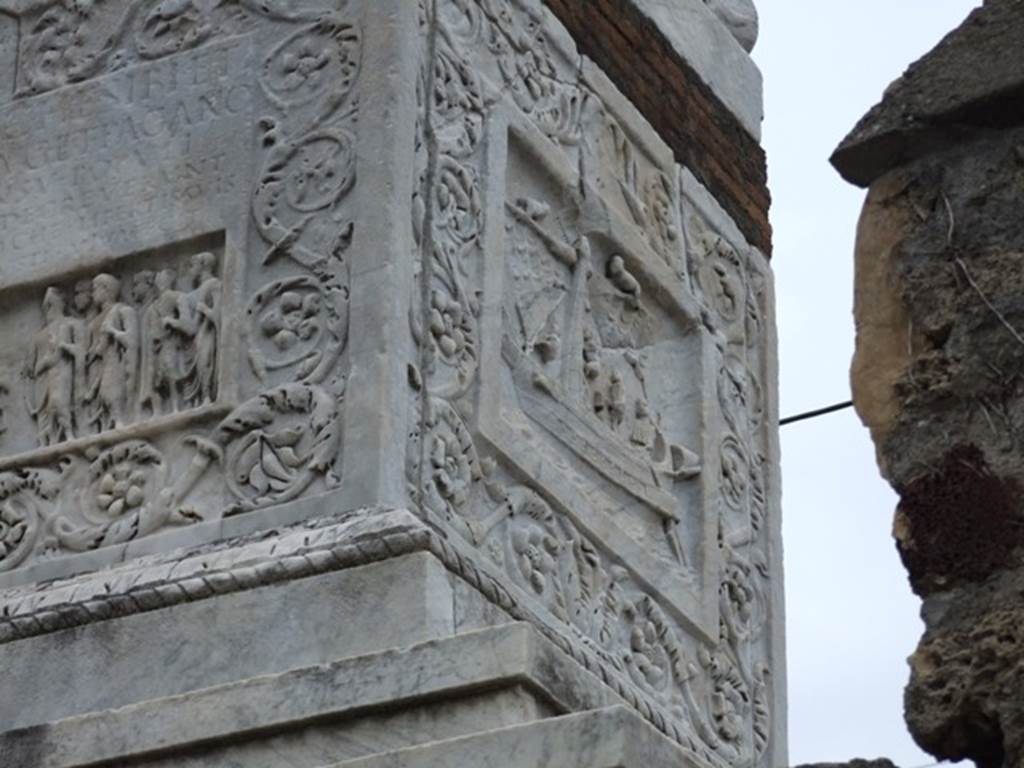
HGW22 Pompeii. December 2007. Upper north side with ship relief.
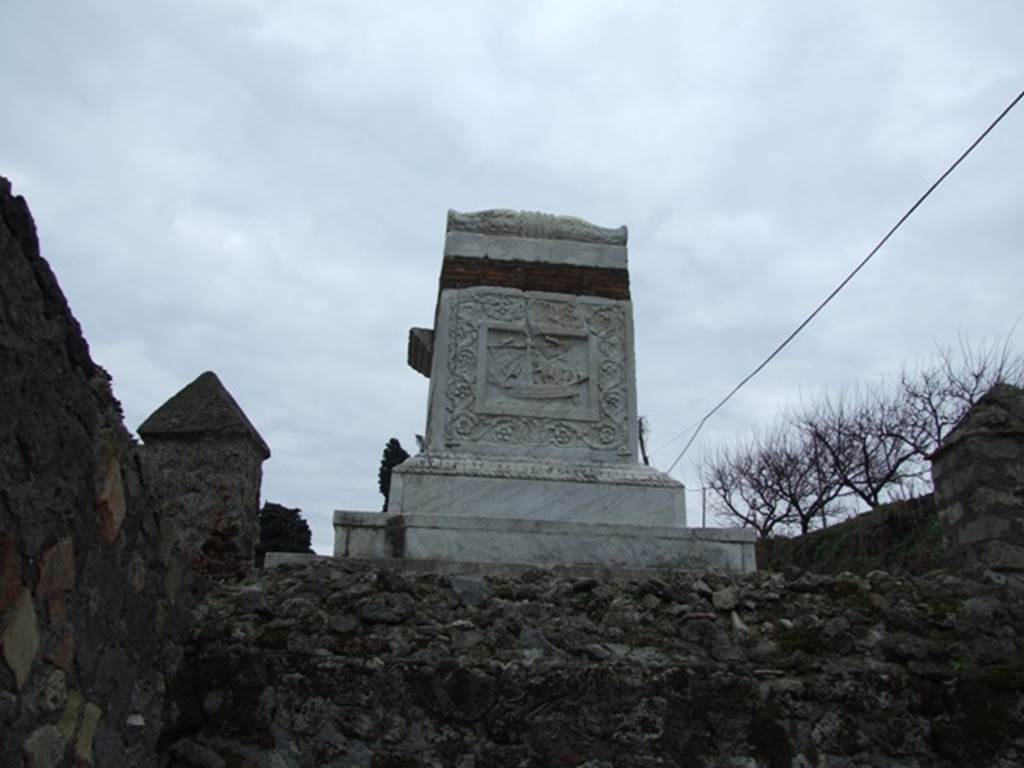
HGW22 Pompeii. December 2007. Upper north side.
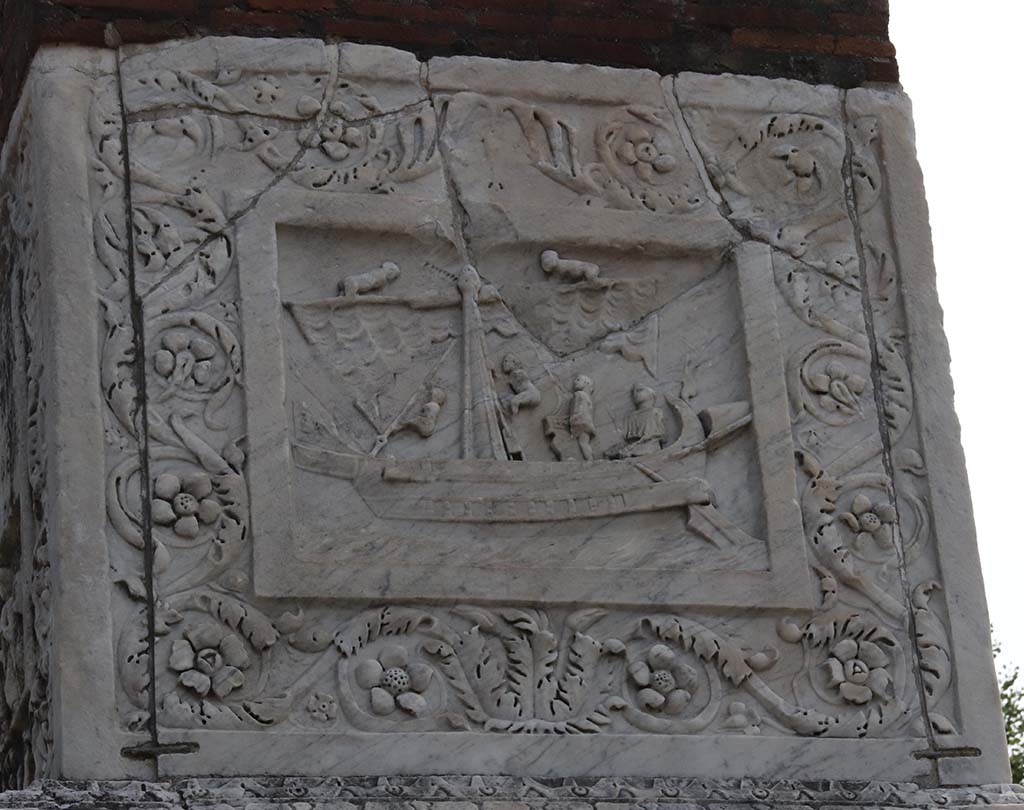
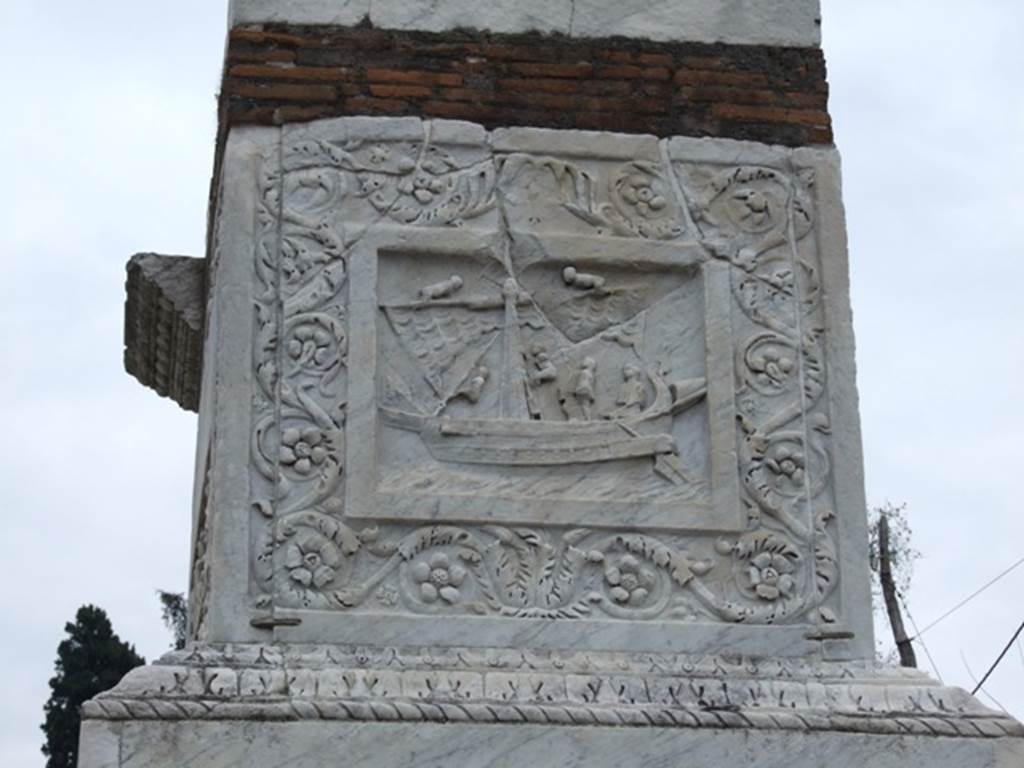
HGW22 Pompeii. December 2007. Ship on upper north side.
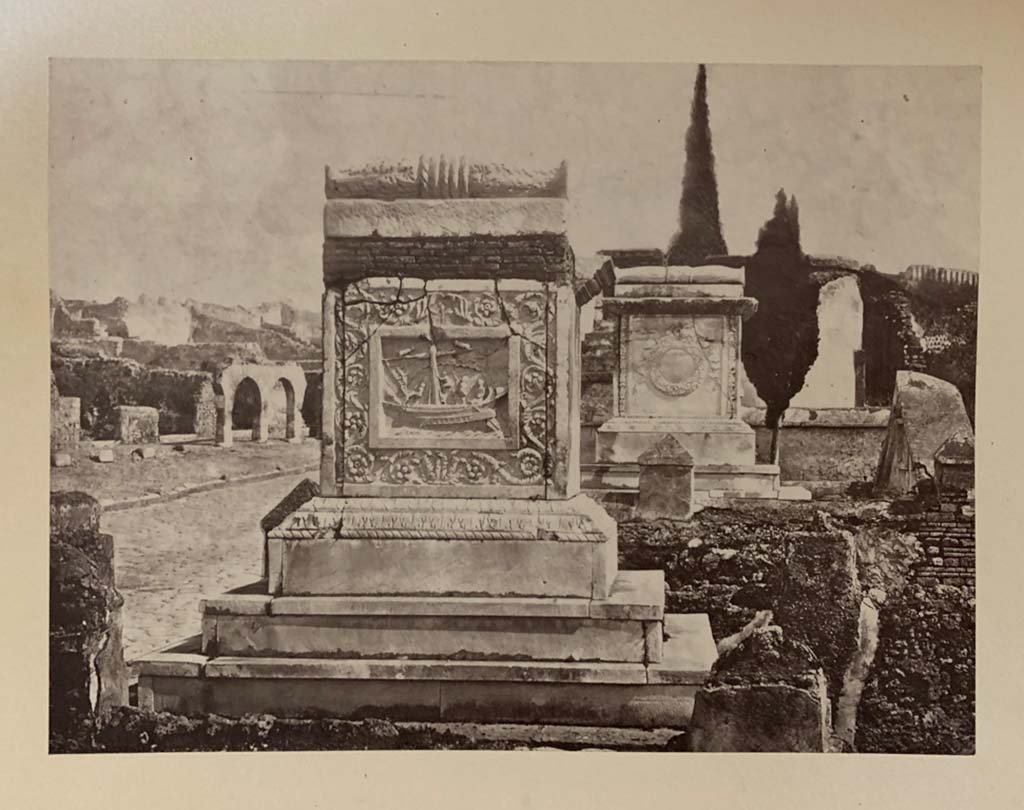
HGW22, Pompeii. Image by G. Sommer, c.1867. Looking south towards north side of tomb.
On the rear right is HGW20, the Tomb of C. Calventius Quietus. Photo courtesy of Rick Bauer.
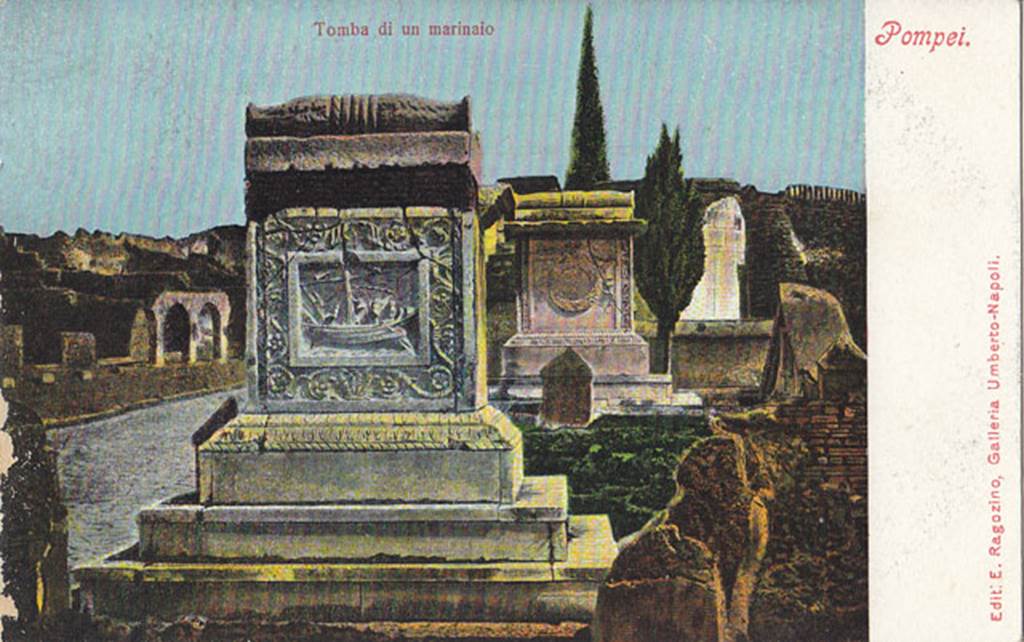
HGW22 Pompeii. Old postcard by Ragozino. North side. Photo courtesy of Drew Baker.
HGW22 Pompeii. Photo by
Nash, Fototeca Unione Roma.
Looking towards ship on upper north side of tomb and upper west (rear) side.
Used with the permission of the
Institute of Archaeology, University of Oxford. File name instarchbx202im076.
Source ID. 44537.
See photo on University of Oxford HEIR database
HGW22 Pompeii. December 2007. Upper west side.
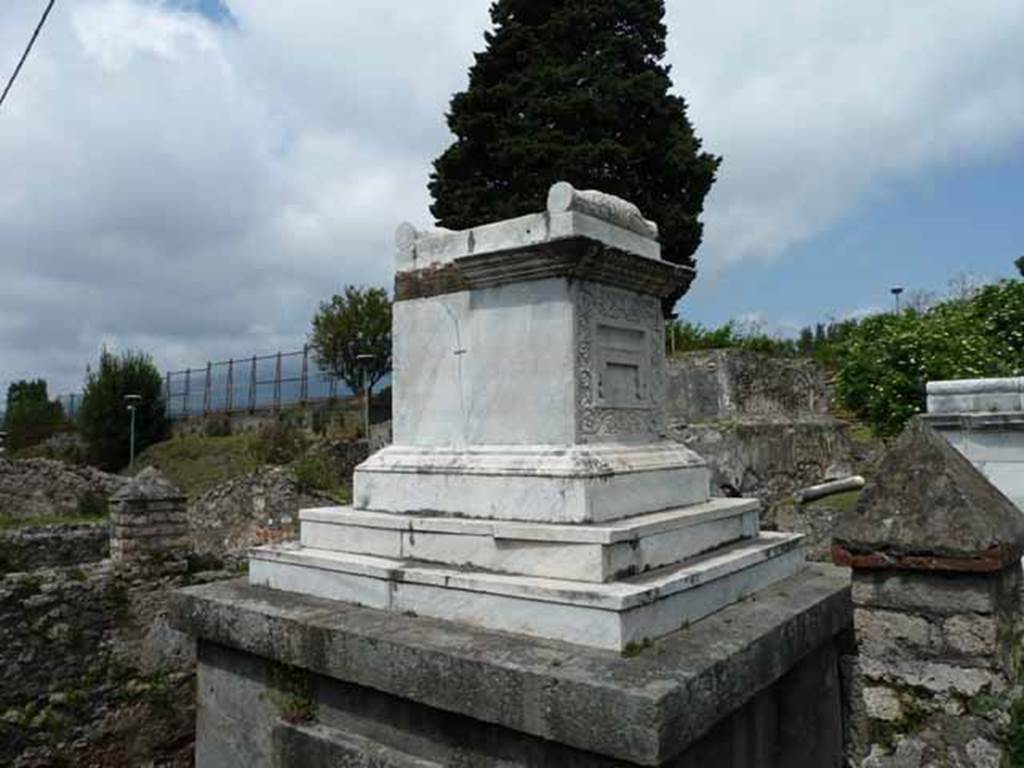
HGW22 Pompeii. May 2010. Upper west and south sides, looking north-east.
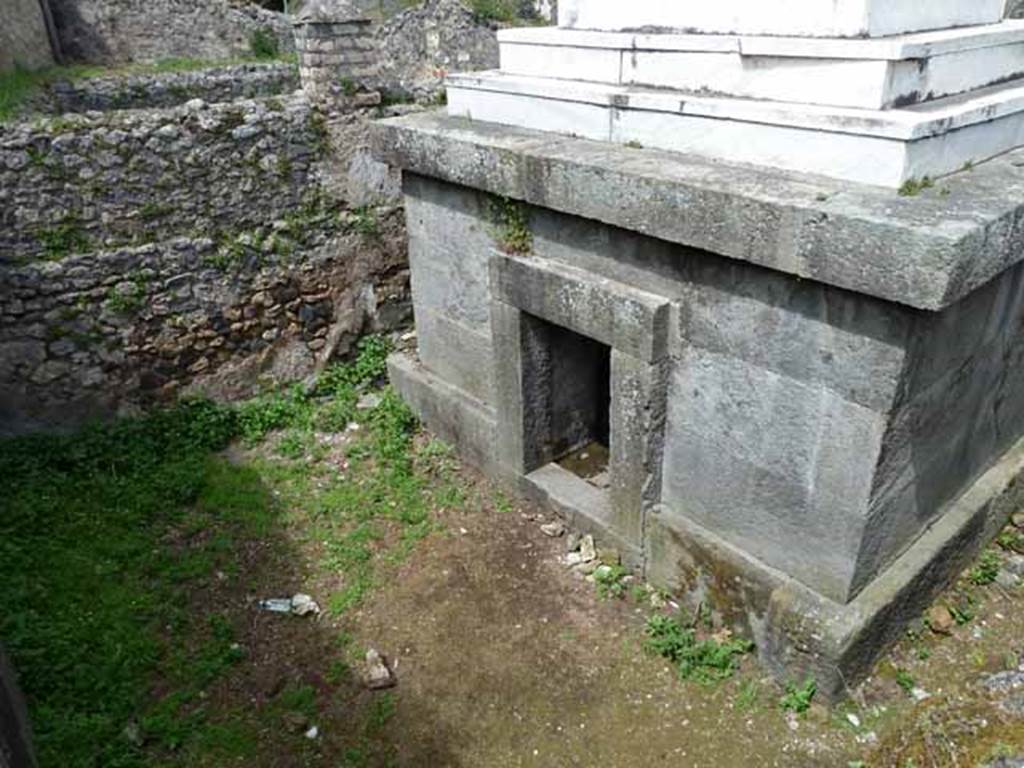
HGW22 Pompeii. May 2010. Entrance to tomb chamber on lower west side of base.
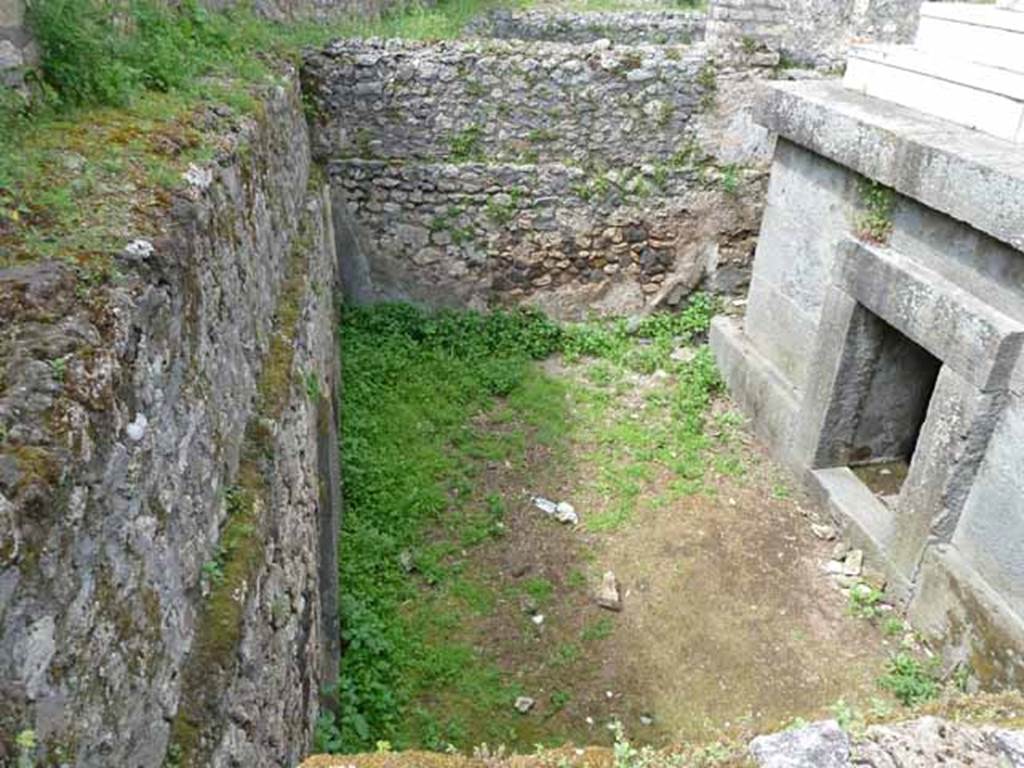
HGW22 Pompeii. May 2010. Looking north along west side of base.
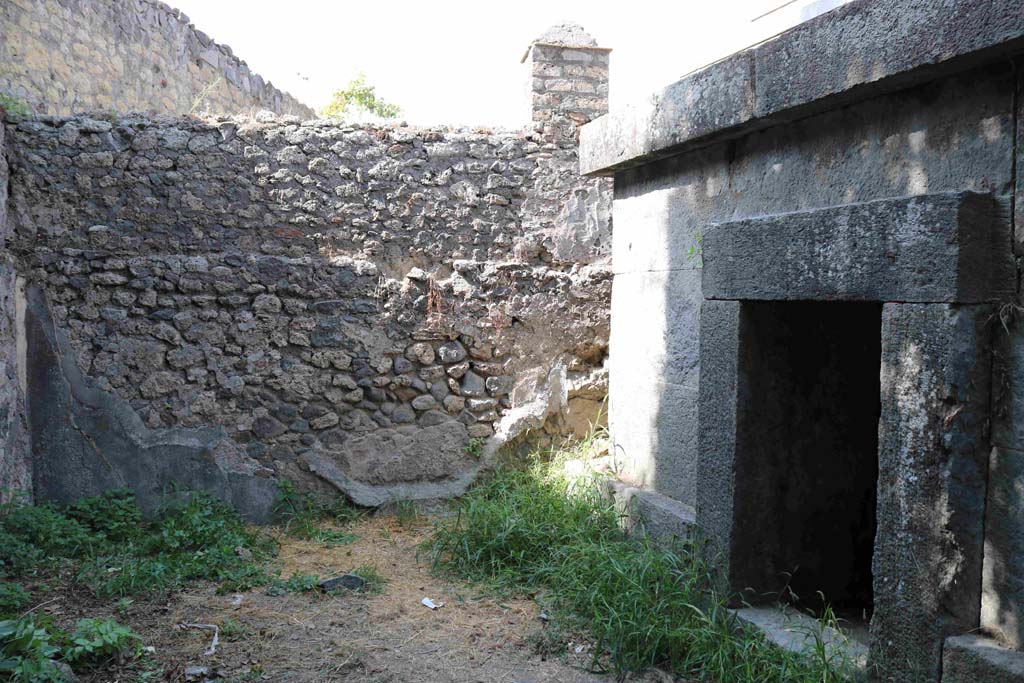
HGW22 Pompeii. September 2019.
Entrance doorway to tomb chamber on west side of base. Photo courtesy of Aude Durand.
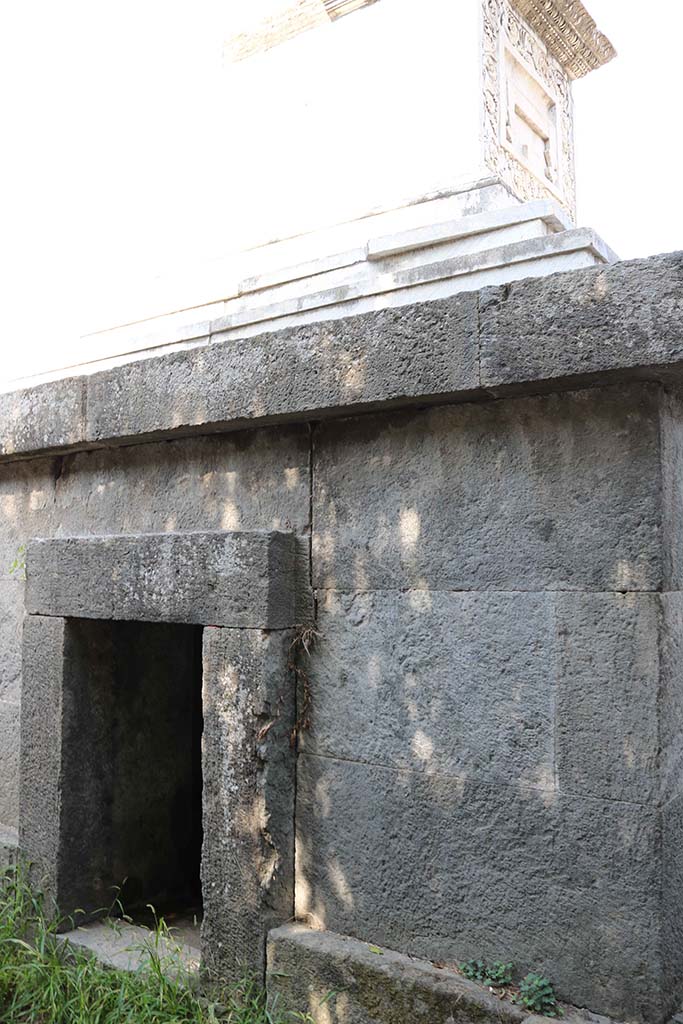
HGW22 Pompeii. September 2019. Entrance doorway to tomb chamber on west side.
Photo
courtesy of Aude Durand.
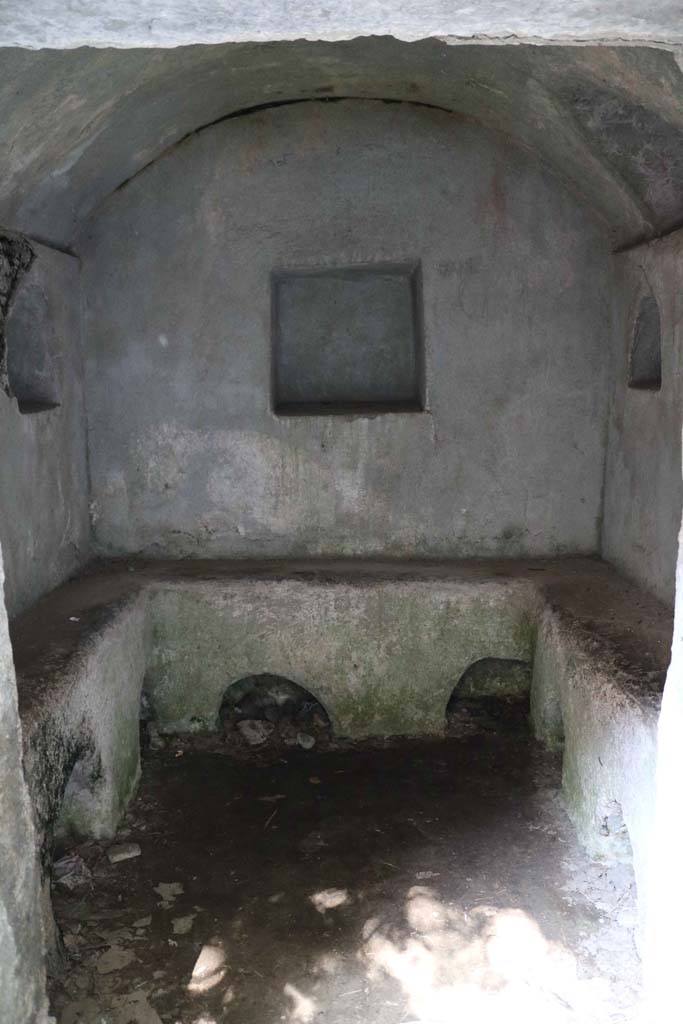
HGW22 Pompeii. September 2019.
Looking
east into tomb chamber from doorway. Photo courtesy of Aude Durand.
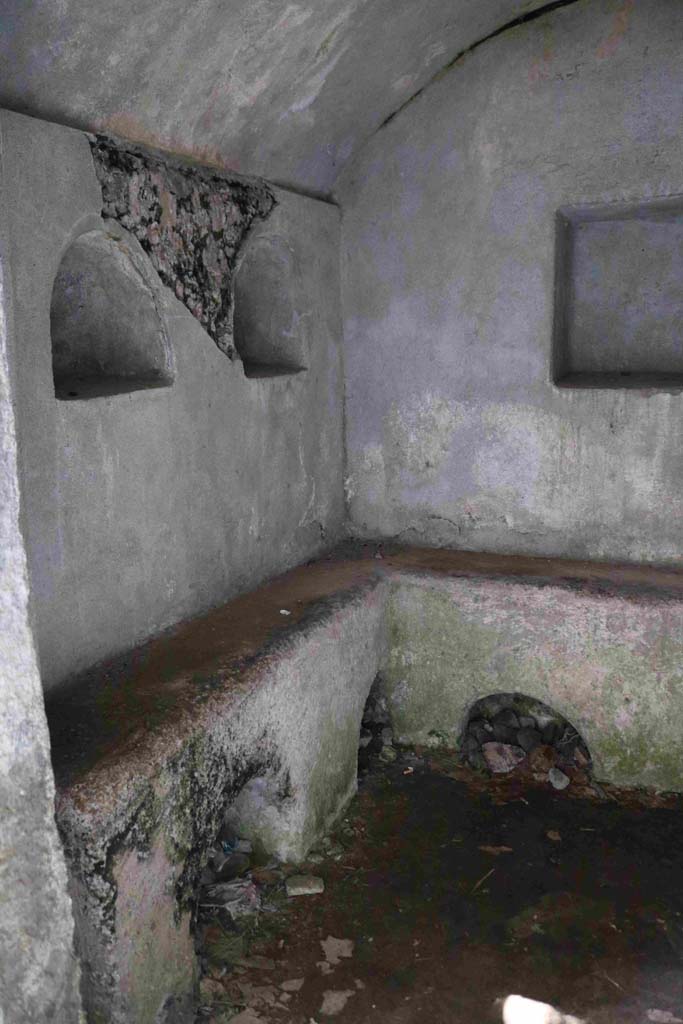
HGW22 Pompeii. September 2019.
Looking
towards north and east walls from doorway. Photo courtesy of Aude Durand.
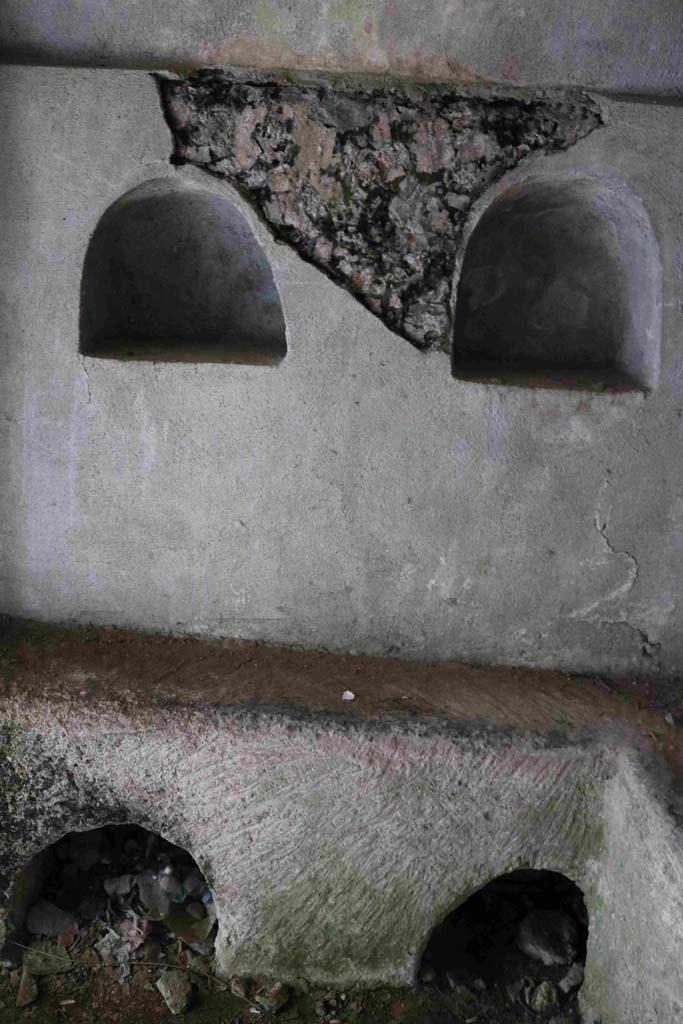
HGW22 Pompeii. September 2019.
North wall, detail
of two upper niches, shelf and two lower recesses. Photo courtesy of Aude Durand.
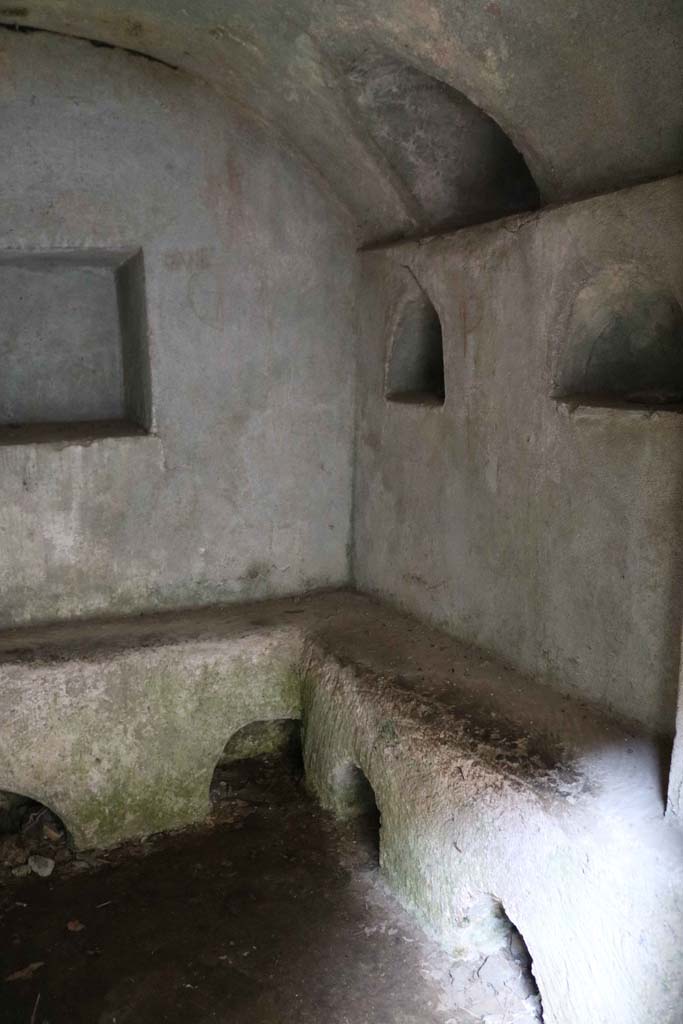
HGW22 Pompeii. September 2019.
East wall with square recess and south wall with slit window, two upper niches, shelf and two lower recesses.
Photo
courtesy of Aude Durand.
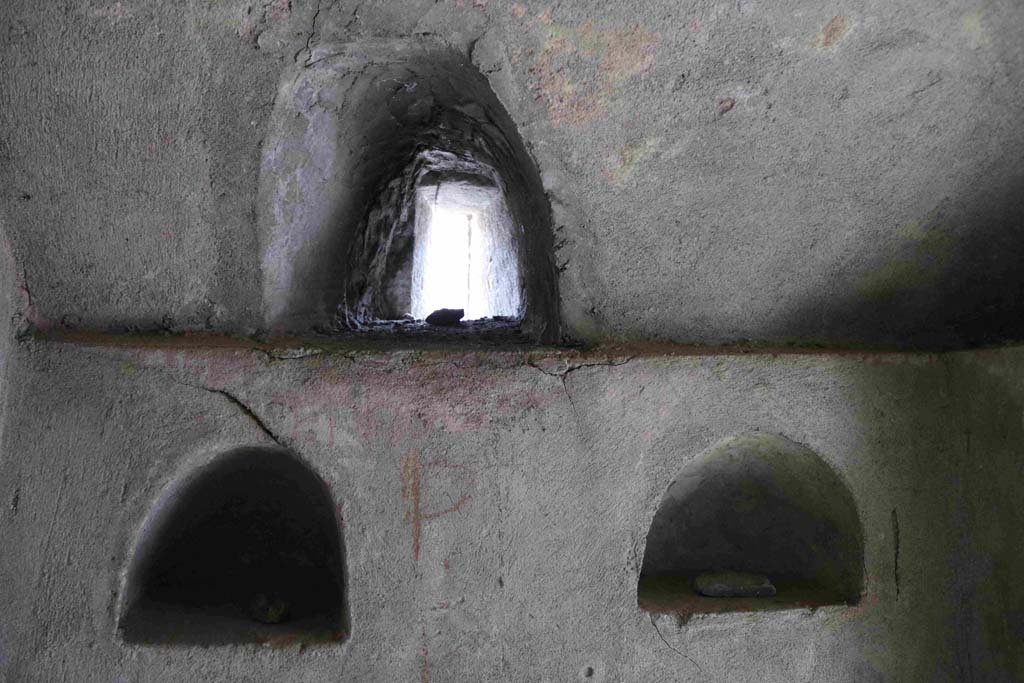
HGW22 Pompeii. September 2019. South wall, with slit window, and two upper
niches. Photo courtesy of Aude Durand.
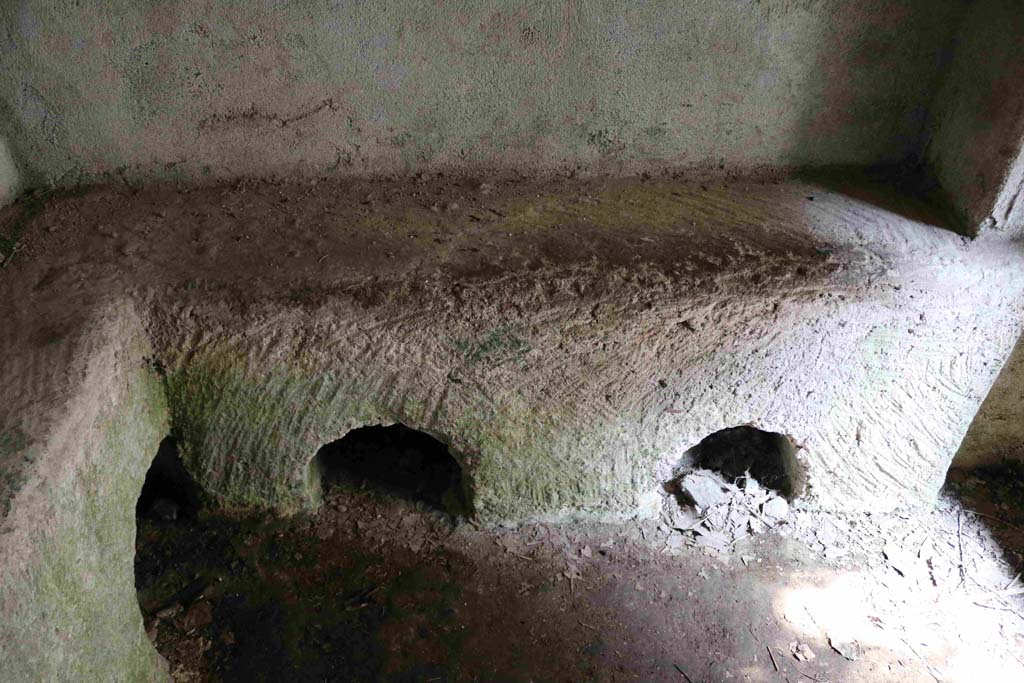
HGW22 Pompeii. September 2019. Lower south wall with shelf and
recesses. Photo courtesy of Aude Durand.
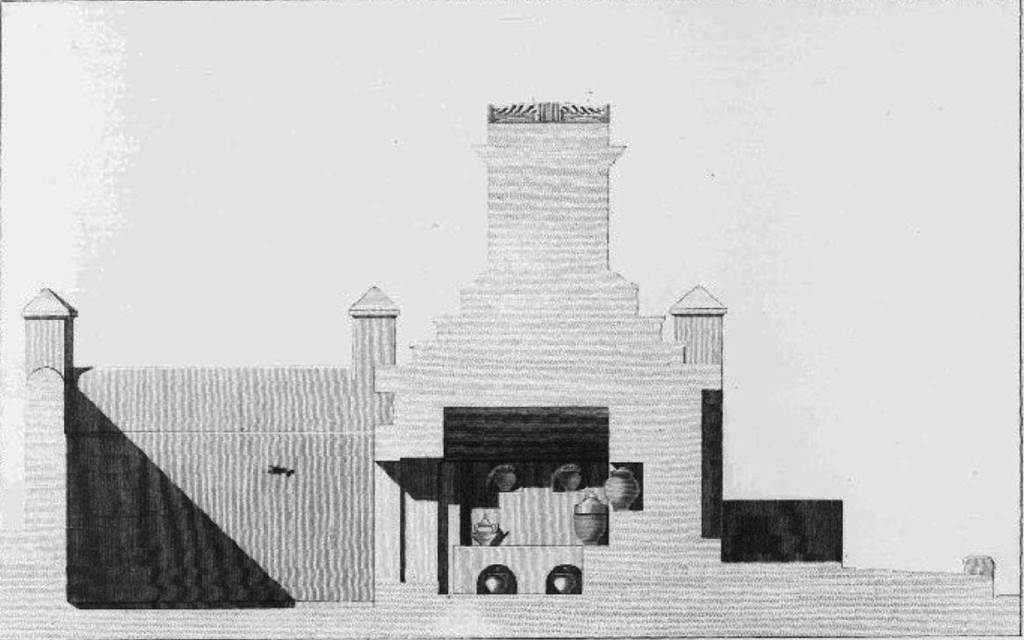
HGW22 Pompeii. 1824 cross section of tomb and tomb chamber.
See Mazois, F.,
1824. Les Ruines de Pompei: Premiere
Partie. Paris : Didot Frères, (pl. 22,1).
![HGW22 Pompeii. c.1819 sketch by W. Gell of interior of tomb chamber.
See Gell W & Gandy, J.P: Pompeii published 1819 [Dessins publiés dans l'ouvrage de Sir William Gell et John P. Gandy, Pompeiana: the topography, edifices and ornaments of Pompei, 1817-1819].
See book in Bibliothèque de l'Institut National d'Histoire de l'Art [France], collections Jacques Doucet Gell Dessins 1819
Use Etalab Open Licence ou Etalab Licence Ouverte](tombs%20hgw22_files/image067.jpg)
HGW22 Pompeii. c.1819 sketch by W. Gell of interior of tomb chamber. Looking east from doorway.
See Gell W & Gandy, J.P: Pompeii published 1819 [Dessins publiés dans l'ouvrage de Sir William Gell et John P. Gandy, Pompeiana: the topography, edifices and ornaments of Pompei, 1817-1819].
See book in
Bibliothèque de l'Institut National d'Histoire de l'Art [France], collections
Jacques Doucet Gell Dessins 1817-1819
Use Etalab Open Licence ou Etalab Licence
Ouverte
![HGW22 Pompeii. A cippus was found on 6th February 1813 in the niche between the grave and the west wall. This had the inscription
C MVNATIVS
ATIMETVS VIX
ANNIS LVII
According to Kockel, Mommsen said this was now in Naples Archaeological Museum.
See Kockel V., 1983. Die Grabbauten vor dem Herkulaner Tor in Pompeji. Mainz: von Zabern. (p. 100).
According to Epigraphik-Datenbank Clauss/Slaby (See www.manfredclauss.de) this read
C(aius) Munatius
Atimetus vix(it)
annis LVII [CIL X 1031]](tombs%20hgw22_files/image069.jpg)
HGW22 Pompeii. A cippus was found on 6th February 1813 in the niche between the grave and the west wall.
This had the inscription
C MVNATIVS
ATIMETVS VIX
ANNIS LVII
According to Kockel, Mommsen said this was now in Naples Archaeological Museum.
See Kockel V., 1983. Die Grabbauten vor dem Herkulaner Tor in Pompeji. Mainz: von Zabern. (p. 100).
According to Epigraphik-Datenbank Clauss/Slaby (See www.manfredclauss.de) this read
C(aius) Munatius
Atimetus vix(it)
annis LVII [CIL X 1031]
Now in Naples Archaeological Museum. Inventory number 3913.
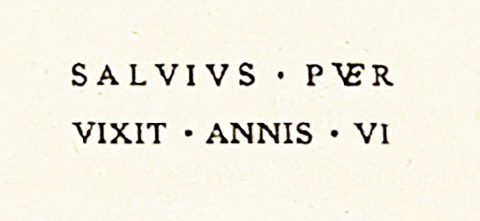
HGW22 or HGE40 Pompeii. Salvius inscription found on cippus.
According to Kockel, a cippus with the inscription
SALVIVS PVER
VIXIT ANNIS VI
was said by Mommsen, Niccolini and Overbeck to have been found near to that of Munatius Atimetus.
Bonucci, Breton, Fiorelli and Mau however attributed it to inside HGE40/Nord40.
See Kockel V., 1983. Die Grabbauten vor dem Herkulaner Tor in Pompeji. Mainz: von Zabern. (p. 100).
According to Epigraphik-Datenbank Clauss/Slaby (See www.manfredclauss.de) this read
Salvius puer
vixit annis
VI [CIL X 1032]
Now in Naples Archaeological Museum. Inventory number 3909.