IX.13.6 Pompeii. Workshop of Sextus Ceius.
Linked to IX.13.4 and IX.13.5. Partly excavated 1913, 1970.
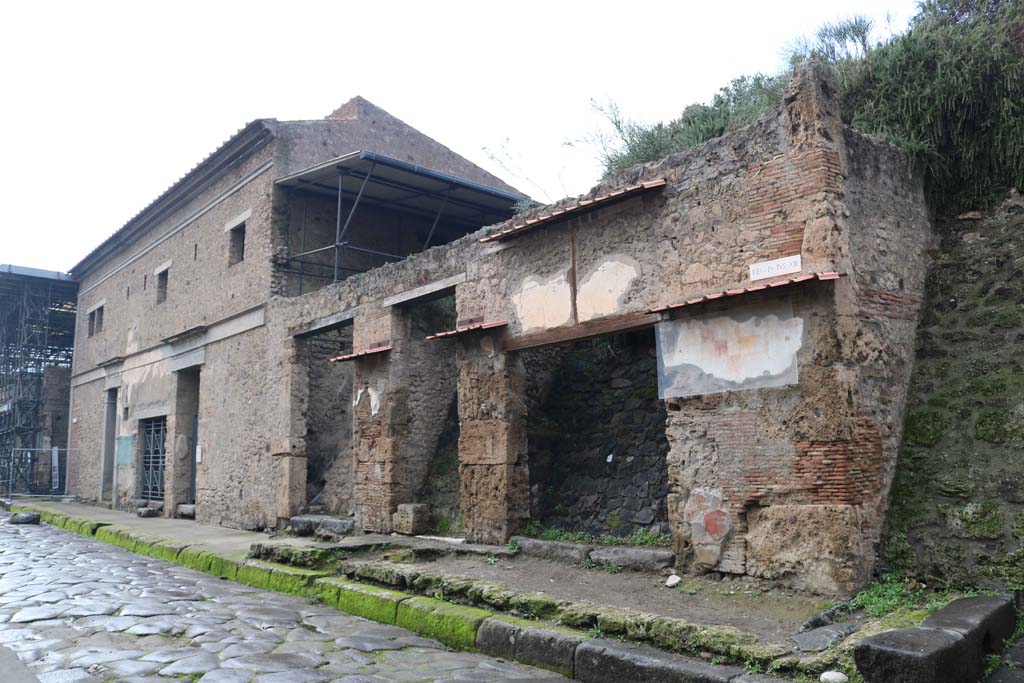
IX.13.6 Pompeii, on right. December
2018.
Looking
west along front façade from IX.13.6 towards IX.13.1, on left. Photo courtesy
of Aude Durand.
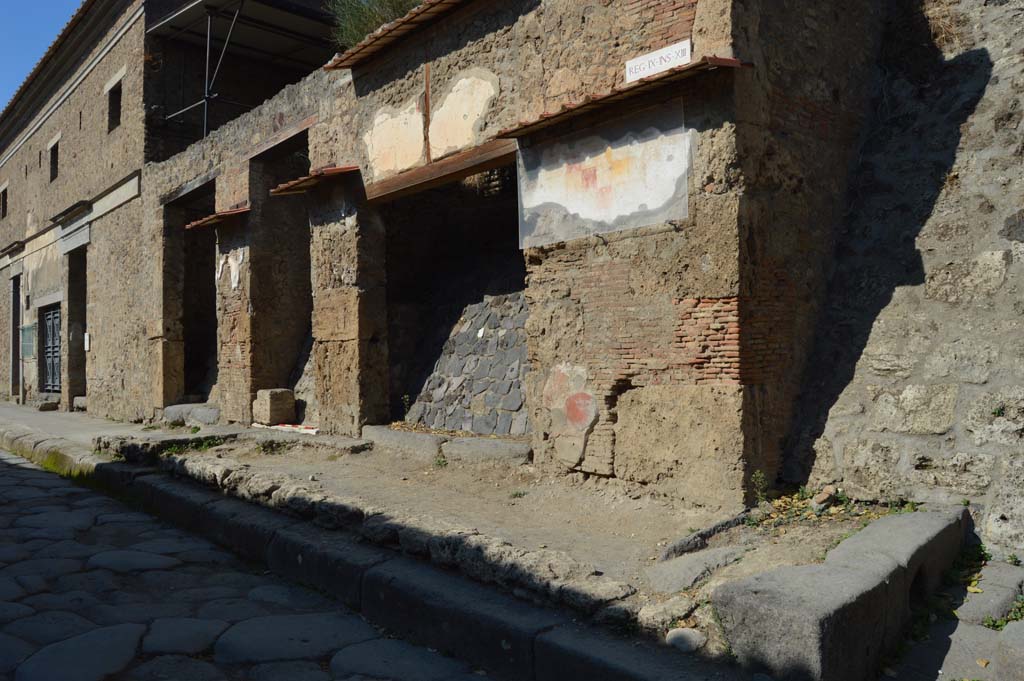
IX.13.6 Pompeii, on right. October 2017. Looking west along front
façade.
Foto Taylor Lauritsen, ERC Grant 681269
DÉCOR.
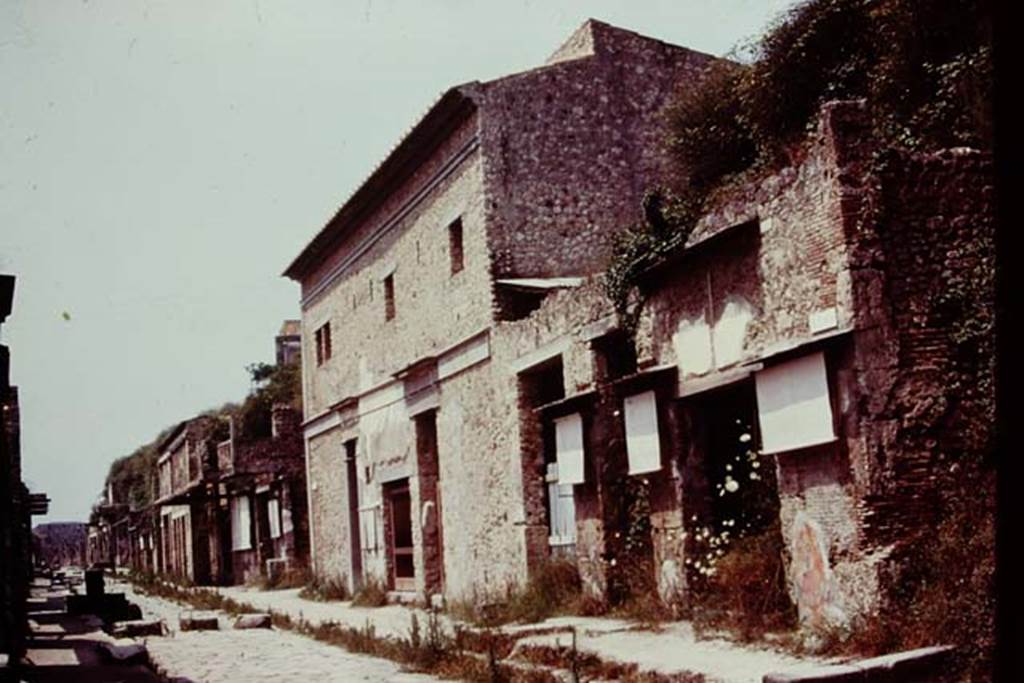
IX.13.1-6 Pompeii. 1976. Looking west along IX.13 on north side of Via dell’Abbondanza. Photo by Stanley A. Jashemski.
Source: The Wilhelmina and Stanley A. Jashemski archive in the University of Maryland Library, Special Collections (See collection page) and made available under the Creative Commons Attribution-Non-Commercial License v.4. See Licence and use details.
J76f0550
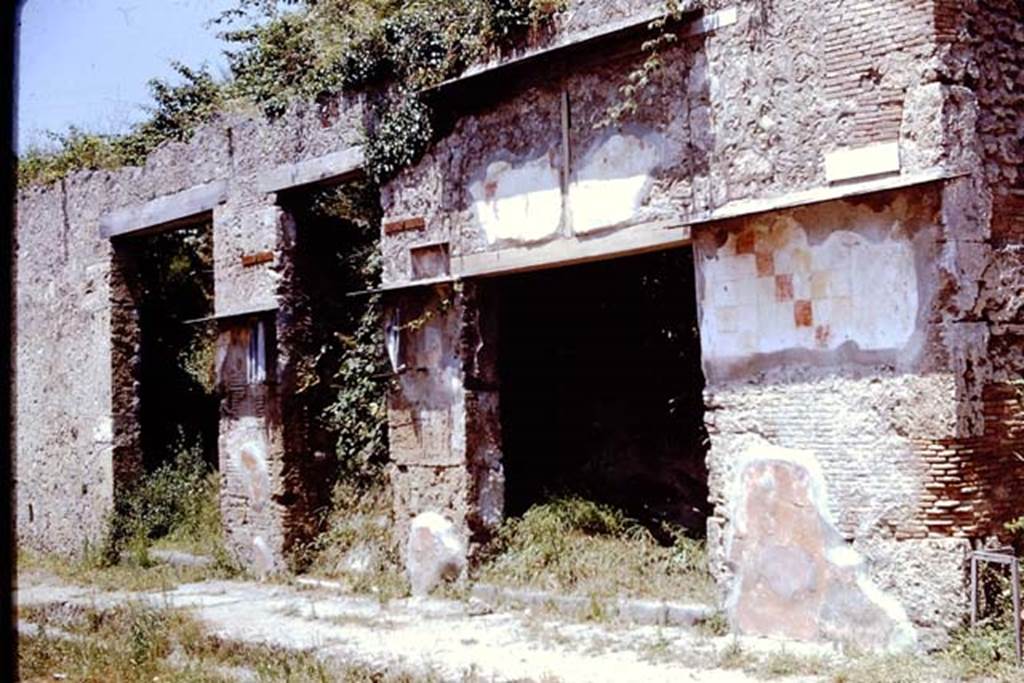
IX.13.6 Pompeii, on right. 1961.
Looking towards doorways to IX.13.4, IX.13.5 and IX.13.6 on north side of Via dell’Abbondanza. Photo by Stanley A. Jashemski.
Source: The Wilhelmina and Stanley A. Jashemski archive in the University of Maryland Library, Special Collections (See collection page) and made available under the Creative Commons Attribution-Non-Commercial License v.4. See Licence and use details.
J61f0707
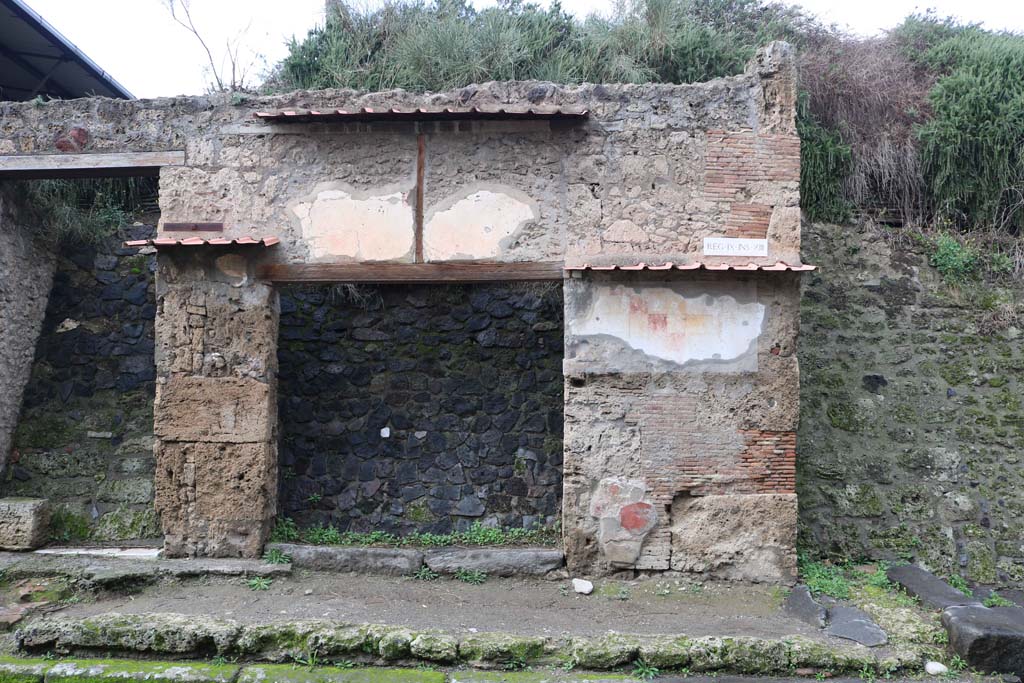
IX.13.6 Pompeii, in centre. December 2018. Looking north to
entrance doorway. Photo courtesy of Aude Durand.
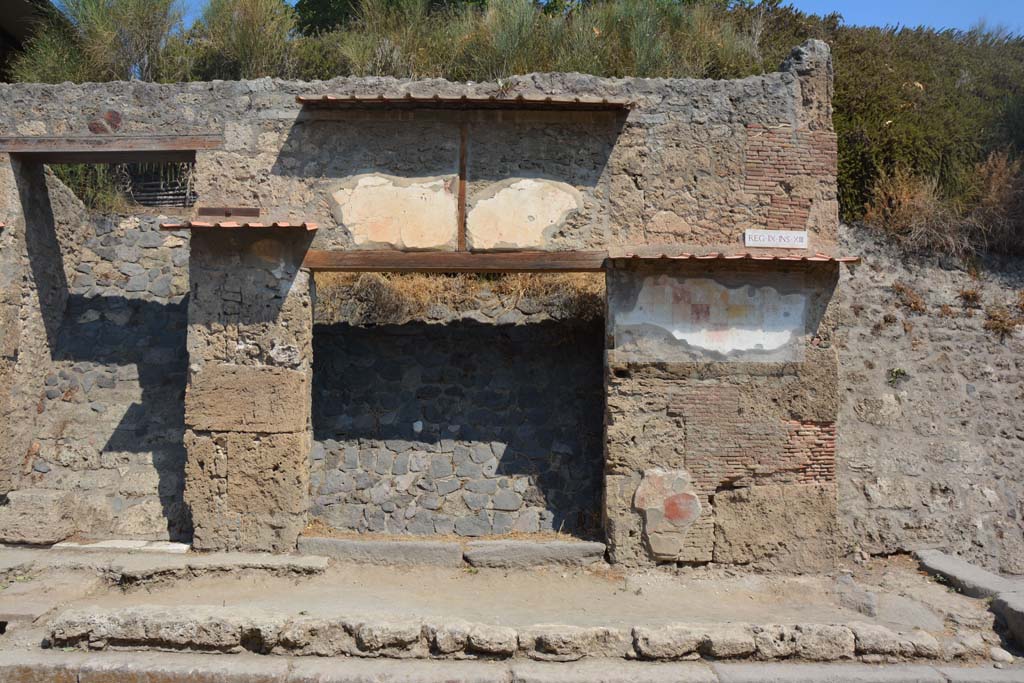
IX.13.5 and 6 Pompeii. July 2017. Looking north to
entrance doorways.
Foto Annette Haug, ERC Grant 681269 DÉCOR.
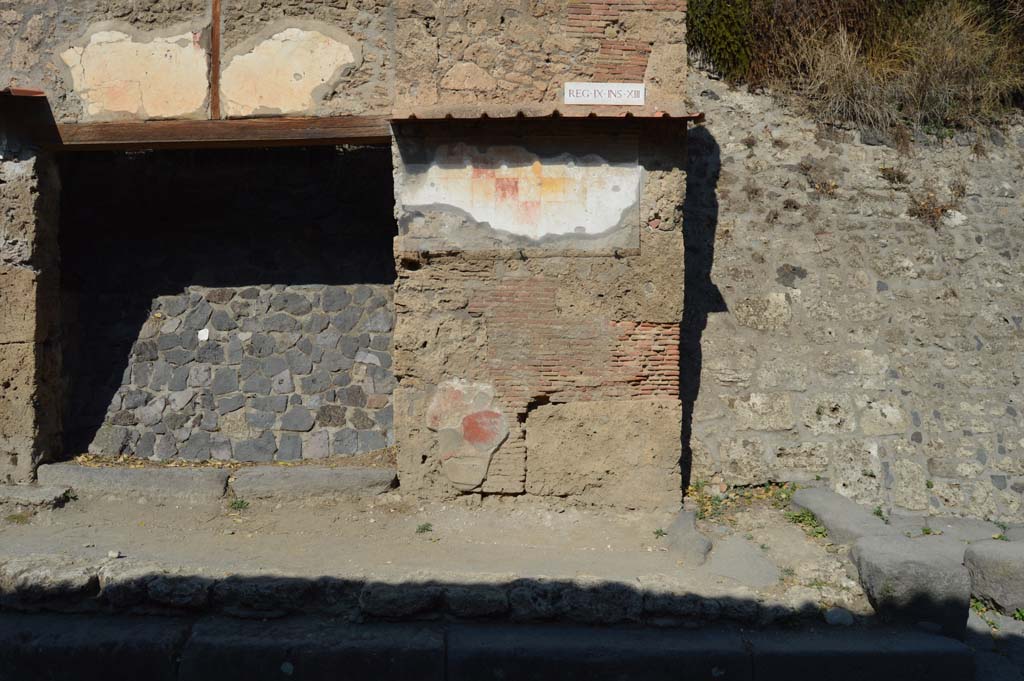
IX.13.6 Pompeii, October 2017. Looking north to entrance
doorway at east end of insula.
Foto
Taylor Lauritsen, ERC Grant 681269 DÉCOR.
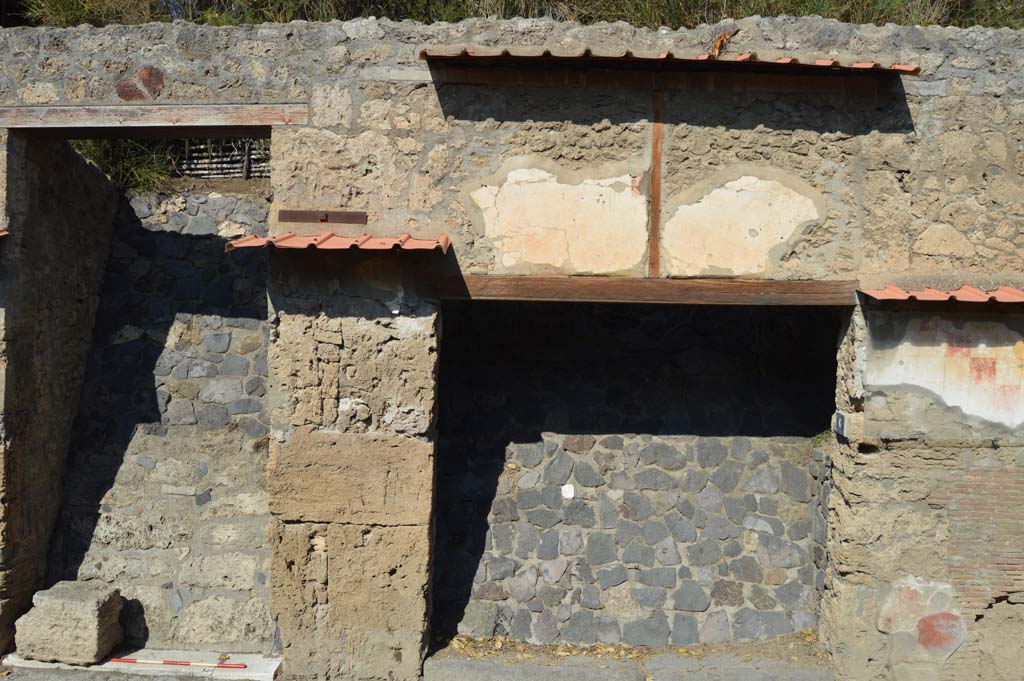
IX.13.6 Pompeii, on right, Pompeii. October 2017. Detail from above entrance
doorway, and east pilaster.
Foto
Taylor Lauritsen, ERC Grant 681269 DÉCOR.
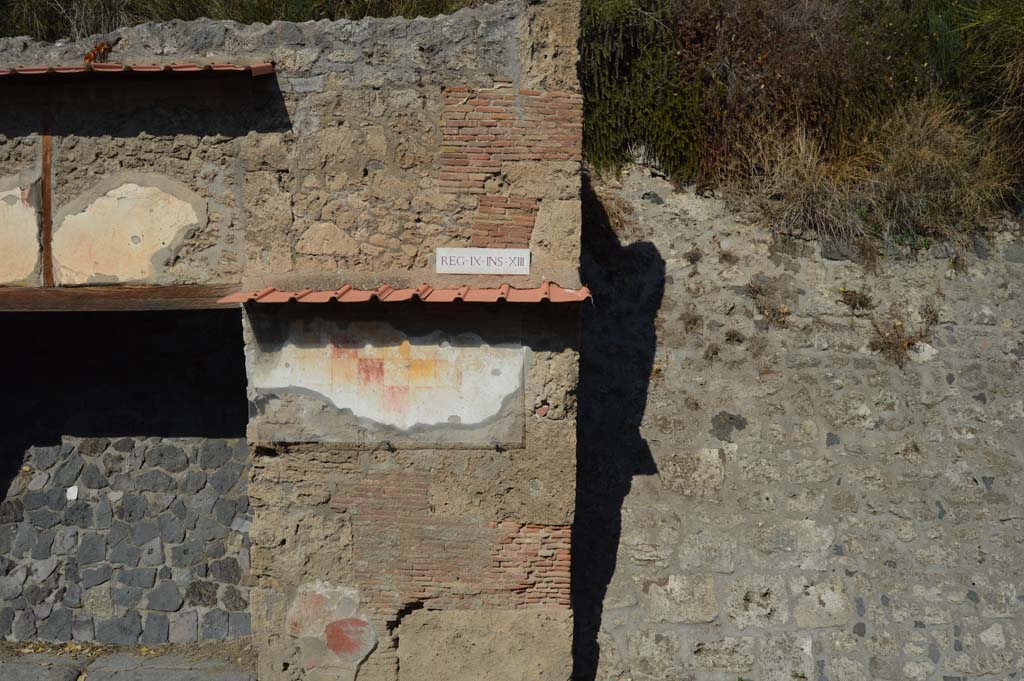
IX.13.6 Pompeii, October 2017. Detail of pilaster on east
side of entrance doorway.
Foto
Taylor Lauritsen, ERC Grant 681269 DÉCOR.
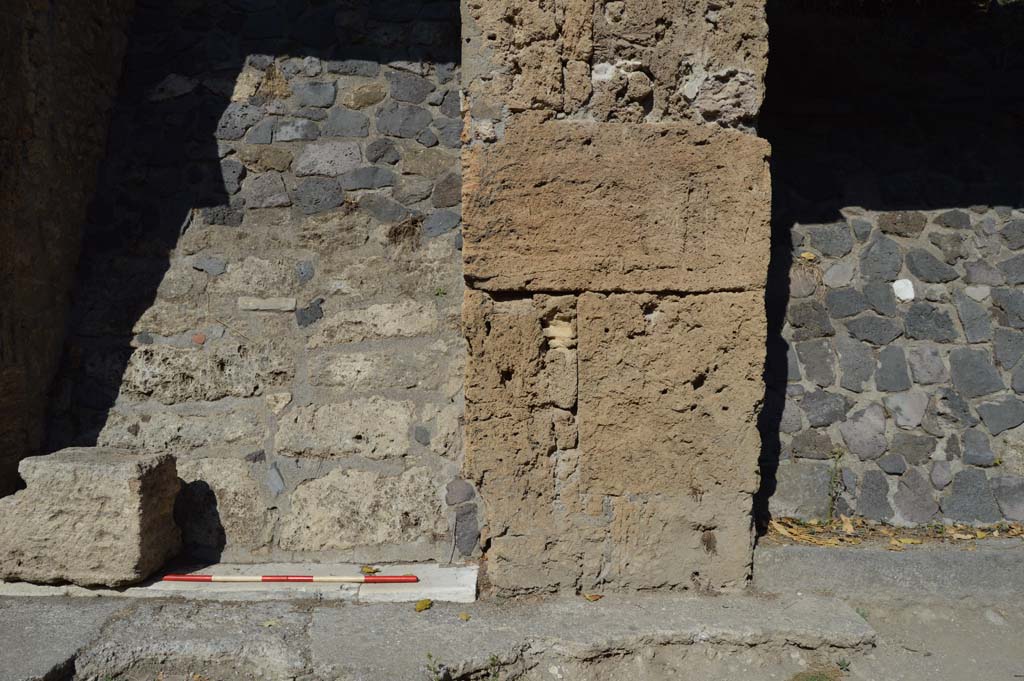
Foto Taylor Lauritsen, ERC Grant 681269
DÉCOR.
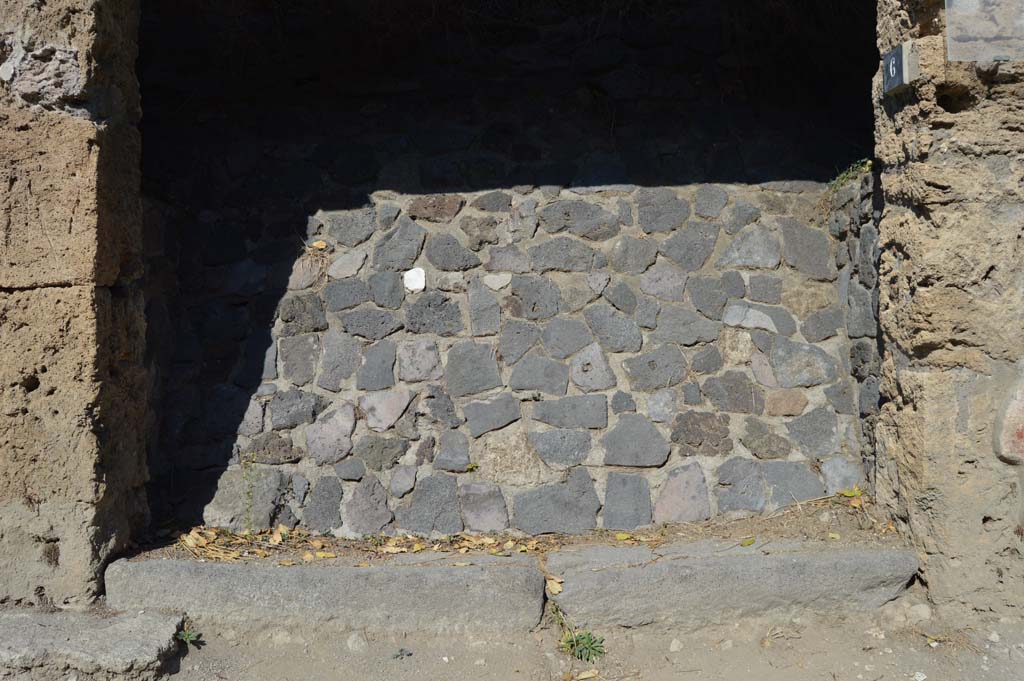
IX.13.6 Pompeii, on right. October 2017. Detail of doorway
threshold.
Foto Taylor Lauritsen, ERC Grant 681269
DÉCOR.
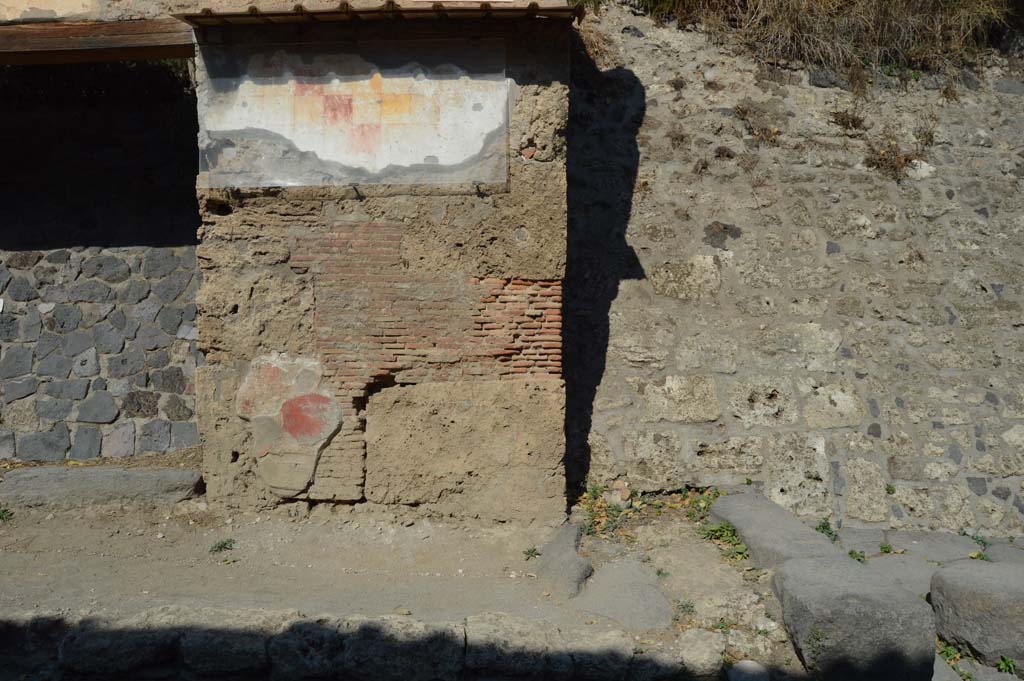
IX.13.6
Pompeii, on right. October 2017.
Detail
of doorway threshold, east pilaster, and end of insula with a blocked roadway,
on right.
Foto
Taylor Lauritsen, ERC Grant 681269 DÉCOR.
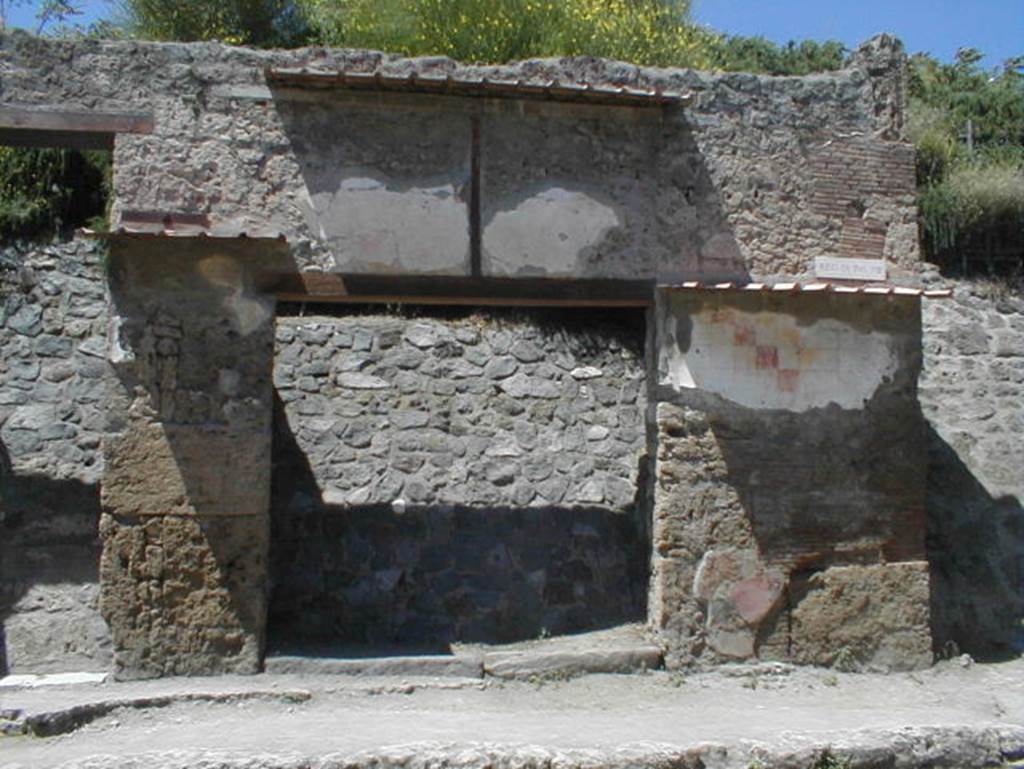
IX.13.6 Pompeii. May 2005. Entrance, looking north.
![IX.13.6 Pompeii. December 2005. Entrance on Via dell’Abbondanza.
According to Della Corte, in this workshop carrying on an unknown industry or trade was a certain Sex. Ceius. Found on the east (right) of the entrance was an electoral recommendation –
Sex. Ceius f(acit) [CIL IV 7974]
And also on the same wall –
[Sex. Cei fr- (or indeed) p]ater fac [CIL IV 7973 with a note that said “if however the fragment was “ator” perhaps it expressed the profession of Ceio”.
According to Epigraphik-Datenbank Clauss/Slaby (See www.manfredclauss.de), these read as –
]ator fac(it) [CIL IV 7973]
L(ucium) Ceium Secundum
iuvenem optimum
d(uumvirum) i(ure) d(icundo) o(ro) v(os) f(aciatis) Sex(tus) Ceius f[acit] [CIL IV 7974]](9%2013%2006_files/image019.jpg)
IX.13.6 Pompeii. December 2005. Entrance on Via dell’Abbondanza.
According to Della Corte, in this workshop carrying on an unknown industry or trade was a certain Sex. Ceius.
Found on the east (right) of the entrance was an electoral recommendation –
Sex. Ceius
f(acit) [CIL IV 7974]
And also on the same wall –
[Sex. Cei fr- (or indeed) p]ater fac [CIL IV 7973 with a note that said “if however the fragment was “ator” perhaps it expressed the profession of Ceio”.
According to Epigraphik-Datenbank Clauss/Slaby (See www.manfredclauss.de), these read as –
]ator fac(it) [CIL IV 7973]
L(ucium) Ceium Secundum
iuvenem optimum
d(uumvirum) i(ure) d(icundo) o(ro) v(os)
f(aciatis) Sex(tus) Ceius f[acit]
[CIL IV 7974]
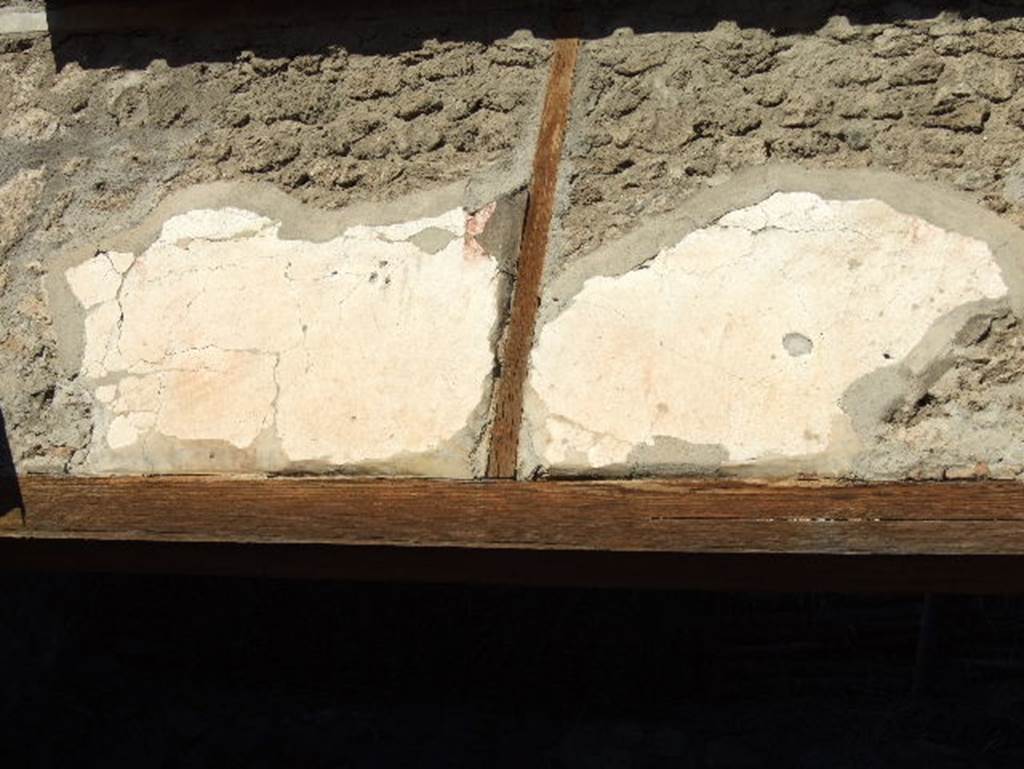
IX.13.6 Pompeii. December 2005. Remains of painted plaster above entrance.
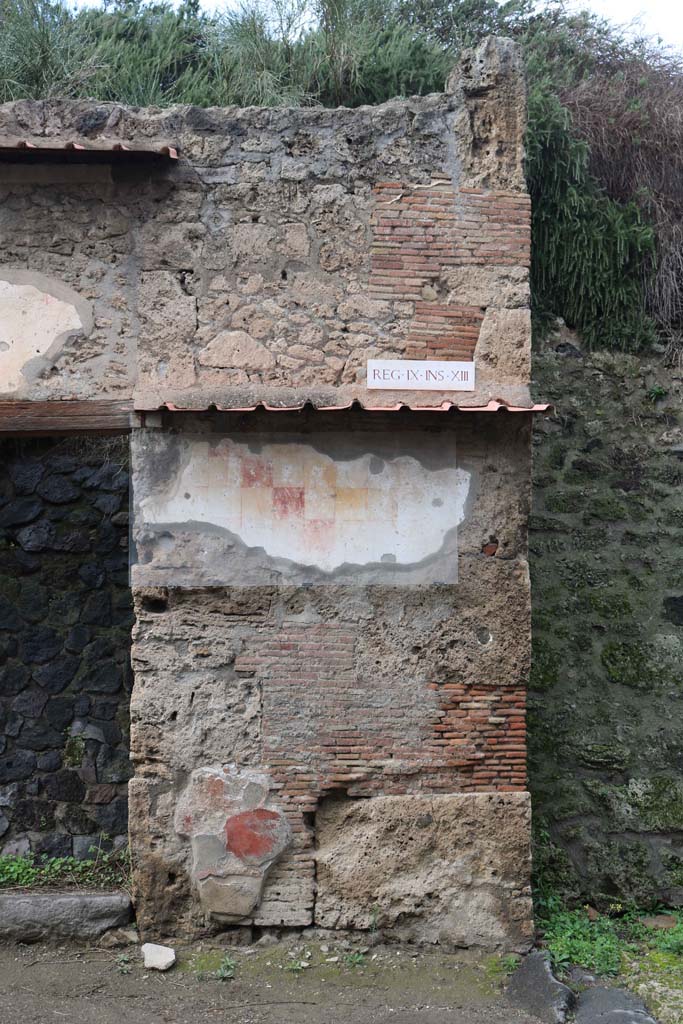
IX.13.6 Pompeii. December 2018.
Painted plaster with chessboard pattern on east side of entrance
doorway. Photo courtesy of Aude Durand.
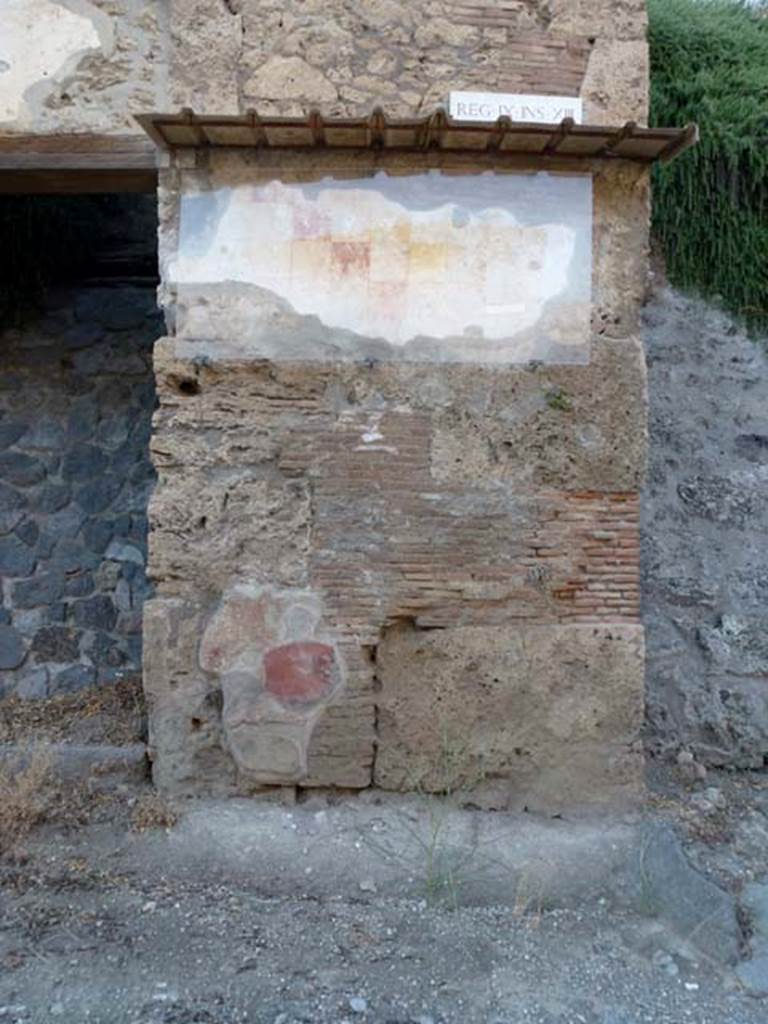
IX.13.6 Pompeii. June 2012.
Painted plaster with chessboard pattern to east of entrance. Photo courtesy of Michael Binns.
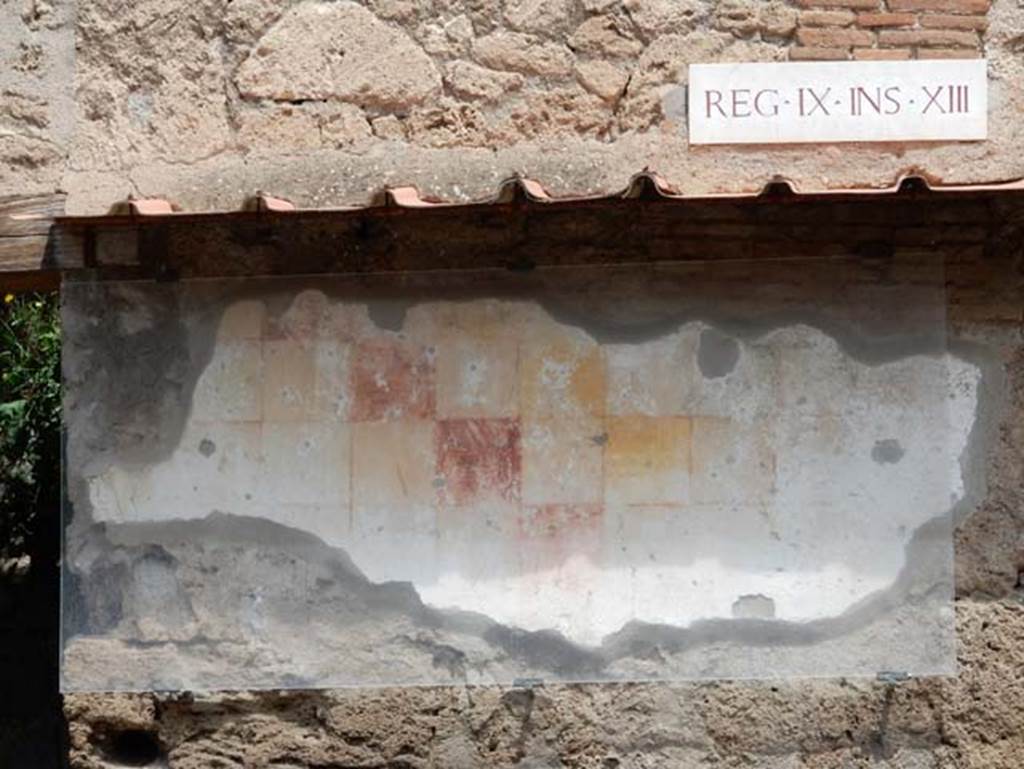
IX.13.6 Pompeii. May 2018. Painted plaster on east side of entrance, with chessboard pattern. Photo courtesy of Buzz Ferebee.
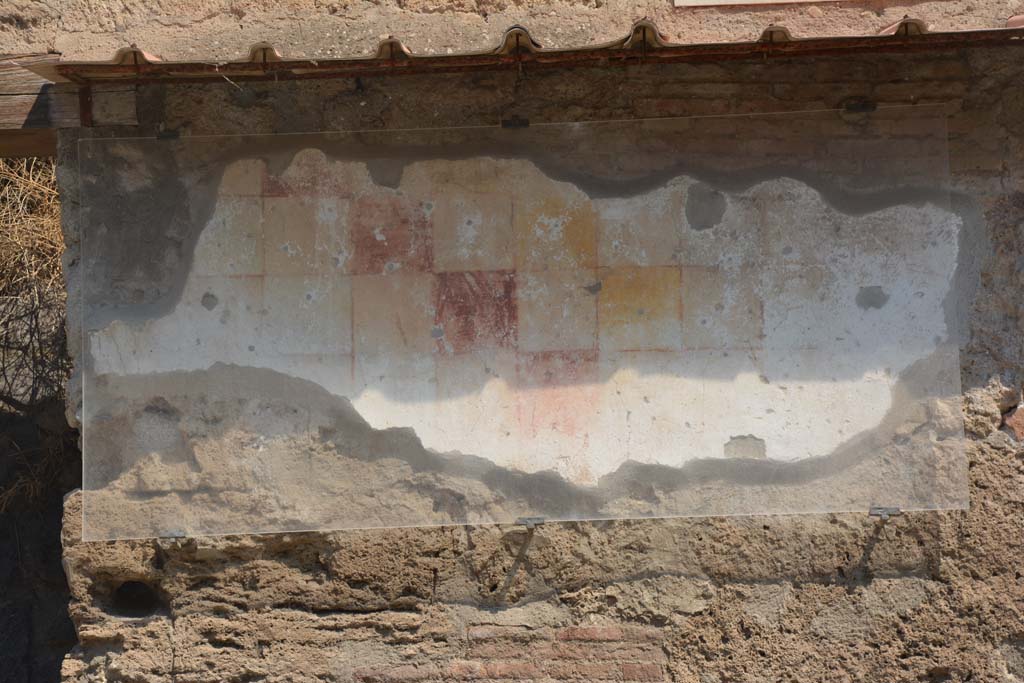
IX.13.6 Pompeii. July 2017. Painted plaster
on east side of entrance, with chessboard pattern.
Foto Annette Haug, ERC Grant 681269 DÉCOR.
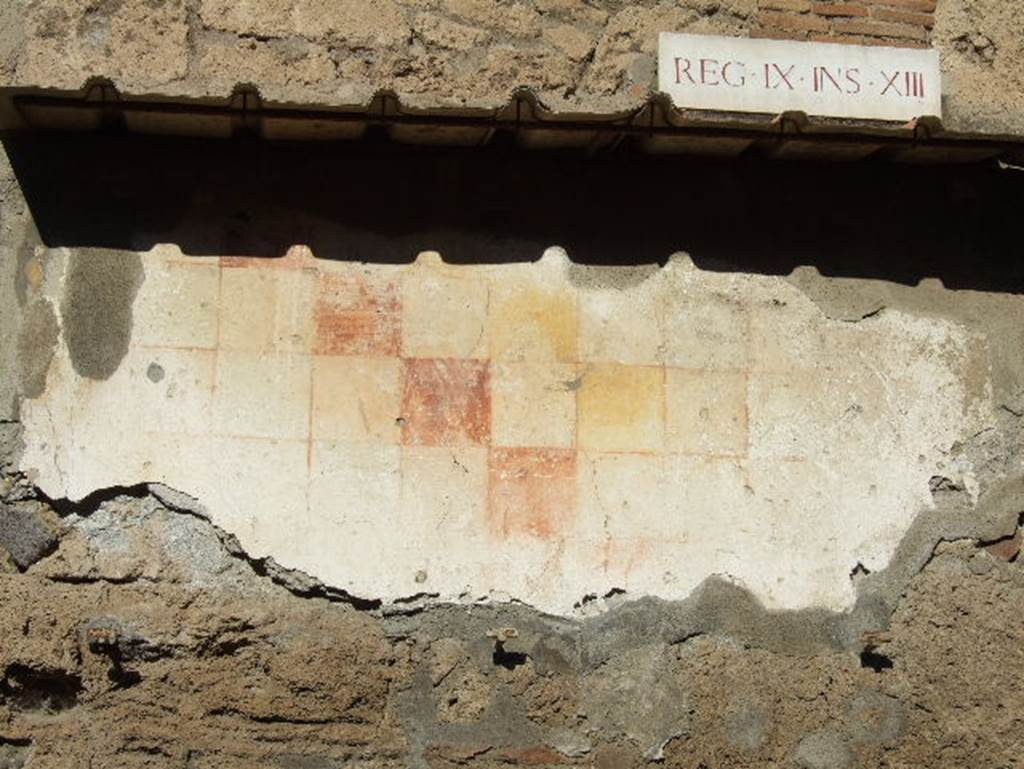
IX.13.6 Pompeii. December 2005. Detail of plaster with chessboard pattern to east of entrance.
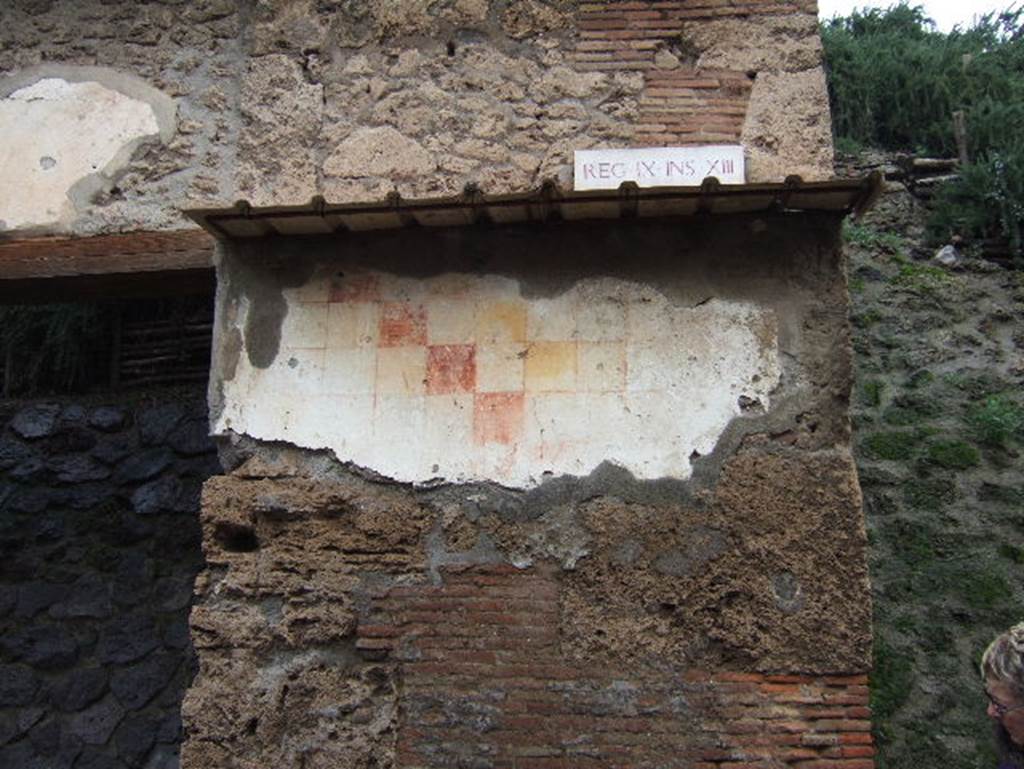
IX.13.6 Pompeii. December 2005. Plaster with chessboard pattern to east of entrance.
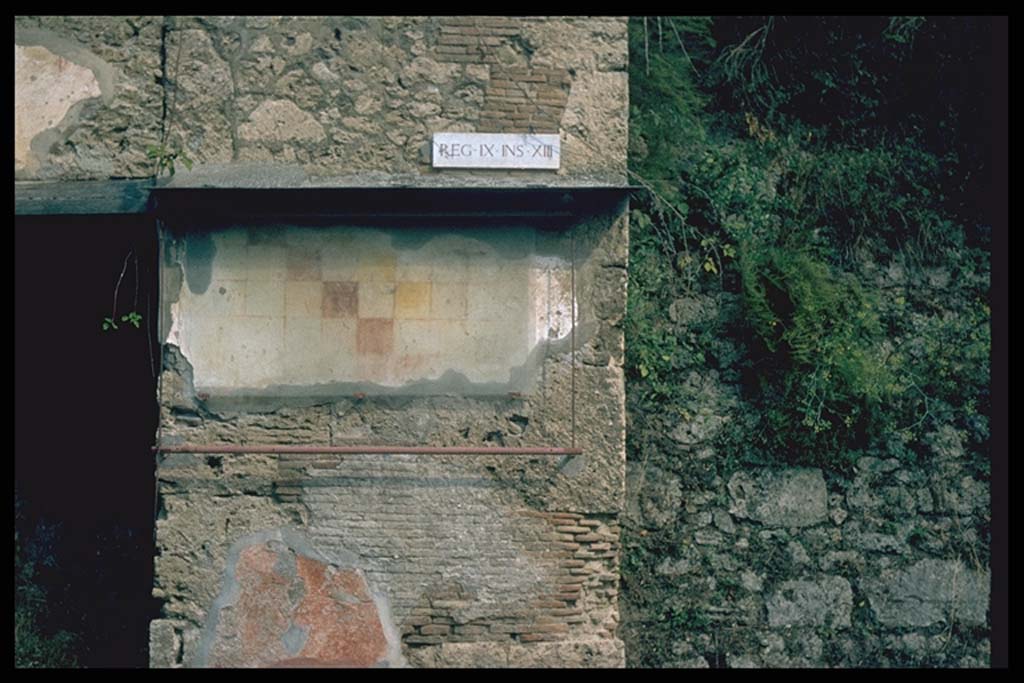
IX.13.6 Pompeii. Plaster with chessboard pattern to east of entrance.
Photographed 1970-79 by Günther Einhorn, picture courtesy of his son Ralf Einhorn.
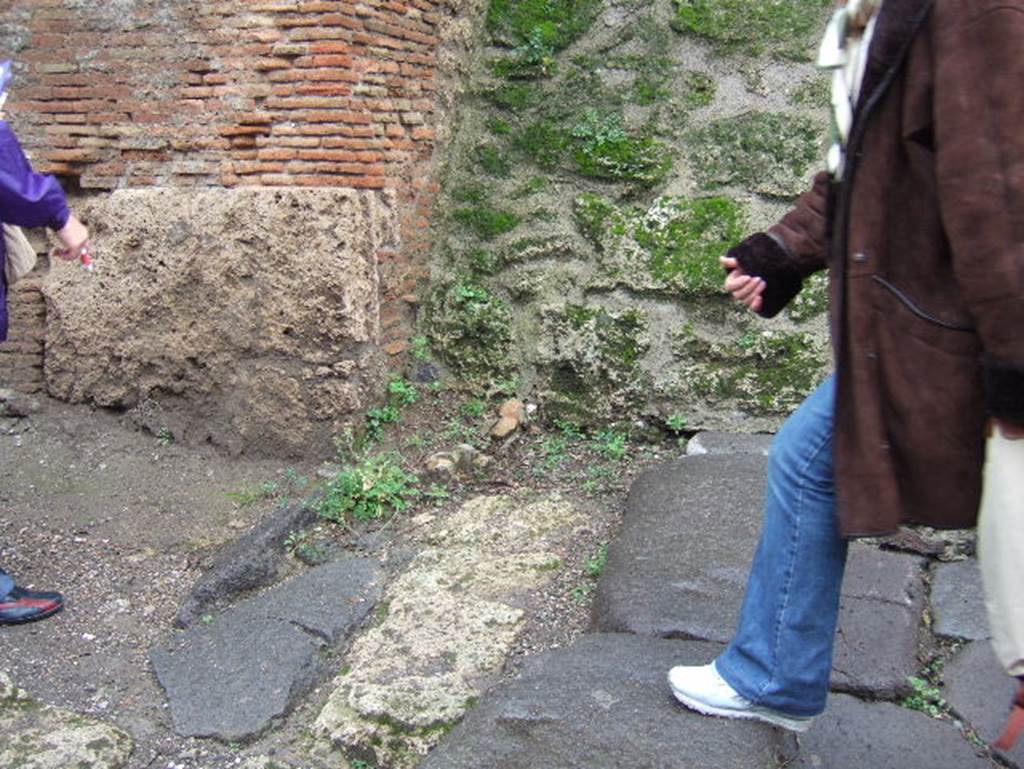
IX.13.6 Pompeii. December 2005. East corner of insula.
On this corner used to stand an amphora with its top half removed (Amphora Urinaria).
This was to receive the urine of passers-by for the use of the fullers or fullones.
According to Della Corte, found immediately at the turn into the eastern vicolo at the corner of the insula, was a terracotta amphora.
This had been conserved in situ from the time of excavation, (the end of April 1913).
It had been restored from broken pieces but found with a broken rim since antiquity. This was an example of a (Urinarium) gastrum.
It would have been placed there by the fuller Fabius Ululitremulus, to collect the urine of passer’s by for his industry’s use.
The urine was used as a bleach as part of the cleaning process.
See Della Corte, M., 1965. Case ed Abitanti di Pompei. Napoli: Fausto Fiorentino. (p.338)
See amphora in situ in SAP photo C 753 (=D80935) taken about 1915, shown in -
See Varone, A. and Stefani, G., 2009. Titulorum Pictorum
Pompeianorum, Rome:
L’erma di Bretschneider, (p.471)
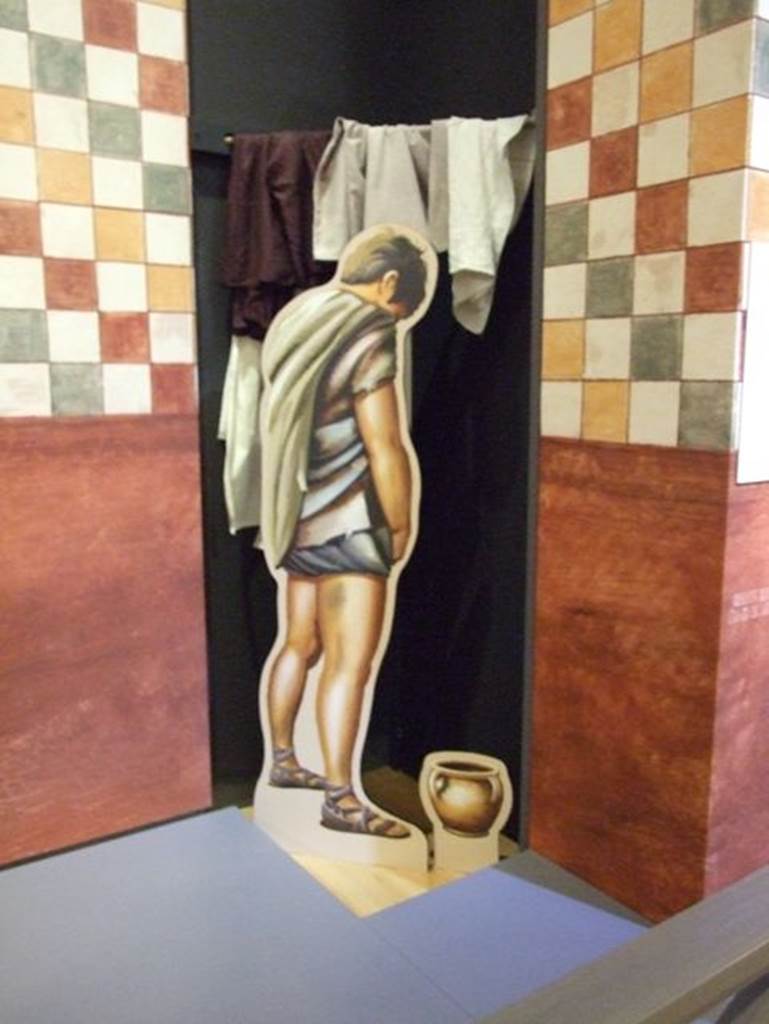
IX.13.6 Pompeii. Reconstruction of Amphora Urinaria, with realistic sound effects.
Photographed at “A Day in Pompeii” exhibition at Melbourne Museum. September 2009.
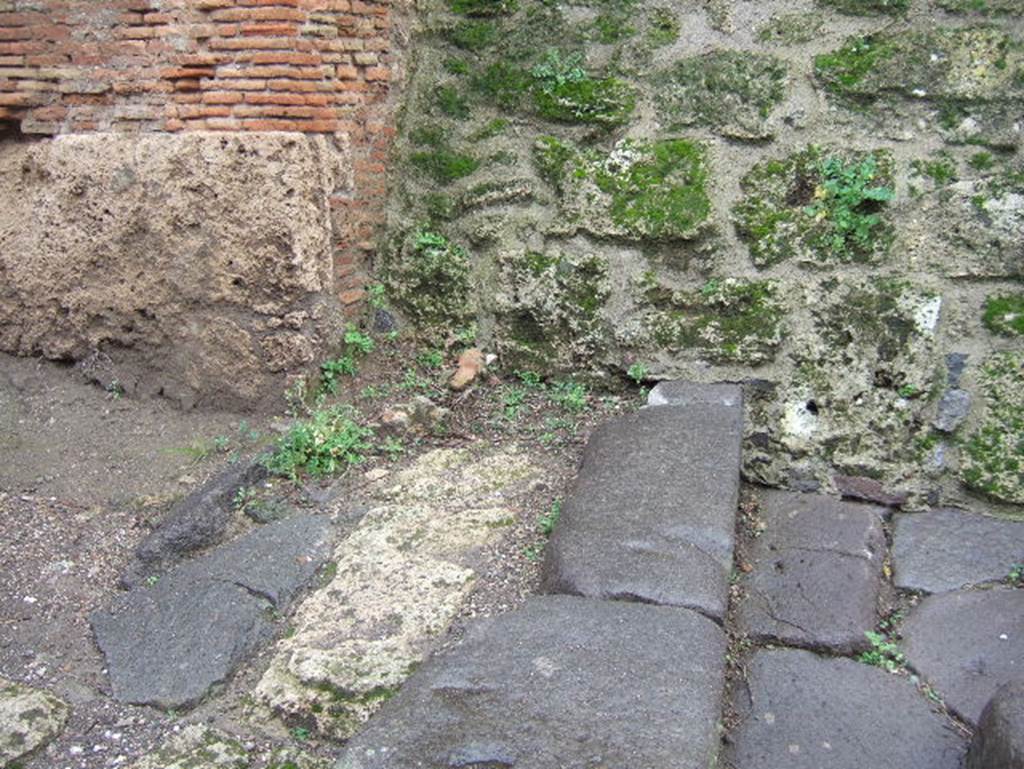
IX.13.6 Pompeii. December 2005. East corner of insula, adjoining unexcavated vicolo, looking north.