IX.9.c Pompeii. Casa del
Porcellino or Casa di Sulpicius Rufus.
Linked to IX.9.b. Excavated 1880 and 1887.
Part 1 Part 2 Part 3
Part 4 Part 5 Part 6

IX.9.c, Pompeii, on right. October 2023. Entrance doorway, on right. Photo
courtesy of Klaus Heese.
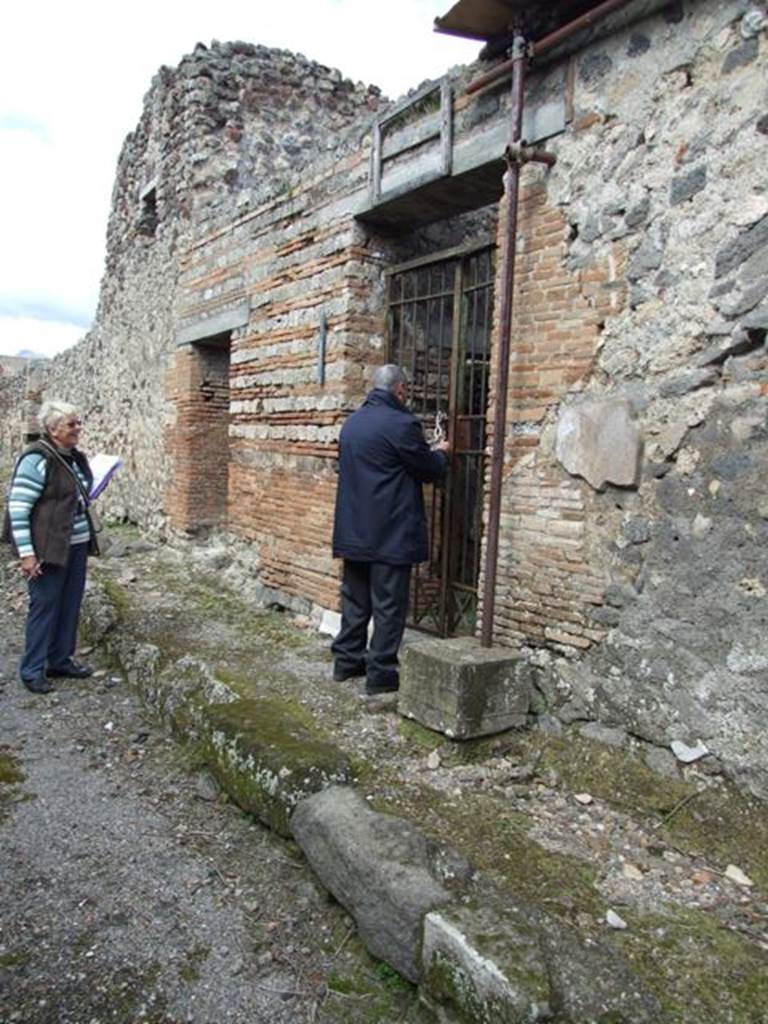
IX.9.c, Pompeii. October 2023. Entrance doorway. Photo courtesy of Klaus
Heese.
![IX.9.c Pompeii. March 2009. Entrance, looking north, with entrance at IX.9.b to the north. According to Della Corte, two seal/signets were found here. One with the name of - C. Sulpicius Rufus (S.90), and the other Q. Nolanius Primus (S.63). On the south side (right of doorway) a graffito was found with the initials Q.N. (CIL IV 5330).
Also found in the house were amphorae, several bearing the initials or name of Caesia Helpis and a certain Vibia. C(aesiae H(elpidi) ab Vibia (CIL IV 5792).
Three amphorae with their writing - Caesiae Helpidis (CIL IV 5789, 5791, 5793), according to Della Corte, made Cesia a producer of wine.
Della Corte thought, as had Mau, that Cesia was the wife of one of the named people on the seal/signet. See Della Corte, M., 1965. Case ed Abitanti di Pompei. Napoli: Fausto Fiorentino. (p.165)
According to Epigraphik-Datenbank Clauss/Slaby (See www.manfredclauss.de), these last three read as –
Caesiae Helpidis [CIL IV 5789]
Caesiae Helpidi
/ Vir
Tolm
/ IIAIX [CIL IV 5791]
PT VIIII
PL x PT VIIII
Caesiae Helpid(is) [CIL IV 5793]](9%2009%20c%20p1_files/image005.jpg)
IX.9.c Pompeii. March 2009. Entrance, looking north, with entrance at IX.9.b to the north.
According to Della Corte, two seal/signets were found here.
One with the name of - C. Sulpicius Rufus (S.90), and the other Q. Nolanius Primus (S.63).
On the south side (right of doorway) a graffito was found with the initials Q.N. (CIL IV 5330).
Also found in the house were amphorae, several bearing the initials or name of Caesia Helpis and a certain Vibia.
C(aesiae
H(elpidi)
ab Vibia (CIL IV 5792).
Three amphorae with their writing - Caesiae Helpidis (CIL IV 5789, 5791, 5793), according to Della Corte, made Cesia a producer of wine.
Della Corte thought, as had Mau, that Cesia was the wife of one of the named people on the seal/signet.
See Della Corte, M., 1965. Case ed Abitanti di Pompei. Napoli: Fausto Fiorentino. (p.165)
According to Epigraphik-Datenbank Clauss/Slaby (See www.manfredclauss.de), these last three read as –
Caesiae
Helpidis [CIL IV 5789]
Caesiae Helpidi
/ Vir
Tolm
/ IIAIX [CIL IV 5791]
PT VIIII
PL x PT VIIII
Caesiae
Helpid(is) [CIL IV 5793]
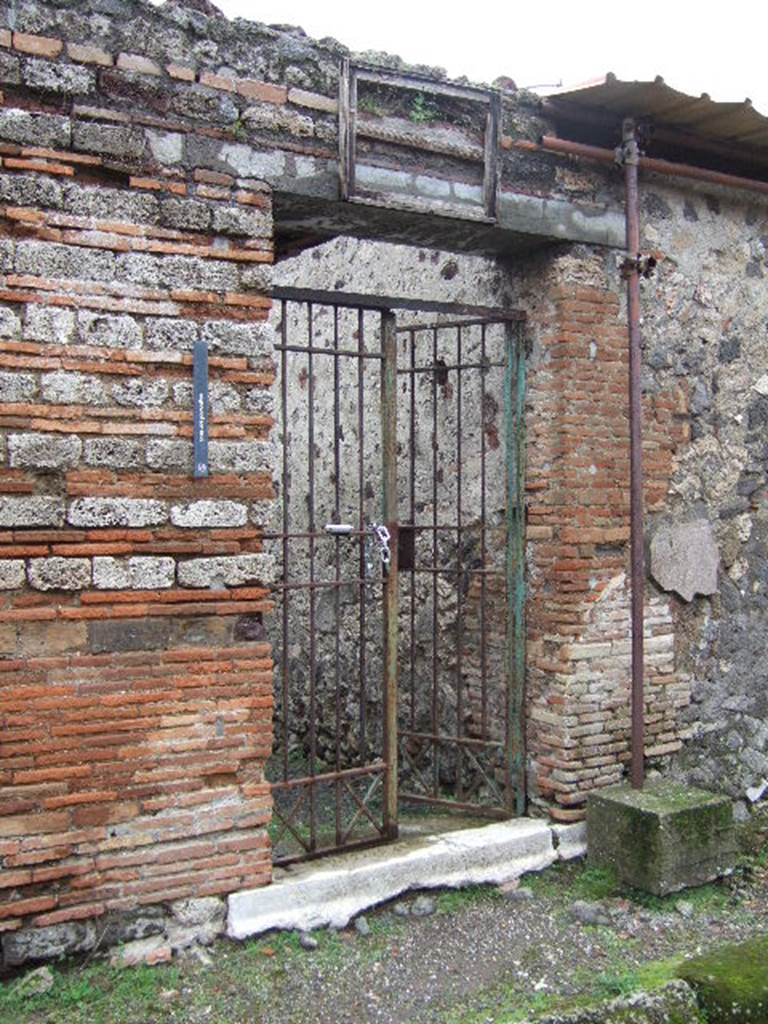
IX.9.c Pompeii. December 2005. Entrance doorway.
According to NdS, the door threshold was of travertine, and found in the doorjamb were the holes for the beam that strengthened the door.
See Notizie degli Scavi di Antichità, 1889, p. 126.
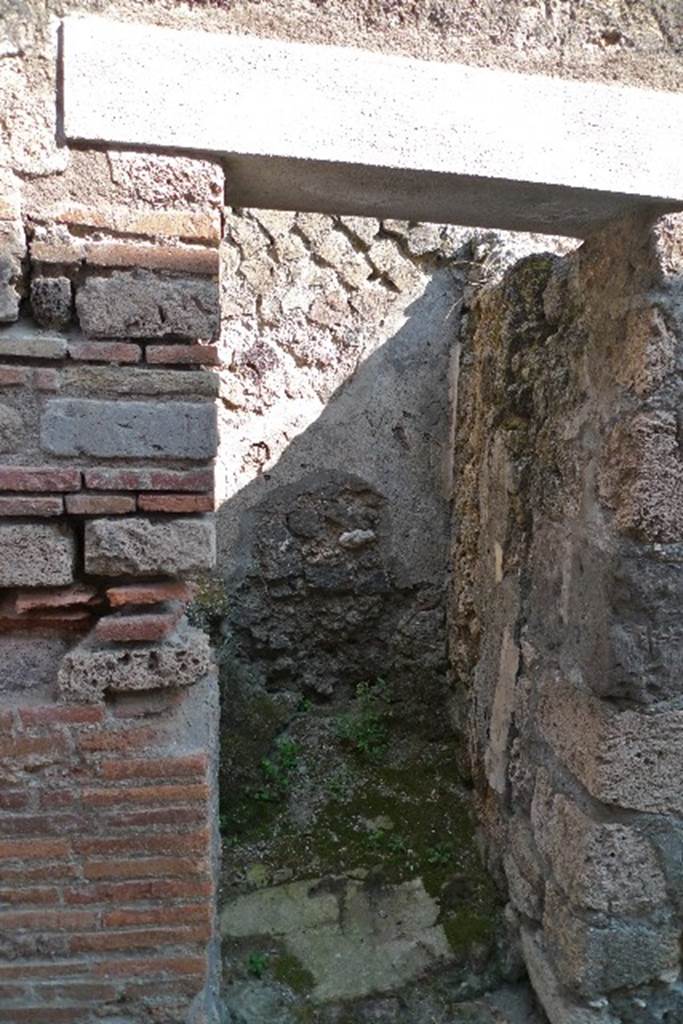
IX.9.c Pompeii. March 2009. Looking south. Remains of plastered and painted street frontage between IX.9.c and IX.9.d
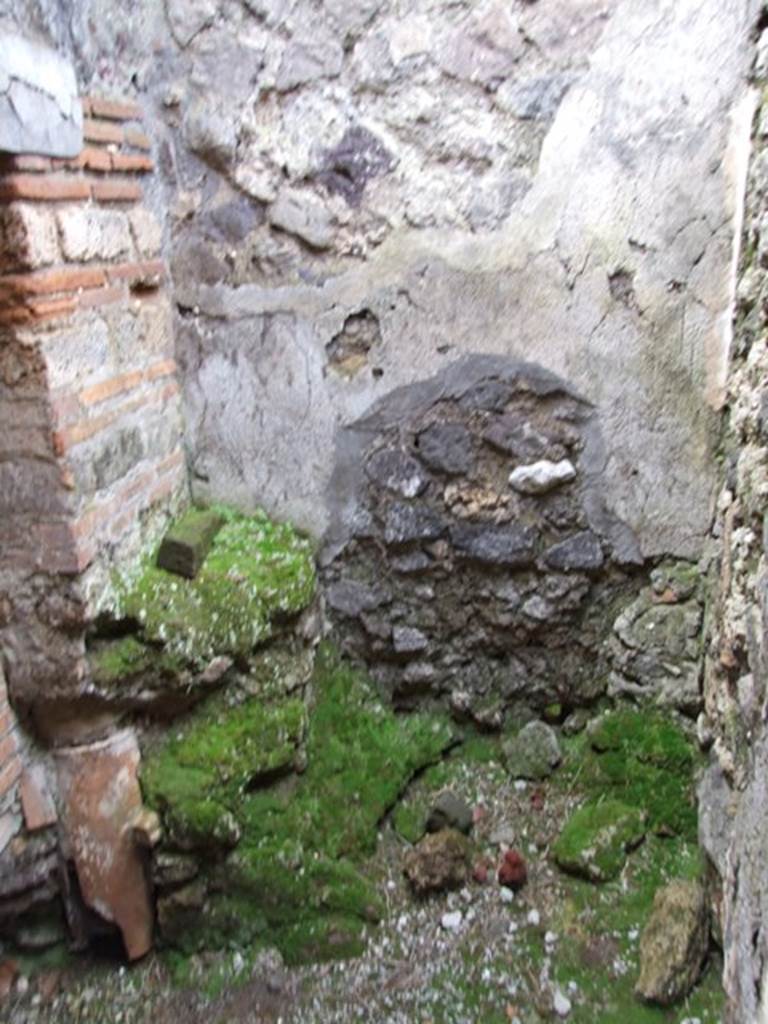
IX.9.c Pompeii. July 2010. Doorway into latrine, looking north. Photo courtesy of Michael Binns.
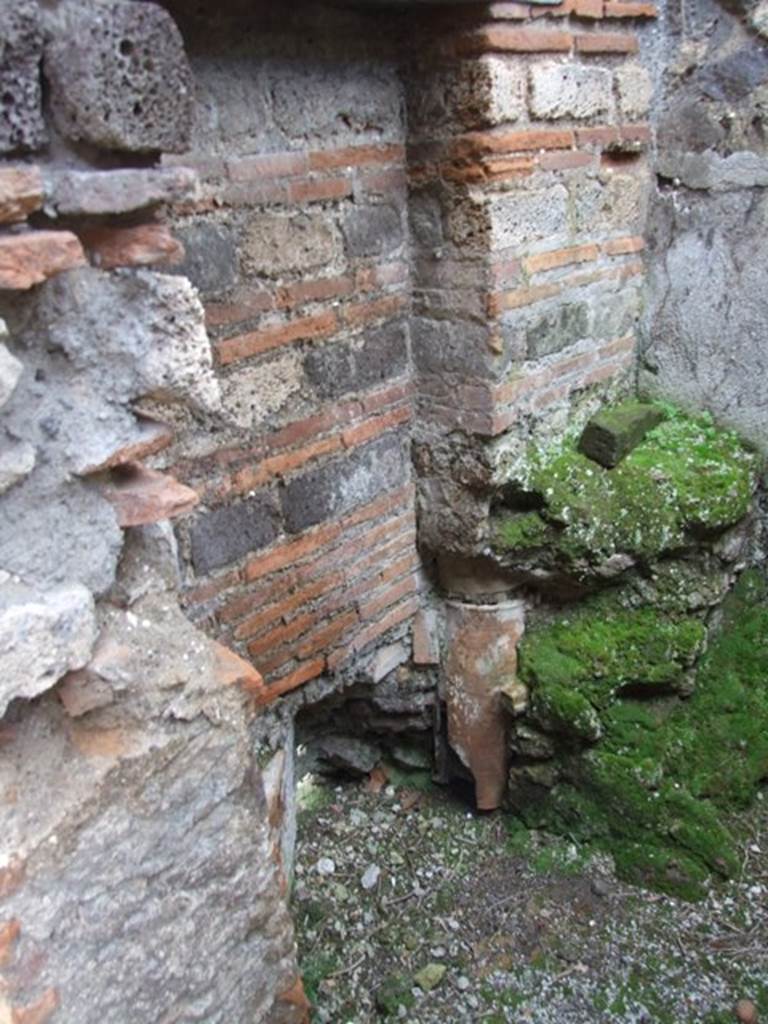
IX.9.c Pompeii. March 2009. North wall of latrine.
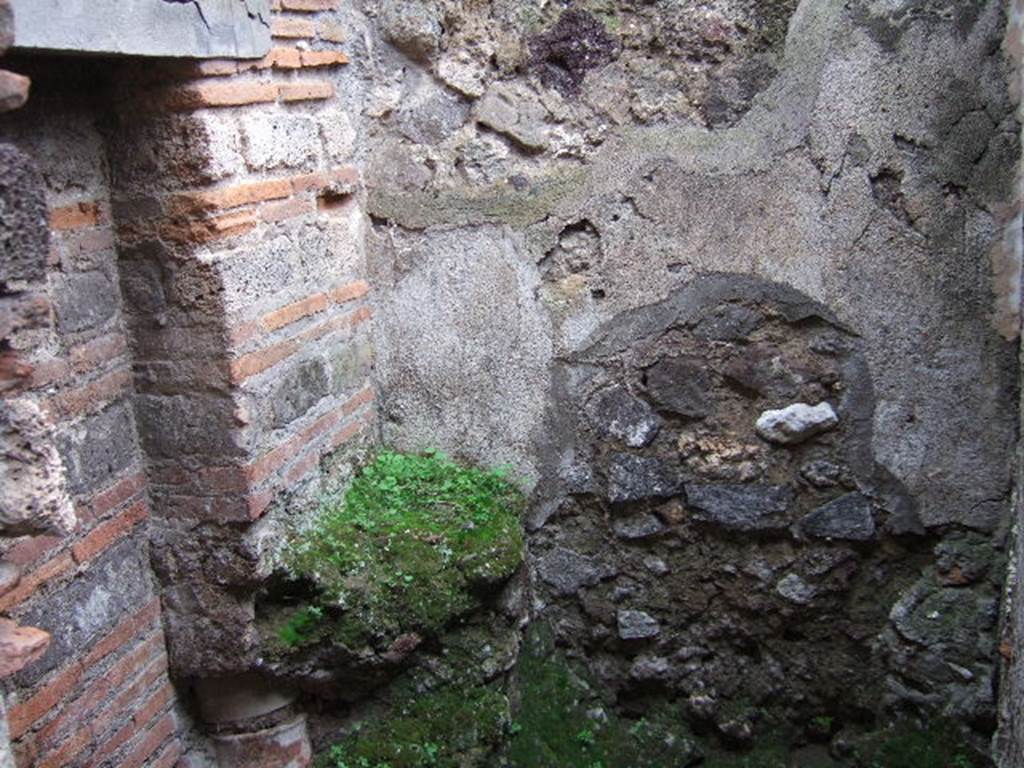
IX.9.c Pompeii. March 2009. West wall of latrine.
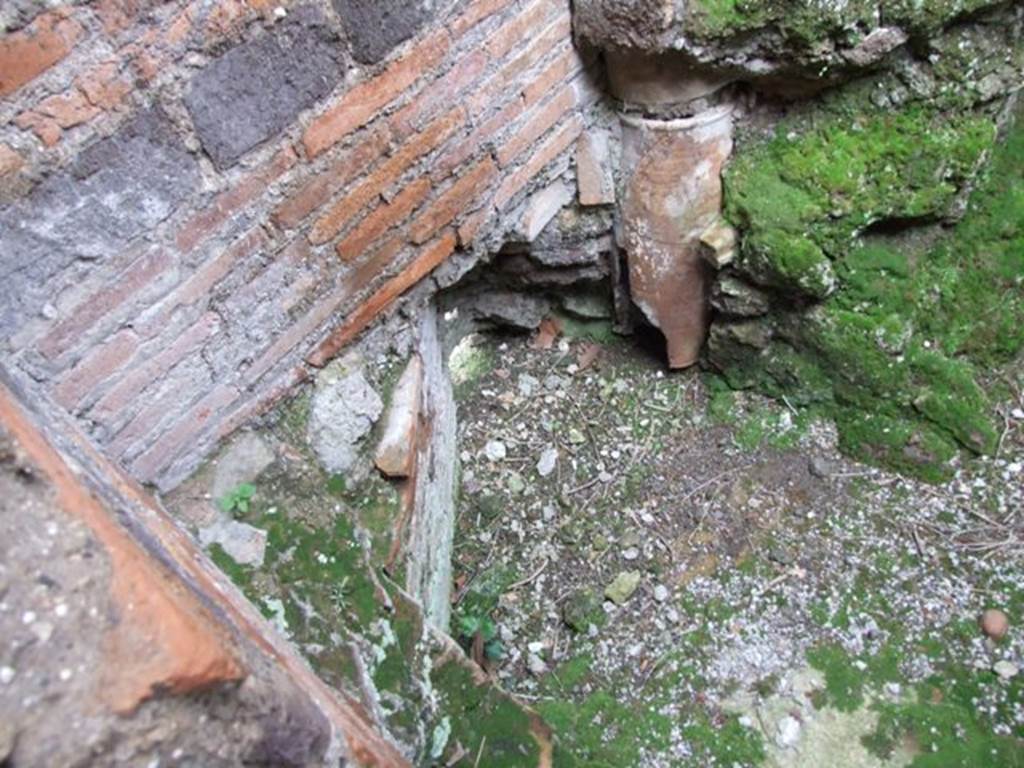
IX.9.c Pompeii. December 2005. Latrine with waste pipe from upper floor.
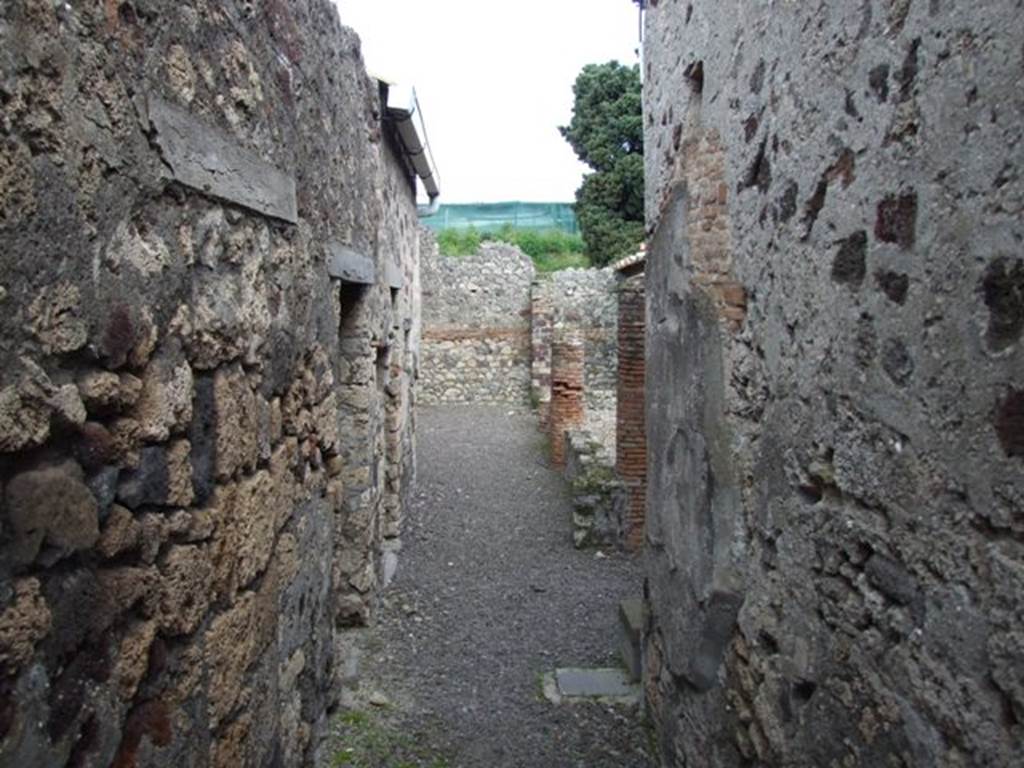
IX.9.c Pompeii. March 2009. West wall of latrine, with down pipe.

IX.9.c Pompeii. October 2023.
Looking east along north wall of entrance corridor, from doorway into
latrine, on left. Photo courtesy of Klaus Heese.
IX.9.c Pompeii. October 2023.
Looking east along south wall of entrance corridor. Photo courtesy of
Klaus Heese.

Looking east along
entrance fauces/corridor towards garden area. Photo courtesy of Klaus Heese.

IX.9.c Pompeii. March 2009. Looking east along entrance fauces towards garden.

IX.9.c Pompeii. March 2009. Doorway to cubiculum on north side of fauces.

IX.9.c Pompeii. March 2009. North wall of cubiculum.

IX.9.c Pompeii. March 2009. East wall of cubiculum.

IX.9.c Pompeii. March 2009. West wall of cubiculum.

IX.9.c Pompeii. March 2009. North wall of north-west corner of portico.
According to Boyce, in the pillar that separates two doorways on the north side of the peristyle was a rectangular niche.
The niche was adorned with a stucco aedicula façade which consisted of two half-columns supporting a pediment.
In the tympanum was a patera upon a bluish background.
Also according to Boyce, a bronze figure of Hygeia seated upon a throne with her feet upon a footstool, was found in a room to the left of the fauces.
On each side of the throne stood a small tree, around which coiled a serpent.
See Boyce G. K., 1937. Corpus of the Lararia of Pompeii. Rome: MAAR 14. (p. 93, no. 467, and Note 4)

IX.9.c Pompeii. March 2009. Lararium niche, with remains of aedicula facade, on the north wall between two cubicula.

IX.9.c Pompeii. March 2009. A small portion of the stuccoed half-column and pediment on its east end.

IX.9.c Pompeii. March 2009. Lararium niche.
Part 2 Part 3
Part 4 Part 5 Part 6