IX.8.1 Pompeii. Shop and rooms. Excavated 1879.
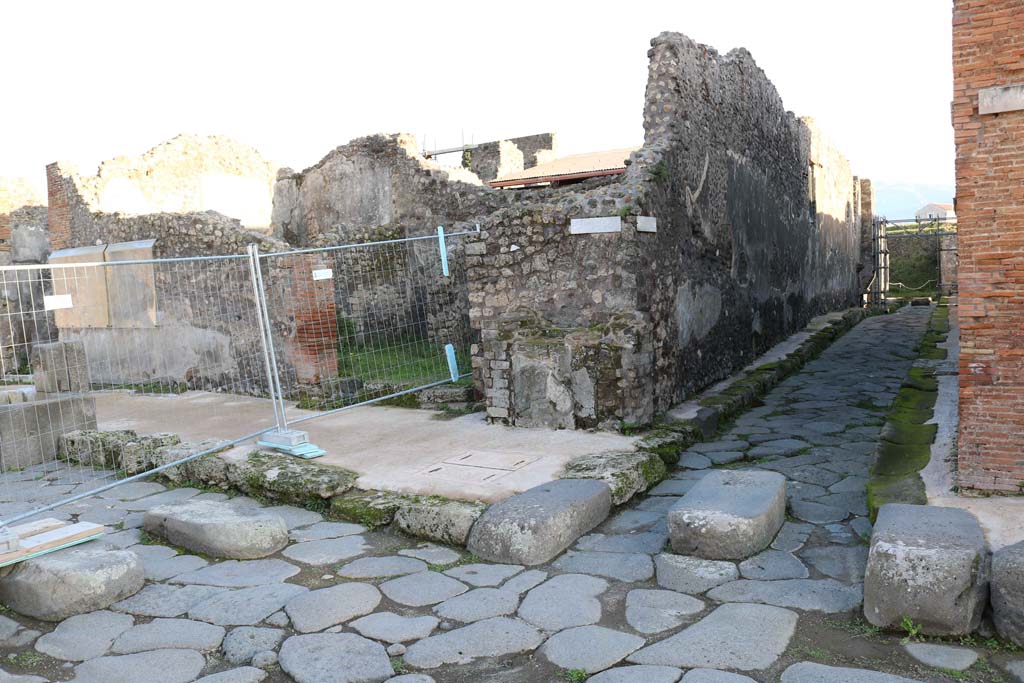
IX.8.1 Pompeii, in centre.
December 2018.
Looking towards entrance doorway on south side
of Via di Nola. Photo courtesy of Aude Durand.
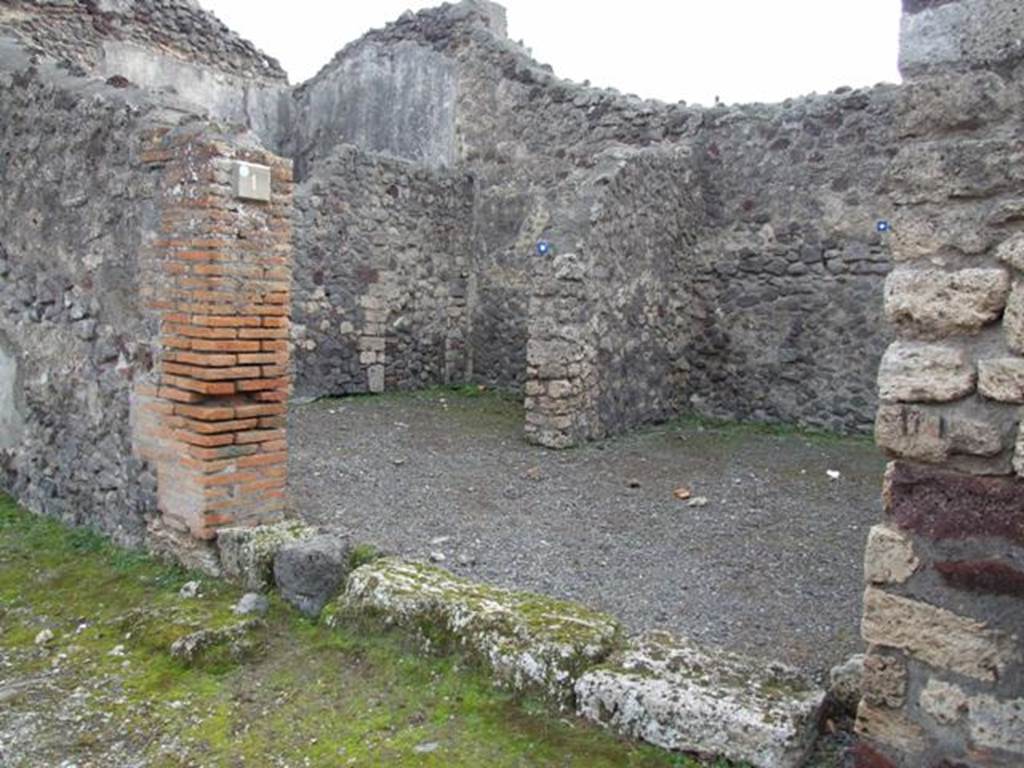
IX.8.1 Pompeii. December 2007. Entrance doorway on Via di Nola, looking south-east.
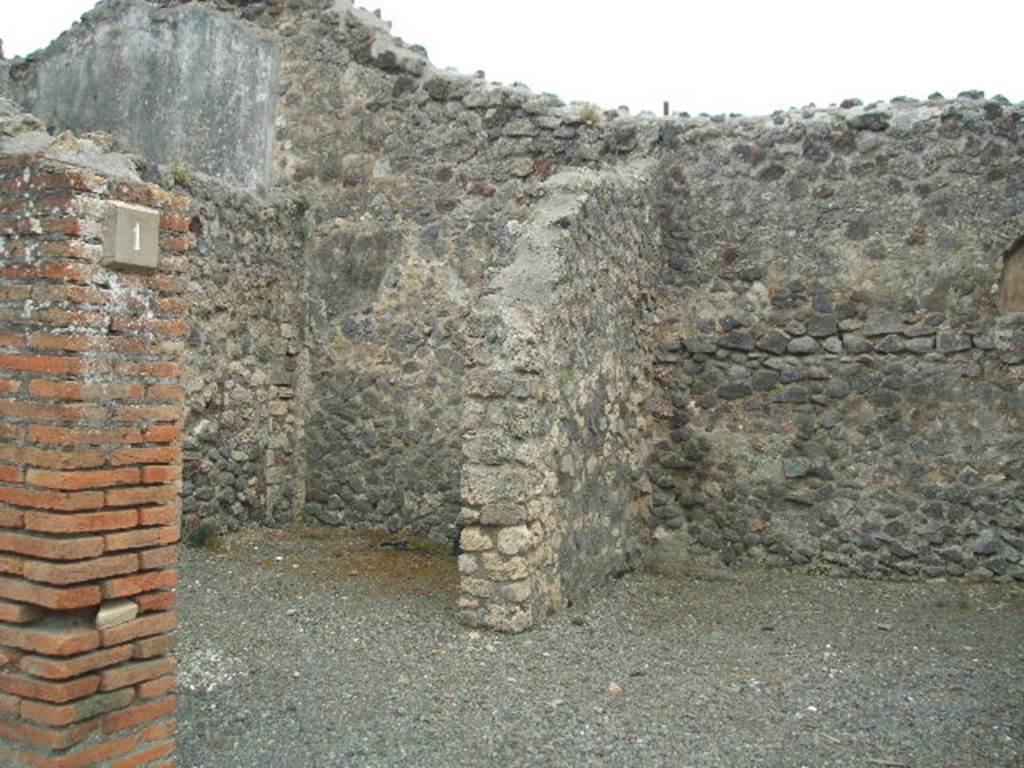
IX.8.1 Pompeii. December 2005. Shop with rooms on east side.
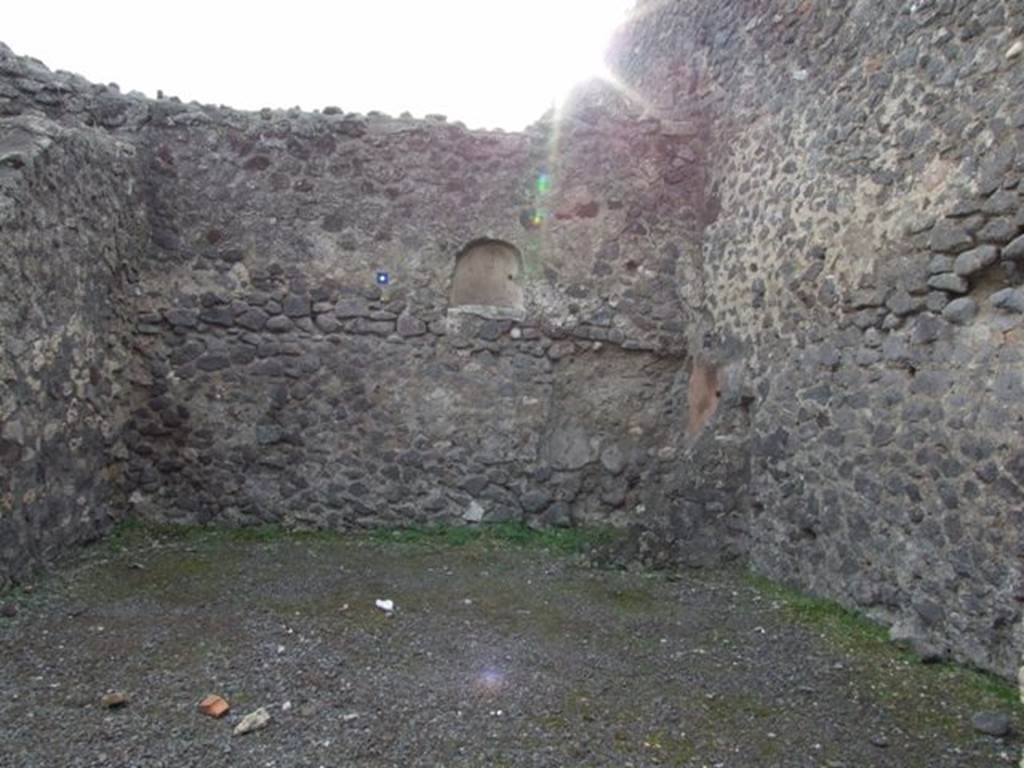
IX.8.1 Pompeii. December 2007. Looking towards south wall and niche in shop.
According to Boyce, in the north wall of the main room was an arched niche, its walls coated with white stucco.
See Boyce G. K., 1937. Corpus of the Lararia of Pompeii. Rome: MAAR 14. (p. 89, no. 447).
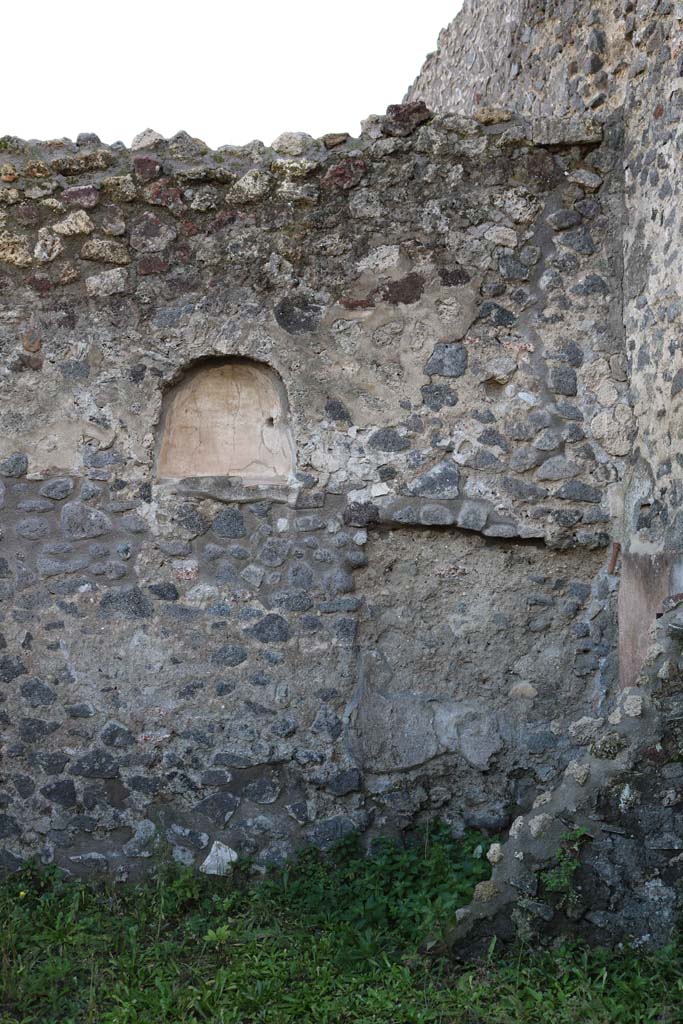
IX.8.1 Pompeii. December 2018.
Niche at west end of south wall in shop, and
area of latrine, on right. Photo courtesy of Aude Durand.
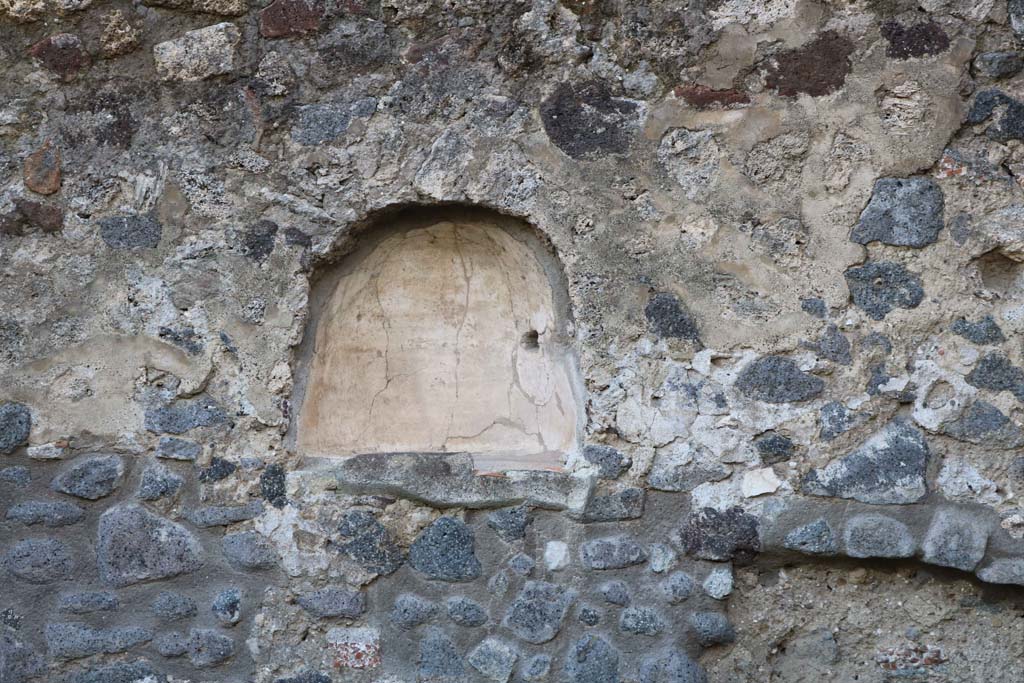
IX.8.1 Pompeii. December 2018. Niche on south
wall of shop, at west end. Photo courtesy of Aude Durand.
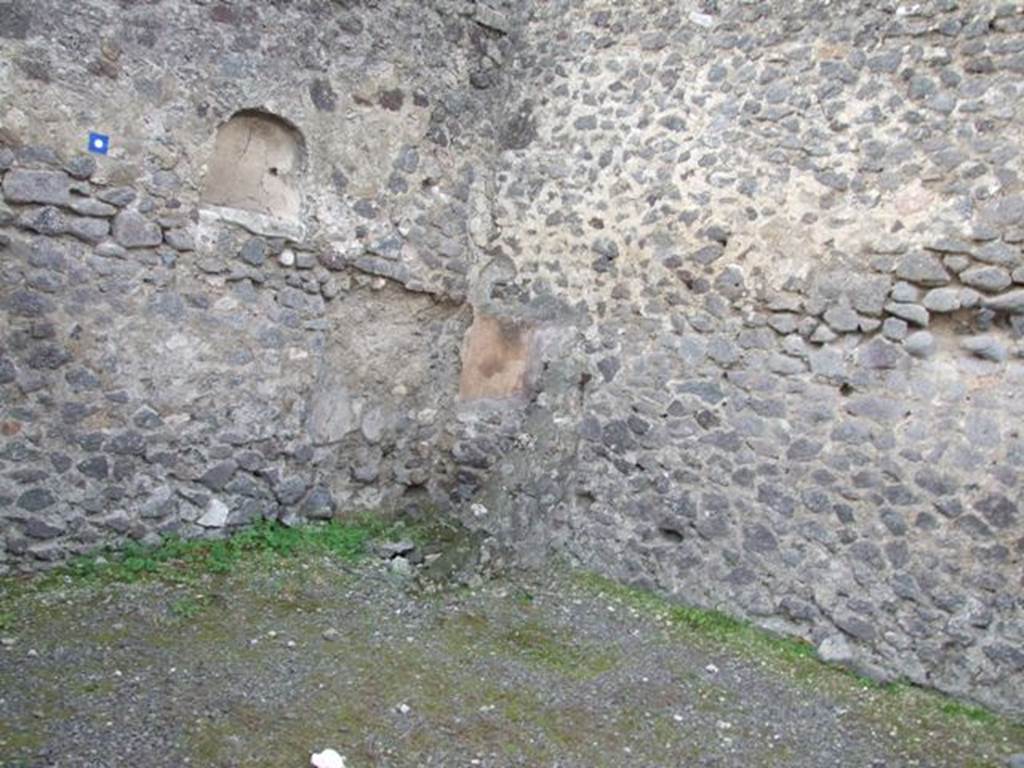
IX.8.1 Pompeii. December 2007. Looking towards south-west corner of shop, the site of the latrine under the stairs to the upper floor.
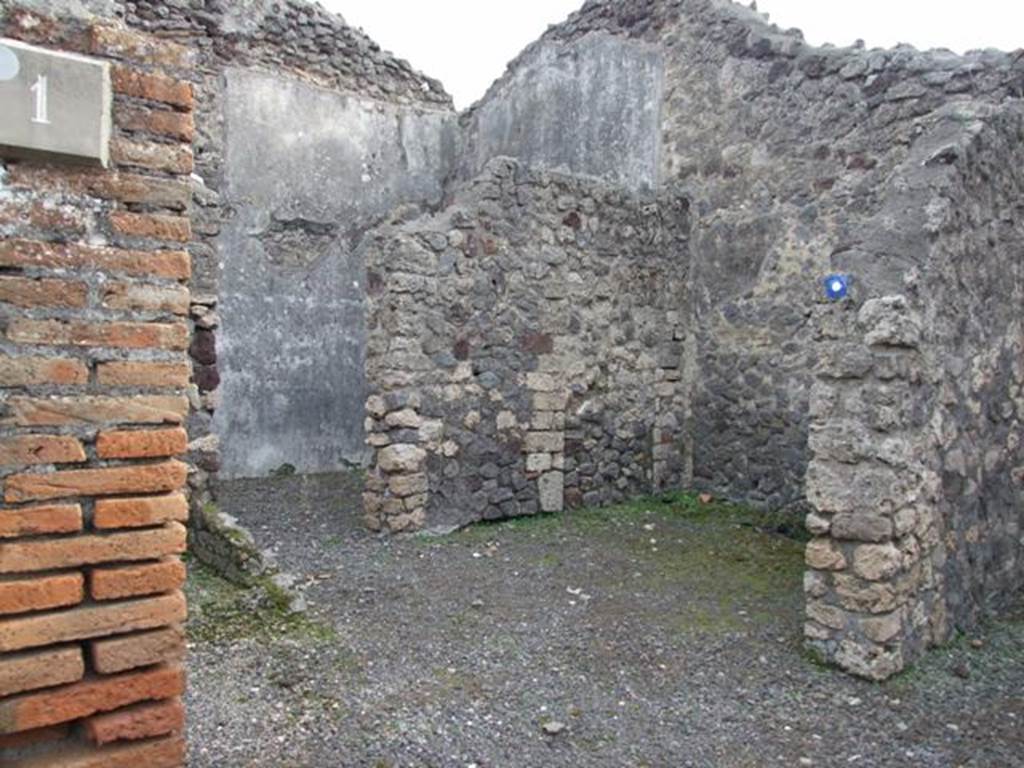
IX.8.1 Pompeii. December 2007. Rooms on east side of shop.
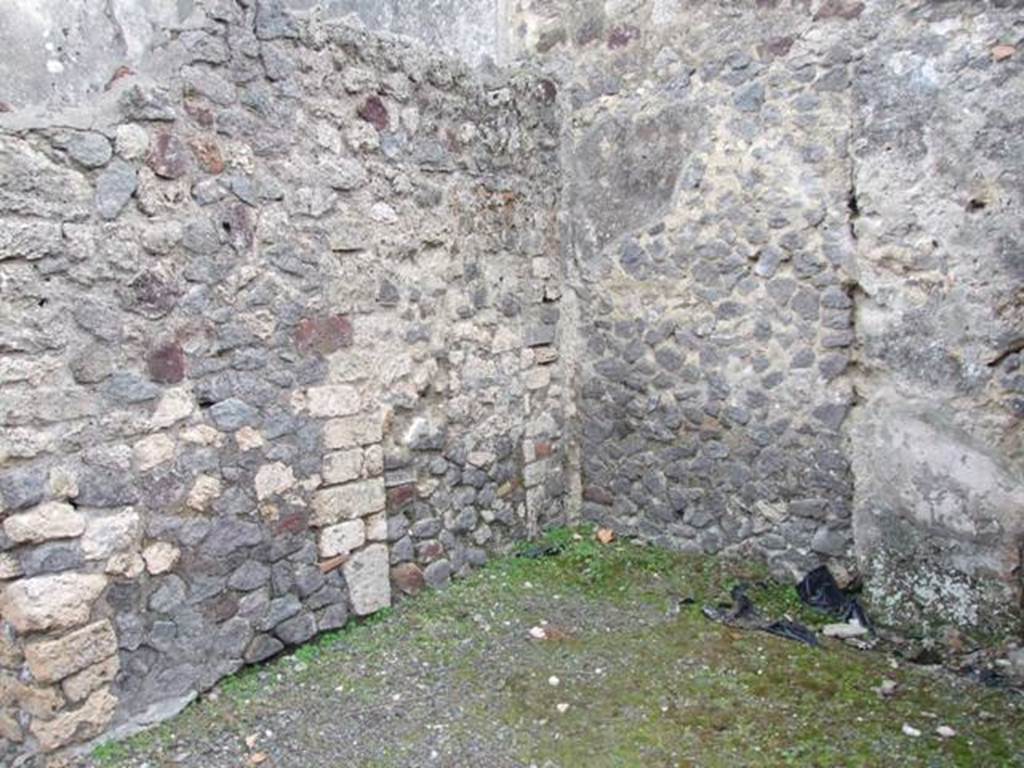
IX.8.1 Pompeii. December 2007. First room to east of shop, looking towards south-east corner.
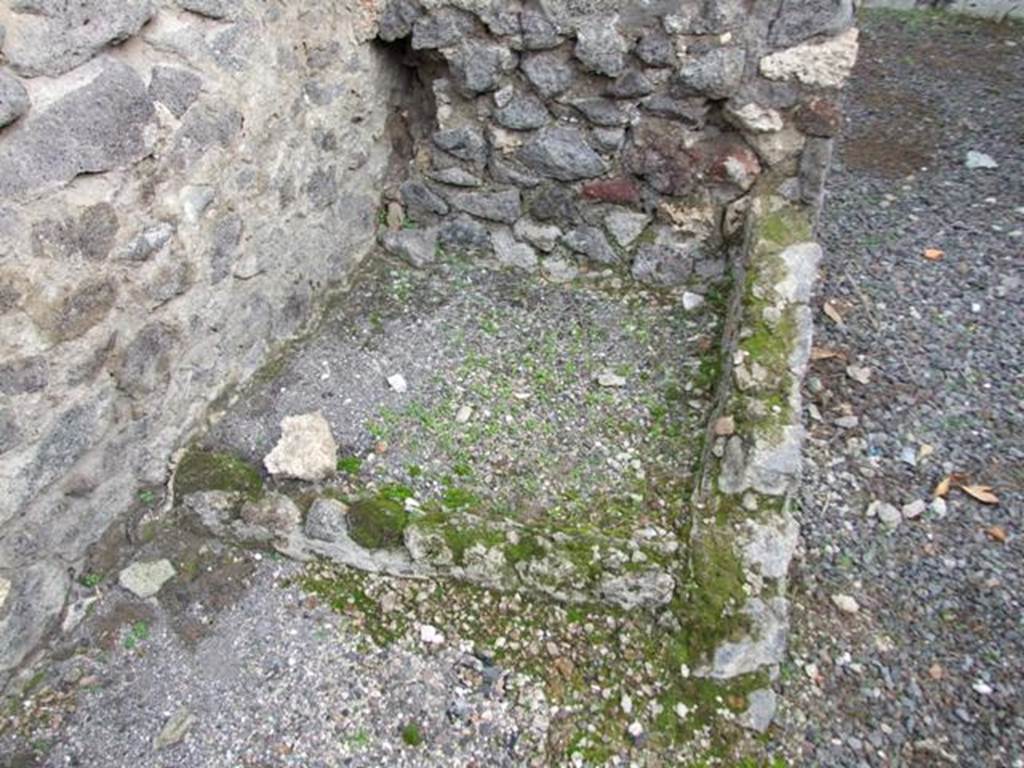
IX.8.1 Pompeii. December 2007. Water-basins against north wall of first room to east of shop.
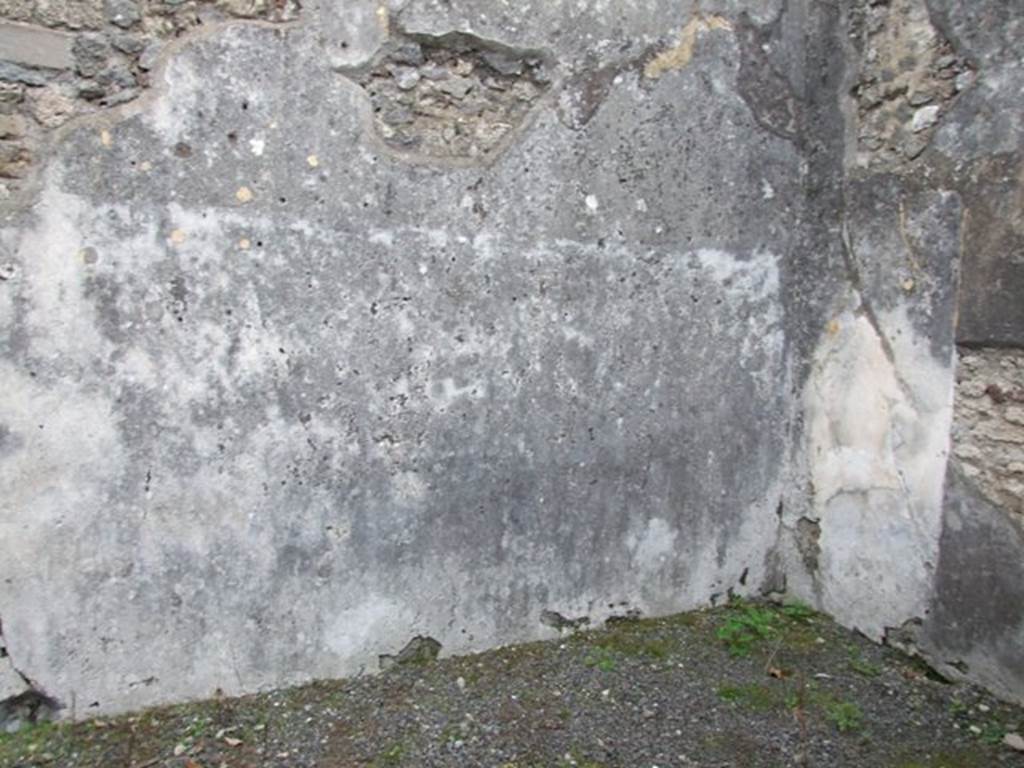
IX.8.1 Pompeii. December 2007. Second room to east of shop, east wall.
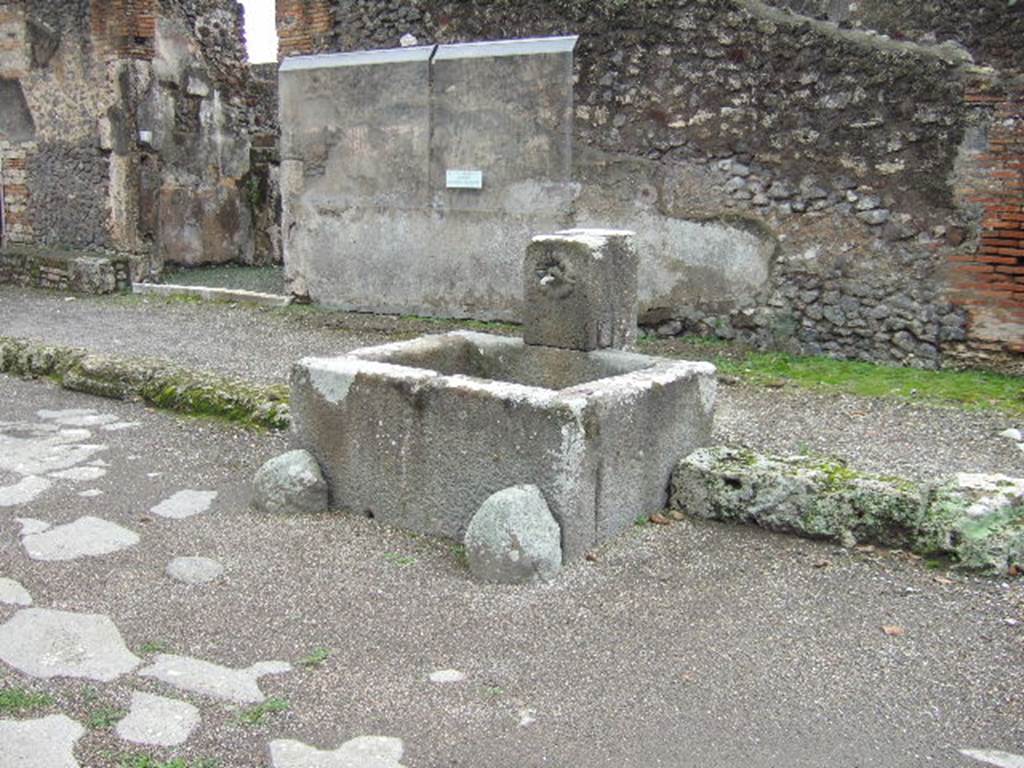
Fountain on Via di Nola, between IX.8.1 and IX.8.2, Pompeii. December 2005.
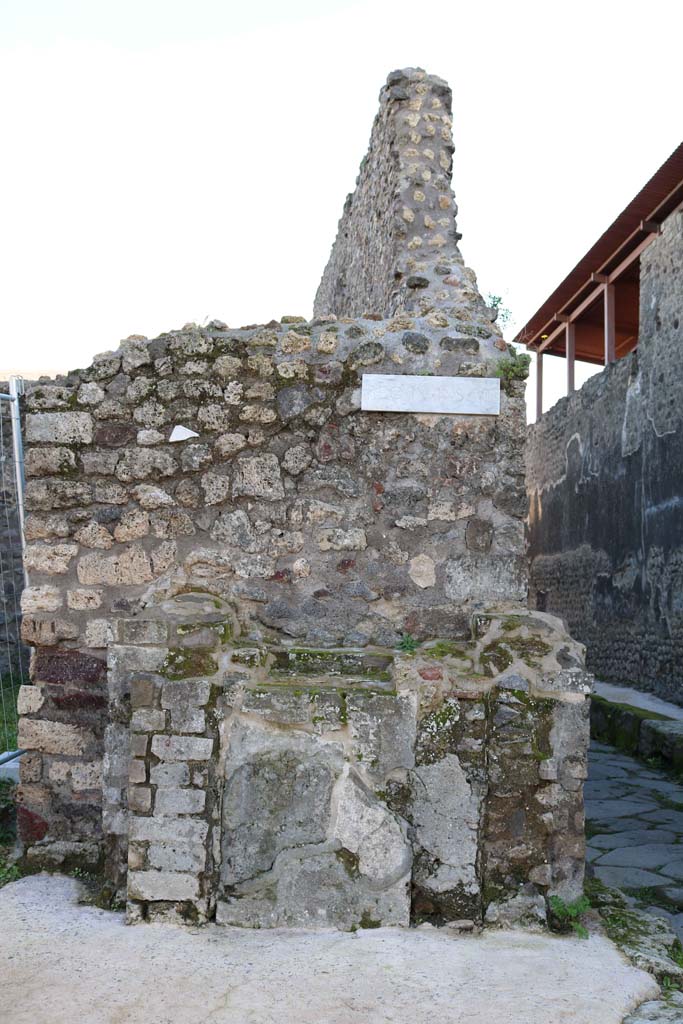
Street altar outside IX.8.1, on Via di Nola. December
2018.
Looking south. Photo courtesy of Aude Durand.
![IX.8.1 Pompeii. December 2005. North-west corner of insula, with street shrine, on west (right) side of entrance.
According to Della Corte, found at the turn in the vicolo, to the right of the entrance of shop number 1, was a recommendation –
Seppius rog(at) [CIL IV 3781].
See Della Corte, M., 1965. Case ed Abitanti di Pompei. Napoli: Fausto Fiorentino. (p.134)
According to Epigraphik-Datenbank Clauss/Slaby (See www.manfredclauss.de), it read –
]M IIvir(um)
[3]VI
Seppius rog(at)
[3]IV[](9%2008%2001_files/image025.jpg)
IX.8.1 Pompeii. December 2005. North-west corner of insula, with street shrine, on west (right) side of entrance.
According to Della Corte, found at the turn in the vicolo, to the right of the entrance of shop number 1, was a recommendation –
Seppius
rog(at) [CIL IV 3781].
See Della Corte, M., 1965. Case ed Abitanti di Pompei. Napoli: Fausto Fiorentino. (p.134)
According to Epigraphik-Datenbank Clauss/Slaby (See www.manfredclauss.de), it read –
]M IIvir(um)
[3]VI
Seppius rog(at)
[3]IV[
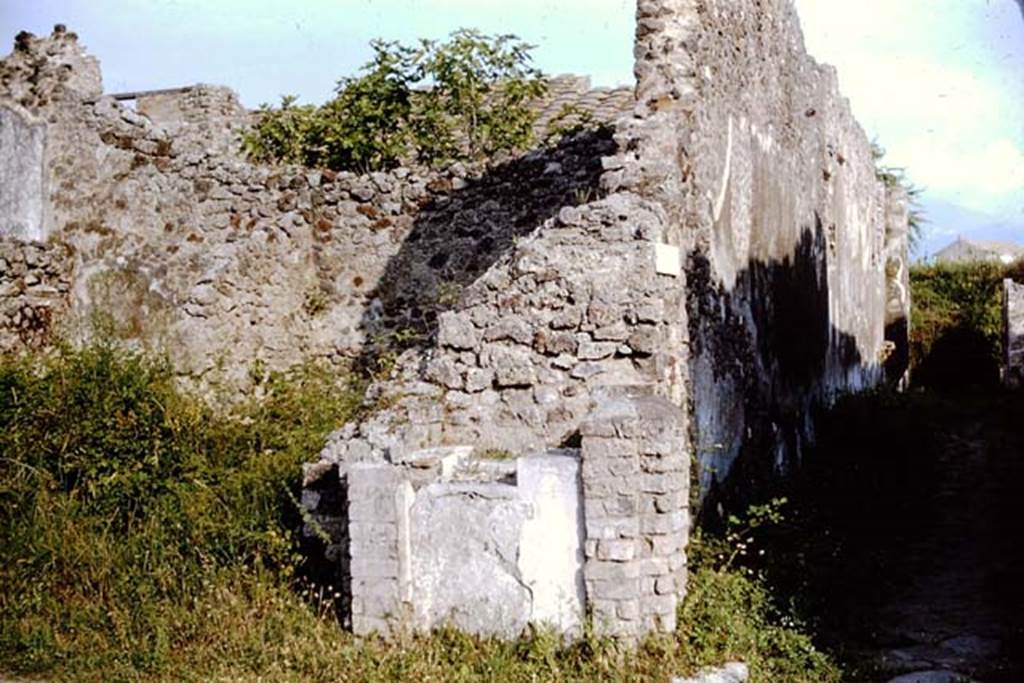
IX.8.1 Pompeii. 1964.
North-west corner of insula, with street shrine, on west (right) side of entrance. Photo by Stanley A. Jashemski.
Source: The Wilhelmina and Stanley A. Jashemski archive in the University of Maryland Library, Special Collections (See collection page) and made available under the Creative Commons Attribution-Non Commercial License v.4. See Licence and use details.
J64f1252
![IX.8.1 Pompeii . March 2009. Looking south along Vicolo del Centenario.
According to Not. Scavi,1880,p.298-299 “In the beginning of July the digging of the upper soil situated to the east of insula 5 and 6 of Reg. IX began…… In August began the excavation of the vicolo on the east of this insula, and the following painted inscriptions appeared: Found at the north-east corner of the vicolo, the side that looked onto the vicolo (on the right), painted on rough plaster in red letters –
N. Herennium Celsum
d.v.v.a.s.p.p.d.r.p.o.v.f ///st
According to Epigraphik-Datenbank Clauss/Slaby (See www.manfredclauss.de), this is CIL IV 3771, and read as -
N(umerium) Herennium Celsum
d(uum)v(irum) v(iis) a(edibus) s(acris) p(ublicis) p(rocurandis) d(ignum) r(ei) p(ublicae) o(ro) v(os) f(aciatis) d(ignus?) est [CIL IV 3771]
Found on the east side of the vicolo (on the left), on white rough plaster in red letters –
Nepote
According to Epigraphik-Datenbank Clauss/Slaby (See www.manfredclauss.de), this is CIL IV 3823, and read as -
Nepote [CIL IV 3823]](9%2008%2001_files/image029.jpg)
IX.8.1, Pompeii, a side wall on left. March 2009. Looking south along Vicolo del Centenario.
According to Notizie degli Scavi di Antichità, 1880, p.298-299 –
“In the beginning of July the digging of the upper soil situated to the east of insula 5 and 6 of Reg. IX began……
In August began the excavation of the vicolo on the east of this insula, and the following painted inscriptions appeared:
Found at the north-east corner of the vicolo, the side that looked onto the vicolo (on the right), painted on rough plaster in red letters –
N. Herennium
Celsum
d.v.v.a.s.p.p.d.r.p.o.v.f
///st
According to Epigraphik-Datenbank Clauss/Slaby (See www.manfredclauss.de), this is CIL IV 3771, and read as -
N(umerium) Herennium
Celsum
d(uum)v(irum) v(iis)
a(edibus) s(acris) p(ublicis)
p(rocurandis) d(ignum) r(ei)
p(ublicae) o(ro) v(os)
f(aciatis) d(ignus?) est
[CIL IV 3771]
Found on the east side of the vicolo (on the left), on white rough plaster in red letters –
Nepote
According to Epigraphik-Datenbank Clauss/Slaby (See www.manfredclauss.de), this is CIL IV 3823, and read as -
Nepote [CIL IV 3823]
Found near the preceding –
![According to Epigraphik-Datenbank Clauss/Slaby (See www.manfredclauss.de), this is CIL IV 3884, and reads as
D(ecimi) Lucreti
Satri Valentis flaminis Neronis Caesaris Augusti fili(i)
perpetui gladiatorum paria XX et D(ecimi) Lucreti{o} Valentis fili(i)
glad(iatorum) paria X pug(nabunt) Pompeis IV V VI III pr(idie) Idus Apr(iles) venatio legitima
et vela erunt
/ Scr(ipsit)
Celer
/ Scr(ipsit)
Aemilius
Celer sing(ulus)
ad luna(m) [CIL IV 3884]
According to Cooley, this was found on the west side of IX.8, and translates as -.
20 Pairs of gladiators of Decimus Lucretius (Celer wrote this - signed within the last C of Lucretius) Satrius Valens, perpetual priest of Nero and 10 pairs of gladiators of Decimus Lucretius Valens, his son, will fight at Pompeii on 8,9,10,11,12 April.
There will be a regular hunt and awnings.
Aemilius Celer wrote this on his own by the light of the moon. (Celer signed to the right hand side of the notice).
See Cooley, A. and M.G.L., 2004. Pompeii : A Sourcebook. London : Routledge. (p.50)](9%2008%2001_files/image031.jpg)
According to Epigraphik-Datenbank Clauss/Slaby (See www.manfredclauss.de), this is CIL IV 3884, and reads as
D(ecimi) Lucreti
Satri Valentis
flaminis Neronis Caesaris Augusti fili(i)
perpetui
gladiatorum paria XX et D(ecimi) Lucreti{o} Valentis fili(i)
glad(iatorum)
paria X pug(nabunt) Pompeis IV V VI III pr(idie) Idus Apr(iles) venatio
legitima
et vela erunt
/ Scr(ipsit)
Celer
/ Scr(ipsit)
Aemilius
Celer sing(ulus)
ad luna(m) [CIL IV 3884]
According to Cooley, this was found on the west side of IX.8, and translates as
-
20 Pairs of gladiators of Decimus Lucretius (Celer wrote this - signed within the last C of Lucretius) Satrius Valens, perpetual priest of Nero and 10 pairs of gladiators of Decimus Lucretius Valens, his son, will fight at Pompeii on 8,9,10,11,12 April.
There will be a regular hunt and awnings.
Aemilius Celer wrote this on his own by the light of the moon. (Celer signed to the right-hand side of the notice).
See Cooley, A. and M.G.L., 2004. Pompeii: A Sourcebook. London: Routledge. (p.50).
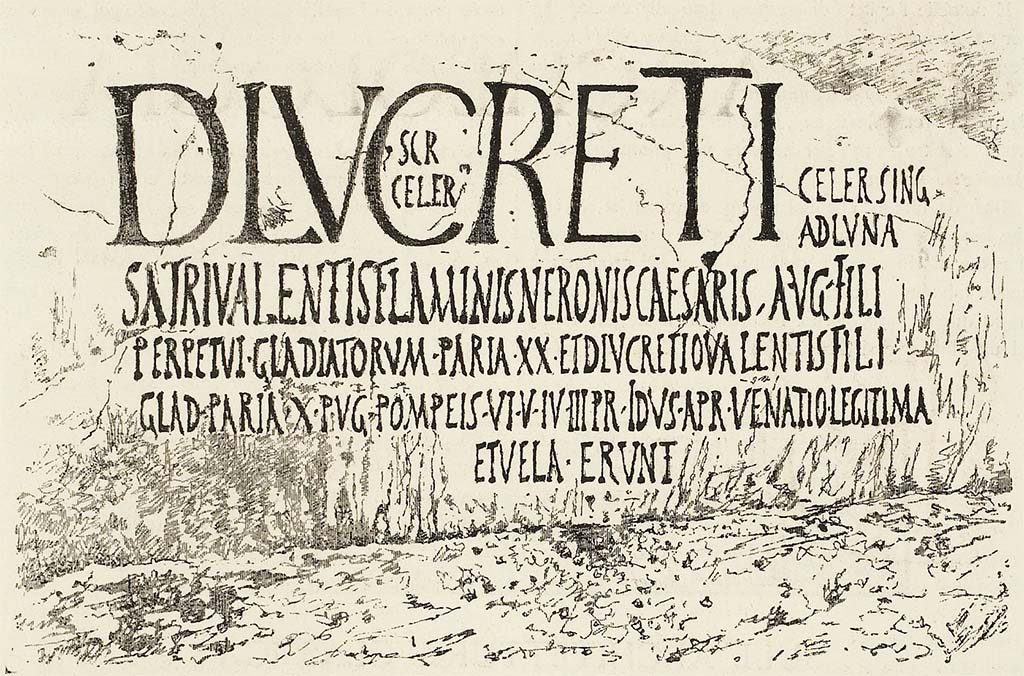
IX.8.1, Pompeii. Drawing of painted inscription from west side of insula IX.8 in Vicolo del Centenario.
See Mele, A.
(ed.) Pompei. Rivista illustrata di archeologia popolare e industriale e
d’arte. Anno 1, num. 4, 30 Giugno
1881. (p.3).
According to Giulio Minervini, this read in italian–
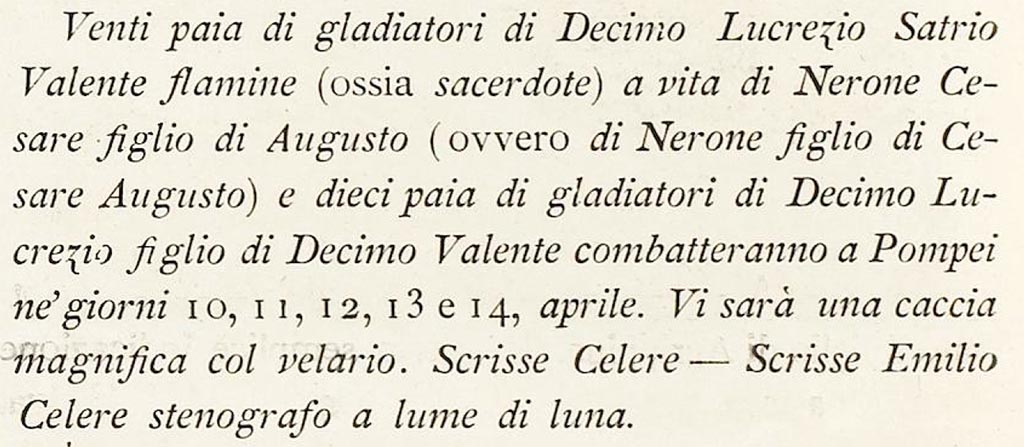
IX.8.1, Pompeii. Italian translation of painted inscription
from west side of insula IX.8 in Vicolo del Centenario.
See Mele, A.
(ed.) Pompei. Rivista illustrata di archeologia popolare e industriale e
d’arte. Anno 1, num. 4, 30 Giugno
1881. (p.2).
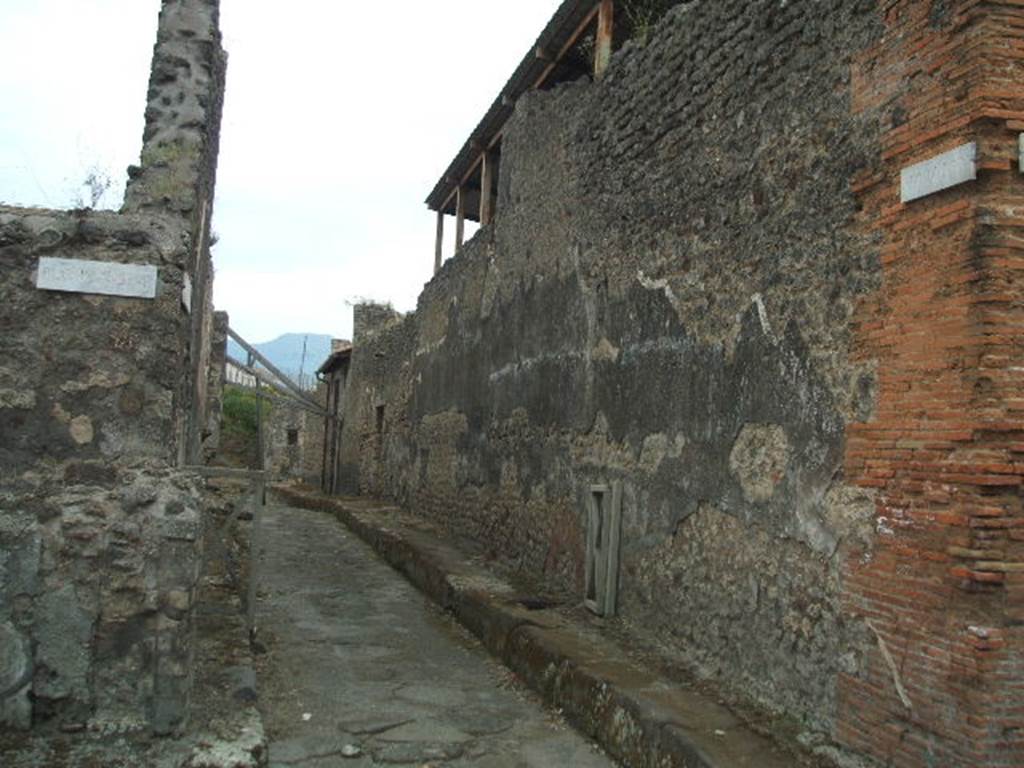
IX.8.1 Pompeii, street altar, on left. Vicolo del Centenario looking south. Corner of IX.5, on right.