IX.7.7 Pompeii. Shop. Linked to IX.7.5 and 6. Partly excavated 1912.
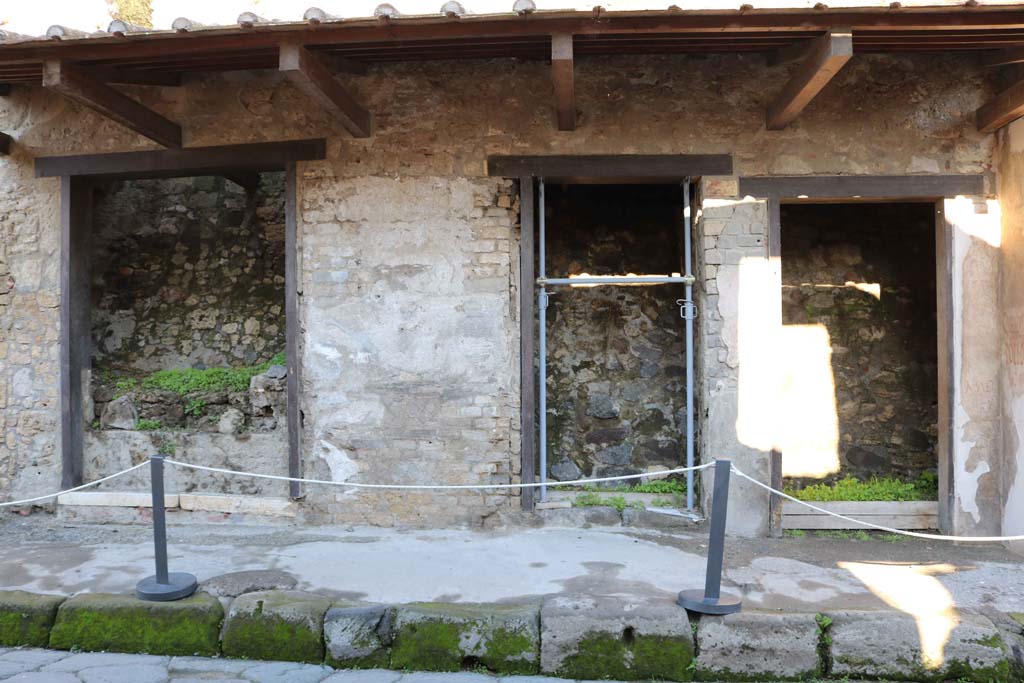
IX.7.7
Pompeii on left, IX.7.6 in centre, and IX.7.5 on right. December 2018. Looking
north towards entrances. Photo courtesy of Aude Durand.
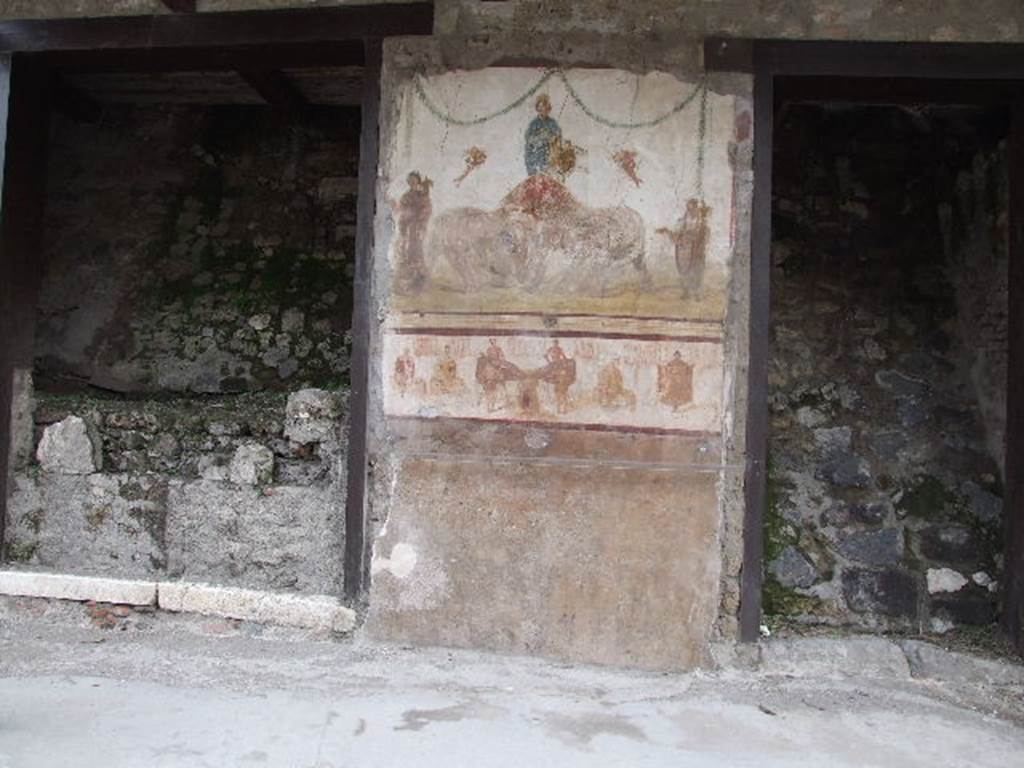
IX.7.7 Pompeii. December 2006. Shop on left and IX.7.6 on right.
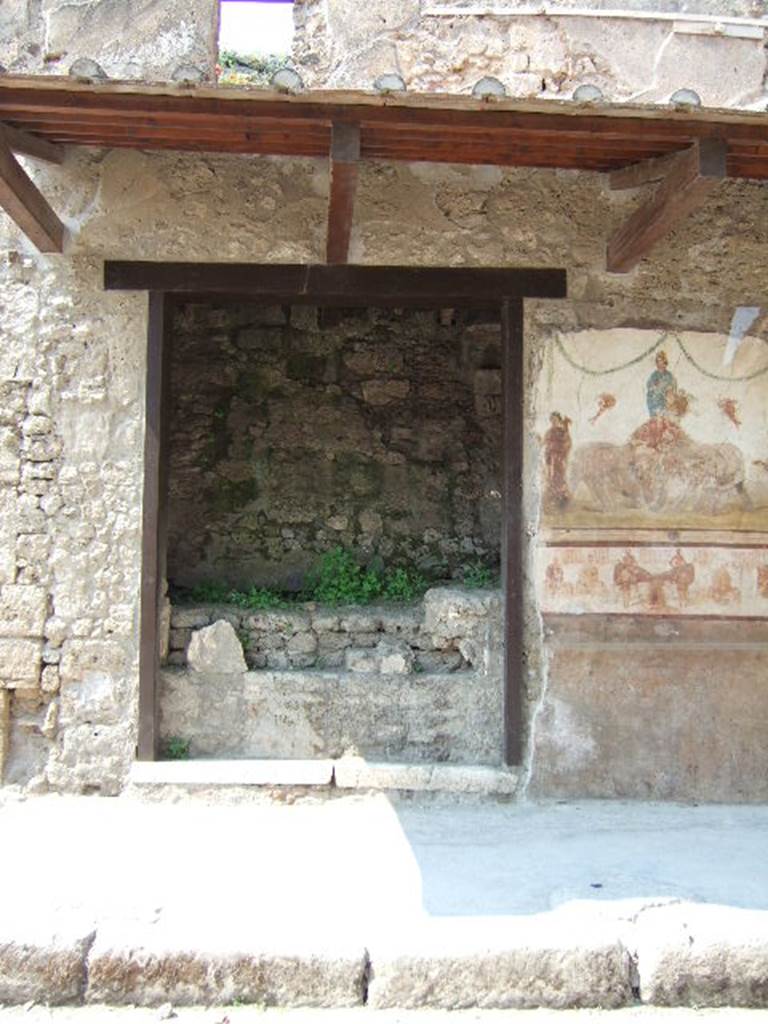
IX.7.7 Pompeii. May
2006. Entrance on Via dell’Abbondanza.
Upon excavation, a plaster-cast of the door was made showing the horizontal long bolt made of iron.
Part of this plaster-cast can still be seen in the doorway, although it has deteriorated with age.
On the left of the doorway was a painting of Mercury with inscriptions above, and another painting below.
The paintings have now been detached from the wall and are held in the storerooms together with CIL IV 7841 and 7842.
(inventory number 40685)
Found on the lower painting, from the pilaster on the left of the doorway, were inscriptions CIL IV 7843 and 7844.
These have now almost vanished.
See Varone, A. and Stefani, G., 2009. Titulorum Pictorum Pompeianorum, Rome: L’erma di Bretschneider, (p.407-411).
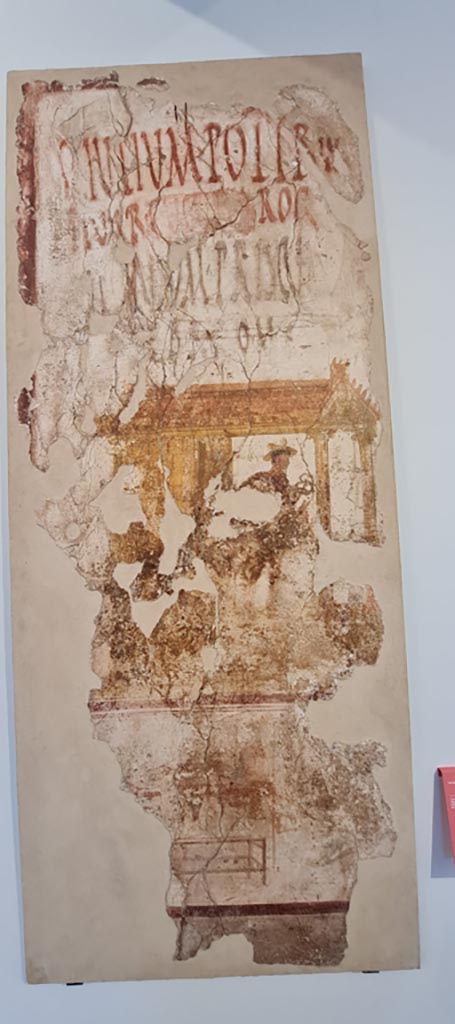
Fresco
with electoral inscription from left (west) of doorway, photographed on display
in Antiquarium.
Photo courtesy of Giuseppe Ciaramella.
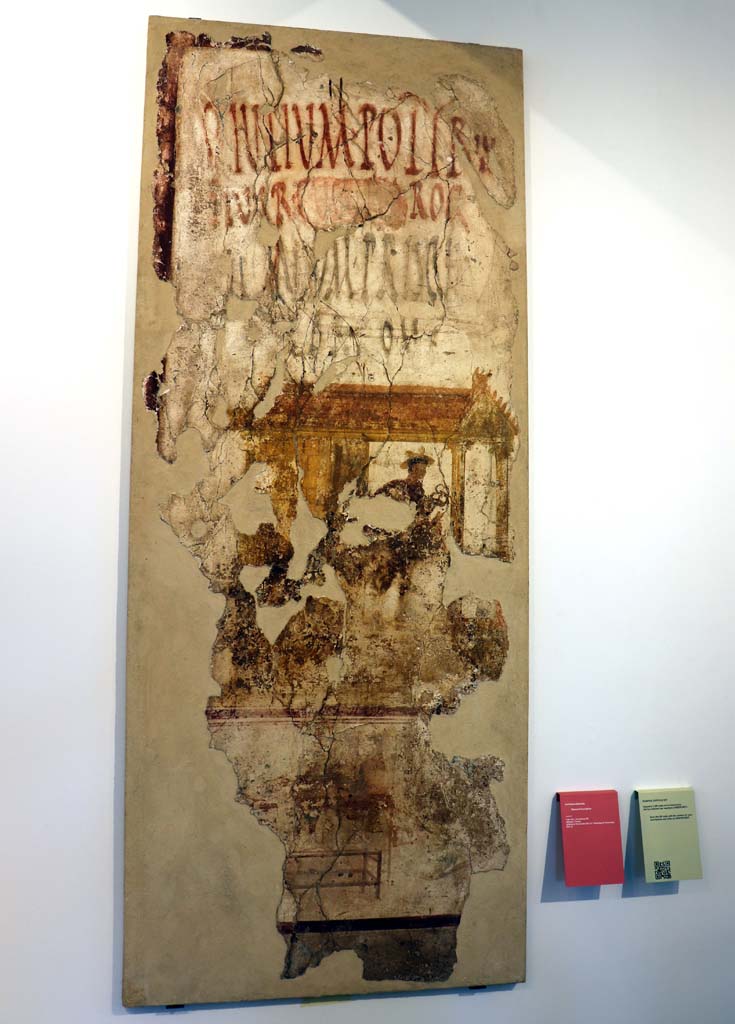
IX.7.7
Pompeii. February 2021. Fresco with electoral inscription, photographed on
display in Antiquarium.
Photo courtesy of Fabien Bièvre-Perrin (CC
BY-NC-SA).
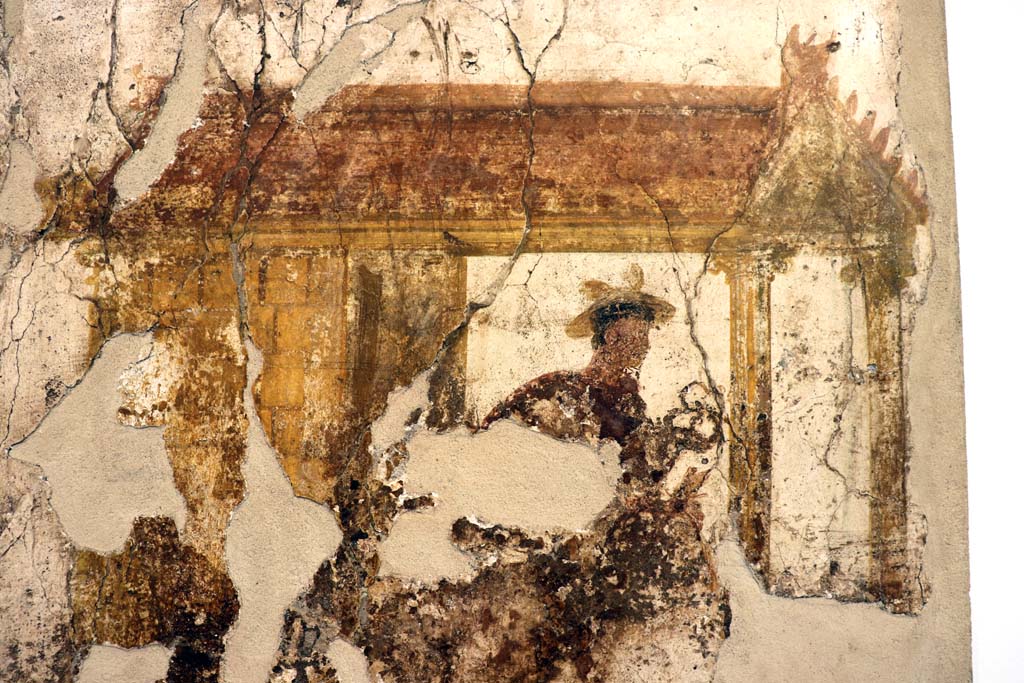
IX.7.7 Pompeii. February 2021. Detail of fresco
of Mercury, photographed on display in Antiquarium.
Photo courtesy of Fabien Bièvre-Perrin (CC BY-NC-SA).
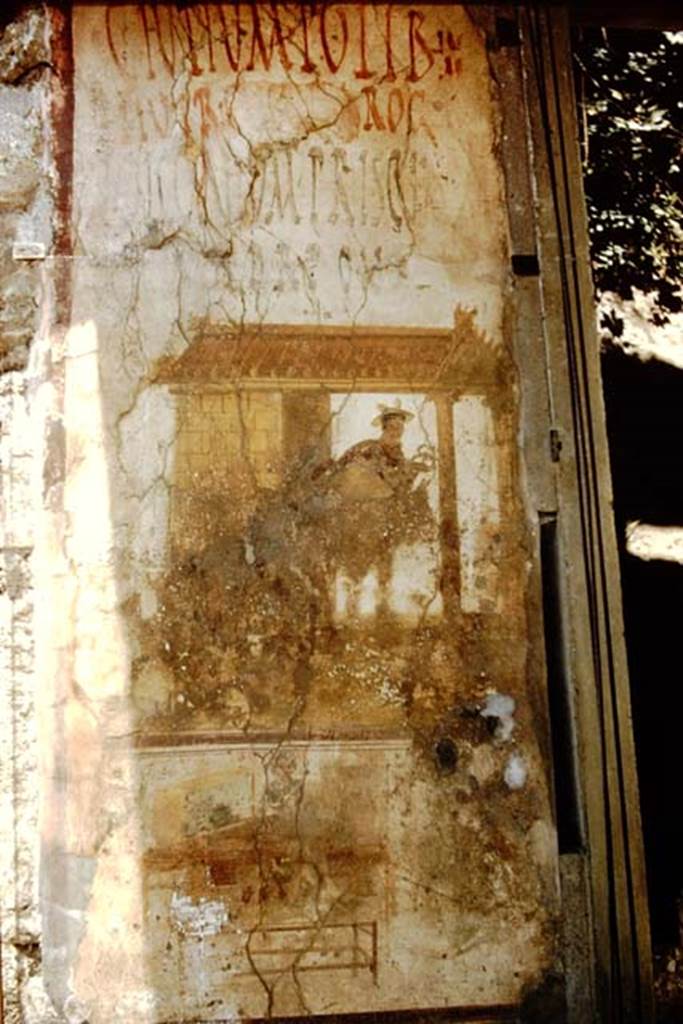
IX.7.7 Pompeii. 1959.
Painting of Mercury, and inscriptions, originally found on the west side of the entrance doorway on Via dell’Abbondanza.
Photo by Stanley A. Jashemski.
Source: The Wilhelmina and Stanley A. Jashemski archive in the University of Maryland Library, Special Collections (See collection page) and made available under the Creative Commons Attribution-Non Commercial License v.4. See Licence and use details.
J59f0155
![IX.7.7 Pompeii. Graffiti from west side of entrance doorway.
According to Della Corte, at the top of the pilaster was CIL IV 7841, which gave the name of one of the workers with the recommendation –
Cuculla rog(at) [CIL IV 7841]
See Della Corte, M., 1965. Case ed Abitanti di Pompei. Napoli: Fausto Fiorentino. (p.280)
According to Epigraphik-Datenbank Clauss/Slaby (See www.manfredclauss.de), this read –
C(aium) Iulium Polyb//iu/m
IIvir(um) Cuculla rog(at) [CIL IV 7841]
This translates as “Cuculla asks for C. Julius Polybius as duovir”.
See Conticello, B., Ed, 1990. Rediscovering Pompeii. Rome: L’Erma di Bretschneider. (pp.150-53).
Beneath CIL IV 7841, but still above the painting of Mercury, was CIL IV 7842, this read as –
Holconium Priscum
IIvir(um) i(ure) d(icundo) d(ignum) r(ei) p(ublicae) o(ro) v(os) f(aciatis) [CIL IV 7842]
This translates as “I ask you to elect Holconius Priscus duovir. He is worthy of holding office”.
See Conticello, B., Ed, 1990. Rediscovering Pompeii. Rome: L’Erma di Bretschneider. (pp.150-53).
See Berry, J., 2007. The Complete Pompeii. London, Thames & Hudson. (p.131)](9%2007%2007_files/image012.jpg)
IX.7.7 Pompeii. Graffiti from west side of entrance doorway.
According to Della Corte, at the top of the pilaster was CIL IV 7841, which gave the name of one of the workers with the recommendation –
Cuculla
rog(at) [CIL IV 7841]
See Della Corte, M., 1965. Case ed Abitanti di Pompei. Napoli: Fausto Fiorentino. (p.280)
According to Epigraphik-Datenbank Clauss/Slaby (See www.manfredclauss.de), this read –
C(aium) Iulium
Polyb//iu/m
IIvir(um) Cuculla
rog(at) [CIL IV 7841]
This translates as “Cuculla asks for C. Julius Polybius as duovir”.
See Conticello,
B., Ed, 1990. Rediscovering Pompeii.
Rome: L’Erma di Bretschneider. (pp.150-53).
Beneath CIL IV 7841, but still above the painting of Mercury, was CIL IV 7842, this read as –
Holconium Priscum
IIvir(um) i(ure)
d(icundo) d(ignum) r(ei)
p(ublicae) o(ro) v(os)
f(aciatis) [CIL IV 7842]
This translates as “I ask you to elect Holconius Priscus duovir. He is worthy of holding office”.
See Conticello, B., Ed, 1990. Rediscovering Pompeii. Rome: L’Erma di Bretschneider. (pp.150-53).
See Berry, J., 2007. The
Complete Pompeii. London, Thames & Hudson. (p.131)
![IX.7.7 Pompeii. Old postcard of about 1910. Photo courtesy of Drew Baker. Wall painting of Mercury, with caduceus and petasus emerging from a small temple. In his right hand he held a purse (marsupium) full of money, which was meant to bring prosperity to Verecundus’s business.
On the painting below Mercury can be seen CIL IV 7843, and beneath that CIL IV 7844. According to Epigraphik-Datenbank Clauss/Slaby (See www.manfredclauss.de), these read as –
Cn(aeum) Helvium Sabinum
aed(ilem) d(ignum) r(ei) p(ublicae) o(ro) v(os) f(aciatis) [CIL IV 7843]
C(aium) Calventium IIvir(um) o(ro) v(os) f(aciatis) [CIL IV 7844]
The painting below Mercury showed a woman, in the centre, sitting at a bench in a shop, with a customer sitting on a seat, on the right.](9%2007%2007_files/image014.jpg)
IX.7.7 Pompeii. Old postcard of about 1910. Photo courtesy of Drew Baker.
Wall painting of Mercury, with caduceus and petasus emerging from a small temple.
In his right hand he held a purse (marsupium) full of money, which was meant to bring prosperity to the business of Verecundus.
On the painting below Mercury can be seen CIL IV 7843, and beneath that CIL IV 7844.
According to Epigraphik-Datenbank Clauss/Slaby (See www.manfredclauss.de), these read as –
Cn(aeum) Helvium
Sabinum
aed(ilem) d(ignum)
r(ei) p(ublicae) o(ro)
v(os) f(aciatis) [CIL IV 7843]
C(aium) Calventium IIvir(um)
o(ro) v(os) f(aciatis) [CIL IV 7844]
The painting below Mercury showed a woman, in the centre, sitting at a bench in a shop, with a customer sitting on a seat, on the right.
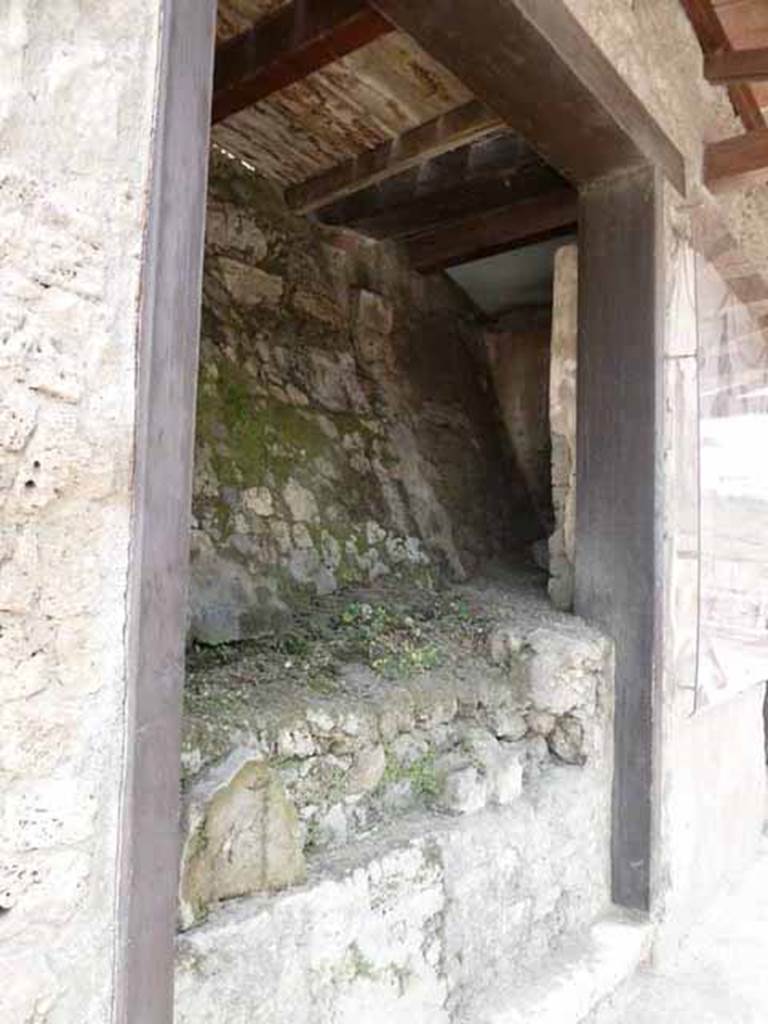
IX.7.7 Pompeii. May 2010. Entrance, looking east.
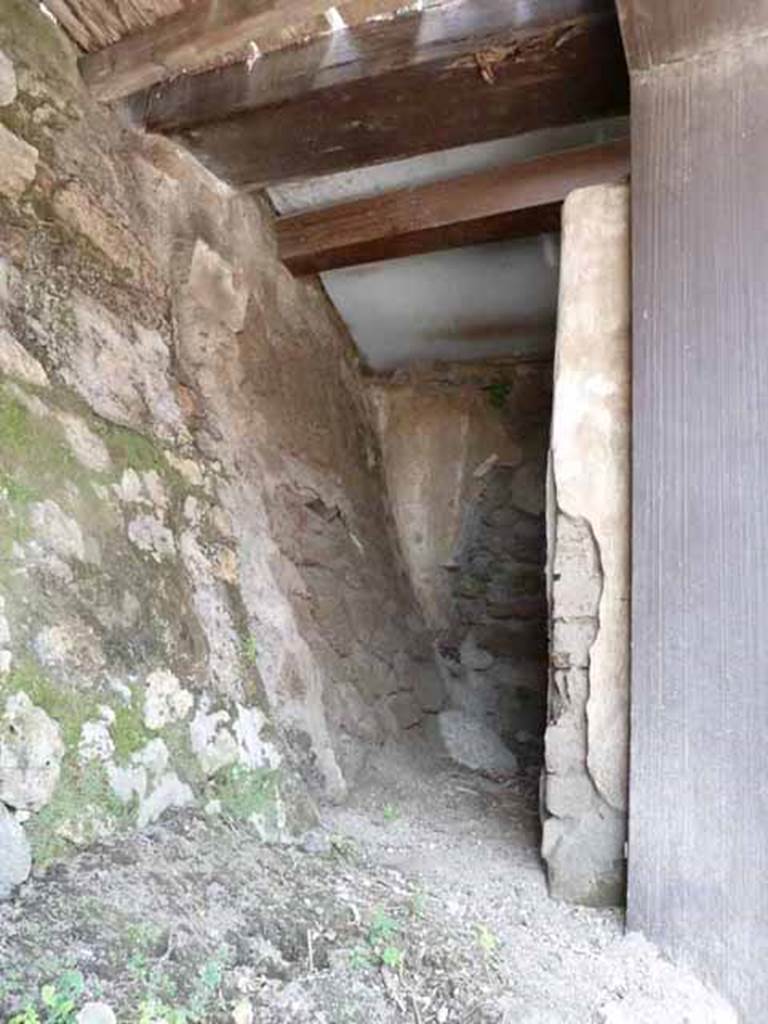
IX.7.7 Pompeii. May 2010. East side of entrance.
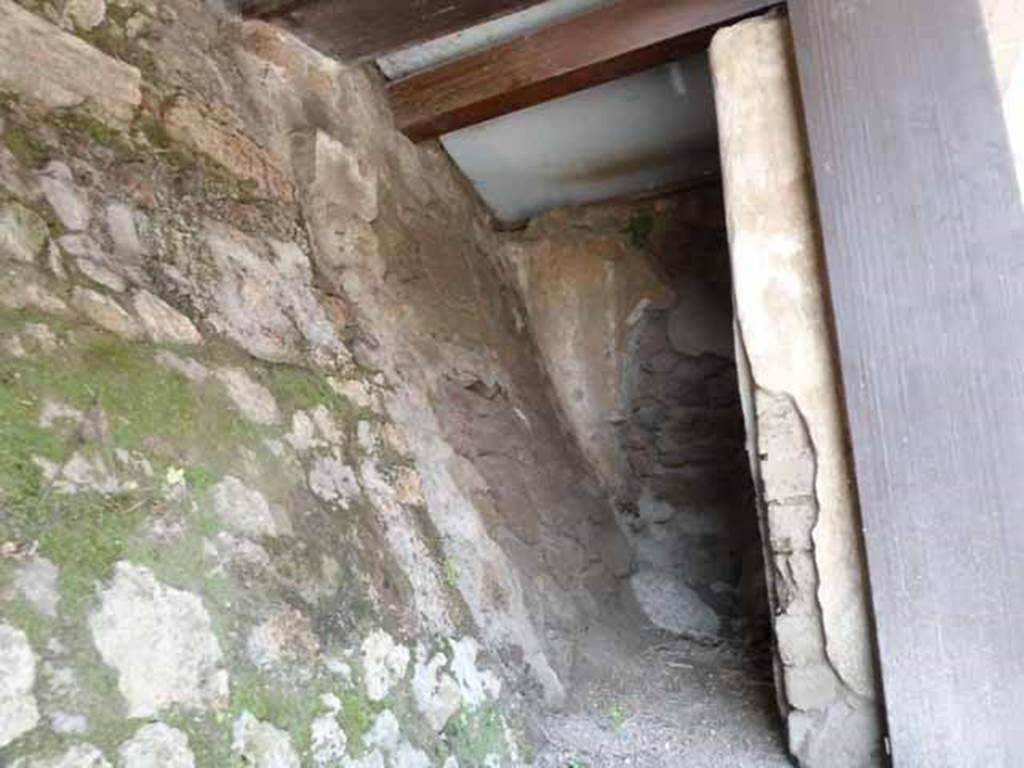
IX.7.7 Pompeii. May 2010. East side of entrance.
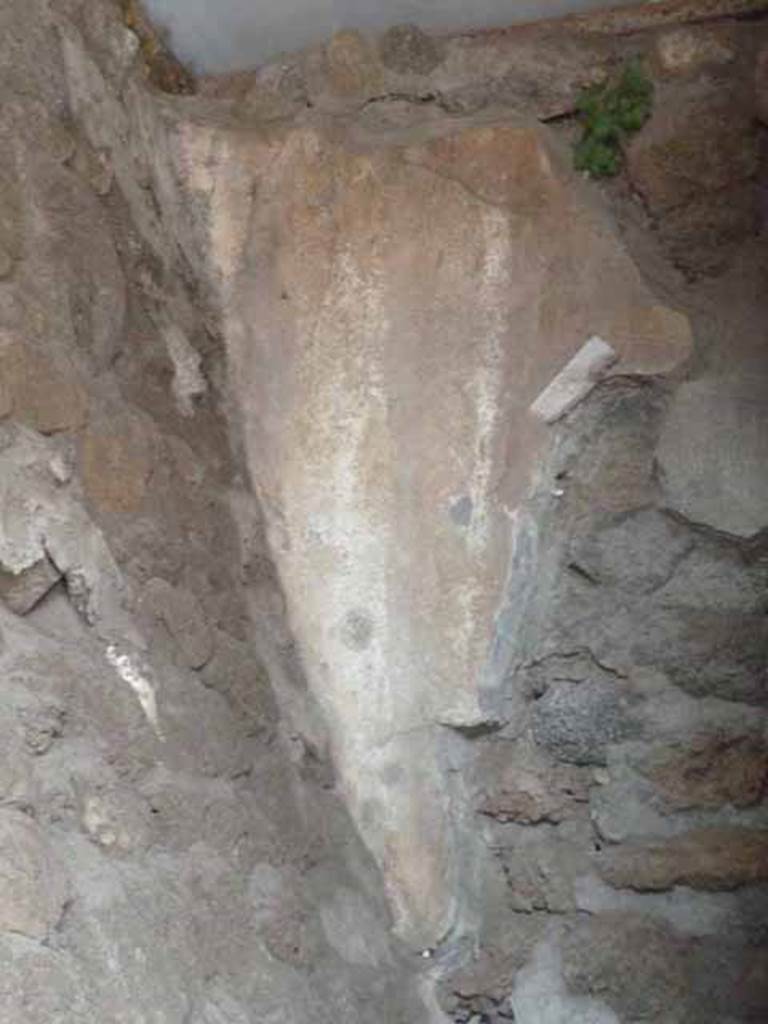
IX.7.7 Pompeii. May 2010. Remains of wall plaster on east wall.
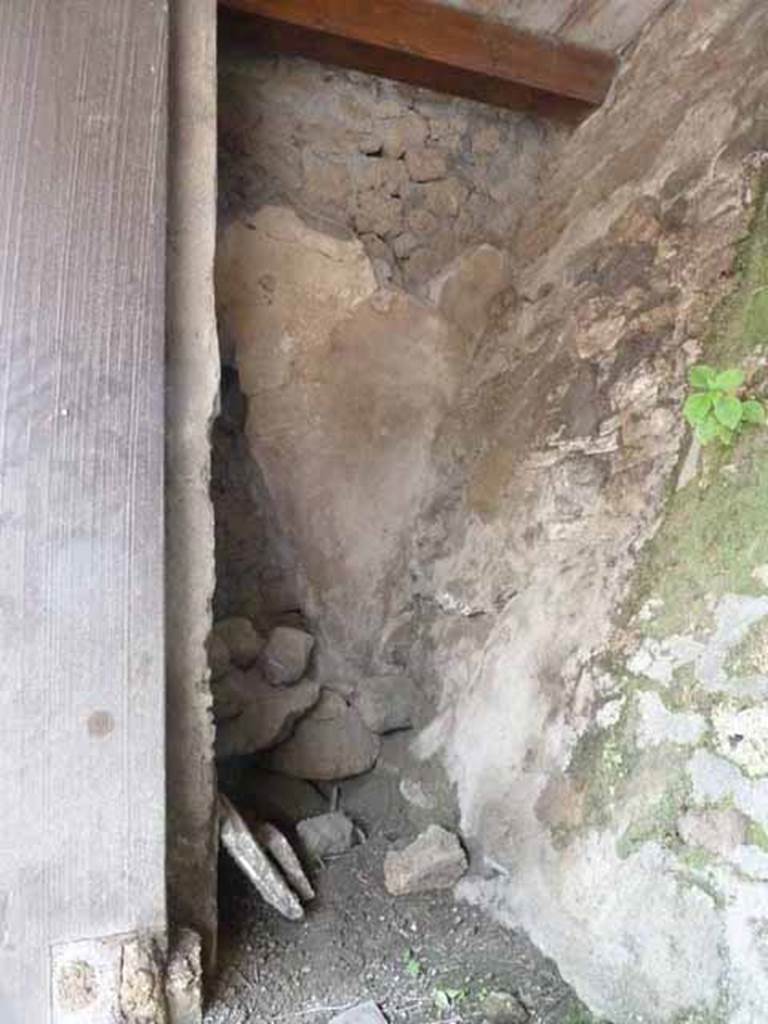
IX.7.7 Pompeii. May 2010. West side of entrance.
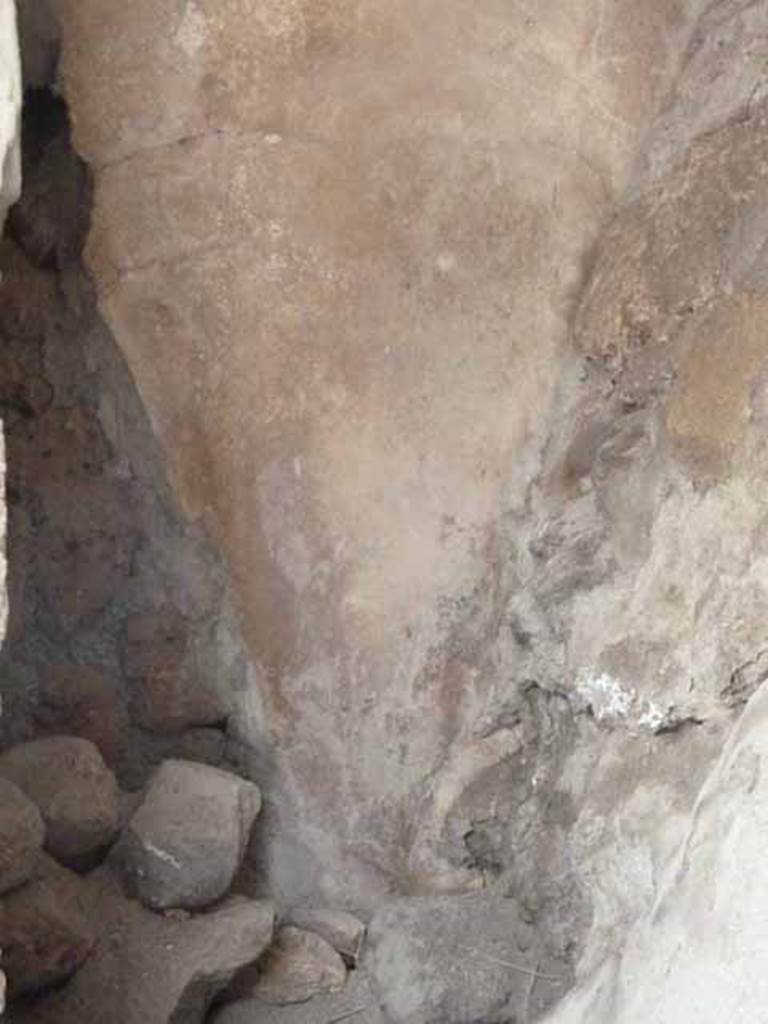
IX.7.7 Pompeii. May 2010. Remains of wall plaster on west wall.
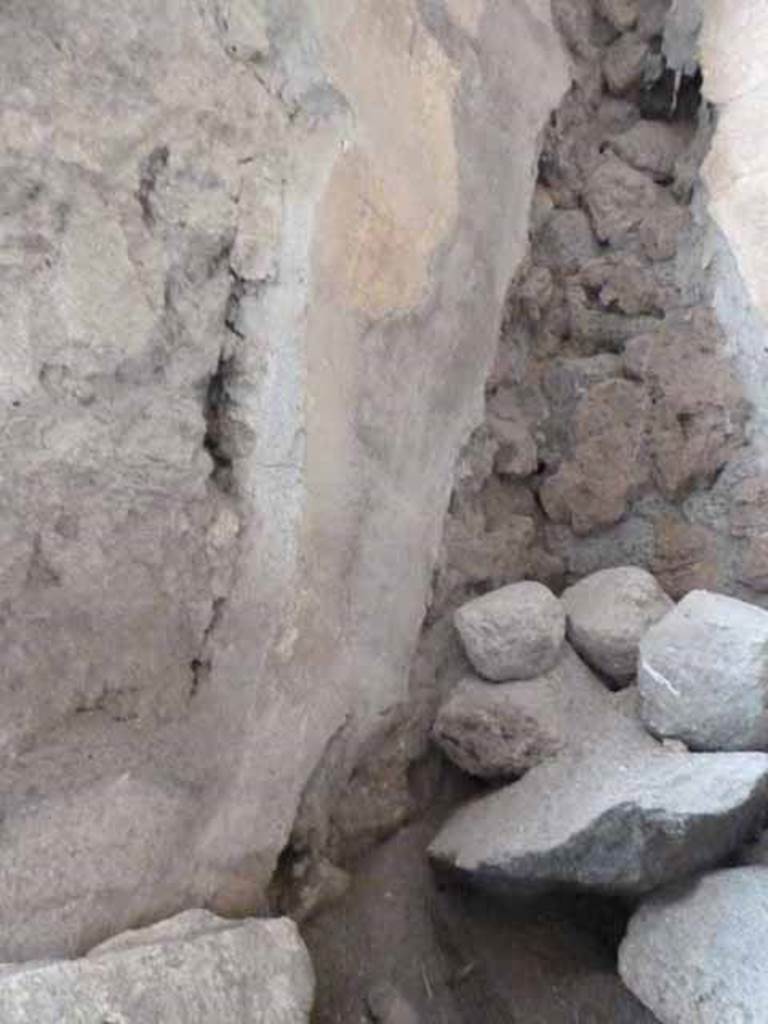
IX.7.7 Pompeii. May 2010. Remains of wall plaster on south-west corner.
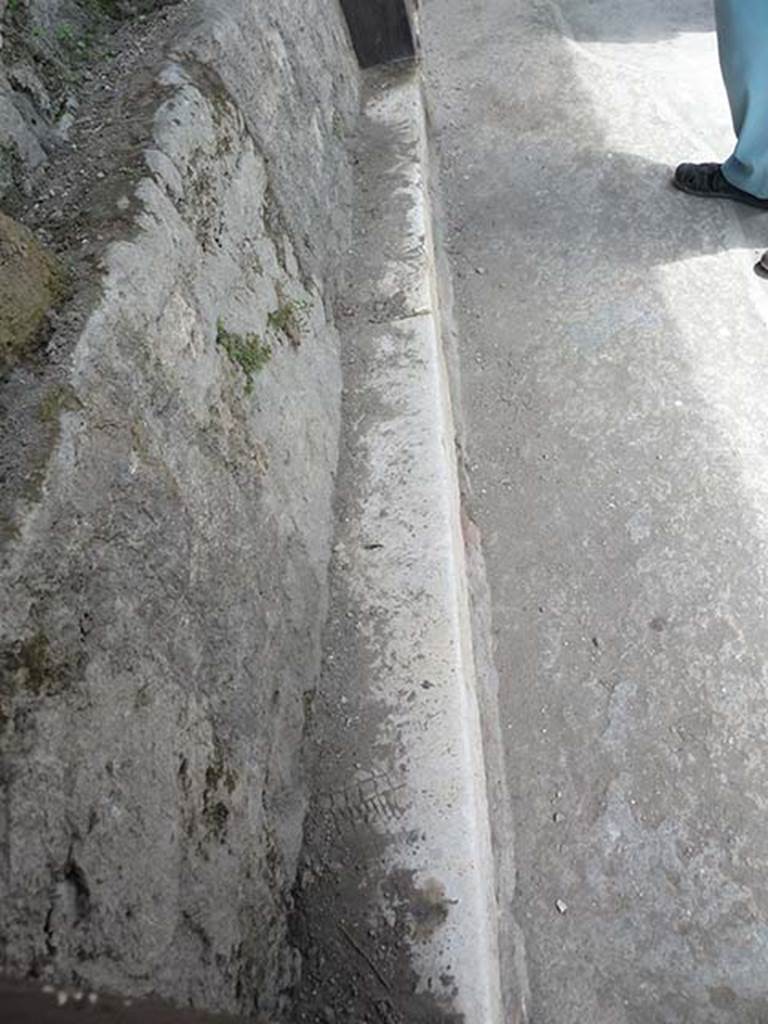
IX.7.7 Pompeii. May 2010. Threshold or sill.
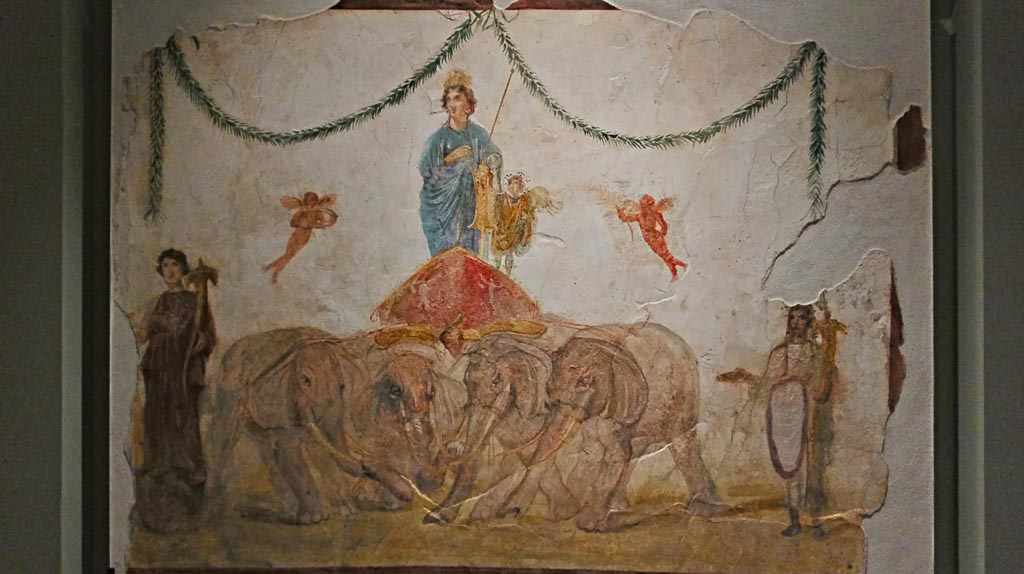
Between IX.7.7 and IX.7.6 Pompeii. December 2019.
Upper part of painting of Venus riding in a chariot pulled by elephants, from pilaster on east side of doorway.
On display in exhibition “Pompei e Santorini”, Rome, 2019. Photo courtesy
of Giuseppe Ciaramella.
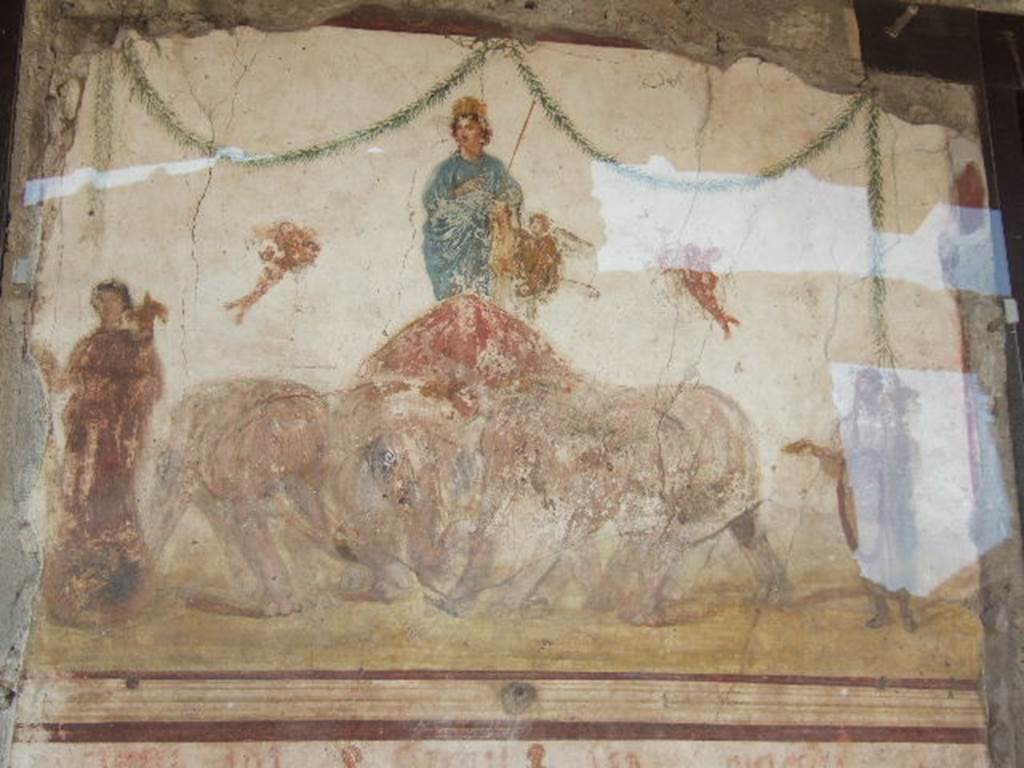
Between IX.7.7 and IX.7.6 Pompeii. May 2006,
Upper part of painting of Venus riding in a chariot pulled by elephants, from pilaster on east side of doorway.
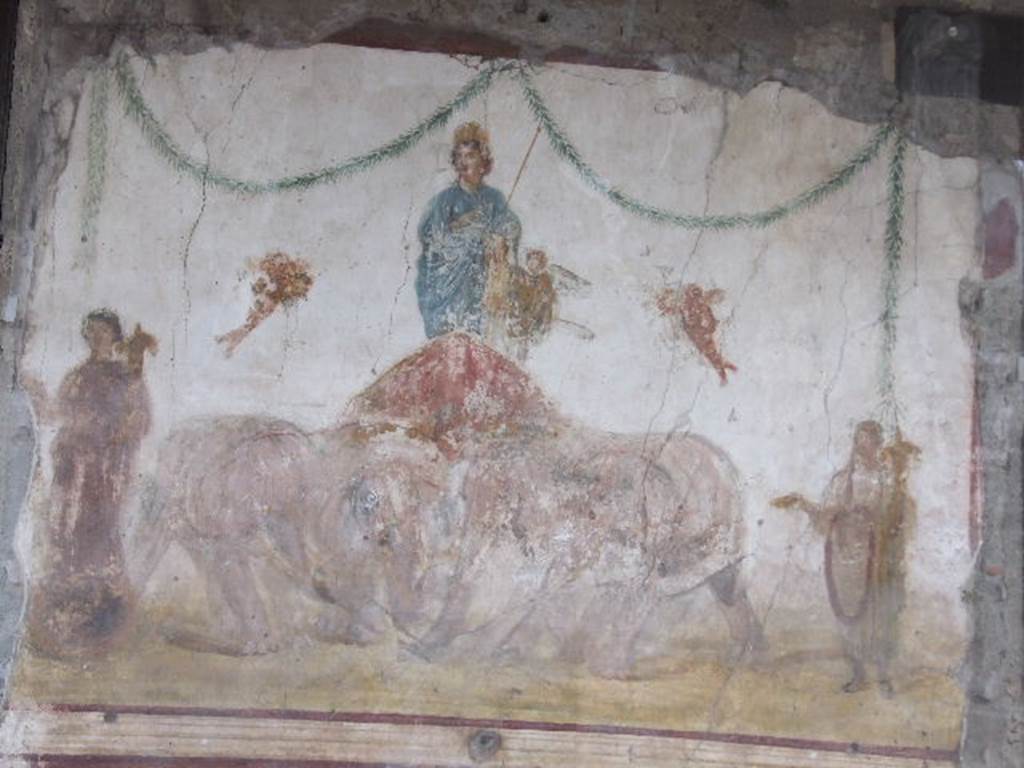
Outside IX.7.7 and IX.7.6. December 2006. Venus riding in a chariot, being pulled by elephants.
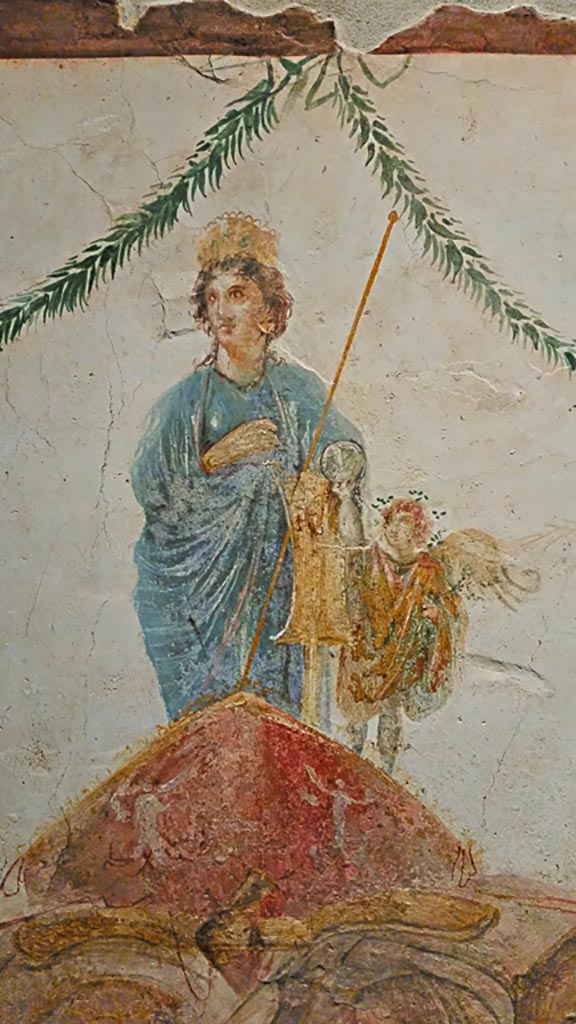
Between IX.7.7 and IX.7.6 Pompeii.
Detail of Venus riding in a chariot, from pilaster on east side of doorway.
From the exhibition
“Pompei e Santorini”, Rome, 2019. Photo courtesy of Giuseppe Ciaramella.
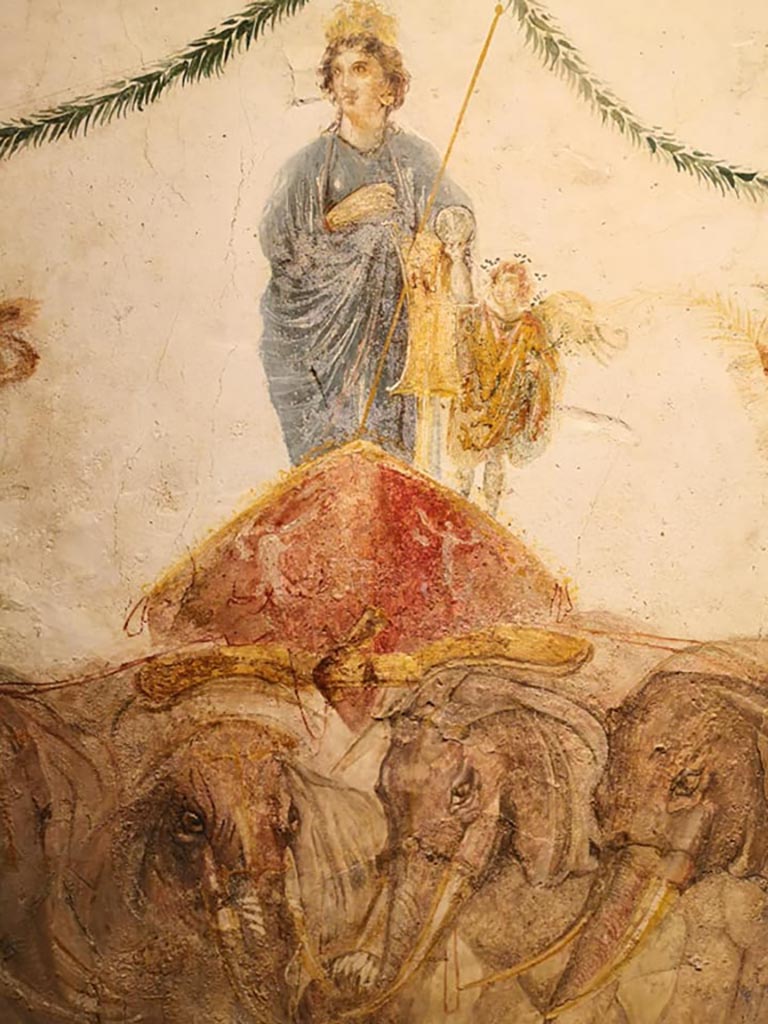
Between IX.7.7 and IX.7.6 Pompeii.
Venus riding in a chariot pulled by elephants, from pilaster on east side of doorway.
From the exhibition
“Pompei e Santorini”, Rome, 2019. Photo courtesy of Giuseppe Ciaramella.
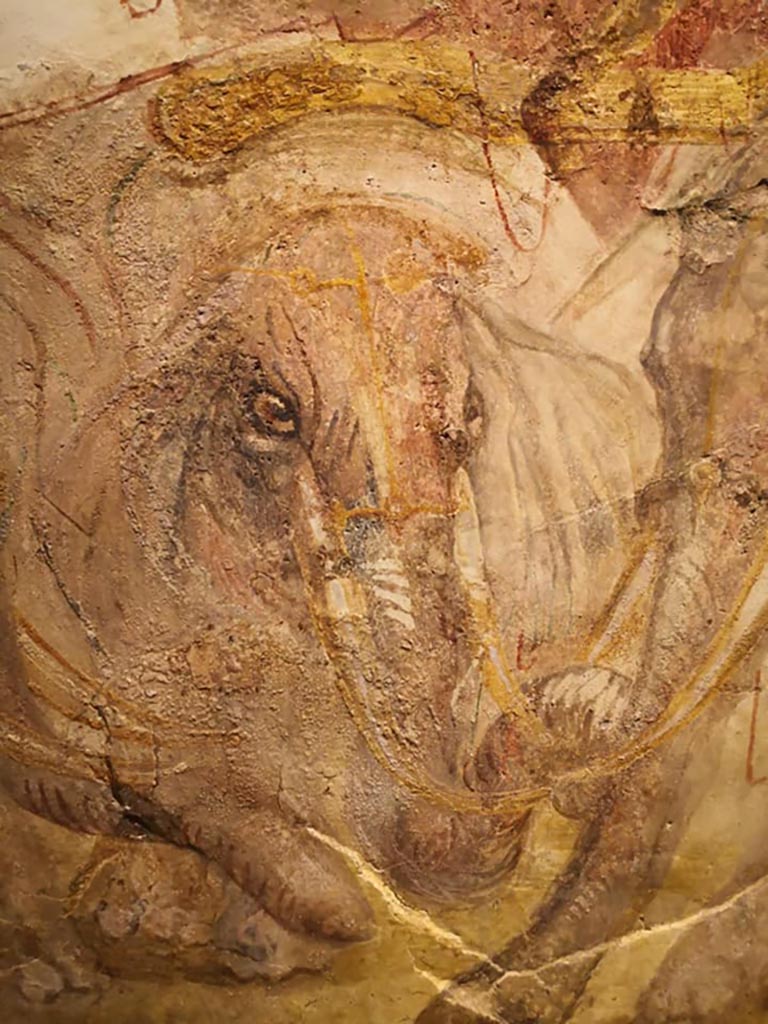
Between IX.7.7 and IX.7.6 Pompeii. Detail of the central elephants, from pilaster on east side of doorway.
From the exhibition
“Pompei e Santorini”, Rome, 2019. Photo courtesy of Giuseppe Ciaramella.
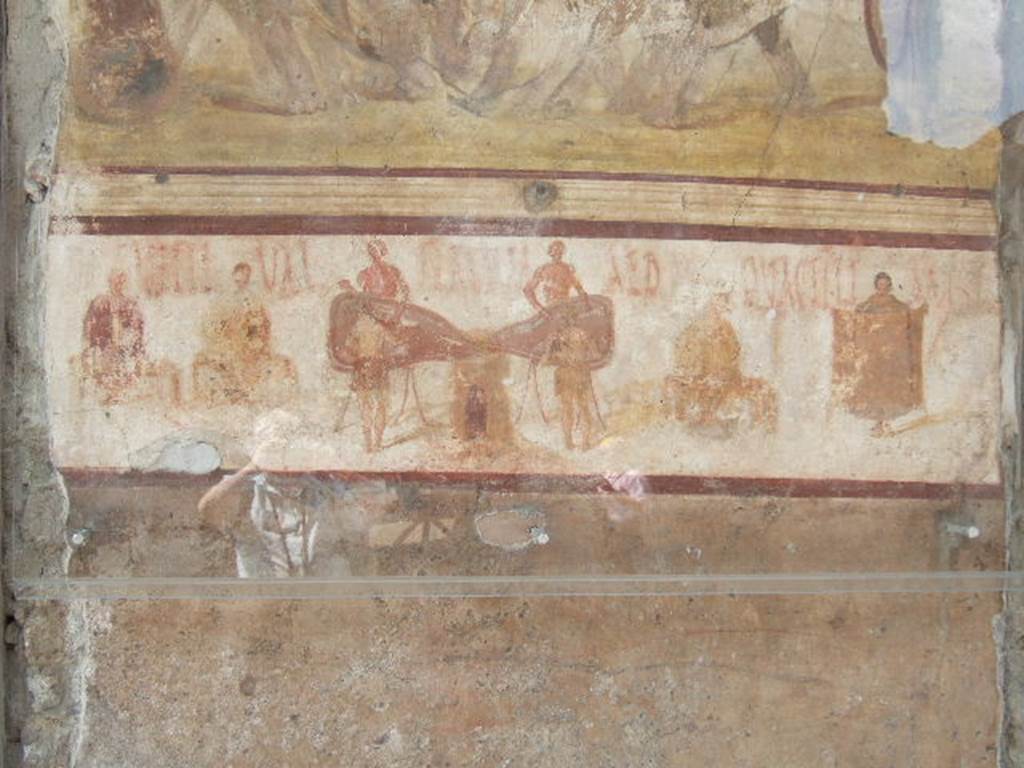
Between IX.7.7 and IX.7.6 Pompeii. May 2006. Lower part of painting of Venus, depicting felt workers (coactiliarii) producing cloth.
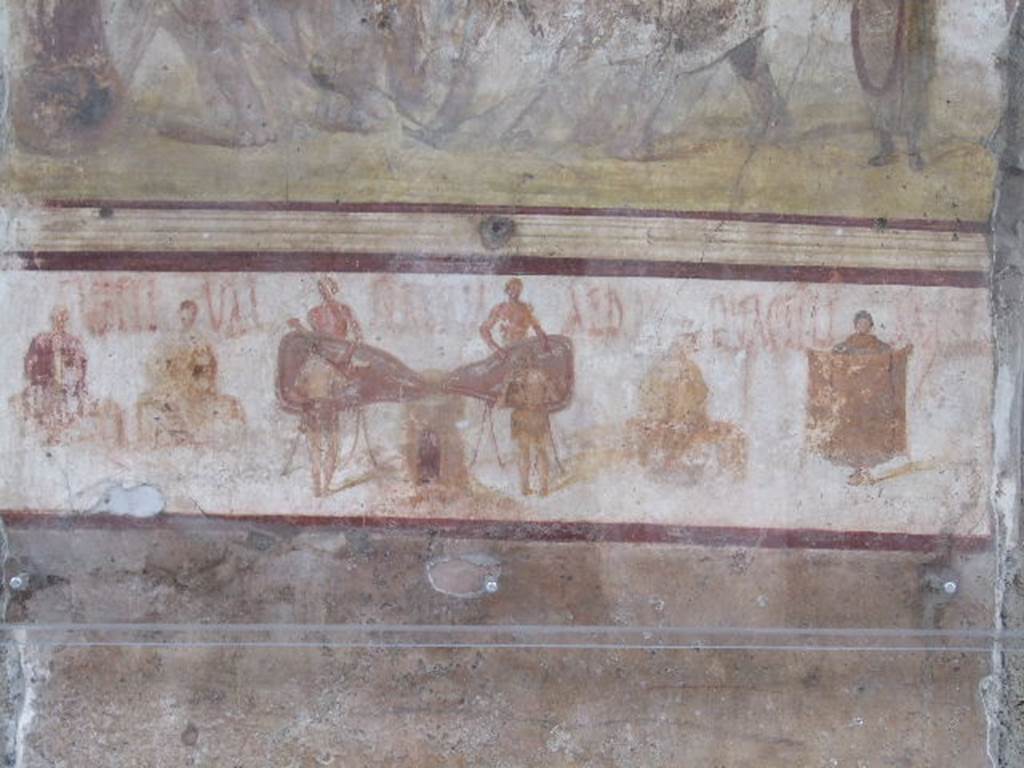
Outside IX.7.7 and IX.7.6. December 2006. Wool and felt-makers at work.
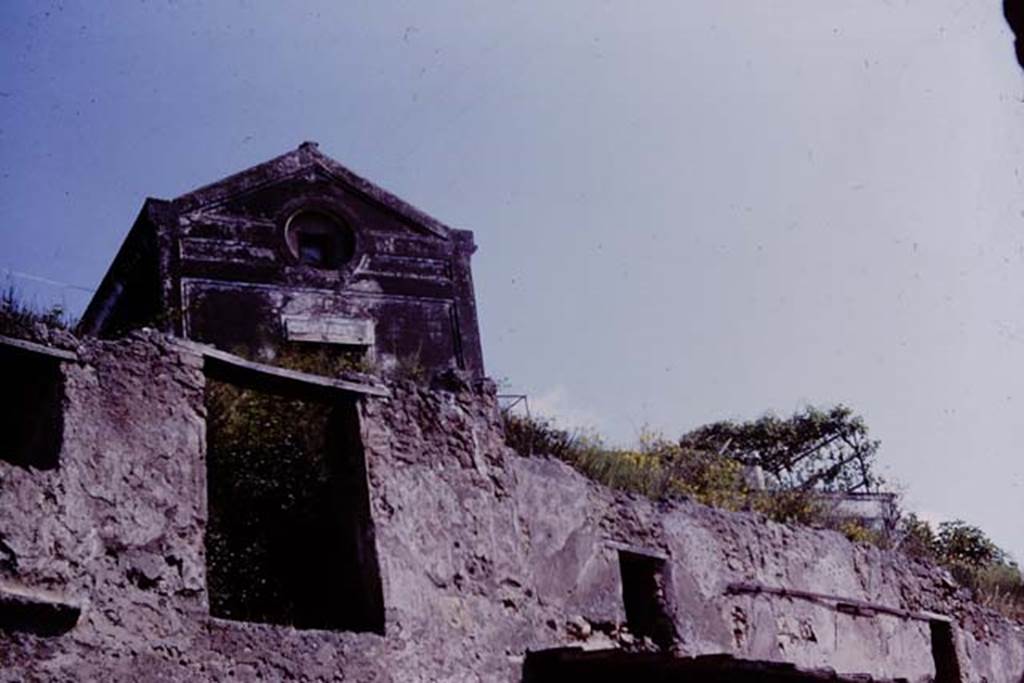
IX.7.7 Pompeii. 1964. Upper floor with windows, on right. Photo by Stanley A. Jashemski
Source: The Wilhelmina and Stanley A. Jashemski archive in the University of Maryland Library, Special Collections (See collection page) and made available under the Creative Commons Attribution-Non Commercial License v.4. See Licence and use details.
J64f1196