IX.1.4 Pompeii. Shop and room. Excavated 1852. (Strada Stabiana 74).
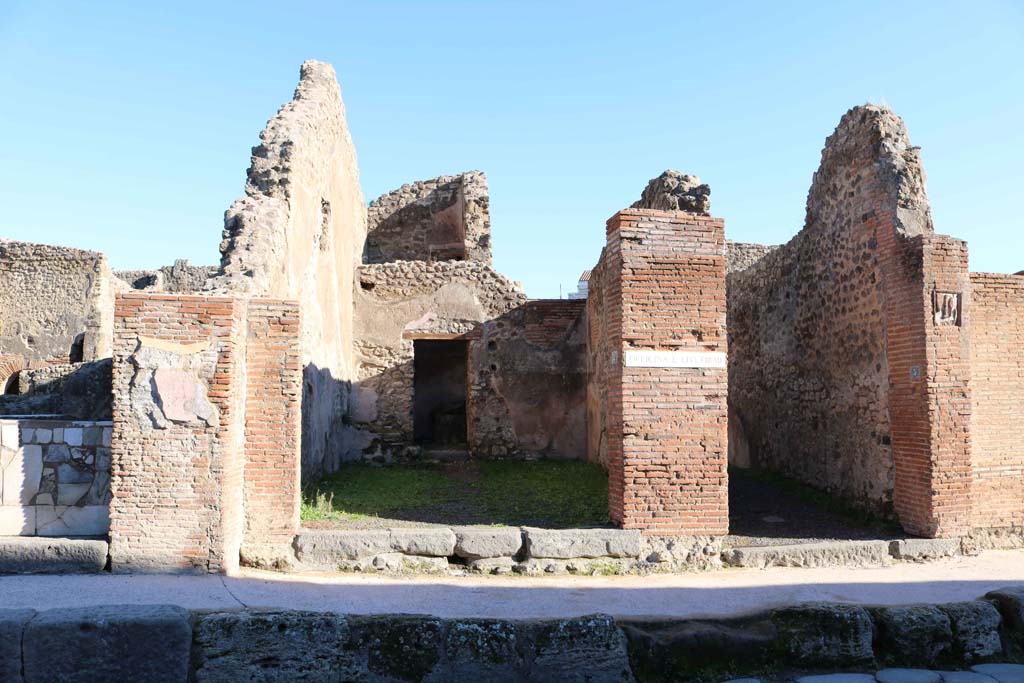
IX.1.4 Pompeii, in centre, IX.1.5, on right.
December 2018. Looking east to entrances. Photo courtesy of Aude Durand.
![IX.1.4 Pompeii. March 2009. Entrance on Via Stabiana. Looking east.
Apart from the graffiti found in February 1852, on the pilaster between IX.1.3 and IX.1.4 (on the left), see IX.1.3 In September 1852, the following were also found painted in red on the same pilaster,
Ceium II vir(um) [CIL IV 944]
Helvium aed(ilem) [CIL IV 945]
See Pagano, M. and Prisciandaro, R., 2006. Studio sulle provenienze degli oggetti rinvenuti negli scavi borbonici del regno di Napoli. Naples : Nicola Longobardi. (p.167)](9%2001%2004_files/image004.jpg)
IX.1.4 Pompeii. March 2009. Entrance on Via Stabiana. Looking east.
Apart from the graffiti found in February 1852, on the pilaster between IX.1.3 and IX.1.4 (on the left), see IX.1.3
In September 1852, the following were also found painted in red on the same pilaster,
Ceium II vir(um)
[CIL IV 944]
Helvium aed(ilem)
[CIL IV 945]
See Pagano, M. and Prisciandaro, R., 2006. Studio sulle provenienze degli oggetti rinvenuti negli scavi borbonici del regno di Napoli. Naples: Nicola Longobardi. (p.167)
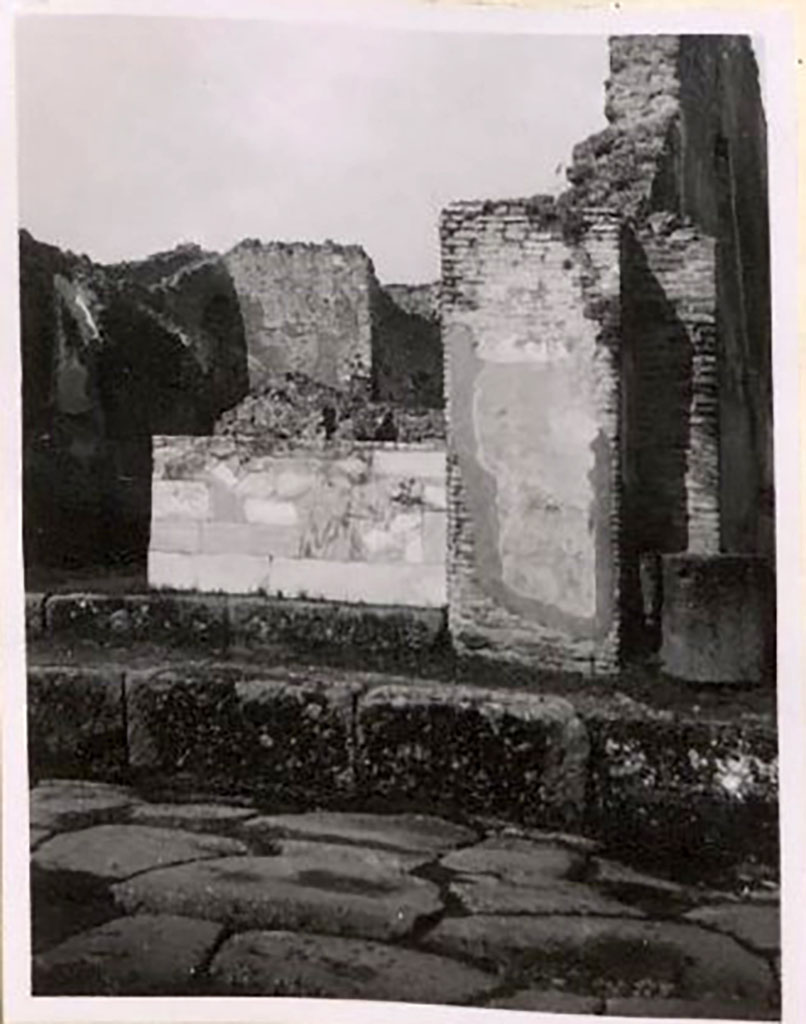
IX.1.3/4 Pompeii. Pre-1943. Pilaster between IX.1.3, on left, and IX.1.4, on right. Photo by Tatiana Warscher.
See Warscher, T. Codex Topographicus Pompeianus, IX.1. (1943), Swedish Institute, Rome. (no.4), p. 15.
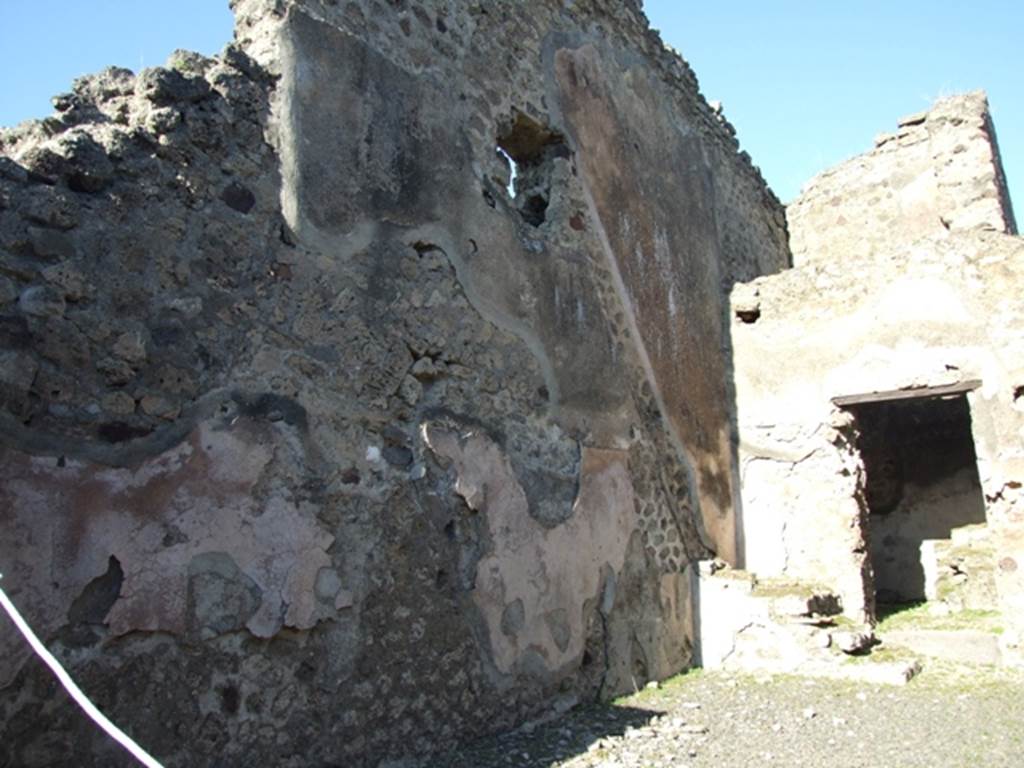
IX.1.4 Pompeii. March 2009.
Stone steps in north-east corner of shop with outline of stairs in remains of high zoccolo/plinth of cocciopesto on north wall.
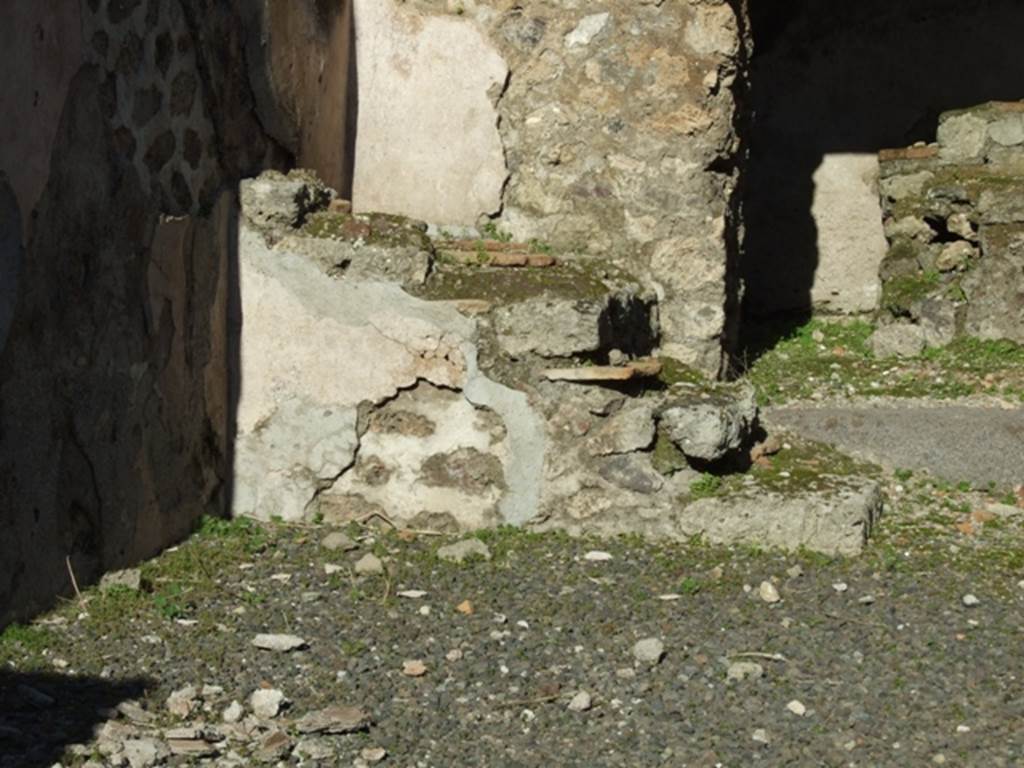
IX.1.4 Pompeii. March 2009. Staircase in north-east corner of shop.
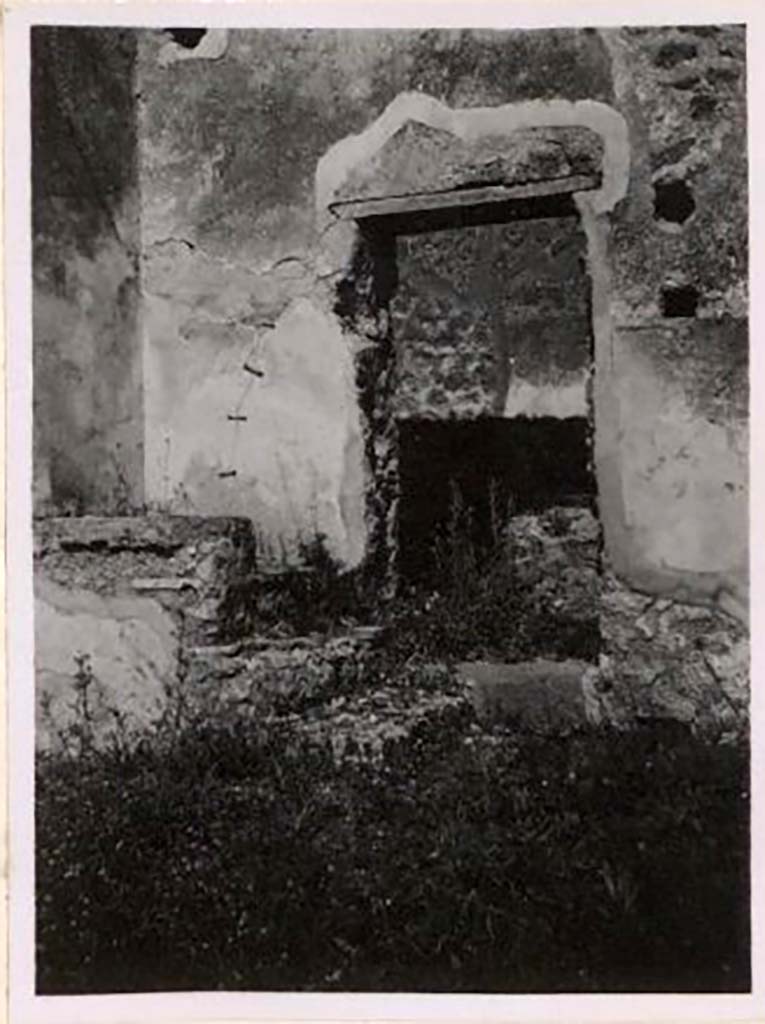
IX.1.4 Pompeii. Pre-1943. Looking towards staircase in north-east corner of shop. Photo by Tatiana Warscher.
She described this as -
“The doorway to the small rear room “b” and the stairs that demonstrated that there were rooms on the upper floor.”
See Warscher, T. Codex Topographicus Pompeianus, IX.1. (1943), Swedish Institute, Rome. (no.16), p. 29.
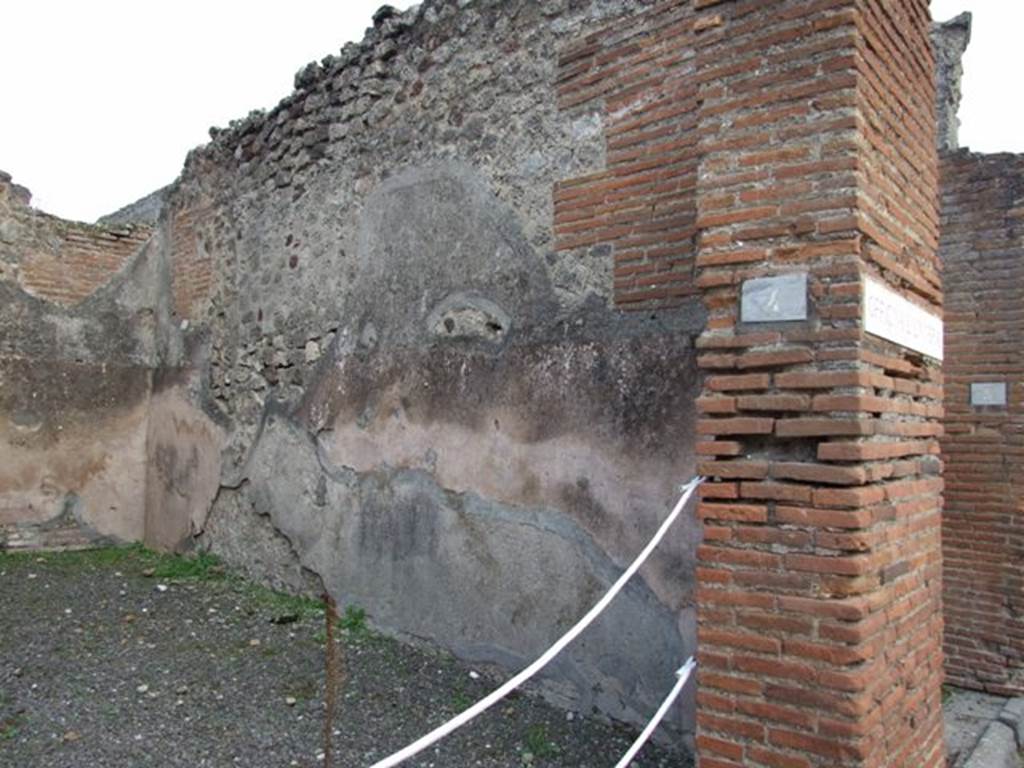
IX.1.4 Pompeii. December 2007. South wall.
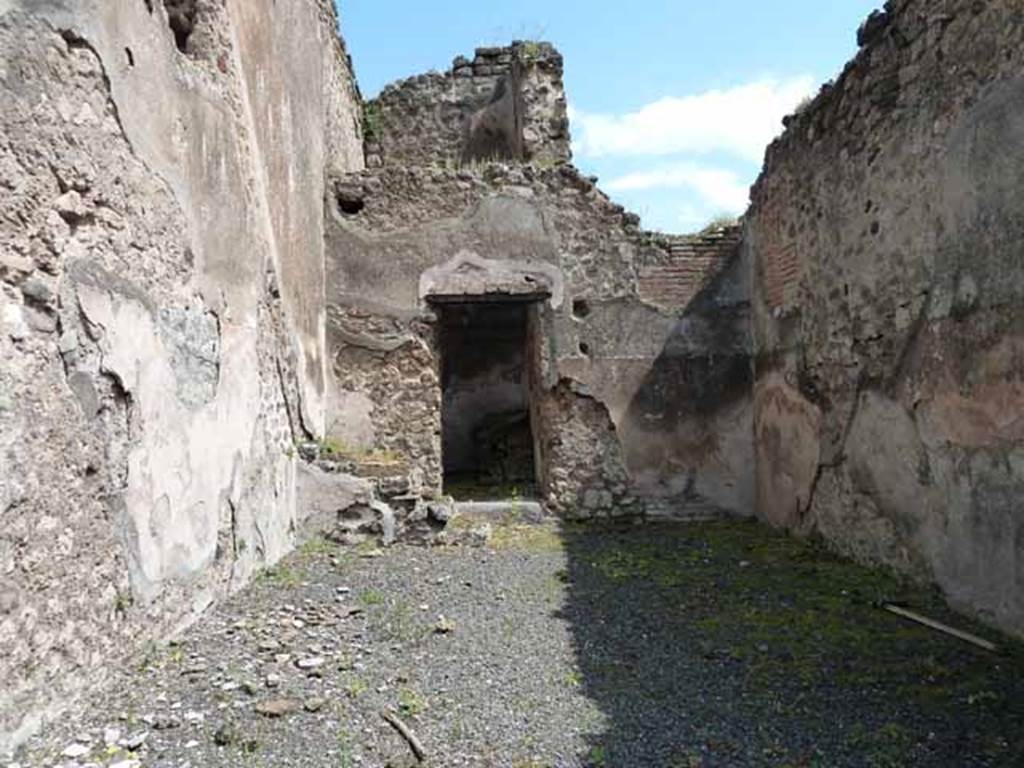
IX.1.4 Pompeii. May 2010. East wall with doorway to rear room, and area of lararium panel on south end (on right).
According to Boyce, somewhere in this shop on an east wall was a panel of special stucco.
In this panel were painted two red serpents confronted at an altar.
A tile was embedded in the wall below their heads, to serve as a shelf for offerings.
There does not appear to be any signs today of either a tile or painting, but see Warscher, below.
See Boyce G. K., 1937. Corpus of the Lararia of Pompeii. Rome: MAAR 14. (p.79)
According to Eschebach, the serpents were painted on the right pilaster of the shop room.
See Eschebach, L., 1993. Gebäudeverzeichnis und Stadtplan der antiken Stadt Pompeji. Köln: Böhlau. (p.398)
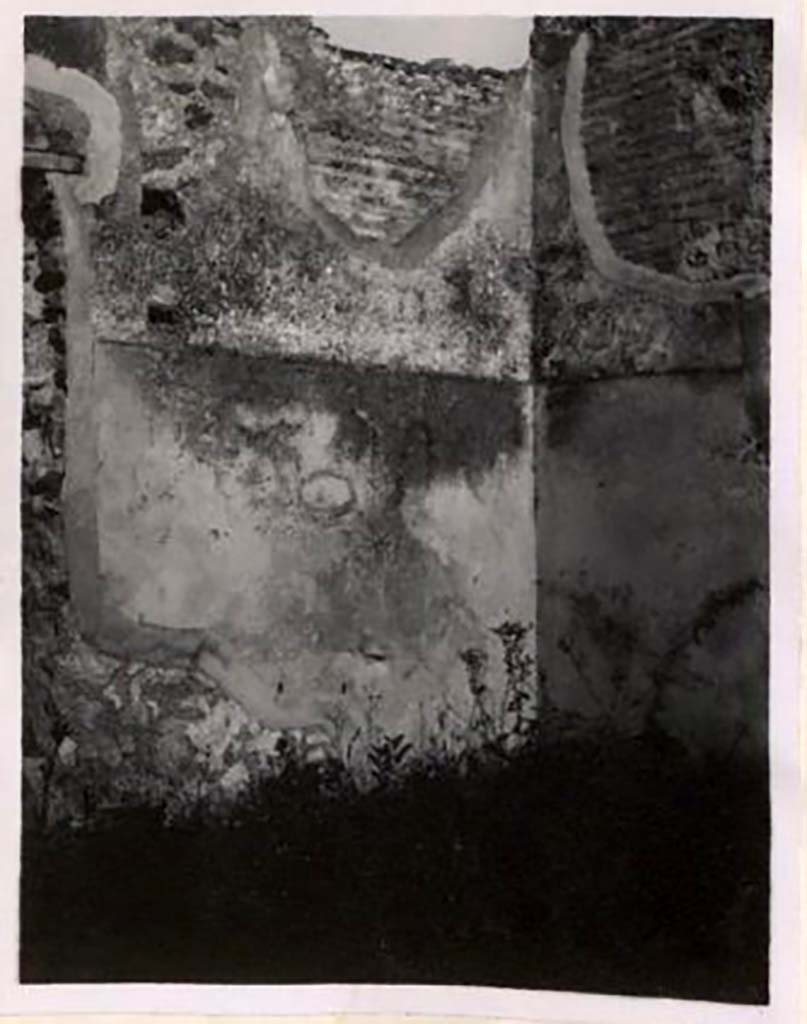
IX.1.4 Pompeii. Pre-1943.
According to Warscher, this is a photo of the east wall with panel (h. about 0.80 x w. 1.80) of special stucco with two painted red serpents.
See Warscher, T. Codex Topographicus Pompeianus, IX.1. (1943), Swedish Institute, Rome. (no.17), p. 32.
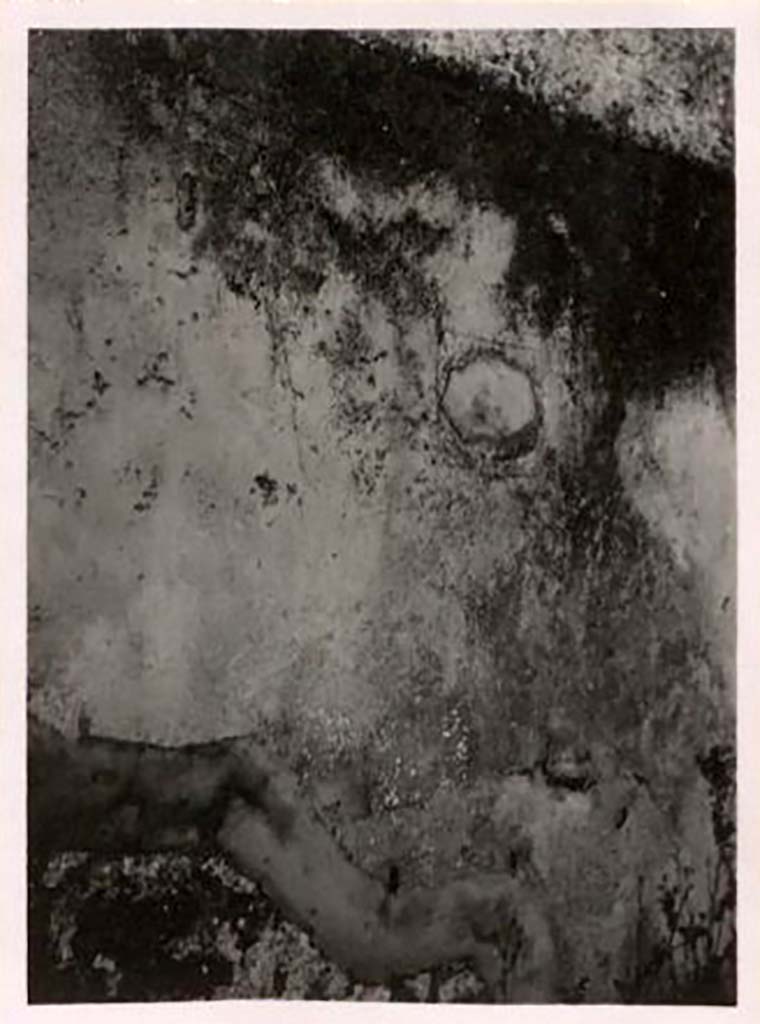
IX.1.4 Pompeii. Pre-1943. Detail of east wall and panel. Photo by Tatiana Warscher.
See Warscher, T. Codex Topographicus Pompeianus, IX.1. (1943), Swedish Institute, Rome. (no.18), p. 32.
![IX.1.4 Pompeii. March 2009. Doorway to rear kitchen room in east wall of shop. In December 1852, an inscription was found in this room:
Carmina(m)
communem ne
arma virumque cano tro [CIL IV 2361]
Now in Naples Archaeological Museum. Inventory number 111970.
See Pagano, M. and Prisciandaro, R., 2006. Studio sulle provenienze degli oggetti rinvenuti negli scavi borbonici del regno di Napoli. Naples : Nicola Longobardi. (p.167)
According to Fiorelli it read:
CARMINA
COMMVNEMNE
ARMA . VIRVMQVE CANO TRO
See Pappalardo, U., 2001. La Descrizione di Pompei per Giuseppe Fiorelli (1875). Napoli: Massa Editore. (p.137)](9%2001%2004_files/image018.jpg)
IX.1.4 Pompeii. March 2009. Doorway to rear kitchen room in east wall of shop.
In December 1852, an inscription was found in this room:
Carmina(m)
communem ne
arma virumque
cano tro [CIL IV 2361]
Now in Naples Archaeological Museum. Inventory
number 111970.
See Pagano, M.
and Prisciandaro, R., 2006. Studio sulle
provenienze degli oggetti rinvenuti negli scavi borbonici del regno di
Napoli. Naples: Nicola Longobardi.
(p.167)
According to
Fiorelli it read:
CARMINA
COMMVNEMNE
ARMA . VIRVMQVE
CANO TRO
See Pappalardo, U., 2001. La Descrizione di Pompei per Giuseppe Fiorelli (1875). Napoli: Massa Editore. (p.137)
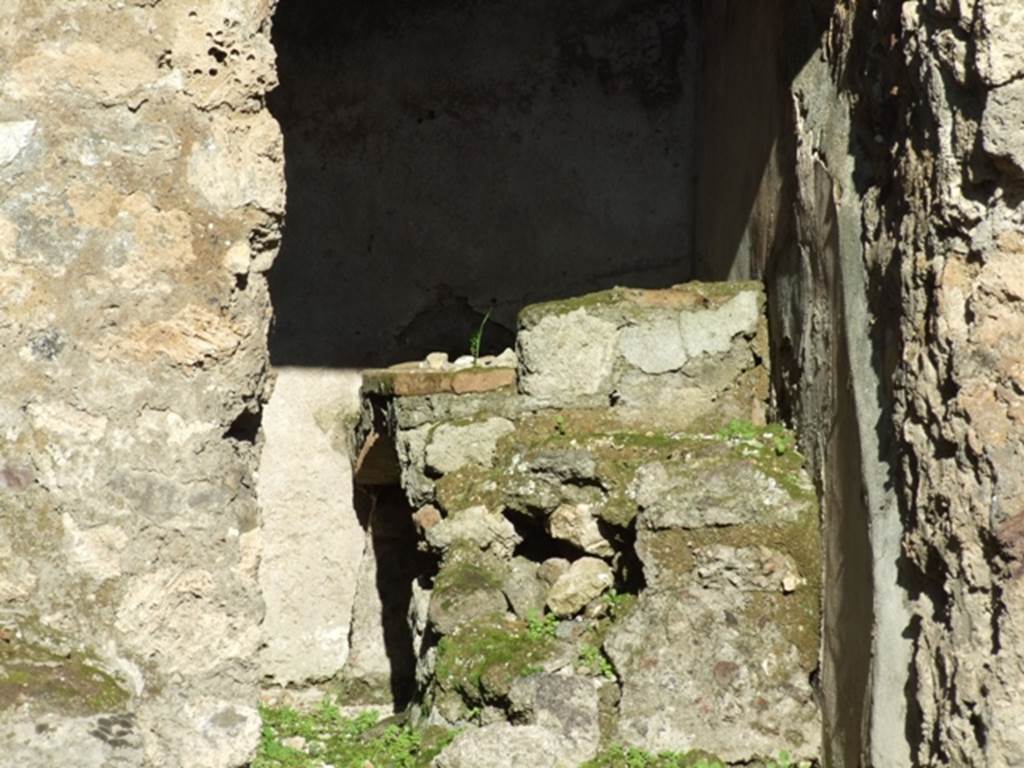
IX.1.4 Pompeii. March 2009. Hearth against south wall in rear room.
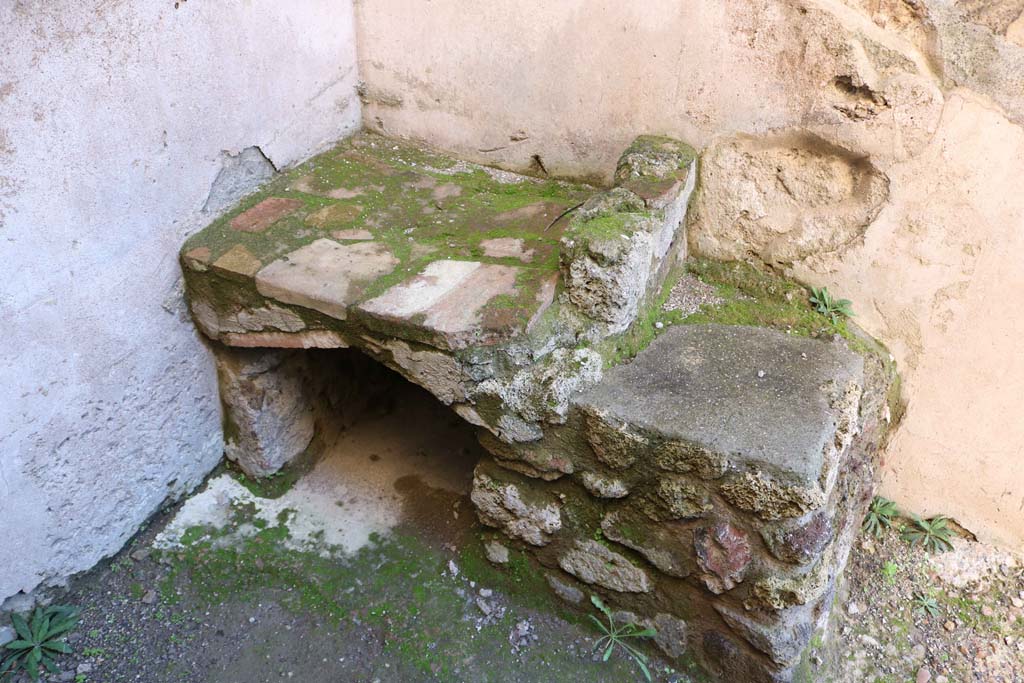
IX.1.4 Pompeii. December 2018. Hearth
against south wall in rear room. Photo courtesy of Aude
Durand.
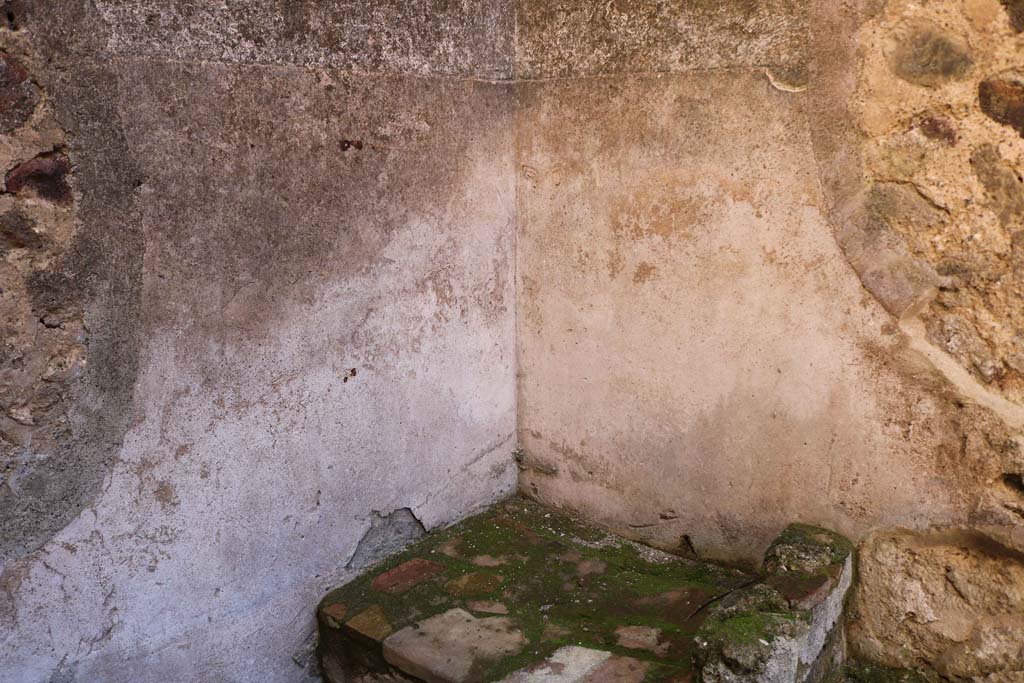
IX.1.4 Pompeii. December 2018. Plaster above
hearth in south-east corner. Photo courtesy of Aude Durand.
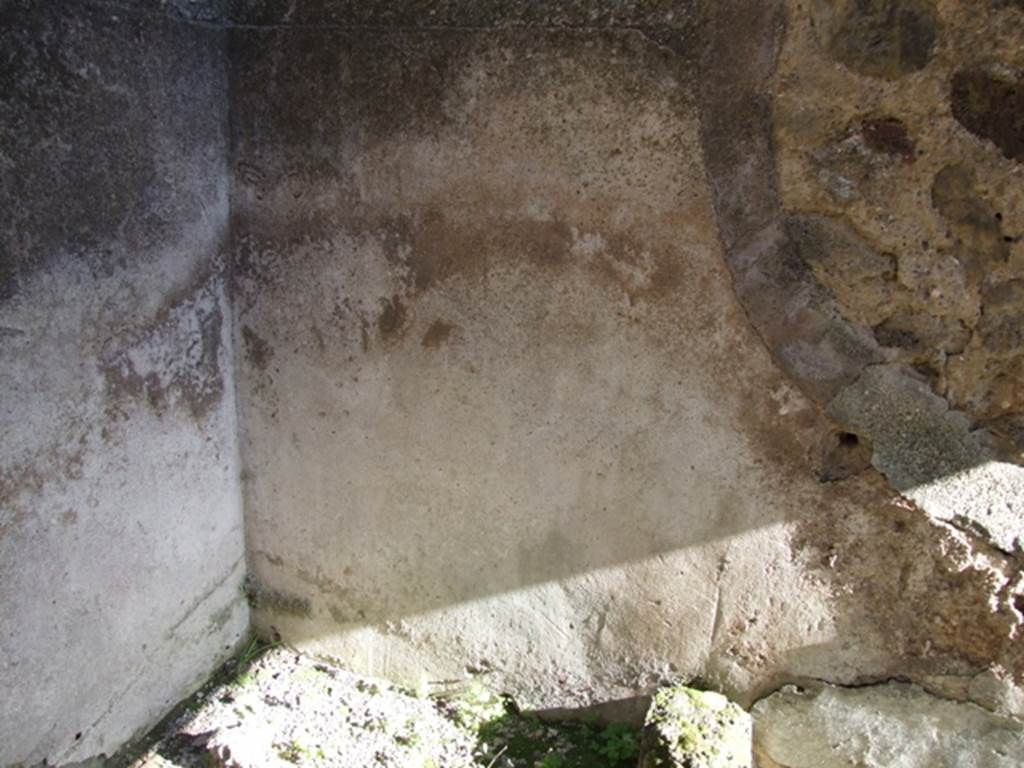
IX.1.4 Pompeii. March 2009. Plaster above hearth in south-east corner of rear room.
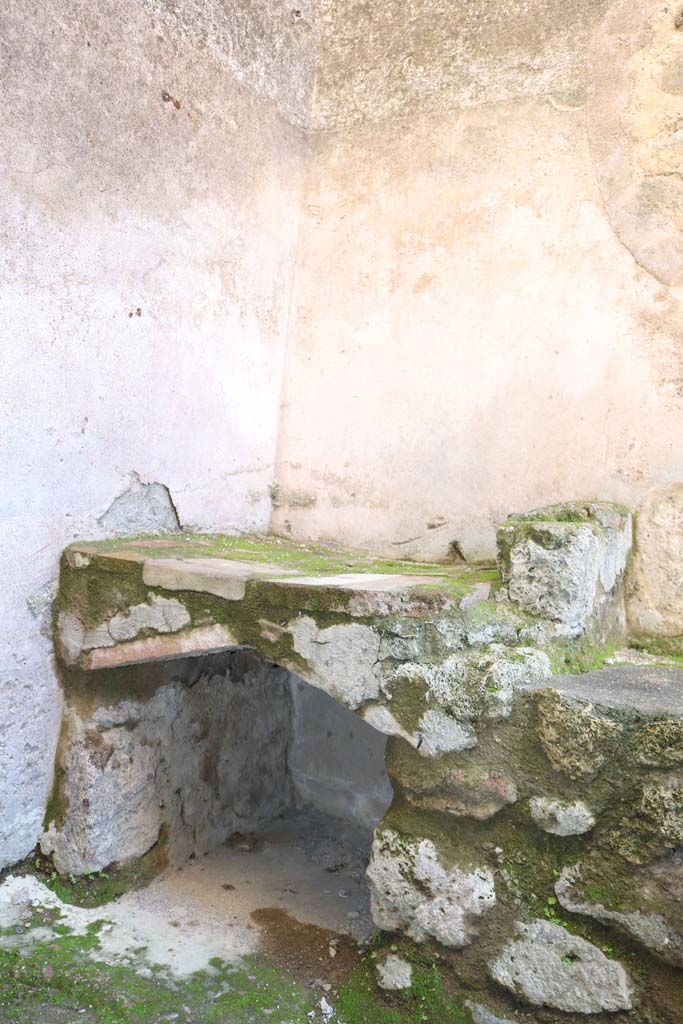
IX.1.4 Pompeii. December 2018.
Underneath hearth in south-east corner. Photo
courtesy of Aude Durand.
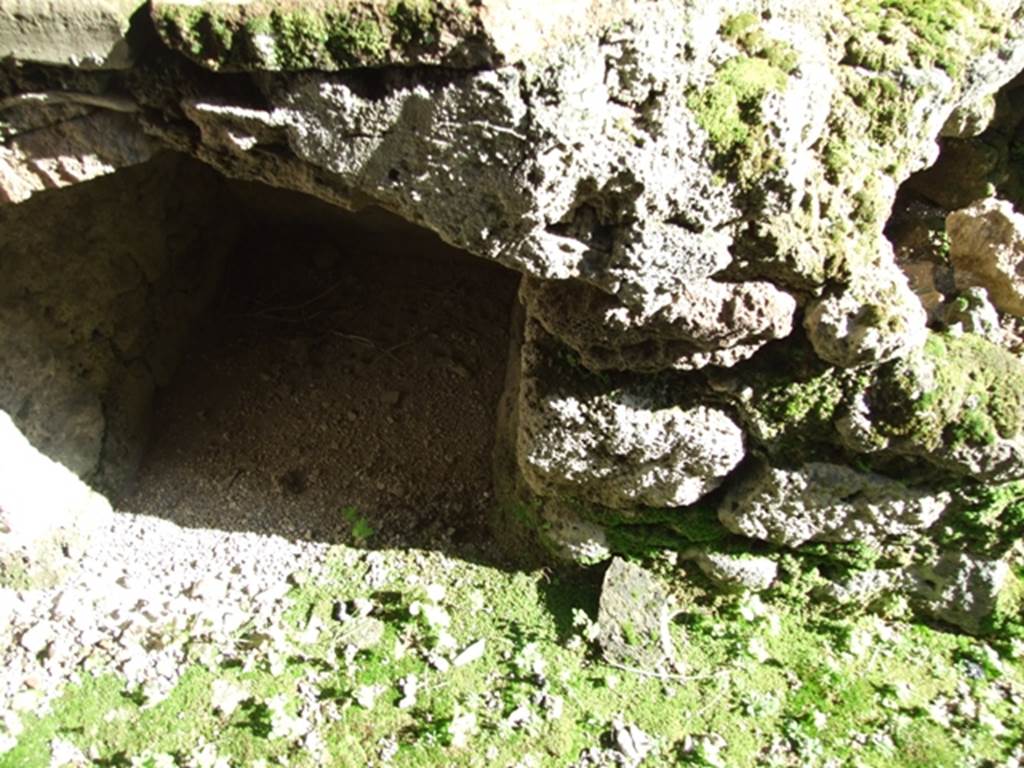
IX.1.4 Pompeii. March 2009. Underneath hearth.
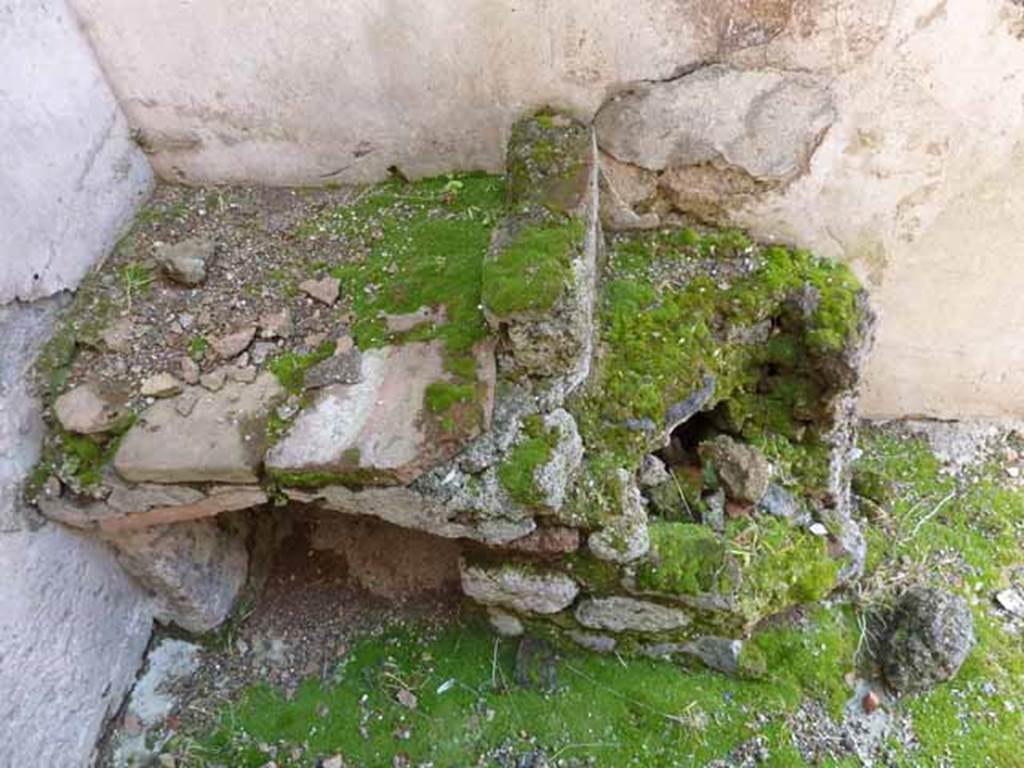
IX.1.4 Pompeii. May 2010. Remains of hearth in south-east corner of rear room.
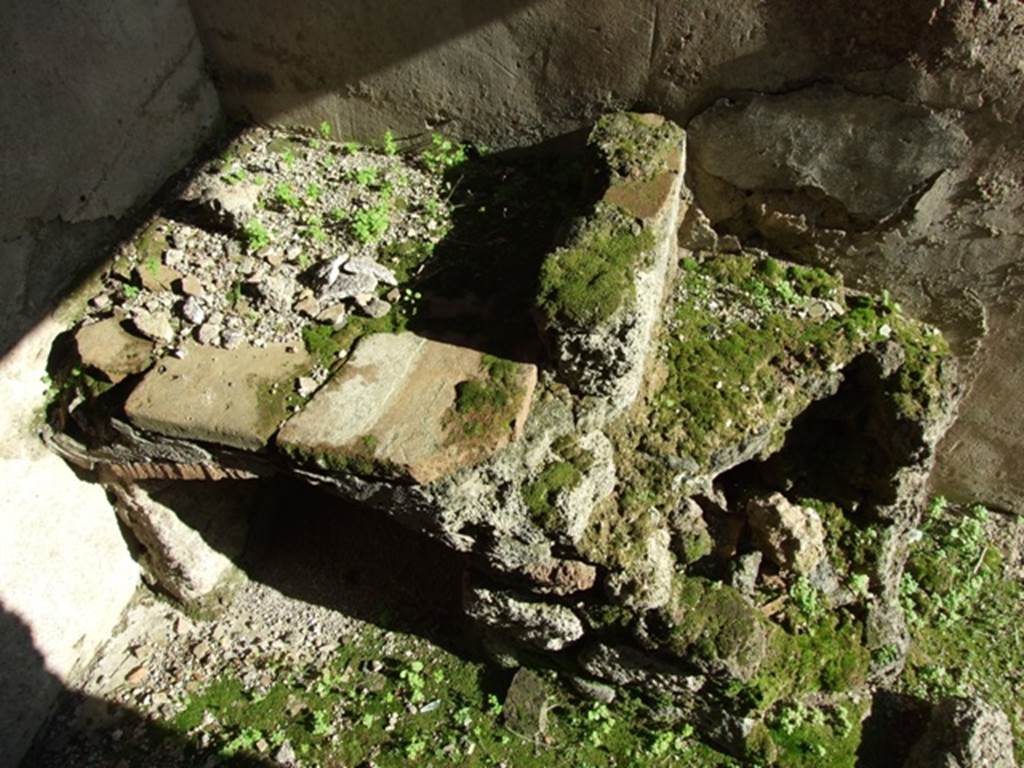
IX.1.4 Pompeii. March 2009. Rear room, with remains of hearth.
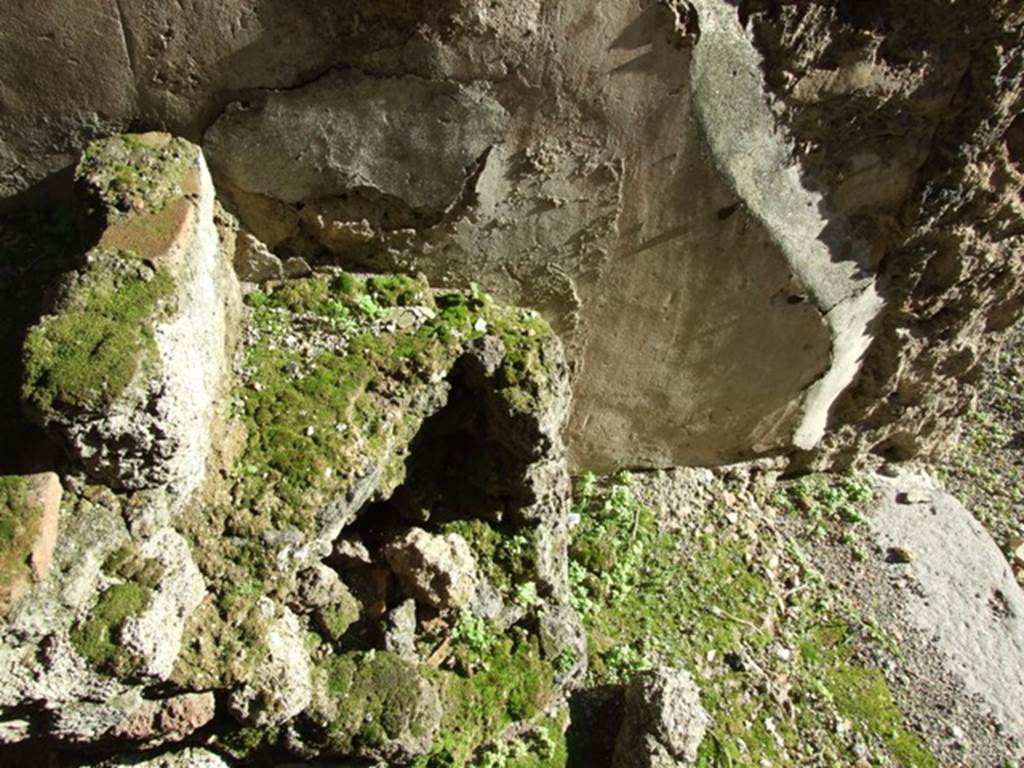
IX.1.4 Pompeii. March 2009. Plaster on south wall, above hearth in rear room.
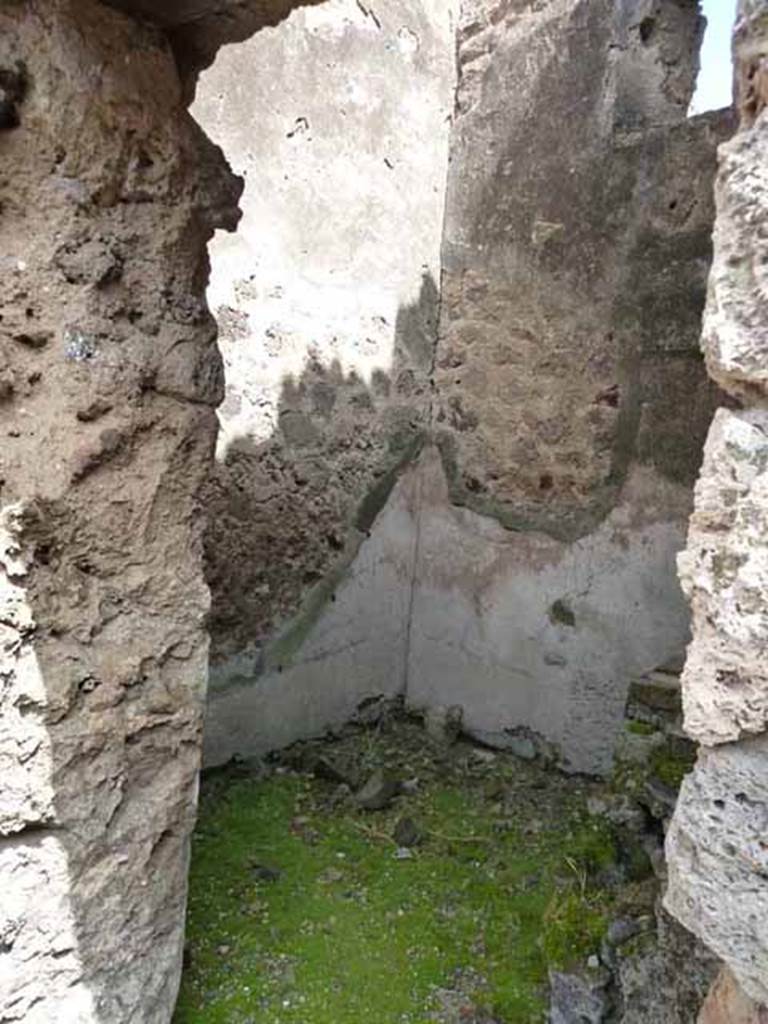
IX.1.4 Pompeii. May 2010. North-east corner of rear room.
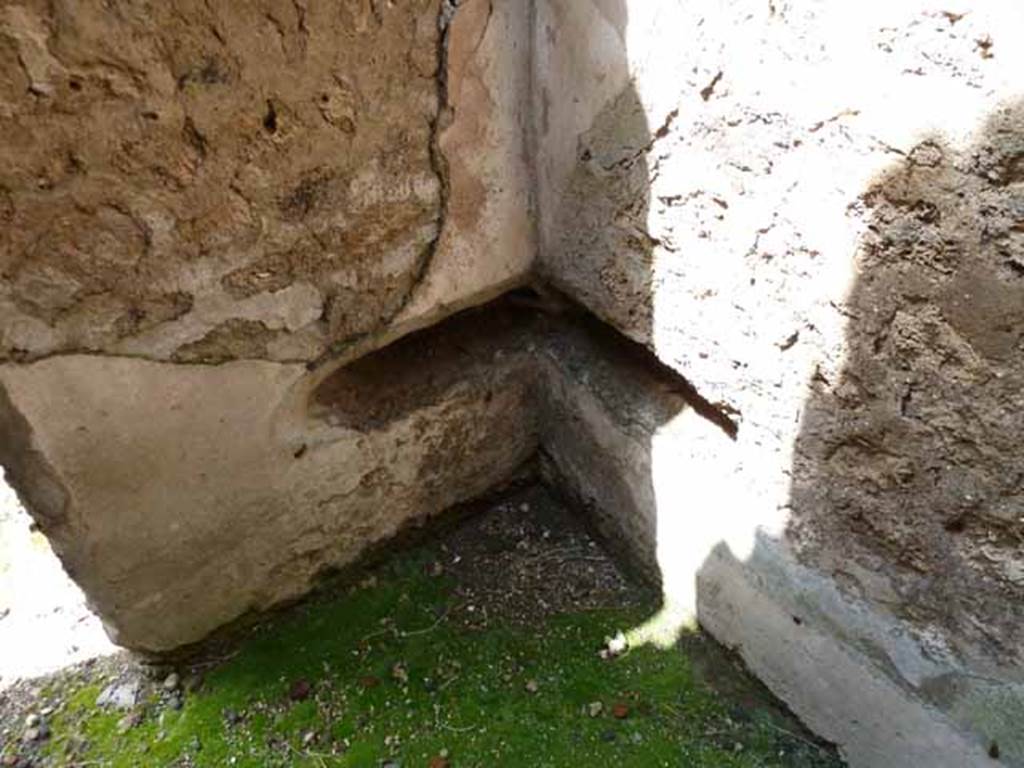
IX.1.4 Pompeii. May 2010. Latrine in north-west corner of rear room.
This is described as having two slots at right angles to each other, in the kitchen area with no privacy.
This might suggest a triangular seat.
See Hobson, B., 2009. Latrinae et foricae: Toilets in the Roman World. London; Duckworth. (p.49 and fig. 64)
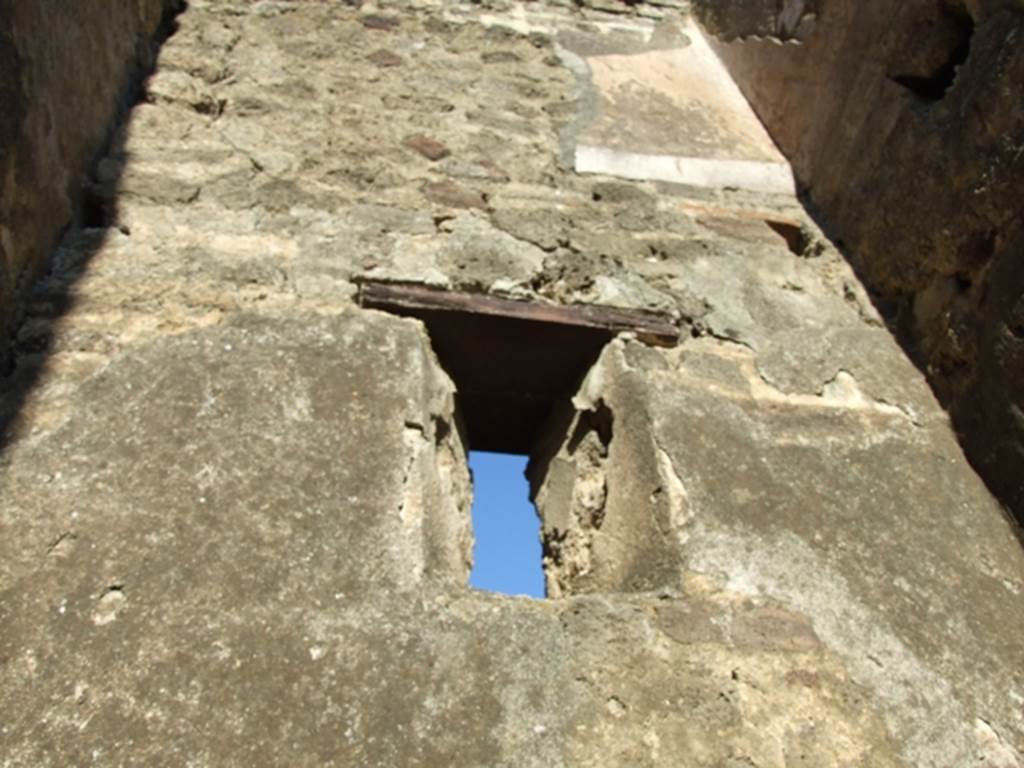
IX.1.4 Pompeii. March 2009. Window in upper east wall of rear room.
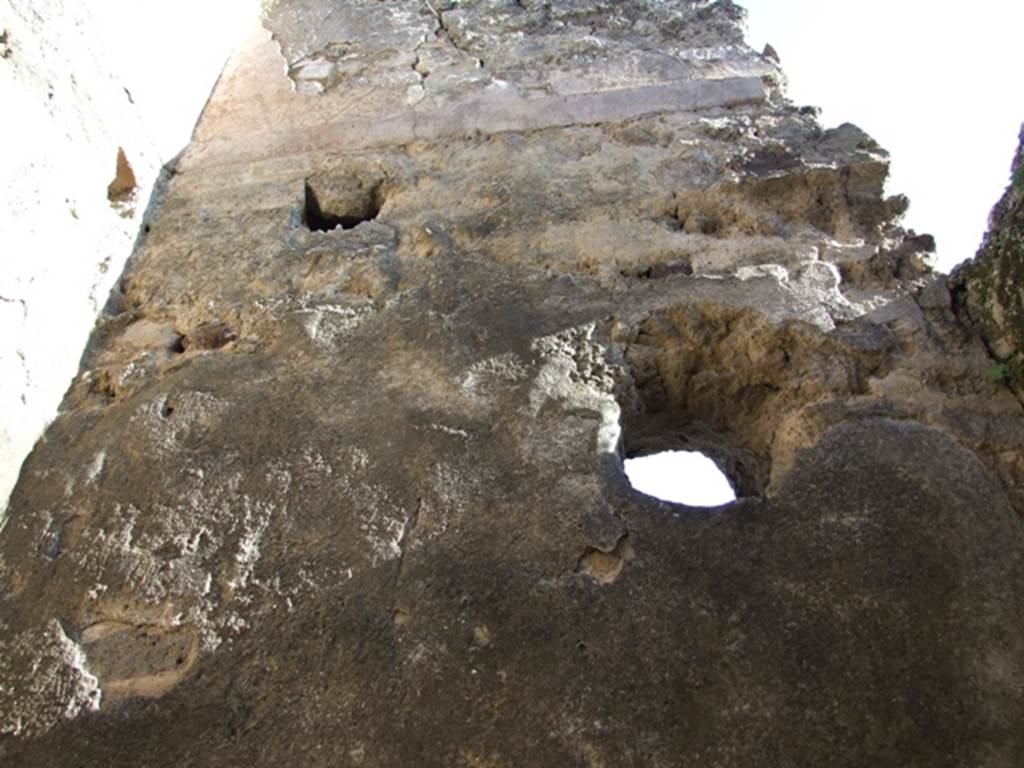
IX.1.4 Pompeii. March 2009. Upper south wall of rear room.
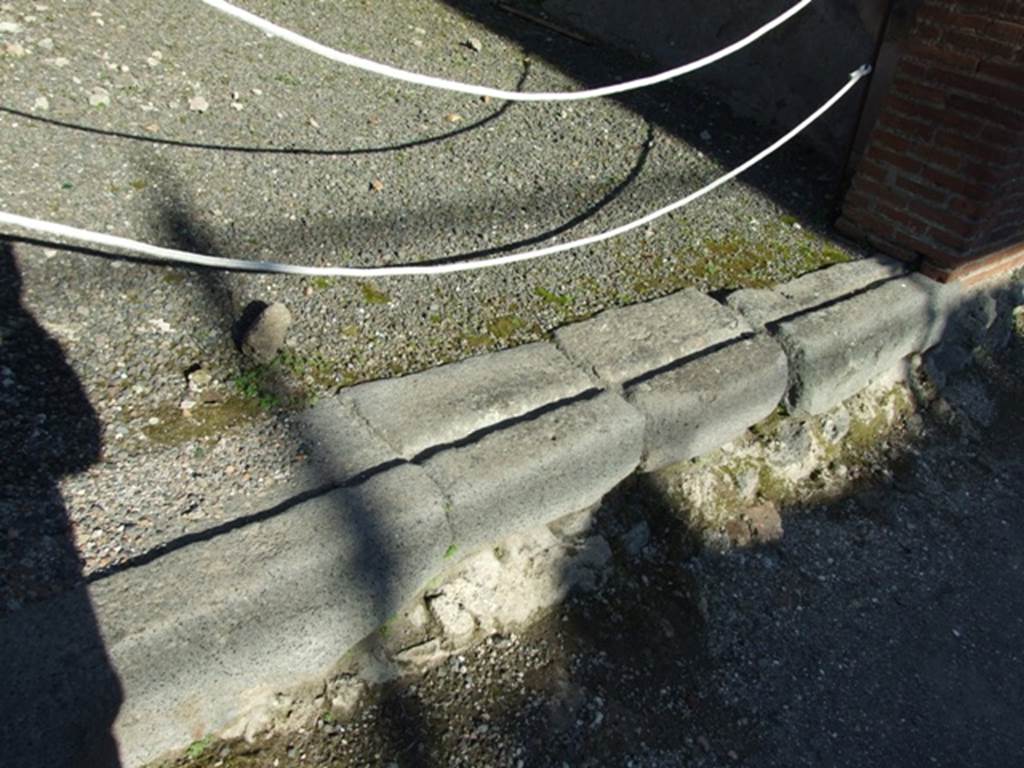
IX.1.4 Pompeii. March 2009. Shop threshold or sill.