VIII.6.6 Pompeii. Horticultural plot. Excavated 1883-4?
Notizie degli Scavi, (January) 1882, p.281, reads –
“Dell’isola
situata a mezzo giorno della 5, e che per la regione esposta di sopra sara da
ora innanzi 6.........”
(“Of the insula situated to the south of 5, which will
now be called 6……,”)
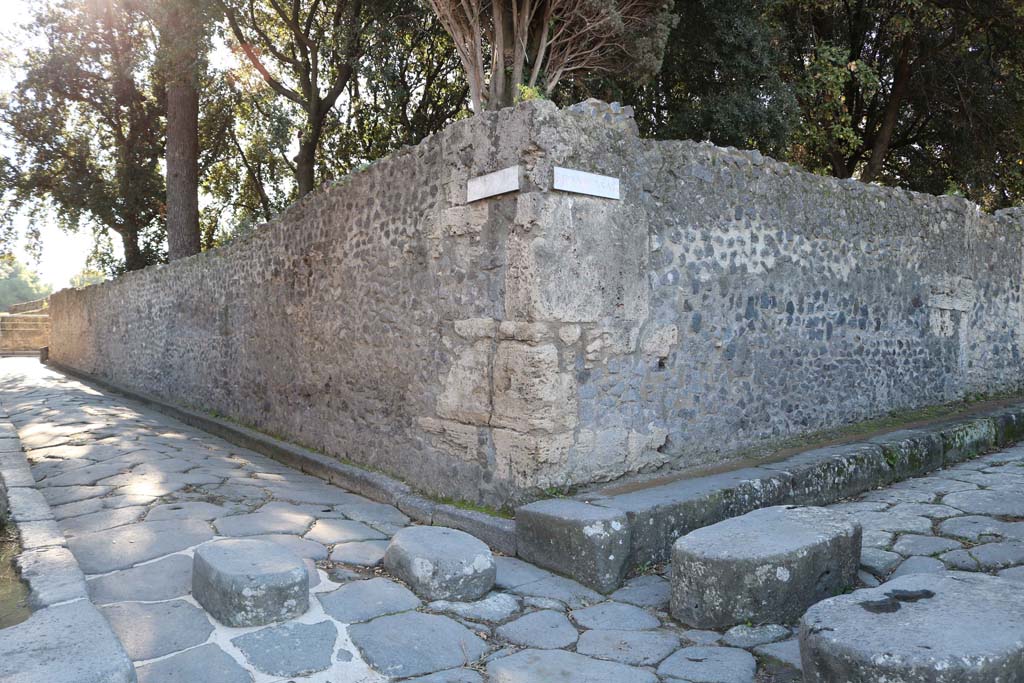
VIII.6.6
Pompeii. December 2018. Looking south along east exterior boundary wall. Photo
courtesy of Aude Durand.
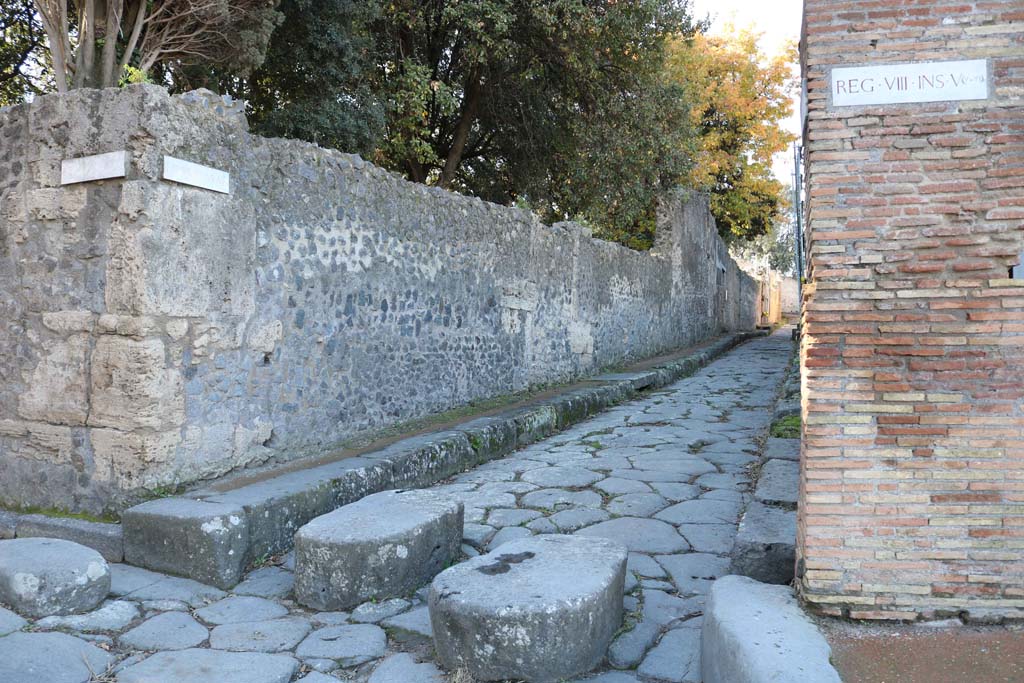
VIII.6.6 Pompeii. December
2018.
Looking
west along north exterior boundary wall in Vicolo delle Pareti Rosse, towards
entrance doorway. Photo courtesy of Aude Durand.
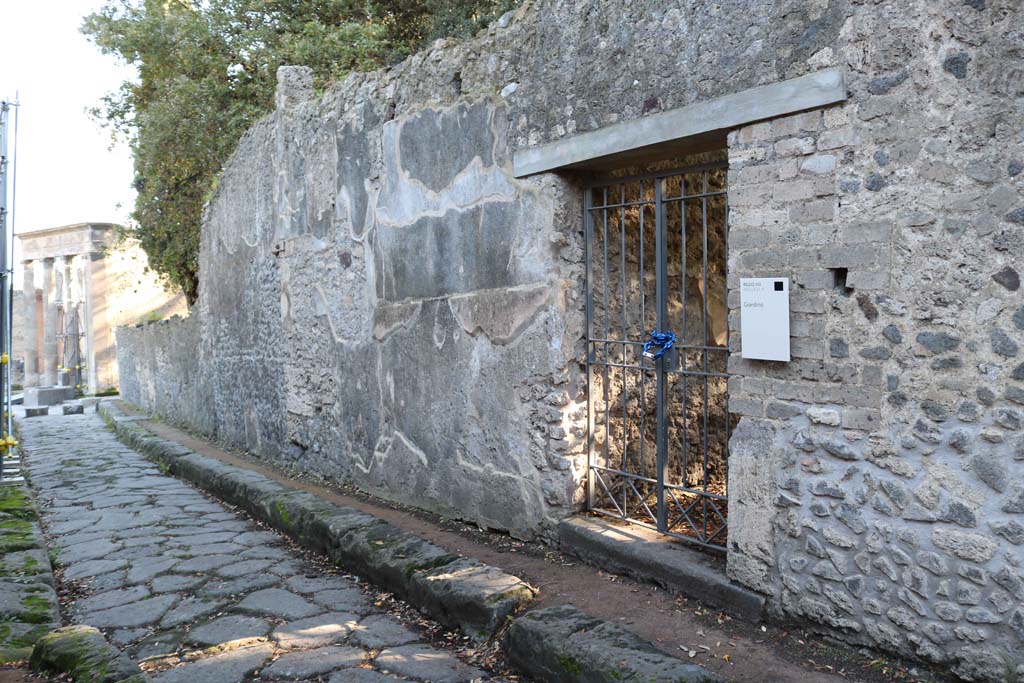
VIII.6.6 Pompeii. December 2018.
Looking east on Vicolo delle Pareti Rosse towards
entrance doorway. Photo
courtesy of Aude Durand.
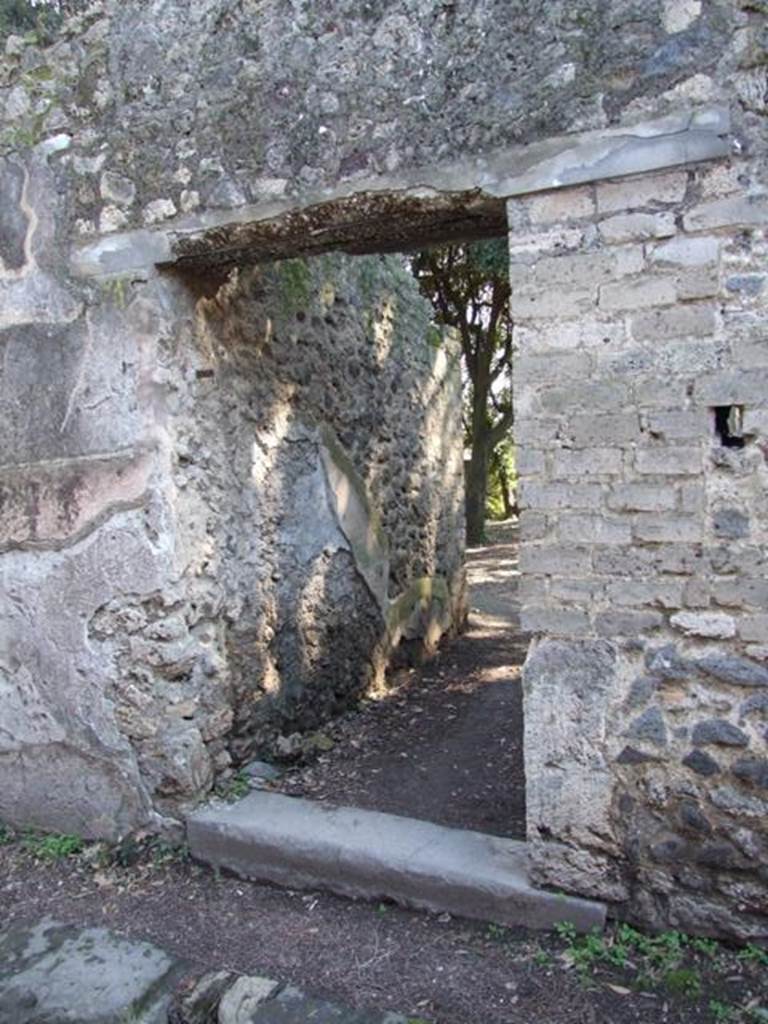
VIII.6.6 Pompeii. March 2009. Entrance on Vicolo delle Pareti Rosse. Looking south.
![VIII.6.6 Pompeii. Graffito found on the wall on the left side of the entrance. According to Varone this inscription was written at the entrance on this house.
Miximus in lecto fateor peccavimus
Hospes si dices quare nulla matella fuit [CIL IV 4957]
He translated this as: We have wet the bed, I know. We have only sinned, o guest, if you tell us for what reason there was no urinal. [CIL IV 4957]
See Varone, A., in Conticello, B., Ed, 1990. Rediscovering Pompeii. Rome: L’Erma di Bretschneider. (p. 35 and note 62).
According to Hobson, in Roman literature chamber pots are referred to as matellae, lasanae or dolia curta. See Hobson, B., 2009. Latrinae et foricae: Toilets in the Roman World. London; Duckworth. (p. 134).
This inscription is often wrongly attributed to VIII.7.6. The NdS 1882, stated that on leaving the large garden (of VIII.5.15) by the second south entrance (VIII.5.38), into the southern alley, this inscription was brought to light on the north wall of insula 6. See Notizie degli Scavi di Antichità, 1882, p. 436.](8%2006%2006_files/image008.jpg)
VIII.6.6 Pompeii. Graffito found on the wall on the left side of the entrance.
According to Varone this inscription was written at the entrance on this house.
Miximus in lecto
fateor peccavimus
Hospes si dices
quare nulla matella fuit [CIL IV 4957]
He translated this as
We wet the bed; I know, O host, we were wrong, Ask why? There was no urinal. [CIL IV 4957]
He notes the alternative interpretation by Bücheler;
We have wet the bed, I know. We have only sinned, o guest,
if you tell us for what reason there was no urinal. [CIL IV 4957]
See Varone, A., in Conticello, B., Ed, 1990. Rediscovering Pompeii. Rome: L’Erma di Bretschneider. (p. 35 and note 62).
According to Hobson, in Roman literature chamber pots are referred to as matellae, lasanae or dolia curta.
See Hobson, B., 2009. Latrinae et foricae: Toilets in the Roman World. London; Duckworth. (p. 134).
This inscription is often wrongly attributed to VIII.7.6.
The NdS 1882, stated that on leaving the large garden (of VIII.5.15) by the second south entrance (VIII.5.38), into the southern alley, this inscription was brought to light on the north wall of insula 6.
See Notizie degli Scavi di Antichità, 1882,
p. 436.
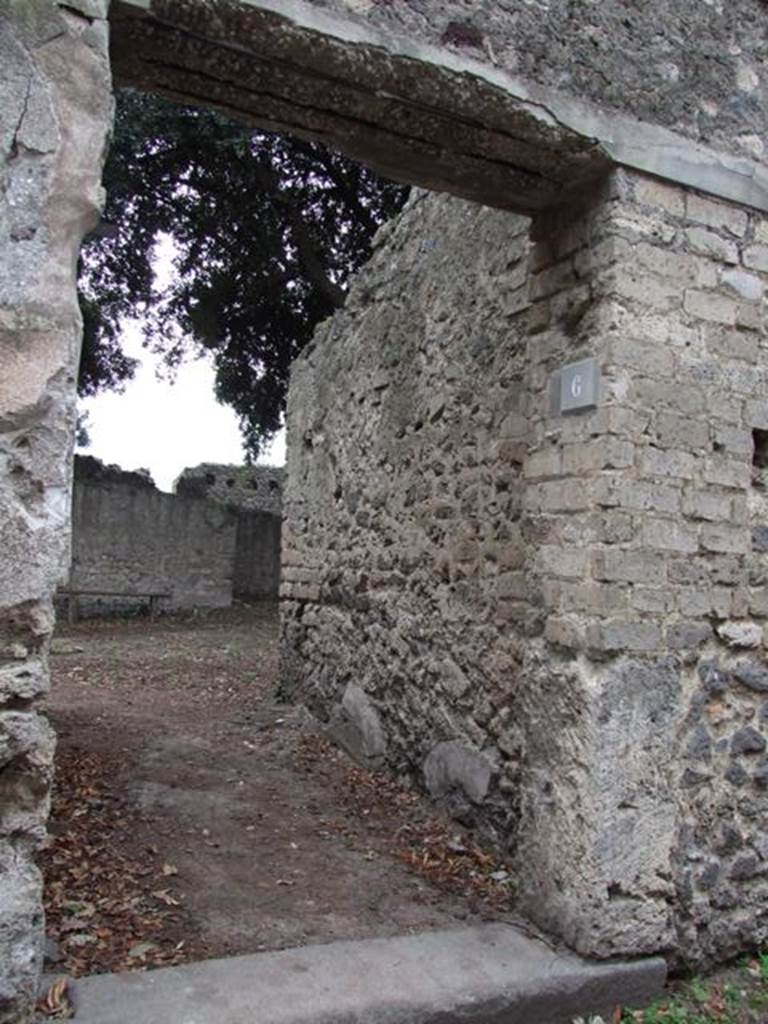
VIII.6.6 Pompeii. December 2007. Entrance.
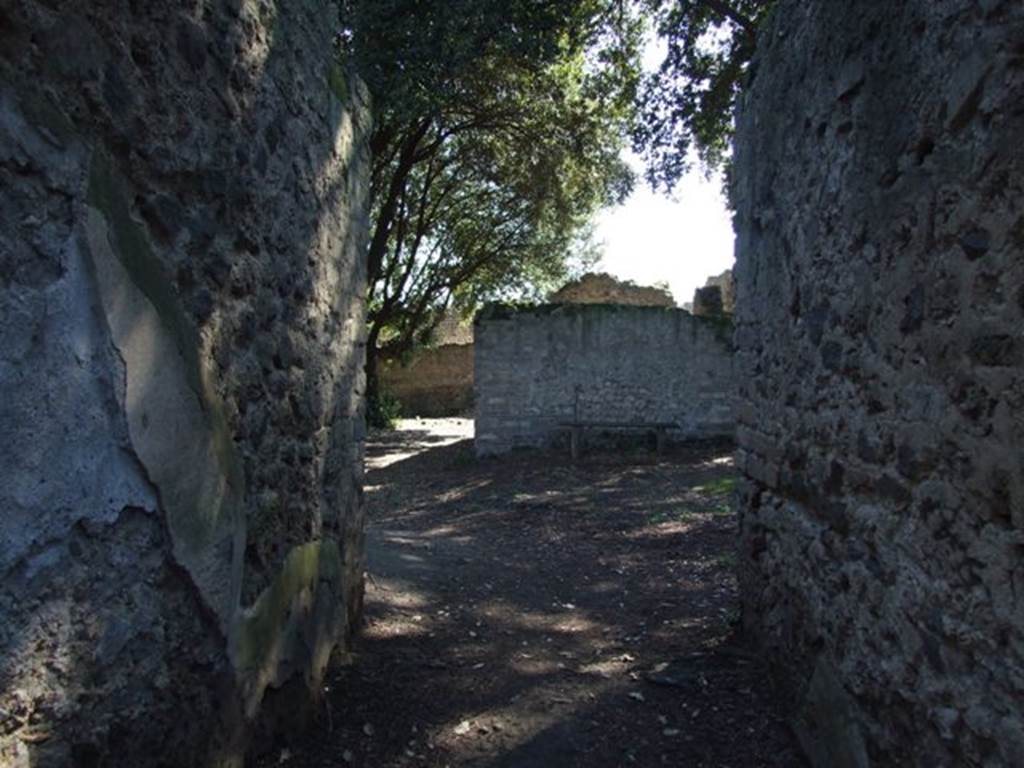
VIII.6.6 Pompeii. March 2009. Entrance corridor, looking south.
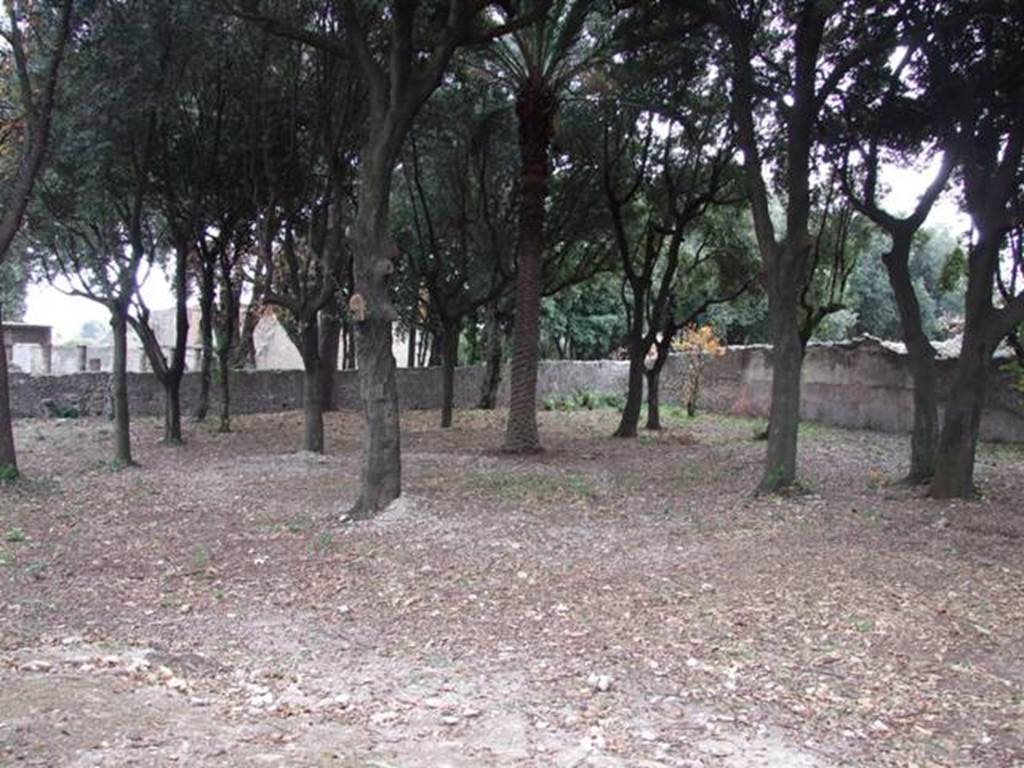
VIII.6.6 Pompeii. December 2007. Looking south-east.
According to Jashemski –
“The east part of the insula (excavated 1883-84) had apparently been converted into a market garden (a) after the earthquake.
Soil contours were partially preserved.”
See Jashemski, W. F., 1993. The Gardens of Pompeii, Volume II: Appendices. New York: Caratzas. (p.219).
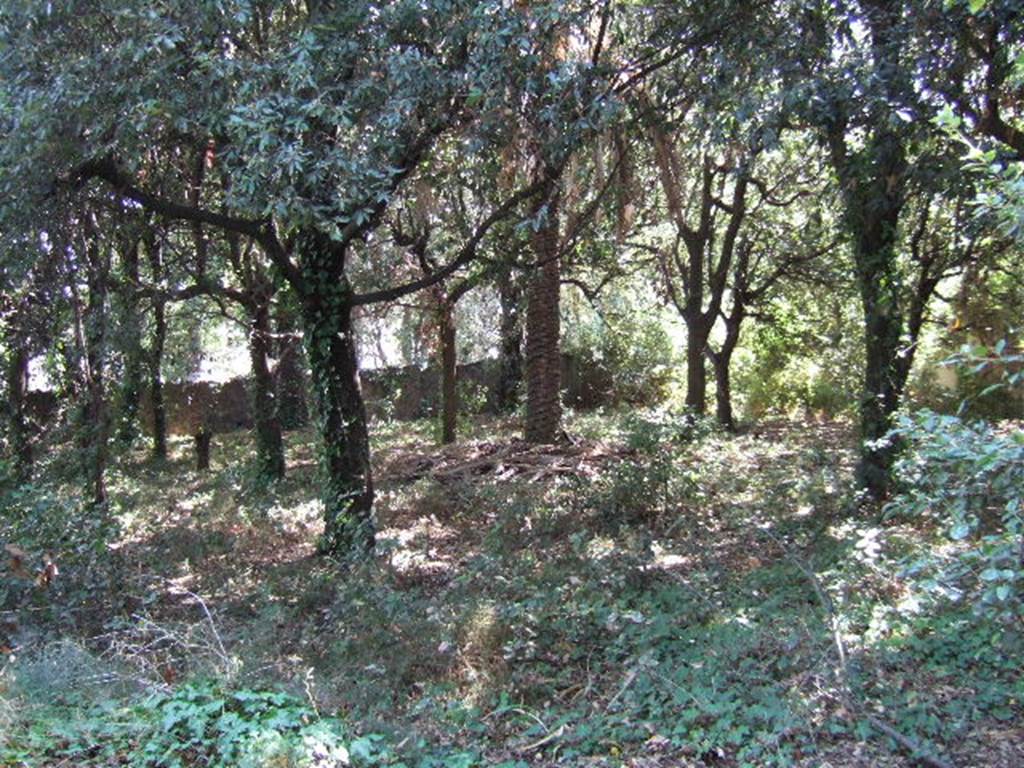
VIII.6.6 Pompeii. September 2005. Looking south-east.
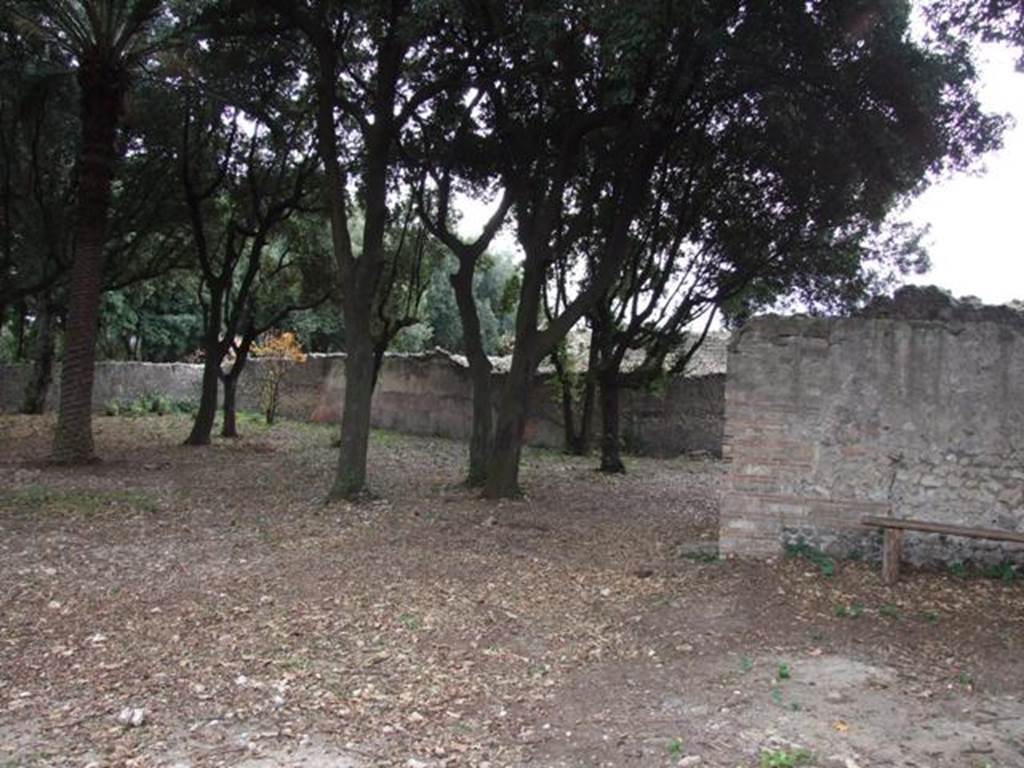
VIII.6.6 Pompeii. December 2007. Looking south-east towards south wall.
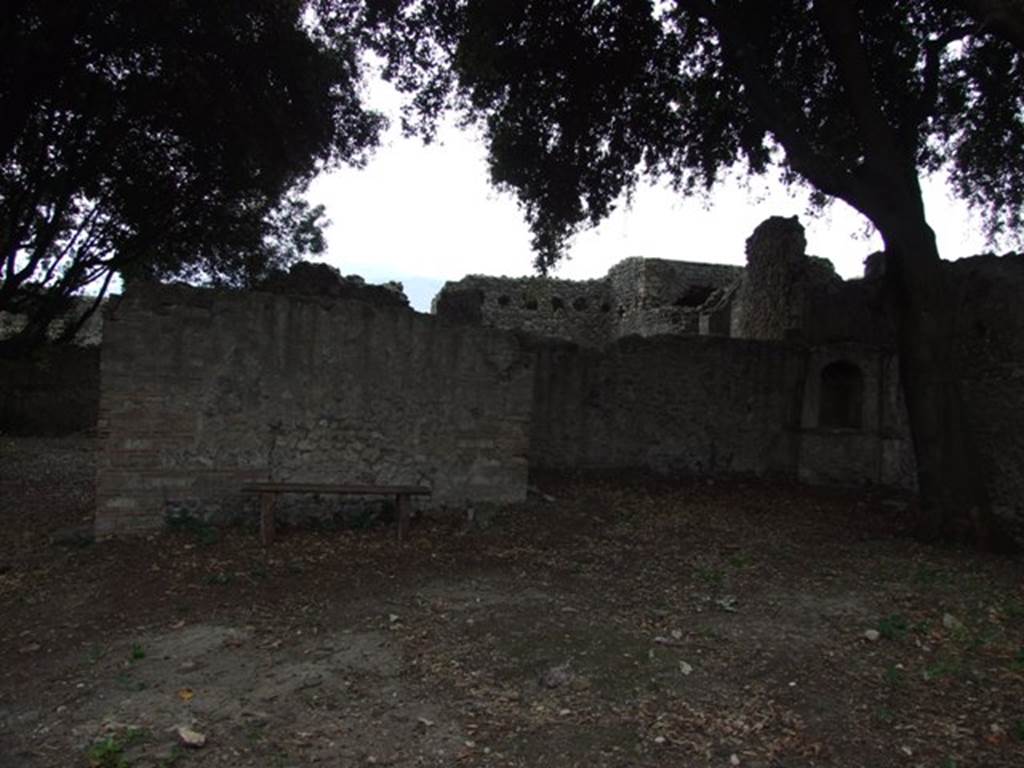
VIII.6.6 Pompeii. December 2007. Looking south.
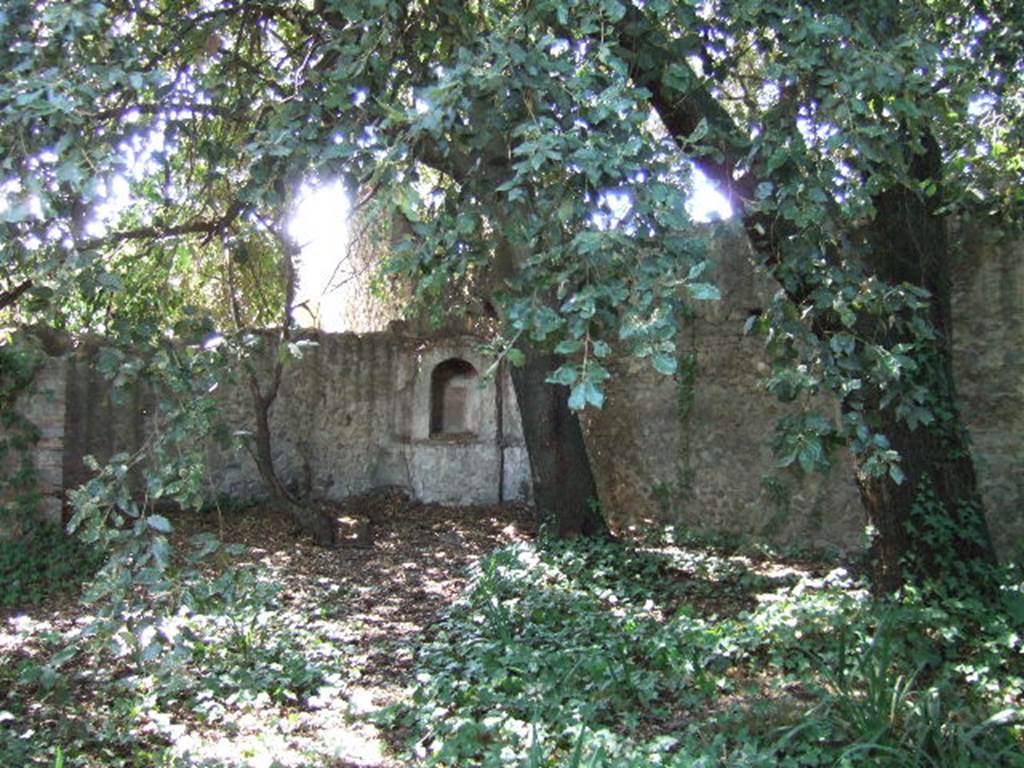
VIII.6.6 Pompeii. September 2005. South-west corner.
According to Boyce, this aedicula was built as part of a house which was demolished in order to make room for the garden.
According to Boyce, the lararium is earlier than the stucco of the west wall, which was spread, not for the garden, but for a room of the earlier house.
See Boyce G. K., 1937. Corpus
of the Lararia of Pompeii. Rome:
MAAR 14. (p.78, No.374, Pl.33,1)
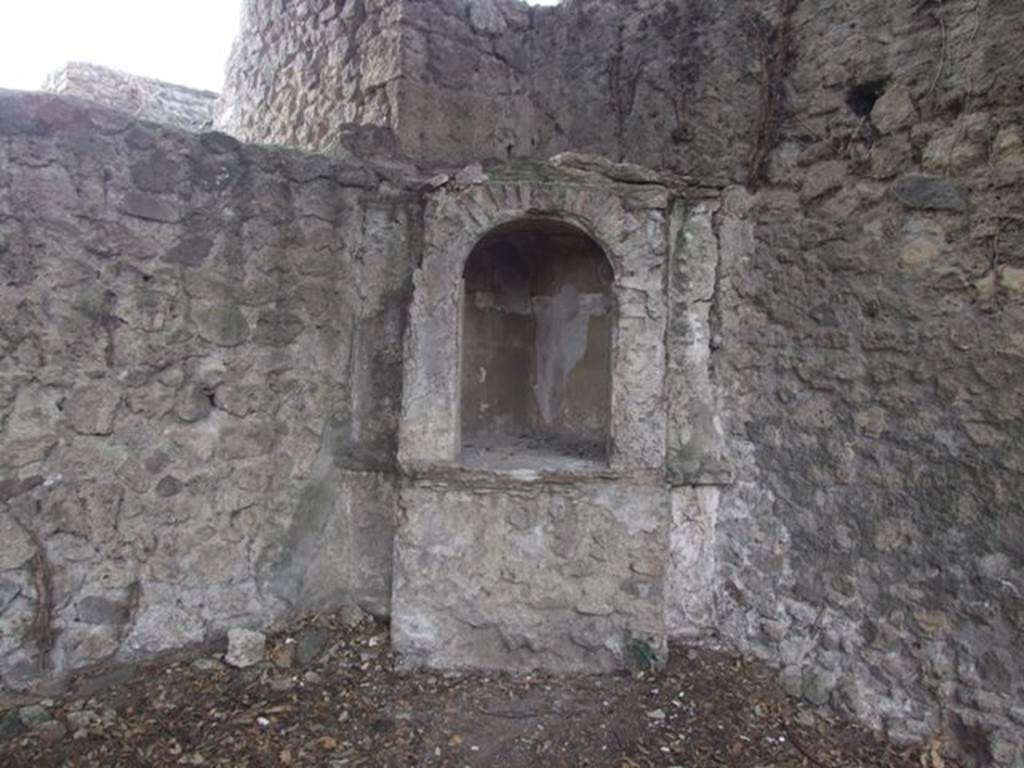
VIII.6.6 Pompeii. December 2007. Niche in south-west corner.
According to Boyce, this simple aedicula consisted on a podium and a niche with an arched opening.
The interior of the niche is an unusual pentagonal shape, the floor is paved with red stucco ornamented with little white stones.
The rest of the structure was uniform white, except for the tympanum, which was yellow with a star in white relief in the middle.
Before the shrine and close to the south wall, stood a small masonry altar, originally coated with white stucco.
See Boyce G. K., 1937. Corpus
of the Lararia of Pompeii. Rome:
MAAR 14. (p.78, No.374, Pl.33,1)
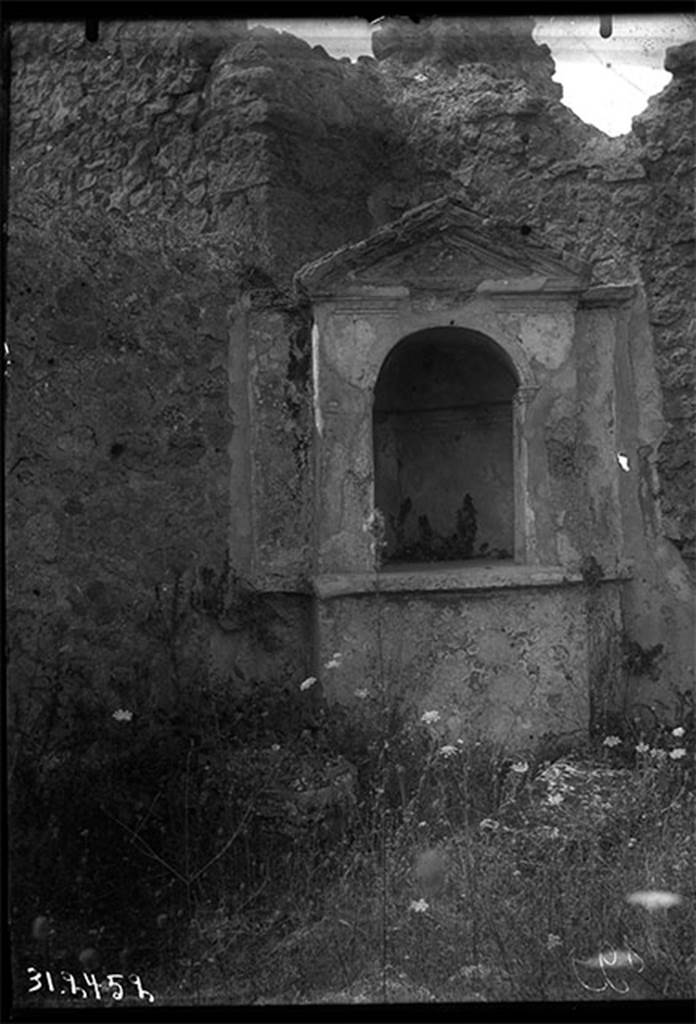
VIII.6.6 Pompeii.
1931. Niche in south-west corner.
DAIR 31.2452. Photo
© Deutsches Archäologisches Institut, Abteilung Rom, Arkiv.
See Boyce G. K., 1937. Corpus
of the Lararia of Pompeii. Rome:
MAAR 14. (p.78, No.374, Pl.33,1)
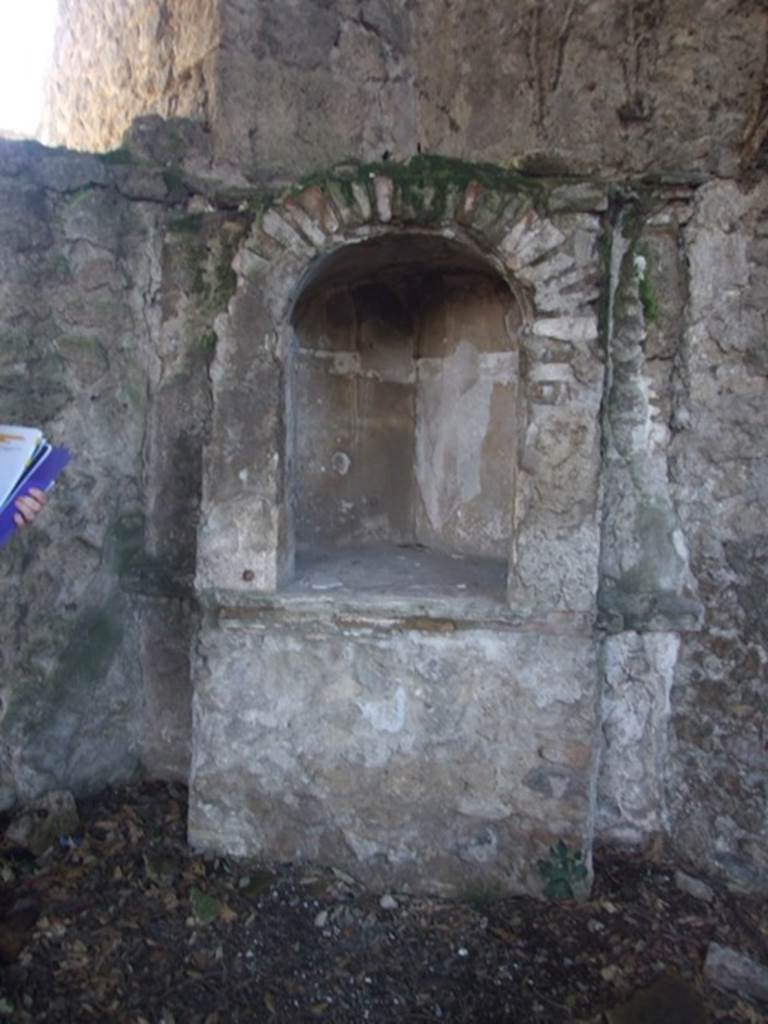
VIII.6.6 Pompeii. March 2009. Niche. Boyce recognised this as VIII.7.4/5,
See Boyce G. K., 1937. Corpus
of the Lararia of Pompeii. Rome:
MAAR 14. (p.78, No.374, Pl.33,1)
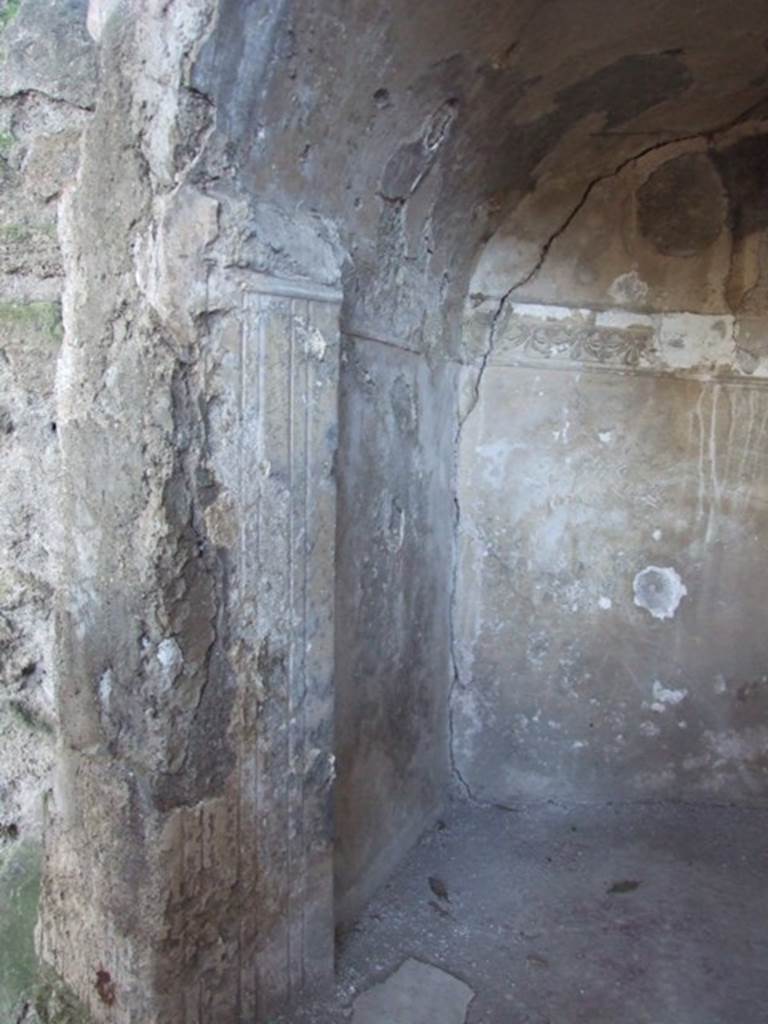
VIII.6.6 Pompeii. March 2009. East side of niche.
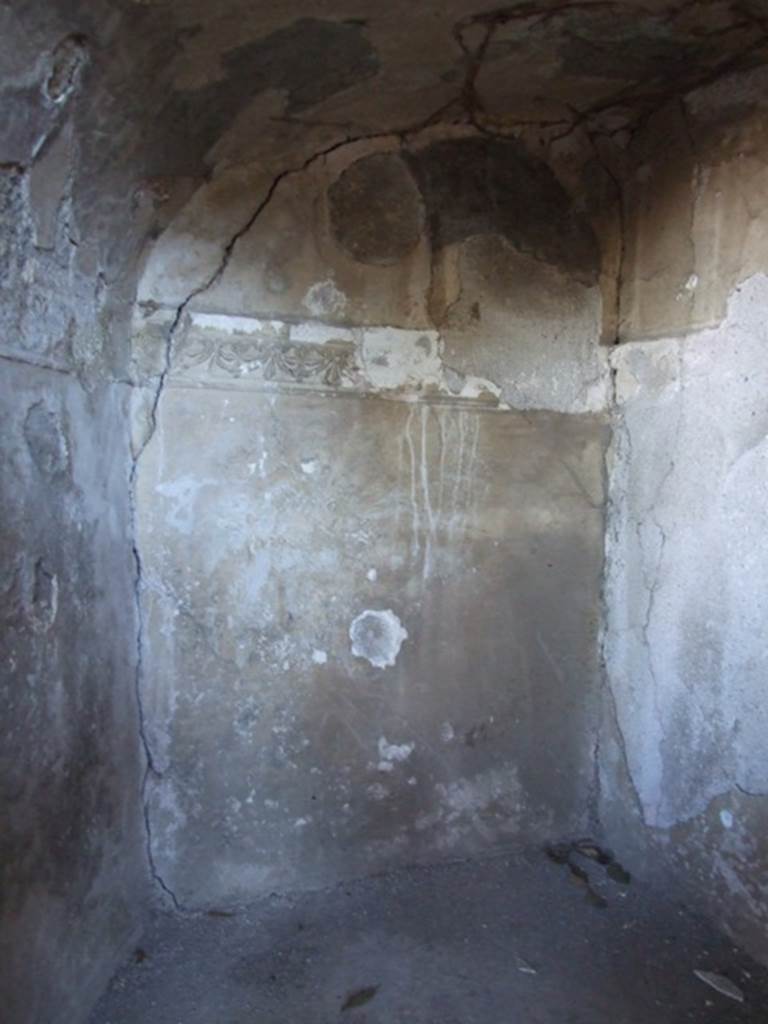
VIII.6.6 Pompeii. March 2009. East wall of niche.
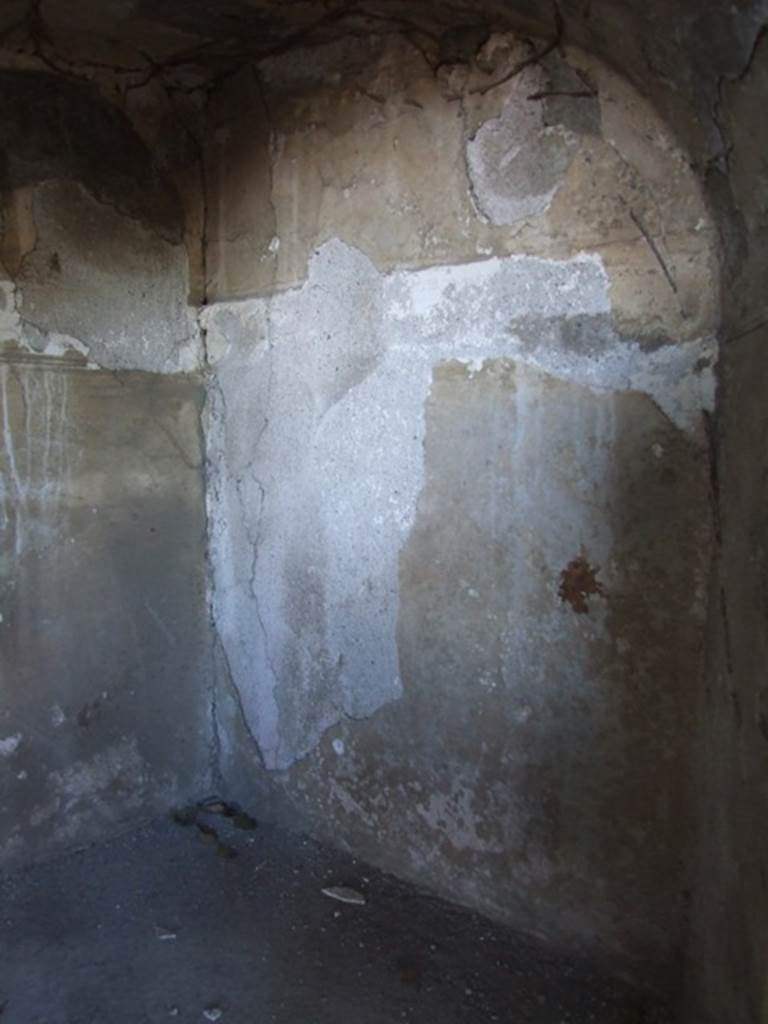
VIII.6.6 Pompeii. March 2009. West wall of niche.
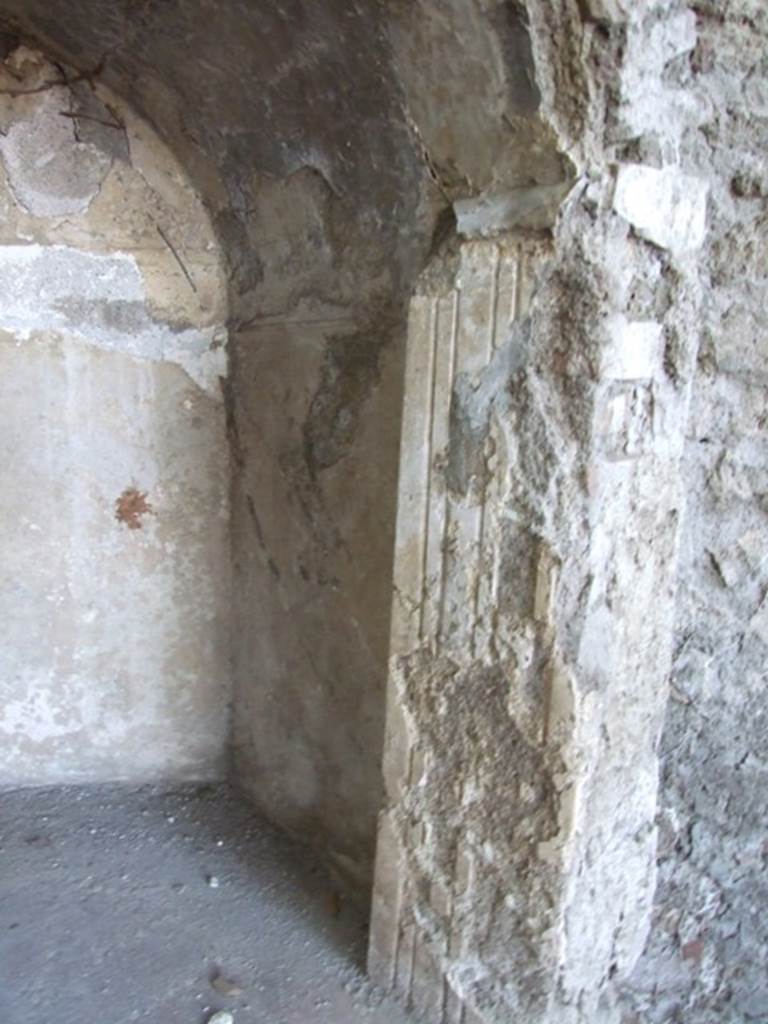
VIII.6.6 Pompeii. March 2009. West side of niche.
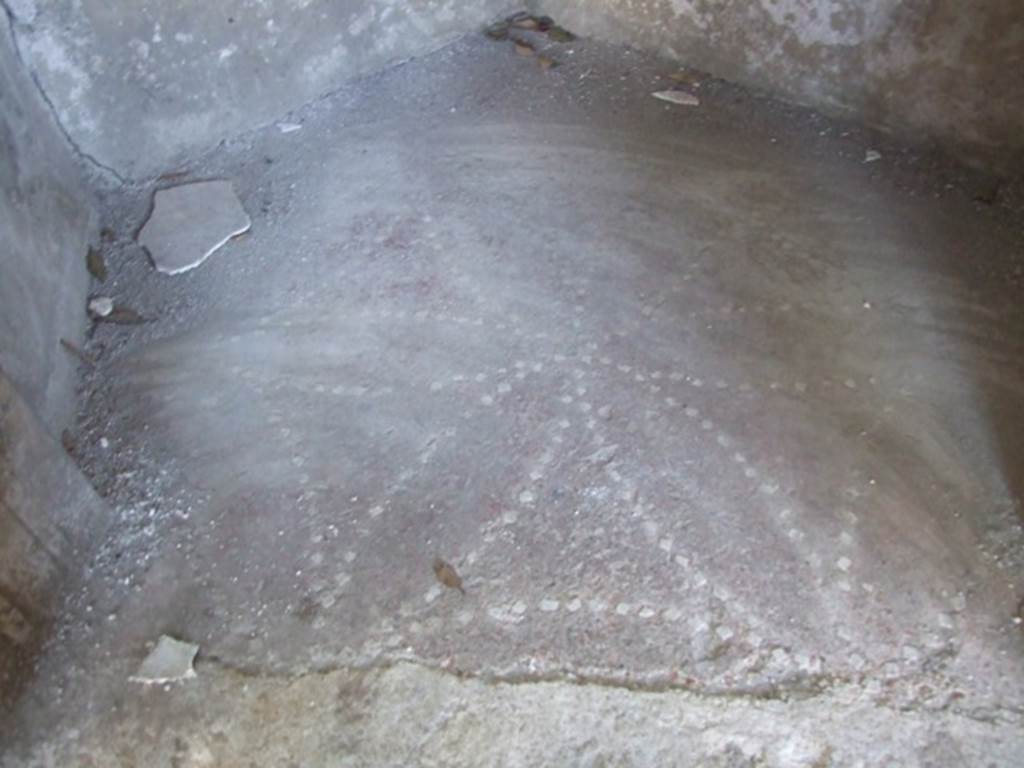
VIII.6.6 Pompeii. March 2009. Floor of niche decorated with small white pattern.
According to Boyce, this was “red stucco ornamented with small white stones”.
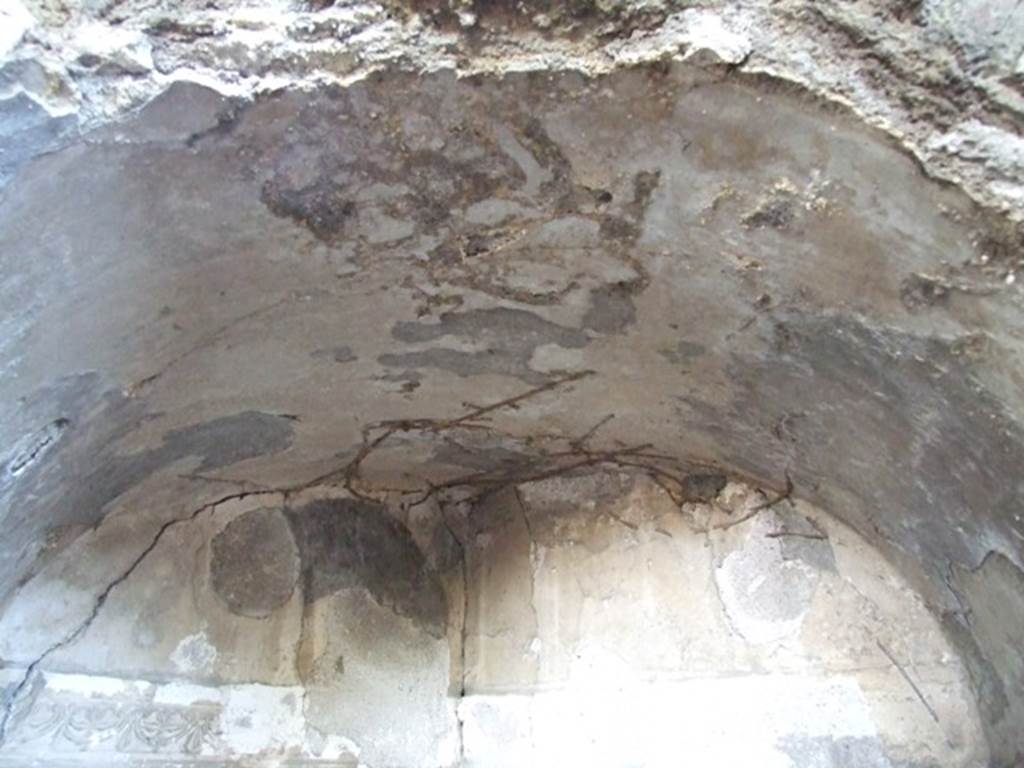
VIII.6.6 Pompeii. March 2009. Ceiling of niche.
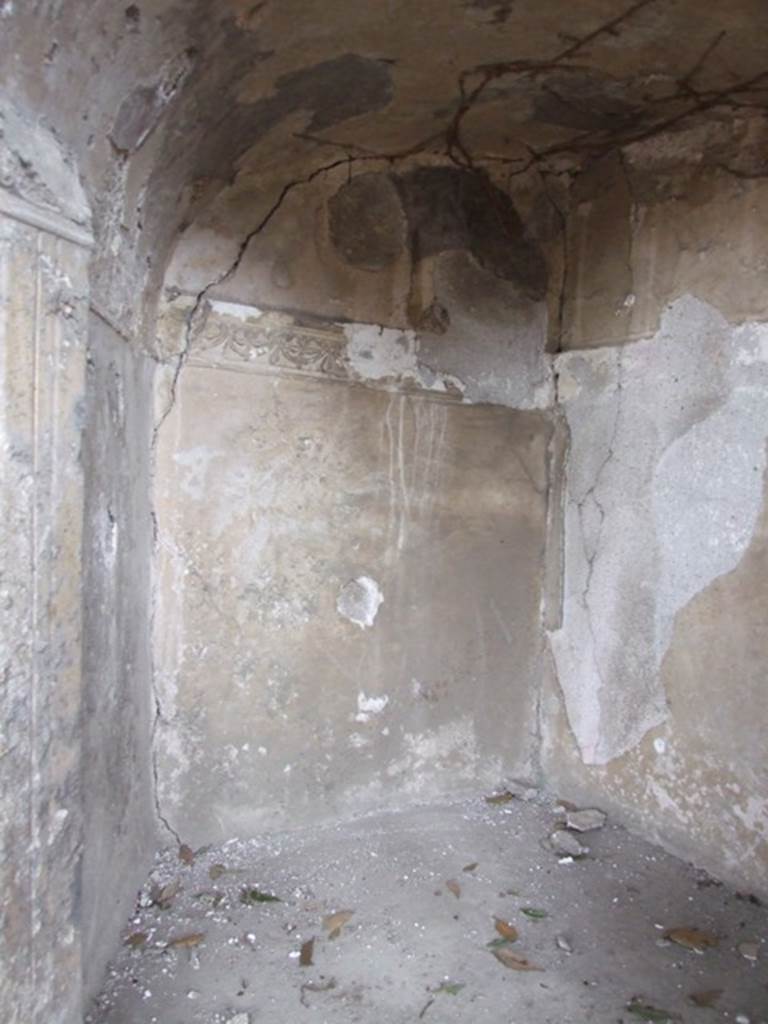
VIII.6.6 Pompeii. December 2007. Interior of niche in south-west corner.
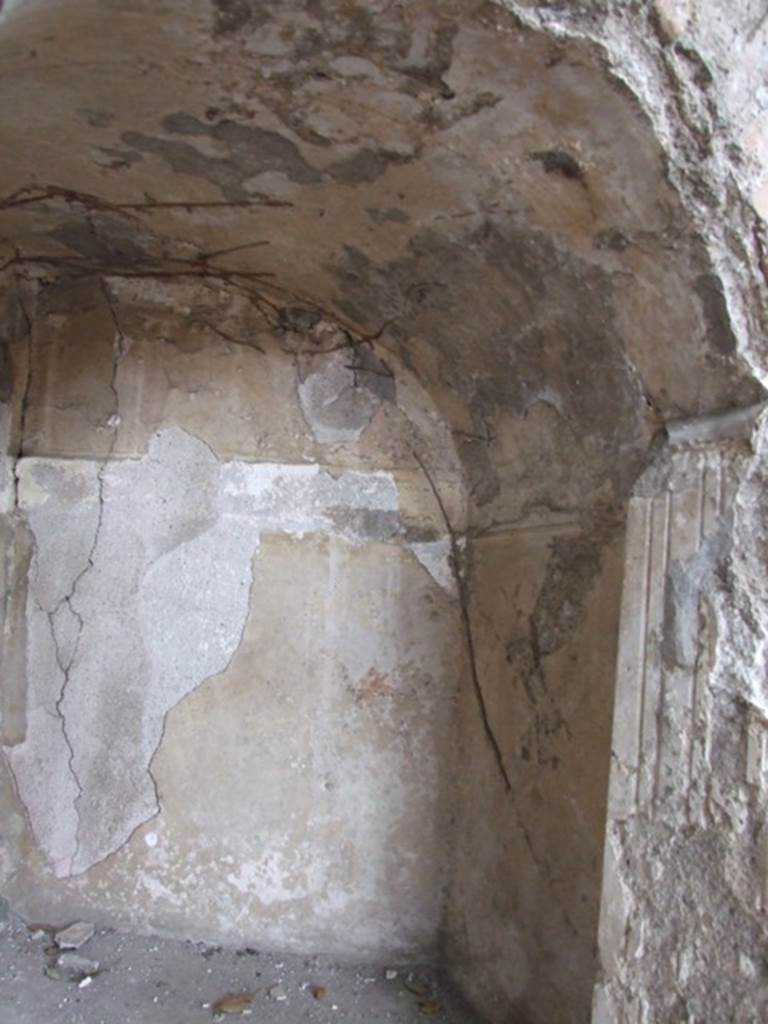
VIII.6.6 Pompeii. December 2007. Interior of niche in south-west corner.