VII.12.35 Pompeii. The Inn on
Vicolo di Eumachia.
Linked to VII .12.34 and
VII.12.36. Excavated 1863. (Vico d’Eumachia 15).

VII.12.35 Pompeii. November 2024. Looking east from Vicolo di Eumachia. Photo courtesy of Annette Haug.
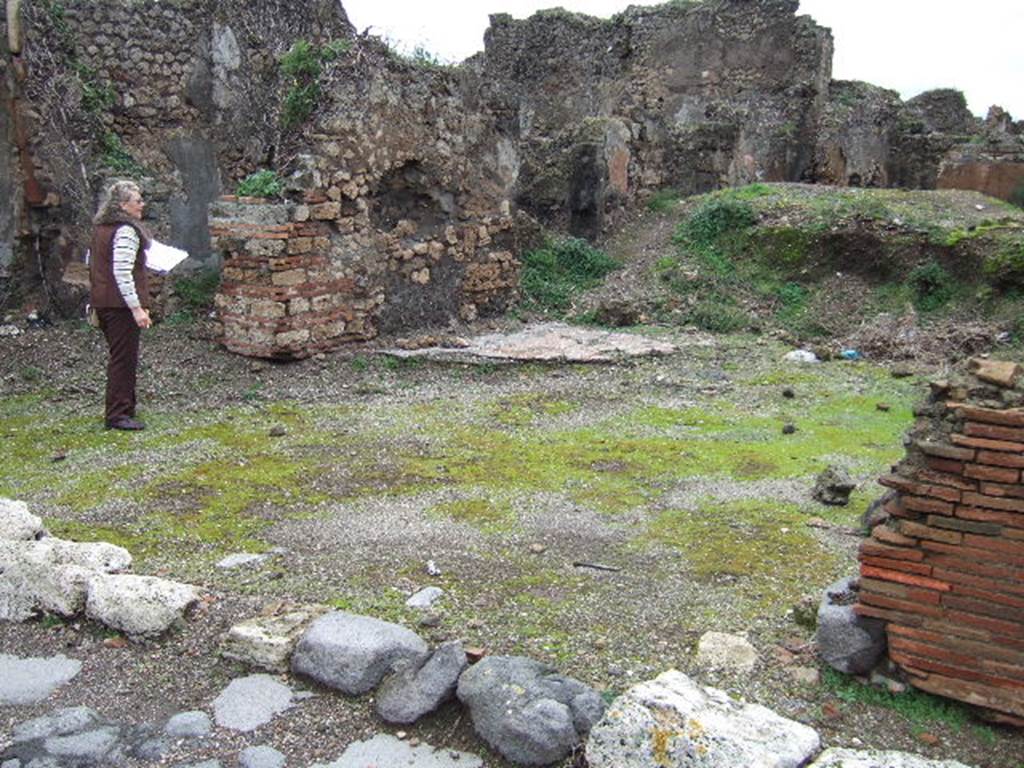
VII.12.35 Pompeii. December 2005. Entrance doorway, looking north-east into room (a), on plan below.
See Packer, Jim, Inns at Pompeii: a short survey. In
Cronache Pompeiane, IV, 1978, (p.9-12).

VII.12.35 Pompeii. March 2009. Looking east into remains of Inn.
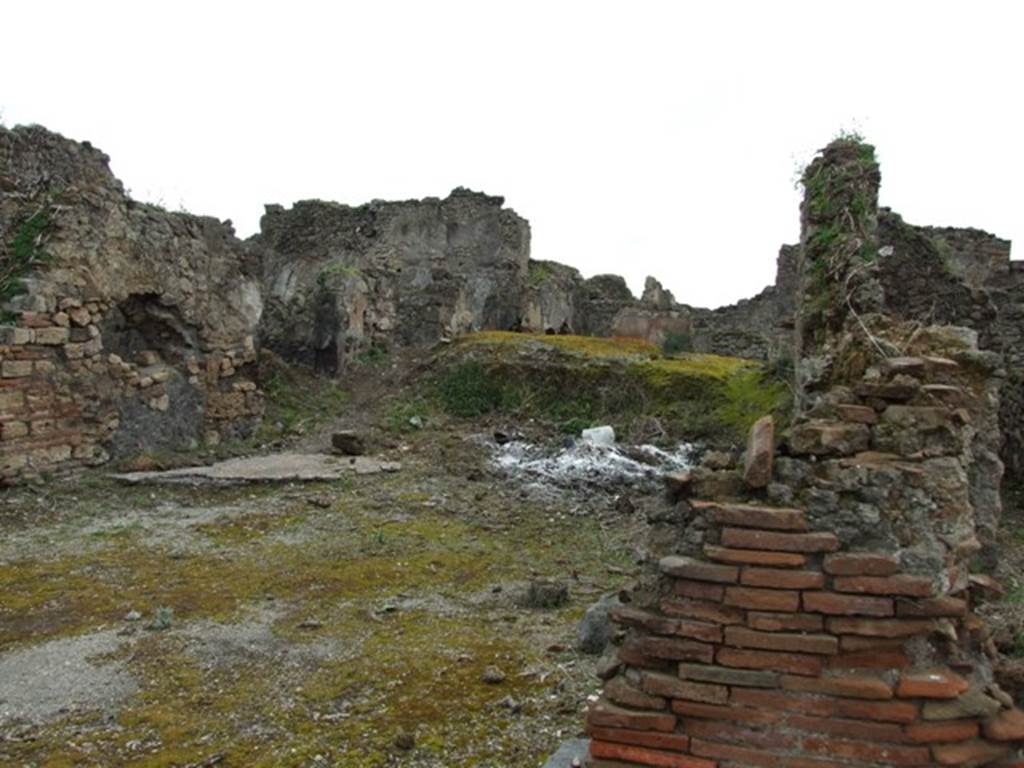
VII.12.35 Pompeii. December 2005. Remains of floor in room (a).

VII.12.35 Pompeii. December 2004. Looking west onto Vicolo di Eumachia. VII.12.35 in foreground with doorway to VII.12.34., in centre
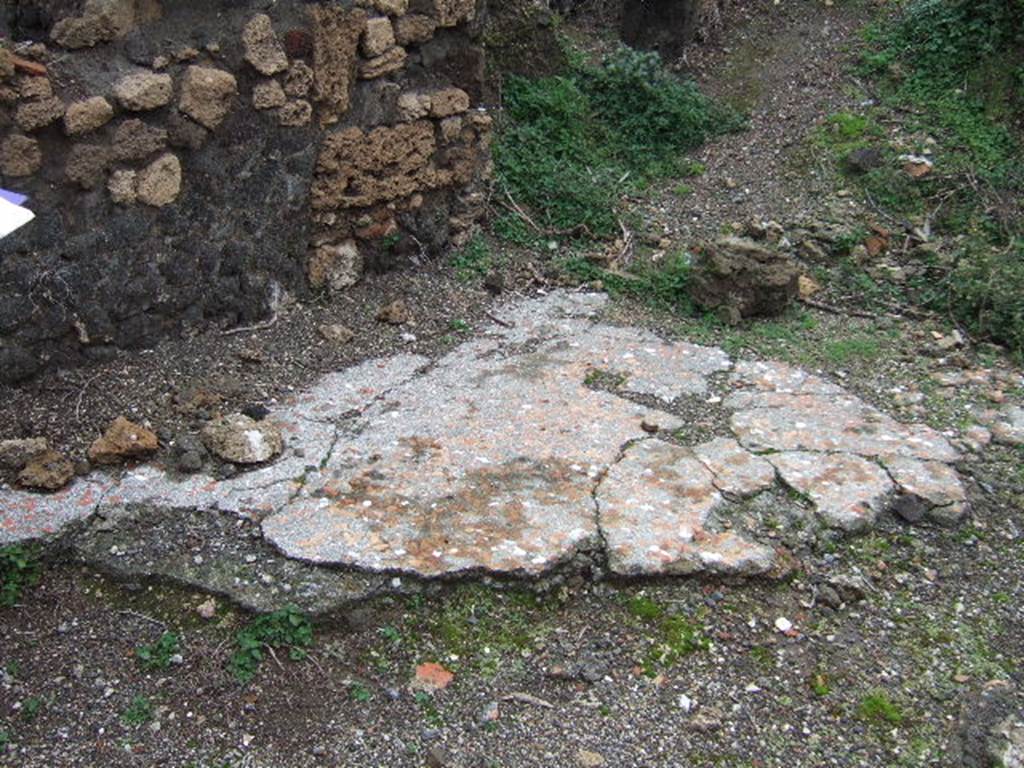
VII.12.35 Pompeii. December 2004. Looking west across VII.12.35, room (a) in foreground and room (b) in right foreground.

VII.12.35 Pompeii. November 2024.
Looking east towards doorway to room (b), on north side of room (a), from area (m). Photo courtesy of Annette Haug.
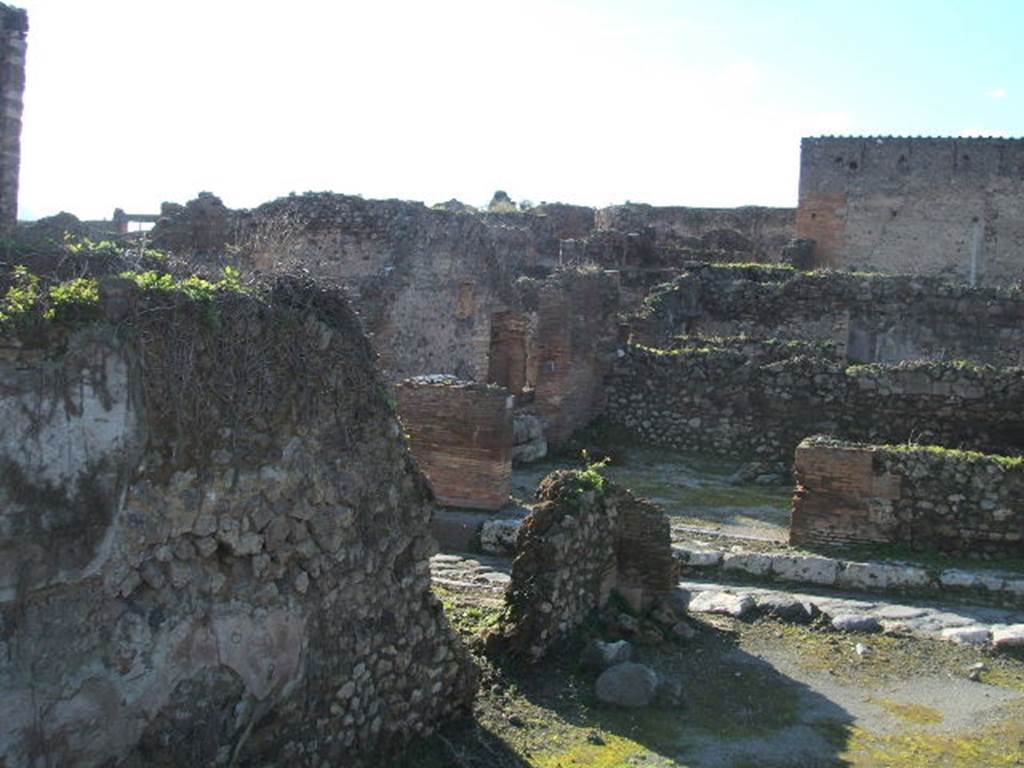
VII.12.35 Pompeii. November 2024. Looking east along rooms on north side of room (a). Photo courtesy of Annette Haug.

VII.12.35 Pompeii. December 2004. Looking north towards two of the cubicula on the north side of room (a).
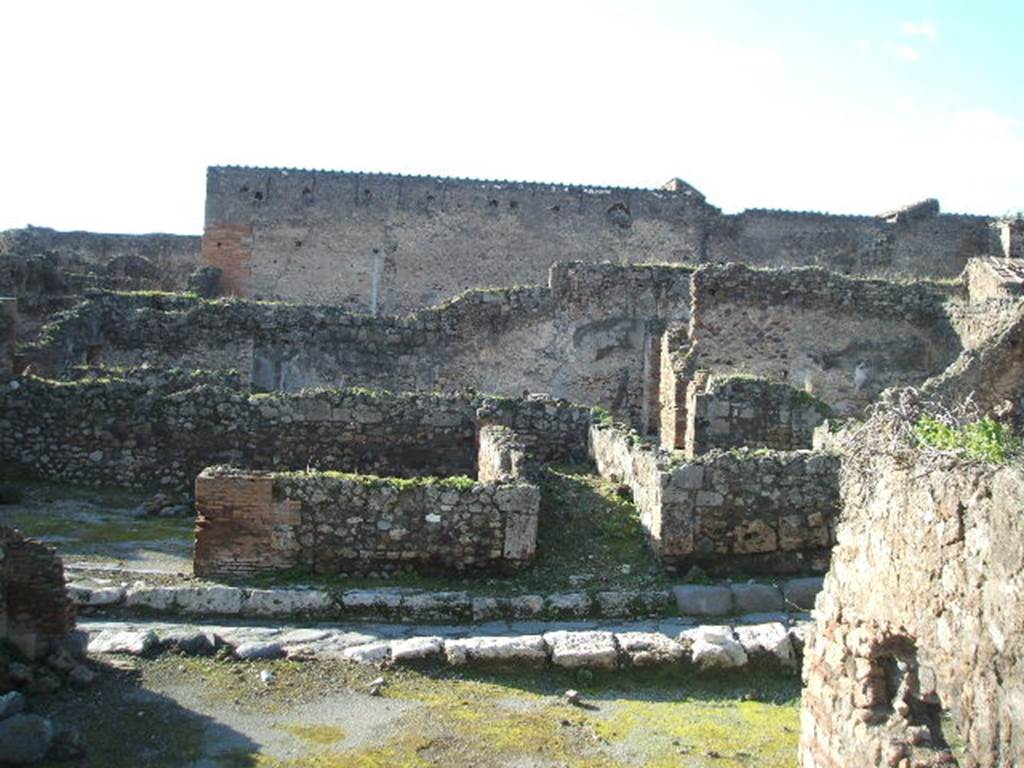
VII.12.35 Pompeii. December 2004. Looking east towards two cubicula, and across top in direction of VII.12.28.

VII.12.35 Pompeii. 1899, plan by Mau of the Inn on Vicolo di Eumachia.
See Mau, A., 1899, translated by Kelsey, F. W., Pompeii: Its Life and Art. New York: Macmillan. (p. 392-393, fig. 221).
The arrangement of rooms here is so unlike that of an ordinary house, the building must have been designed as a tavern from the very beginning.
According to Mau, the main room (room a), the large covered atrium which probably served as a dining room, was entered directly from the street.
At one side was the kitchen (room h), 6 sleeping rooms (rooms b-g) open upon the other sides.
A short passage (room i) led from the main atrium room to the stalls (room k) in front of which was a watering trough.
The vehicles were probably crowded into the recess at (room m) or the front of (room a).
The two side rooms (rooms l and p) were latrines.
But the landlord did not only provide for guests from out of town: he also endeavoured to attract local patronage, by means of a wineshop (room n) at VII.12.34, which opened upon the street, and had a separate dining room (room o), with a latrine at the rear (room l).
The walls of several of the rooms contained graffiti, scratched into the walls by the guests.
Found in room c, –
Gaius Valerius Venustus, soldier of the first praetorian cohort enrolled in the century of Rufus, the greatest of all …… [CIL IV 2145]
Vibius Restitutus slept here alone, longing for his Urbana. [CIL IV 2146]
According to Mau, four players, one of them a Martial, passed a night together in the same apartment. [CIL IV 2155]
Found in the next room (d) a patriotic citizen of Puteoli left a greeting for his native town -
Good fortune to the colonia Claudia Neronensis of Puteoli. Gaius Julius Speratus wrote this. [CIL IV 2152]
Found in room (f)
Lucifer and Primigenius came this way. [CIL IV 2156]
Found in room (g)
Lucceius Albanus
of Abellinum with …. [CIL IV 2159
Abellinum = Avellino)
According to Della Corte, many graffiti were written on the walls by the customers [CIL IV 2144-2164]
See Della Corte, M., 1965. Case ed Abitanti di Pompei. Napoli: Fausto Fiorentino. (p.201).
According to Epigraphik-Datenbank Clauss/Slaby (See www.manfredclauss.de), these were -
Vibius [CIL IV
2144]
Caius() Valerius
Venustus m(iles) c(o)h(ortis) I pr(aetoriae)
|(centuria) Rufi
fututul() maximum [CIL IV 2145]
and see above.
Vibius Restitutus hic
solus dormivit et
Urbanam
suam
desiderabat [CIL IV 2146]
and see above.
Fuit
hic //
M(arcus) Clodiu
Primo [CIL IV 2147]
(Translated by Berry as - Marcus Clodius Primio was here).
Rutilus [CIL IV 2147a]
Egloge
have [CIL IV 2148]
Phoebus [CIL IV
2149]
VIIIIIIIIIII [CIL IV
2149a]
Castre(n)sis vale
Castre(n)sis
va(le)
calos Actio
Castre(n)sis
va(le)
Anicete
va(le) [CIL IV 2150]
Iustus Myrsine
v[ [CIL IV 2151]
Coloniae Clau(diae)
Nerone(n)si
Put<e=I>olan(a)e
Feliciter
scripsit C(aius)
Iulius Speratus
Sperate
va(le) [CIL IV 2152] and see above.
Lucida Ci[ [CIL IV 2153]
Pyrrichus Salvio
sodali sal(utem) [CIL IV 2154]
C(aius) Cominius
Pyrrichus et
L(ucius) Novius
Priscus et L(ucius) Campius
Primigenius
fanatici tres
a pulvinar(io)
Synethaei(!)
hic fuerunt cum
Martiale
sodale Actiani
Anicetiani
sinceri Salvio
sodali feliciter [CIL IV 2155] and see above.
Lucifer
et Primige
nius hac [CIL IV
2156] and see above.
C(aius) Valerius
Maximus
mil<e=I>s
domus [CIL IV 2157]
XXXXII
LXIIII
LXXX
XXXXII
LV
LV
|() VIII [CIL IV 2158]
Lucceius Albanus
Abellinas cum
Travio Aetio [CIL IV
2159] and see above.
Thes/mus [CIL IV
2160]
Nica [CIL IV 2161]
Panta M() [CIL IV
2162]
Saenecio
Fortunato
Plurimam
Salutem
ubique [CIL IV 2163]
"GR"
[CIL IV 2164] (written in Greek)
See Mau, A., 1907, translated by Kelsey, F. W., Pompeii: Its Life and Art. New York: Macmillan. (p. 400-401)
See Berry, J., 2007. The Complete Pompeii. London, Thames & Hudson, (p.103 translation of CIL IV 2147, 2152, 2156)
See Varone, A., 2002. Erotica Pompeiana: Love Inscriptions on the Walls of Pompeii, Rome: L’erma di Bretschneider. (p.21 for CIL IV 2146)
See Varone, A., 2002. Erotica Pompeiana: Love Inscriptions on the Walls of Pompeii, Rome: L’erma di Bretschneider. (p.67 for CIL IV 2145)