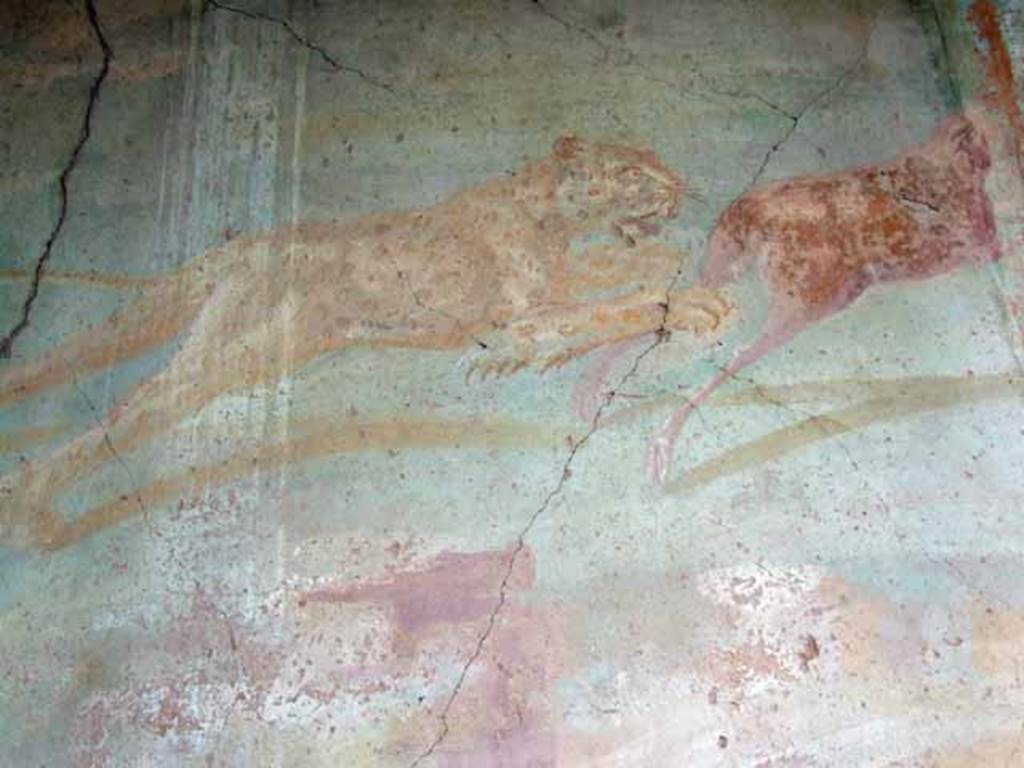
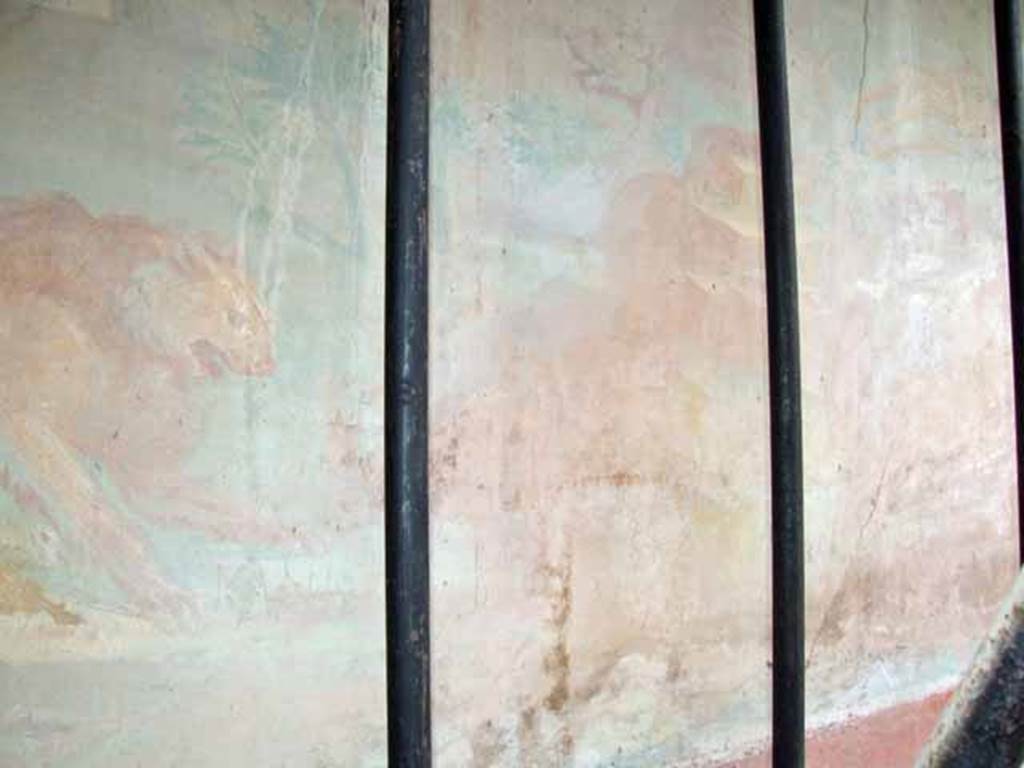
VII.2.25 Pompeii. Casa delle Quadrighe or Casa della Caccia Nuova.
Linked to VII.2.24 and VII.2.26. Excavated 1844.
Part 1 Part 2
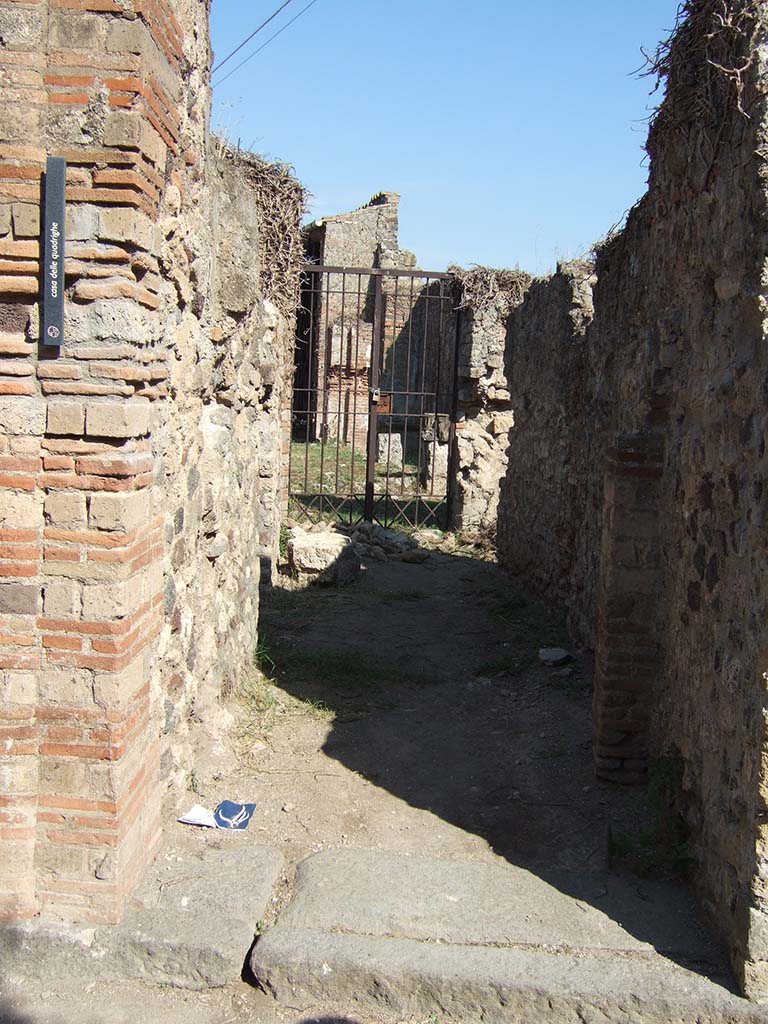
VII.2.25 Pompeii.
September 2005. Entrance on Vicolo Storto.
Looking east across vestibule into entrance corridor or fauces.
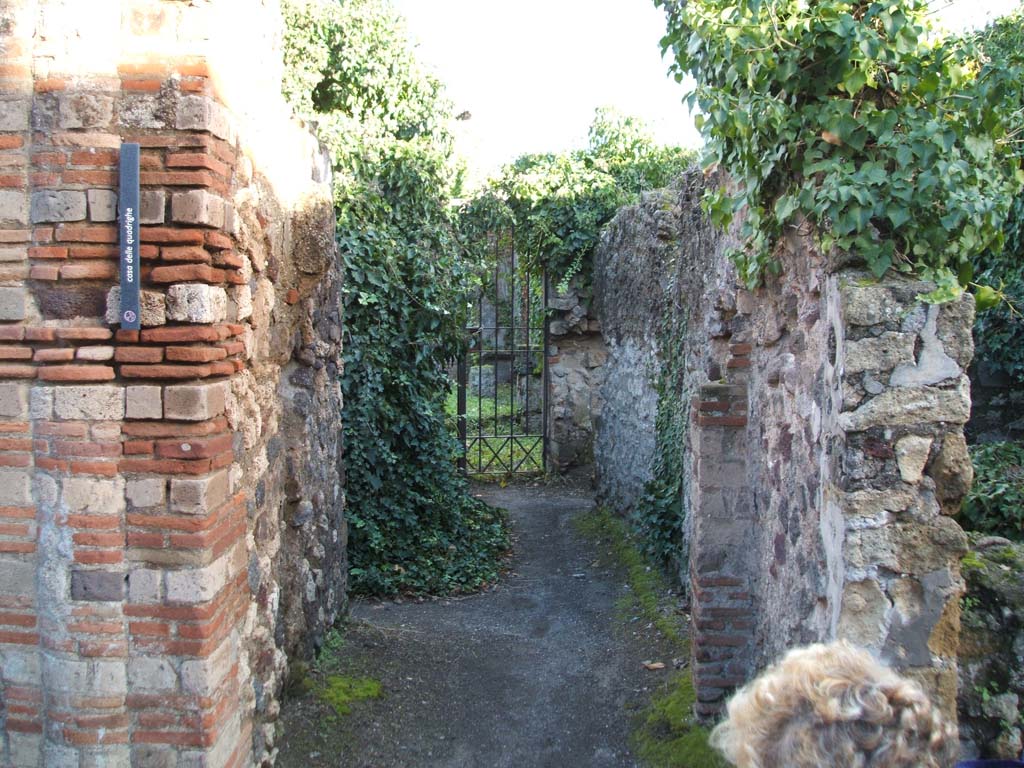
VII.2.25 Pompeii. December 2004. Looking east along entrance corridor.
According to Boyce, in the kitchen on the north side of the entrance corridor, a poorly preserved lararium painting was found.
On the right of an altar was the Genius in a toga, on the left was the tibicen in a long white garment.
On each side of them stood a Lar clad in a green and yellow tunic and red cloak.
The Genius was larger than the tibicen, but the Lares were larger than the Genius.
In the lower zone, two serpents were confronted at an altar, above them were garlands and in front, plants.
See Boyce G. K., 1937. Corpus of the Lararia of Pompeii. Rome: MAAR 14. (p.63, no. 255).
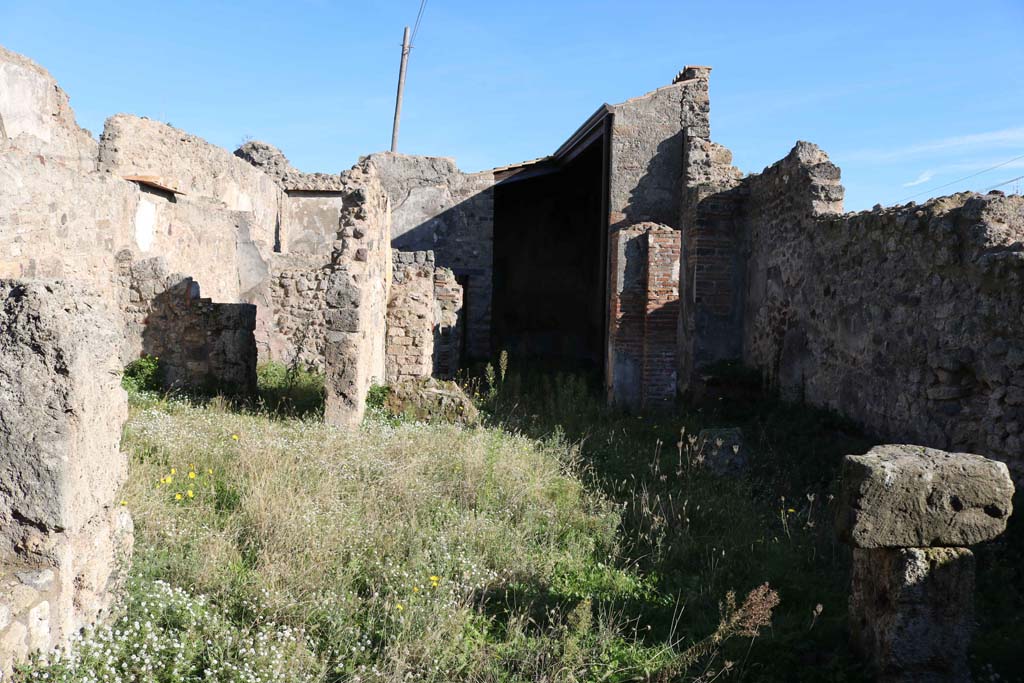
VII.2.25 Pompeii. December
2018. Looking east into atrium. Photo courtesy of Aude Durand.
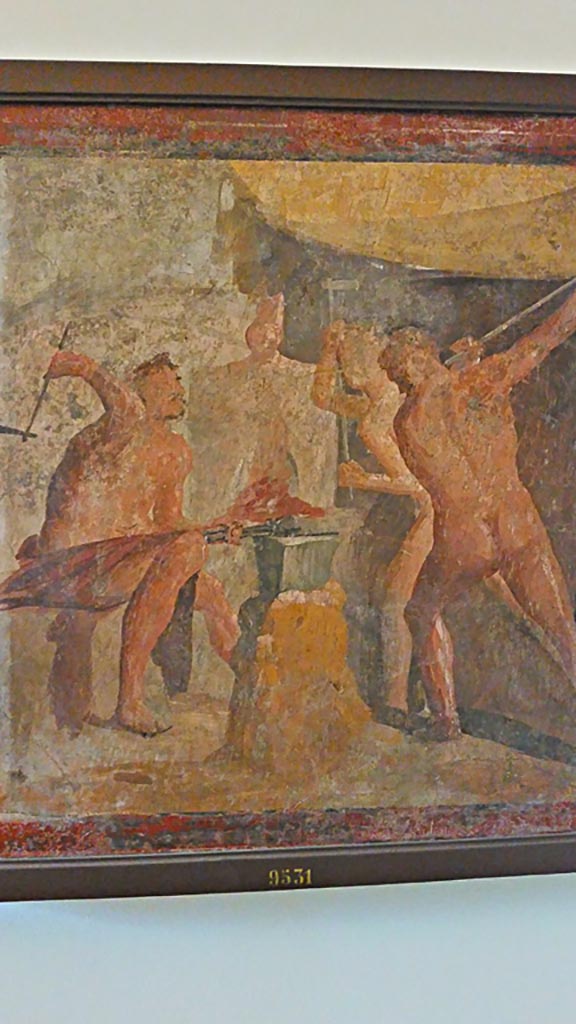
VII.2.25 Pompeii. Wall painting from triclinium.
The workshop of Hephaistos, where the powerfully muscled Cyclops forge the armour of the heroes.
Now in Naples Archaeological Museum. Inventory number 9531.
Photo courtesy of Giuseppe
Ciaramella, November 2018.
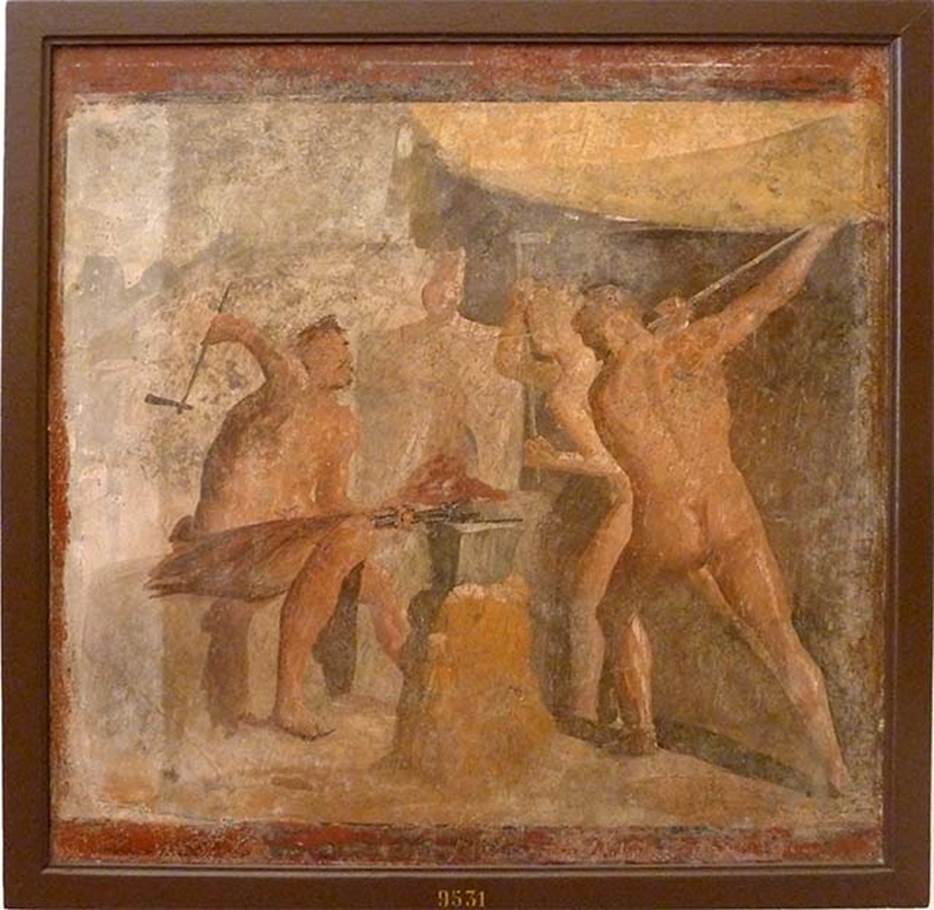
VII.2.25 Pompeii. May 2010. Wall painting from triclinium.
The workshop of Hephaistos, where the powerfully muscled Cyclops forge the armour of the heroes.
Now in Naples Archaeological Museum. Inventory number 9531.
According to Helbig, the painting was found in a triclinium on the left from the garden.
See Helbig, W., 1868. Wandgemälde der vom Vesuv verschütteten Städte Campaniens. Leipzig: Breitkopf und Härtel, 259.
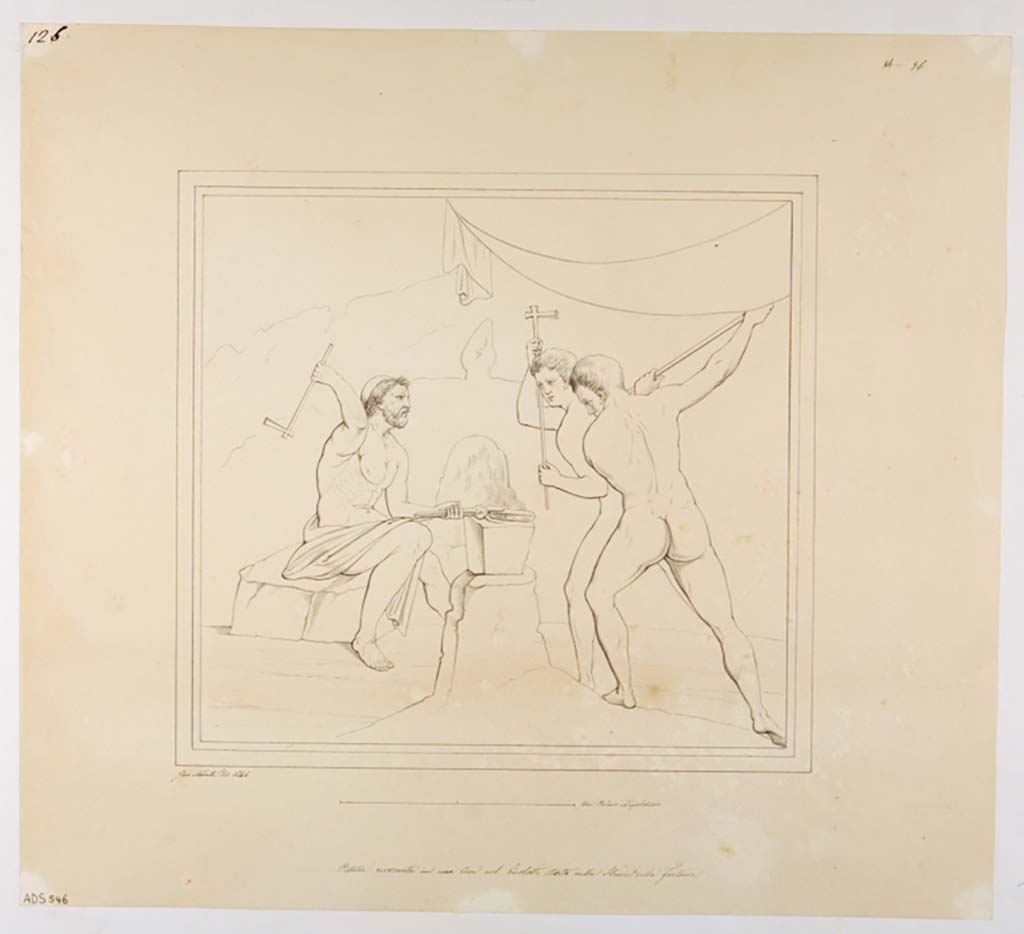
VII.2.25 Pompeii. Drawing by Giuseppe Abbate, 1846, of painting of the Workshop of Hephaistos found on east wall of triclinium.
Now in Naples Archaeological Museum. Inventory number ADS 546.
Photo © ICCD. https://www.catalogo.beniculturali.it
Utilizzabili alle
condizioni della licenza Attribuzione - Non commerciale - Condividi
allo stesso modo 2.5 Italia (CC BY-NC-SA 2.5 IT)
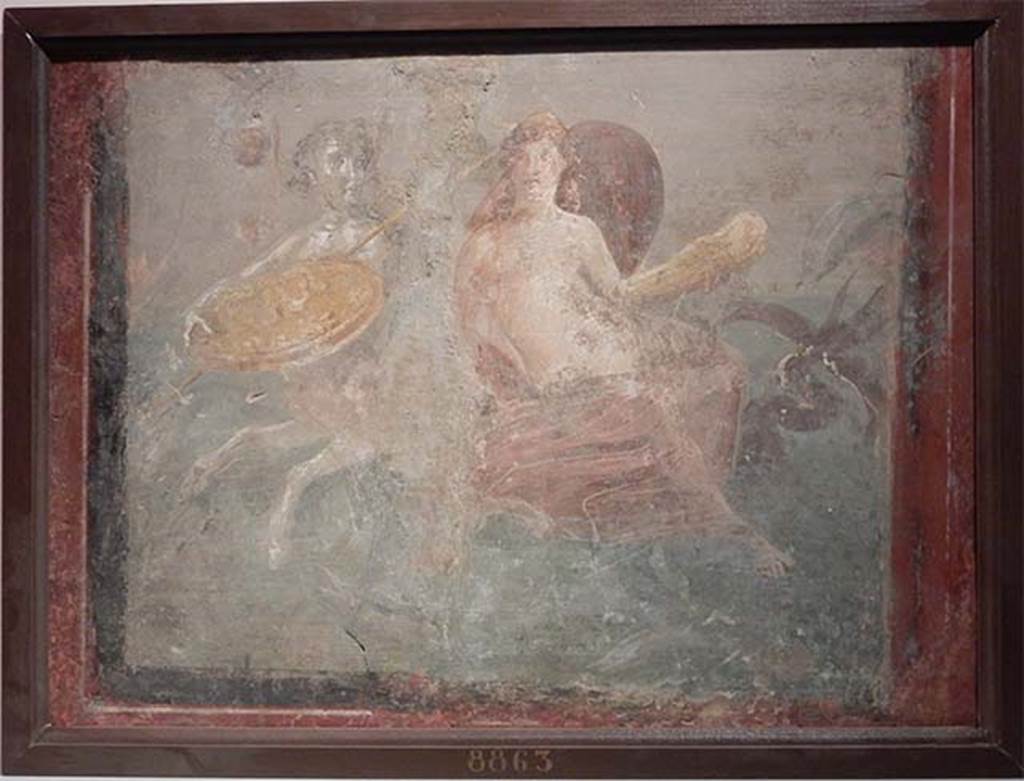
VII.2.25 Pompeii. Wall painting from triclinium.
On the museum card in 2016 the description is as follows.
A marine centaur bears Achilles’ shield and Thetis.
His greaves, in the form of dolphins, swim around them.
Now in Naples Archaeological Museum. Inventory number 8863.
Photo courtesy of Buzz Ferebee.
Helbig describes this as:
Thetis, von den
Hüften abwärts mit einem rothen Gewande bedeckt, eine Stephane um das Haupt,
sitzt auf einem jugendlichen Seekentauren, welcher sich nach ihr umblickt. In
der L. hält sie eine goldfarbige Beinschiene, der Kentaur einen Schild, worauf
als Zeichen ein Delphin zu sehen ist, und einen stabähnlichen Gegenstand,
vermuthlich einen Speer.
See Helbig, W., 1868. Wandgemälde der vom Vesuv verschütteten Städte Campaniens. Leipzig: Breitkopf und Härtel, 1319.
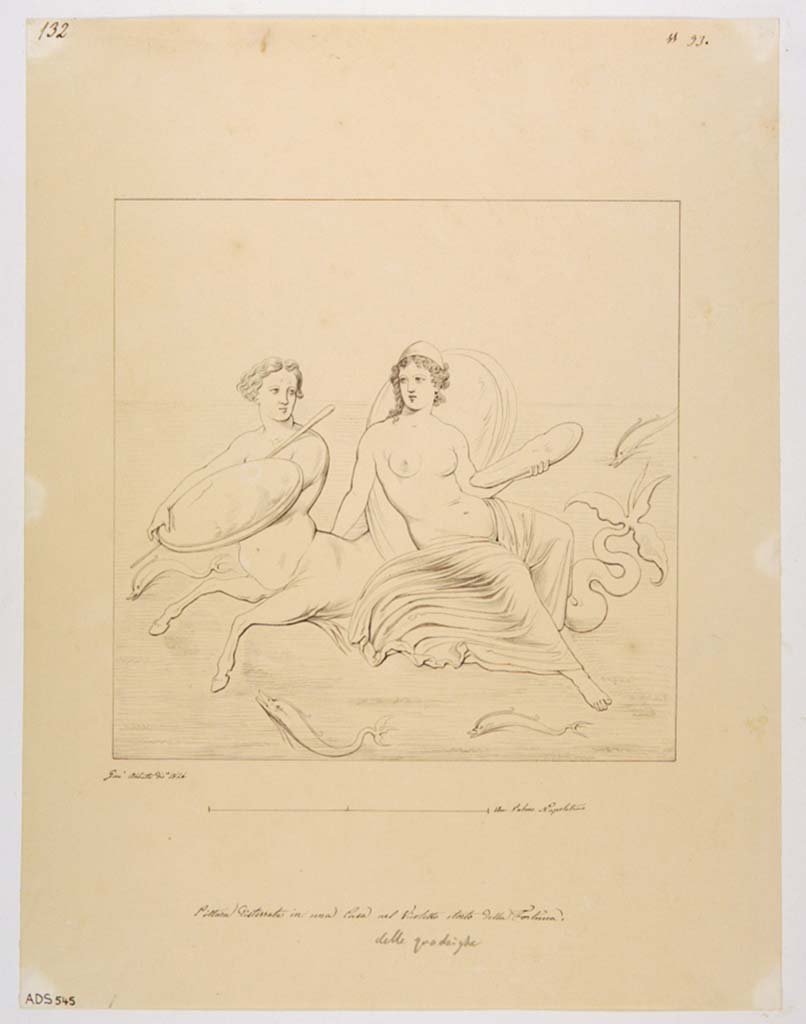
VII.2.25 Pompeii. Drawing by Giuseppe Abbate, 1846, of the painting of Thetis riding on a marine centaur with the arms of Achilles.
Found on the west wall of triclinium on a red background.
Originally the excavators described this painting as Venus with the arms of Mars.
Now in Naples Archaeological Museum. Inventory number ADS 545.
Photo © ICCD. https://www.catalogo.beniculturali.it
Utilizzabili alle
condizioni della licenza Attribuzione - Non commerciale - Condividi
allo stesso modo 2.5 Italia (CC BY-NC-SA 2.5 IT)
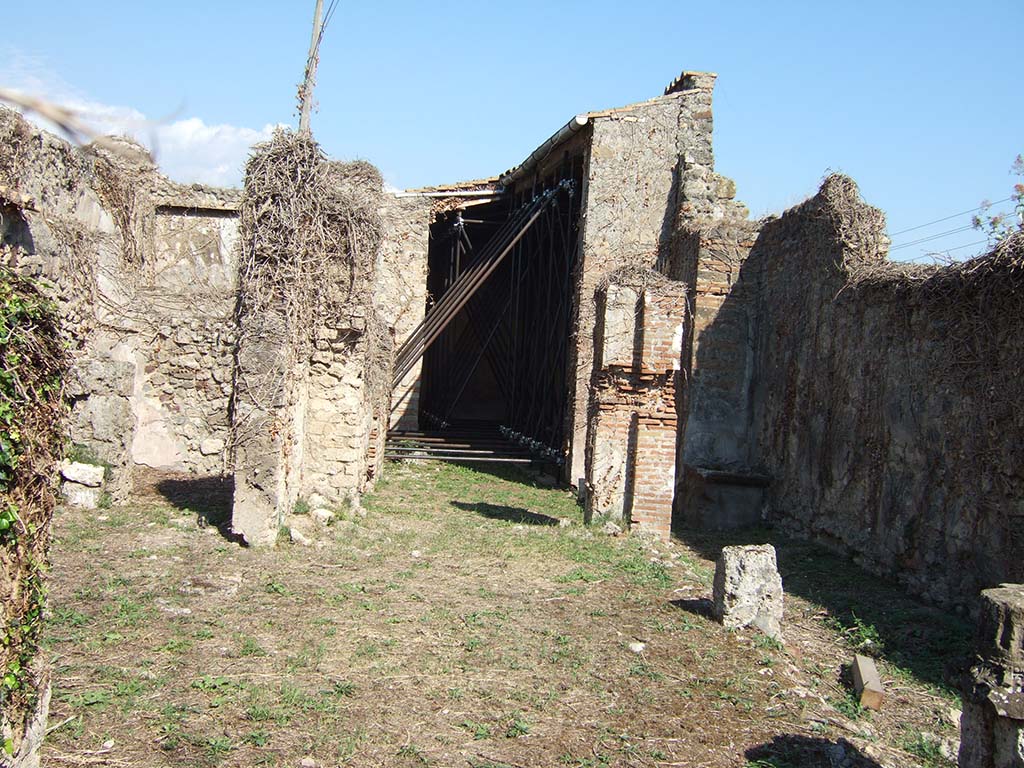
VII.2.25 Pompeii. September 2005. Looking east into atrium with the remains of three-sided portico.
The portico used to have a pluteus (low wall) between the columns, now vanished.
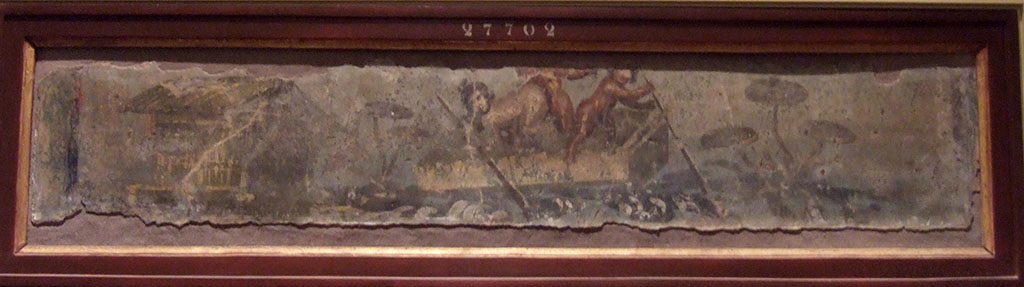
VII.2.25 Pompeii. Found on the pluteus of the peristyle. Nile scene with pigmies.
Now in Naples Archaeological Museum. Inventory number 27702.
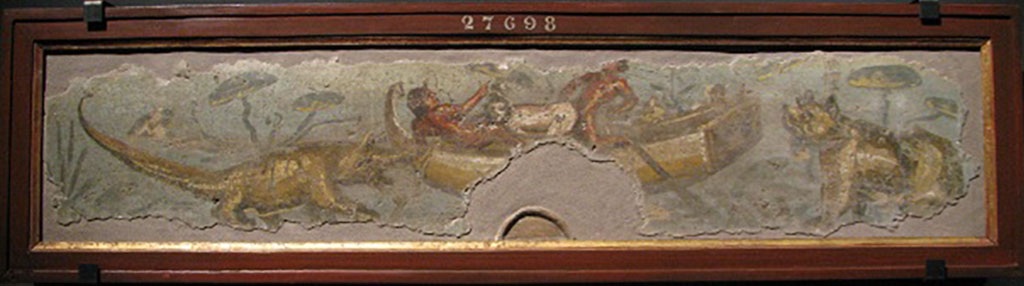
VII.2.25 Pompeii. Found on the pluteus of the peristyle. Nile scene with pigmies.
Now in Naples Archaeological Museum. Inventory number 27698.
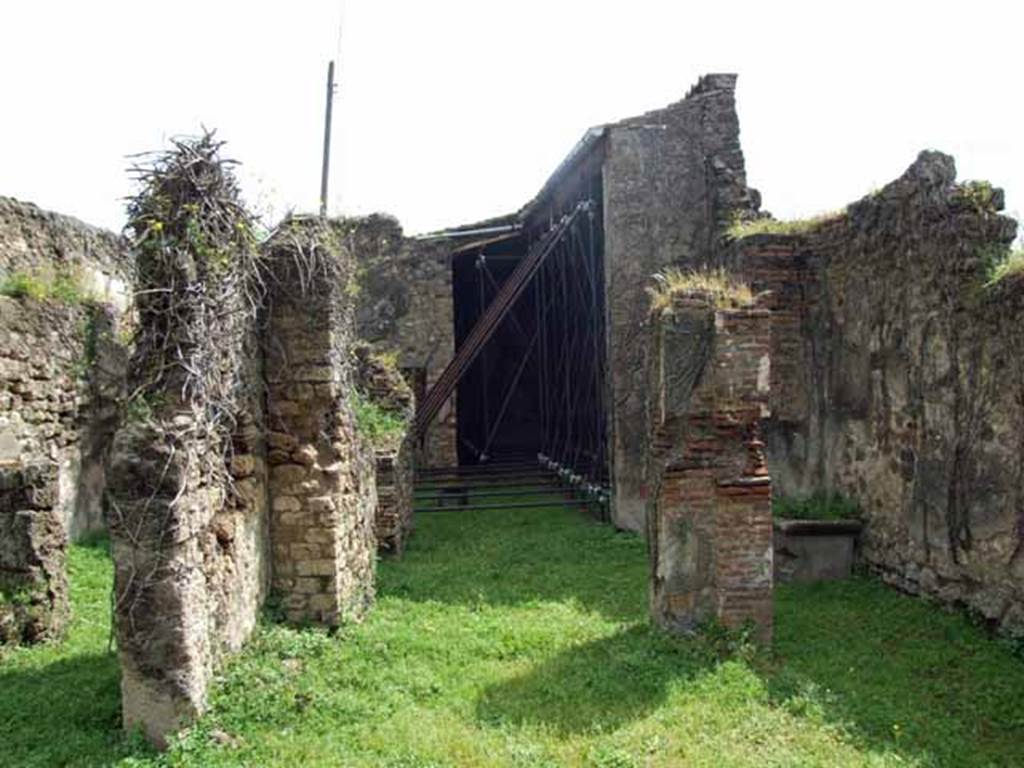
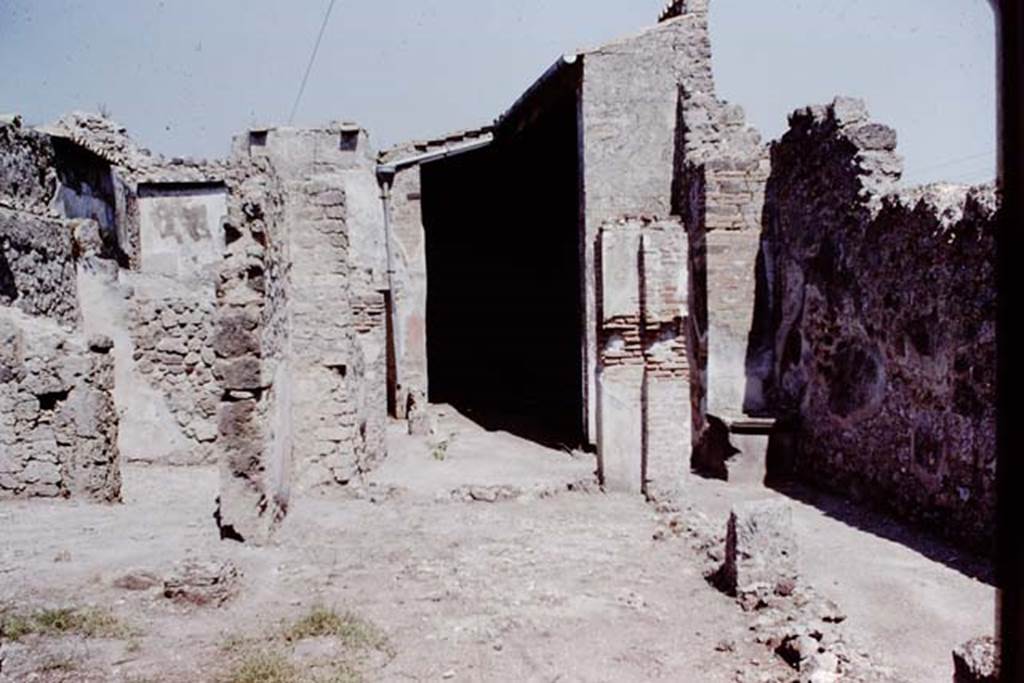
VII.2.25 Pompeii. 1966. Looking east across atrium area with portico towards garden area. Photo by Stanley A. Jashemski.
Source: The Wilhelmina and Stanley A. Jashemski archive in the University of Maryland Library, Special Collections (See collection page) and made available under the Creative Commons Attribution-Non-Commercial License v.4. See Licence and use details.
J66f1008
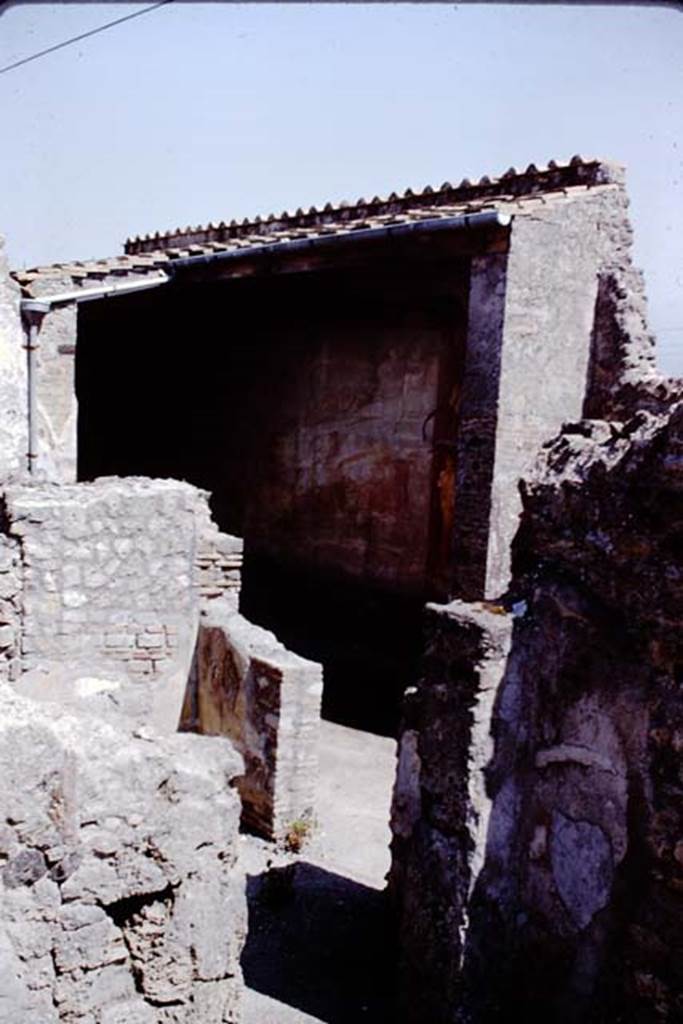
VII.2.25 Pompeii. 1966.
Looking through the small oecus doorway towards the garden area with painted walls. Photo by Stanley A. Jashemski.
Source: The Wilhelmina and Stanley A. Jashemski archive in the University of Maryland Library, Special Collections (See collection page) and made available under the Creative Commons Attribution-Non-Commercial License v.4. See Licence and use details.
J66f1009
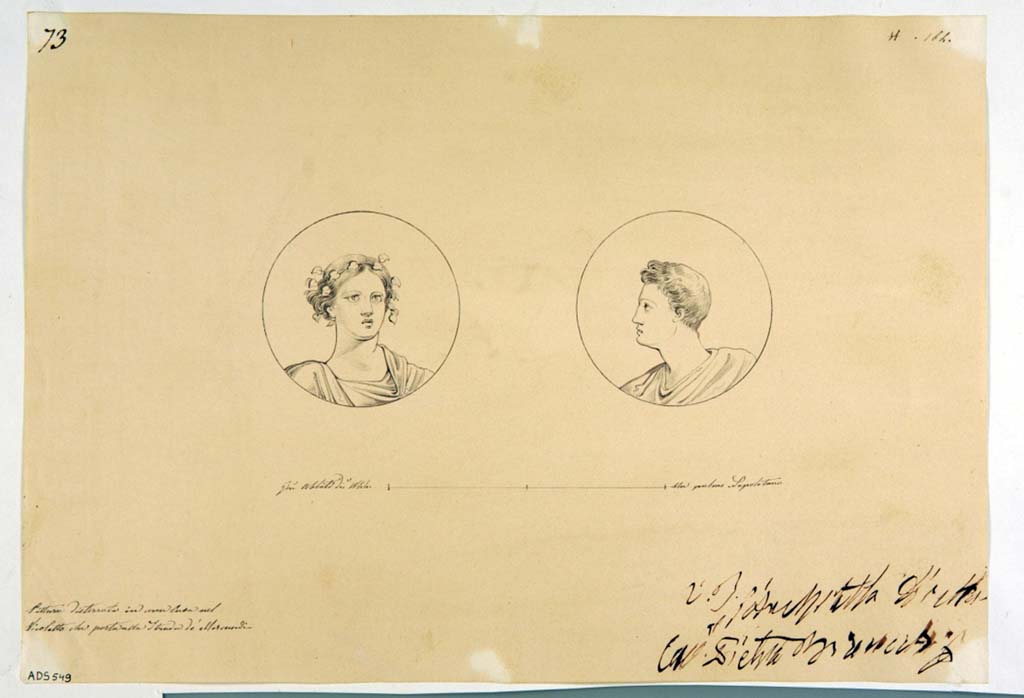
VII.2.25 Pompeii. Drawing by Giuseppe Abbate, 1844, of two medallions found in the oecus.
There is only one small trace now of one of the medallions on a yellow background in the middle zone of the west wall.
According to Abbate, the female head is crowned with ivy and turning to the right, the male head turns to the left.
Now in Naples Archaeological Museum. Inventory number ADS 549.
Photo © ICCD. https://www.catalogo.beniculturali.it
Utilizzabili alle
condizioni della licenza Attribuzione - Non commerciale - Condividi
allo stesso modo 2.5 Italia (CC BY-NC-SA 2.5 IT)
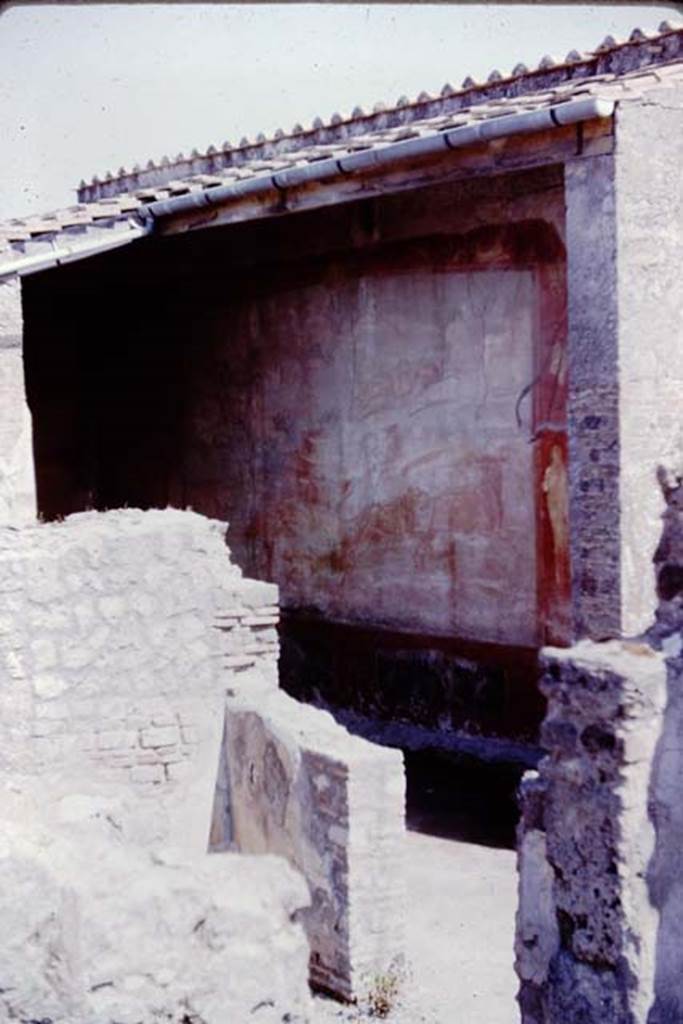
VII.2.25 Pompeii. 1966.
Looking through the small oecus doorway towards the west end of the garden area with painted walls. Photo by Stanley A. Jashemski.
Source: The Wilhelmina and Stanley A. Jashemski archive in the University of Maryland Library, Special Collections (See collection page) and made available under the Creative Commons Attribution-Non-Commercial License v.4. See Licence and use details.
J66f1010
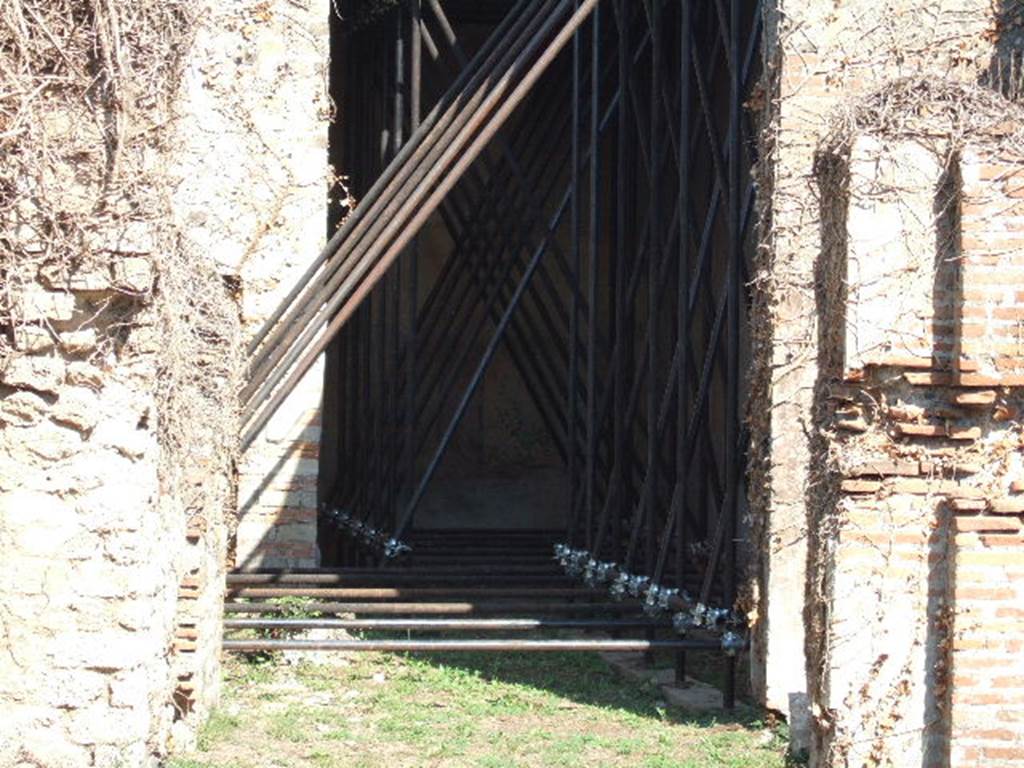
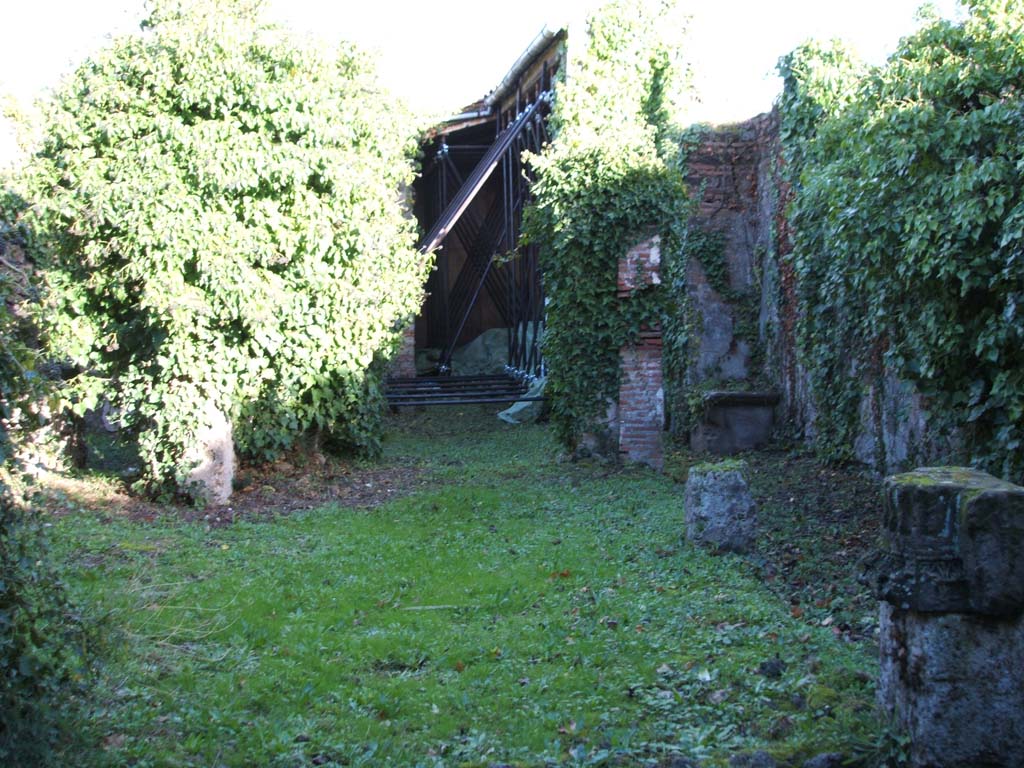
VII.2.25 Pompeii. September 2005. Looking east to the viridarium at the rear of the portico.
According to PPP, this is the viridarium and contains an arched niche in the east wall.
Boyce thought this was the oecus.
Jashemski points out that Boyce was in error, and that the area of the viridarium had been roofed to protect the paintings.
Jashemski agreed with PPP and said the area at the rear was the small garden.
See Bragantini, de Vos, Badoni, 1986. Pitture e Pavimenti di Pompei, Parte 3. Rome: ICCD. (p.80)
See Boyce G. K., 1937. Corpus of the Lararia of Pompeii. Rome: MAAR 14. (p.63, no. 254)
See Jashemski, W. F., 1993. The Gardens of Pompeii, Volume II: Appendices. New York: Caratzas. (p.174 and p.359 for full description)
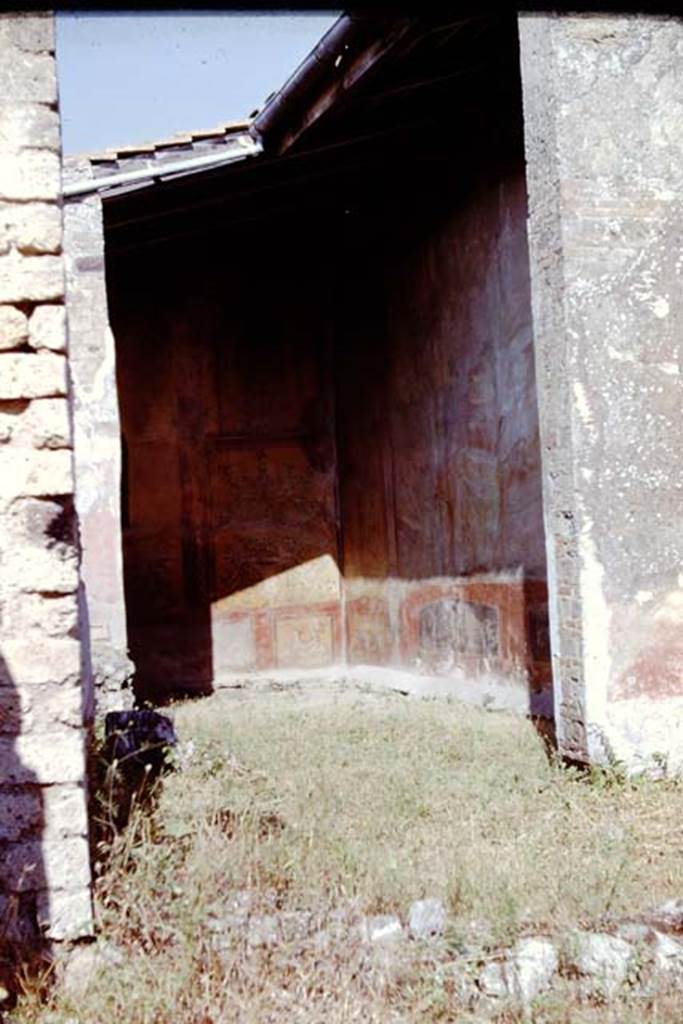
VII.2.25 Pompeii. 1961. Looking east to the viridarium at the rear of the portico. Photo by Stanley A. Jashemski.
Source: The Wilhelmina and Stanley A. Jashemski archive in the University of Maryland Library, Special Collections (See collection page) and made available under the Creative Commons Attribution-Non-Commercial License v.4. See Licence and use details.
J61f0762
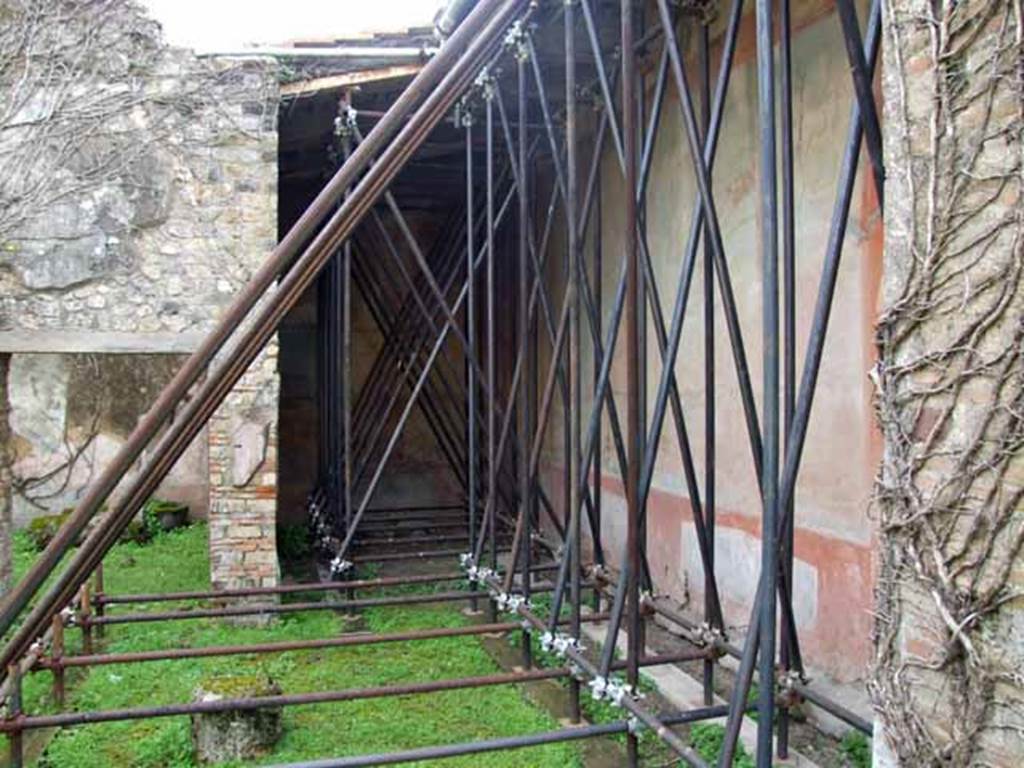
According to Jashemski, this was decorated with garden paintings and a large animal painting.
See Jashemski, W. F., 1993. The Gardens of Pompeii, Volume II: Appendices. New York: Caratzas. (p.174 and p.359 for full description and Fig.425).
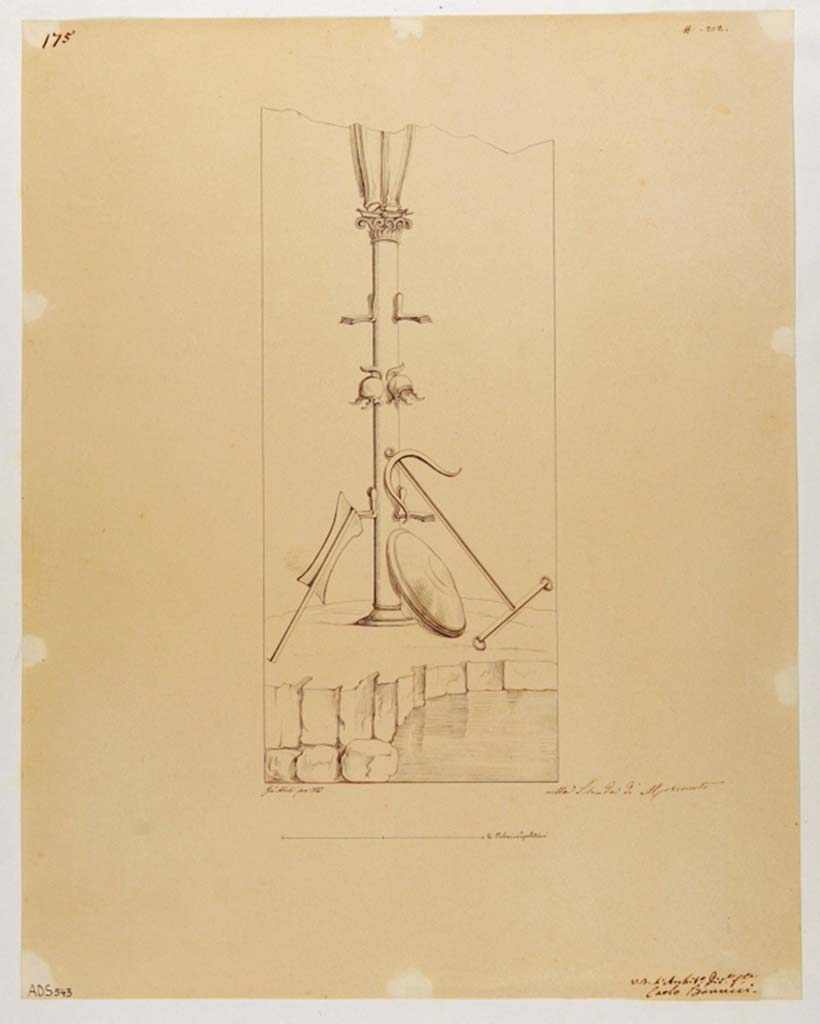
Nothing much remains of the west wall today, so this fresco has been lost.
See Helbig, W., 1868. Wandgemälde der vom Vesuv verschütteten Städte Campaniens. Leipzig: Breitkopf und Härtel, (1776).
Now in Naples Archaeological Museum. Inventory number ADS 543.
Photo © ICCD. https://www.catalogo.beniculturali.it
Utilizzabili alle
condizioni della licenza Attribuzione - Non commerciale - Condividi
allo stesso modo 2.5 Italia (CC BY-NC-SA 2.5 IT)
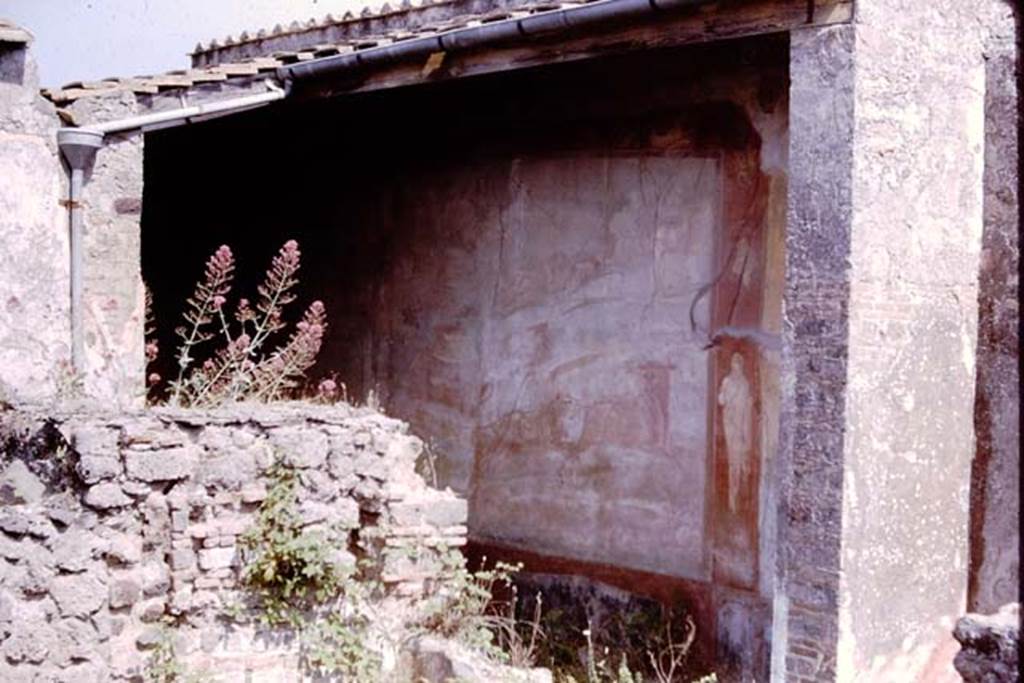
VII.2.25 Pompeii. 1964. Viridarium, large animal painting from west end of south wall. Photo by Stanley A. Jashemski.
Source: The Wilhelmina and Stanley A. Jashemski archive in the University of Maryland Library, Special Collections (See collection page) and made available under the Creative Commons Attribution-Non-Commercial License v.4. See Licence and use details.
J64f0886
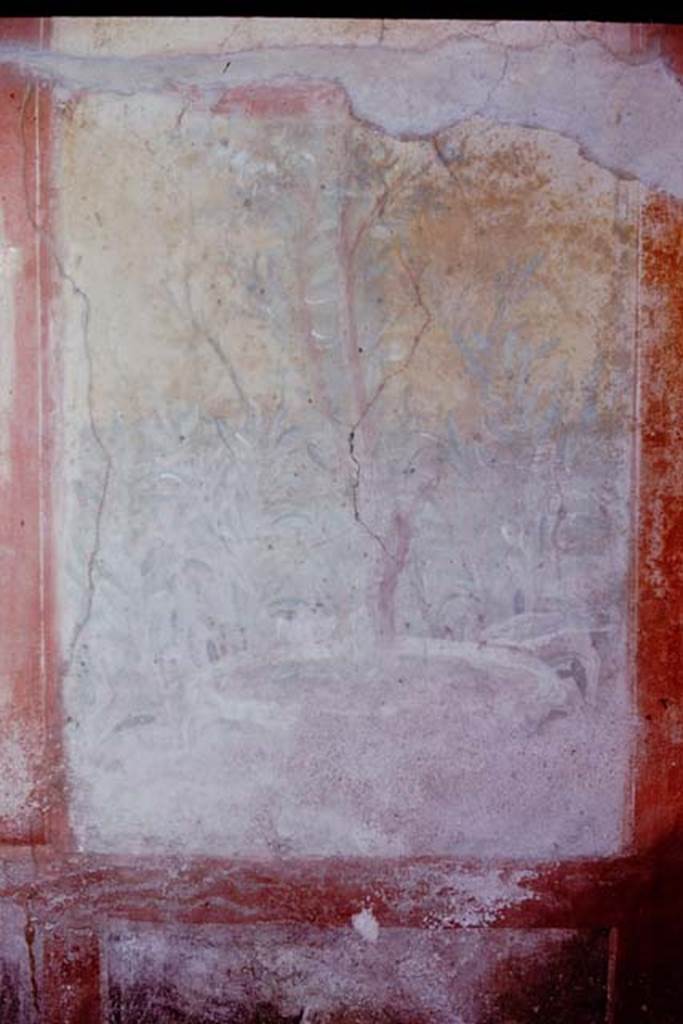
VII.2.25 Pompeii. 1961. Panel at west end of south wall, with plants, birds and a labrum. Photo by Stanley A. Jashemski.
Source: The Wilhelmina and Stanley A. Jashemski archive in the University of Maryland Library, Special Collections (See collection page) and made available under the Creative Commons Attribution-Non-Commercial License v.4. See Licence and use details.
J61f0764
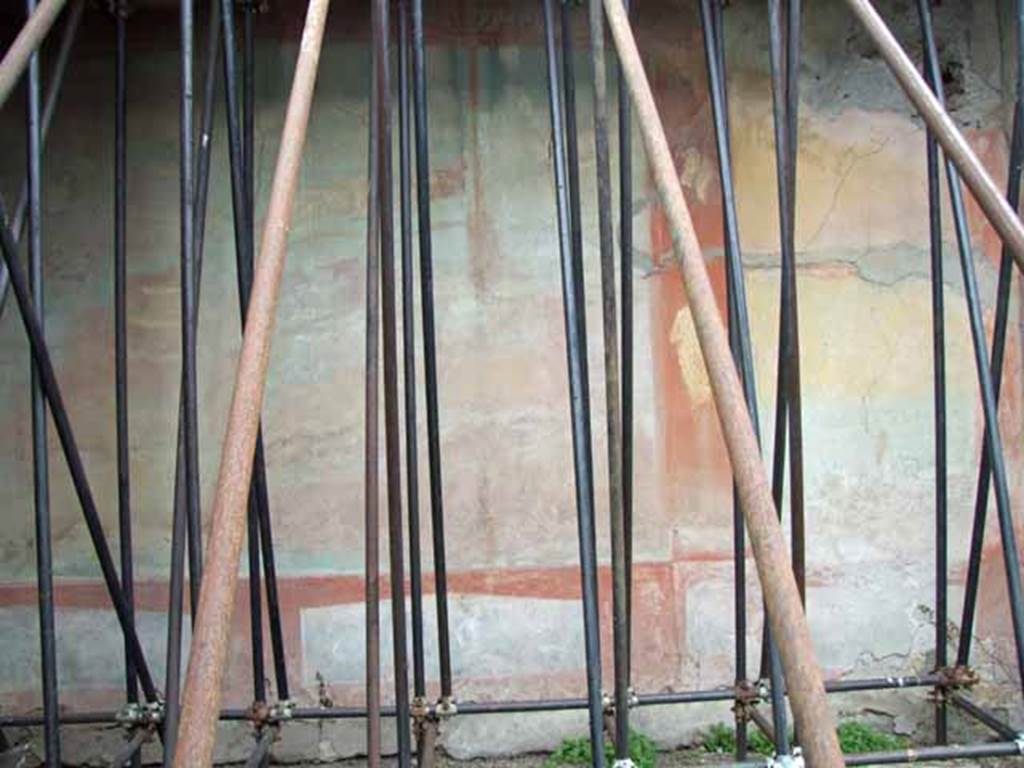
A lion is pursuing a bull. To the right is a painting of a herm covered with drapery.
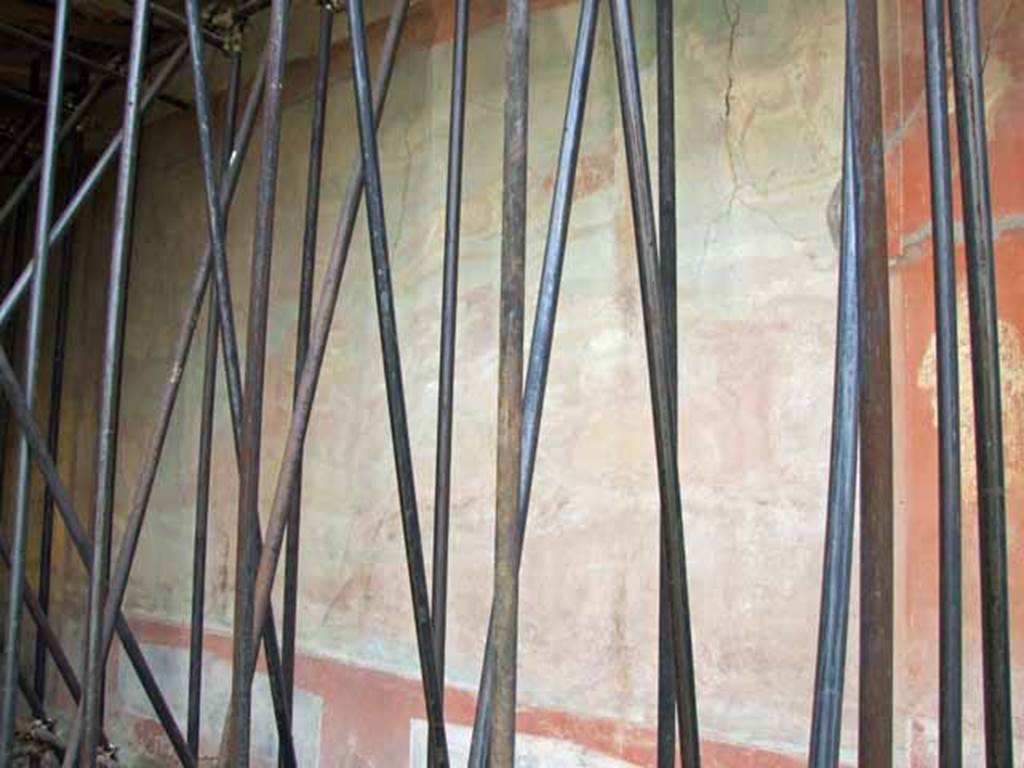
According to PPP the scene derives from the same model and copies the group in the Casa di M. Lucretius Fronto (V.4.a).
See Bragantini, de Vos, Badoni, 1986. Pitture e Pavimenti di Pompei, Parte 3. Rome: ICCD. (p. 81).
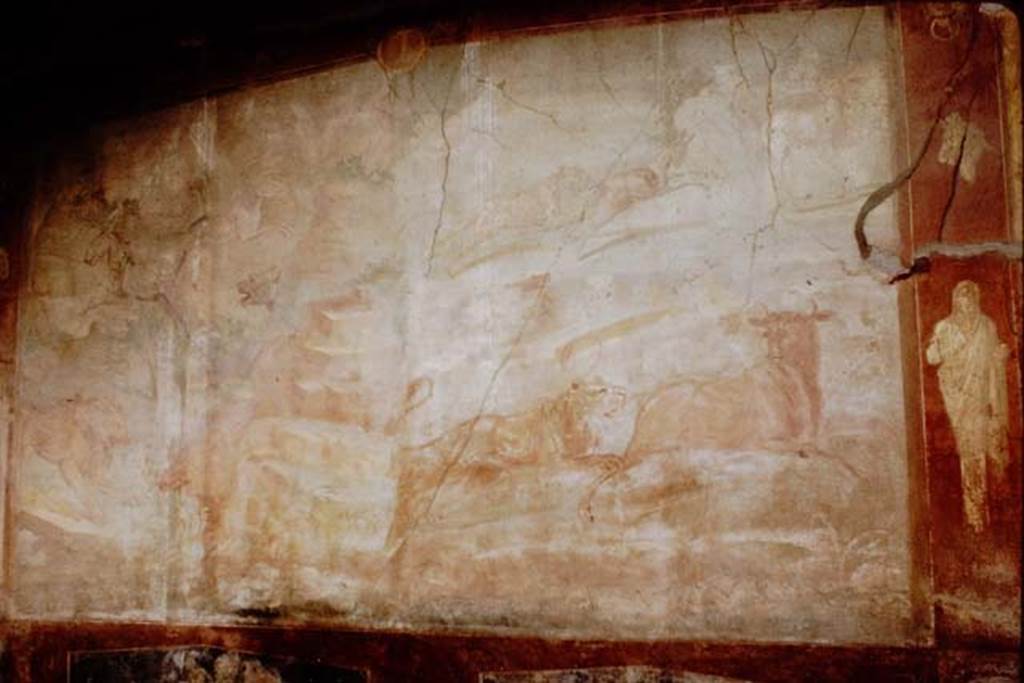
Source: The Wilhelmina and Stanley A. Jashemski archive in the University of Maryland Library, Special Collections (See collection page) and made available under the Creative Commons Attribution-Non-Commercial License v.4. See Licence and use details.
J64f1377
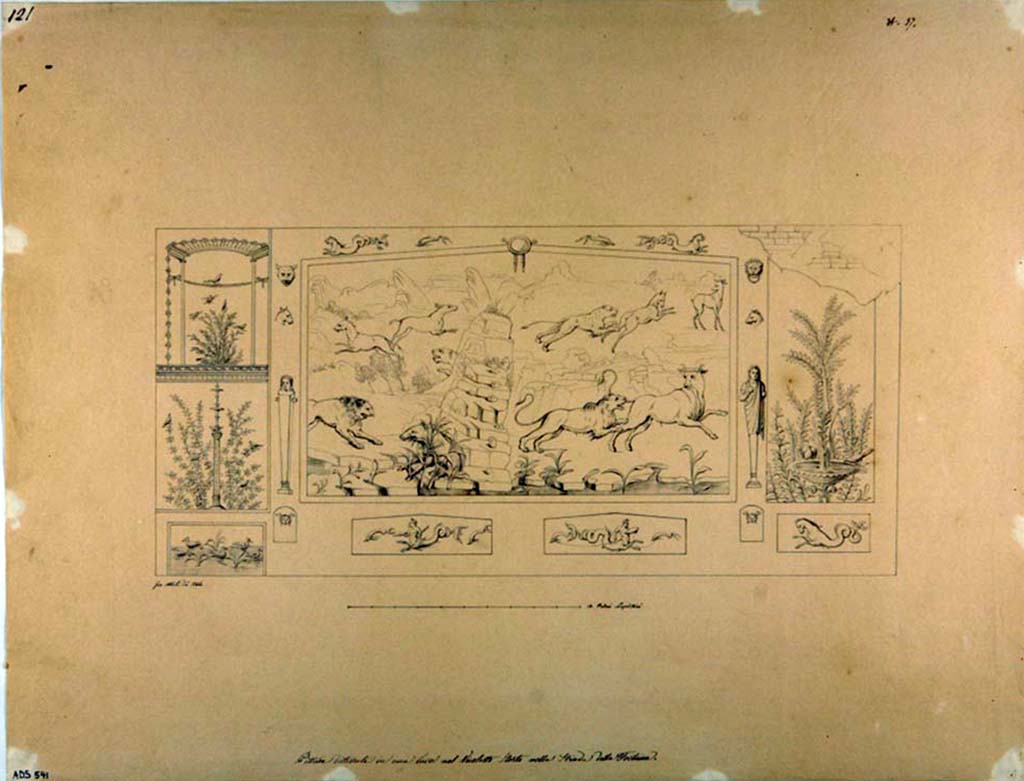
See Helbig, W., 1868. Wandgemälde der vom Vesuv verschütteten Städte Campaniens. Leipzig: Breitkopf und Härtel, 1586.
Now in Naples Archaeological Museum. Inventory number ADS 541.
Photo © ICCD. https://www.catalogo.beniculturali.it
Utilizzabili alle condizioni della licenza Attribuzione
- Non commerciale - Condividi allo stesso modo 2.5 Italia (CC BY-NC-SA 2.5 IT)