VI.16.10 Pompeii. Casa di Erastus. Shop and dwelling. Excavated 1903.
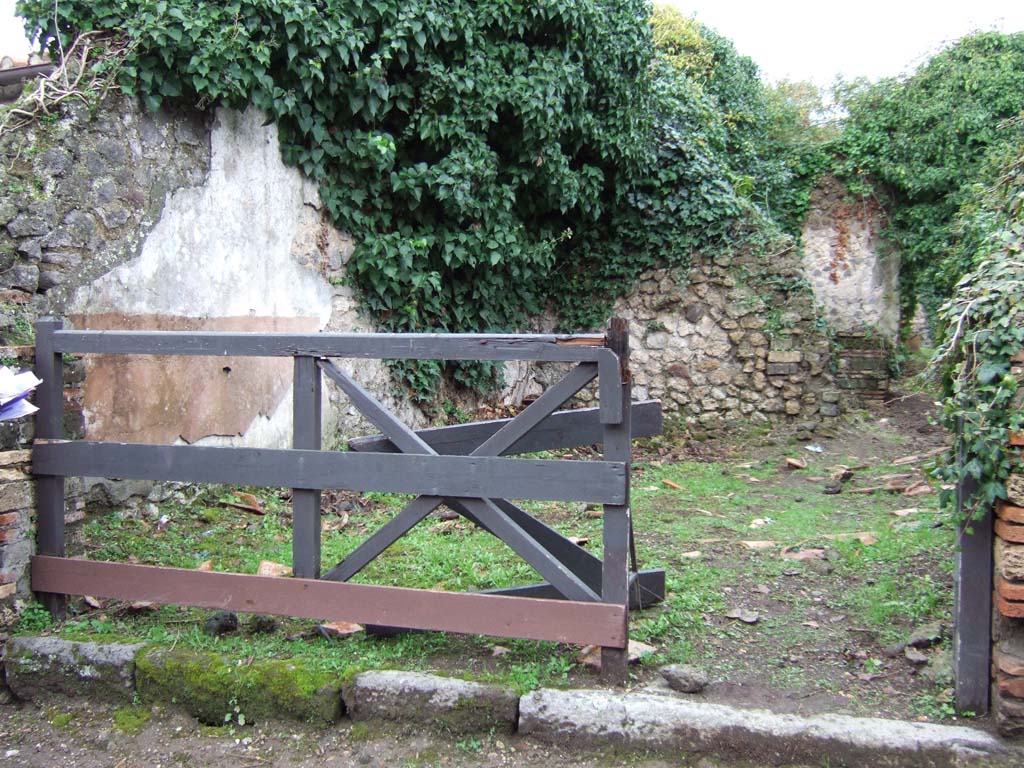
VI.16.10 Pompeii. December 2005. Entrance doorway to shop, with dwelling.
The wide shop entrance had a lava threshold with the usual socket for the shutters to close the doorway.
The shop room, excavated 18th September 1903, had a floor of beaten earth with walls faced with white plaster, and a high dado painted red.
See Notizie degli Scavi di Antichità, 1908,
(p.55).
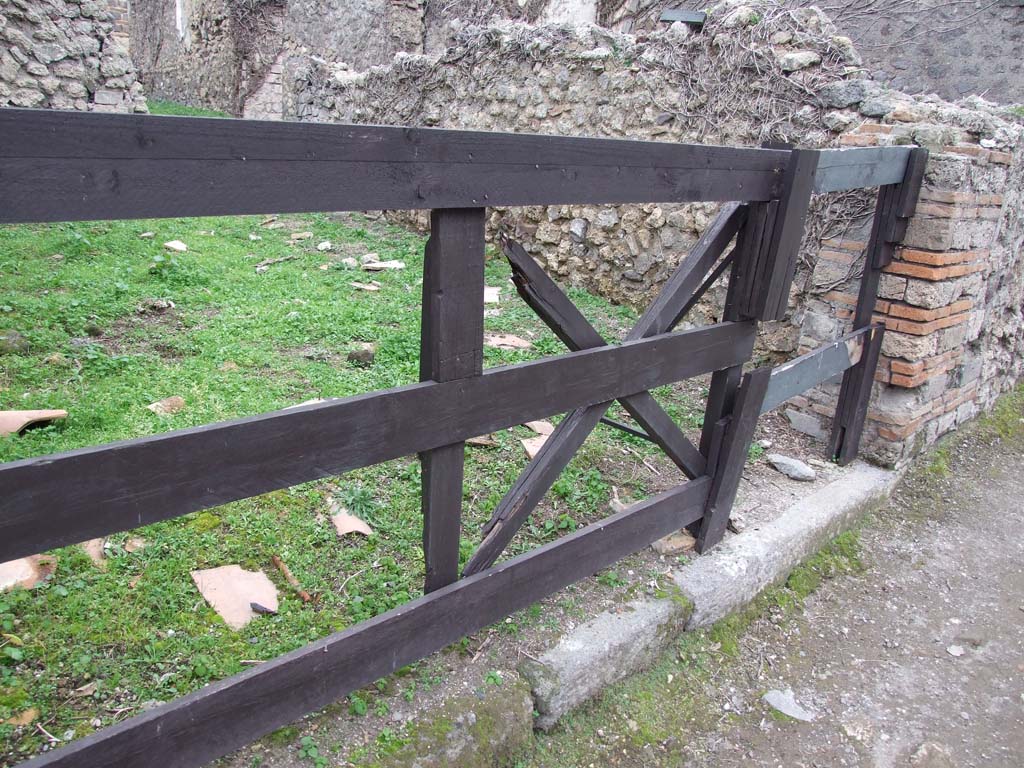
VI.16.10 Pompeii. December 2007. Entrance doorway, looking towards north side of shop.

VI.16.10 Pompeii.
1906. Entrance motto naming Erastus.
According to Sogliano in NdS, the above black and white marble lettering was embedded in the cocciopesto in the pavement in front of the wide doorway of number 10.
He thought the last abbreviation was intended as – p(ecunia) s(ua) hs………
See Notizie degli Scavi di Antichità, 1906,
p. 154.
Della Corte surmised that a person called Erastus rented this workshop and dwelling and composed the black and white stone motto.
See Della Corte,
M., 1965. Case ed Abitanti di Pompei.
Napoli: Fausto Fiorentino. (p.88)
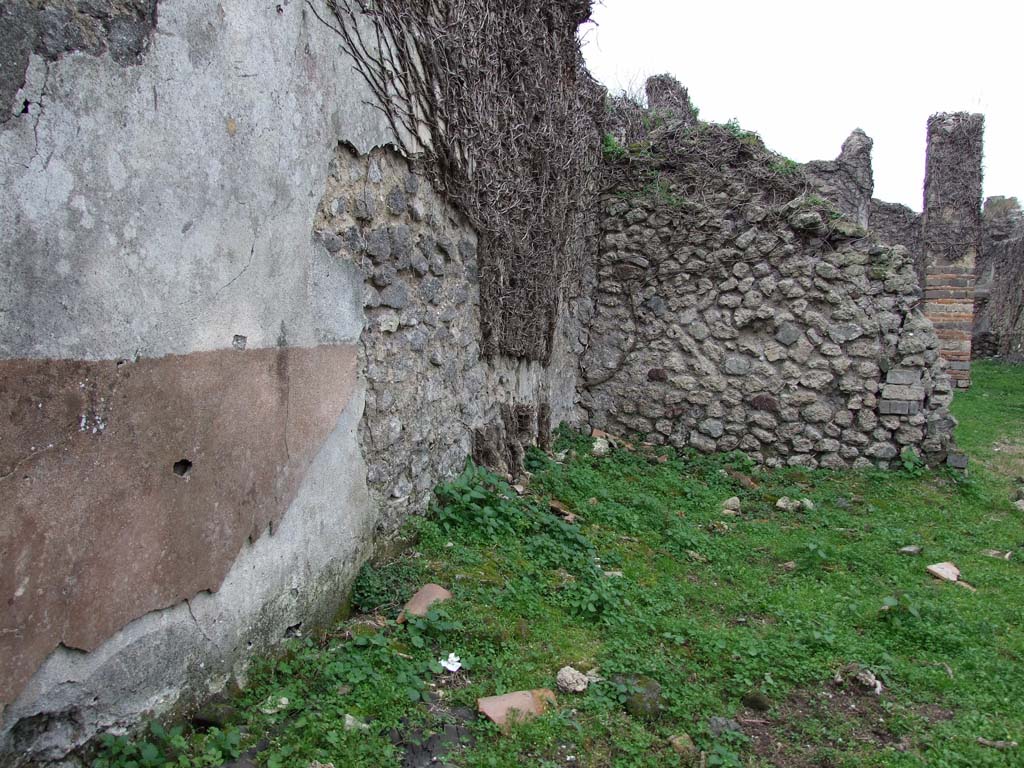
VI.16.10 Pompeii. December 2007. South side of shop, with remains of faded white plastered wall and high red dado.
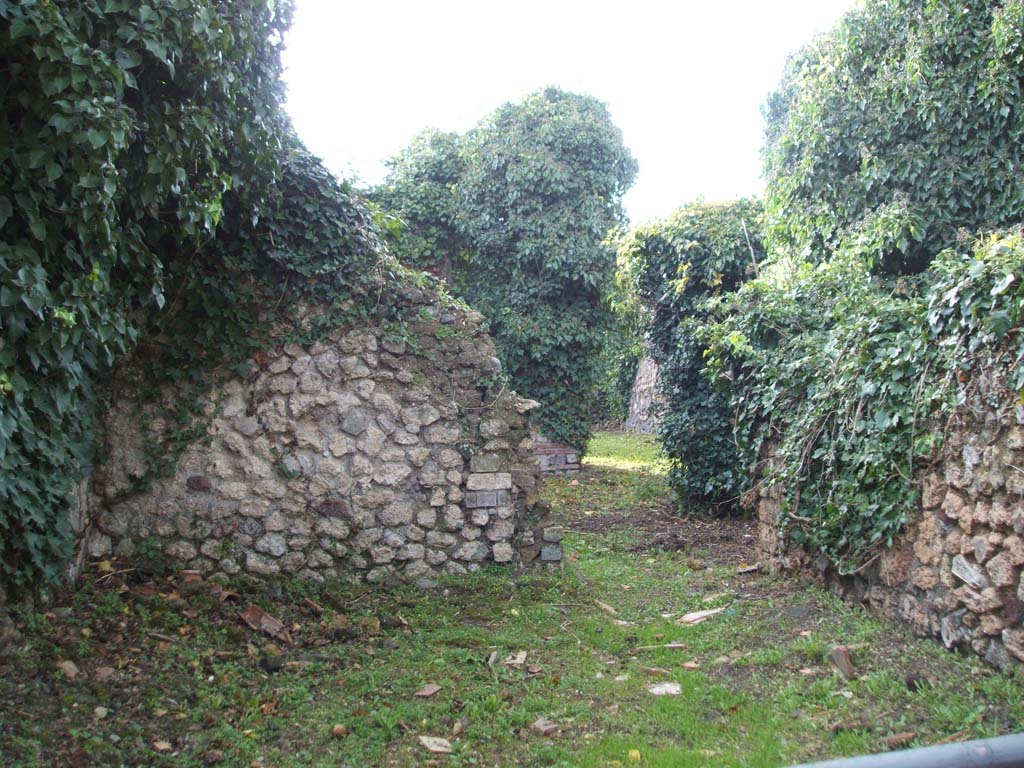
VI.16.10 Pompeii. December 2004. Looking west across shop-room.
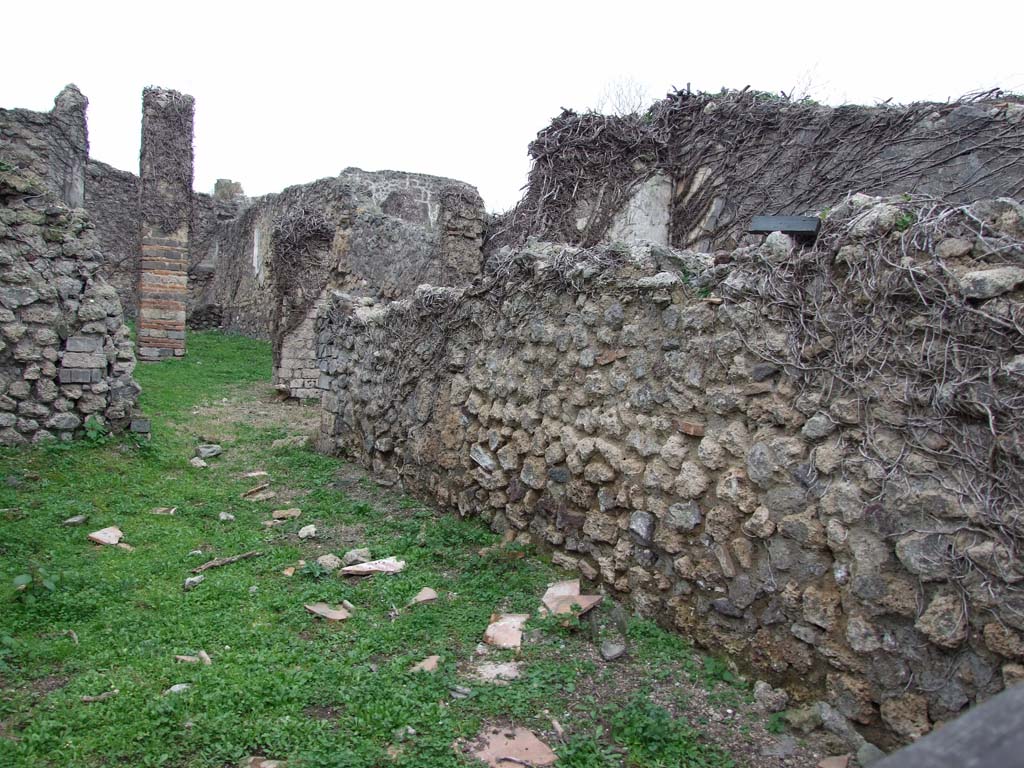
VI.16.10 Pompeii. December 2007. North wall of shop with doorway at rear in west wall, to atrium.
Eschebach described this doorway as leading to the atrium.
According to NdS, the doorway led to a corridor “B”.
See Eschebach,
L., 1993. Gebäudeverzeichnis und
Stadtplan der antiken Stadt Pompeji. Köln: Böhlau. (p.226)
See Notizie degli Scavi di Antichità, 1908,
(p.55).
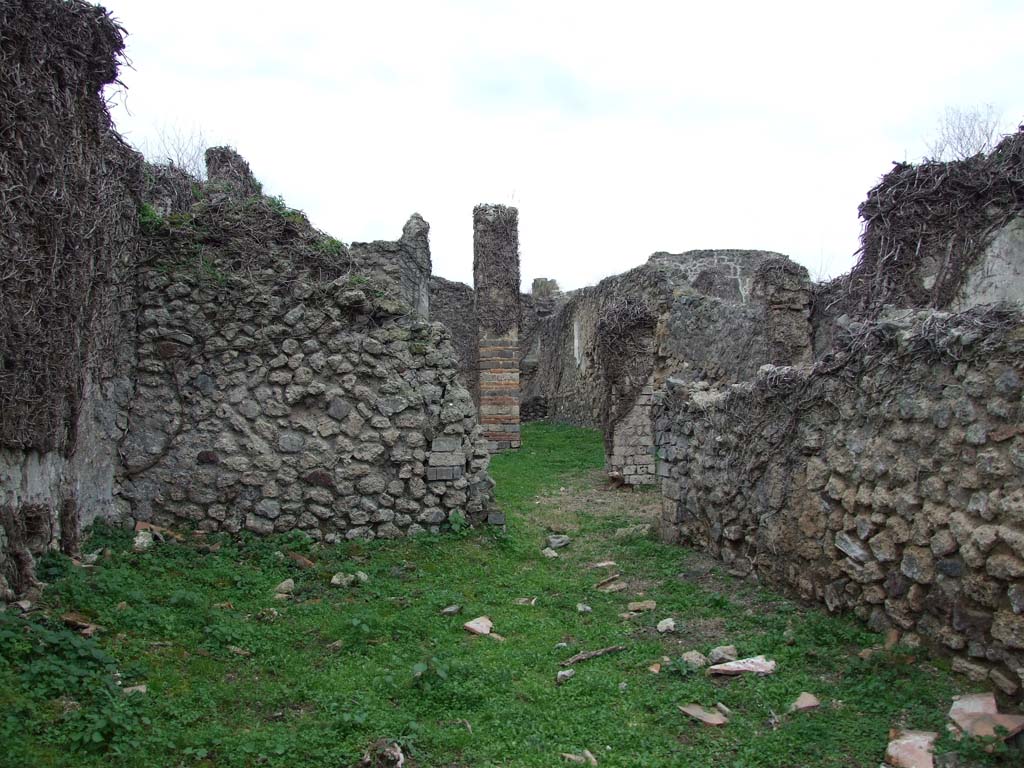
VI.16.10 Pompeii. December 2007. Looking west towards doorway to atrium, or corridor, in west wall.
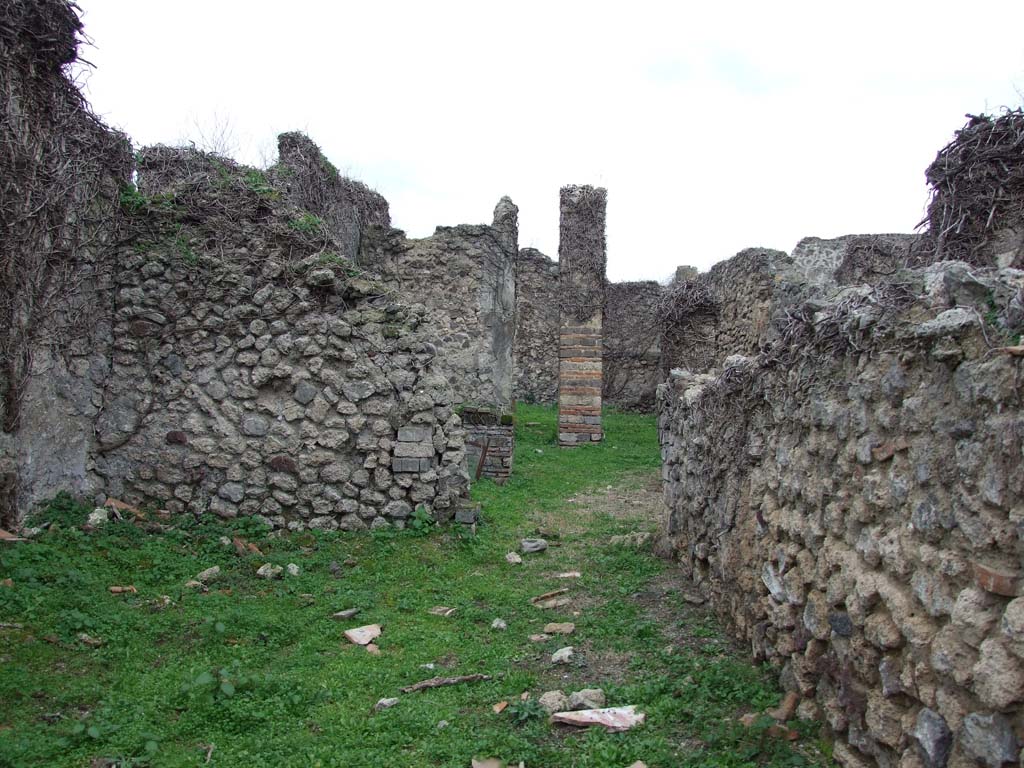
VI.16.10 Pompeii. December 2007. Doorway to atrium or corridor in rear wall of shop.
According to NdS, by an open space in the west wall one entered into a corridor with white walls and red horizontal band at the height of the dado.
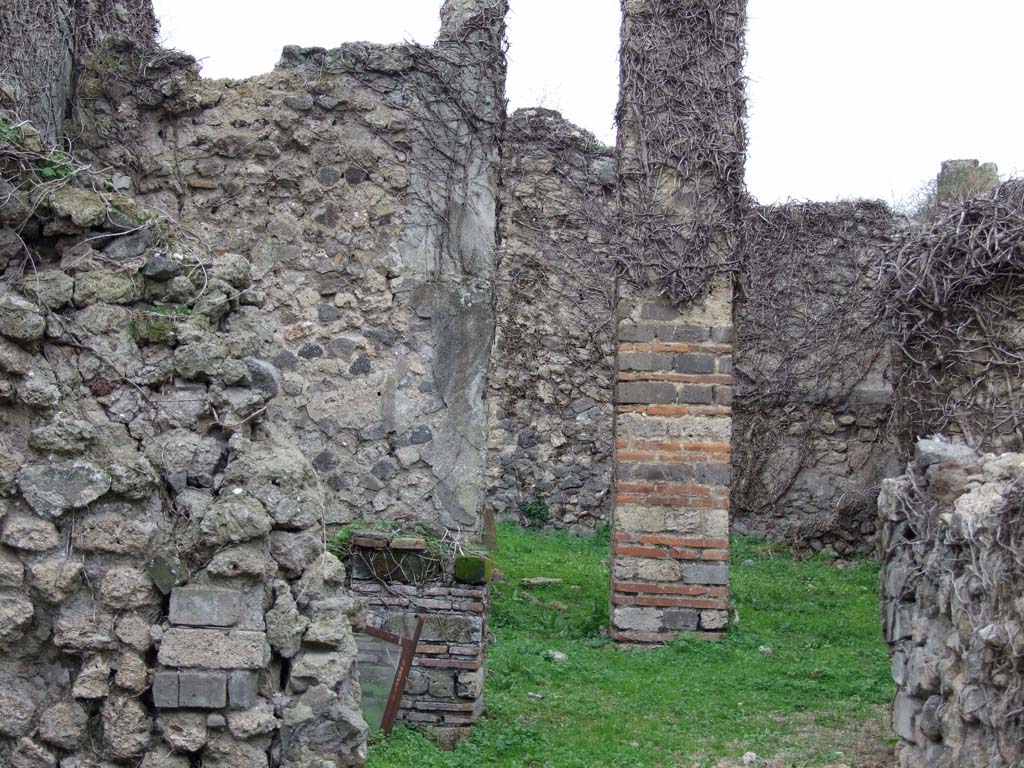
VI.16.10 Pompeii. December 2007. Looking west through atrium or corridor to rear of house.
According to NdS, on the south side of the corridor was a cubiculum C (left of photo).
The cubiculum had a floor of cocciopesto, white walls and a window in its west wall.
From the corridor through a wide doorway that formed a step one entered into the covered area E.
This was excavated on 10th May 1904.
The floor was beaten earth, and preserved on the walls were traces of rough plaster.
The east side consisted of four pillars, between the two central pillars was the entrance from the corridor.
The window from cubiculum C was between the two pillars on the south side.
The two on the north side formed a frame that formed one of the walls of a cupboard (armarium).
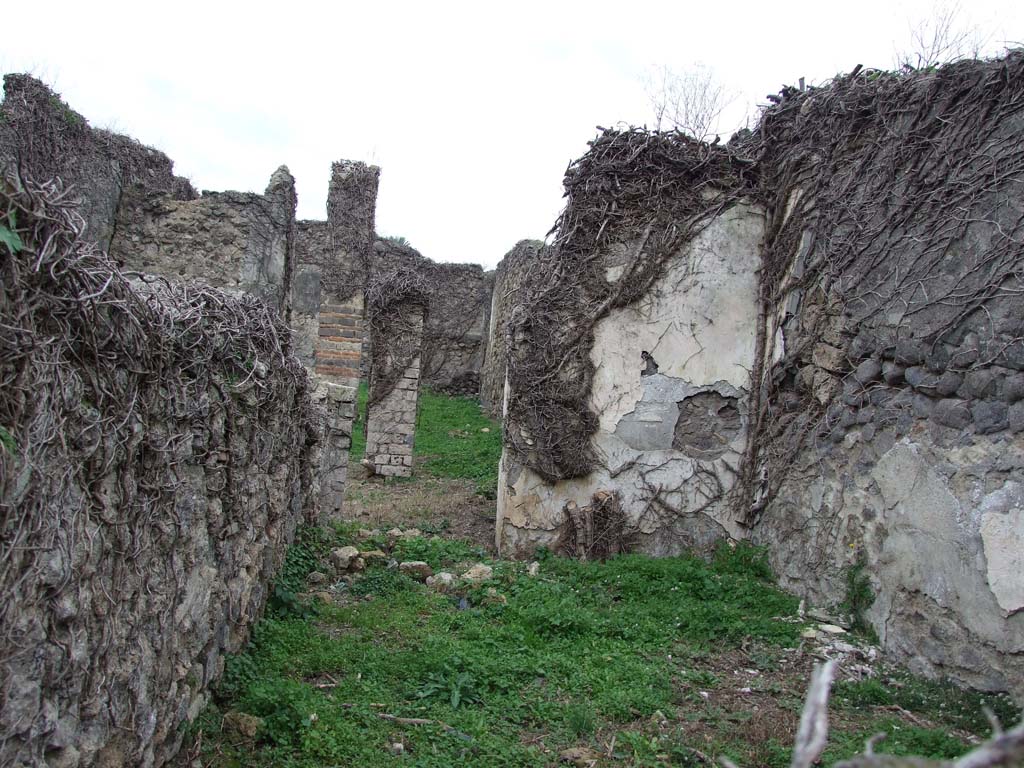
VI.16.10 Pompeii. December 2007. Triclinium, or cubiculum, in north-east corner of house.
According to Eschebach this was the triclinium.
According to NdS, this was another cubiculum D, described as being to the east of the corridor B.
It was entered through white doorposts, and originally would have had a wooden threshold, that formed a descending step.
The floor was of concrete and the white walls had a dado formed by decorations limited by red bands and in which were other small decorations with yellow bands.
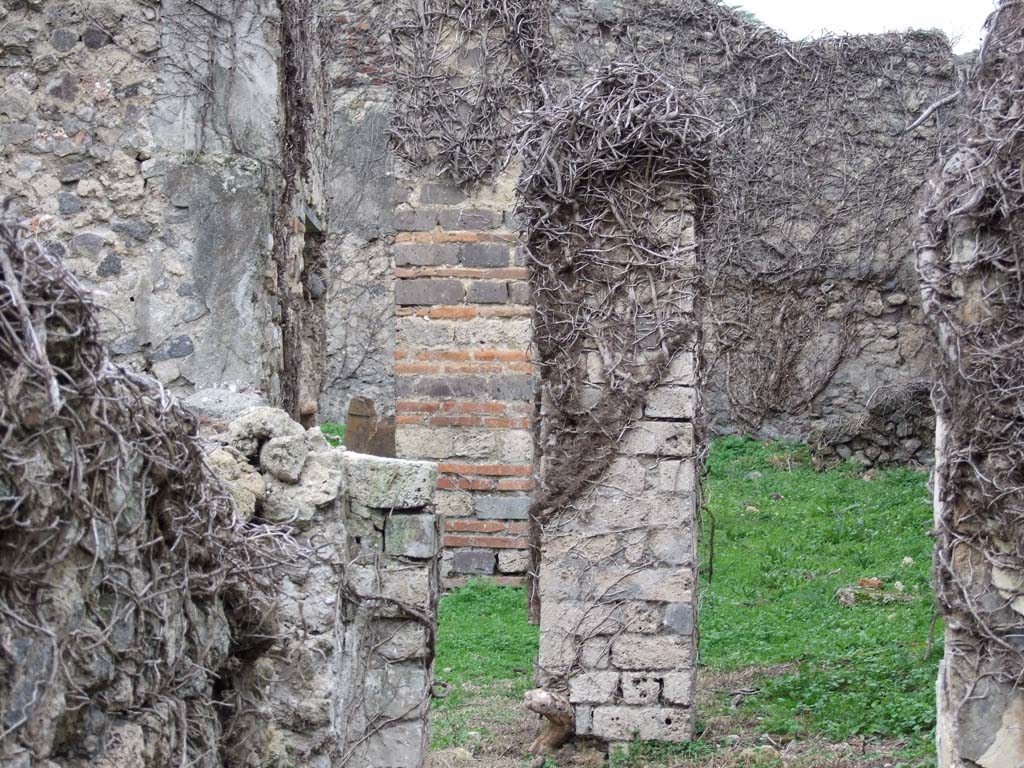
VI.16.10 Pompeii. December 2007. Looking west from triclinium, or cubiculum, across towards rear of house into garden, F.
The pillar, centre left, would have been on the right side of the entrance to the garden area.
It was made of brick and tufa-stone cut into bricks, which were very robust, having to support a roof in F.
The outdoor area F was found with the remains of II style decoration on the north and west walls.
To the left of the brick and tufa pillar, a doorway can be seen. This would have led to the kitchen and latrine.
The other pillar, centre of photo, would have been the one on the north side of the doorway from the corridor.
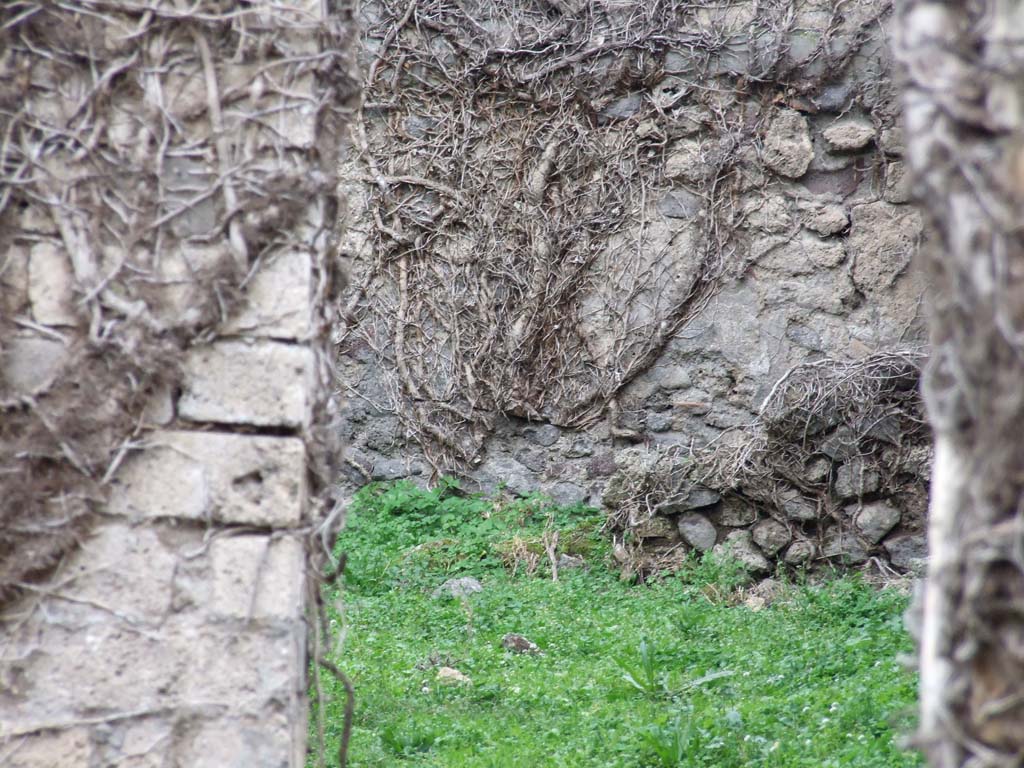
VI.16.10 Pompeii. December 2007. Rear of house.
According to Jashemski, the garden at the rear had a portico on the east supported by a pillar of brick and tufa cut in the shape of brick.
The garden was enclosed by a low masonry wall built between the pillar and the north garden wall.
In the south-east corner of the garden, there was a terracotta puteal.
See Jashemski, W. F., 1993. The Gardens of Pompeii, Volume II: Appendices. New York: Caratzas. (p.164).
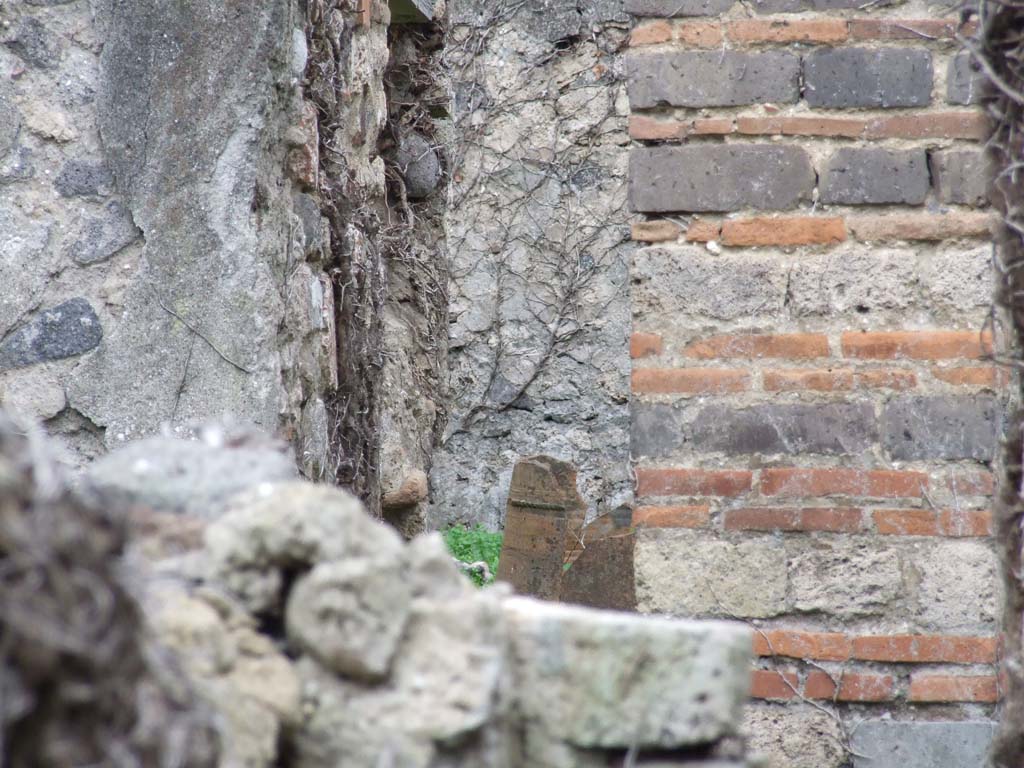
VI.16.10 Pompeii. December 2007. Remains of terracotta puteal at rear of house.
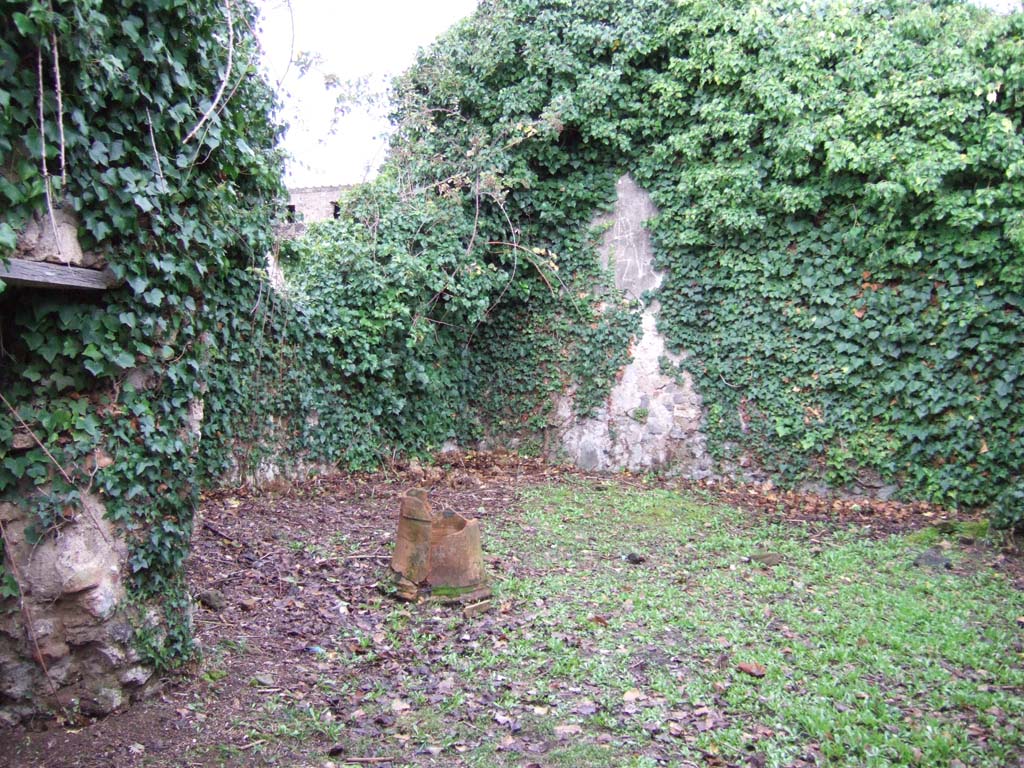
VI.16.10 Pompeii. December 2005. Remains of terracotta puteal at rear of house.
The doorway leading to the kitchen with hearth, and annexed latrine, can be seen on the left.
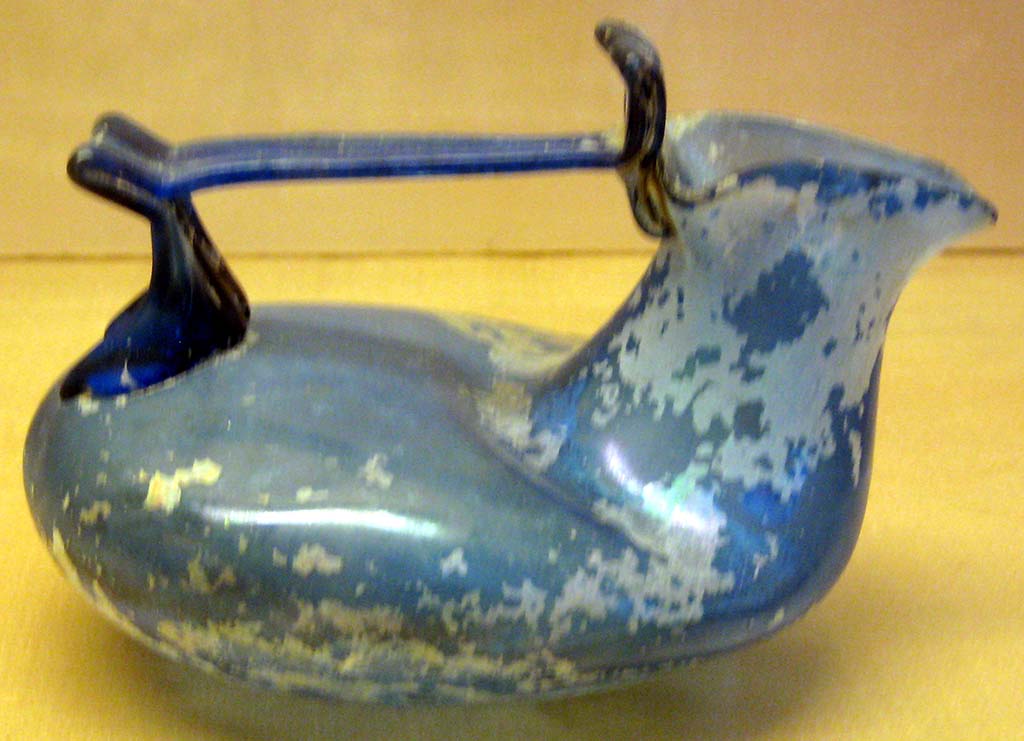
VI.16.10 Pompeii. Deep blue glass askos with encrustation found here.
It has a trilobate mouth, rigid handle with flat ribbon with rounded apex, lower bifurcated graft.
Now in Naples Archaeological Museum. Inventory number 133275.
See Le
Collezioni del Museo Nazionale di Napoli, 1986. Roma: De Luca, p. 222,
n.37.