VI.14.42 Pompeii. Casa della Imperatrice
di Russia.
Linked to VI.14.41. Excavated 1846 and 1876.
![VI.14.42 Pompeii. December 2005. Entrance doorway.
According to Breton, this dwelling discovered in 1846 in the presence of the princess that gave it her name.
In it were found a large quantity of statues, utensils, coins and precious objects.
Today, it is very ruined and offers nothing remarkable.
See Breton, Ernest. 1870. Pompeia, Guide de visite a Pompei, 3rd ed. Paris, Guerin.
Graffito found outside the doorway in February 1846 was –
Pompeium o)(ro) v(os) f(aciatis)
Inventus rog(at) [CIL IV 327}
See Pagano, M. and Prisciandaro, R., 2006. Studio sulle provenienze degli oggetti rinvenuti negli scavi borbonici del regno di Napoli. Naples: Nicola Longobardi, (p. 161). PAH II, 449.
According to Della Corte, this house, spacious and simply decorated, may have been the house of Inventus, because of an electoral recommendation found to the right of the entrance, in support of a specially favoured candidate, perhaps a neighbour, Sesto Pompeio.
Inventus rog(at) [CIL IV 327]
See Della Corte, M., 1965. Case ed Abitanti di Pompei. Napoli: Fausto Fiorentino. (p.86)](6%2014%2042_files/image002.jpg)
VI.14.42 Pompeii. December 2005. Entrance doorway.
According to Breton, this dwelling discovered in 1846 in the presence of the princess that gave it her name.
In it were found a large quantity of statues, utensils, coins and precious objects.
Today, it is very ruined and offers nothing remarkable.
See Breton, Ernest. 1870. Pompeia, Guide de visite a Pompei, 3rd ed. Paris, Guerin.
Graffito found outside the doorway in February 1846 was –
Pompeium o)(ro)
v(os) f(aciatis)
Inventus rog(at)
[CIL IV 327}
See Pagano, M. and Prisciandaro, R., 2006. Studio sulle provenienze degli oggetti rinvenuti negli scavi borbonici del regno di Napoli. Naples: Nicola Longobardi, (p. 161). PAH II, 449.
According to Della Corte, this house, spacious and simply decorated, may have been the house of Inventus, because of an electoral recommendation found to the right of the entrance, in support of a specially favoured candidate, perhaps a neighbour, Sesto Pompeio.
Inventus
rog(at) [CIL IV 327]
See Della Corte,
M., 1965. Case ed Abitanti di Pompei.
Napoli: Fausto Fiorentino. (p.86)
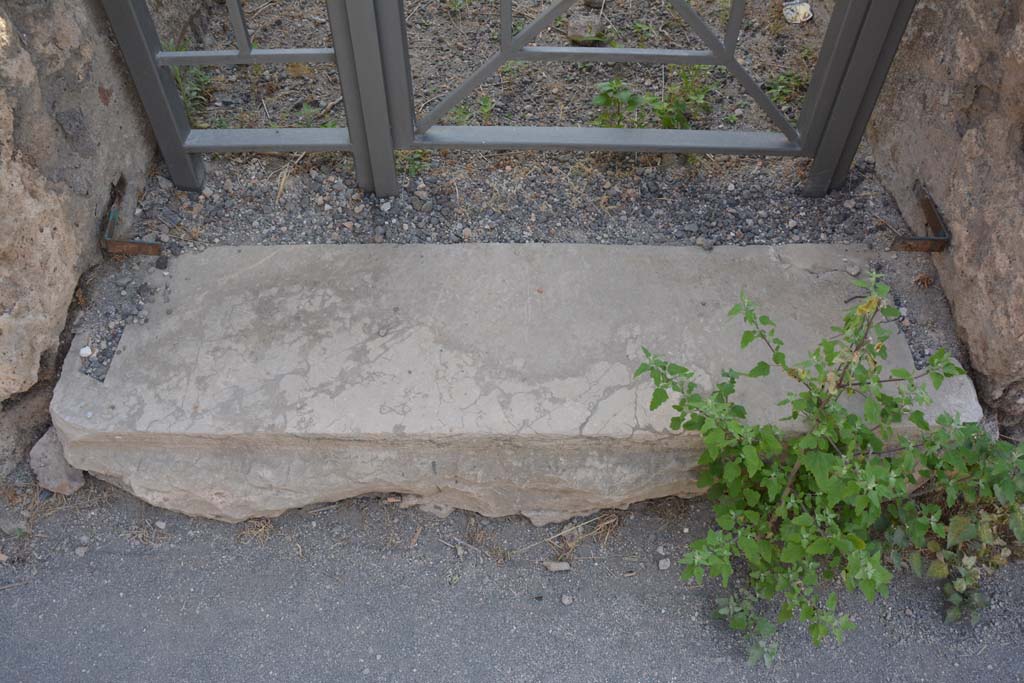
VI.14.42 Pompeii. July
2017. Looking east to threshold of entrance doorway.
Foto Annette Haug, ERC Grant 681269 DÉCOR
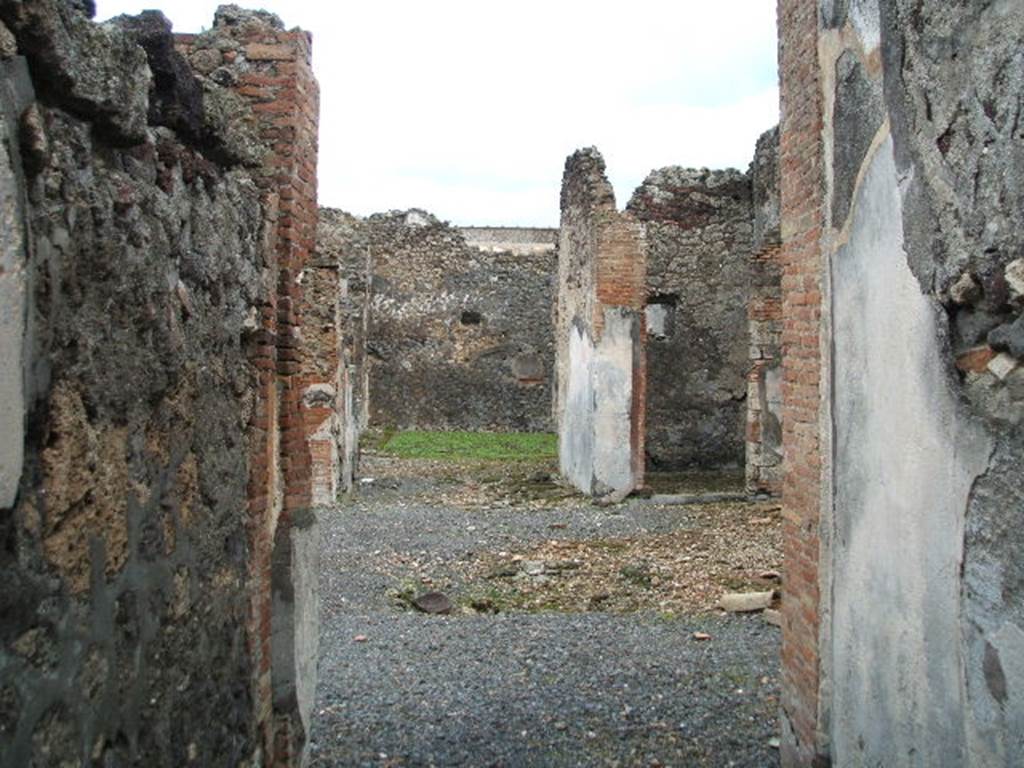
VI.14.42 Pompeii. December 2004. Looking east from entrance corridor towards atrium and tablinum.
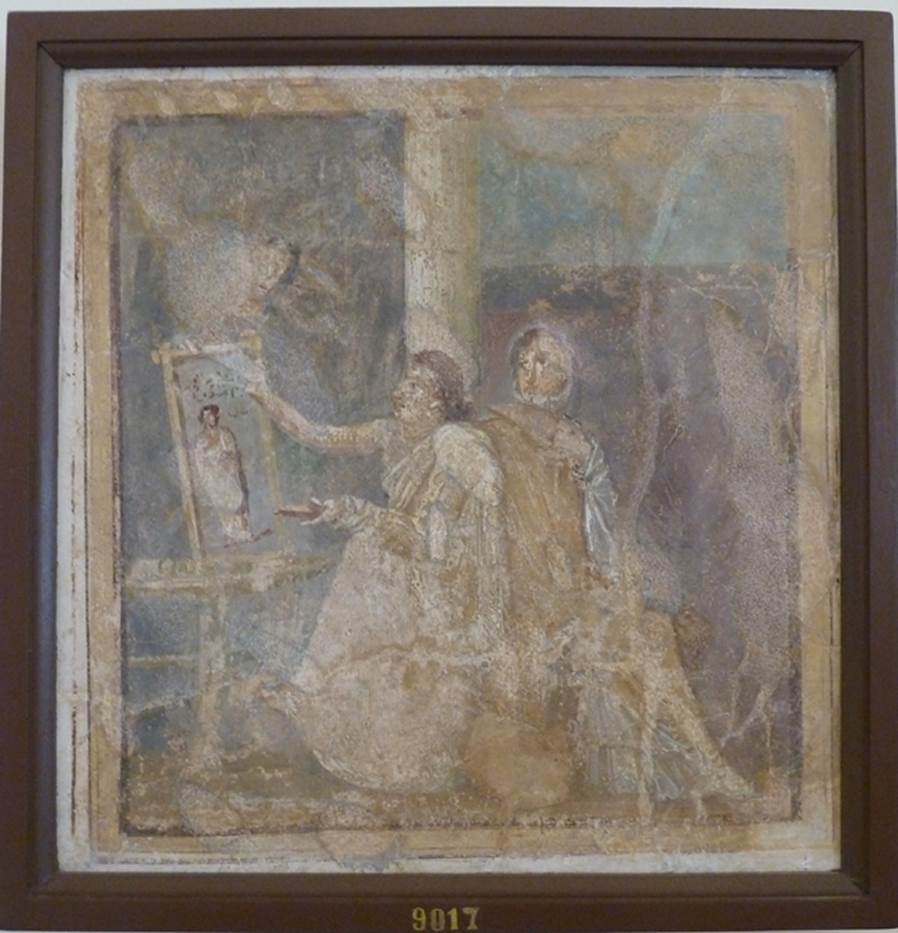
VI.14.42 Pompeii. Found in cubiculum (3), the room on the south (or right) of the entrance corridor.
Wall painting of woman painting. She holds a palette in her left hand and is painting a picture on a table or easel with the right.
A woman in yellow, with a white mantel over her shoulder, sits next to her.
The woman admires the painting which is of a woman in a yellow robe.
Now in Naples Archaeological Museum. Inventory number 9017.
See Helbig, W., 1868. Wandgemälde der vom Vesuv verschütteten Städte Campaniens. Leipzig: Breitkopf und Härtel. (1444).
See Richardson, L., 2000. A Catalog of Identifiable Figure Painters of Ancient Pompeii, Herculaneum. Baltimore: John Hopkins.
(p.120, he described it as a Genre scene with woman painting a picture, found in cubiculum 3, south of fauces).
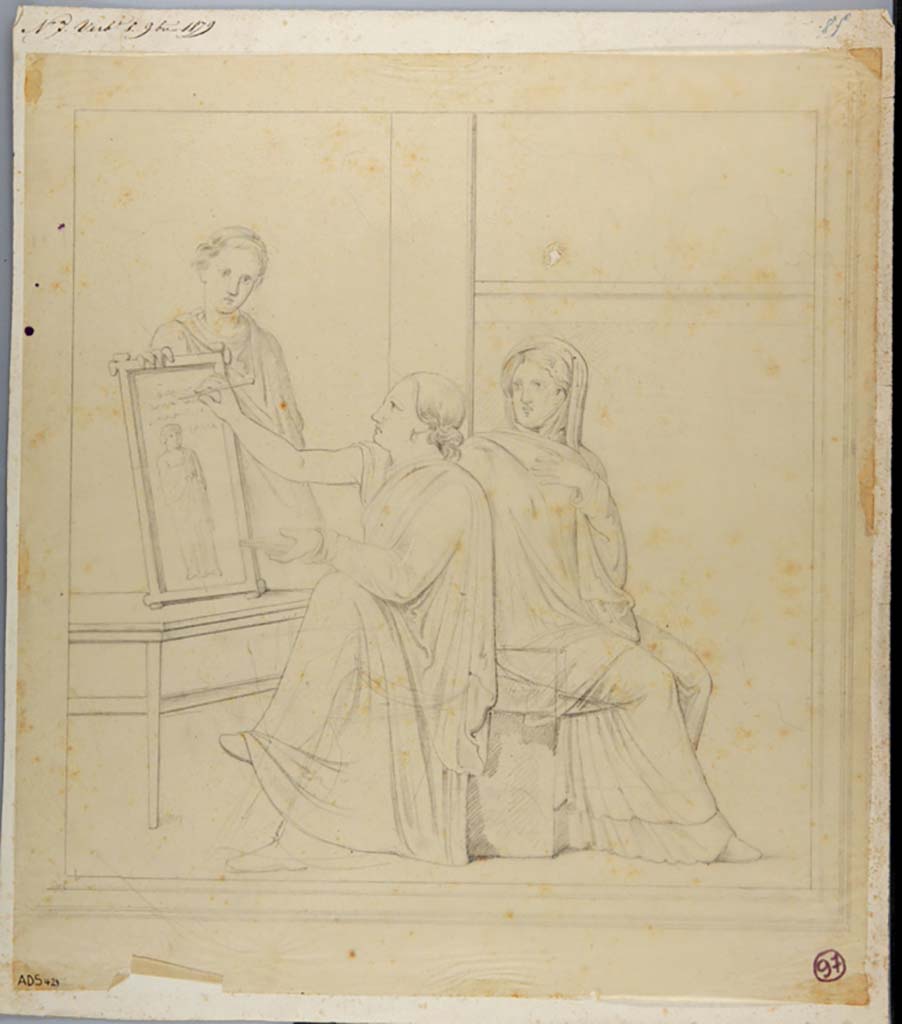
VI.14.42 Pompeii. Drawing by Giuseppe Abbate, of painting found on west wall of cubiculum on south side of entrance corridor.
Now in Naples Archaeological Museum. Inventory number ADS 421.
Photo © ICCD. https://www.catalogo.beniculturali.it
Utilizzabili alle
condizioni della licenza Attribuzione - Non commerciale - Condividi
allo stesso modo 2.5 Italia (CC BY-NC-SA 2.5 IT)
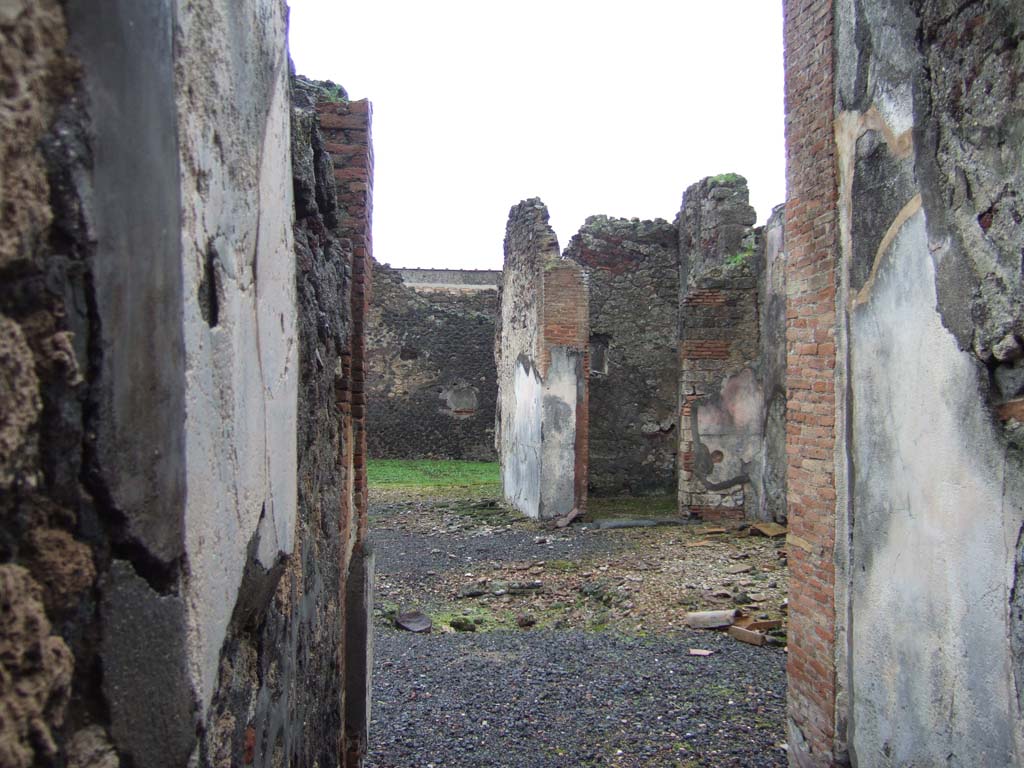
VI.14.42 Pompeii. December 2005. Looking from entrance corridor towards south wall of tablinum, and doorway to cubiculum on its south side.
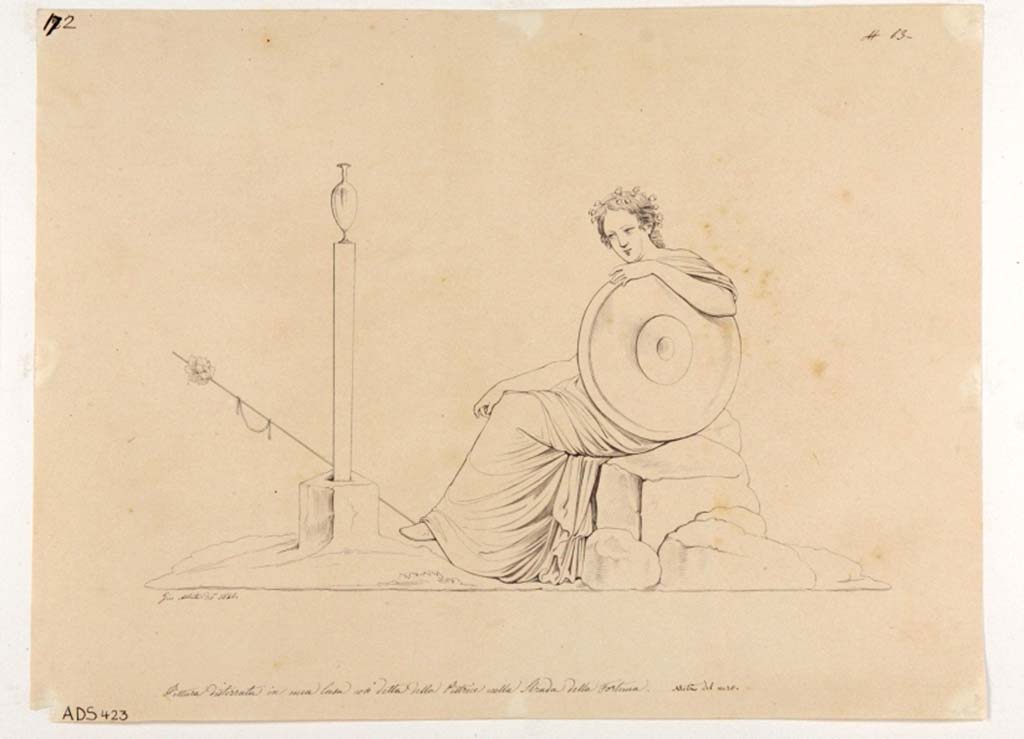
VI.14.42 Pompeii. Drawing by Giuseppe Abbate, 1846, of painting of a sitting Maenad found on south wall of tablinum, but now completely disappeared.
Now in Naples Archaeological Museum. Inventory number ADS 423.
Photo © ICCD. https://www.catalogo.beniculturali.it
Utilizzabili alle
condizioni della licenza Attribuzione - Non commerciale - Condividi
allo stesso modo 2.5 Italia (CC BY-NC-SA 2.5 IT)
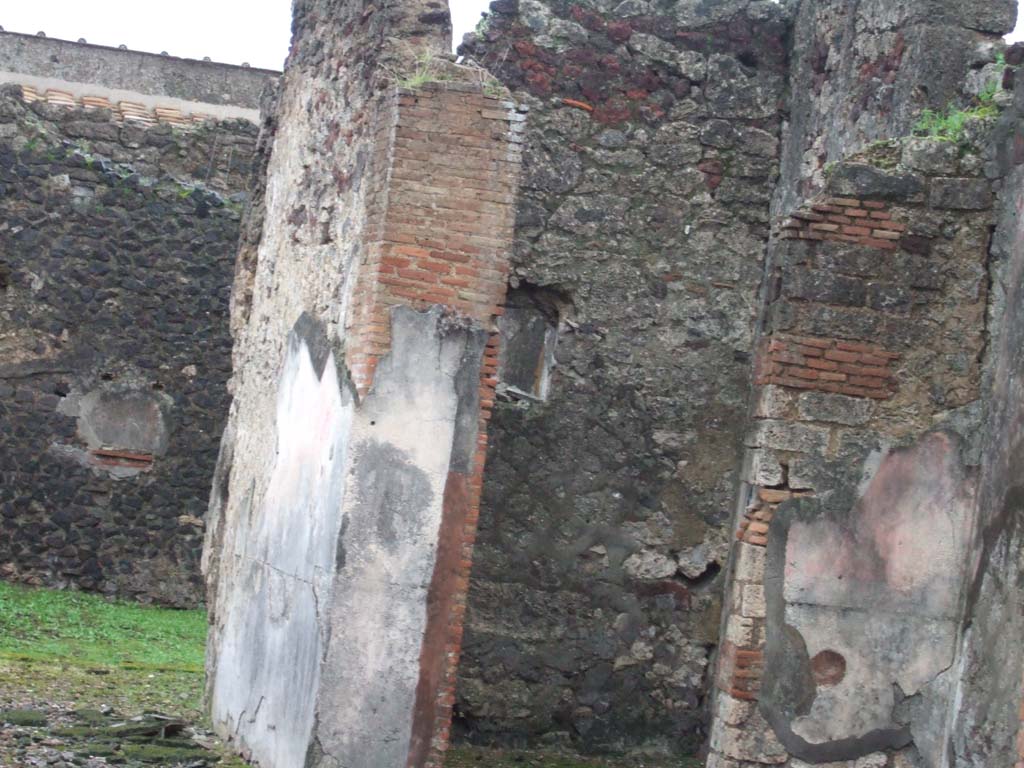
VI.14.42 Pompeii. December 2005. Doorway to cubiculum on south side of tablinum, looking east.
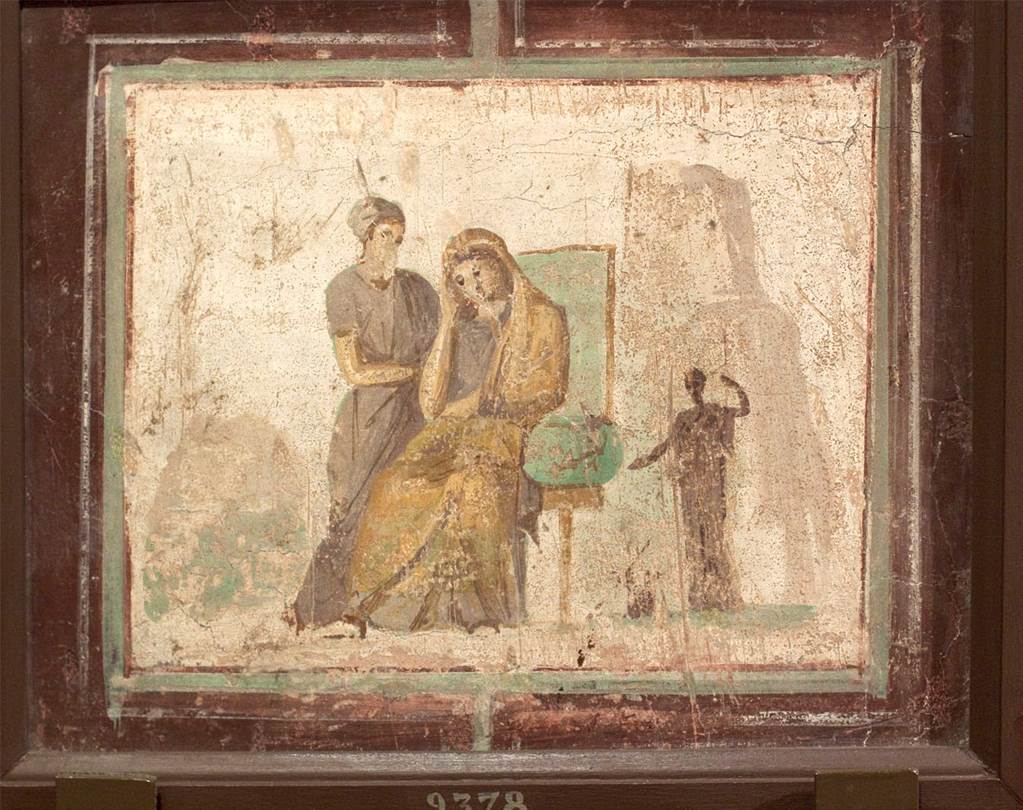
VI.14.42 Pompeii. Cubiculum on south side (right) from tablinum.
Wall painting of Phaedra and wet nurse or two women in conversation, found on east wall.
Now in Naples Archaeological Museum. Inventory number 9378.
See Helbig, W., 1868. Wandgemälde der vom Vesuv verschütteten
Städte Campaniens.
Leipzig: Breitkopf und Härtel. (1433 described as Woman and ladies maid).
See Schefold, K., 1957. Die Wände Pompejis. Berlin: De Gruyter. (p. 138).
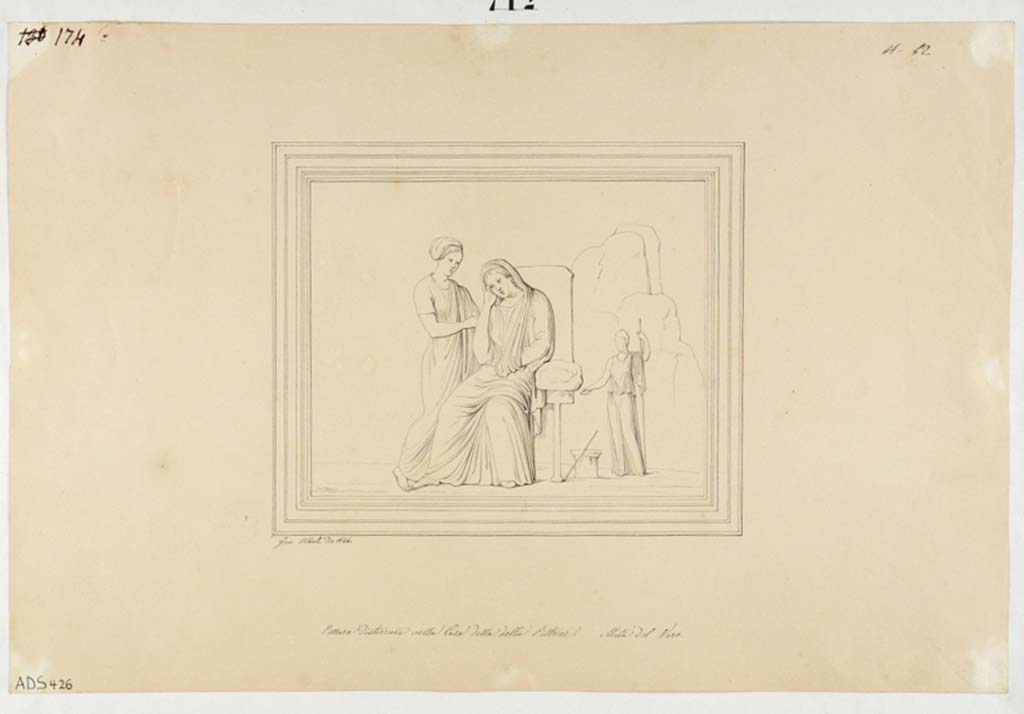
VI.14.42 Pompeii. Drawing by Giuseppe Abbate, 1846, of painting found on east wall in cubiculum on south side of tablinum.
Now in Naples Archaeological Museum. Inventory number ADS 426.
Photo © ICCD. https://www.catalogo.beniculturali.it
Utilizzabili alle
condizioni della licenza Attribuzione - Non commerciale - Condividi
allo stesso modo 2.5 Italia (CC BY-NC-SA 2.5 IT)
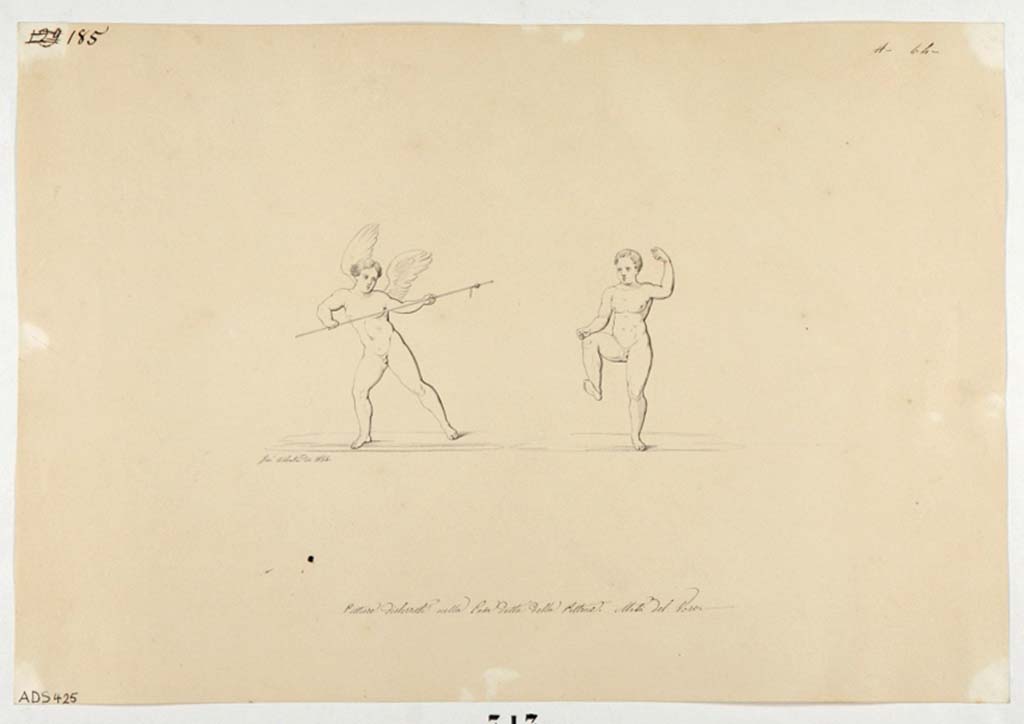
VI.14.42 Pompeii. Drawing by Giuseppe Abbate, 1846, of painted panels found on south wall of cubiculum on south side of tablinum.
Now in Naples Archaeological Museum. Inventory number ADS 425.
Photo © ICCD. https://www.catalogo.beniculturali.it
Utilizzabili alle
condizioni della licenza Attribuzione - Non commerciale - Condividi
allo stesso modo 2.5 Italia (CC BY-NC-SA 2.5 IT)
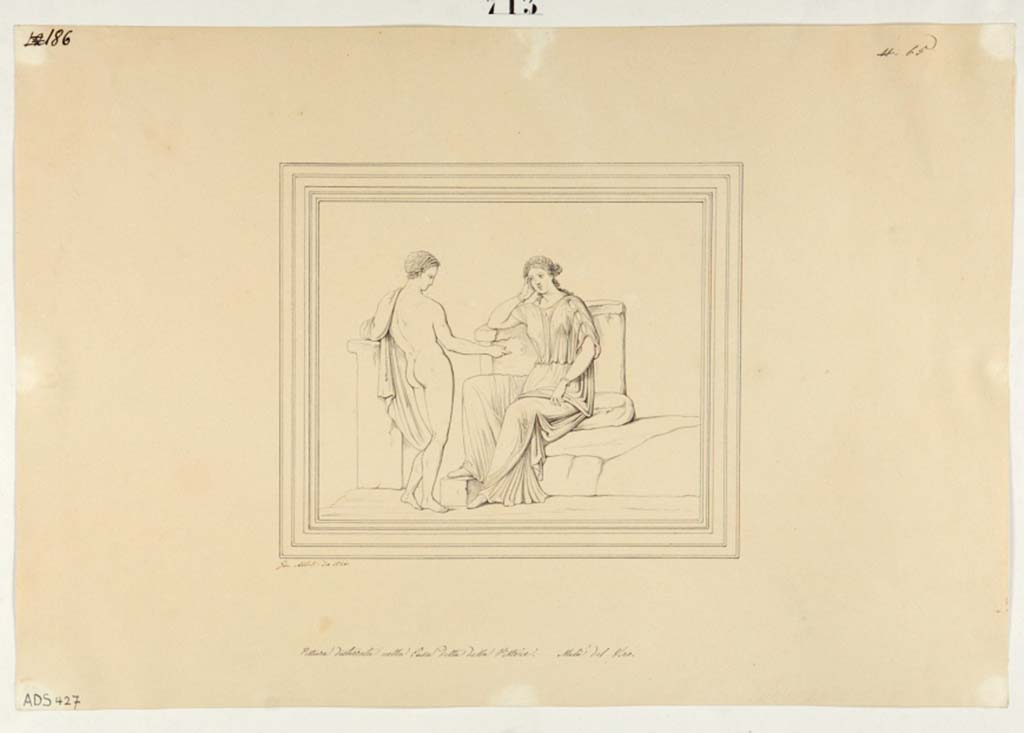
VI.14.42 Pompeii. Drawing by Giuseppe Abbate,1846, of painting found on north wall of cubiculum on south side of tablinum.
A masculine standing figure and female sitting, (Helbig 1392b), perhaps Paris and Helen or Phaedra and Hippolytus.
Now in Naples Archaeological Museum. Inventory number ADS 427.
Photo © ICCD. https://www.catalogo.beniculturali.it
Utilizzabili alle
condizioni della licenza Attribuzione - Non commerciale - Condividi
allo stesso modo 2.5 Italia (CC BY-NC-SA 2.5 IT)
The original painting is now in Naples Archaeological Museum.
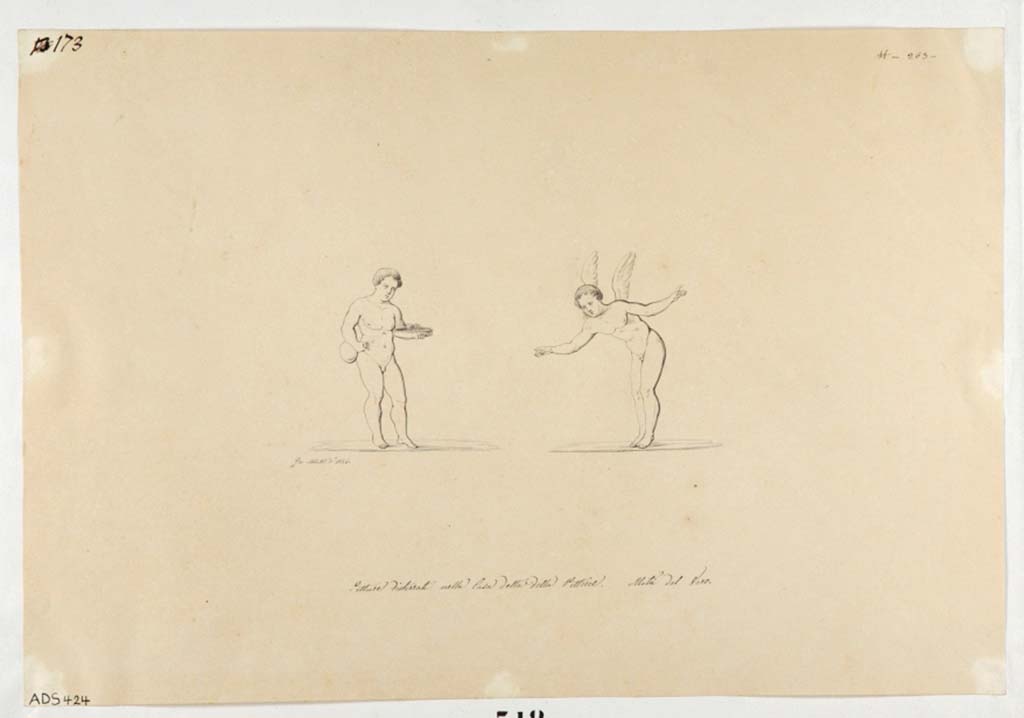
VI.14.42 Pompeii. Drawing by Giuseppe Abbate, 1846, of painted panels found on north wall of cubiculum on south side of tablinum, on either side of the central painting above.
These were left in situ and have now faded and disappeared.
Now in Naples Archaeological Museum. Inventory number ADS 424.
Photo © ICCD. https://www.catalogo.beniculturali.it
Utilizzabili alle condizioni della licenza Attribuzione
- Non commerciale - Condividi allo stesso modo 2.5 Italia (CC BY-NC-SA 2.5 IT)
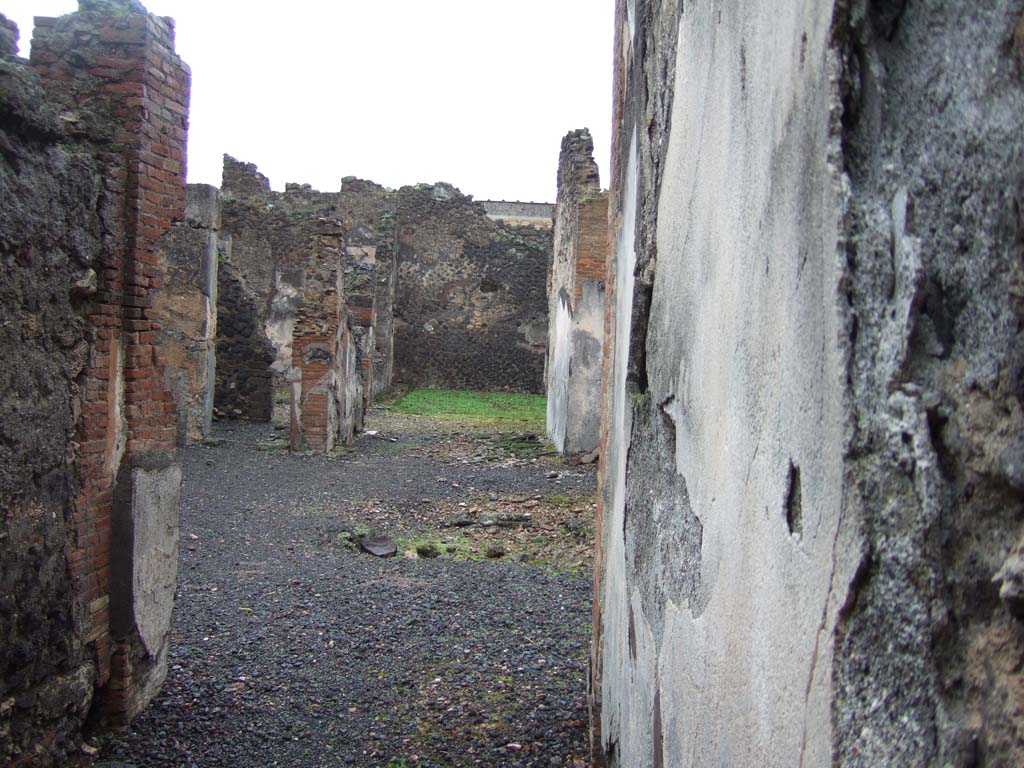
VI.14.42 Pompeii. December 2005. Looking east across atrium and small tablinum towards garden area at rear.
According to Jashemski, the small garden at the right rear of the house, excavated in 1846, was visible from the entrance doorway through the atrium and tablinum.
It had a covered passageway on the west side. The triclinium to the north of the garden had a wide window looking into the garden.
See Jashemski, W. F., 1993. The Gardens of Pompeii, Volume II: Appendices. New York: Caratzas. (p.151)
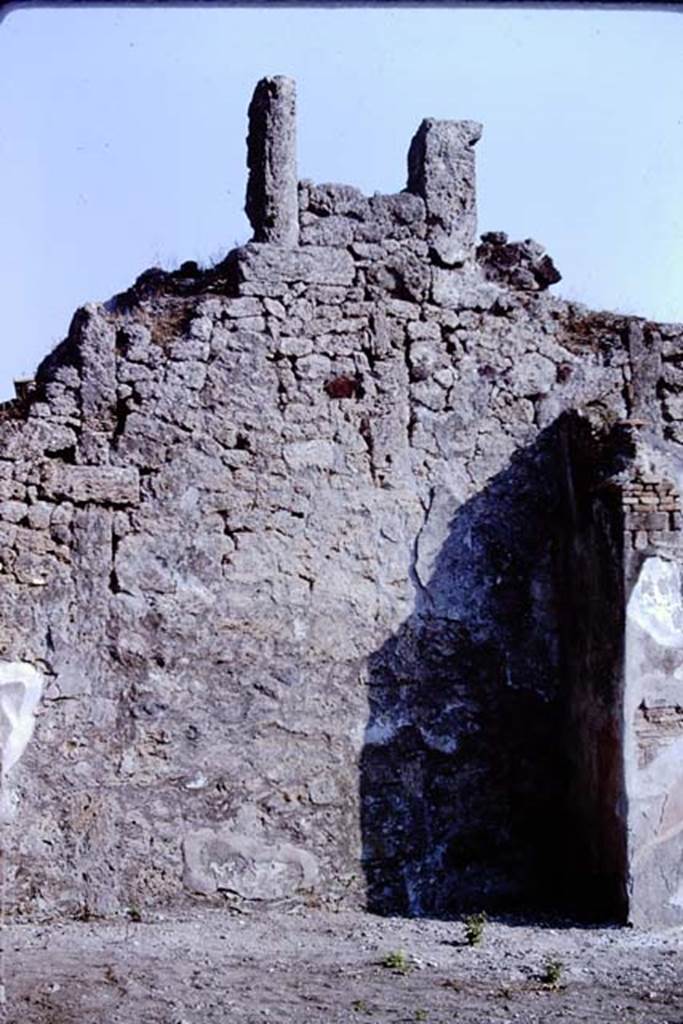
VI.14.42 Pompeii. 1966. Looking towards the south wall of the garden area. Photo by Stanley A. Jashemski.
Source: The Wilhelmina and Stanley A. Jashemski archive in the University of Maryland Library, Special Collections (See collection page) and made available under the Creative Commons Attribution-Non-Commercial License v.4. See Licence and use details.
J66f0248
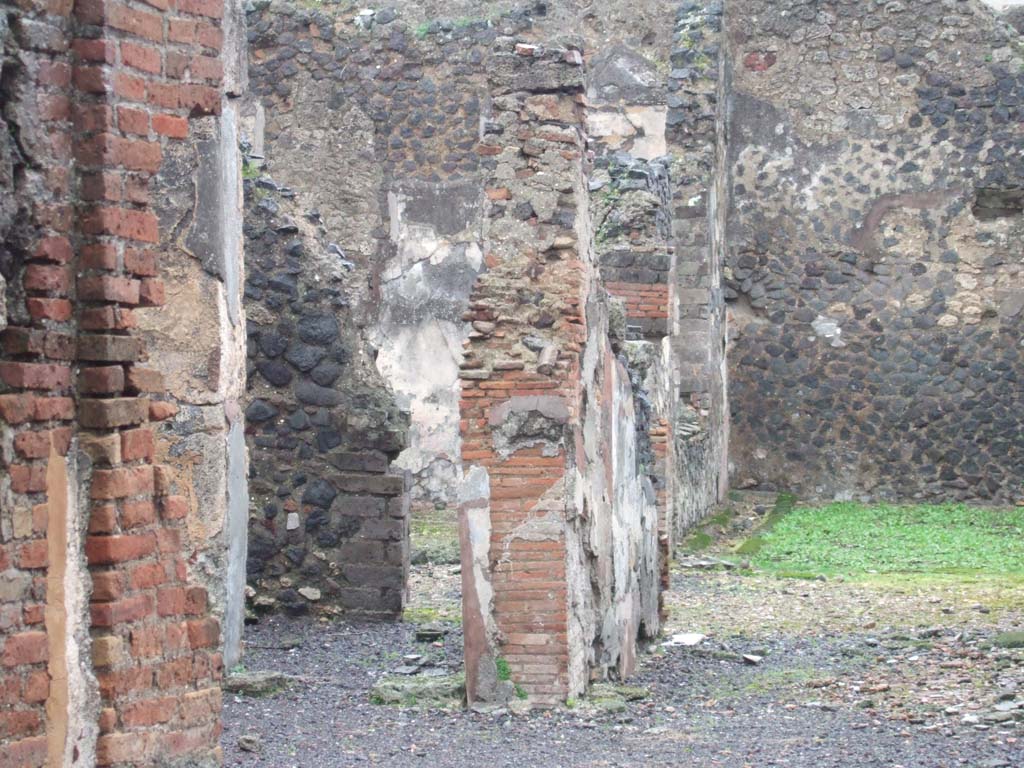
VI.14.42 Pompeii. December 2005. Doorway to kitchen room on north side of tablinum.
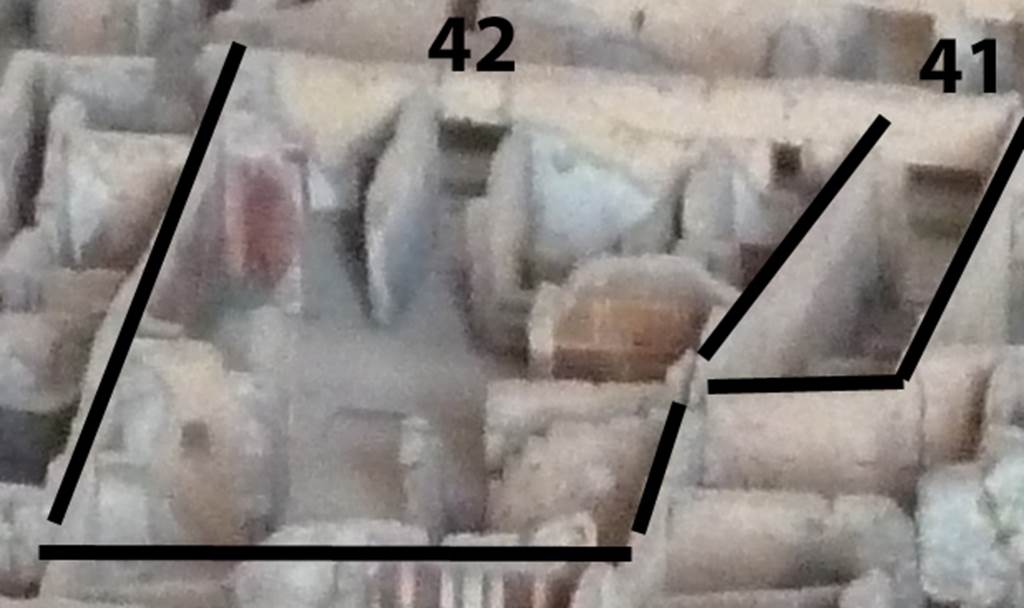
VI.14.42 Pompeii. Looking west from rear, across cork model in Naples Archaeological Museum.
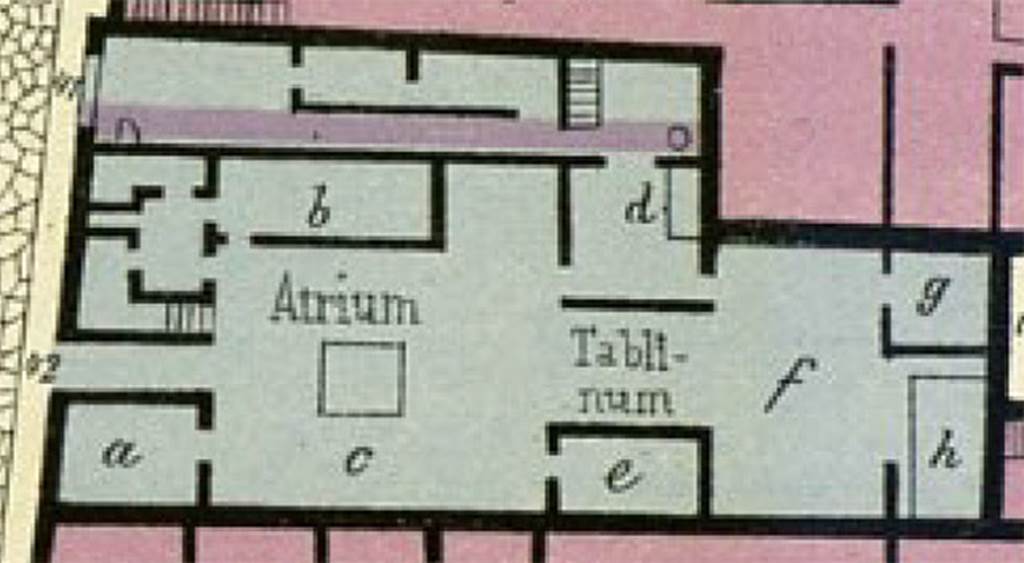
VI.14.42 Pompeii. Plan by Emile Presuhn showing entrances at VI.14.41 and 42.
See Presuhn E., 1878. Pompei : Les dernières fouilles de 1874 a 1878. Leipzig: Weigel, section V, plate I.