VI.14.40 Pompeii. Dwelling house.
Excavated 1846, 1876. Bombed in 1943.
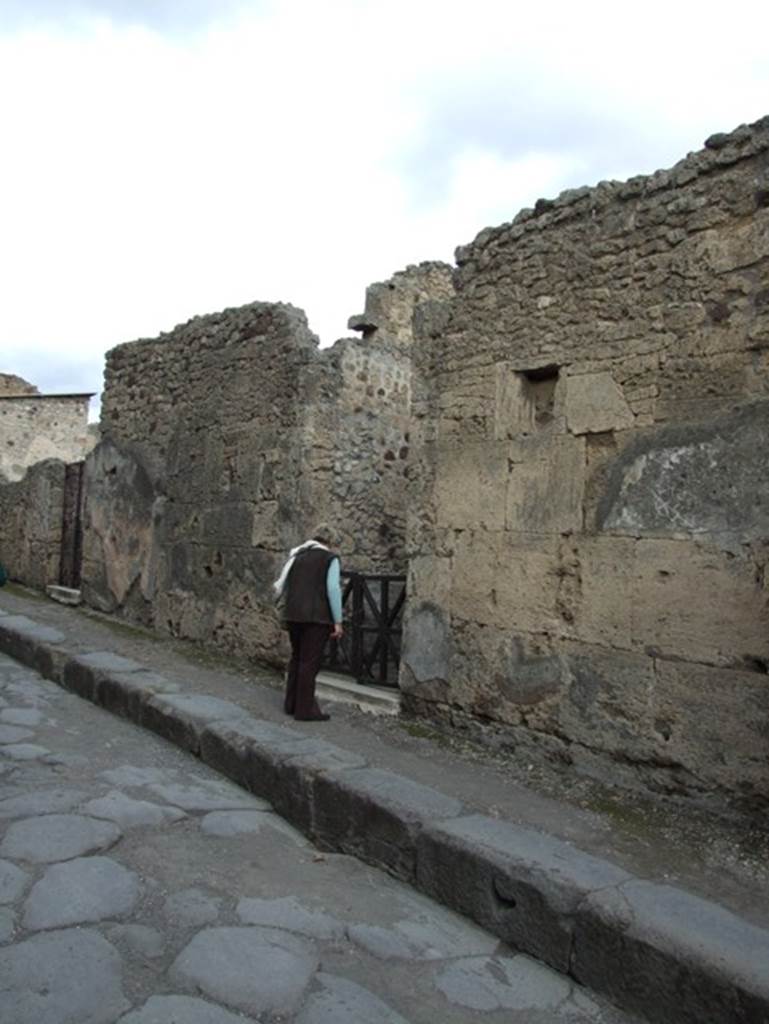
VI.14.40 Pompeii. December 2007. Looking north to entrance doorway on Vicolo dei Vettii.
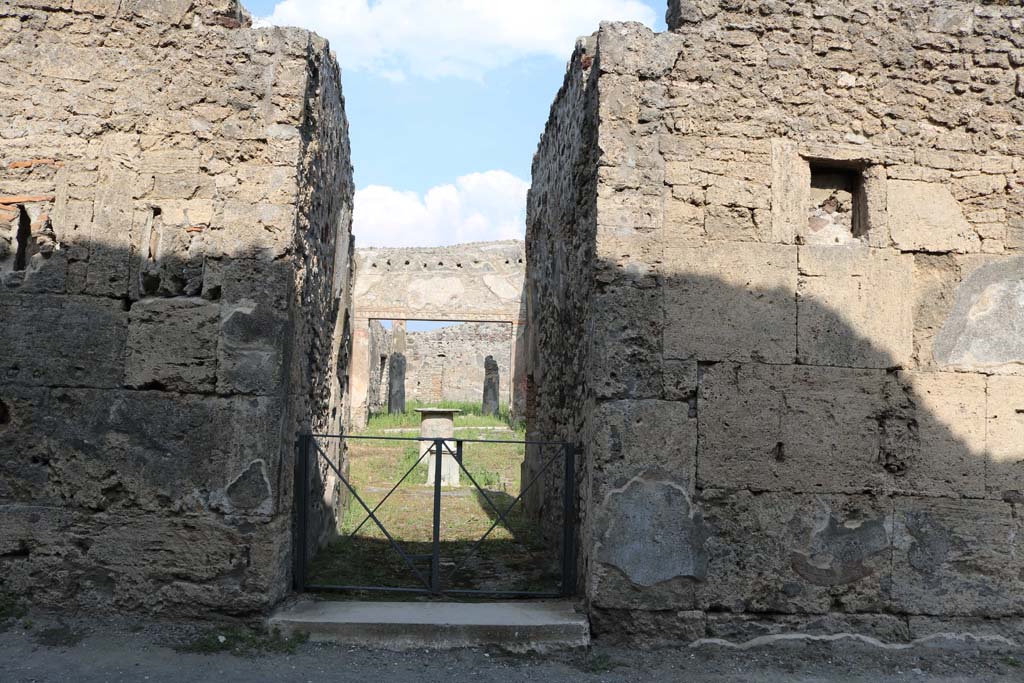
VI.14.40 Pompeii. December 2018. Entrance doorway on east
side of Vicolo dei Vettii. Photo courtesy of Aude Durand.
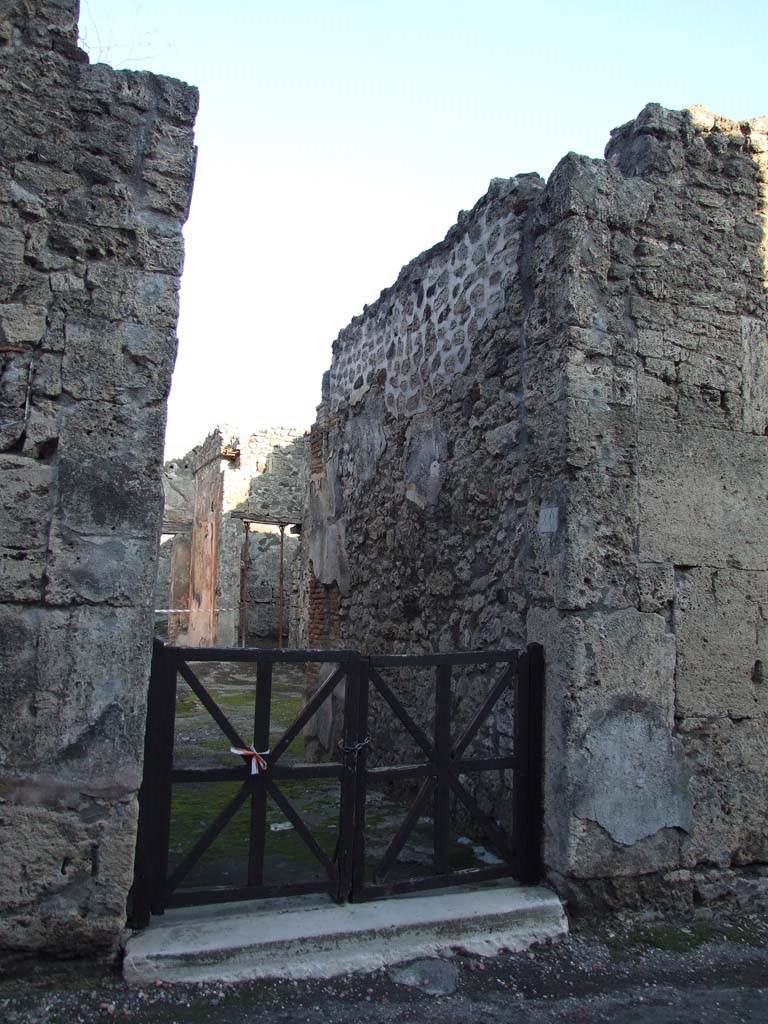
VI.14.40 Pompeii. December 2007. Entrance doorway.
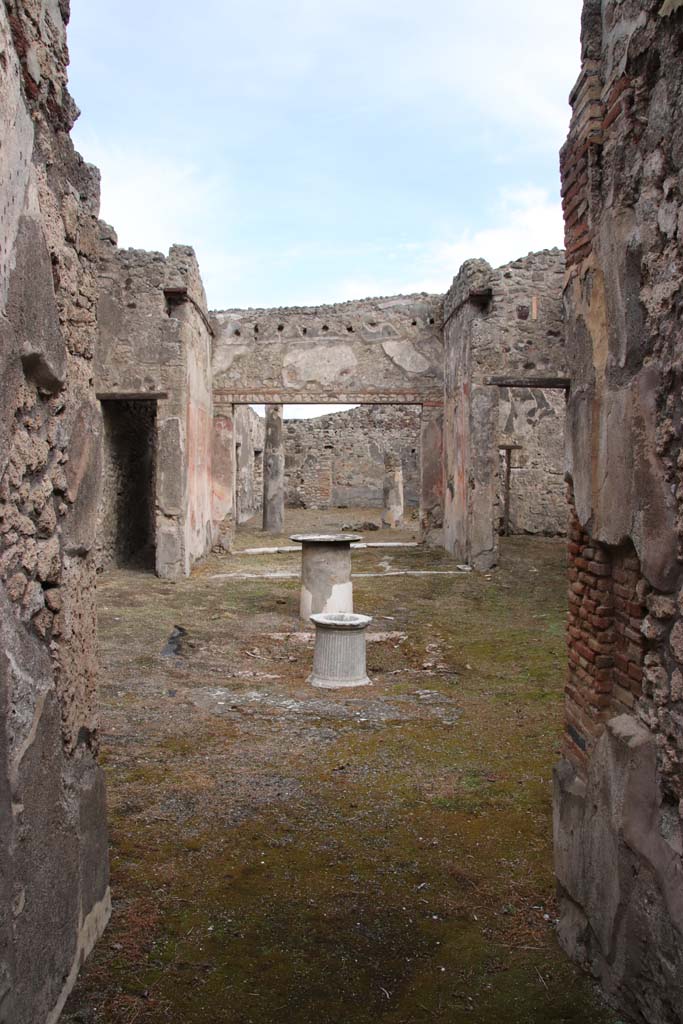
VI.14.40 Pompeii. October 2020.
Looking east across atrium from entrance corridor. Photo courtesy of Klaus Heese.
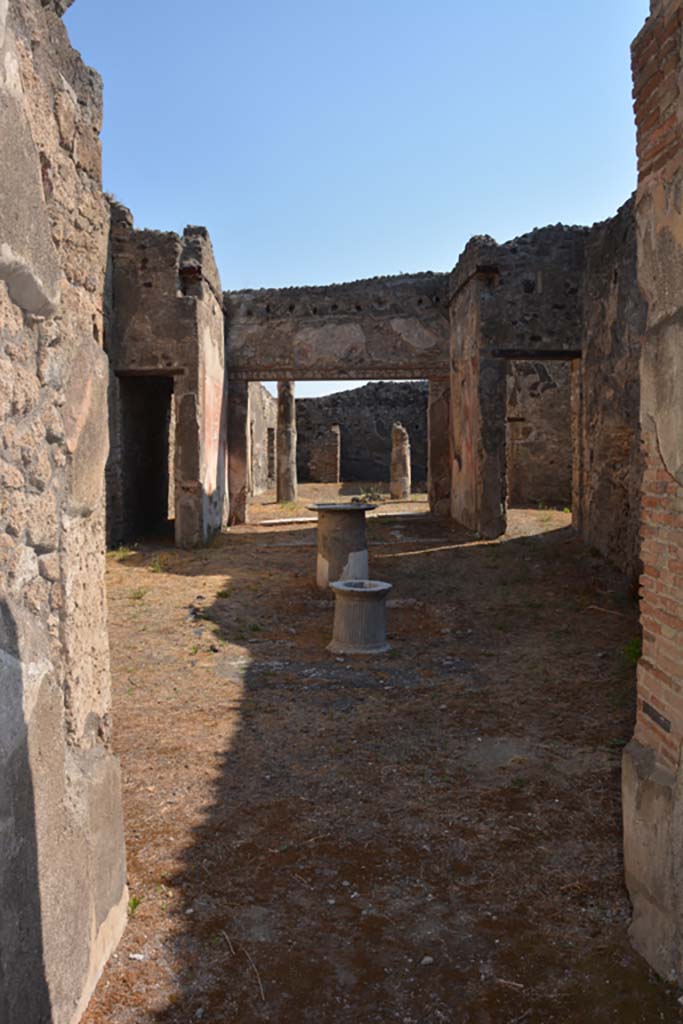
VI.14.40 Pompeii. September 2019.
Looking east across atrium from entrance corridor.
Foto Annette Haug, ERC Grant 681269 DÉCOR
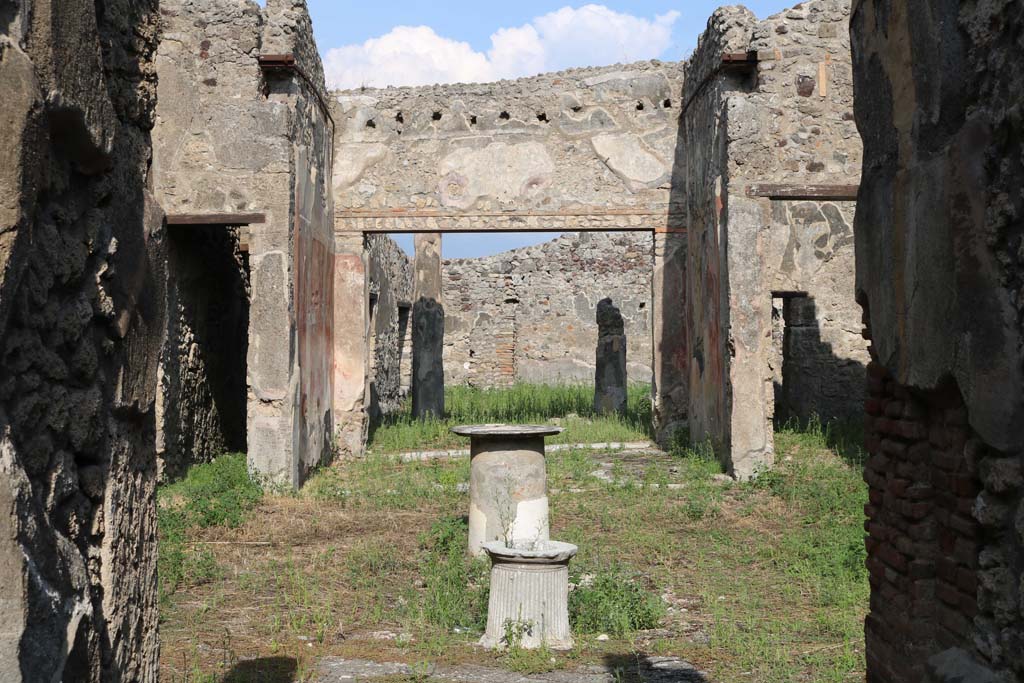
VI.14.40 Pompeii. December 2018. Looking east across atrium
from entrance corridor. Photo courtesy of Aude Durand.
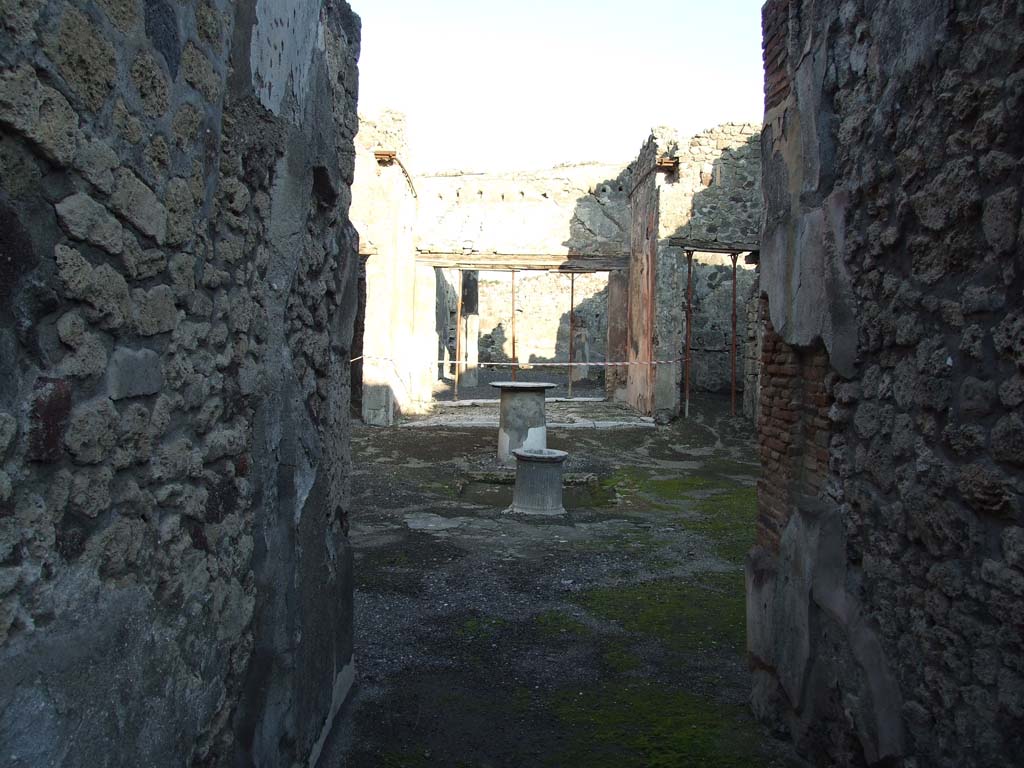
VI.14.40 Pompeii. December 2007. Looking east from fauces or entrance corridor, across atrium to tablinum.
According to Garcia y Garcia, this house also had two rooms hit by the 1943 bombardment, with the loss of IV style painting.
See Garcia y Garcia, L., 2006. Danni di guerra a Pompei. Rome: L’Erma di Bretschneider. (p.93, with two photos by Tatiana Warscher pre 1943 on p.94).
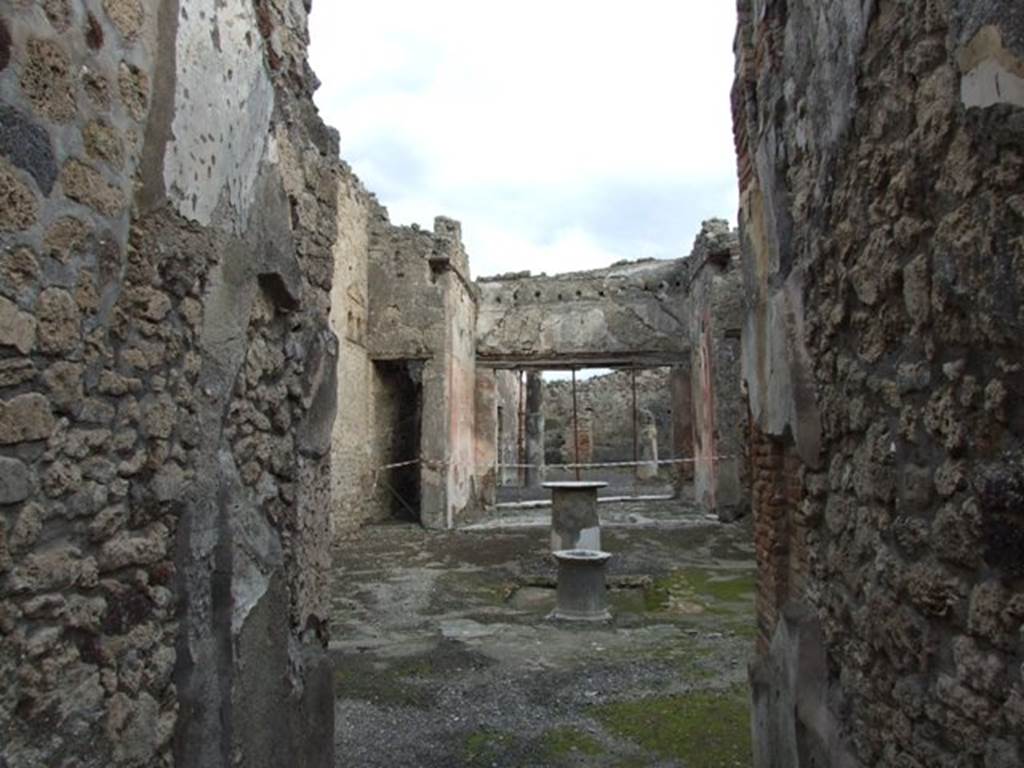
VI.14.40 Pompeii. December 2007. Looking east across atrium.
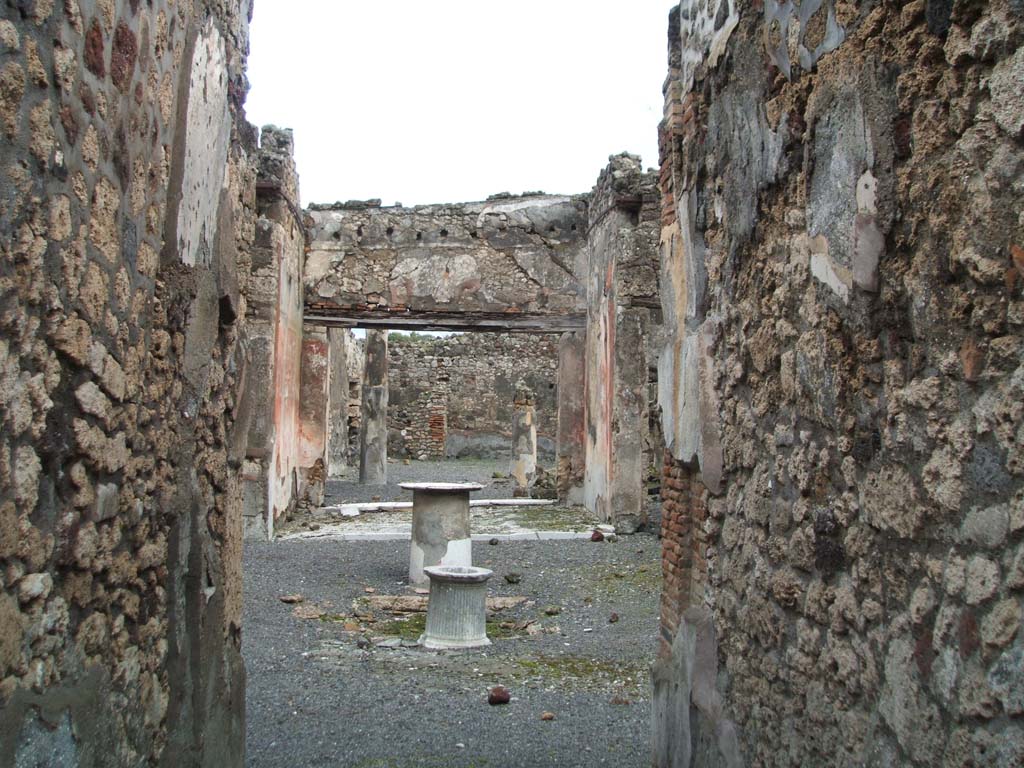
VI.14.40 Pompeii. December 2004. Looking east from entrance corridor across atrium through tablinum to the garden area at rear.
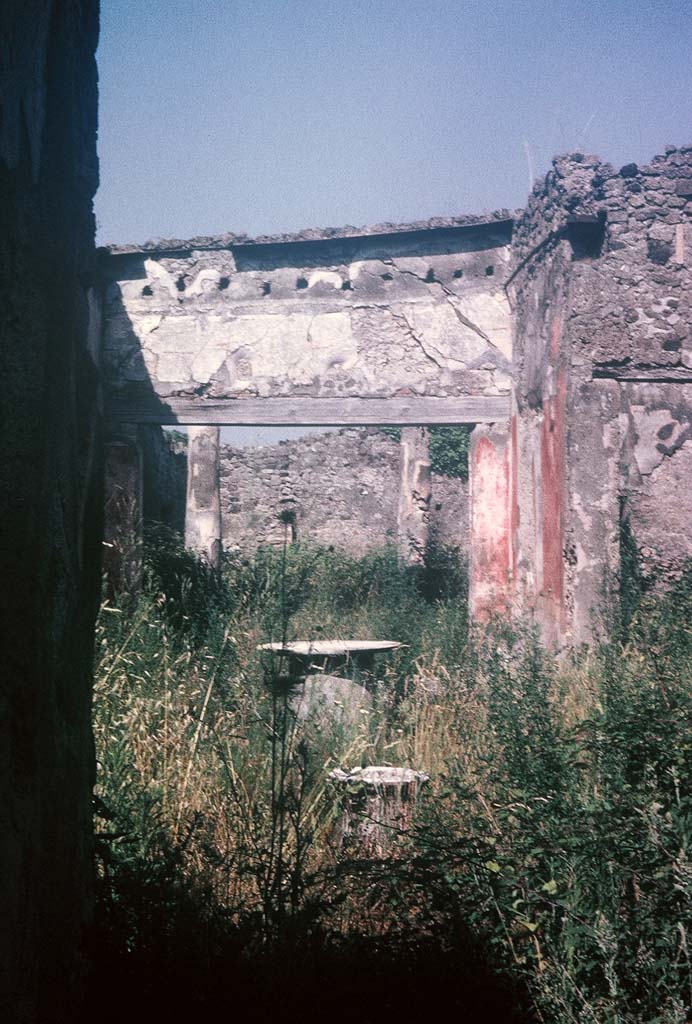
VI.14.40, Pompeii. August 1965.
Looking east across atrium from entrance corridor. Photo courtesy of Rick Bauer.
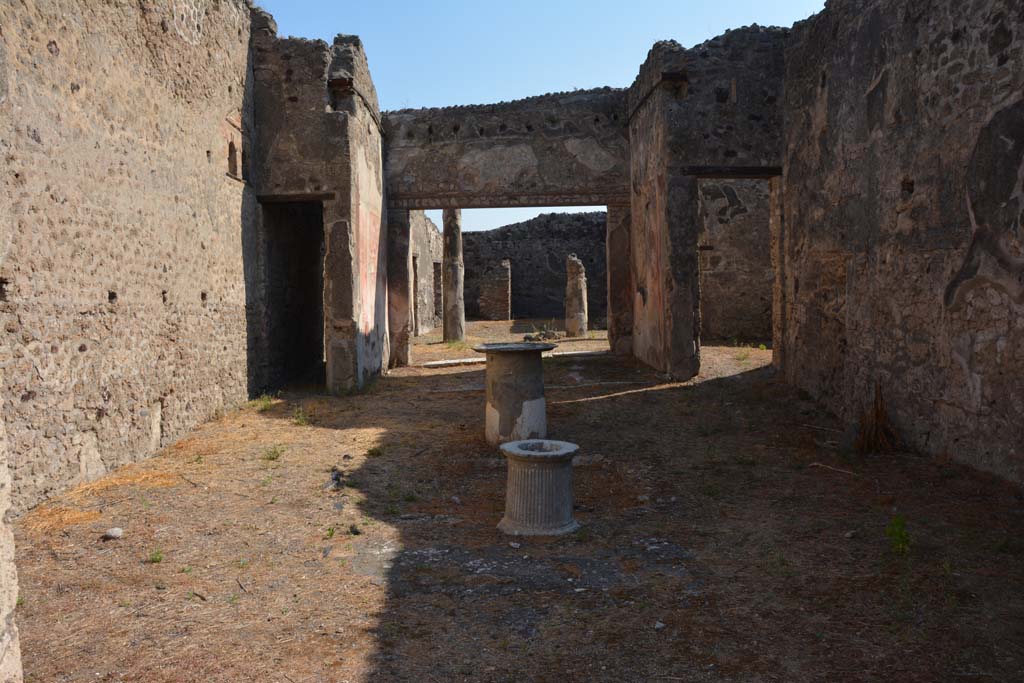
VI.14.40 Pompeii. September 2019. Looking east across impluvium in
atrium.
Foto Annette Haug, ERC
Grant 681269 DÉCOR
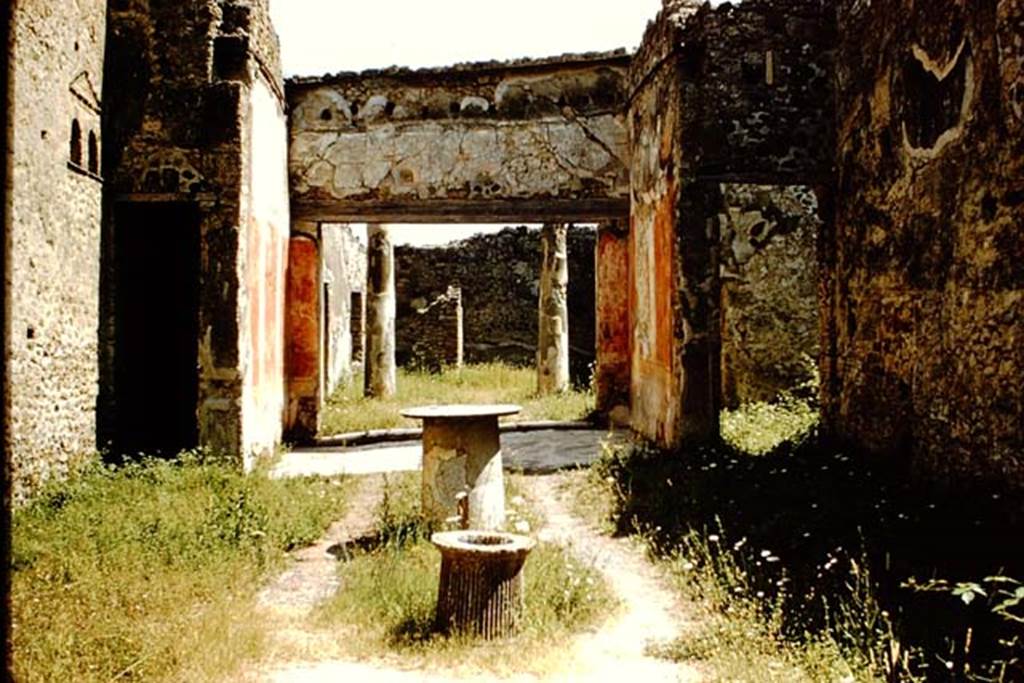
VI.14.40, Pompeii. 1959. Looking east across atrium. Photo by Stanley A. Jashemski.
Source: The Wilhelmina and Stanley A. Jashemski archive in the University of Maryland Library, Special Collections (See collection page) and made available under the Creative Commons Attribution-Non Commercial License v.4. See Licence and use details.
J59f0431
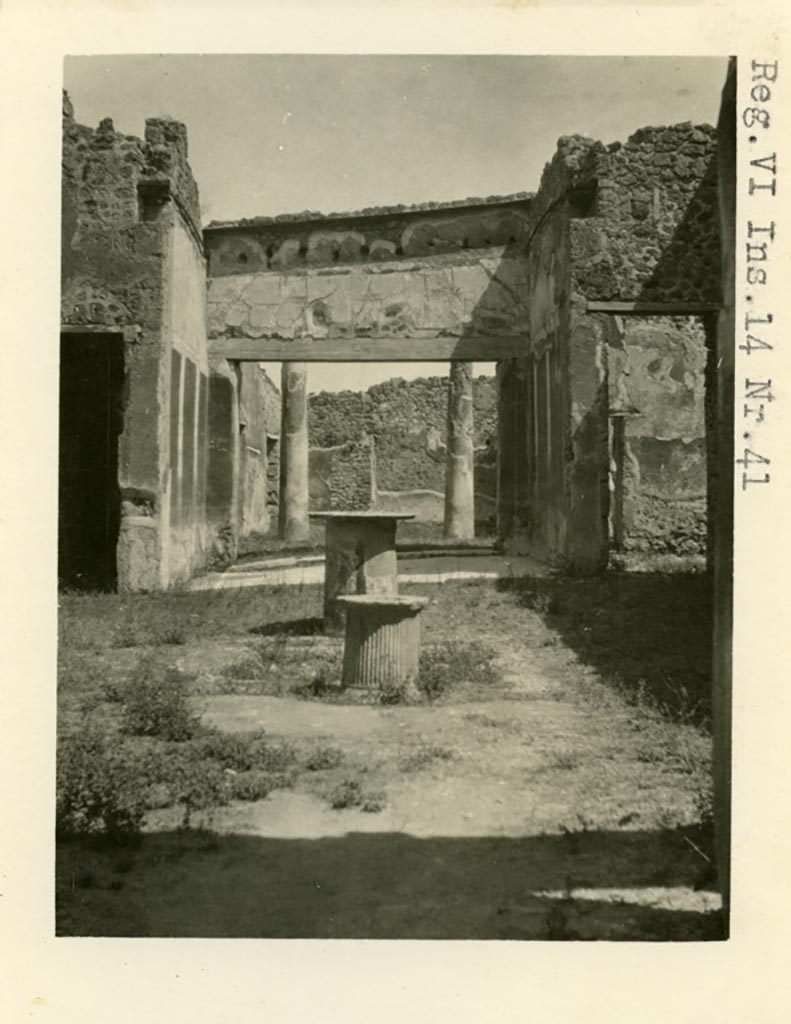
VI.14.40 Pompeii but numbered as VI.14.41. Pre-1937-1939. Looking east across atrium.
Photo courtesy of American Academy in Rome, Photographic Archive. Warsher collection no. 435a.
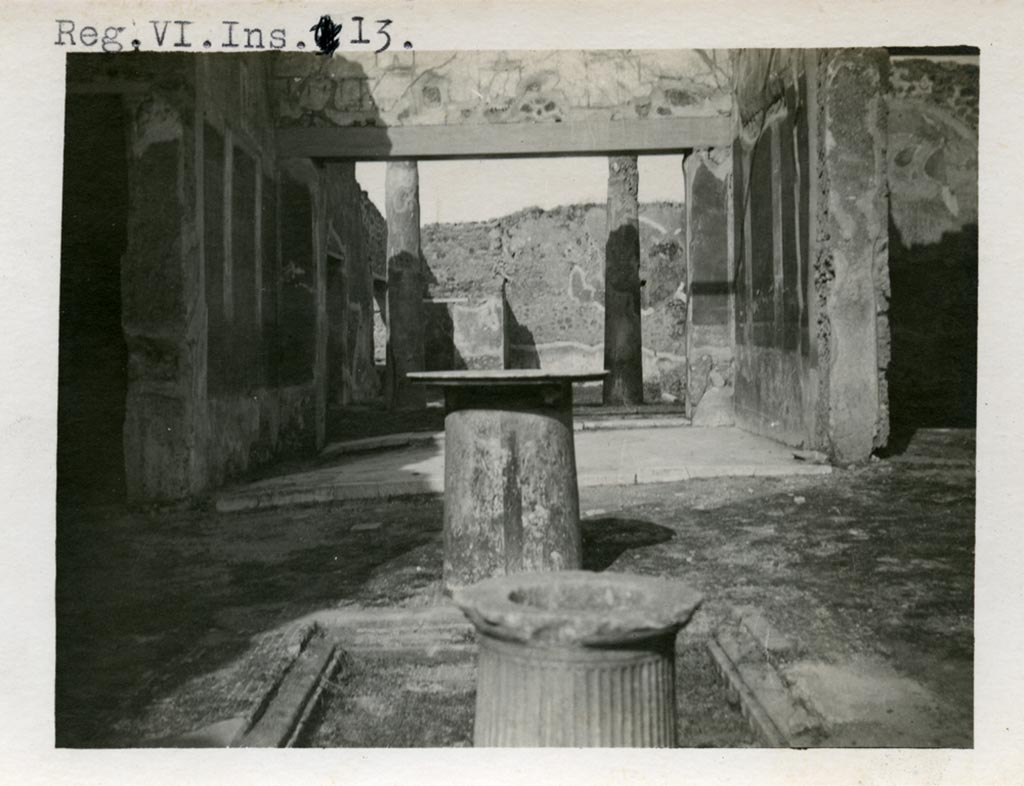
VI.14.40 Pompeii but numbered as VI.13. Pre-1937-39. Looking east across impluvium in atrium towards tablinum.
Photo courtesy of American Academy in Rome, Photographic Archive. Warsher collection no. 435.
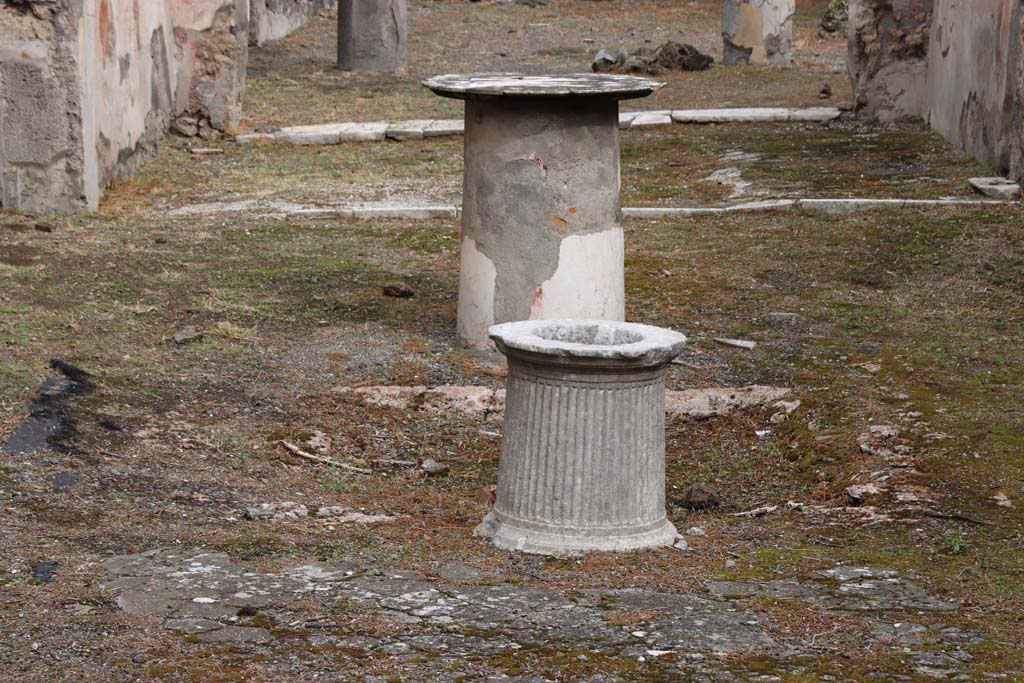
VI.14.40 Pompeii. October 2020. Impluvium in atrium, with puteal and marble table. Photo courtesy of Klaus Heese.
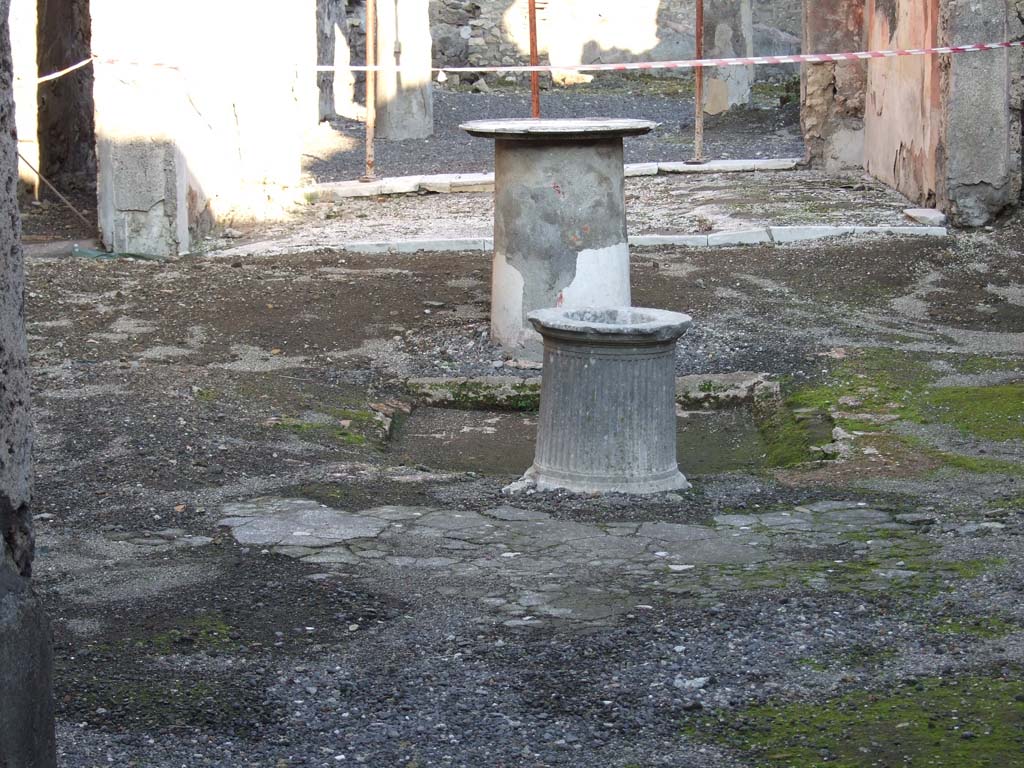
VI.14.40 Pompeii. December 2007. Impluvium in atrium, with puteal and marble table.
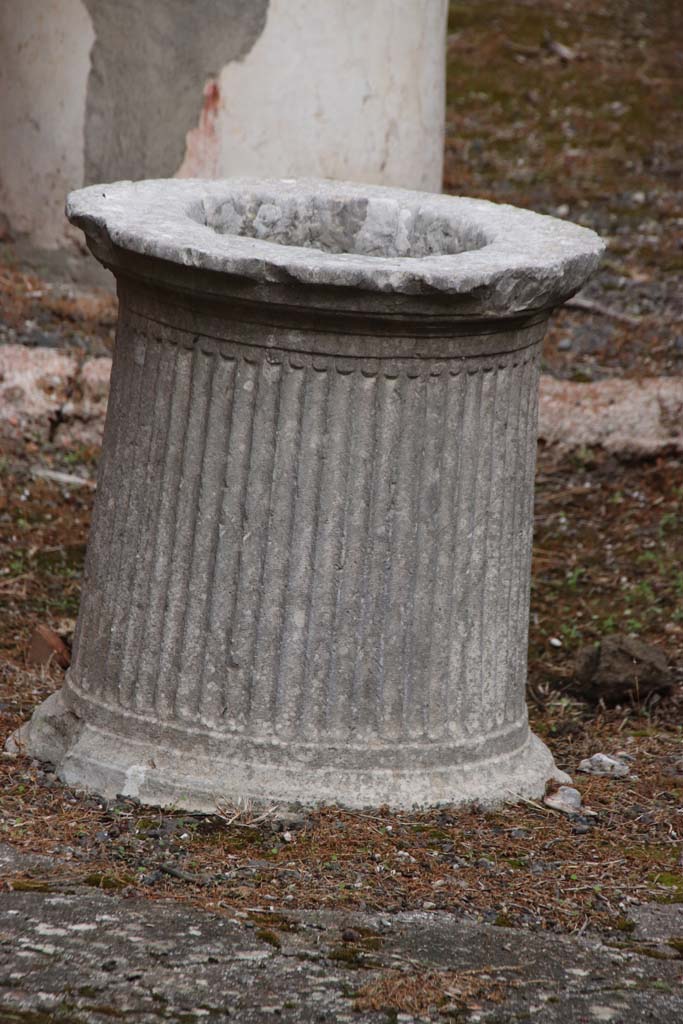
VI.14.40 Pompeii. October 2020. Detail of puteal in atrium. Photo courtesy of Klaus Heese.
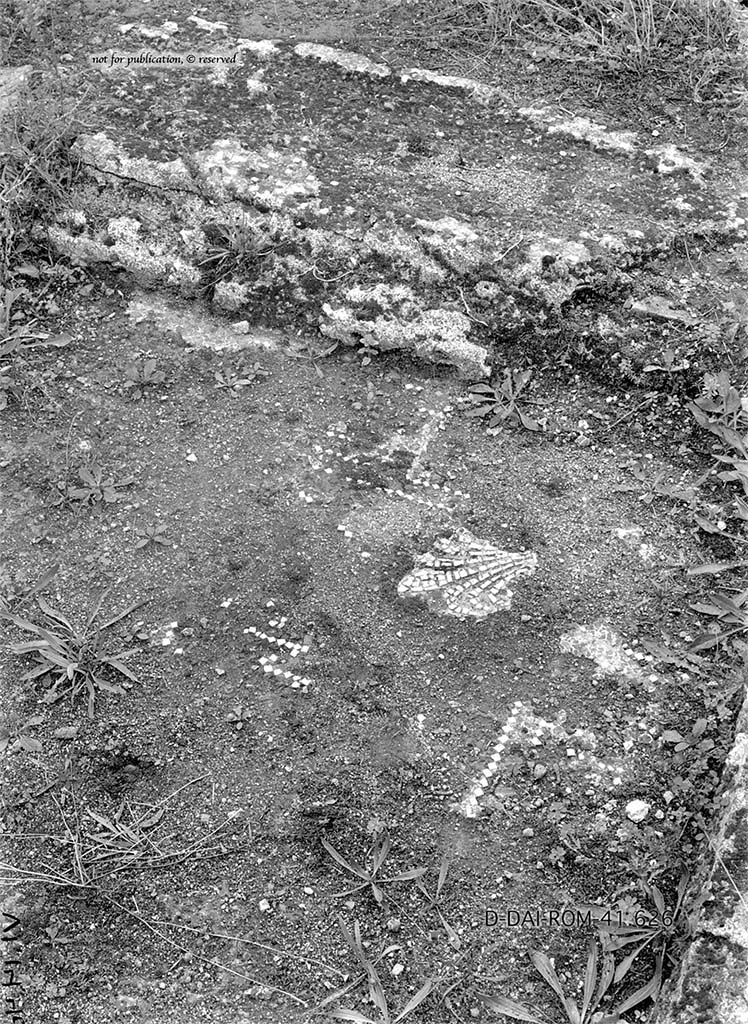
VI.14.40 Pompeii.
Pre-1938. Impluvium in atrium.
See Pernice,
E. 1938. Pavimente und Figürliche
Mosaiken: Die Hellenistische Kunst in Pompeji, Band VI.
Berlin: de Gruyter, Taf. 16,1.
According to PPM –
The impluvium was faced with cocciopesto, the base was decorated by meanders in white tesserae, and in the four corners, by palmettes.
The edge was in cocciopesto with decorations outlined in white tesserae, which were then covered by the flooring of lavapesto.
See Carratelli,
G. P., 1990-2003. Pompei: Pitture e Mosaici. Vol. V. Roma: Istituto
della enciclopedia italiana, (p. 393).
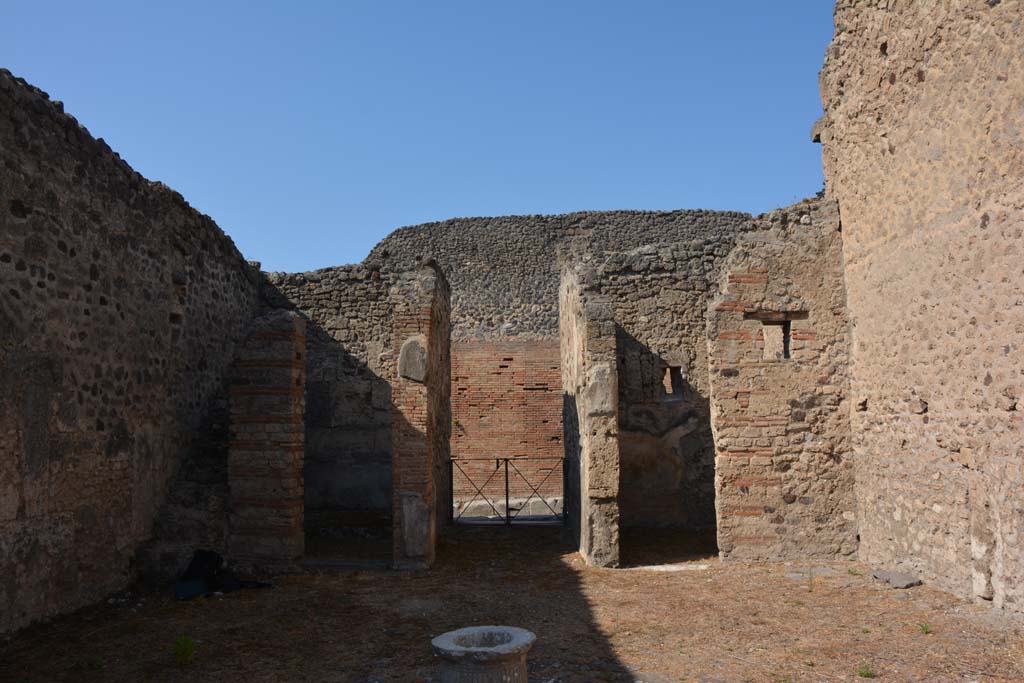
VI.14.40 Pompeii. September 2019.
Looking west across atrium towards entrance doorway, with doorway
to a cubiculum on either side.
Foto Annette Haug, ERC
Grant 681269 DÉCOR
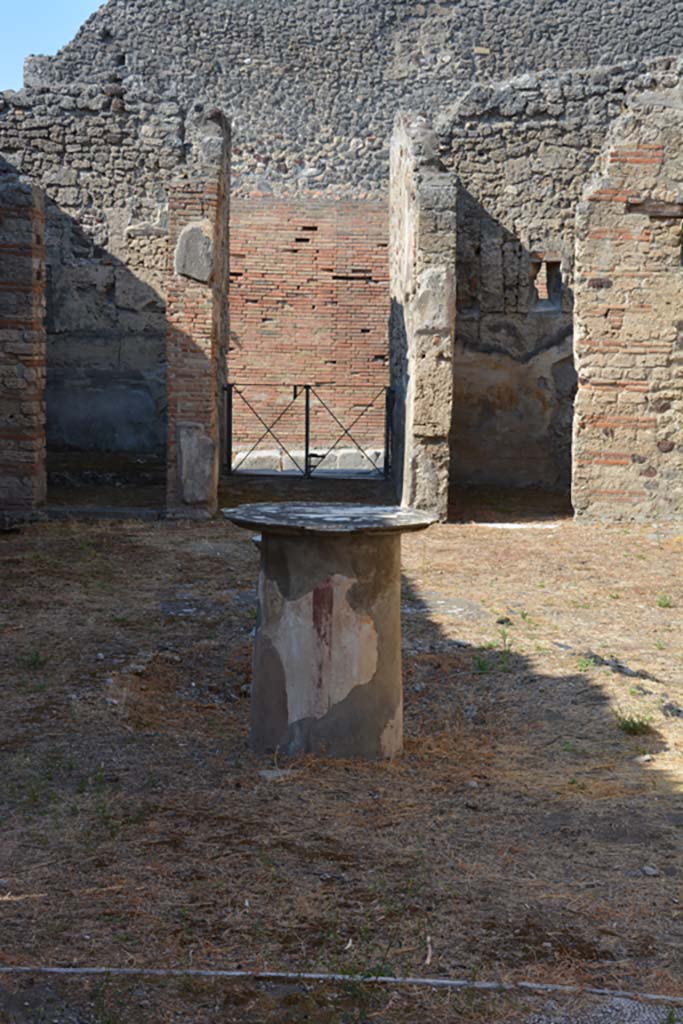
VI.14.40 Pompeii. September 2019. Looking west across atrium
towards entrance doorway.
Foto Annette Haug, ERC
Grant 681269 DÉCOR
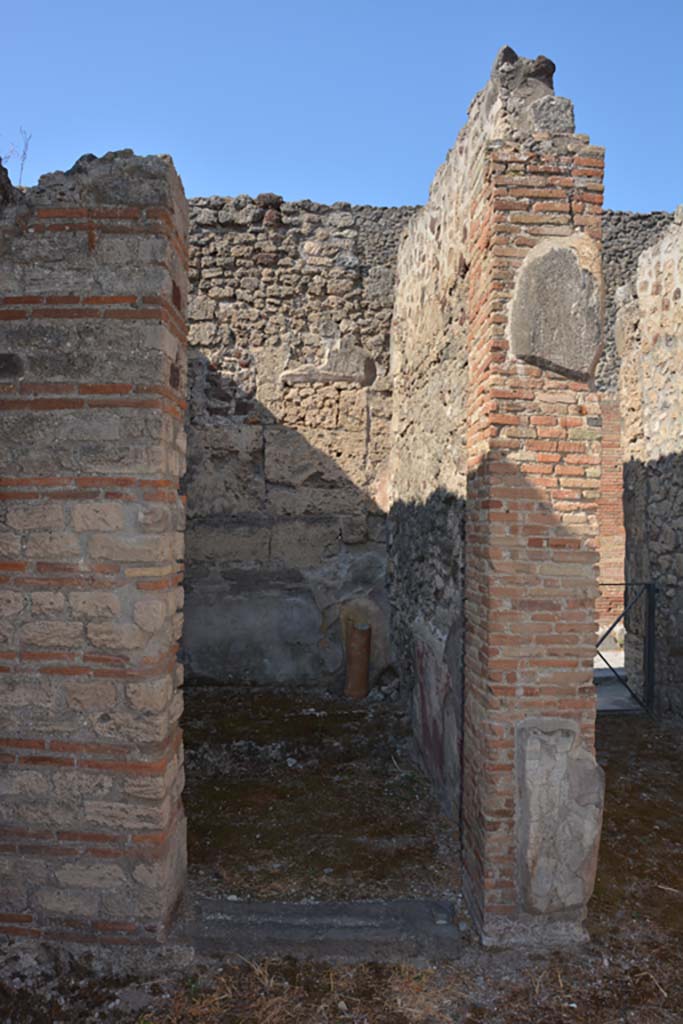
VI.14.40 Pompeii. September 2019.
Doorway to cubiculum on south side of entrance corridor.
Foto Annette Haug, ERC
Grant 681269 DÉCOR
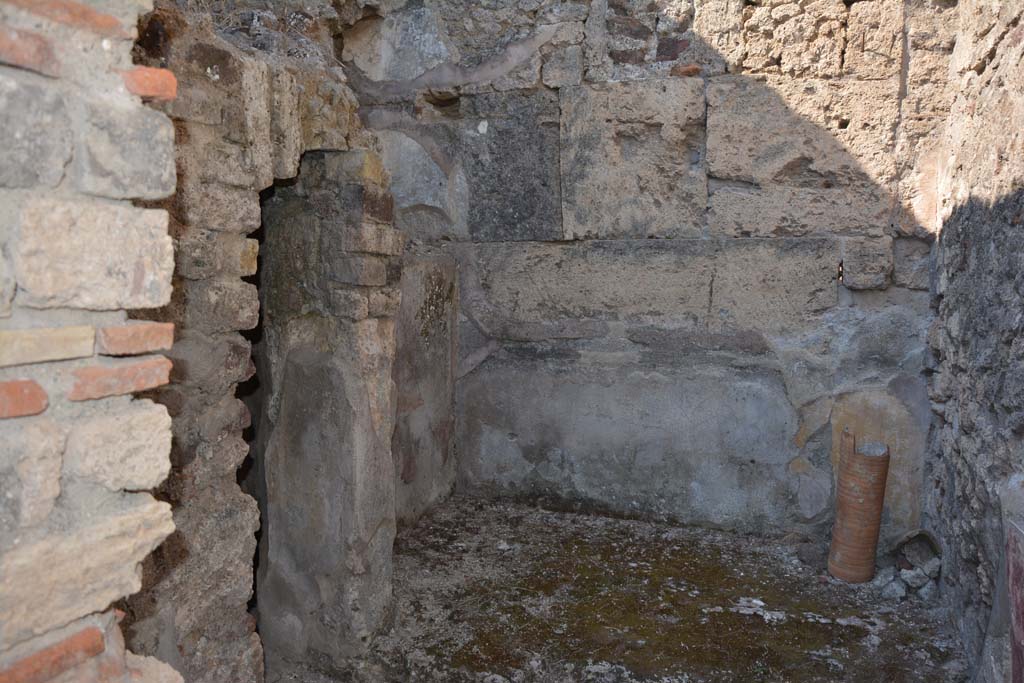
VI.14.40 Pompeii. September 2019.
Looking west towards alcove in cubiculum, with flooring of
cocciopesto scattered white limestone flakes.
Foto Annette Haug, ERC
Grant 681269 DÉCOR
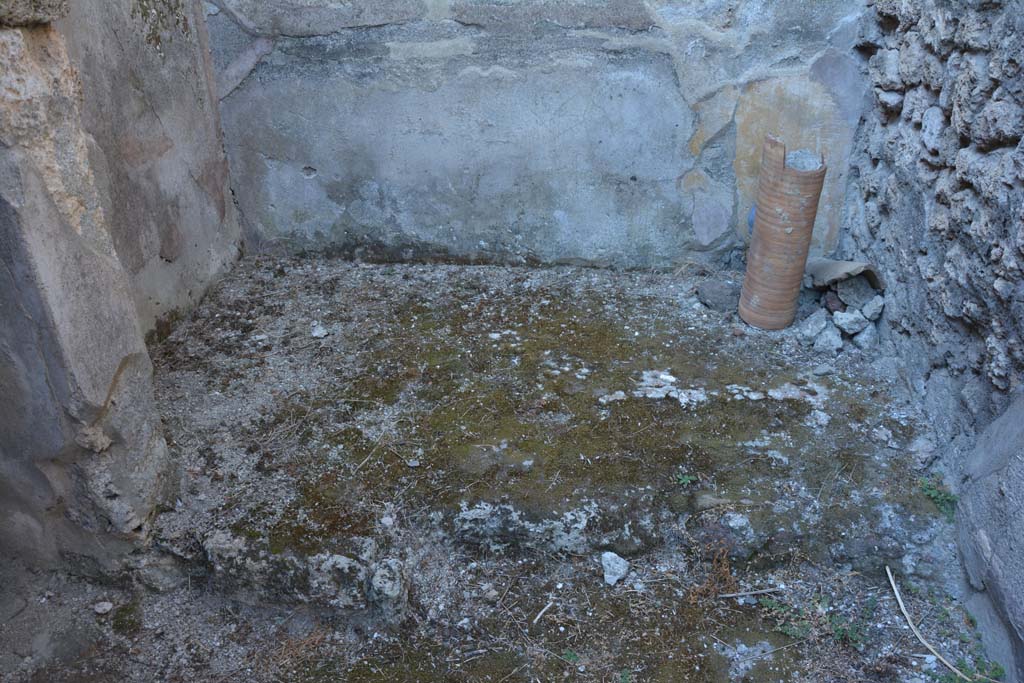
VI.14.40 Pompeii. September 2019. Looking west across flooring
towards alcove in cubiculum on south side of entrance corridor.
Foto Annette Haug, ERC
Grant 681269 DÉCOR
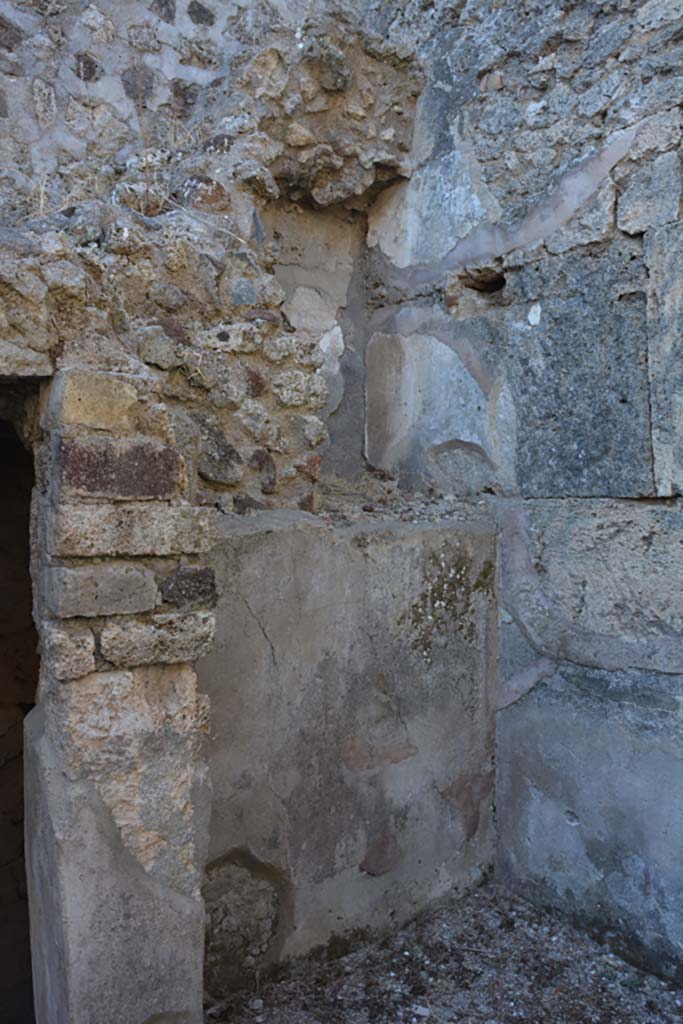
VI.14.40 Pompeii. September 2019. South wall in south-west corner
of alcove.
Foto Annette Haug, ERC
Grant 681269 DÉCOR
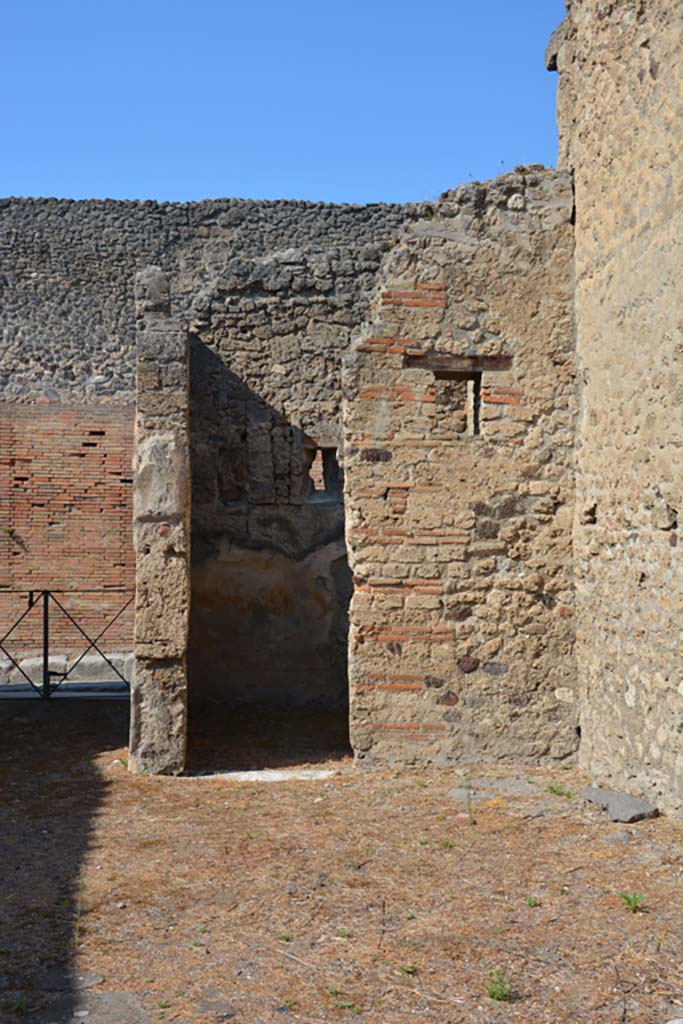
VI.14.40 Pompeii. September 2019. Doorway to cubiculum on north
side of entrance doorway.
Foto Annette Haug, ERC
Grant 681269 DÉCOR
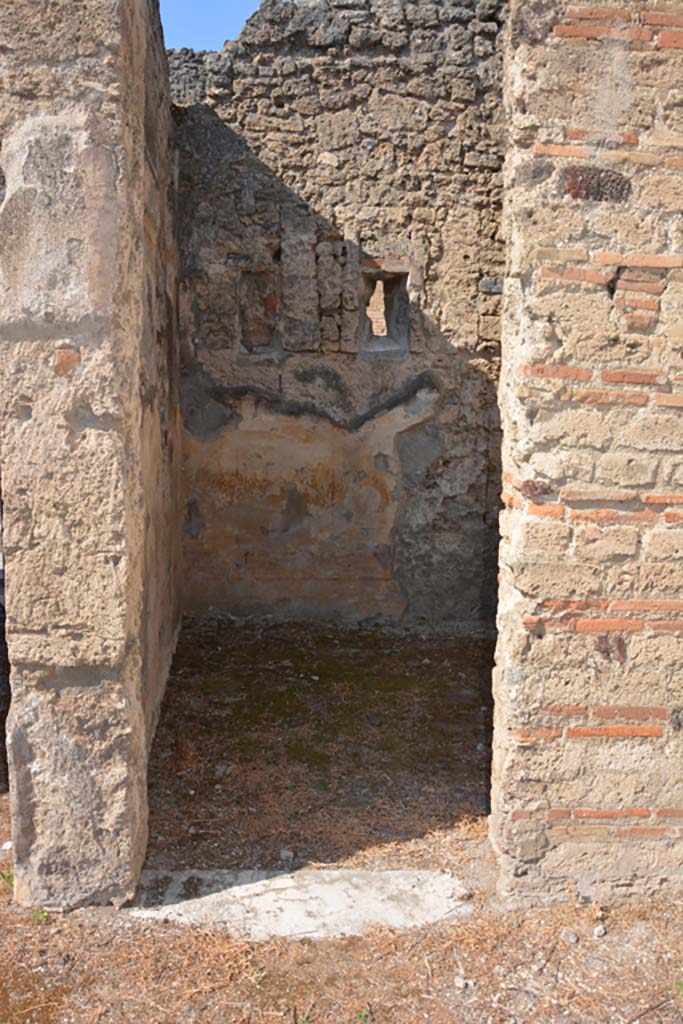
VI.14.40 Pompeii. September 2019. Looking west through doorway
into cubiculum.
Foto Annette Haug, ERC
Grant 681269 DÉCOR
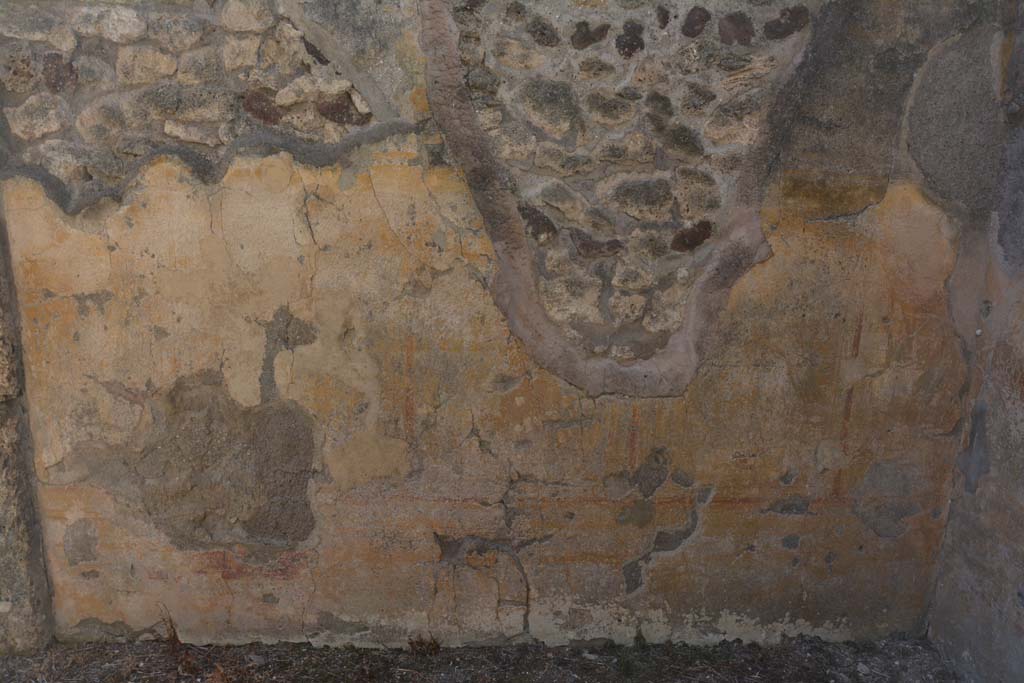
VI.14.40 Pompeii. September 2019. South wall of cubiculum.
Foto Annette Haug, ERC
Grant 681269 DÉCOR
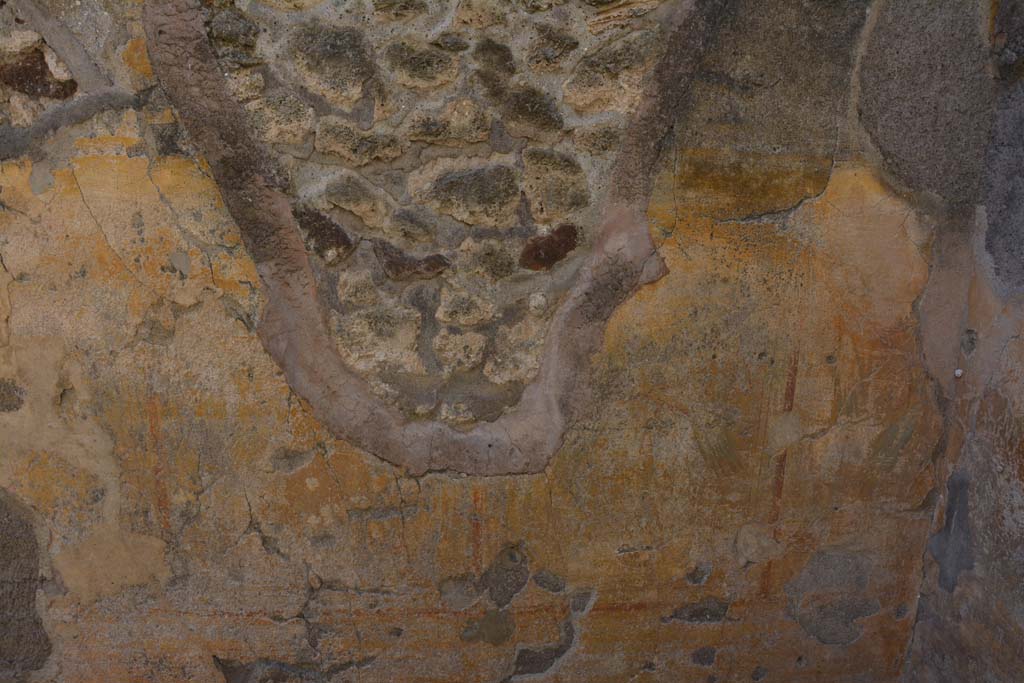
VI.14.40 Pompeii. September 2019. Detail from lower south wall.
Foto Annette Haug, ERC
Grant 681269 DÉCOR
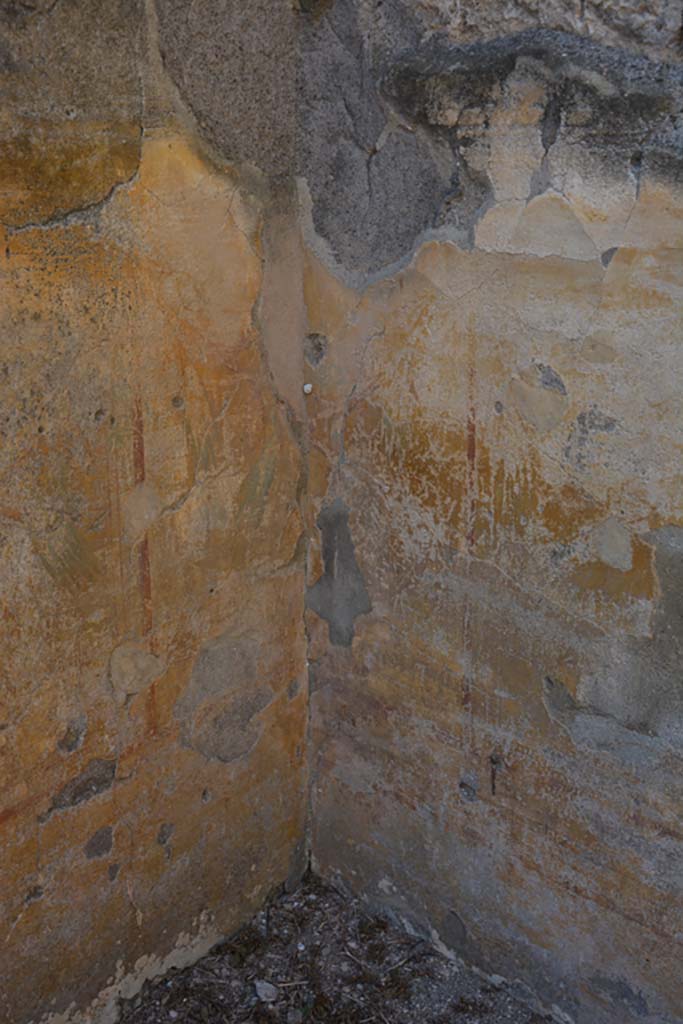
VI.14.40 Pompeii. September 2019. Lower south-west corner of
cubiculum
Foto Annette Haug, ERC
Grant 681269 DÉCOR
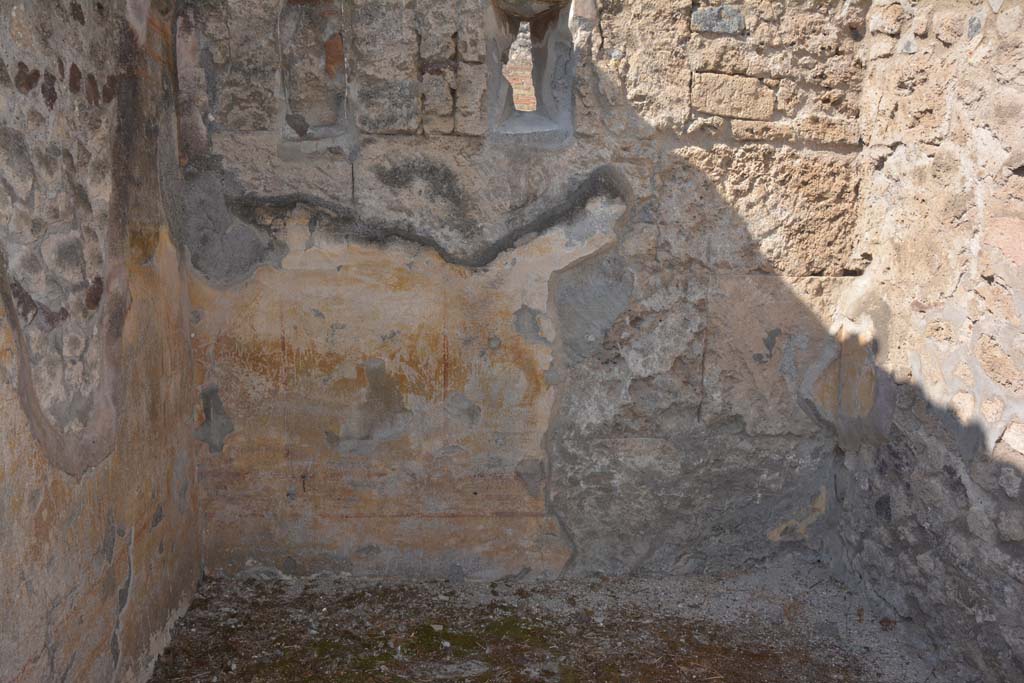
VI.14.40 Pompeii. September 2019. Looking towards lower west wall
of cubiculum.
Foto Annette Haug, ERC
Grant 681269 DÉCOR
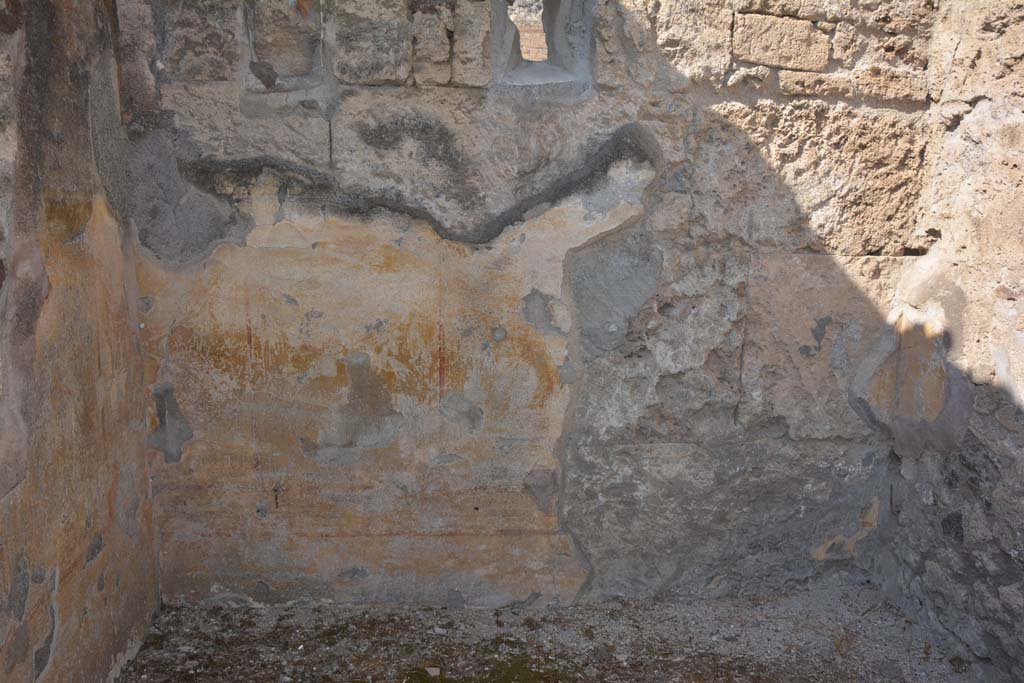
VI.14.40 Pompeii. September 2019. Detail from lower west wall.
Foto Annette Haug, ERC
Grant 681269 DÉCOR
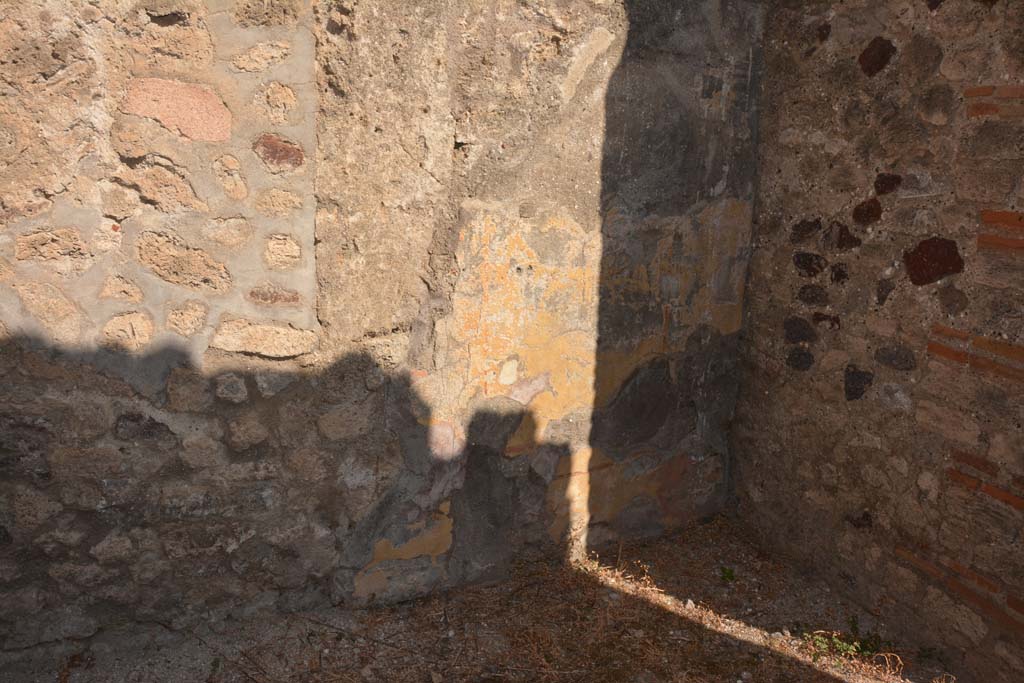
VI.14.40 Pompeii. September 2019. Looking towards north wall and
north-east corner of cubiculum.
Foto Annette Haug, ERC
Grant 681269 DÉCOR
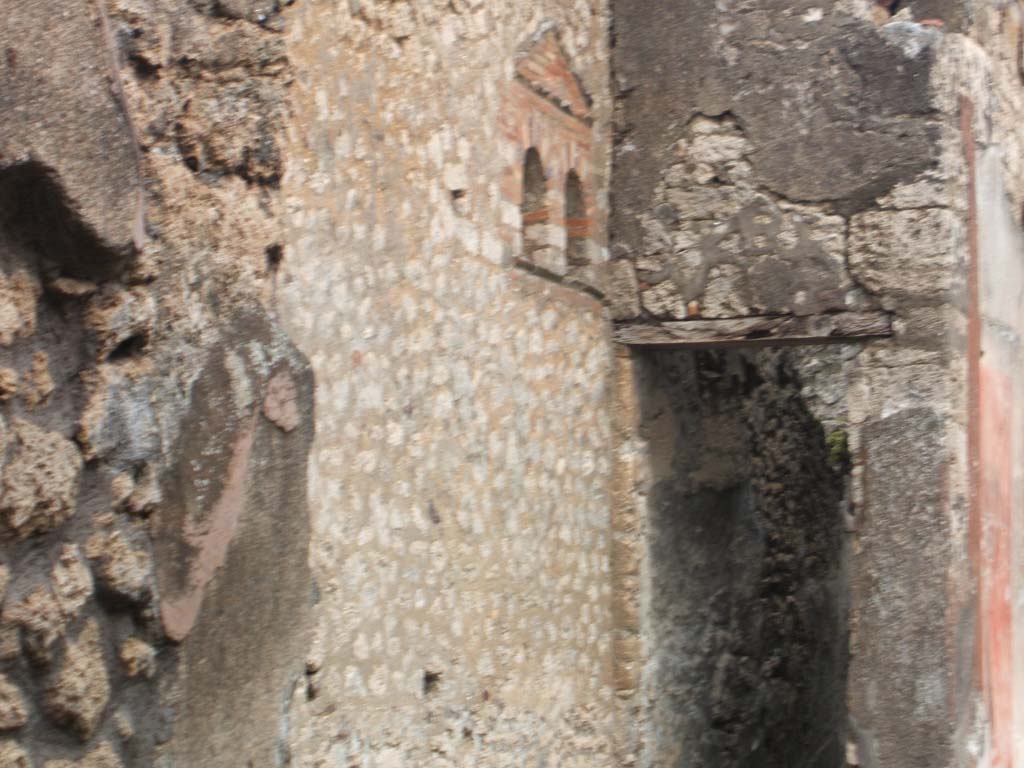
VI.14.40 Pompeii. December 2004. North wall of atrium, with doorway in north-east corner to corridor to rear.
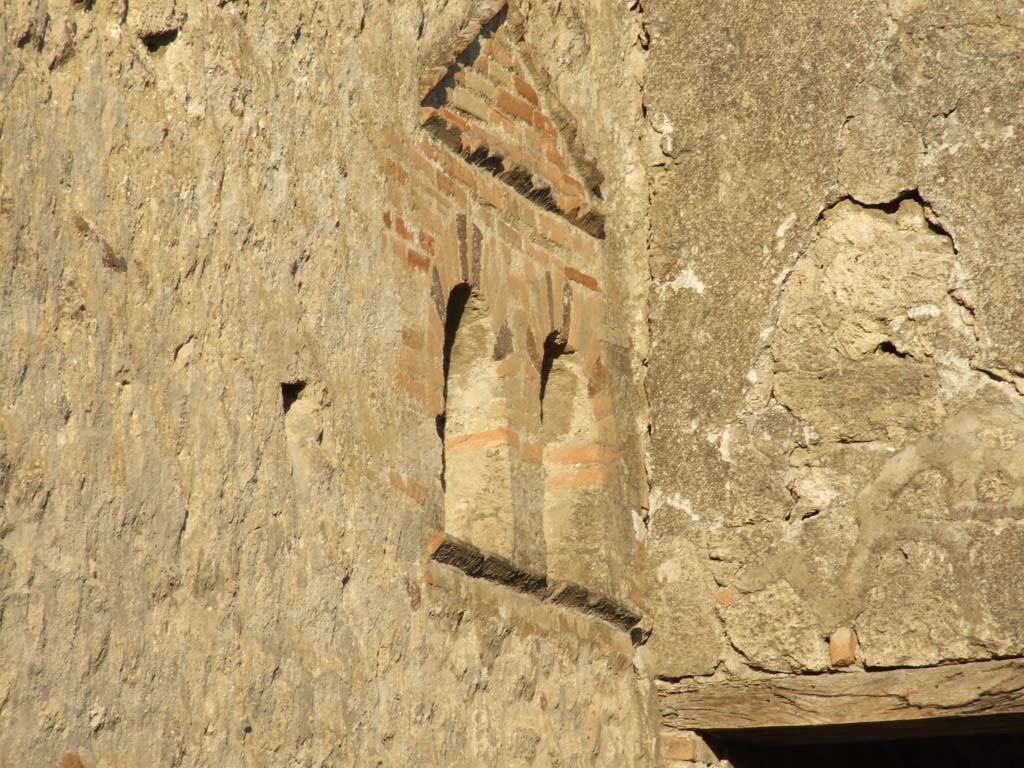
VI.14.40 Pompeii. December 2007. North wall of atrium, with double niche.
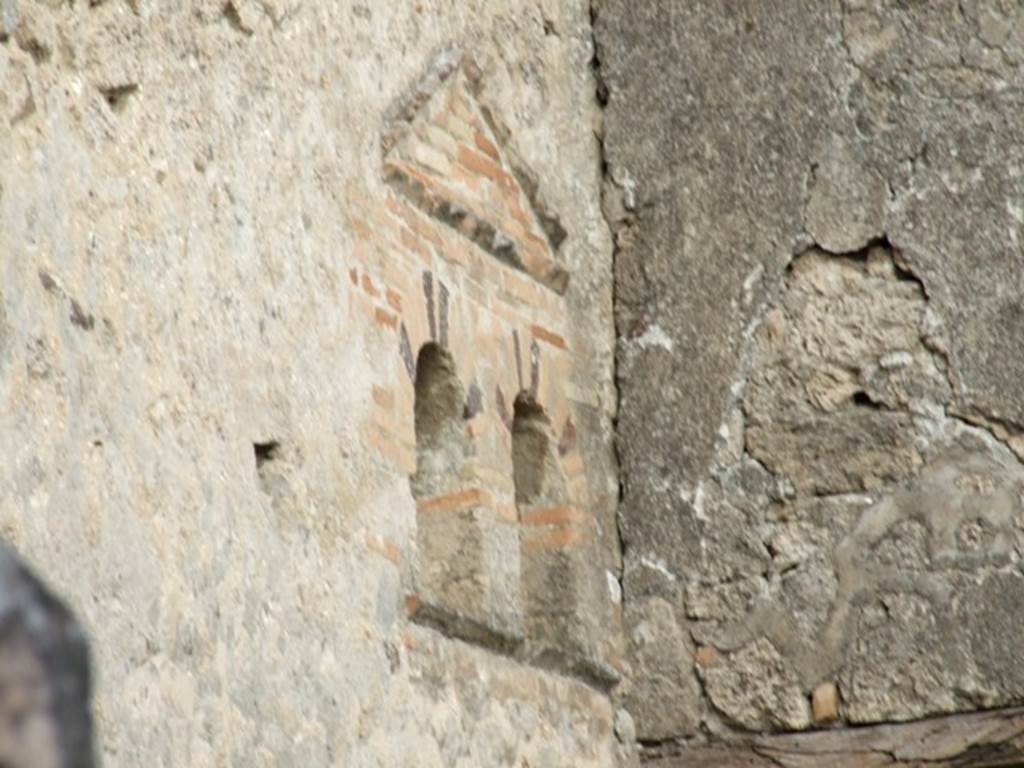
VI.14.40 Pompeii. December 2007. Double niche on north wall of atrium.
According to Boyce, at the extreme east end of the north wall of the atrium, are two vaulted niches, side by side.
Above them both is a single pediment formed of projecting tiles.
See Boyce G. K., 1937. Corpus of the Lararia of Pompeii. Rome: MAAR 14. (p. 54, no.207, with Pl.4, 6).
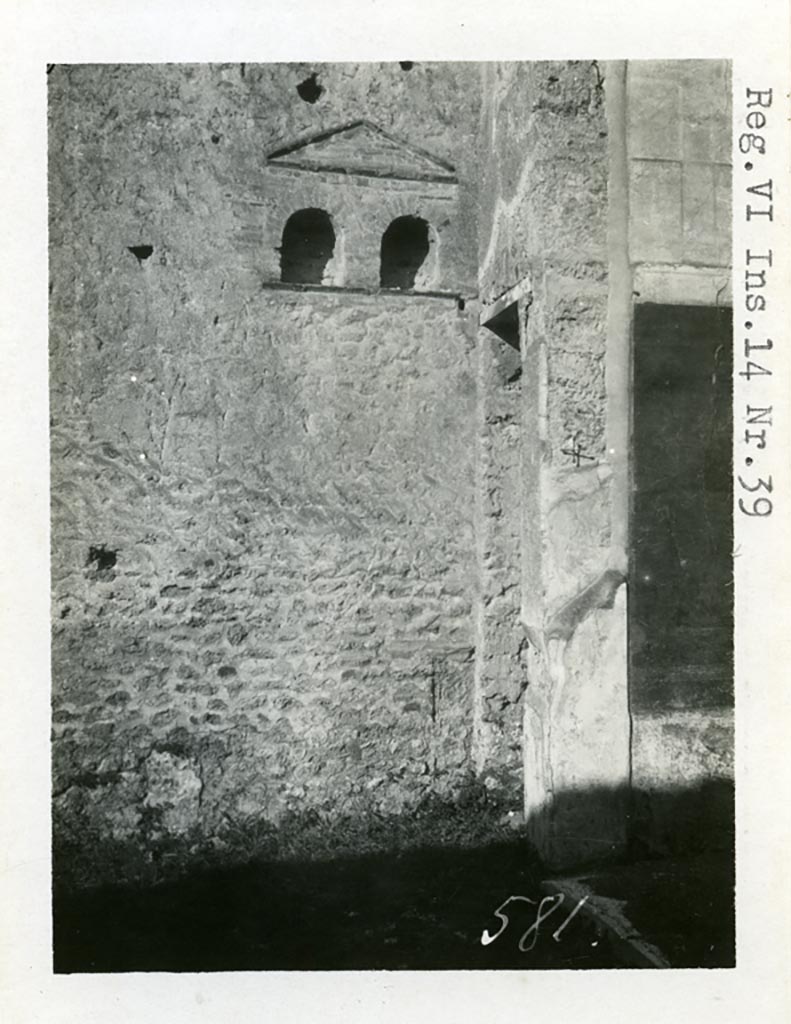
VI.14.40 Pompeii but numbered as VI.14.39. Pre-1937-39. Double niche on north wall of atrium.
Photo courtesy of American Academy in Rome, Photographic Archive. Warsher collection no. 581.
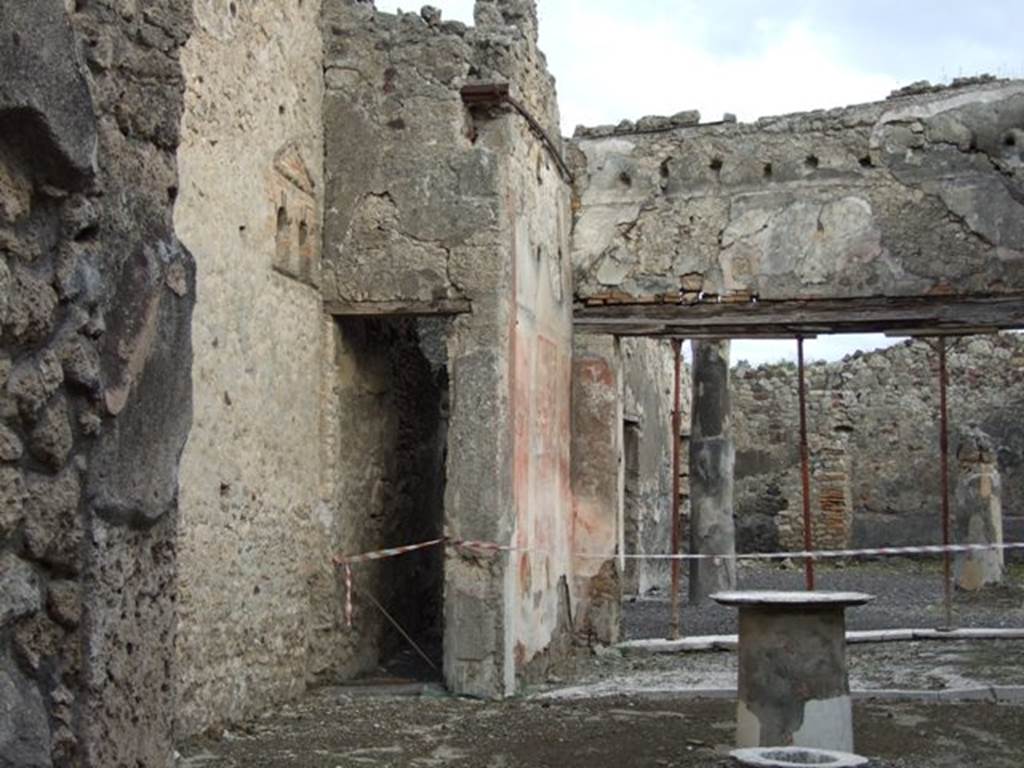
VI.14.40 Pompeii. December 2007. Doorway to corridor on north side of tablinum, which leads to rear rooms and garden.
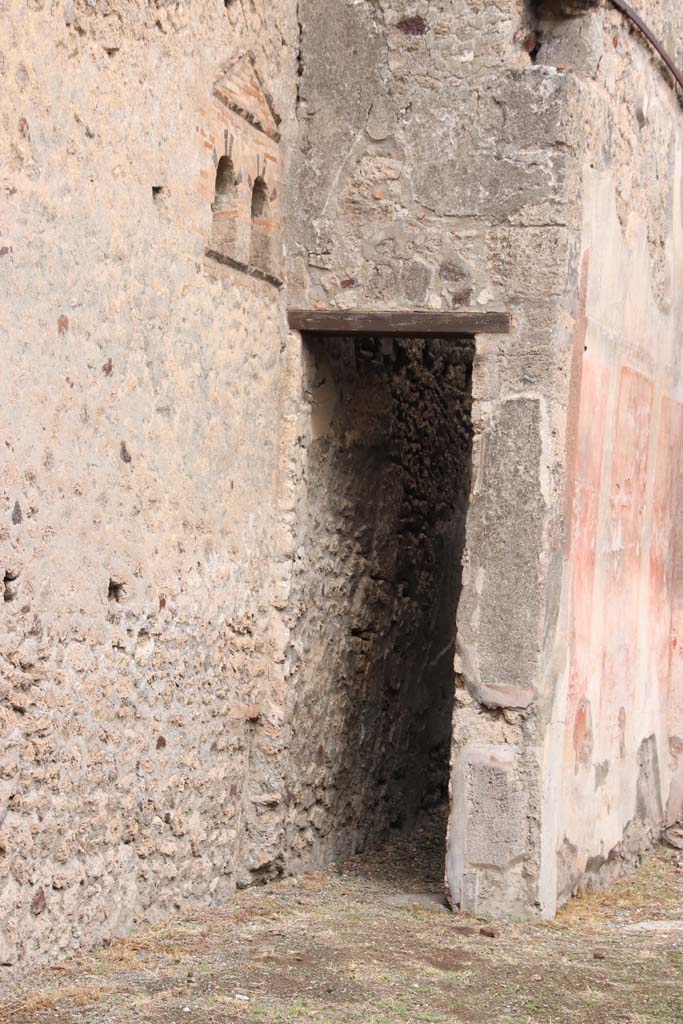
VI.14.40 Pompeii. October 2020.
Doorway to corridor leading to rear rooms and garden, and north wall of tablinum.
Photo
courtesy of Klaus Heese.
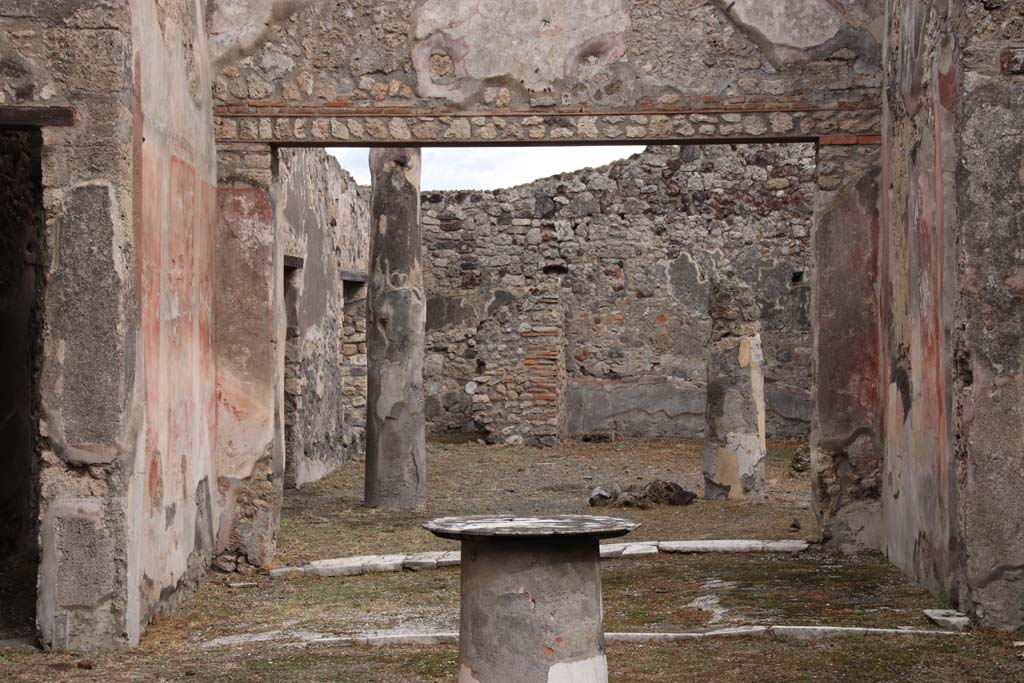
VI.14.40 Pompeii. October 2020. Looking east towards tablinum and peristyle. Photo courtesy of Klaus Heese.
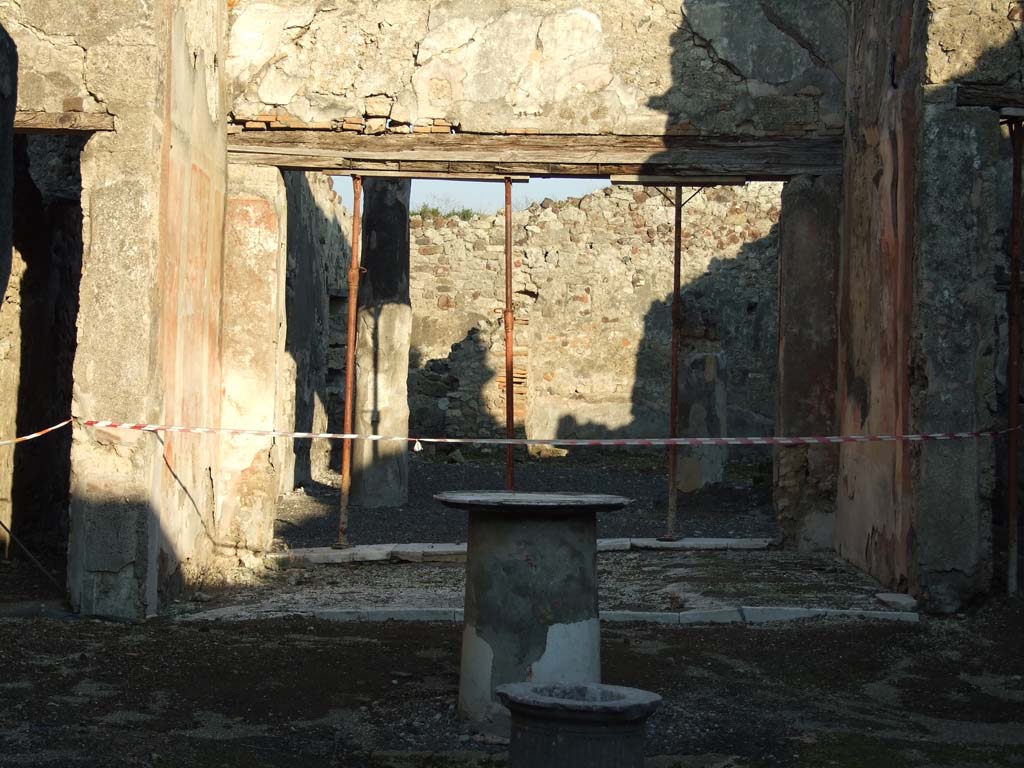
VI.14.40 Pompeii. December 2007. Looking east towards tablinum from atrium.
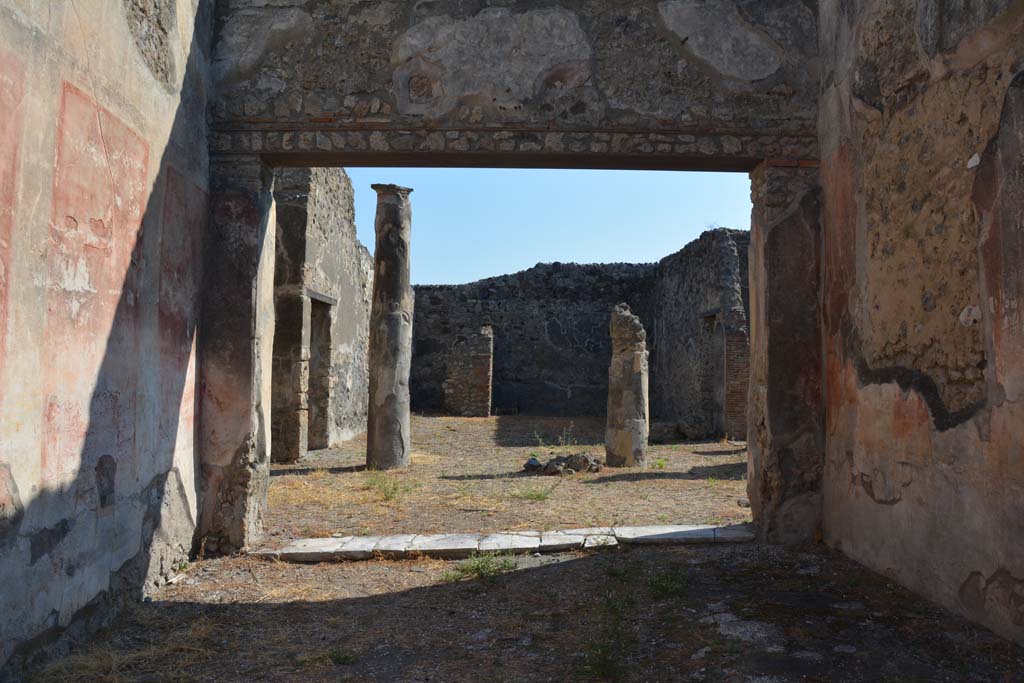
VI.14.40 Pompeii. September 2019. Looking east across tablinum
towards peristyle.
Foto Annette Haug, ERC
Grant 681269 DÉCOR
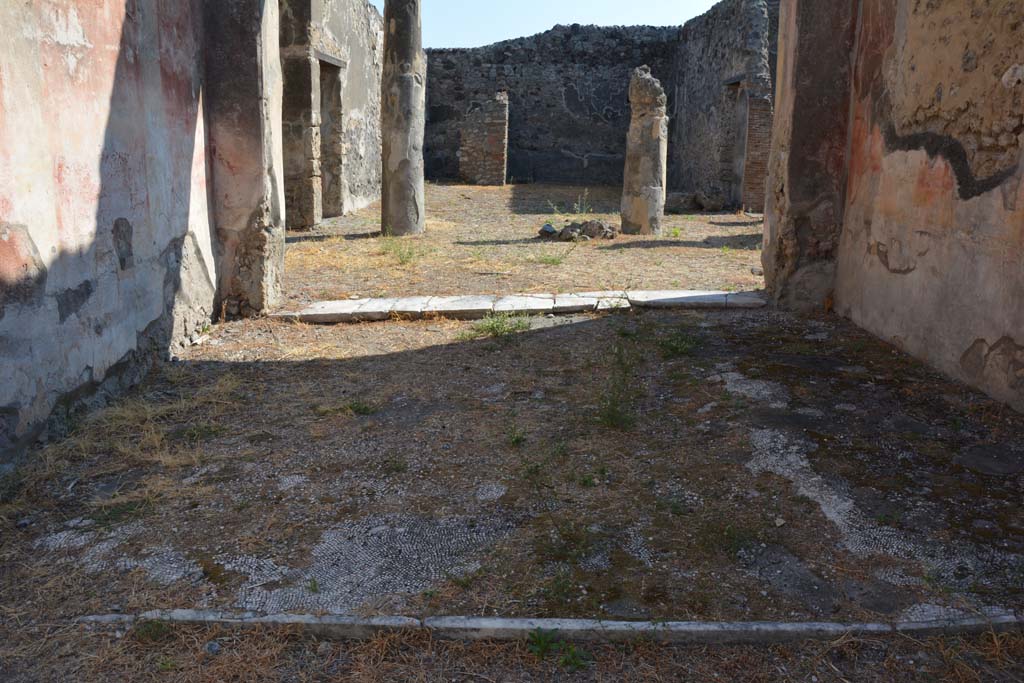
VI.14.40 Pompeii. September 2019. Looking east across flooring in tablinum.
Foto Annette Haug, ERC
Grant 681269 DÉCOR
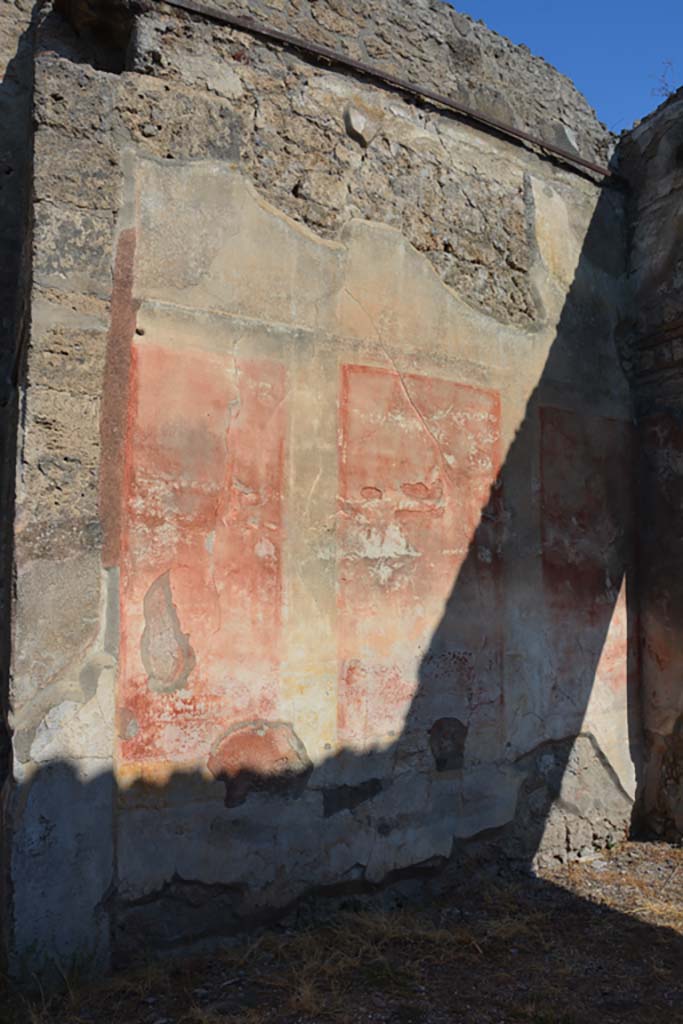
VI.14.40 Pompeii. September 2019. North wall of tablinum.
Foto Annette Haug, ERC
Grant 681269 DÉCOR
According to Kuivalainen –
In the tablinum “The zoccolo/dado was black with floral motifs, the central zone was red with panels divided with bands, and between the fields were candelabra with twining plants. The upper zone had a white background.
On the upper north wall, but nearly destroyed, was a painted youth (a young, almost naked Bacchus) …… On the other walls Apollo and Ceres were painted.”
Description: A youth standing with his weight on his left foot, wearing yellow boots, a red cloak covering his back and forearms; a band from the right shoulder goes to the left hip. On his head is a vine wreath. In his right hand he holds a cantharus, in his left a thyrsus.
Comments: Young almost naked Bacchus. The band is rare, the boots or high footwear are more common.
See Kuivalainen, I., 2021. The Portrayal of Pompeian Bacchus. Commentationes Humanarum Litterarum 140. Helsinki: Finnish Society of Sciences and Letters, p.97, B5.
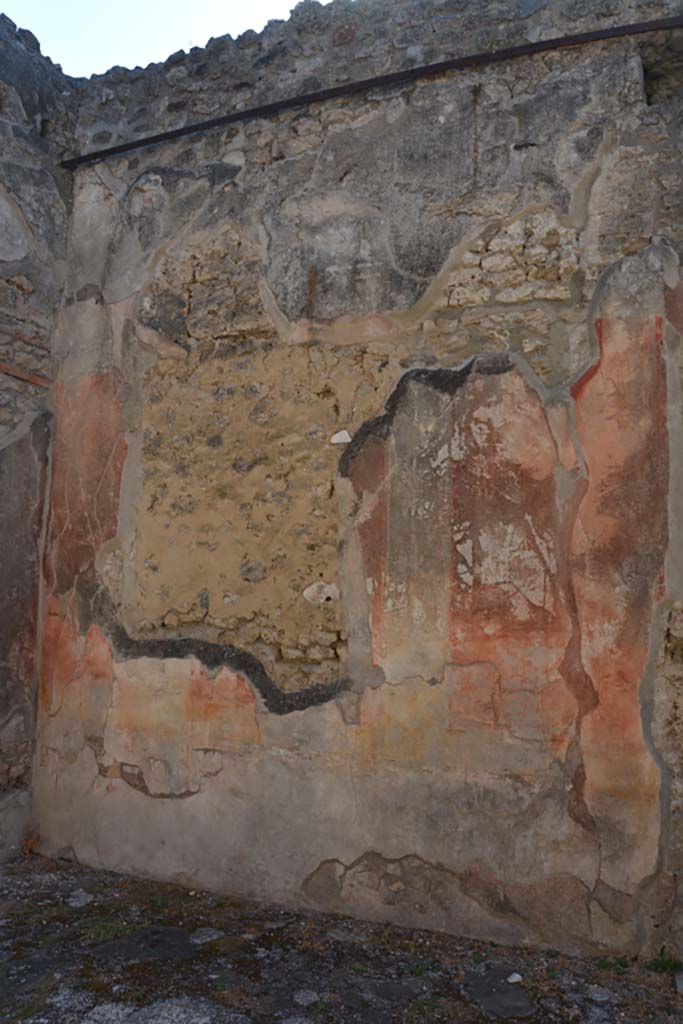
VI.14.40 Pompeii. September 2019. South wall of tablinum.
Foto Annette Haug, ERC
Grant 681269 DÉCOR
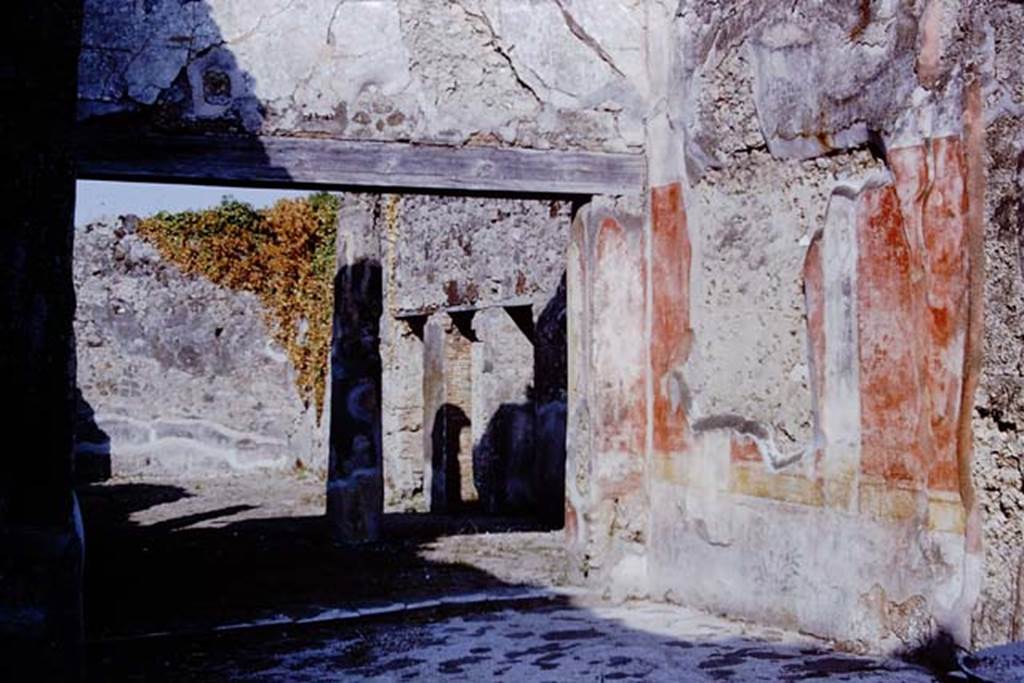
VI.14.40 Pompeii. 1966. Looking south-east through tablinum towards south wall and peristyle area. Photo by Stanley A. Jashemski.
Source: The Wilhelmina and Stanley A. Jashemski archive in the University of Maryland Library, Special Collections (See collection page) and made available under the Creative Commons Attribution-Non Commercial License v.4. See Licence and use details.
J66f0251
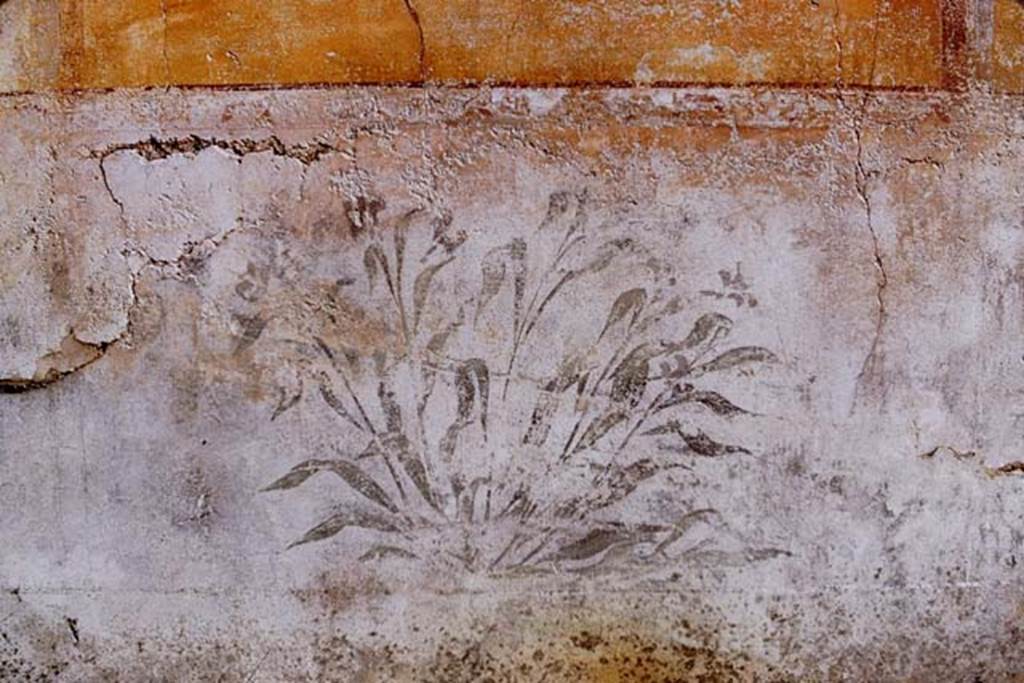
VI.14.40 Pompeii. 1966. Painted plant on south wall of tablinum. Photo by Stanley A. Jashemski.
Source: The Wilhelmina and Stanley A. Jashemski archive in the University of Maryland Library, Special Collections (See collection page) and made available under the Creative Commons Attribution-Non Commercial License v.4. See Licence and use details.
J66f0250
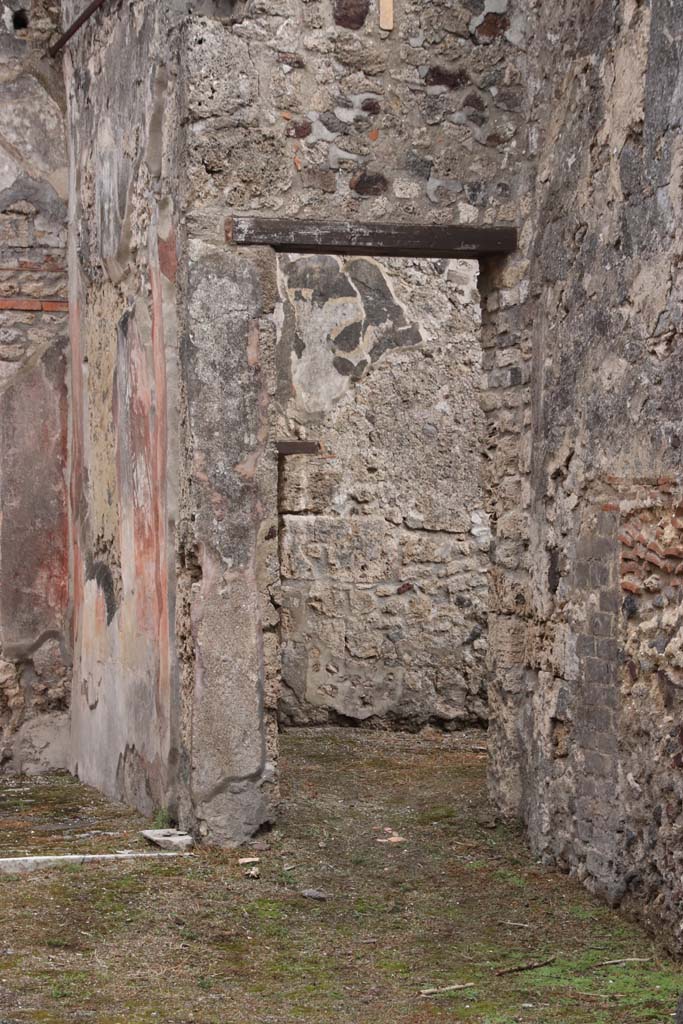
VI.14.40 Pompeii. October 2020.
Looking towards south wall of tablinum and doorway to oecus. Photo courtesy of Klaus Heese.
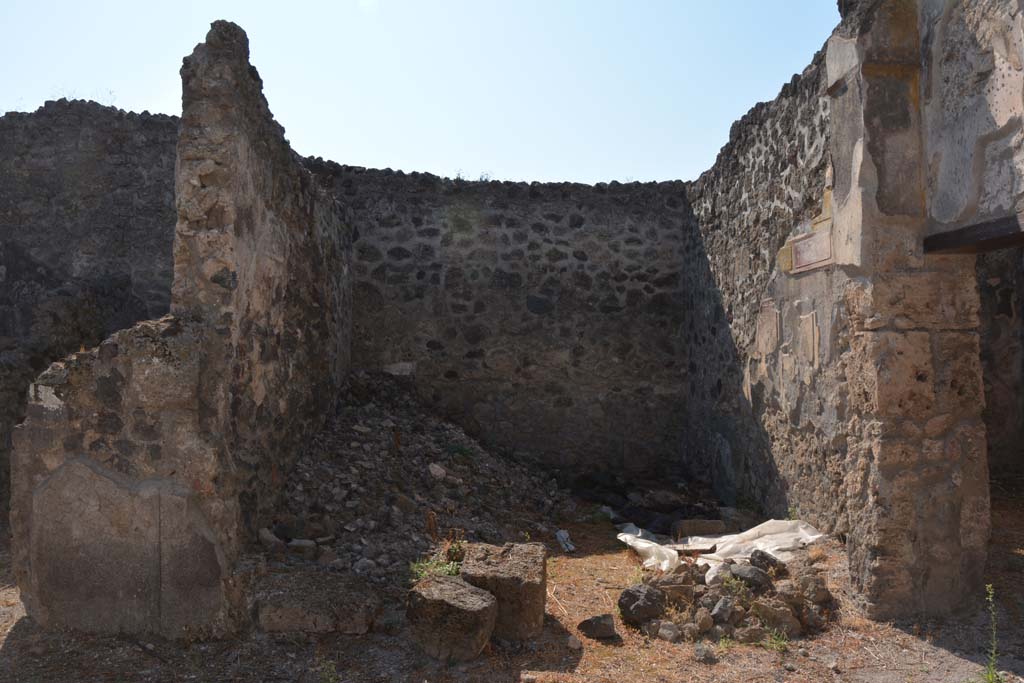
VI.14.40 Pompeii. September 2019. Looking towards exedra on south
side of peristyle.
Foto Annette
Haug, ERC Grant 681269 DÉCOR
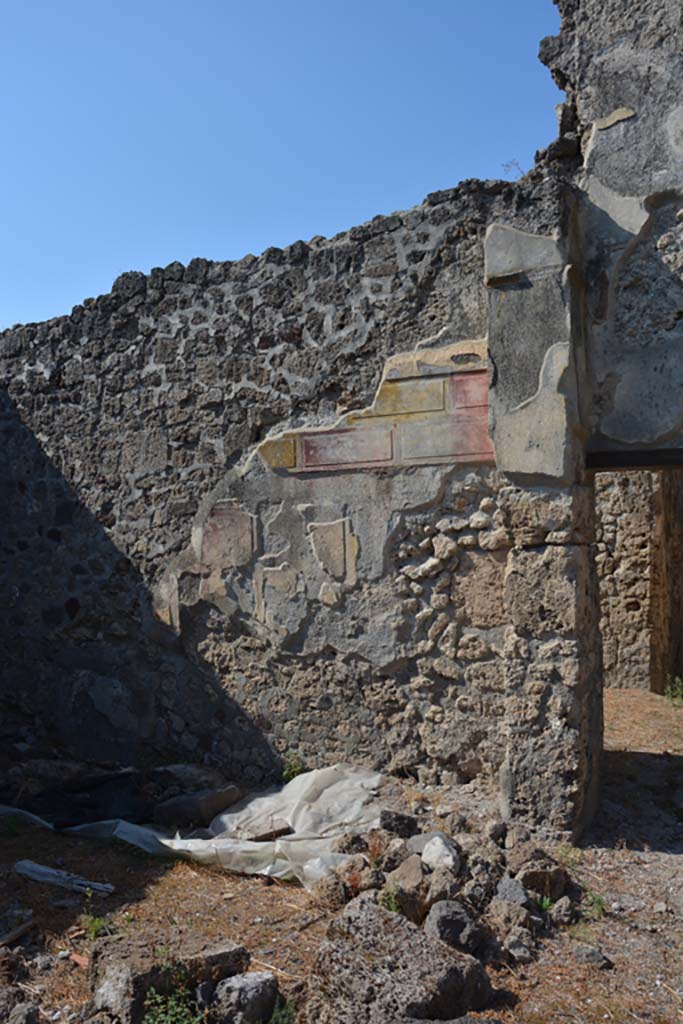
VI.14.40
Pompeii. September 2019. Looking towards west wall of exedra.
Foto Annette Haug, ERC Grant 681269 DÉCOR
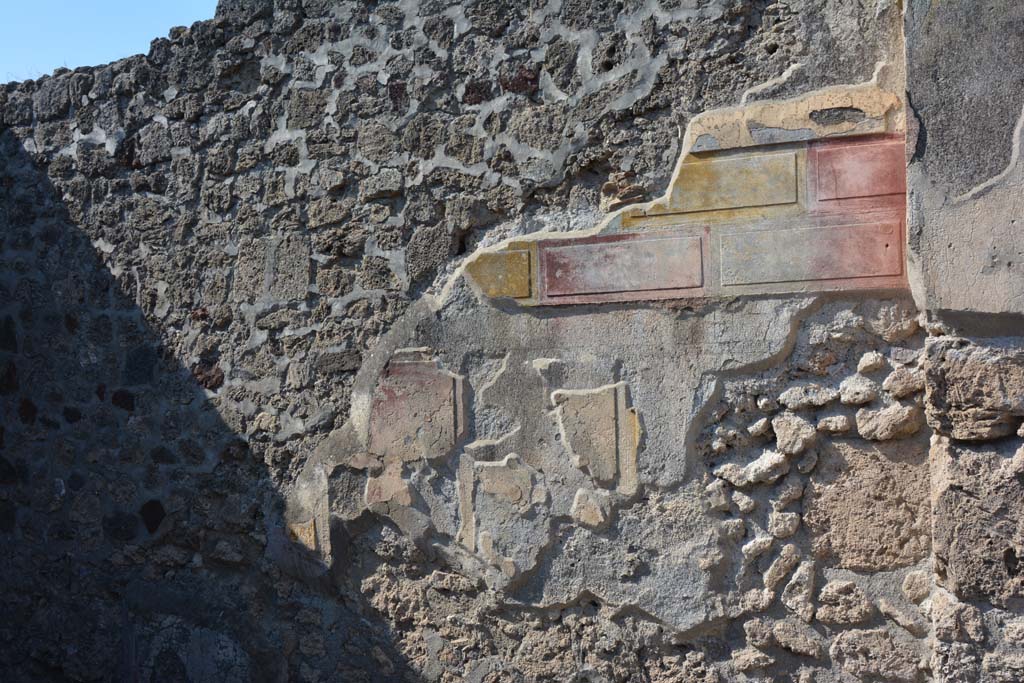
VI.14.40 Pompeii. September 2019. Detail of I Style decoration on
west wall of exedra.
Foto Annette
Haug, ERC Grant 681269 DÉCOR
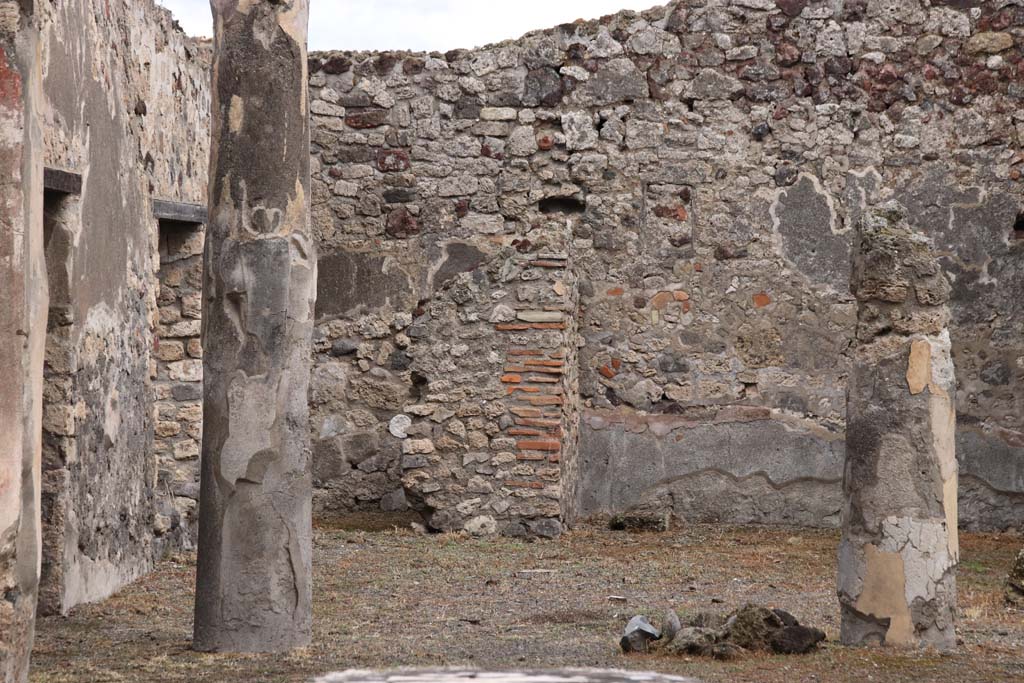
VI.14.40 Pompeii. October 2020.
Peristyle on east side of tablinum. Photo courtesy of Klaus Heese.
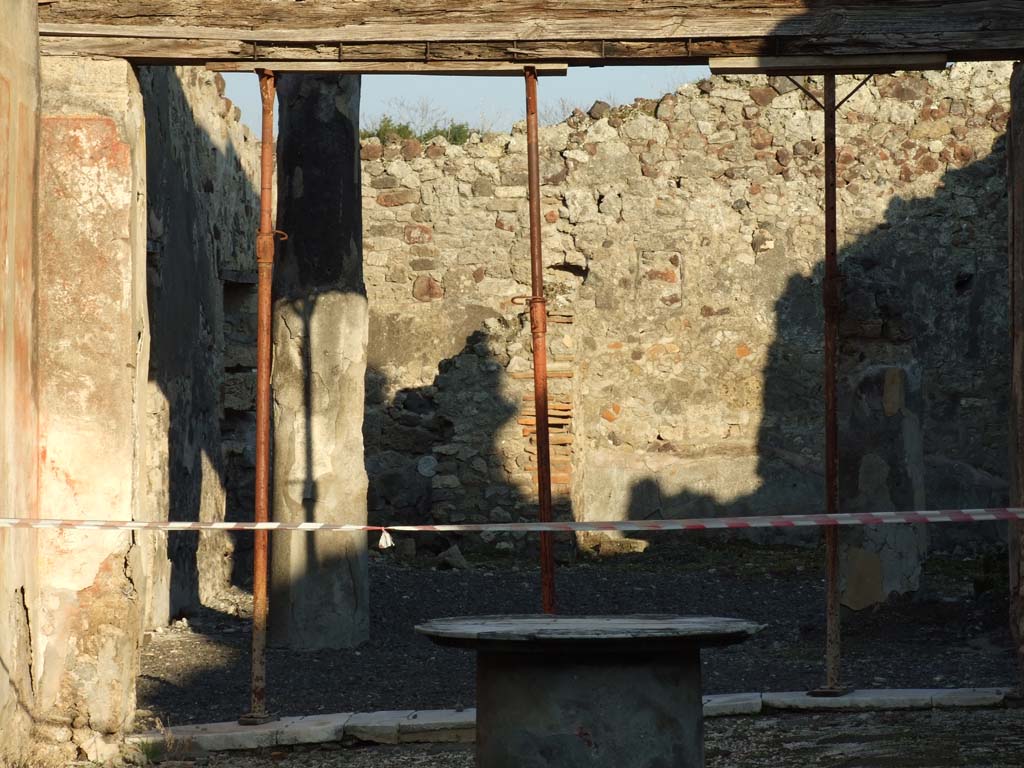
VI.14.40 Pompeii. December 2007. Peristyle on east side of tablinum.
According to Jashemski, the peristyle garden at the rear of the tablinum was visible from the entrance doorway.
It was enclosed on most of the north and part of the south sides by narrow passageways.
On the west side by a wide portico supported by two stuccoed columns, yellow to a height of I.86m, red above.
The side passages were covered by overhanging roofs from the adjacent rooms.
The triclinium on the left had a large window looking into the garden.
On the right of the garden, a statuette of a small boy holding a little dog, was found.
The front legs of the dog were missing, as were also the legs of the boy from the knees down.
A rectangular base with a portion of the feet was found.
Now in Naples Archaeological Museum, inventory number 120511.
See Jashemski, W. F., 1993. The Gardens of Pompeii, Volume II: Appendices. New York: Caratzas. (p.151)
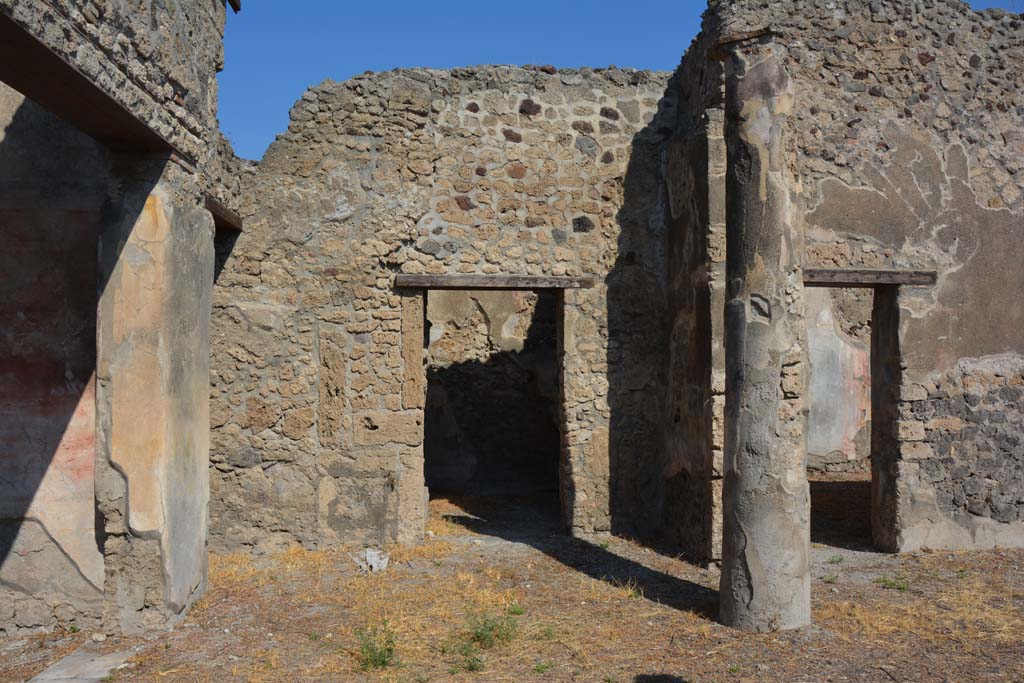
VI.14.40 Pompeii. September 2019.
Looking north across west portico towards doorways to room with
vaulted ceiling, in centre and large triclinium, on right.
Foto Annette Haug, ERC
Grant 681269 DÉCOR
![VI.14.40 Pompeii. 1878. Drawing of graffiti found in the north-west corner of the peristyle.
According to Presuhn these showed the greetings
QUIIINTUS ROMANUS VA and QUINTUS ROMANUS FELIX.
He suggested that Quintus Romanus may have been a gladiator.
See Presuhn E., 1878. Pompeji: Die Neuesten Ausgrabungen von 1874 bis 1878. Leipzig: Weigel. (V, plate III, p. 6).
The Epigraphik-Datenbank Clauss/Slaby (See www.manfredclauss.de) records
Qu{e}intus Romanus
sua [CIL IV 4563]
Quintus Romanus Felix [CIL IV 4565]](6%2014%2040_files/image064.jpg)
VI.14.40 Pompeii. 1878. Drawing of graffiti found in the north-west corner of the peristyle.
According to Presuhn these showed the greetings
QUIIINTUS ROMANUS
VA and QUINTUS ROMANUS FELIX.
He suggested that Quintus Romanus may have been a gladiator.
See Presuhn E., 1878. Pompeji: Die Neuesten Ausgrabungen von 1874 bis 1878. Leipzig: Weigel. (V, plate III, p. 6).
The Epigraphik-Datenbank Clauss/Slaby (See www.manfredclauss.de) records
Qu{e}intus
Romanus
sua [CIL IV 4563]
Quintus Romanus
Felix [CIL IV 4565]
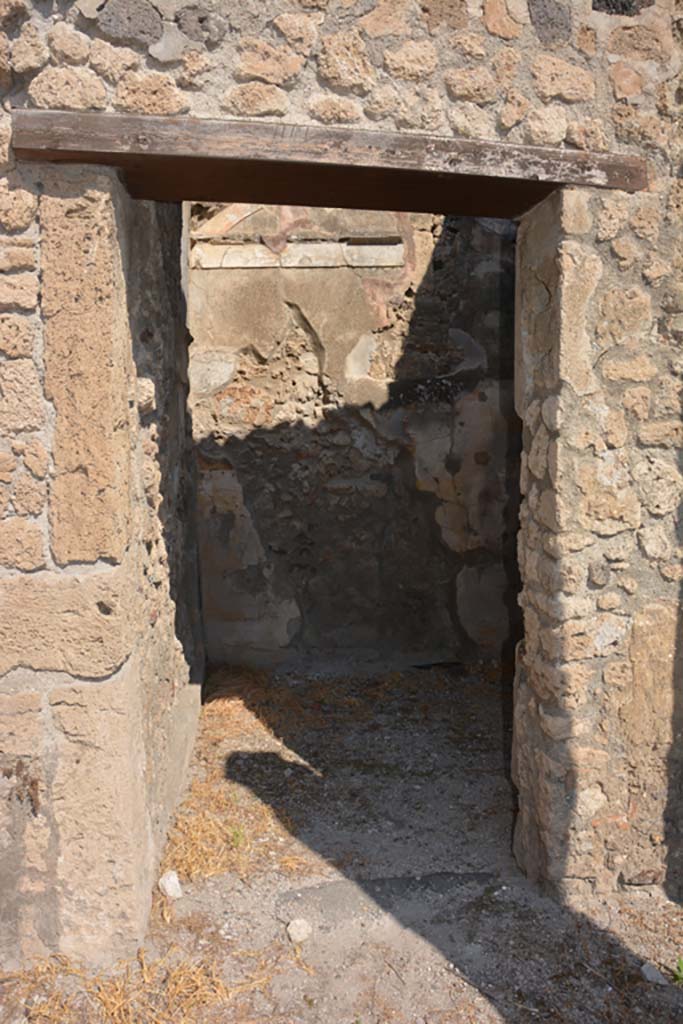
VI.14.40 Pompeii. September 2019.
Looking north through doorway into room with vaulted ceiling.
Foto Annette Haug, ERC Grant 681269 DÉCOR
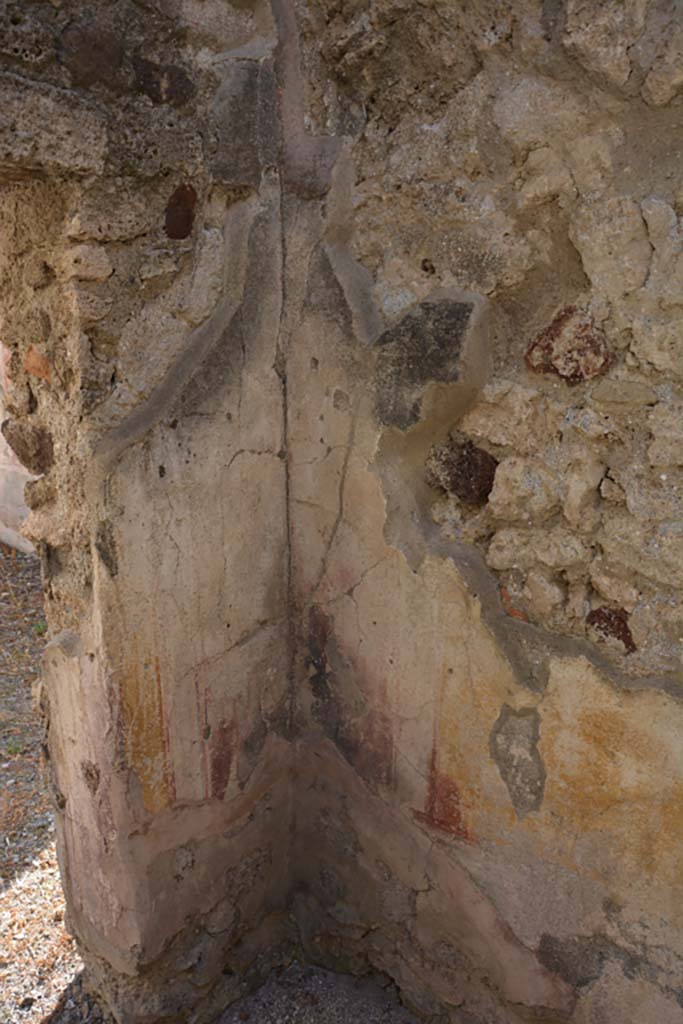
VI.14.40 Pompeii. September 2019. South-west corner with remaining
painted decoration.
Foto Annette Haug, ERC
Grant 681269 DÉCOR
According to PPM –
The zoccolo would have been painted yellow, the middle zone was purple, and the upper part would have been polychrome.
See Carratelli,
G. P., 1990-2003. Pompei: Pitture e Mosaici. Vol. V. Roma: Istituto
della enciclopedia italiana, (p.401).
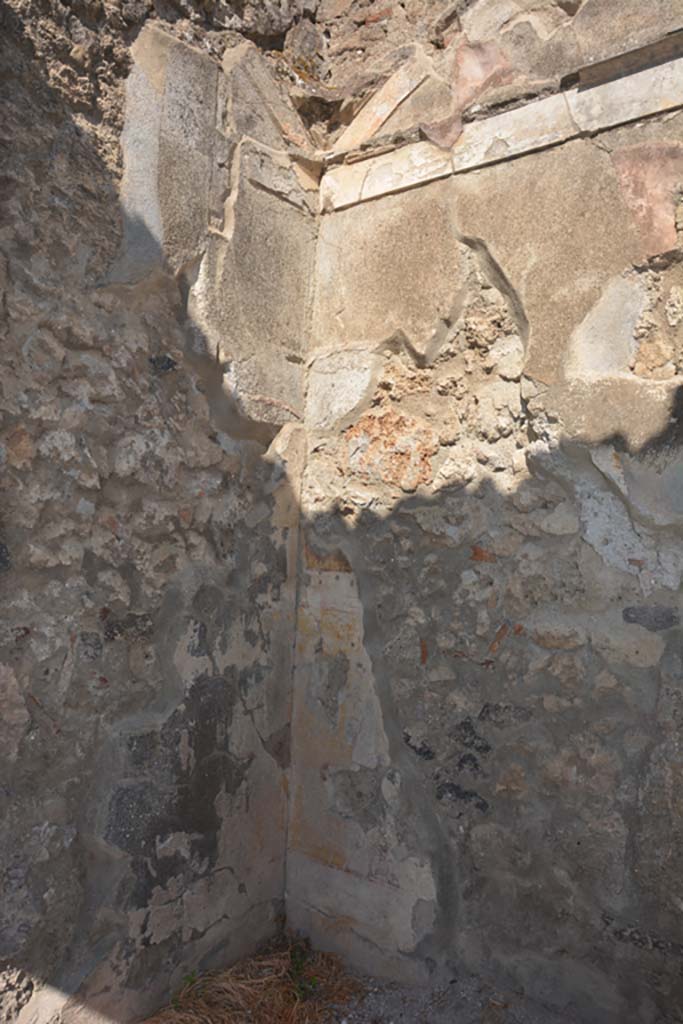
VI.14.40 Pompeii. September 2019. North-west corner
Foto Annette Haug, ERC
Grant 681269 DÉCOR
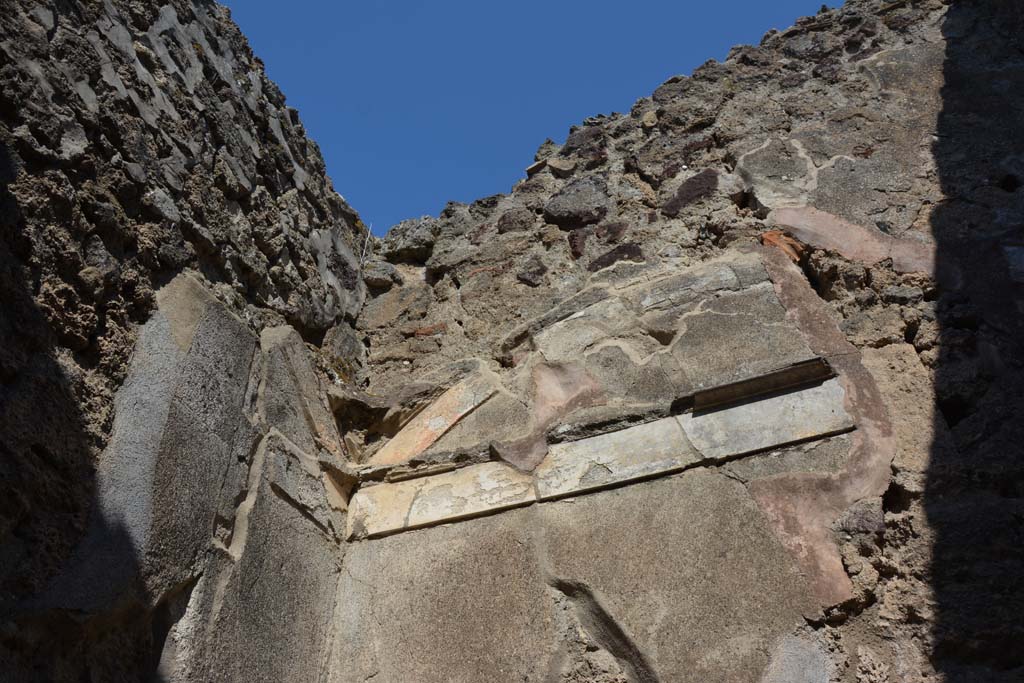
VI.14.40 Pompeii. September 2019. Upper north-west corner and
north wall.
Foto Annette Haug, ERC
Grant 681269 DÉCOR
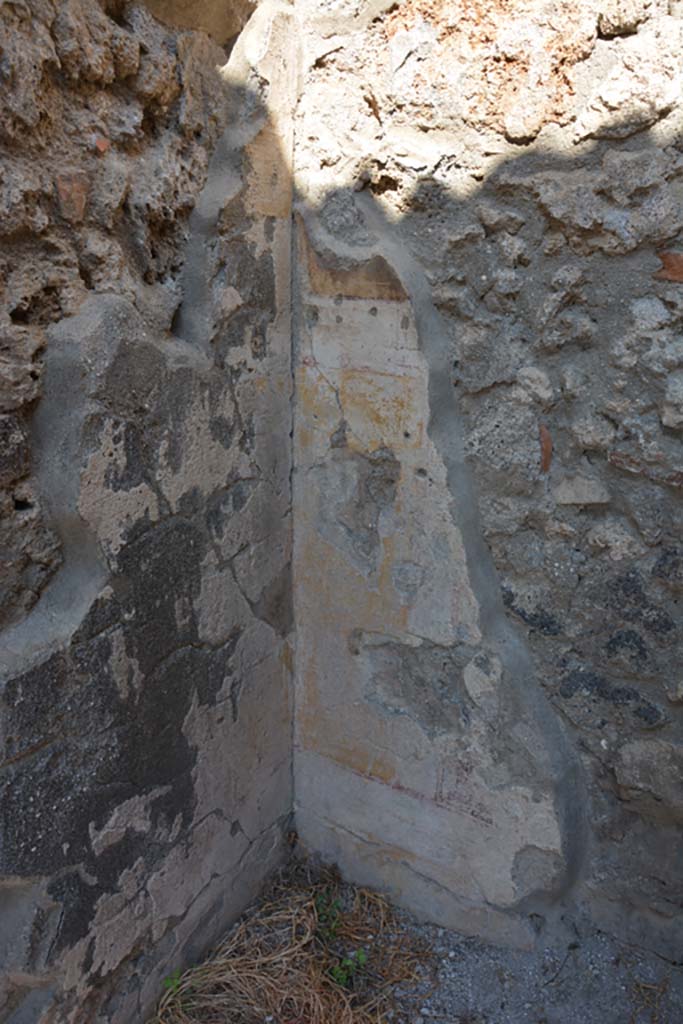
VI.14.40 Pompeii. September 2019.
Lower north-west corner with detail from north wall.
Foto Annette Haug, ERC Grant 681269 DÉCOR
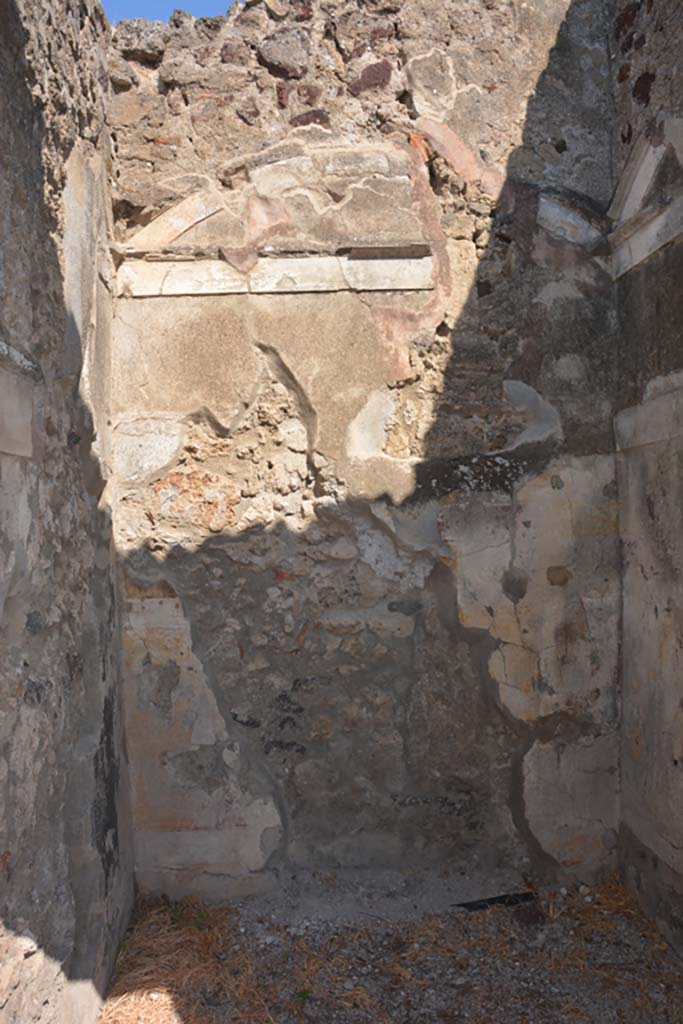
VI.14.40 Pompeii. September 2019. Looking towards north wall.
Foto Annette Haug, ERC
Grant 681269 DÉCOR
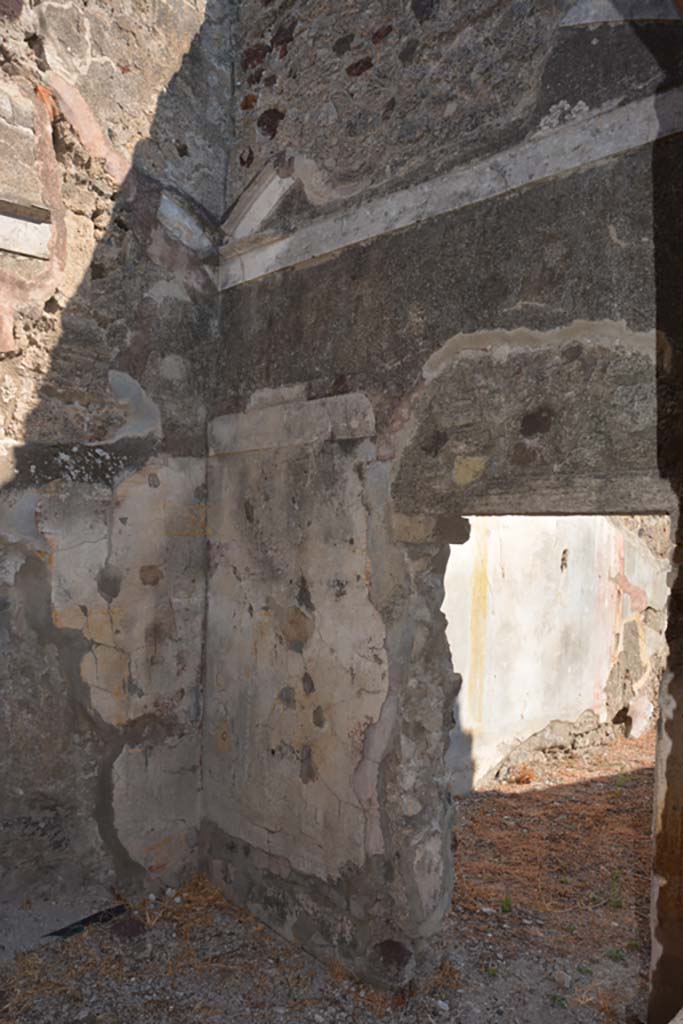
VI.14.40 Pompeii. September 2019.
North-east corner with east wall and doorway into large
triclinium.
Foto Annette Haug, ERC
Grant 681269 DÉCOR
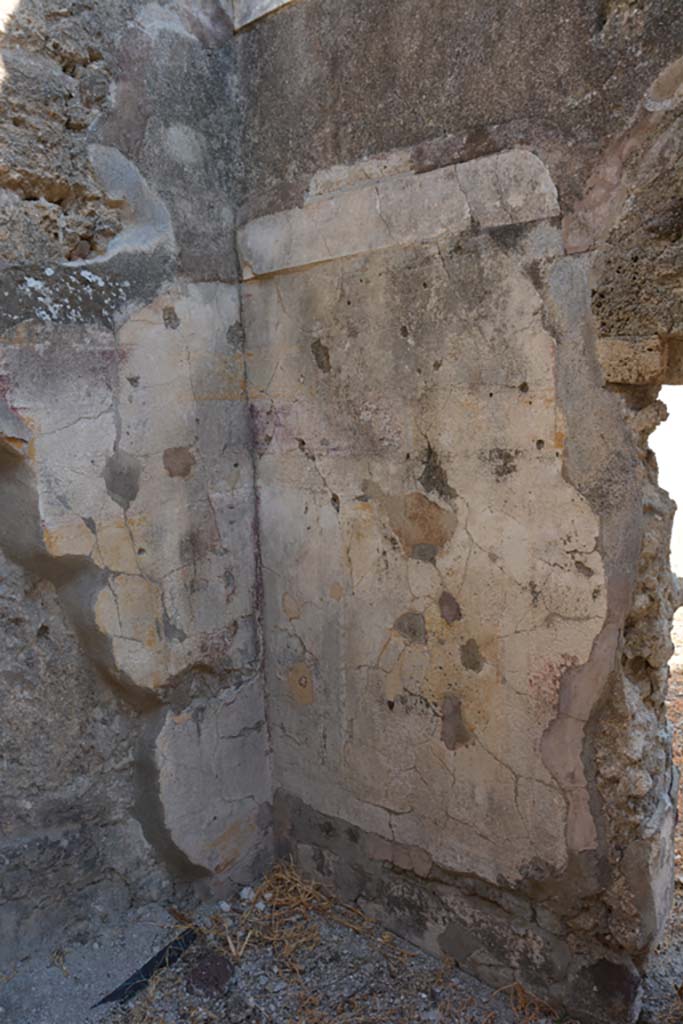
VI.14.40 Pompeii. September 2019. Detail from lower north-east
corner.
Foto Annette Haug, ERC
Grant 681269 DÉCOR
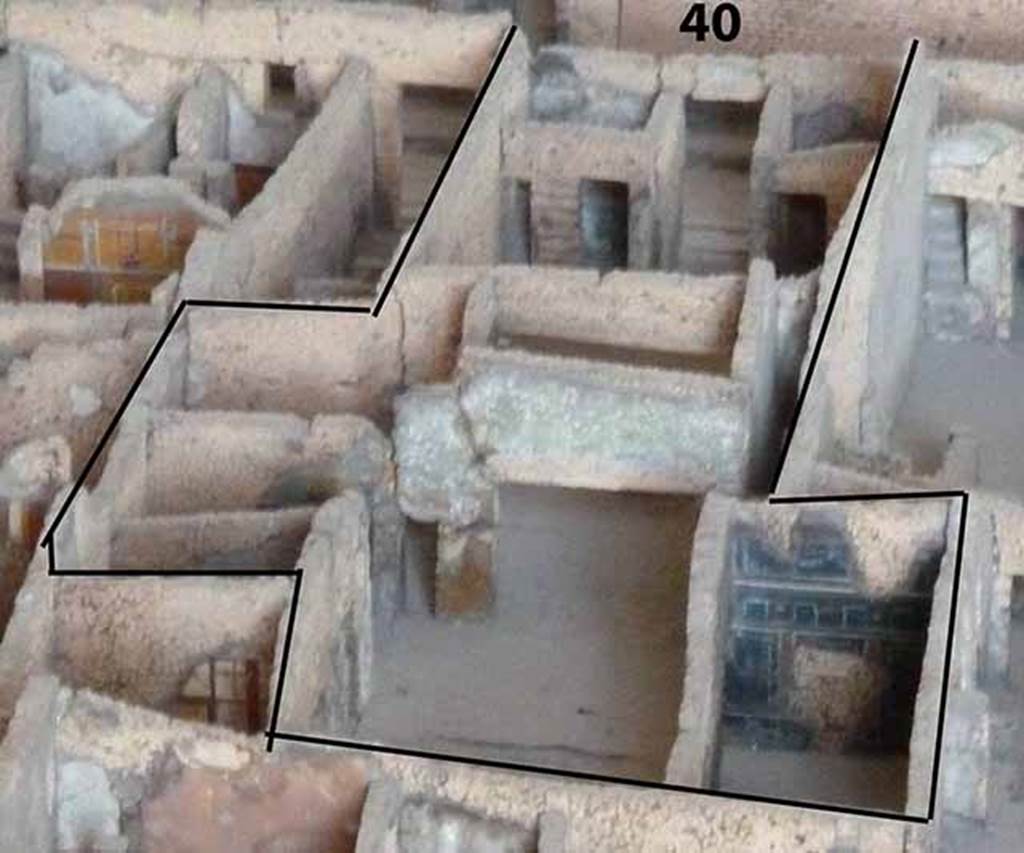
VI.14.40 Pompeii. Looking west from rear, across area on cork model in Naples Archaeological Museum.
Note the large triclinium, on the right, (north side) with the painted decoration.
According to Boyce, on the south side of the peristyle beside the doorway to the kitchen, was found a fragmentary lararium painting, of which only the left side was preserved. A yellow serpent with red crest coiled above a flaming altar.
The entire painting was originally framed by an aedicula painted in red, within which were green garlands with red flowers stretched across the top and hanging down the sides.
See Boyce G. K., 1937. Corpus
of the Lararia of Pompeii. Rome:
MAAR 14. (p. 54, no. 208)
See Sogliano, A., 1879. Le pitture murali campane scoverte negli anni 1867-79. Napoli: (p. 18, no. 57, he described it as damaged on the right extremity).
See Giacobello, F., 2008. Larari Pompeiani: Iconografia e culto dei Lari in ambito domestico. Milano: LED Edizioni. (p. 180).
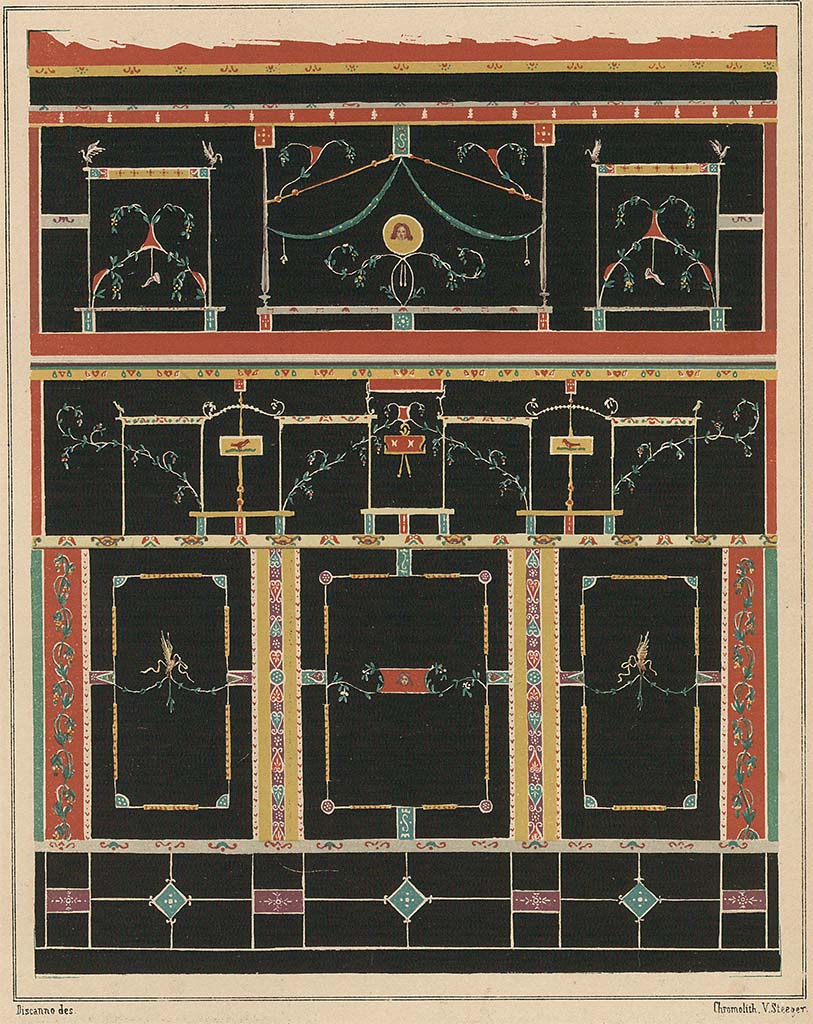
VI.14.40 Pompeii. 1878. Painting by Discanno of the black painted east wall of the large triclinium on the north side rear of the house.
See Presuhn E., 1878. Pompeji: Die Neuesten Ausgrabungen von 1874 bis 1878. Leipzig: Weigel. (Abtheilung V, plate IV, p. 6).
According to Mau, the paintings are done in the third style with a black
background; as so many times, the room is divided into two parts, an
antechamber and an internal part; the anteroom has the upper part of the wall
divided from the middle one by a simple stucco frame, probably corresponding to
the height of the decorative vault so that according to every analogy the
internal part must have been covered. The special value of the wall decoration
lies in the use made there of plant shoots represented with their natural
colors, which, conducted in beautiful lines, with few flowers and leaves,
gracefully fill the space. It seems there were no paintings.
See Bullettino dell’Instituto di Corrispondenza
Archeologica (DAIR), 1877, p. 213.
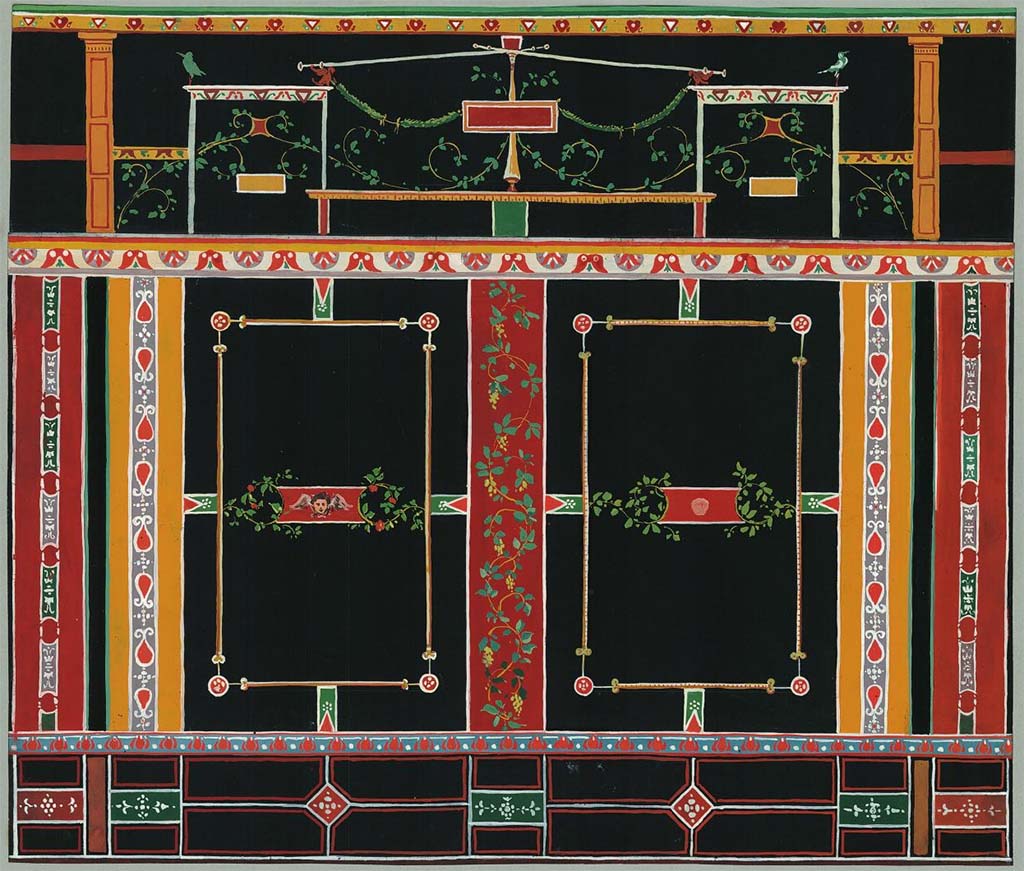
Painting sometime between 1834-1890 by C. E. Plitt which would seem to show a wall in the large triclinium on the north side rear of the house.
Not signed but in a
folder with others numbered A-VII-34-90 to 111 with title: "Pompeji. Handmalereien von C. E. Plitt".
DAIR A-VII-34-111. Photo © Deutsches
Archäologisches Institut, Abteilung Rom, Arkiv.
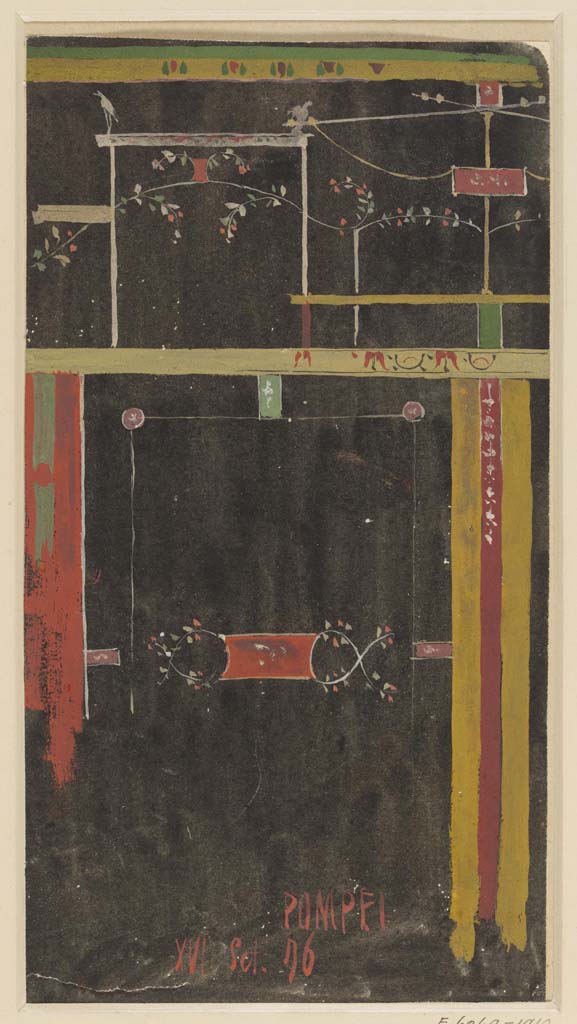
VI.14.40 Pompeii. 16th September
1876. Triclinium on the north side rear of the house?
Watercolour
by Luigi Bazzani, preliminary study of painted wall-decoration.
Photo © Victoria and Albert Museum. Inventory number 2049-1900.
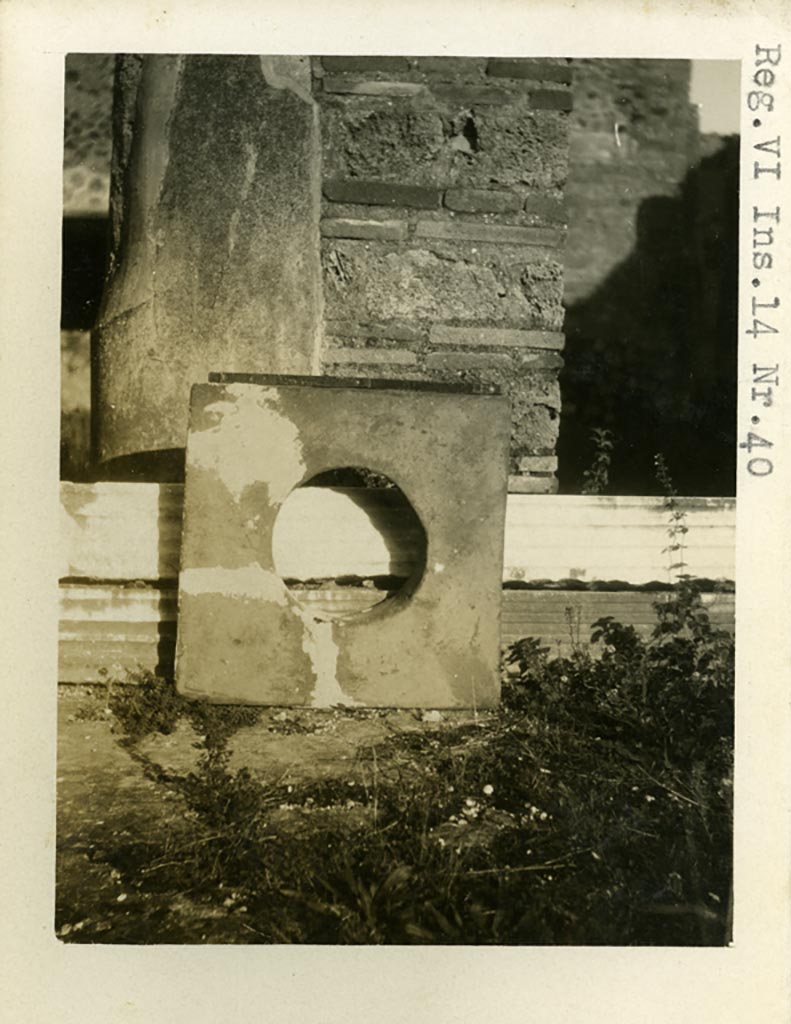
VI.14.40 Pompeii, according to Warsher. Pre-1937-39. Items.
Photo courtesy of American Academy in Rome, Photographic Archive. Warsher collection no. 1267.