VI.11.15 Pompeii. Dwelling.
Linked to VI.11.5 and VI.11.16. Excavated 1842.
According to Fiorelli –
“Più piccola è
l’abitazione che viene appresso, anche senza protiro, e con scaletta pe’
cenacoli.
Ha di fronte
all’atrio una sola stanza, rasentata dalla fauce, che portava alla cucina e ad
una cella contigua. ………”
See Pappalardo, U., 2001. La Descrizione di Pompei per Giuseppe Fiorelli (1875). Napoli: Massa Editore. (p.70).
(Smaller is
the house that comes after, also without an entrance corridor, and with stairs/ladder
to the upper floor.
Facing the
atrium it has a single room, bordering onto the corridor, which led to the
kitchen and an adjoining room. …….)
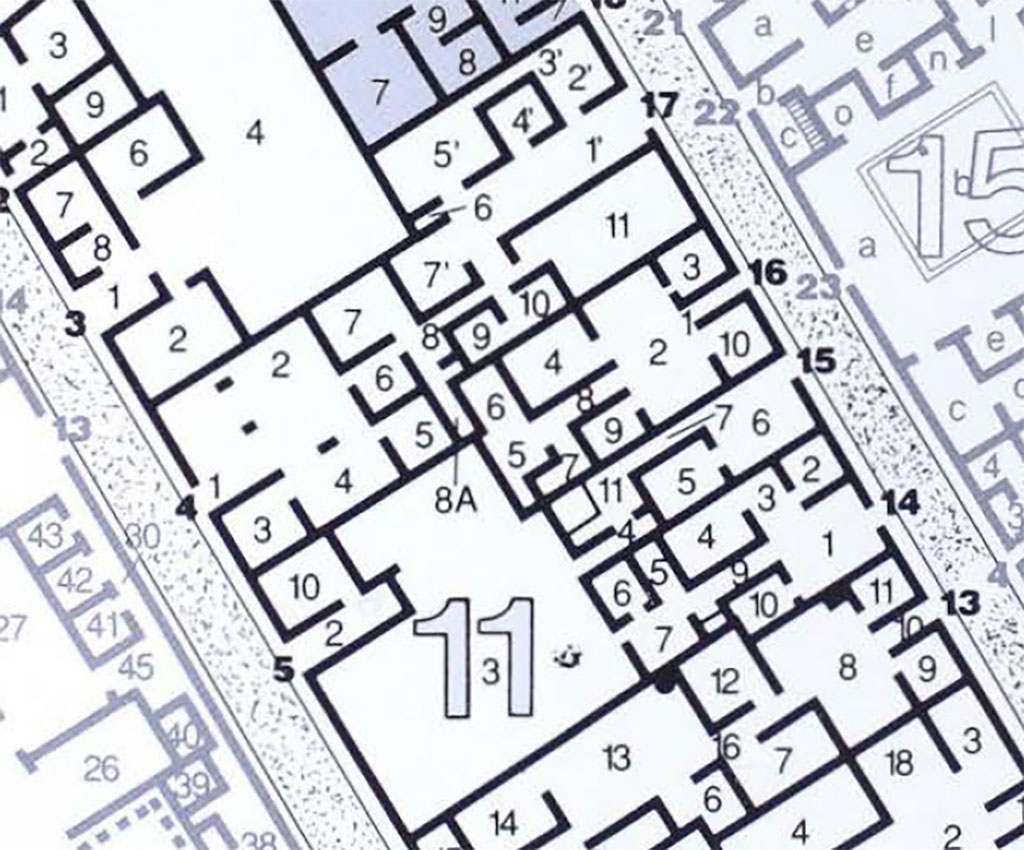
VI.11.5.15 Pompeii. Plan including VI.11.5 and VI.11.16, and VI.11.4/17.
See Carratelli, G. P., 1990-2003. Pompei: Pitture e Mosaici: Vol. V. Roma:
Istituto della enciclopedia italiana, p. 76.
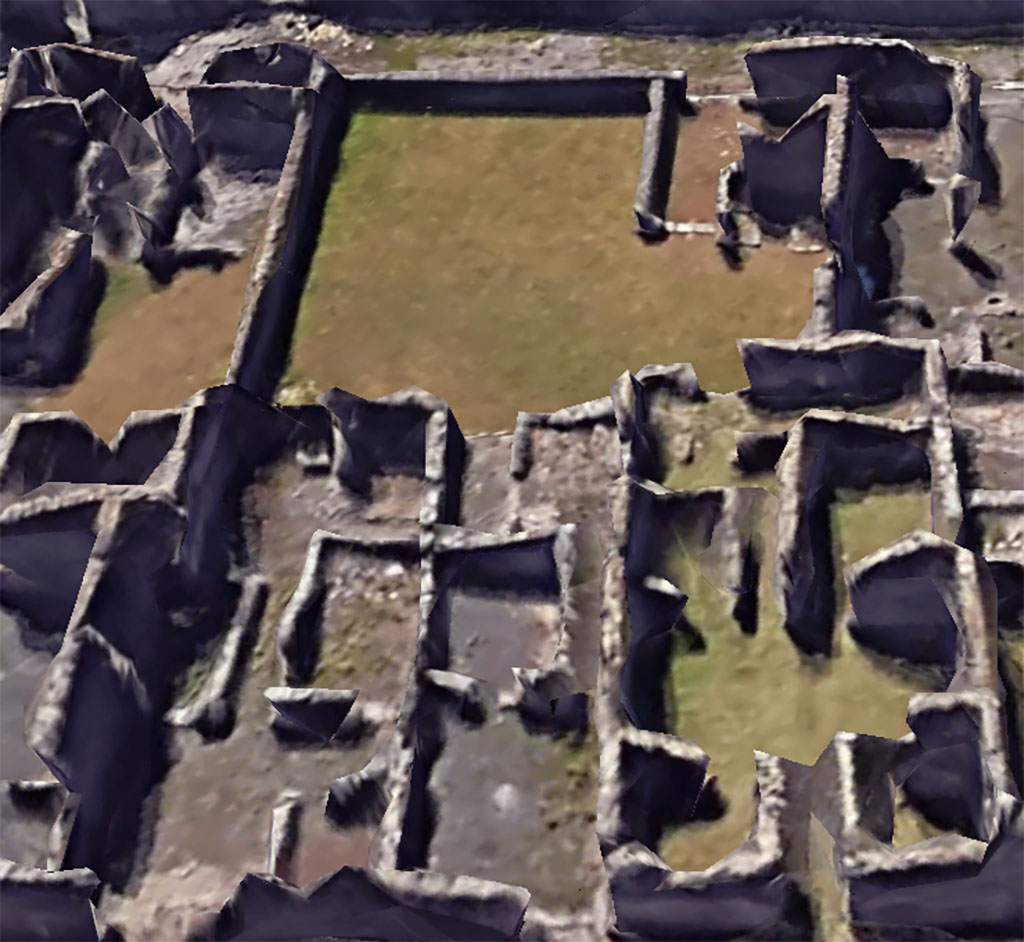
VI.11.15 Pompeii, in centre of lower photo. Google Earth. 2023. Looking west.
VI.11.14 can be seen in the lower centre, with VI.11.16 on the right of the lower photo.
VI.11.05 Pompeii, is in the upper photo.
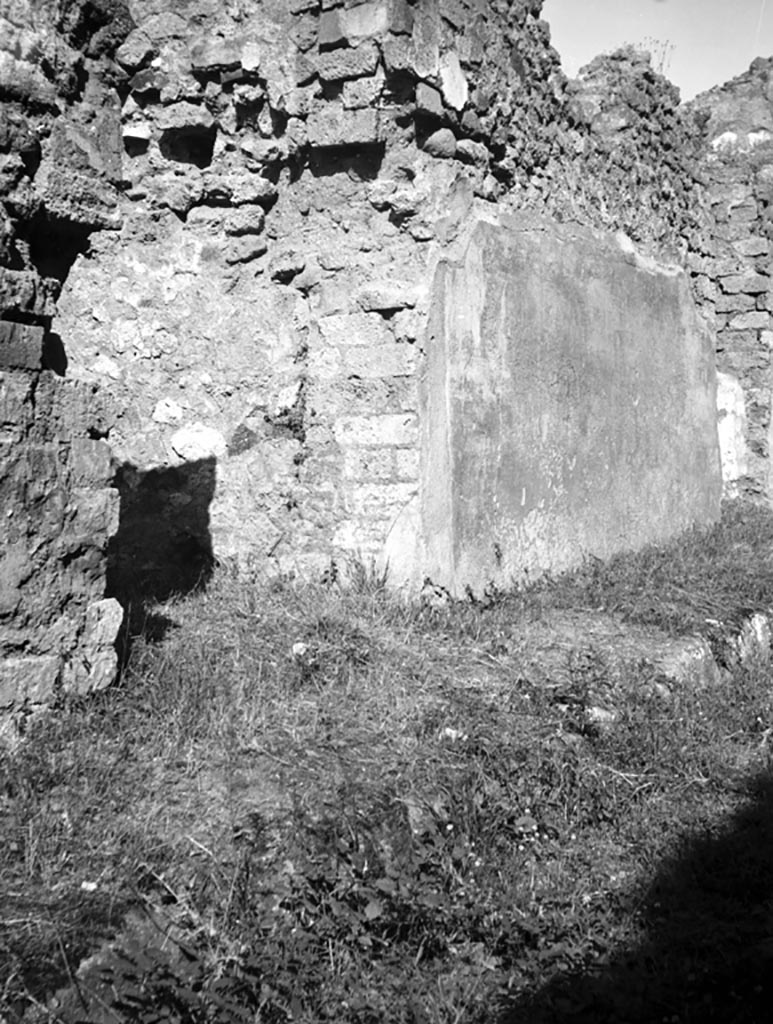
VI.11.15 Pompeii. W1497. Entrance doorway and façade on Vicolo del Labirinto.
Photo by Tatiana
Warscher. Photo © Deutsches Archäologisches Institut, Abteilung Rom, Arkiv.
![VI.11.15 Pompeii. September 2005. Entrance doorway, looking west.
According to Fiorelli, this small house also without an entrance corridor, had a staircase to the upper floor in the atrium. At the rear of the atrium it had only one room bordering onto a corridor leading to the kitchen and a nearby room. On the exterior walls on either side of the doorway, many obscene graffiti and women’s names were found. Names included, Iucunda, Secunda, Aprodite, Numpe, Veneria, Restituta, with graffiti that revealed their lives. See Pappalardo, U., 2001. La Descrizione di Pompei per Giuseppe Fiorelli (1875). Napoli: Massa Editore. (p.70)
(for other graffiti, see VI.11.14)
According to Varone, found to the right of the entrance was CIL IV 1383, it read –
Isidorum aed(ilem) [ o(ro) v(os) fac(iatis)]
optime cunulincet [….]
According to Varone, found to the right of the entrance was CIL IV 1391, it read –
Veneria
Maximo
mentla
exmuccavt
per vindemia[[m]]
tota
et relinque-
tutr(umque) ventre
inane e[t]
os plenu
C.S (---)
See Varone, A., 2002. Erotica Pompeiana: Love Inscriptions on the Walls of Pompeii, Rome: L’erma di Bretschneider. (p.81 and p.78-9 with fig VII)](6%2011%2015_files/image006.jpg)
VI.11.15 Pompeii. September 2005. Entrance doorway, looking west.
According to Fiorelli, this small house also without an entrance corridor, had a staircase to the upper floor in the atrium.
At the rear of the atrium it had only one room bordering onto a corridor leading to the kitchen and a nearby room.
On the exterior walls on either side of the doorway, many obscene graffiti and women’s names were found.
Names included, Iucunda, Secunda, Aprodite, Numpe, Veneria, Restituta, with graffiti that revealed their lives.
See Pappalardo, U., 2001. La Descrizione di Pompei per Giuseppe Fiorelli (1875). Napoli: Massa Editore. (p.70)
(for other graffiti, see VI.11.14)
According to Varone, found to the right of the entrance was CIL IV 1383, it read –
Isidorum aed(ilem)
[ o(ro) v(os) fac(iatis)]
optime cunulincet
[….]
According to Varone, found to the right of the entrance was CIL IV 1391, it read –
Veneria
Maximo
mentla
exmuccavt
per vindemia[[m]]
tota
et relinque-
tutr(umque)
ventre
inane e[t]
os plenu
C.S (---)
See Varone, A., 2002. Erotica Pompeiana: Love Inscriptions on the Walls of Pompeii, Rome: L’erma di Bretschneider. (p.81 and p.78-9 with fig VII)
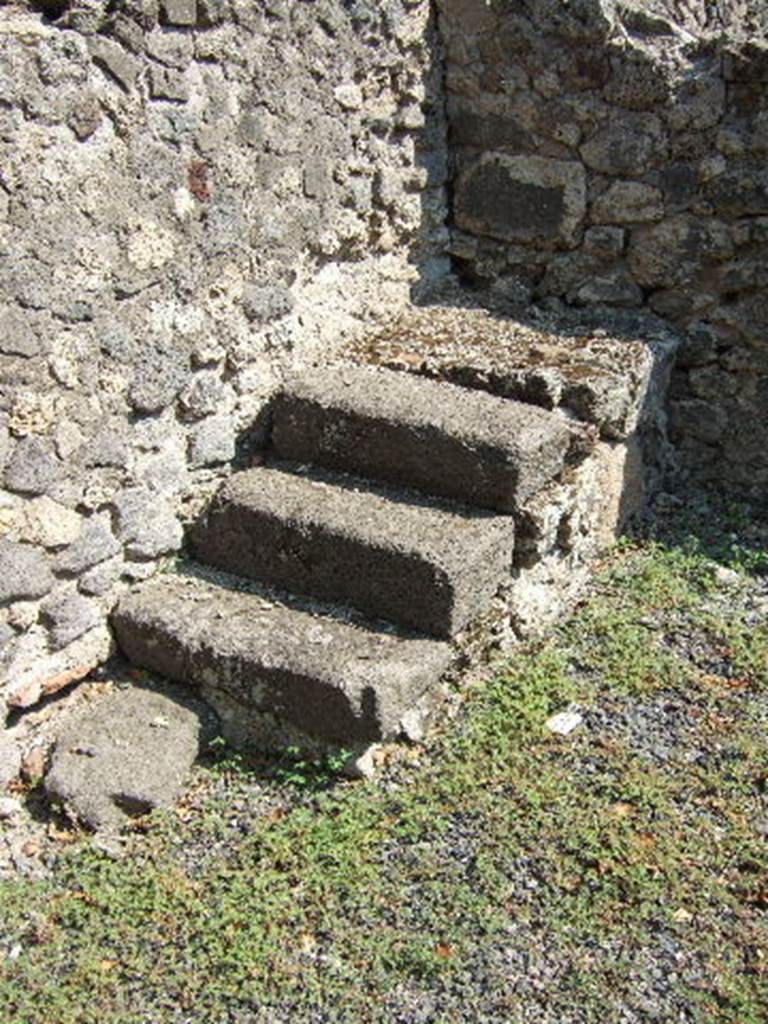
VI.11.15 Pompeii. September 2005.
Stairs to upper floor in south-east corner of atrium, south of entrance doorway.
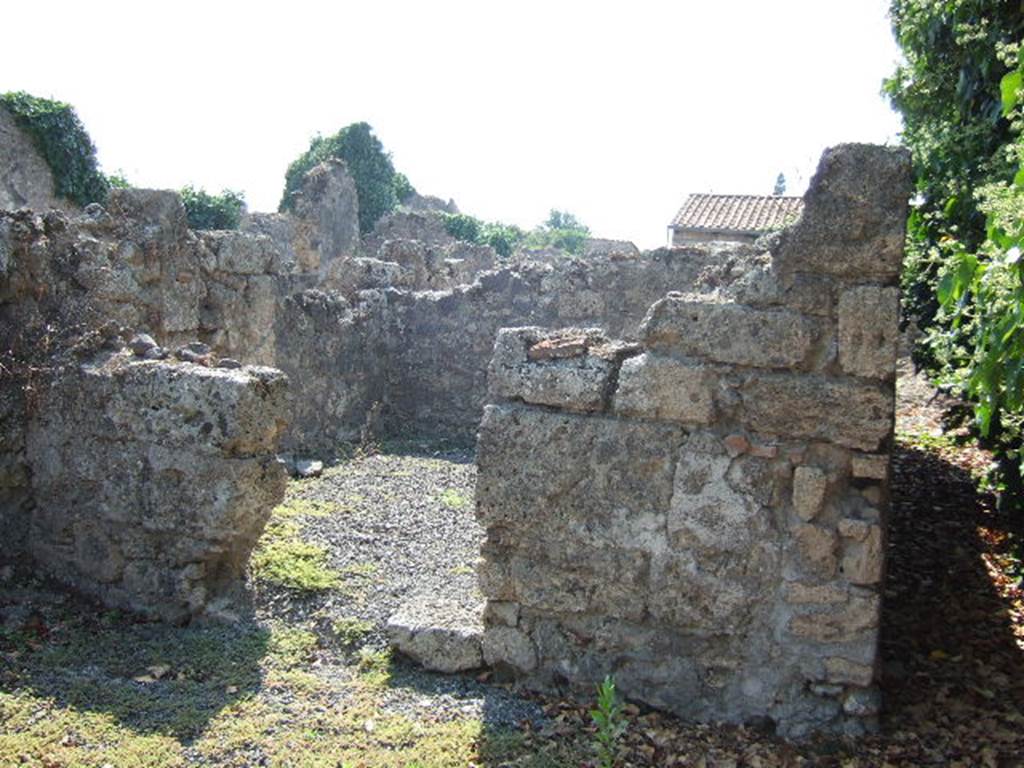
VI.11.15 Pompeii. September 2005.
Closed tablinum on west side of atrium, with corridor, on right, leading to kitchen and nearby room.
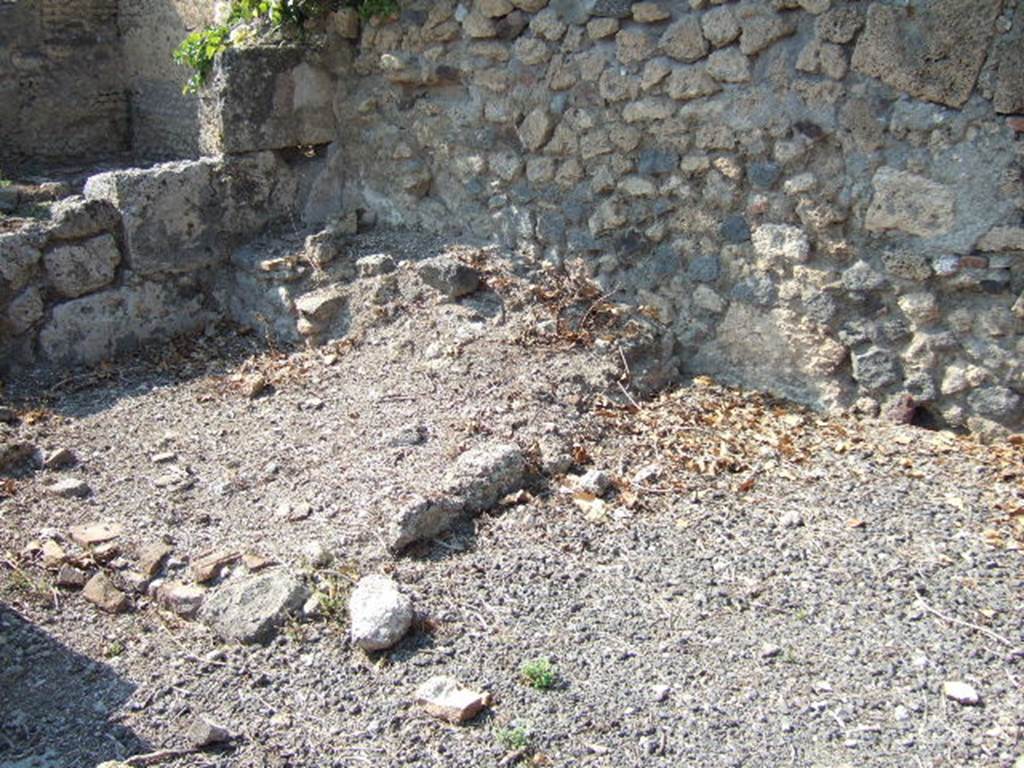
VI.11.5 Pompeii. September 2005. Room at west end of corridor.
According to Boyce, at the end of the corridor, were to be seen the ruins of a structure enclosing a rectangular niche.
The inside walls were coated with white stucco.
Here was probably the lararium described in the report as –
“un piccolo masso
di fabbrica, forse ara, ed una piccolo nicchia, per cui potrebbe credersi un
sacrario”.
His reference was – Bull. Arch. Nap., i, 1843, 74.
See Boyce G. K., 1937. Corpus
of the Lararia of Pompeii. Rome:
MAAR 14. (p.51, no.187)
See Giacobello,
F., 2008. Larari Pompeiani: Iconografia e
culto dei Lari in ambito domestico. Milano: LED Edizioni. (p.294)
Extracts from Bullettino Archeologico Napoletano, Anno
Primo, 1843.
(Note: “Sesta casa” (Sixth house) is part of Avellino’s
description, and not a numbered location.)
It would seem he called VI.11.4/5/15/16 and 17, the Sixth
house).
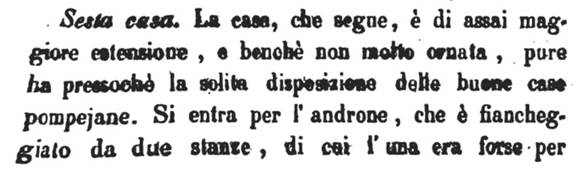
See Bullettino Archeologico Napoletano, Anno Primo, 1843, Napoli:
Tipografia Tramater, No. IX, 1 Maggio 1843, p.67 (also entered into
VI.11.5, 15, 16 and 17).
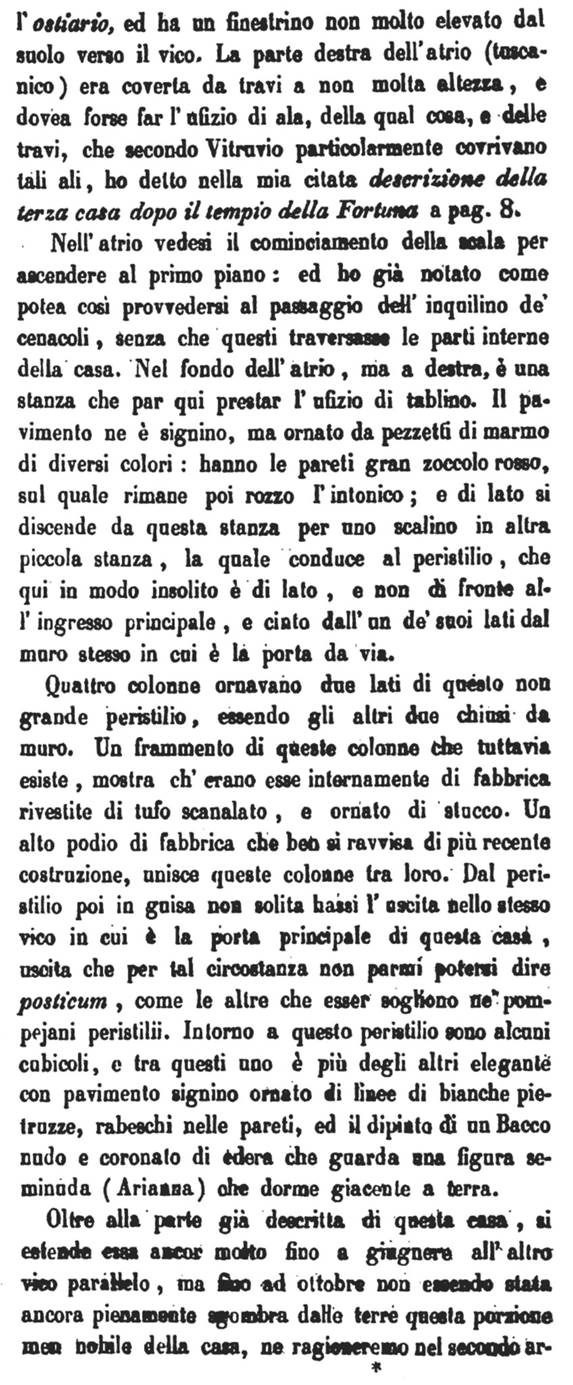
See Bullettino Archeologico
Napoletano, Anno Primo, 1843, Napoli: Tipografia Tramater, No. IX, 1
Maggio 1843, p.67.
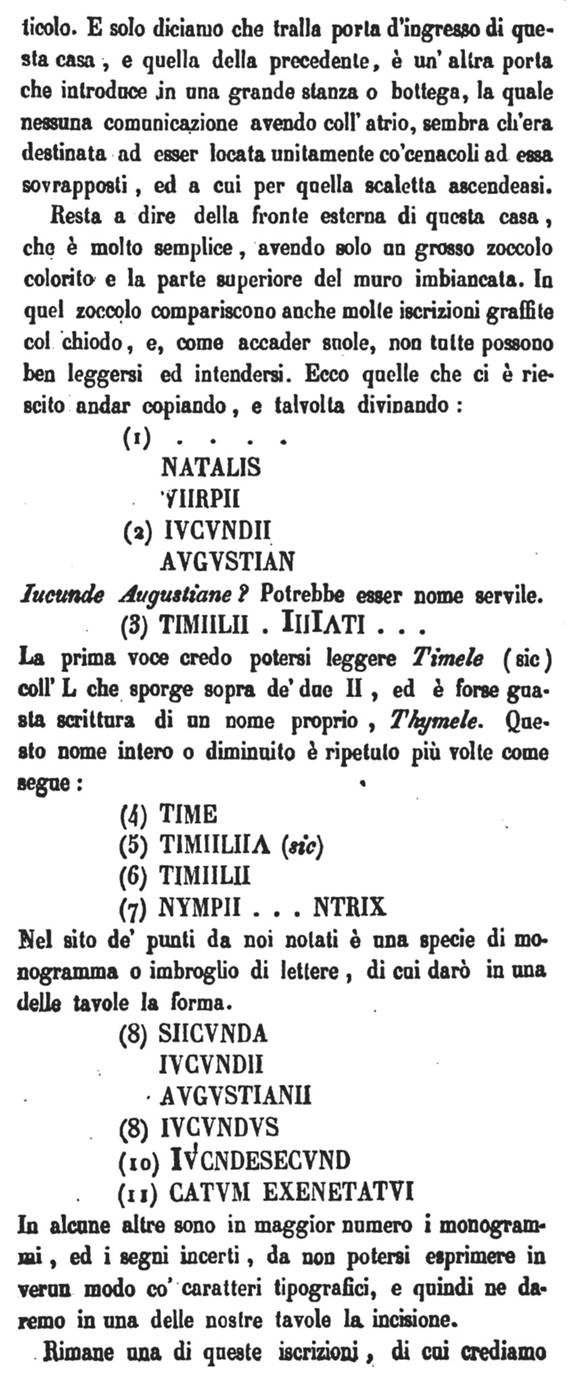
See Bullettino
Archeologico Napoletano, Anno Primo, 1843, Napoli: Tipografia Tramater, No.
IX, 1 Maggio 1843, p.68.
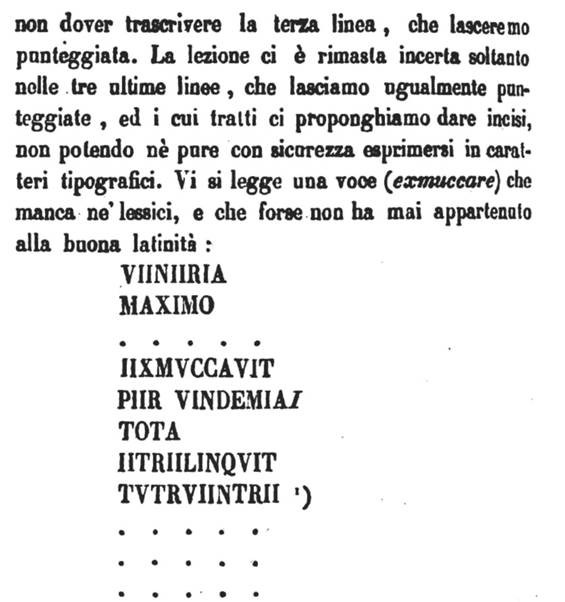

See Bullettino
Archeologico Napoletano, Anno Primo, 1843, Napoli: Tipografia Tramater, No.
IX, 1 Maggio 1843, p.68.
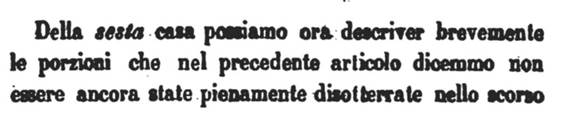
See Bullettino
Archeologico Napoletano, Anno Primo, 1843, Napoli: Tipografia Tramater, No.
X, 1 Giugno, 1843, p. 73.
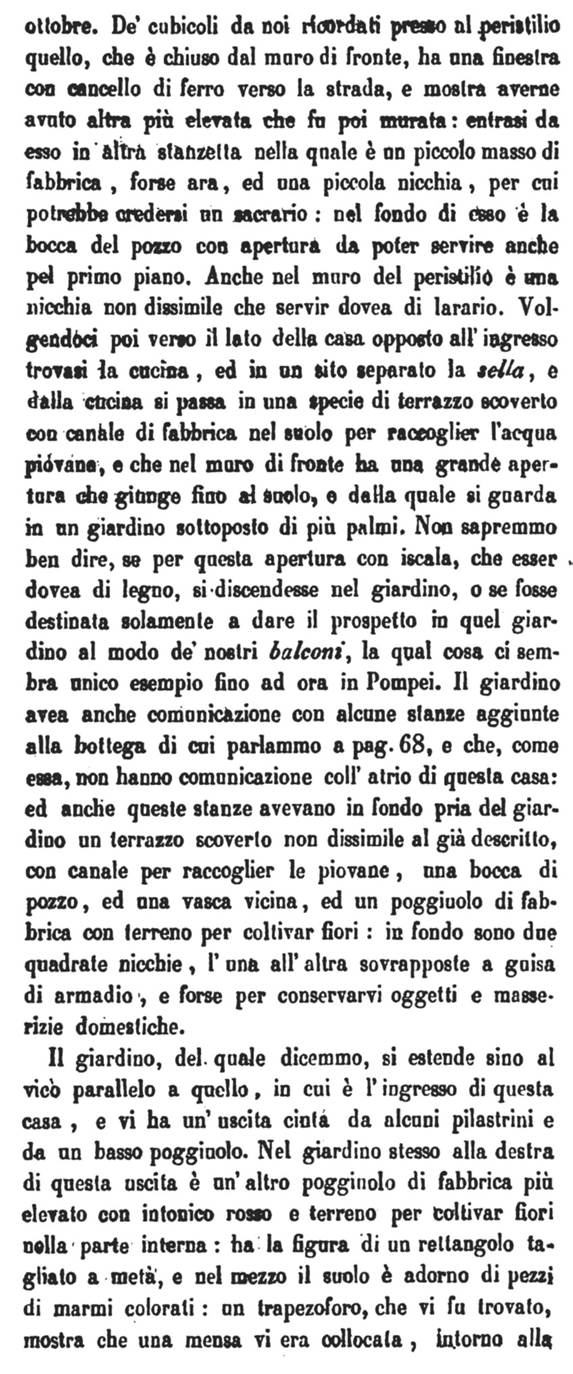
See Bullettino
Archeologico Napoletano, Anno Primo, 1843, Napoli: Tipografia Tramater, No.
X, I Giugno, 1843, p. 74.
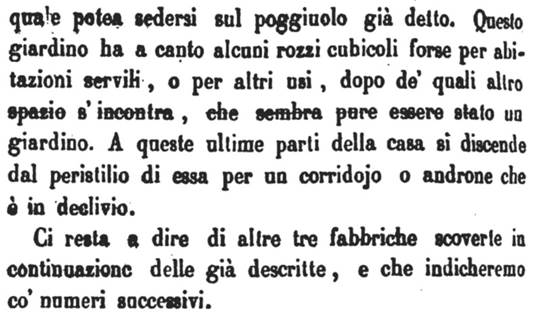
See Bullettino
Archeologico Napoletano, Anno Primo, 1843, Napoli: Tipografia Tramater, No.
X, 1 Giugno, 1843, p. 74.