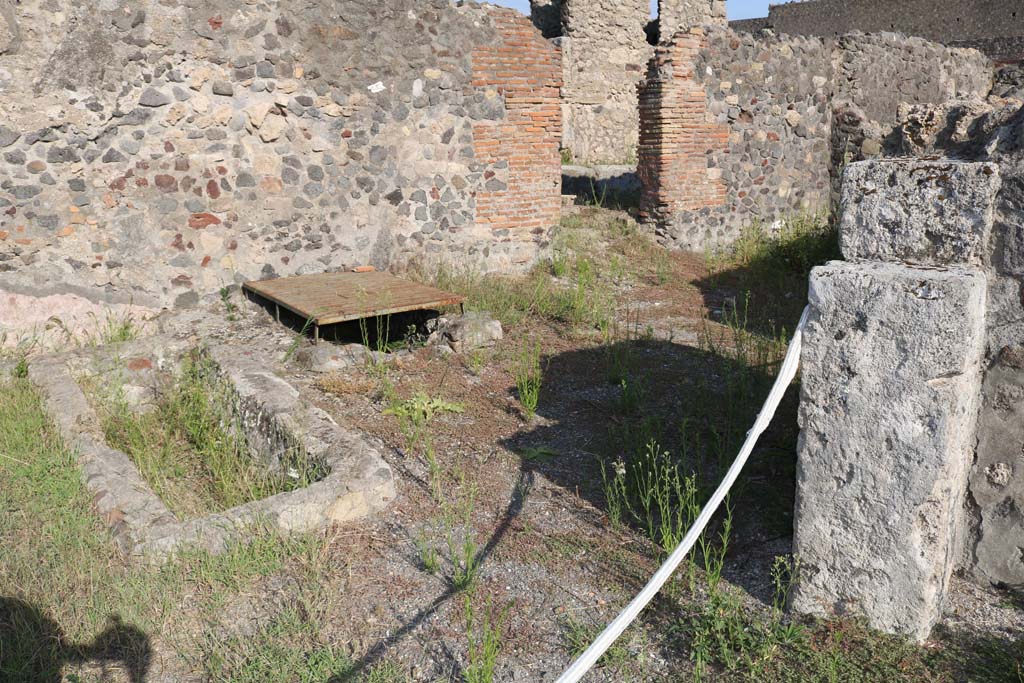
VI.1.15 Pompeii. Shop with back room. Fabbrica del Sapone.
Linked to VI.1.14, VI.1.16, and VI.1.21. Excavated 1788.
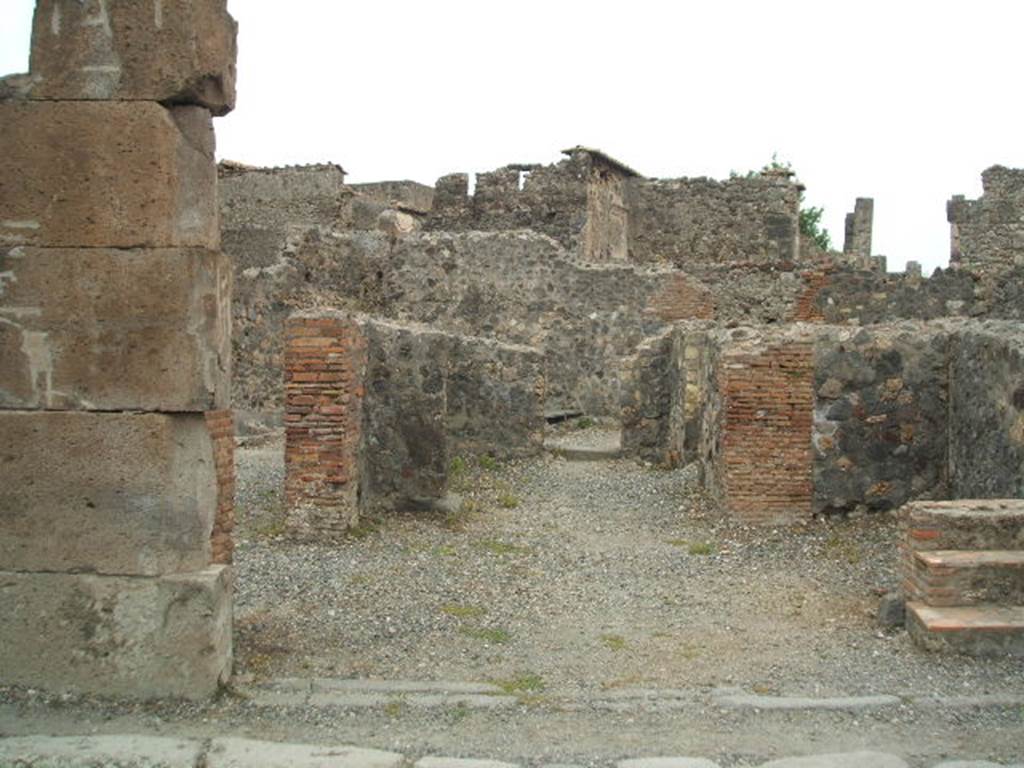
VI.1.15 Pompeii. September 2004. Looking east towards entrance doorway.
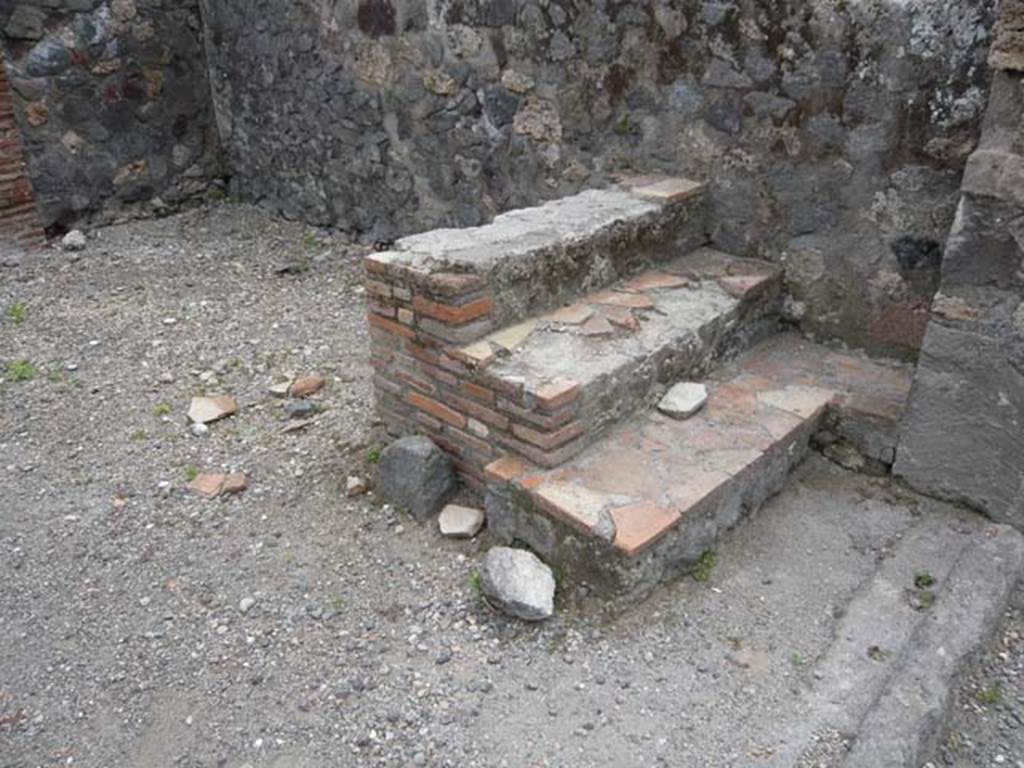
VI.1.15 Pompeii. May 2012. Looking towards masonry steps in south-west corner near entrance. Photo courtesy of Buzz Ferebee.
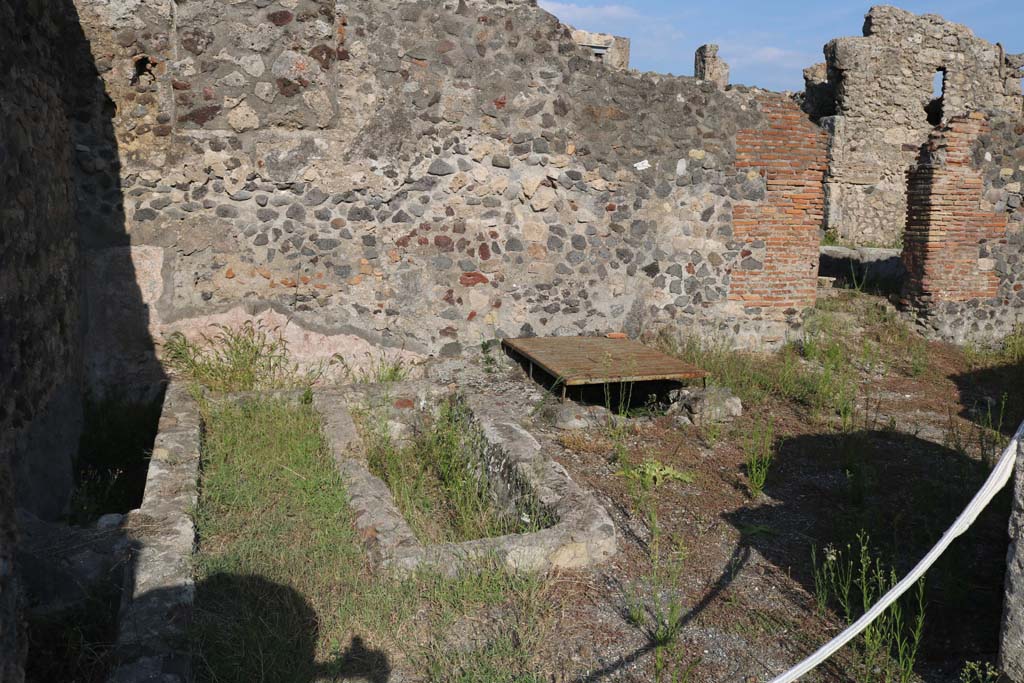
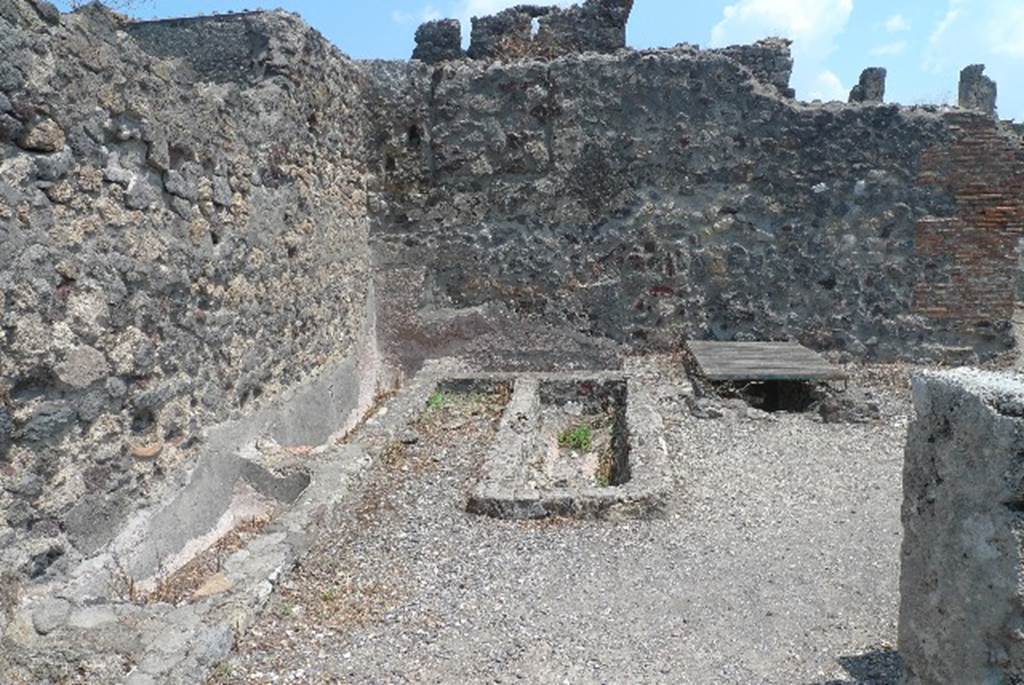
VI.1.15 Pompeii. July 2010. Looking east to rear. Photo courtesy of Michael Binns.
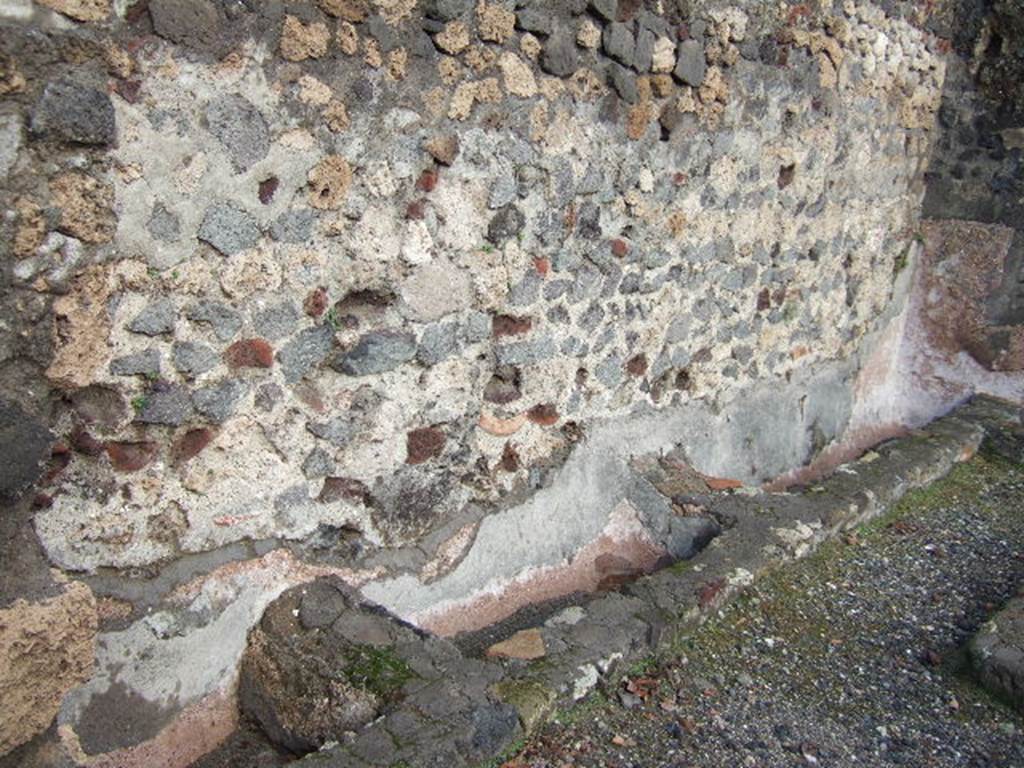
VI.1.15 Pompeii. December 2005. North wall.
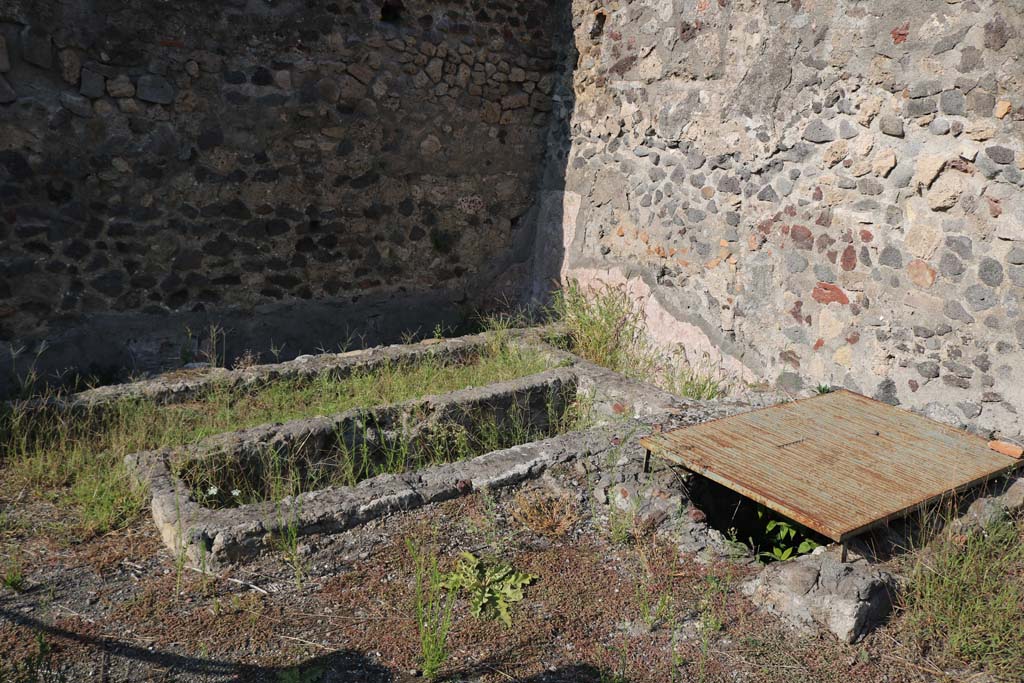
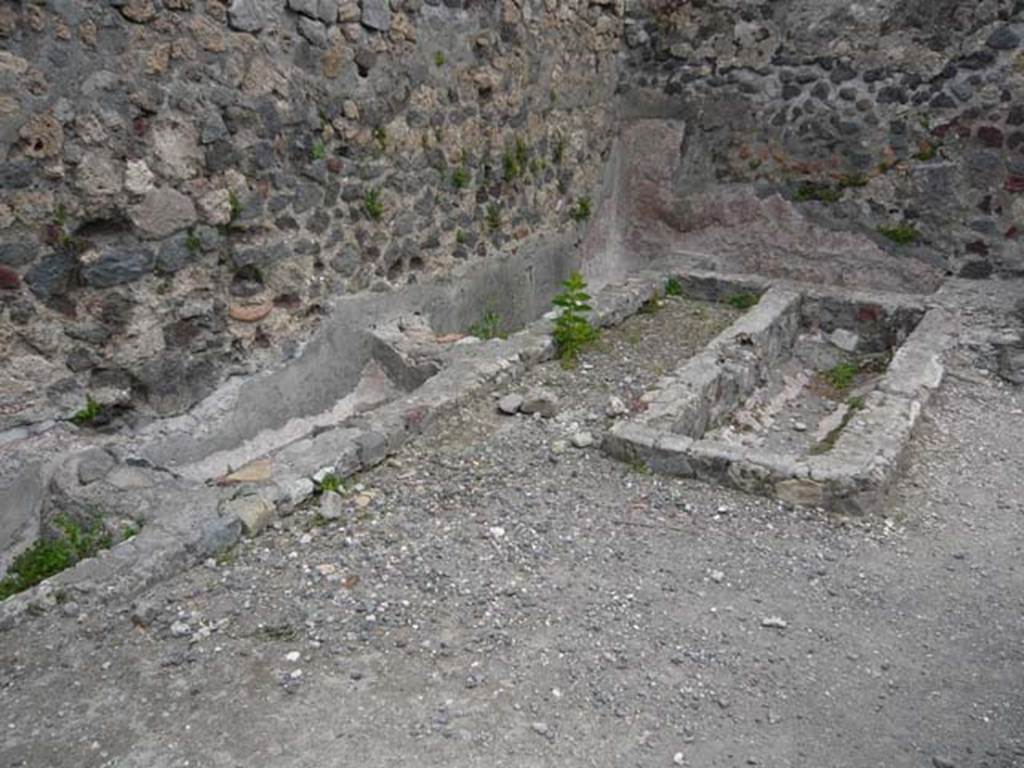
VI.1.15 Pompeii. May 2012. Looking towards vats/basins in north-east corner. Photo courtesy of Buzz Ferebee.
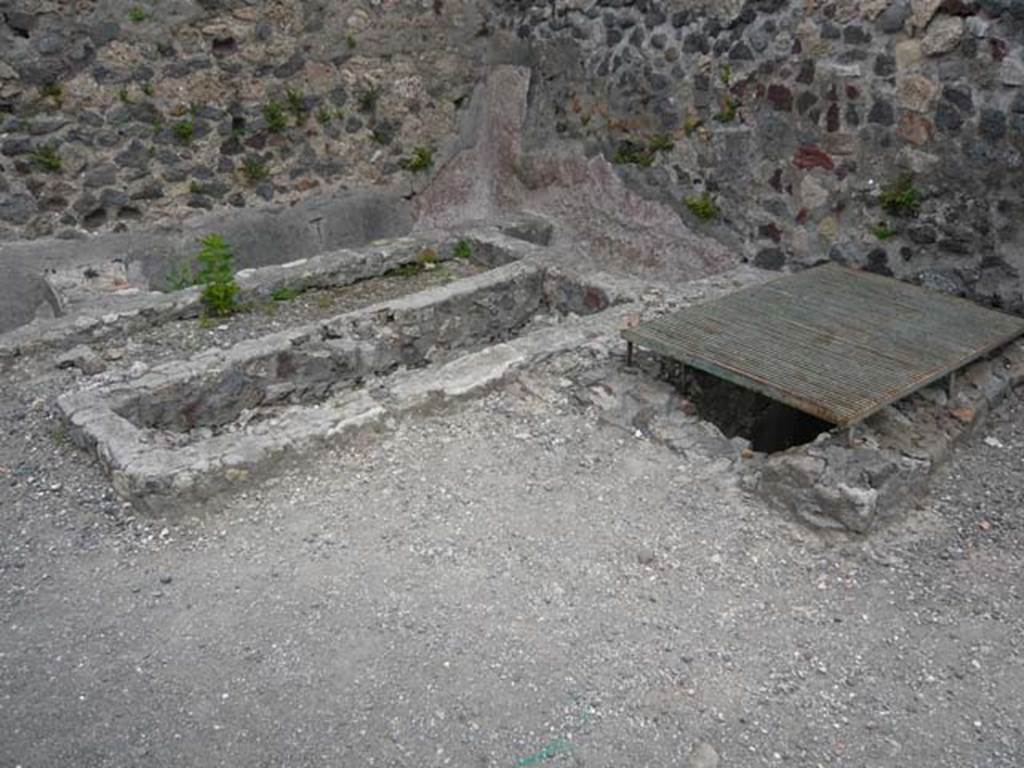
VI.1.15 Pompeii. May 2012. Looking north-east across basins or vats. Photo courtesy of Buzz Ferebee.
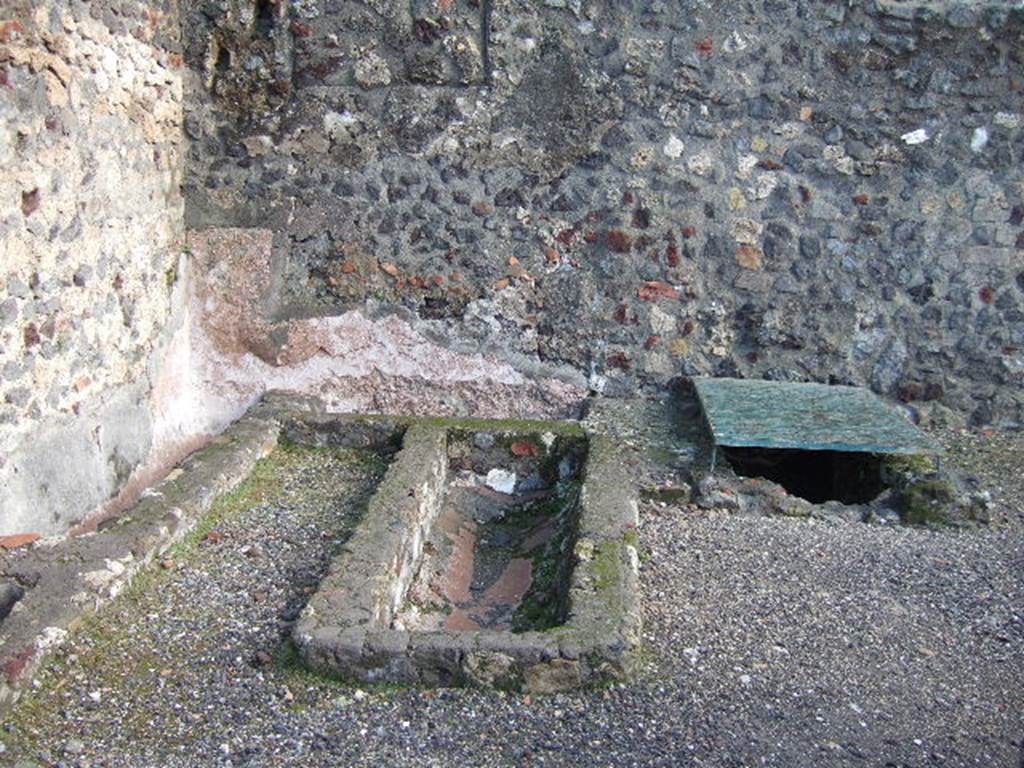
VI.1.15 Pompeii. December 2005. East wall with basins or vats.
According to Jones and Robinson, a group of small workshops were constructed in the south of the insula.
Each workshop had a wide shop doorway opening onto Via Consolare.
Plaster-lined tanks, similar to those found in the north of the insula, were recovered from the excavations of the Soap Factory (VI.1.14/15).
They were also discovered at the Bar of Acisculus (VI.1.17) and also from the Shrine at VI.1.13.
This suggested that there was a consistent phase of tank-centred industrial activity throughout the insula, and that fish processing was a major industry in this area of Pompeii during the late second and early first centuries BC.
See Dobbins, J & Foss, P., 2008. The World of Pompeii. New York: Routledge. (p.394)
On page 398, they say that following the Social War, the fish processing tanks were abandoned, and the workshops redeveloped.
In the Soap Factory, a group of clay and stone hearths were recovered, along with significant quantities of hammerscale, charcoal, slag and hearth bottoms.
This property was now operating as a metal smithy.
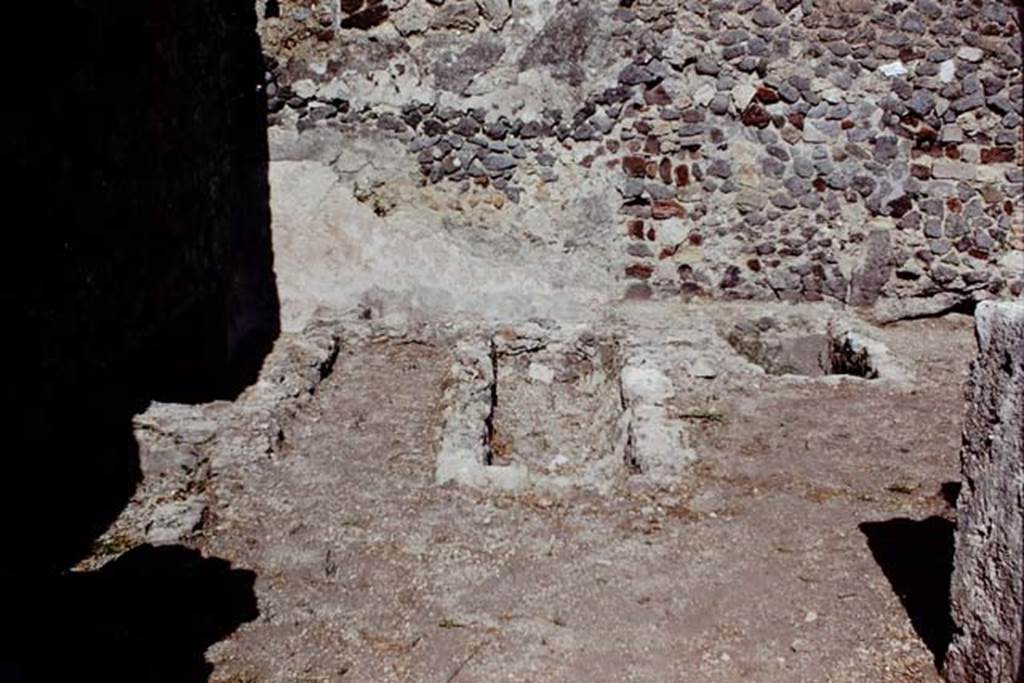
VI.1.15 Pompeii. 1968. Looking towards basins or vats near the east wall. Photo by Stanley A. Jashemski.
Source: The Wilhelmina and Stanley A. Jashemski archive in the University of Maryland Library, Special Collections (See collection page) and made available under the Creative Commons Attribution-Non-Commercial License v.4. See Licence and use details.
J68f1988
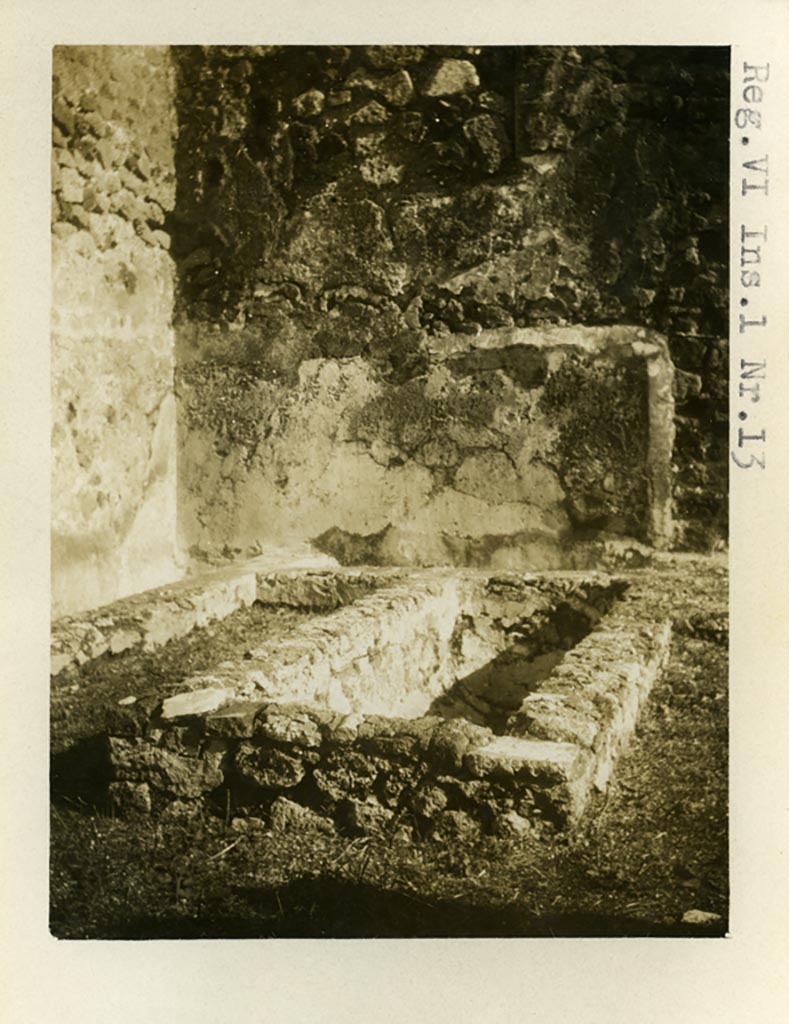
Photo courtesy of American Academy in Rome, Photographic Archive. Warsher collection no. 1255.
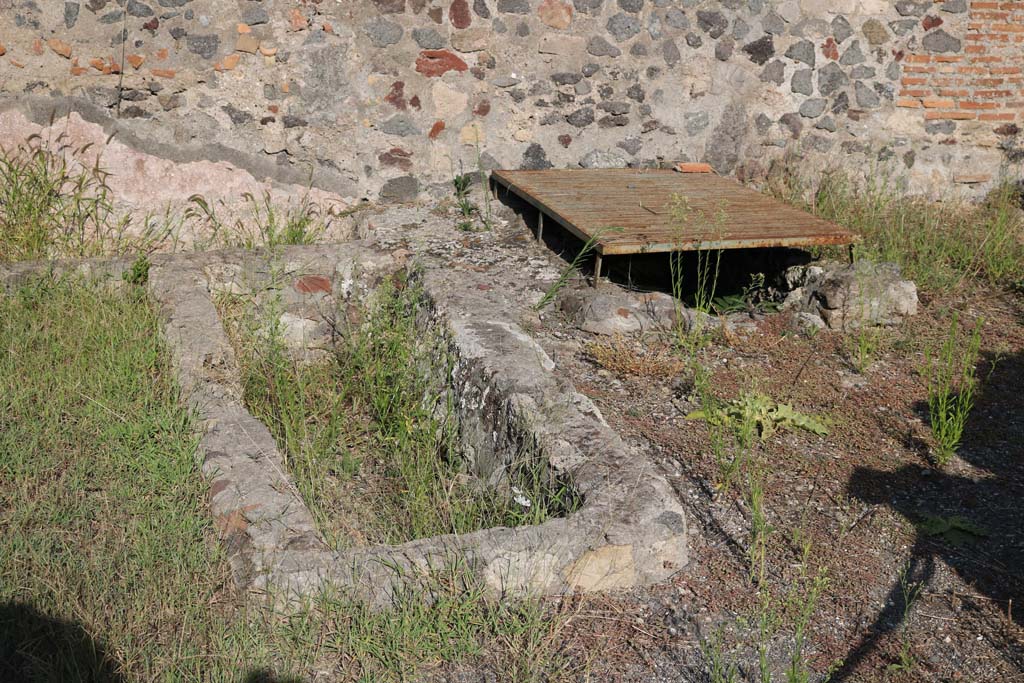
VI.1.15 Pompeii. December 2018. Looking towards the east wall of the rear room. Photo courtesy of Aude Durand.
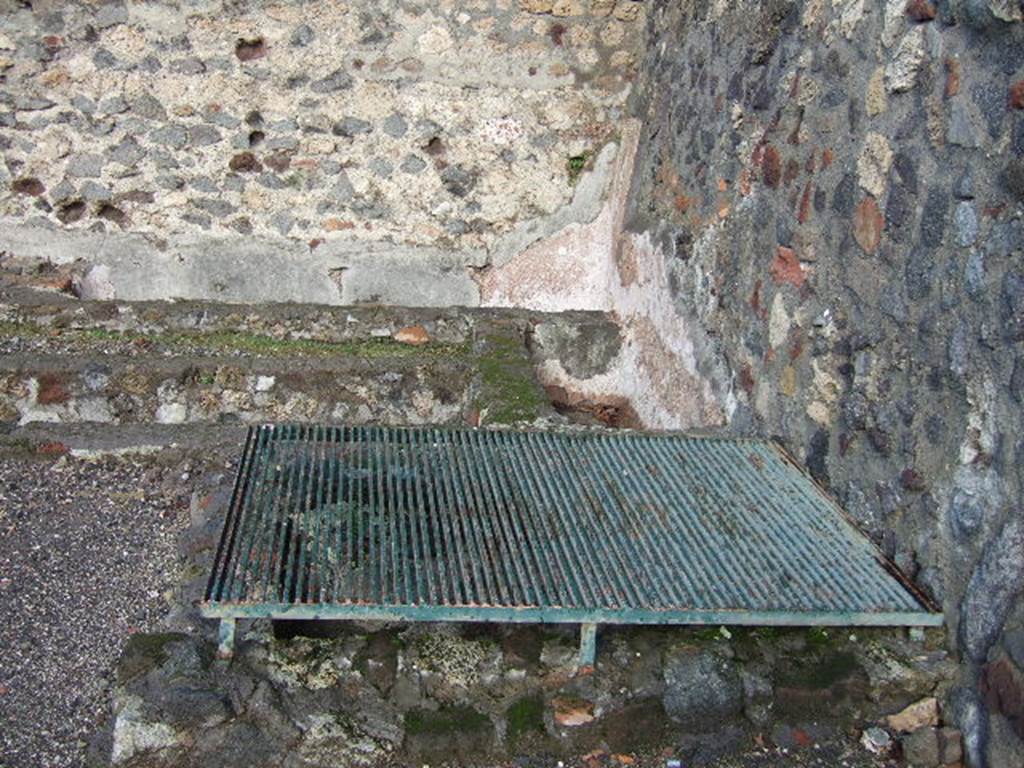
VI.1.15 Pompeii. December 2005. Looking north across east side.