I.8.13 Pompeii. Officina di A. Granius Romanus, workshop & dwelling.
Excavated 1941.
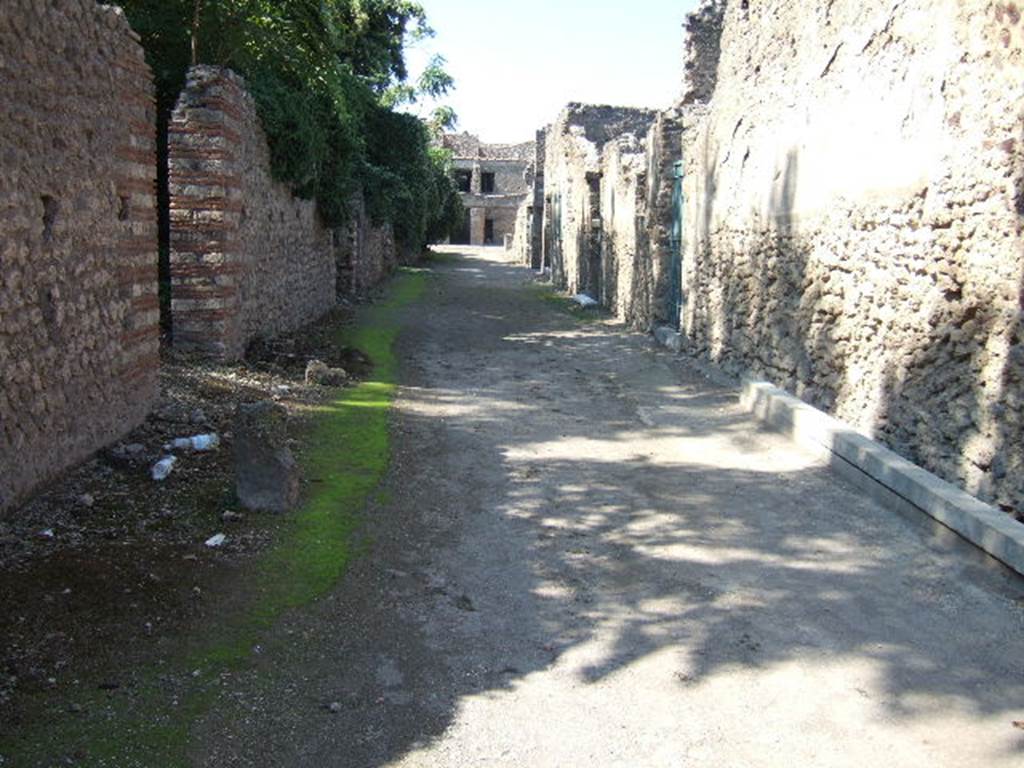
I.18 Pompeii, on left. September 2005. Via di Castricio, looking west. I.8.13, on right.
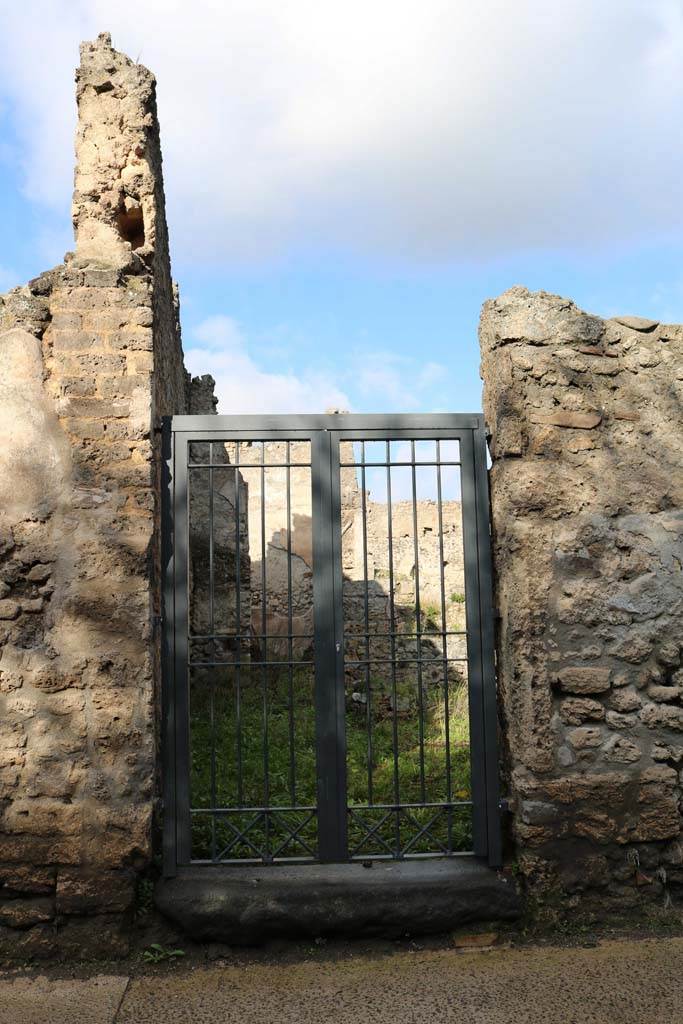
I.8.13, Pompeii. December 2018. Entrance doorway. Photo
courtesy of Aude Durand.
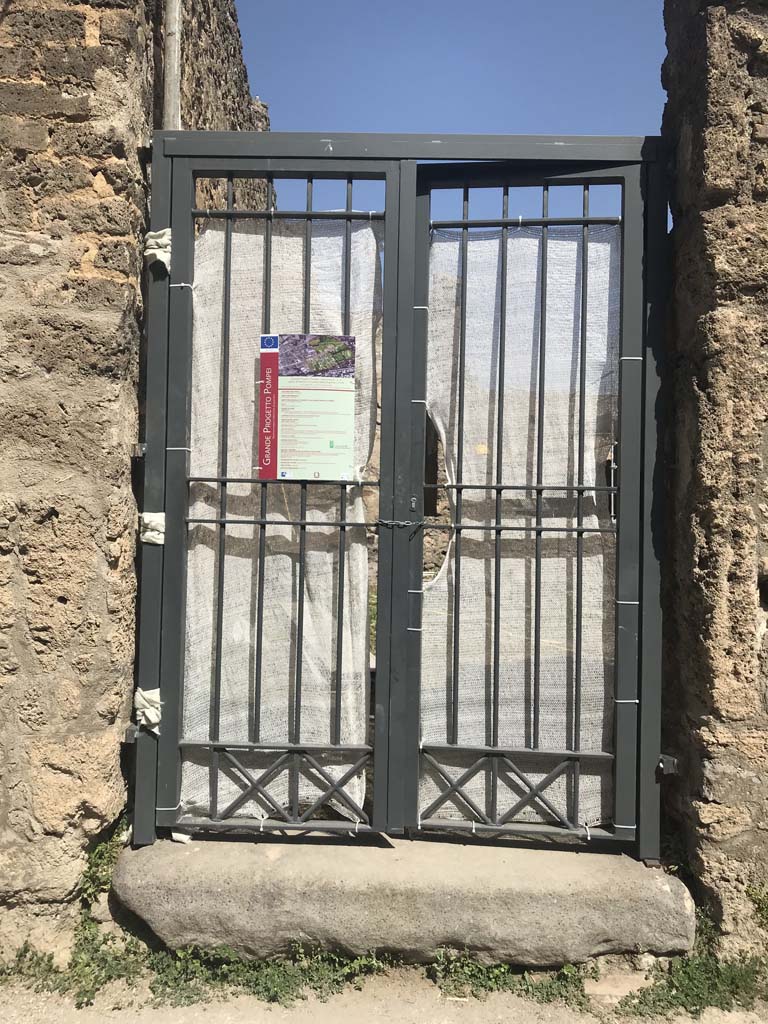
I.8.13 Pompeii. April 2019. Entrance doorway. Photo courtesy of
Rick Bauer.
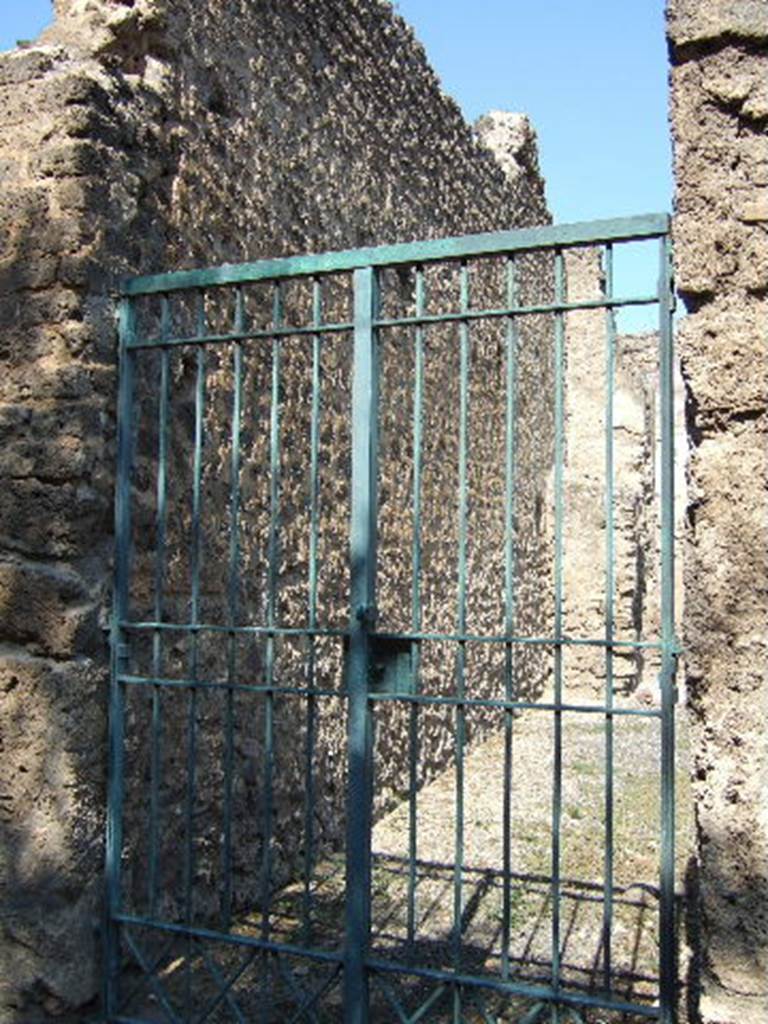
I.8.13 Pompeii. September 2005. Entrance doorway.
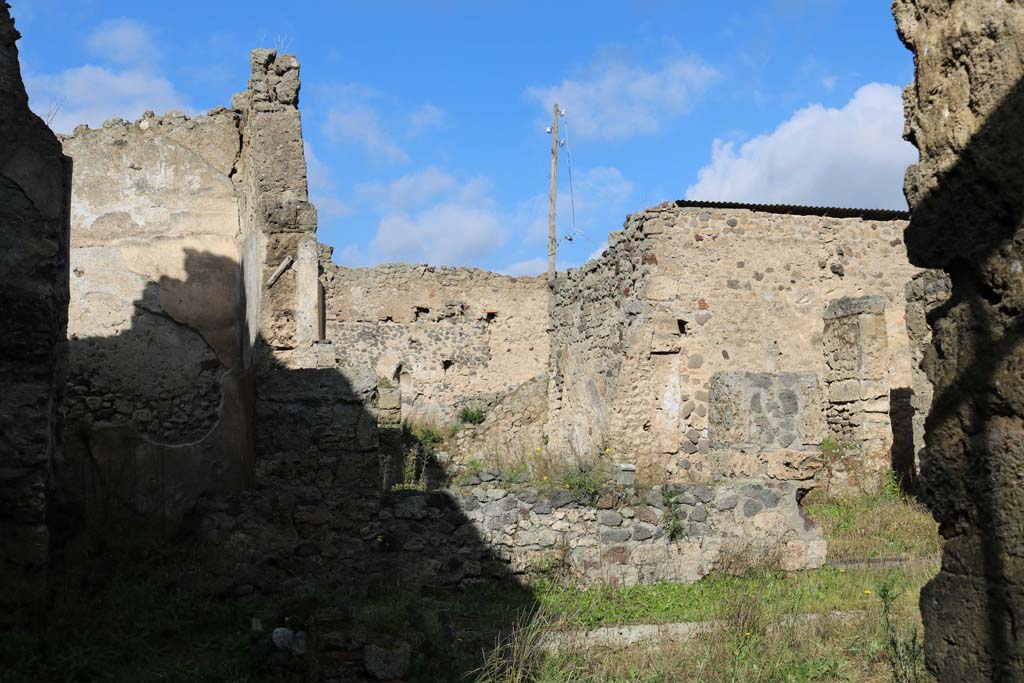
I.8.13 Pompeii. September 2024. Looking north from entrance.
Photo courtesy of Giuseppe
Ciaramella.

I.8.13 Pompeii. December 2018. Looking north from entrance
doorway. Photo courtesy of Aude Durand.
![I.8.13 Pompeii. September 2005. Looking north from entrance. An amphora was found in this house addressed to A. Granio Romano [CIL IV 9540] Della Corte thought Faustilla would have been Granio’s wife.
See Della Corte, M., 1965. Case ed Abitanti di Pompei. Napoli: Fausto Fiorentino. (p.327)](1%2008%2013_files/image012.jpg)
I.8.13 Pompeii. September 2005. Looking north from entrance.
An amphora was found in this house addressed to A. Granio Romano [CIL IV 9540]
Della Corte thought Faustilla would have been Granio’s wife.
See Della Corte,
M., 1965. Case ed Abitanti di Pompei.
Napoli: Fausto Fiorentino. (p.327)

I.8.13 Pompeii. December 2018. Looking north from entrance.
Photo courtesy of Aude Durand.
![I.8.13 Pompeii. September 2005. Looking north from entrance, along west side of courtyard. According to Jashemski, this entrance led directly into a covered passageway. This passageway enclosed the courtyard at the front of the house, on the west and north side.
In the north-west corner of the passageway, there was a large lararium. See Jashemski, W. F., 1993. The Gardens of Pompeii, Volume II: Appendices. New York: Caratzas. (p.43) According to Della Corte, found written on the lararium were the names of two, perhaps dependants or family of Granio – Diadumenus (and) [D]iopha[ntus] [CIL IV 7296] See Della Corte, M., 1965. Case ed Abitanti di Pompei. Napoli: Fausto Fiorentino. (p.327)
According to Epigraphik-Datenbank Clauss/Slaby (See www.manfredclauss.de), these read as -
Diadumenus
[3]vac
[ [CIL IV 7296a]
] Saltus
Diopha[ntus(?)] [CIL IV 7296b]](1%2008%2013_files/image015.jpg)
I.8.13 Pompeii. September 2005. Looking north from entrance, along west side of courtyard.
According to Jashemski, this entrance led directly into a covered passageway.
This passageway enclosed the courtyard at the front of the house, on the west and north side.
In the north-west corner of the passageway, there was a large lararium.
See Jashemski, W. F., 1993. The Gardens of Pompeii, Volume II: Appendices. New York: Caratzas. (p.43)
According to Della Corte, found written on the lararium were the names of two, perhaps dependants or family of Granio –
Diadumenus (and)
[D]iopha[ntus] [CIL IV 7296]
See Della Corte, M., 1965. Case ed Abitanti di Pompei. Napoli: Fausto Fiorentino. (p.327)
According to Epigraphik-Datenbank Clauss/Slaby (See www.manfredclauss.de), these read as -
Diadumenus
[3]vac
[ [CIL IV 7296a]
] Saltus
Diopha[ntus(?)] [CIL IV 7296b]
![I.8.13 Pompeii. September 2005. Looking north-east from entrance, towards rear of house. According to Della Corte, in a cubiculum on the south-east side of the inner courtyard, interesting graffiti were found –
See Della Corte, M., 1965. Case ed Abitanti di Pompei. Napoli: Fausto Fiorentino. (p.327)
Idibus Iulis inaures pos(i)tas ad Faustilla(m).
Pro denariis II deduxit aeris a(ssem).
Ex sum(ma) XXX [CIL IV 8203]
According to Epigraphik-Datenbank Clauss/Slaby (See www.manfredclauss.de) this read as –
Idibus Iuli(i)s
inaures postas ad Faustilla(m)
pro |(denariis) II usura(m) deduxit aeris a(ssem)
ex sum(ma) XXX [CIL IV 8203]
According to Cooley, this was found to the right of CIL IV 8204, in the south-east corner of the bedroom.
She translated it as –
“15 July. Earrings deposited with Faustilla. Per two denarii she took as usury one copper as. From a total? 30.” [CIL IV 8203]
See Cooley, A. and M.G.L., 2004. Pompeii : A Sourcebook. London : Routledge. (p.170)
According to another book, it translated as -
“On July fifteenth I pawned earrings to Faustilla for 2 denarii (equivalent to 32 asses). From this amount, she deducted one-thirtieth as interest for the monthly usury of one as” [CIL IV 8203]
See Panetta, M. R. (ed). 2004. Pompeii, the history, life and art of the buried city. Italy, White Star Publishers; (p. 231)
IV non(as) Iul(ias) paenulam palliolum [posita ad Fau]stillam Pr[oden.]
L [deduxit ?] XIII semis ( ?).
[Aeri]s a(sses) VIII [CIL IV 8204]
According to Epigraphik-Datenbank Clauss/Slaby (See www.manfredclauss.de) this read as –
IV Non(as) Iul(ias)
paenulam palliolum [posita ad Fau]stilla(m)
pr[o |(denariis)] L usur[a]
[deduxit] XIII s(emissem)
[aeri]s a(sses) VIII [CIL IV 8204]
According to Cooley, this was found in the south-east corner of the bedroom.
She translated it as –
“4 July. Hooded cloak and small cloak (deposited by Fau)stilla. Per 50 (…)usury (…) 14 and a half (…) 8 asses”. [CIL IV 8204]
See Cooley, A. and M.G.L., 2004. Pompeii : A Sourcebook. London : Routledge. (p.170)
The other book describes it as another graffito found in the same room but written just a few days earlier on July 4th.
This time Faustilla received another bitter pledge, this time a cape with a hood.
See Panetta, M. R. (ed). 2004. Pompeii, the history, life and art of the buried city. Italy, White Star Publishers; (p. 231)](1%2008%2013_files/image017.jpg)
I.8.13 Pompeii. September 2005. Looking north-east from entrance, towards rear of house.
According to Della Corte, in a cubiculum on the south-east side of the inner courtyard, interesting graffiti were found –
See Della Corte,
M., 1965. Case ed Abitanti di Pompei. Napoli: Fausto Fiorentino. (p.327)
Idibus Iulis
inaures pos(i)tas ad Faustilla(m).
Pro denariis II
deduxit aeris a(ssem).
Ex sum(ma)
XXX [CIL IV 8203]
According to Epigraphik-Datenbank Clauss/Slaby (See www.manfredclauss.de) this read as –
Idibus Iuli(i)s
inaures postas ad
Faustilla(m)
pro |(denariis)
II usura(m) deduxit aeris a(ssem)
ex sum(ma) XXX [CIL IV 8203]
According to Cooley, this was found to the right of CIL IV 8204, in the south-east corner of the bedroom.
She translated it as –
“15 July. Earrings deposited with Faustilla. Per two denarii she took as usury one copper as. From a total? 30.” [CIL IV 8203]
See Cooley, A. and M.G.L., 2004. Pompeii: A Sourcebook. London: Routledge. (p.170)
According to another book, it translated as -
“On July fifteenth I pawned earrings to Faustilla for 2 denarii (equivalent to 32 asses). From this amount, she deducted one-thirtieth as interest for the monthly usury of one as” [CIL IV 8203]
See Panetta, M. R. (ed). 2004. Pompeii, the history, life and art of the buried city. Italy, White Star Publishers; (p. 231)
IV non(as)
Iul(ias) paenulam palliolum [posita ad Fau]stillam Pr[oden.]
L
[deduxit ?] XIII semis ( ?).
[Aeri]s a(sses)
VIII [CIL IV
8204]
According to Epigraphik-Datenbank Clauss/Slaby (See www.manfredclauss.de) this read as –
IV Non(as)
Iul(ias)
paenulam
palliolum [posita ad Fau]stilla(m)
pr[o |(denariis)]
L usur[a]
[deduxit] XIII
s(emissem)
[aeri]s a(sses) VIII [CIL IV 8204]
According to Cooley, this was found in the south-east corner of the bedroom.
She translated it as –
“4 July. Hooded cloak and small cloak (deposited by Fau)stilla. Per 50 (…)usury (…) 14 and a half (…) 8 asses”. [CIL IV 8204]
See Cooley, A. and M.G.L., 2004. Pompeii: A Sourcebook. London: Routledge. (p.170)
The other book describes it as another graffito found in the same room but written just a few days earlier on July 4th.
This time Faustilla received another bitter pledge, this time a cape with a hood.
See Panetta, M. R. (ed). 2004. Pompeii, the history, life and art of the buried city. Italy, White Star Publishers; (p. 231)

I.8.13 Pompeii. September 2005. Looking south from I.8.12 across rear courtyard.

I.8.13 Pompeii. 1975. Shop House, 1st room on W side, lunette on W wall. Photo courtesy of Anne Laidlaw.
American Academy in Rome, Photographic Archive. Laidlaw collection _P_75_5_12.