I.7.11 Pompeii. Casa dell’Efebo
or Domus P. Cornelius Tages
or House of the Ephebus.
Excavated 1912 and 1925. Linked to I.7.10, I.7.12 and I.7.19.
Part
1 Part
2 Part
3 Part
4 Part
5 Part
6 Part
7 Part
8 Part
9
We have included all rooms of both houses at 1.7.10 and 1.7.11 together in this section.
I.7.10 is shown as being the “blocked” doorway.
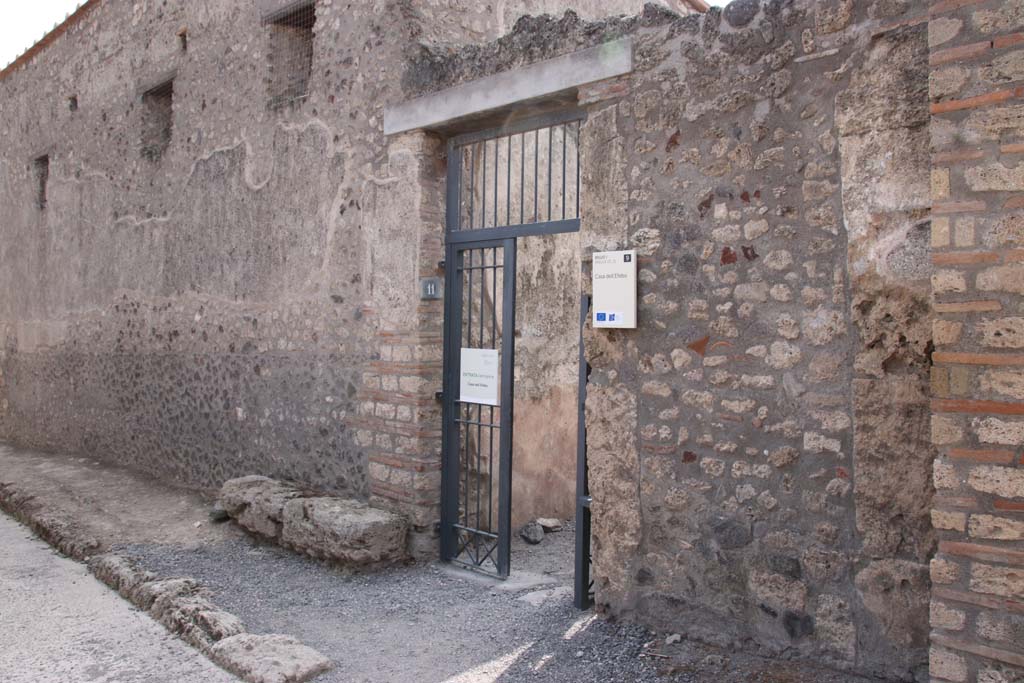
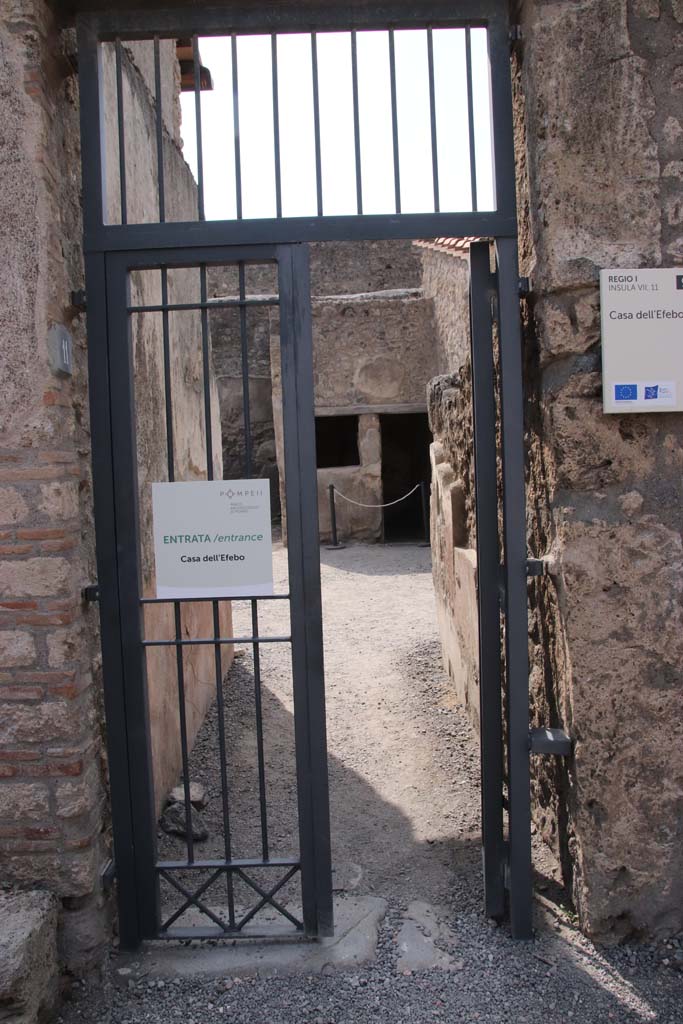
I.7.11 Pompeii. September 2021.
Looking west into atrium through entrance doorway. Photo
courtesy of Klaus Heese.
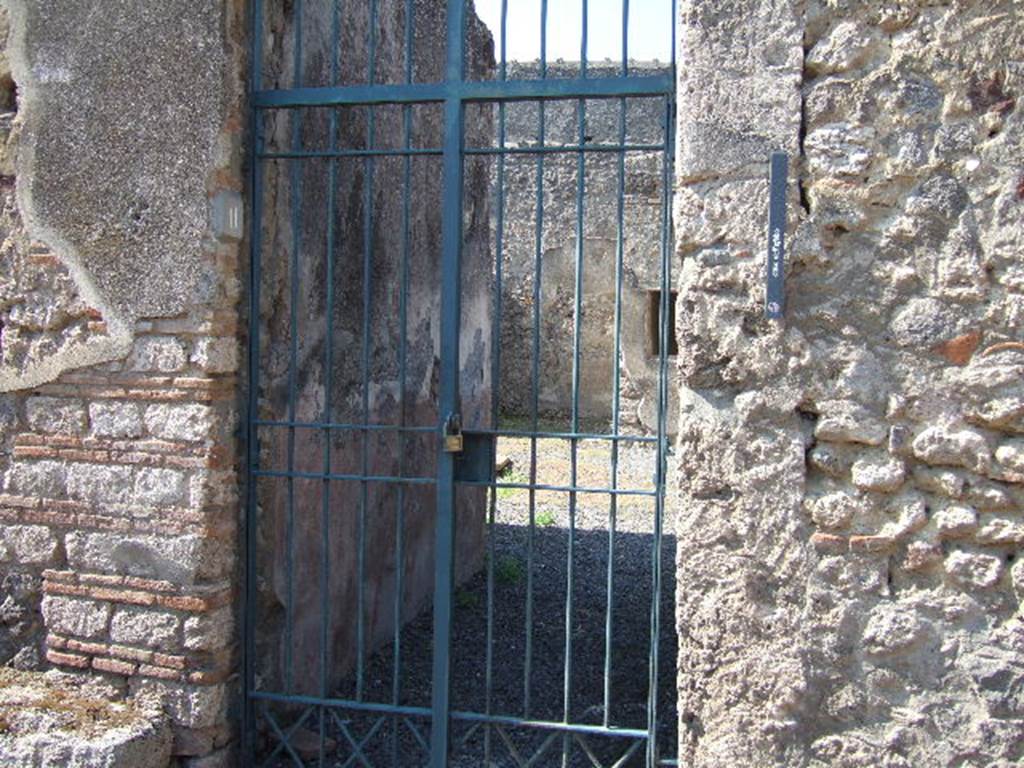
I.7.11 Pompeii. September 2005. Entrance, looking west into atrium.
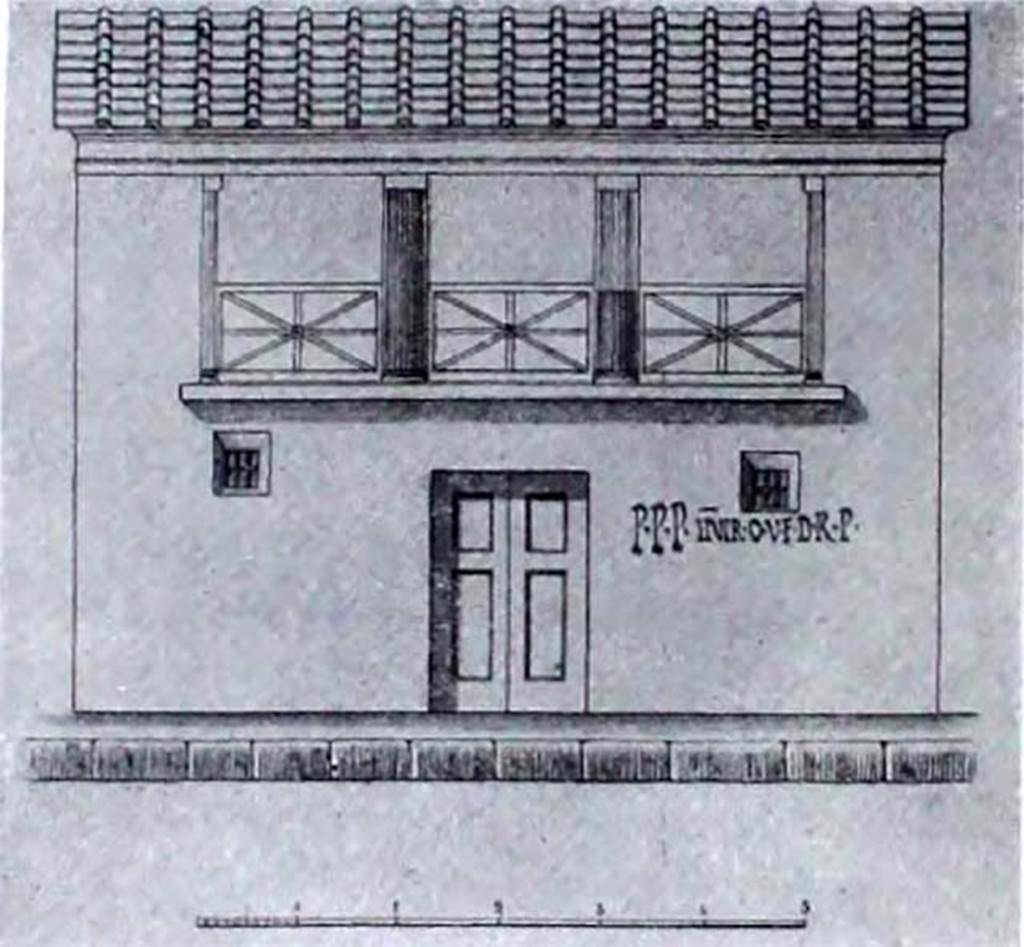
I.7.11 Pompeii. 1927 drawing of suggested reconstruction of facade.
According to NdS this shows the inscription, in faded red, to the right of entrance 10.
P P P II VIR
O V F D R P
It is another programma in the series, very numerous in this insula and the adjacent houses, of P. Paquio Proculo.
See Notizie degli Scavi di Antichità, 1927,
p. 34, fig. 11, p. 80-1.
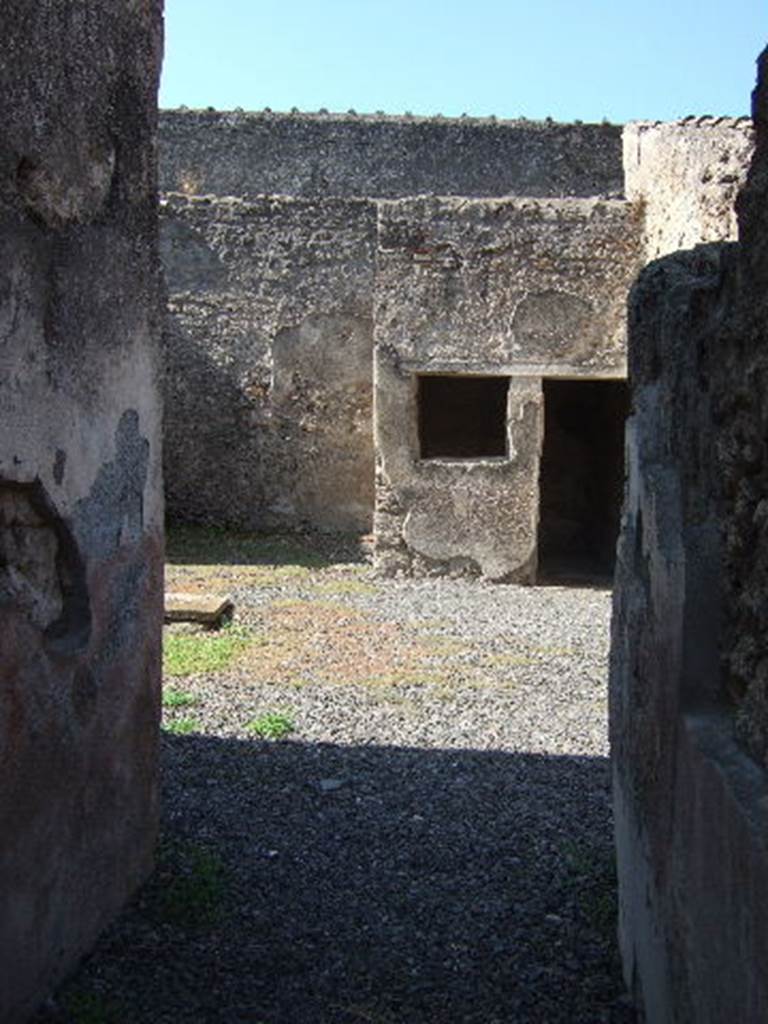
I.7.11 Pompeii. September 2005. Looking west along entrance corridor from doorway at I.7.11.
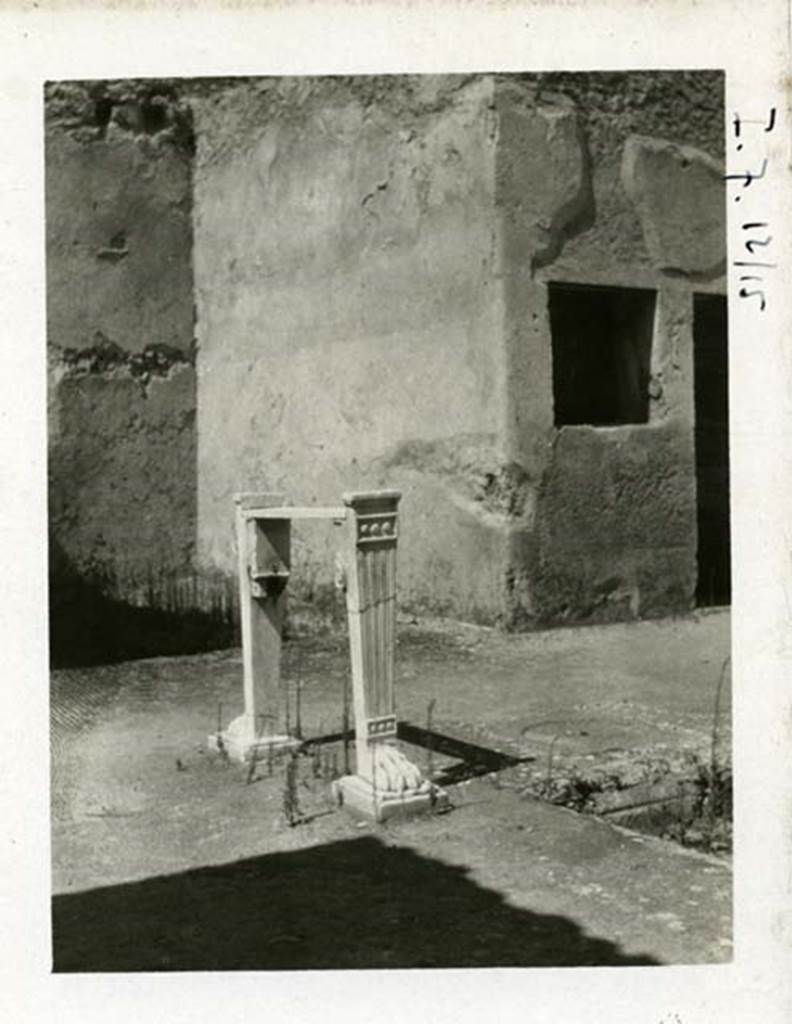
I.7.11 Pompeii, listed as I.7.12/15. Pre-1937-39.
Looking north-west across atrium towards exedra, and bedroom with window and doorway.
Photo courtesy of American Academy in Rome, Photographic Archive. Warsher collection no. 1894.
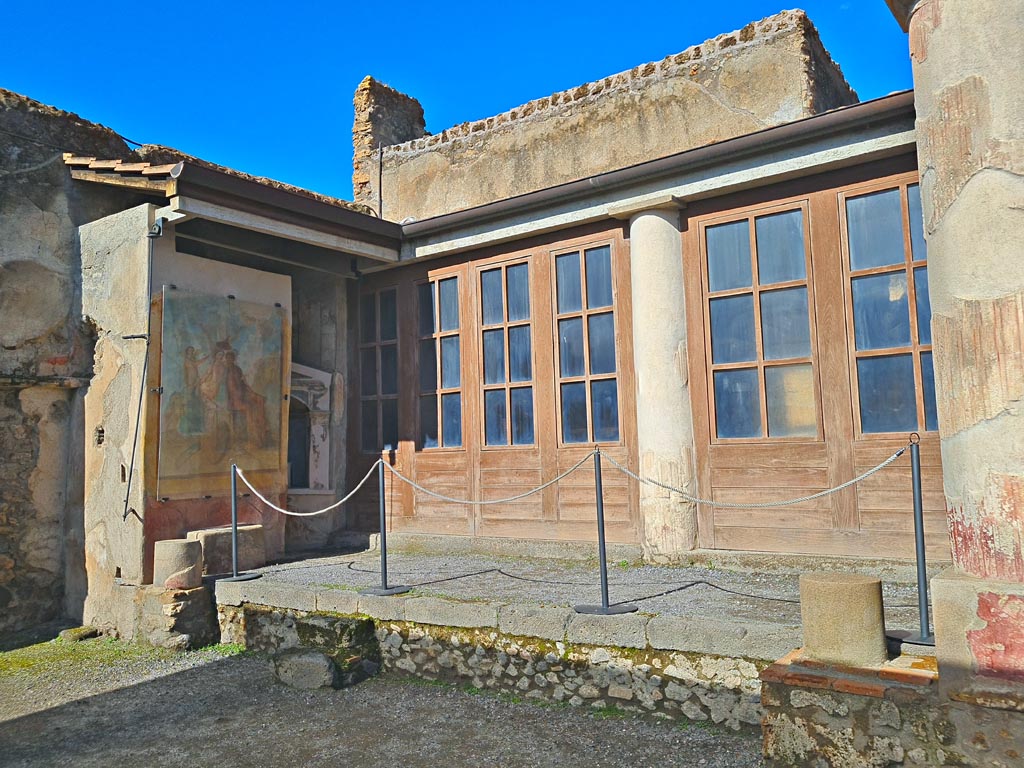
I.7.11/12 Pompeii. March 2024. Looking towards north portico of garden area. Photo courtesy of Giuseppe Ciaramella.
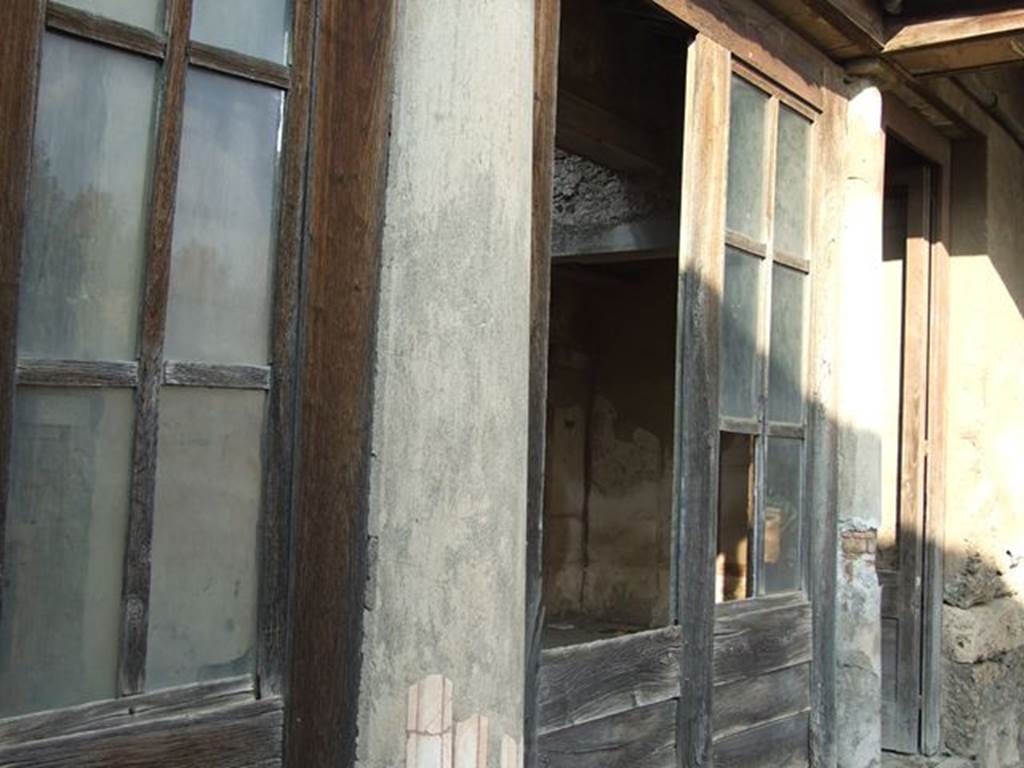
I.7.11 Pompeii. December 2006. South end of house, north wall of north portico with reproduction wooden doors, leading from I.7.12.
According to Jashemski, Maiuri said the space between the columns and the west pillar of the portico were closed by glass set in a wooden frame.
This would have kept the rain and sun from the triclinium, tablinum and exedra.
Maiuri did not mention finding any glass and some scholars think that wooden shutters were used.
See Jashemski, W. F., 1993. The Gardens of Pompeii, Volume II: Appendices. New York: Caratzas. (p.38)
From now on, the photos show the northern part of this house, starting from the north wall of the north portico.
To see the southern part of the house and garden area, see I.7.12.
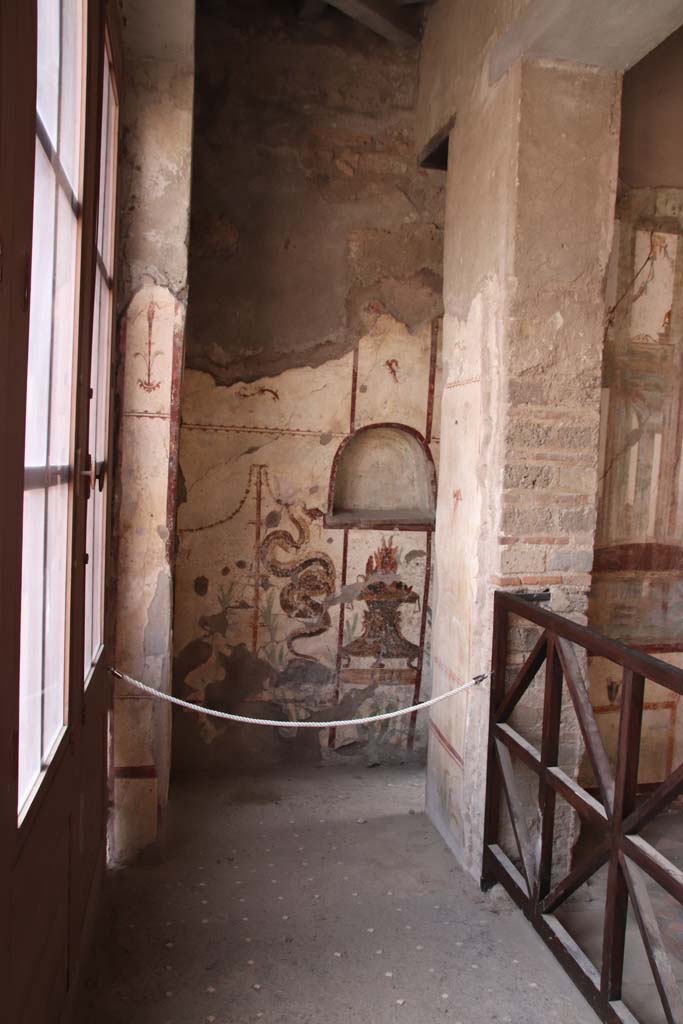
I.7.11 Pompeii, 1978. Looking towards north portico from garden area. Photo by Stanley A. Jashemski.
Source: The Wilhelmina and Stanley A. Jashemski archive in the University of Maryland Library, Special Collections (See collection page) and made available under the Creative Commons Attribution-Non-Commercial License v.4. See Licence and use details.
J78f0359
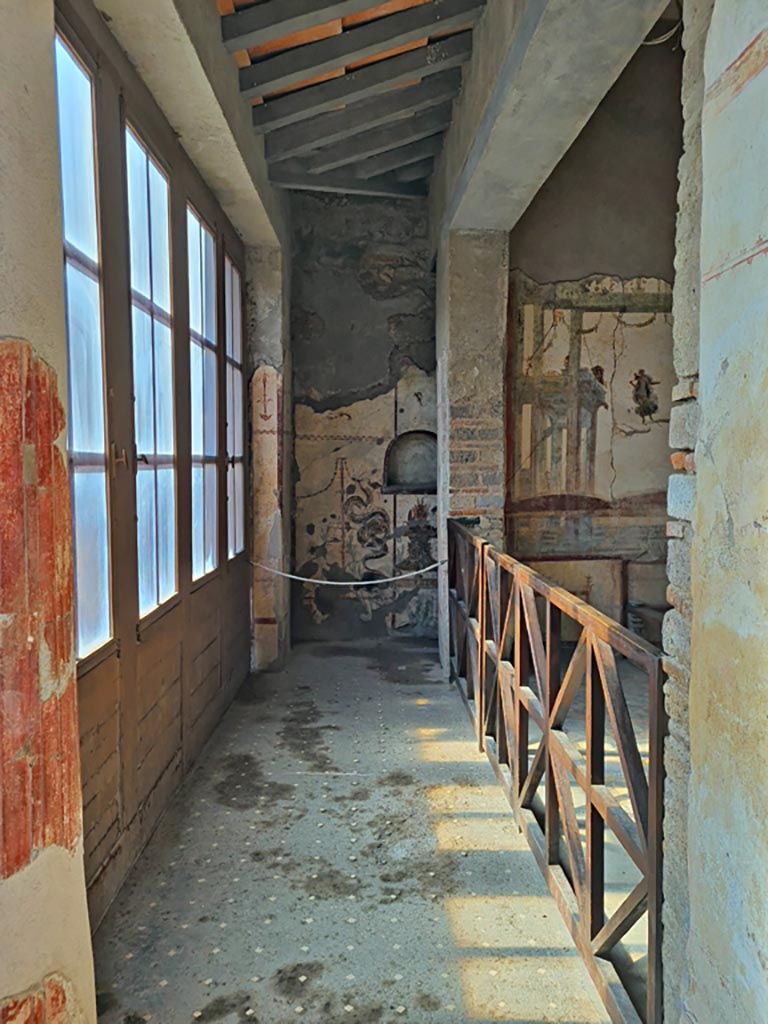
I.7.11 Pompeii. September 2024. Looking west towards Lararium. Photo courtesy of Giuseppe Ciaramella.
I.7.11 Pompeii. May 2017. Lararium on west wall. Photo courtesy of Buzz Ferebee.
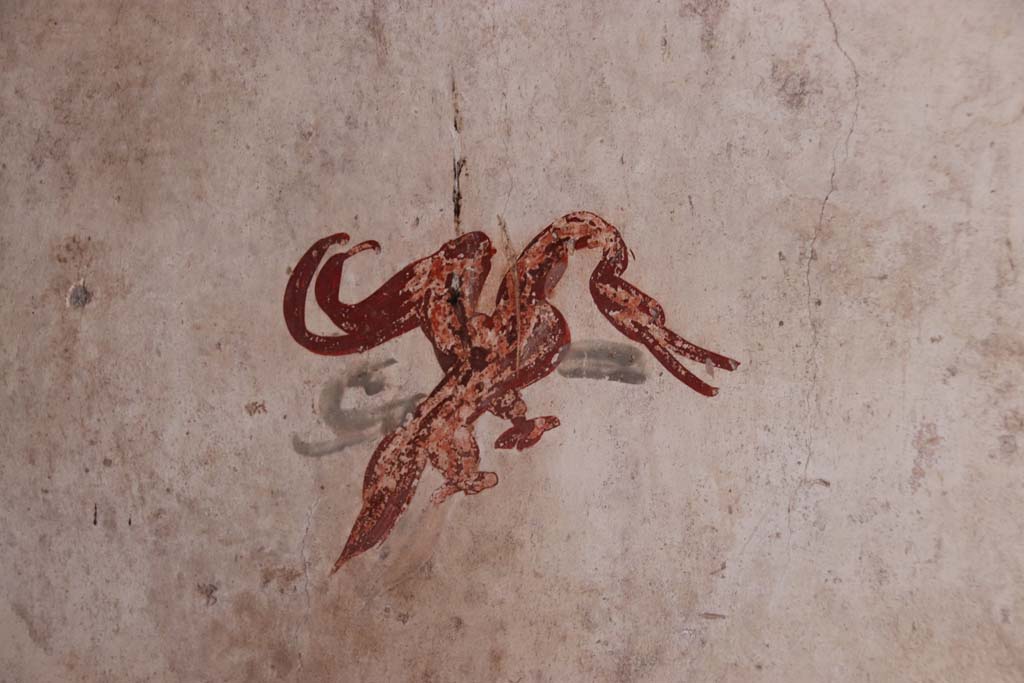
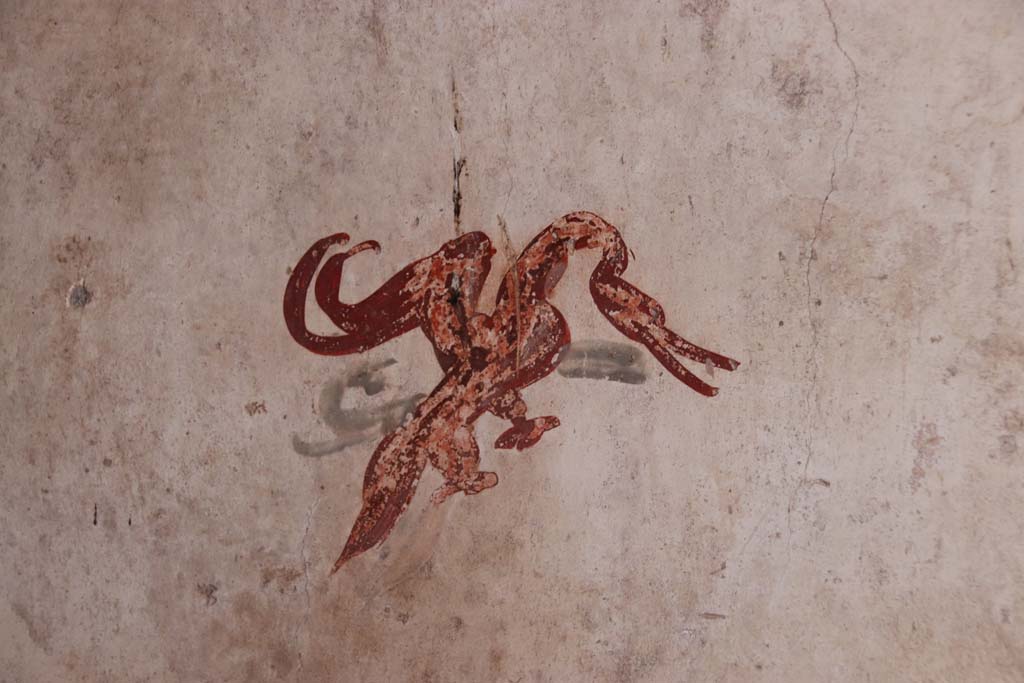
I.7.11 Pompeii. September 2021. Painted bird on north wall.
Photo courtesy of Klaus Heese.
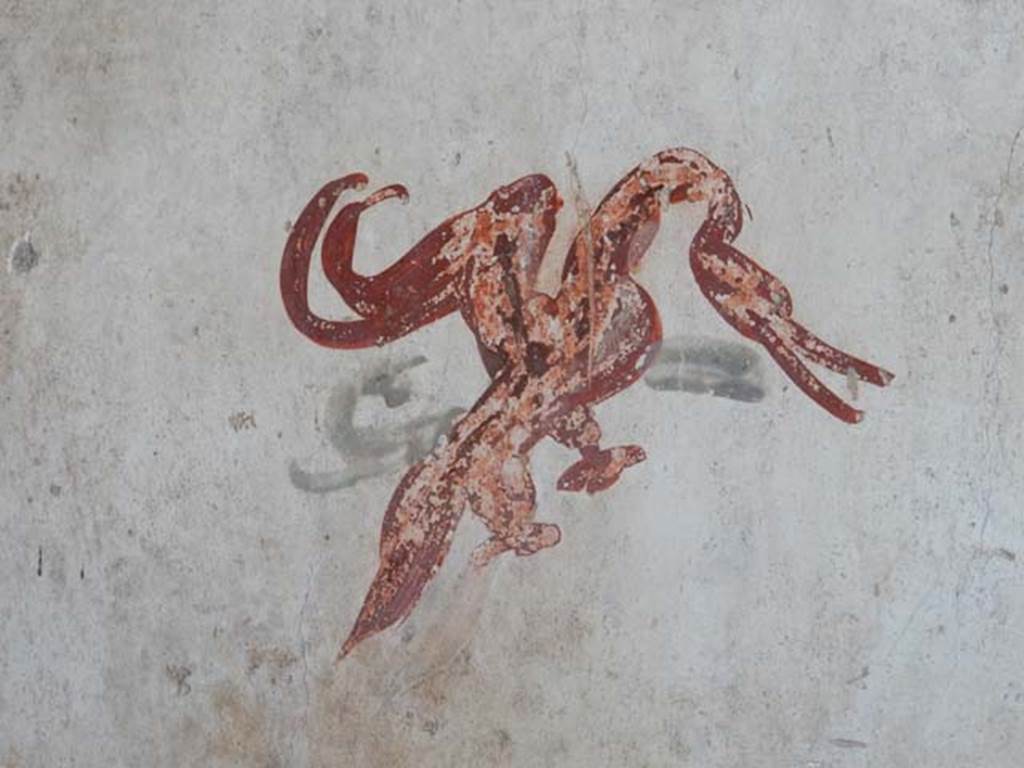
I.7.11 Pompeii. May 2017. Detail of painted bird from north wall. Photo courtesy of Buzz Ferebee.
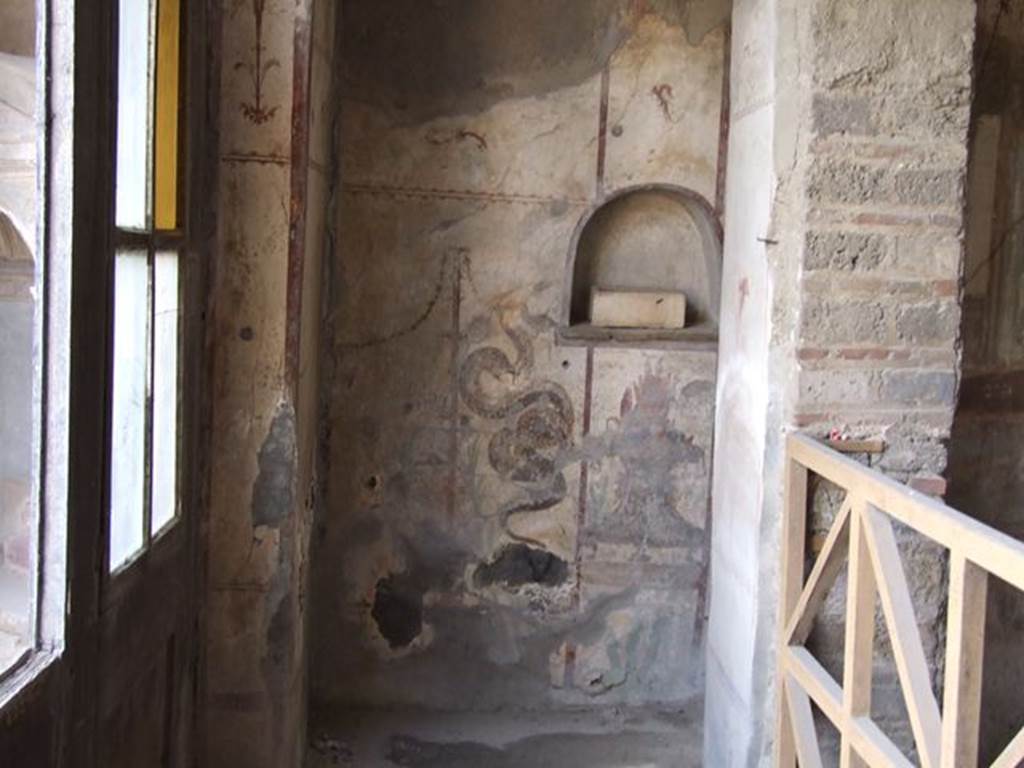
I.7.11 Pompeii. December 2006. Lararium on west wall.
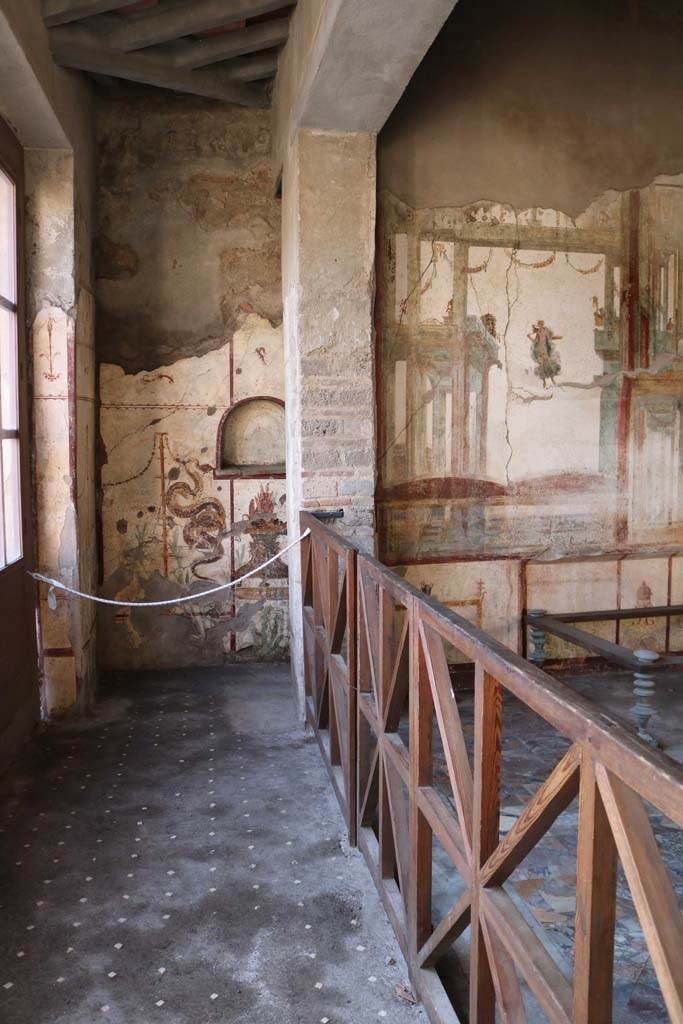
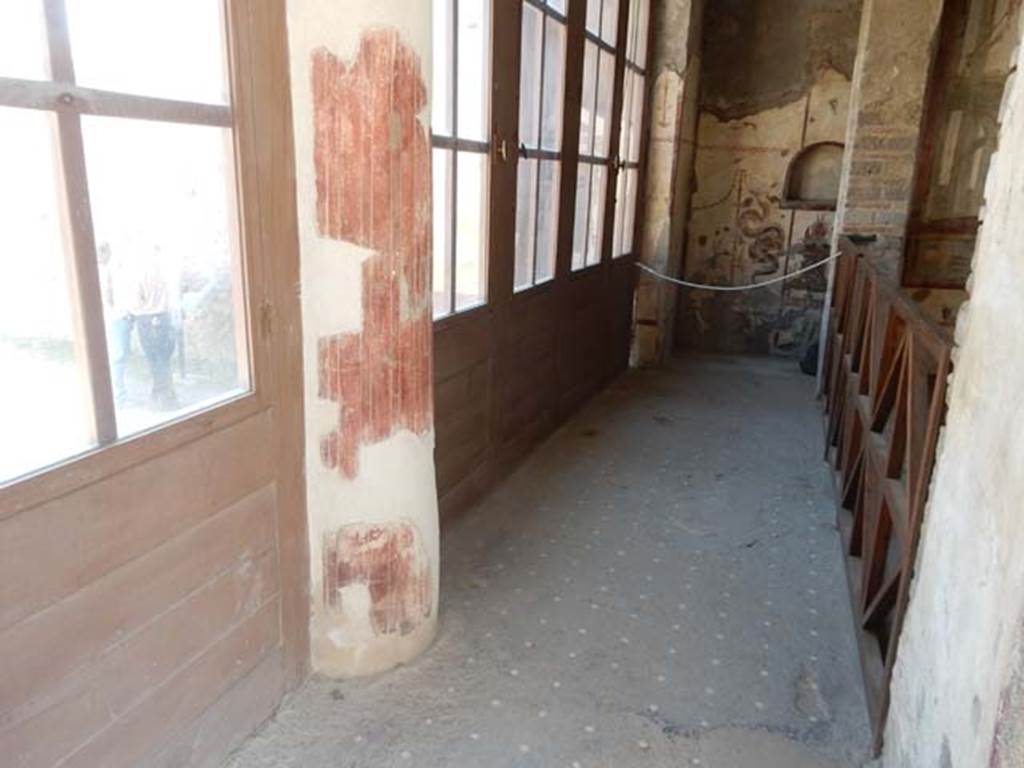
According to Boyce, in a very narrow room opening off the north-west corner of the peristyle and west of the triclinium was a lararium.
The arched niche is simply decorated with a dark stripe outlining the niche against the white of the surrounding wall.
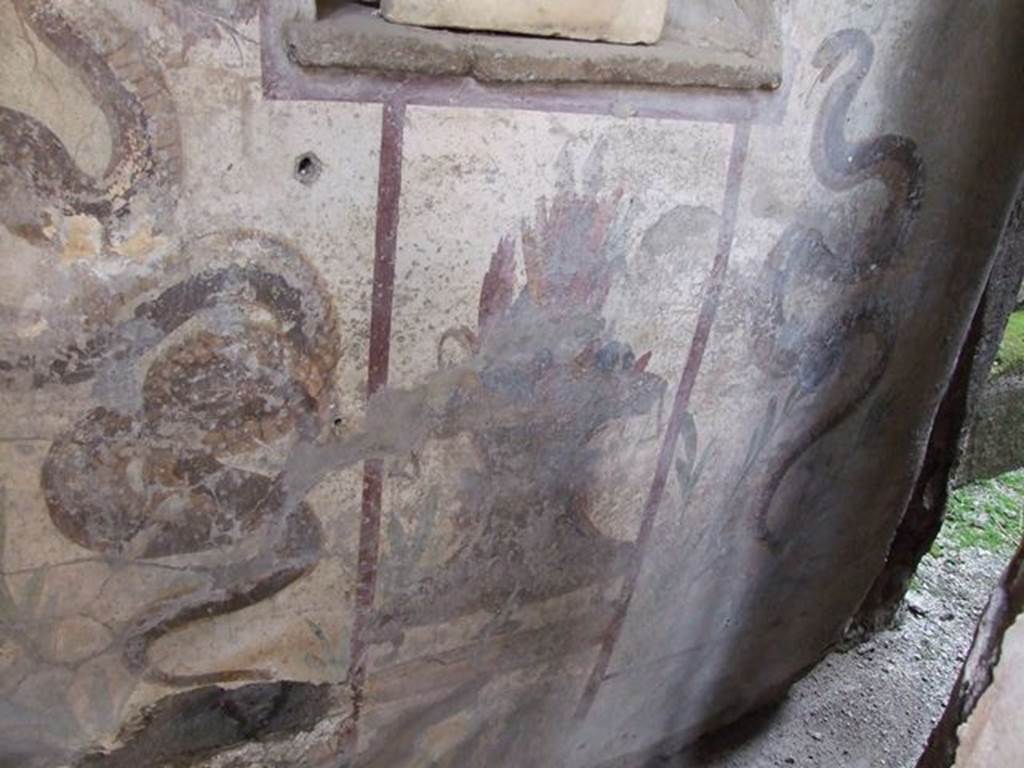
On the wall below the niche are two painted serpents, one on each side.
Their heads are on a level with the floor of the niche.
(Boyce then gives a note that these serpents direct their heads to the niche as if to receive the offerings placed in it, rather than to the offerings on the burning altar).
The serpent on the left is larger and has a red crest and beard, the other serpent being smaller, with neither crest or beard.
Between the serpents, under the niche, is a painted flaming altar in the form of a metal brazier.
On top of the brazier are eggs.
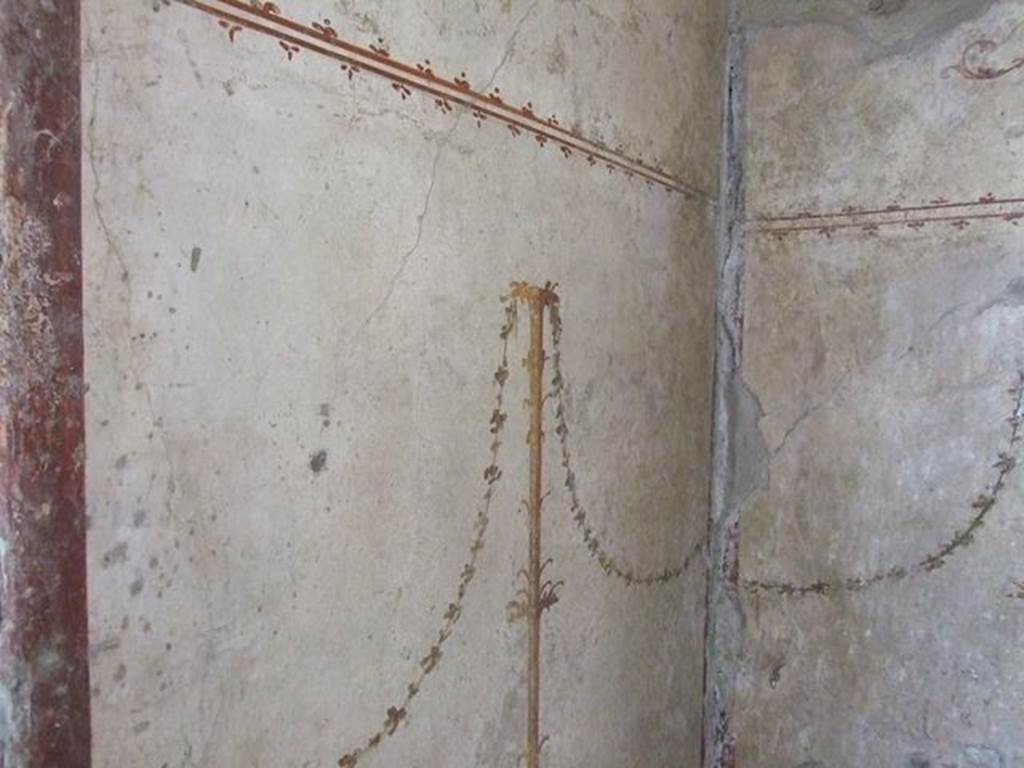
Plants are in the background, and stylized candelabra with festoons border the painting on the sides.
See Notizie degli Scavi di Antichità, 1927, 52 with photograph.
See Boyce G. K., 1937. Corpus
of the Lararia of Pompeii. Rome: MAAR 14. (p.26, no.41B).
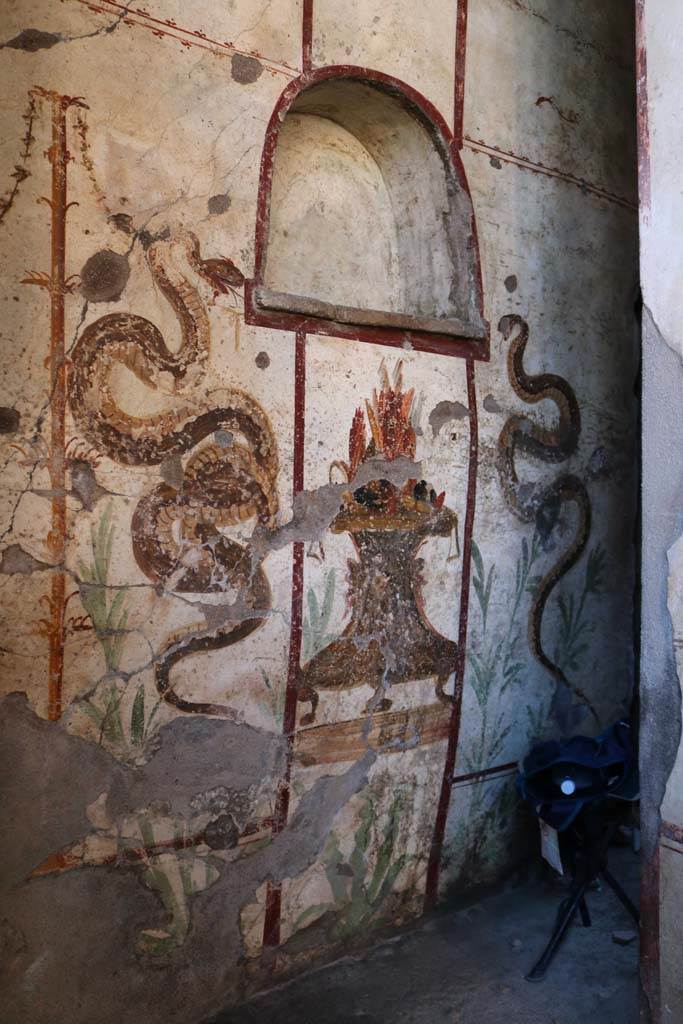
I.7.11 Pompeii. August
2023. Lararium against west wall. Photo
courtesy of Maribel Velasco.
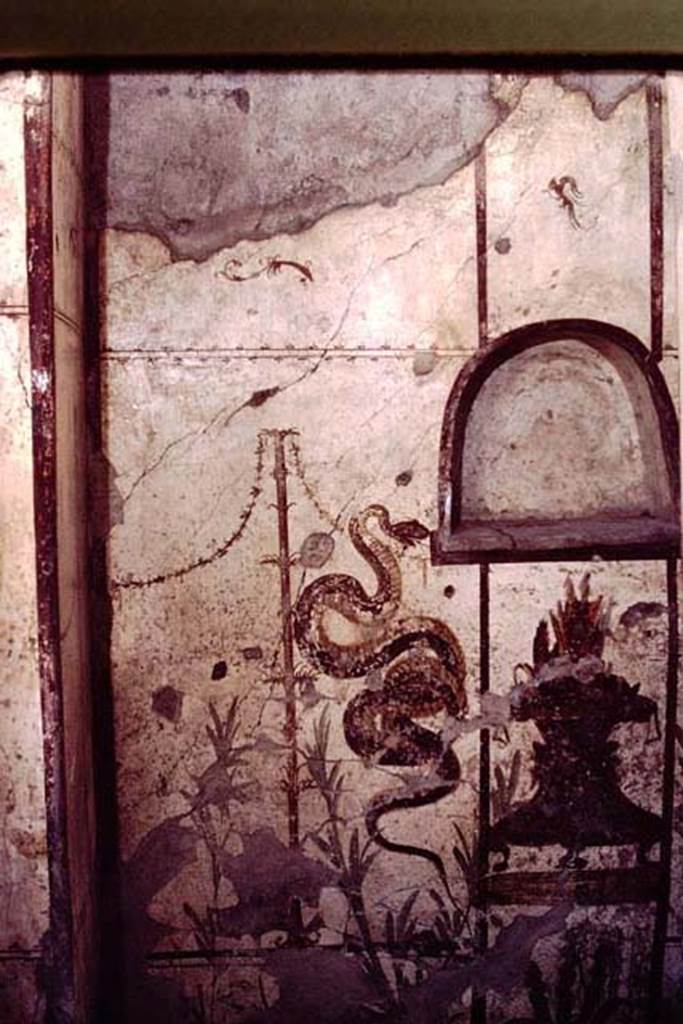
I.7.11 Pompeii. December 2018. Lararium against west
wall. Photo
courtesy of Aude Durand.
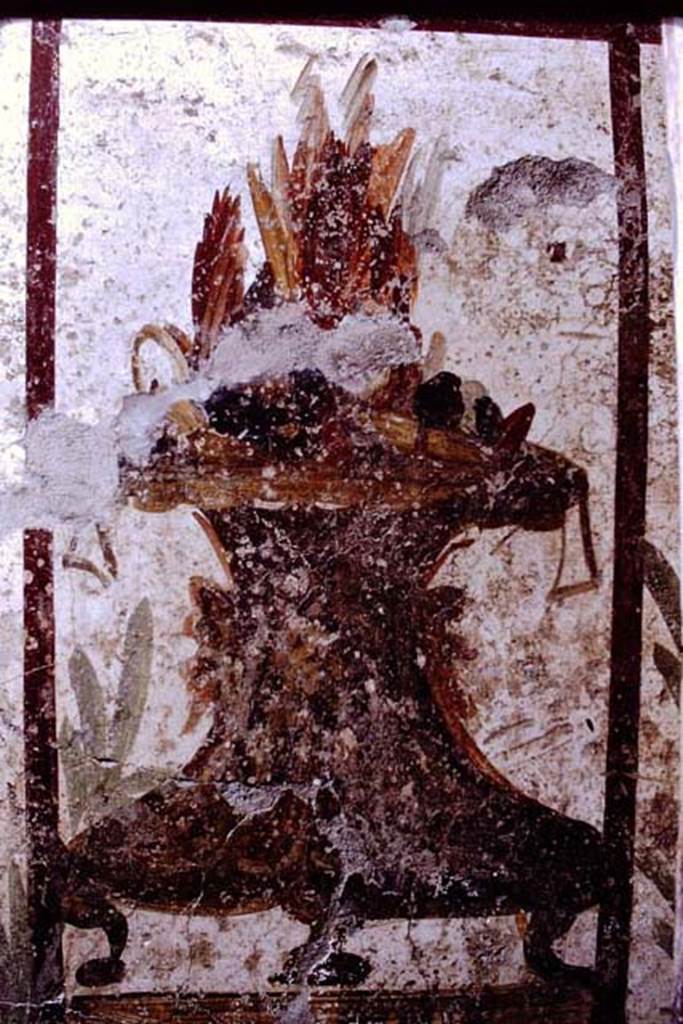
I.7.11 Pompeii. 1968. Lararium on west wall. Photo by Stanley A. Jashemski.
Source: The Wilhelmina and Stanley A. Jashemski archive in the University of Maryland Library, Special Collections (See collection page) and made available under the Creative Commons Attribution-Non-Commercial License v.4. See Licence and use details.
J68f0414
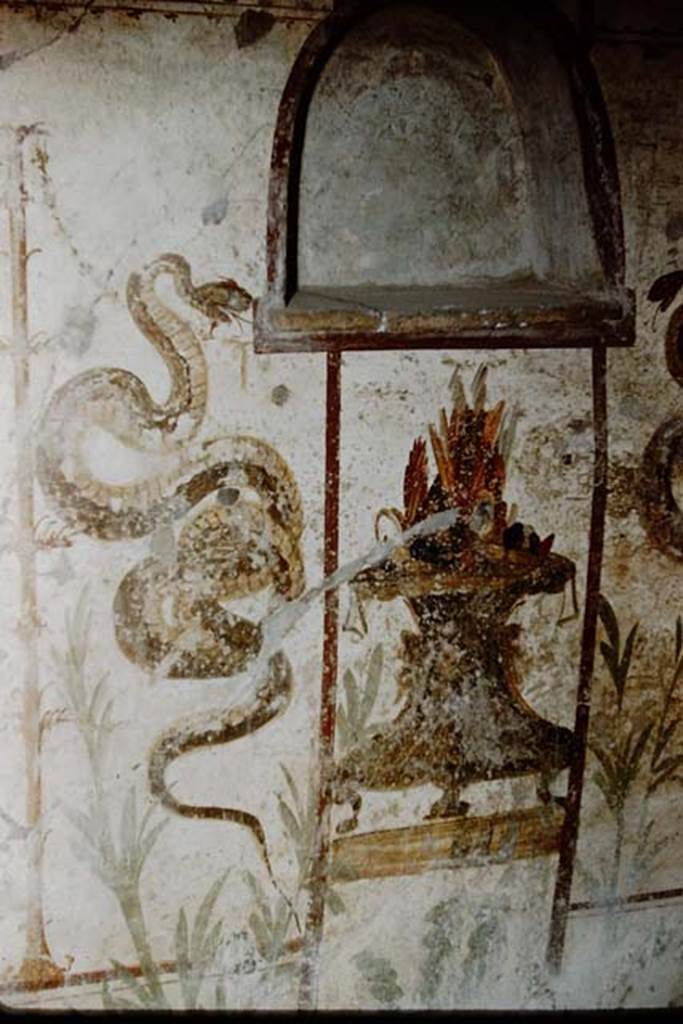
I.7.11 Pompeii, 1968. Altar. Photo by Stanley A. Jashemski.
Source: The Wilhelmina and Stanley A. Jashemski archive in the University of Maryland Library, Special Collections (See collection page) and made available under the Creative Commons Attribution-Non-Commercial License v.4. See Licence and use details.
J68f0415
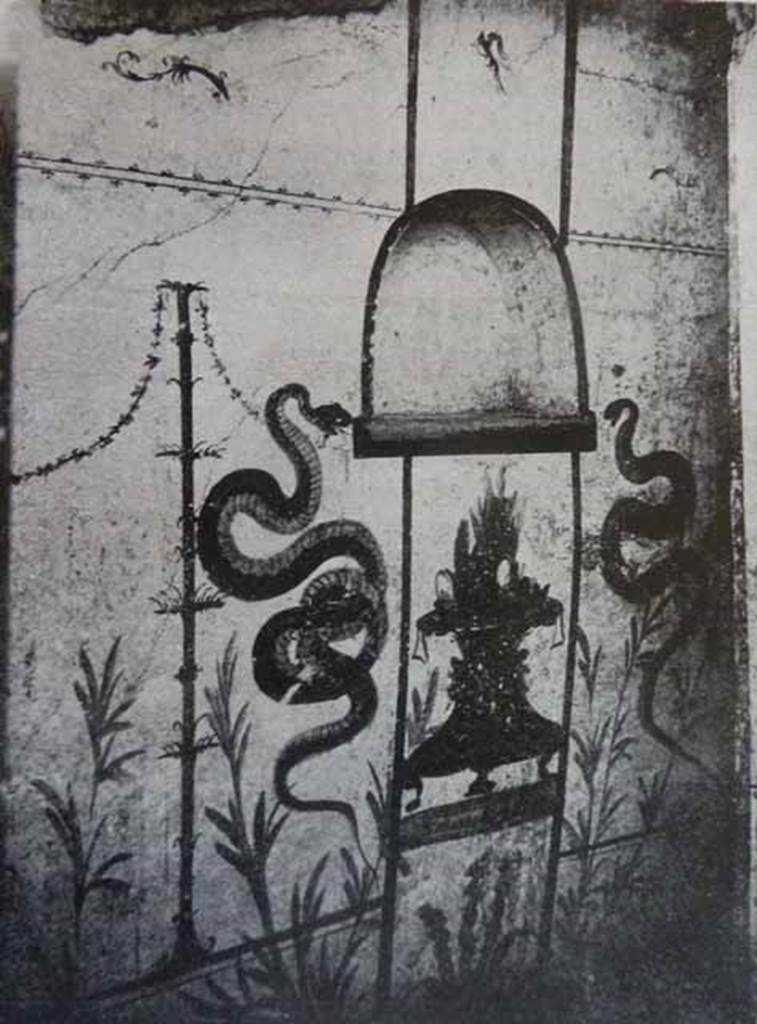
I.7.11 Pompeii. 1959. Lararium on west wall. Photo by Stanley A. Jashemski.
Source: The Wilhelmina and Stanley A. Jashemski archive in the University of Maryland Library, Special Collections (See collection page) and made available under the Creative Commons Attribution-Non-Commercial License v.4. See Licence and use details.
J59f0321
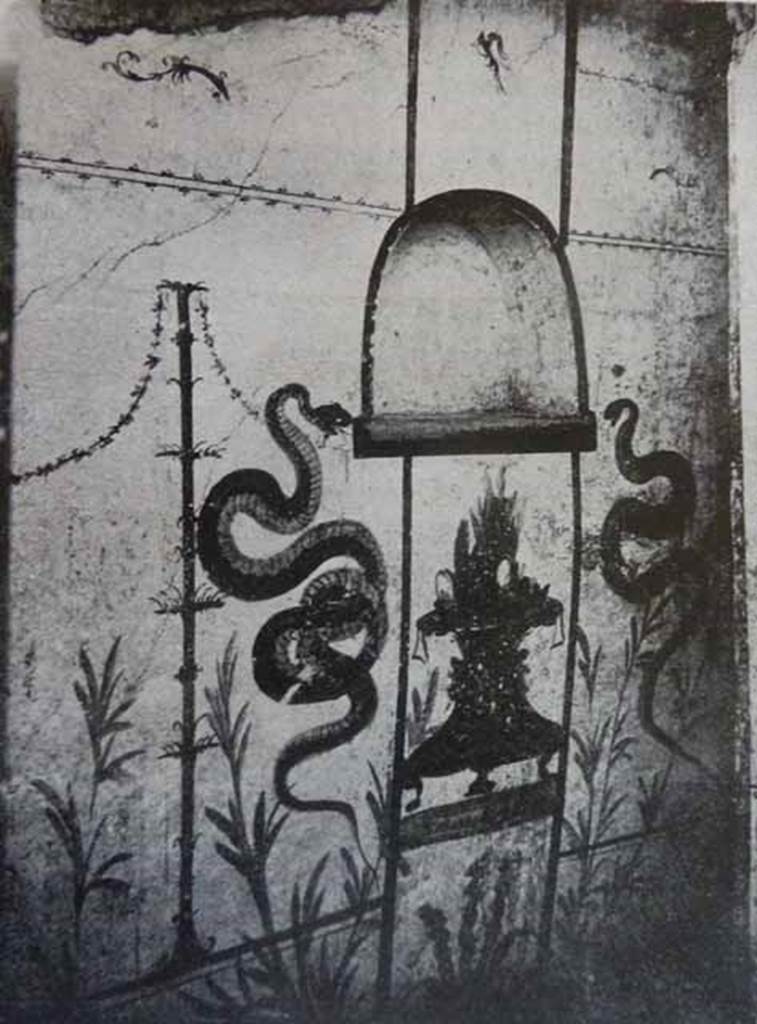
I.7.11 Pompeii. Lararium when first excavate, showing arched niche and two serpents.
Between the serpents, under the niche, is a painted flaming altar in the form of a metal brazier.
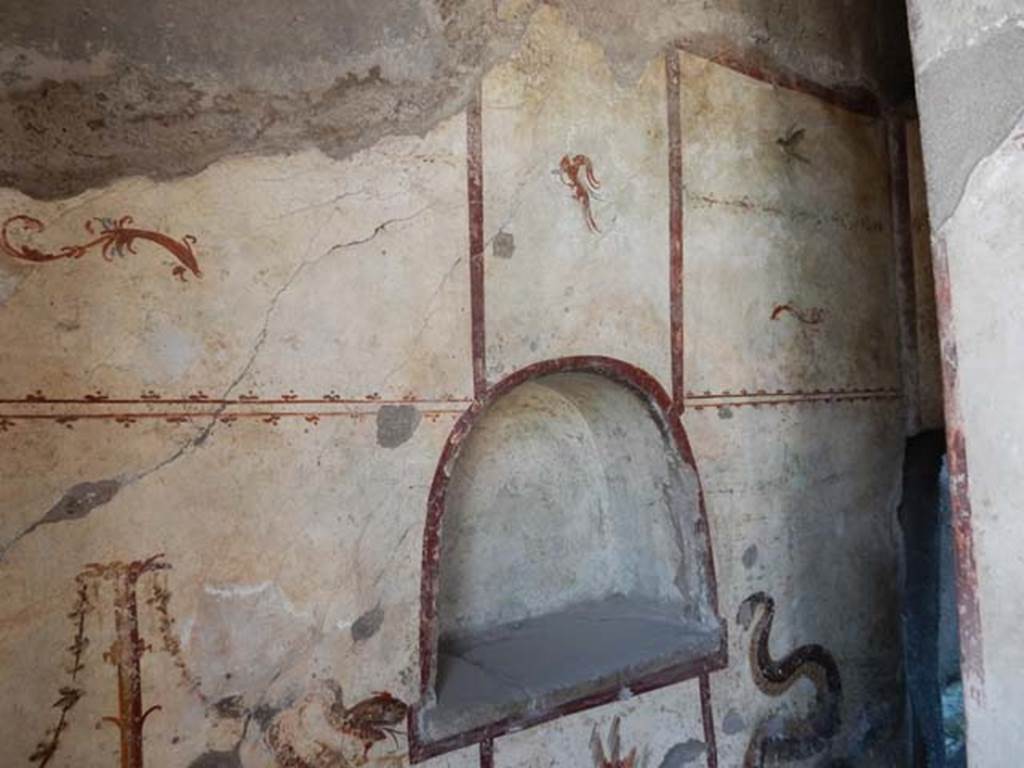
I.7.11 Pompeii. September 2021. Niche set into west wall.
Photo courtesy of Klaus Heese.
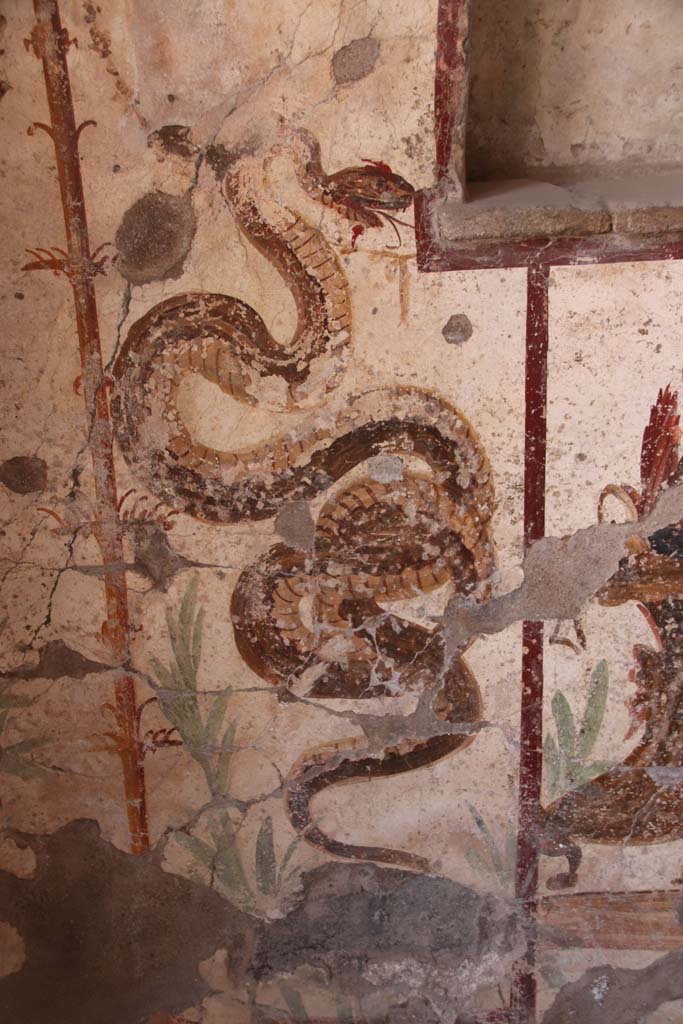
I.7.11 Pompeii. May 2017. Detail of upper west wall and niche. Photo courtesy of Buzz Ferebee.
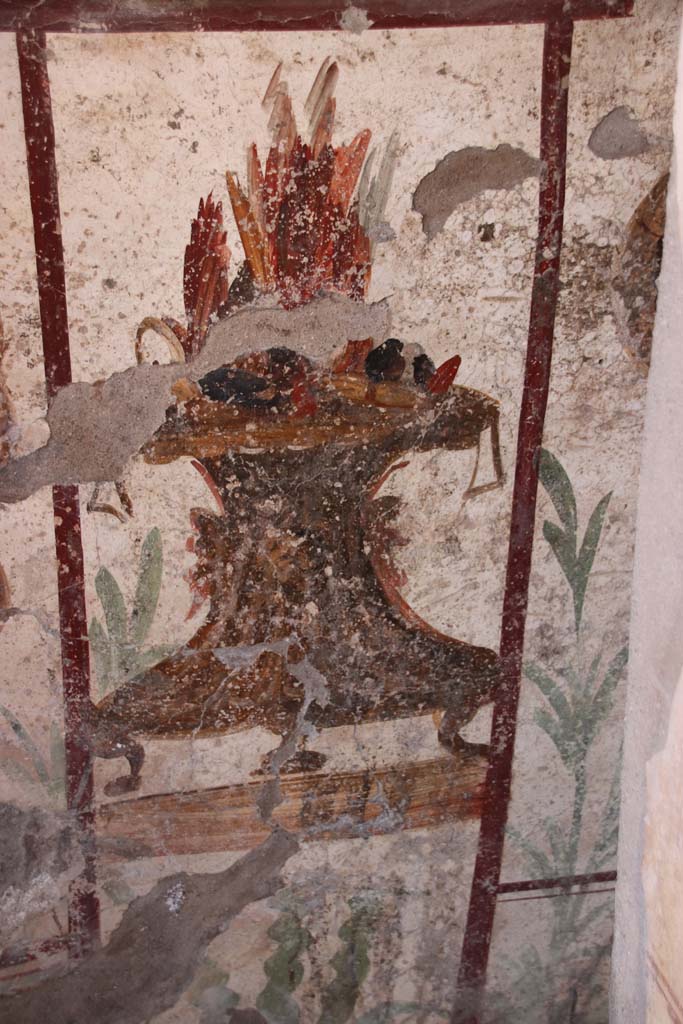
I.7.11 Pompeii. September 2021.
Upper
west wall, painted decoration in centre above niche. Photo courtesy of Klaus
Heese.
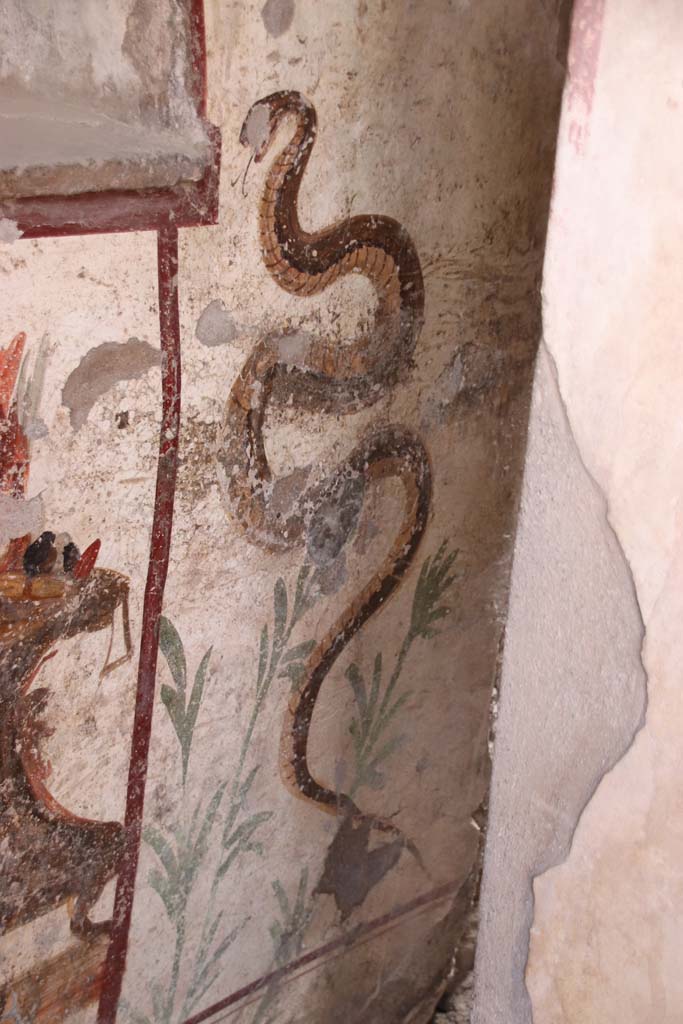
I.7.11 Pompeii. September 2021.
Painted serpent on south side of painted altar. Photo courtesy of
Klaus Heese.
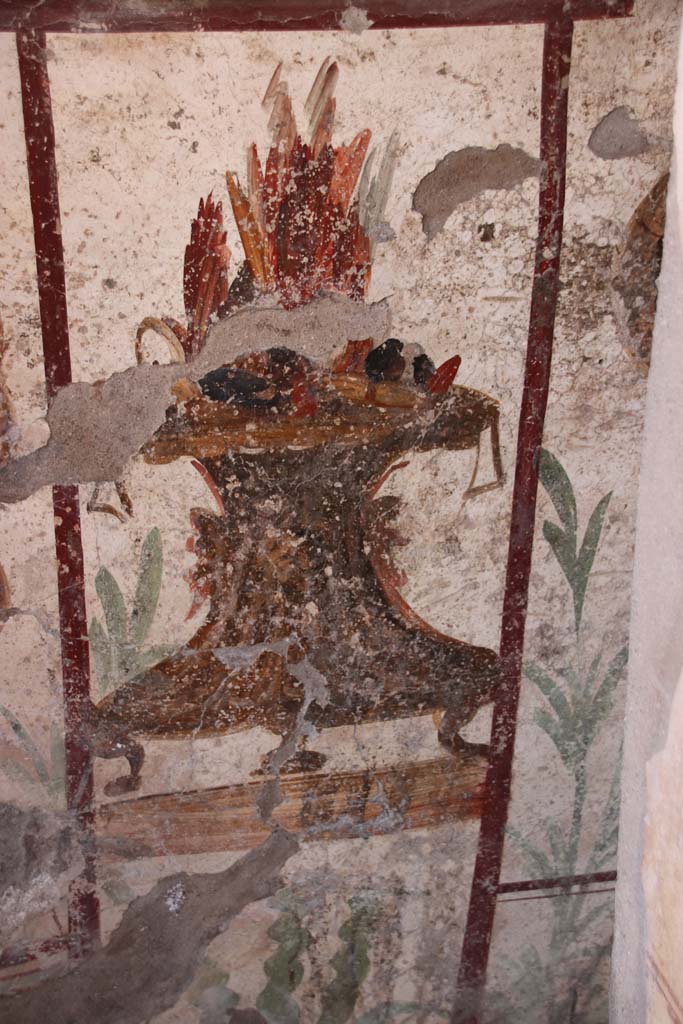
I.7.11 Pompeii. September 2021. Painted altar on west wall.
Photo courtesy of Klaus Heese.
I.7.11 Pompeii. September 2021.
Painted serpent on north side of painted altar. Photo courtesy of
Klaus Heese.
I.7.11 Pompeii. December 2006. Lararium painted flaming altar in the form of a metal brazier, with serpent on either side.
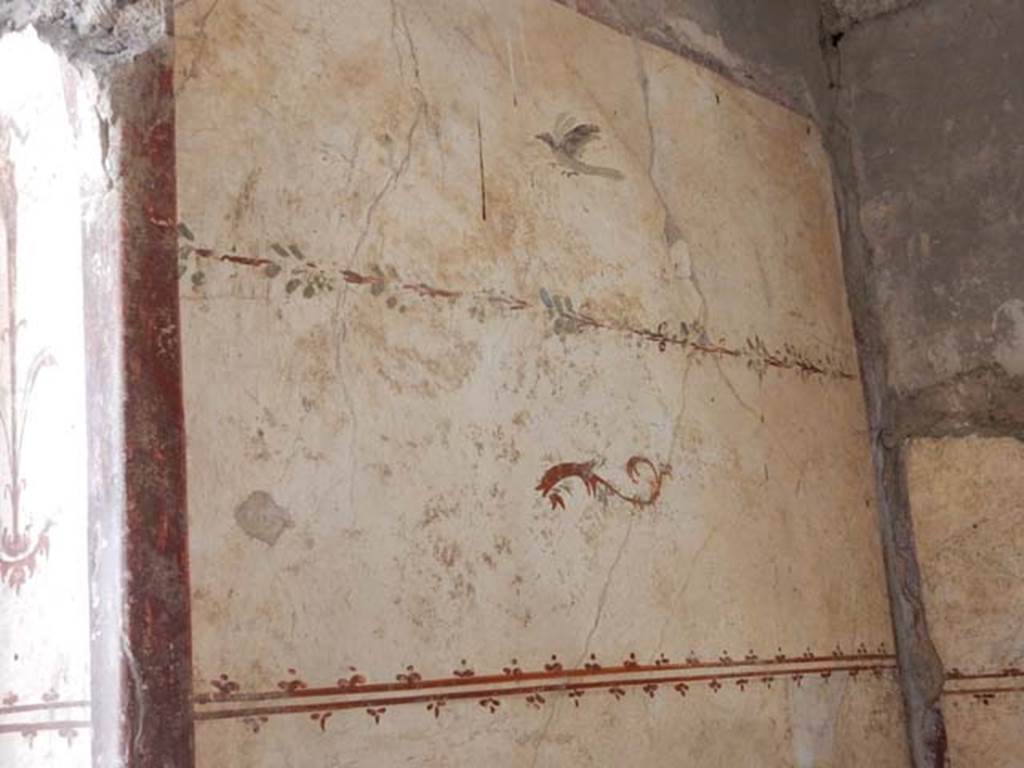
I.7.11 Pompeii. May 2017. Upper south wall. Photo courtesy of Buzz Ferebee.
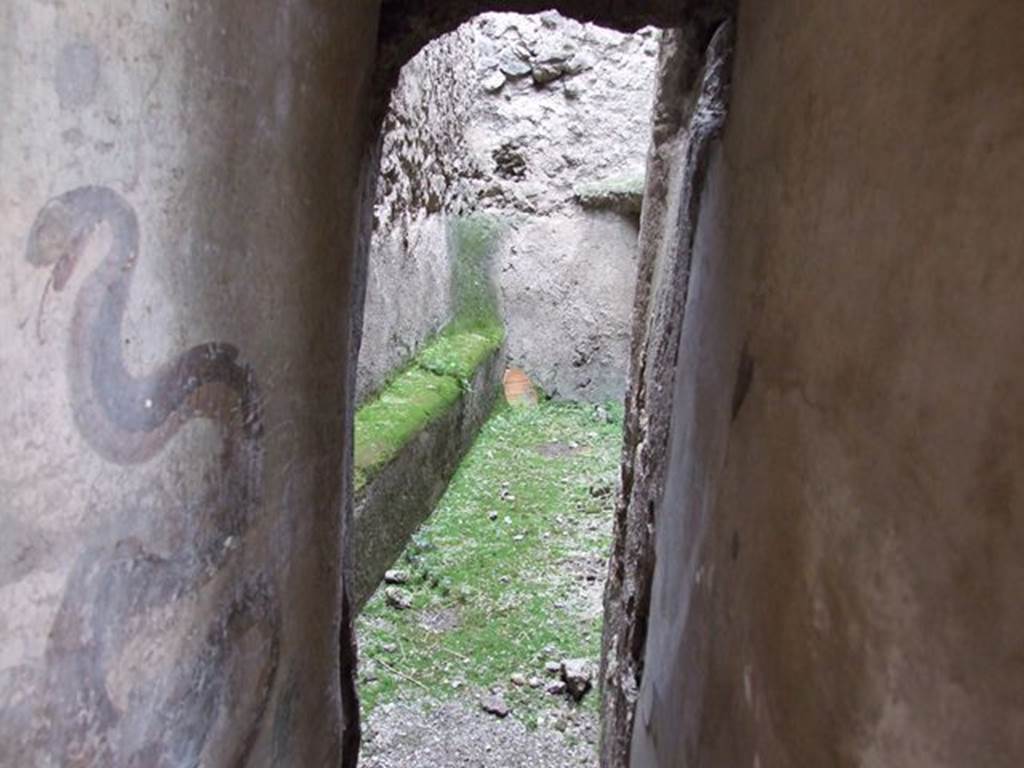
I.7.11 Pompeii. December 2006. Painted festoons from south wall, with stylized candelabra bordering the sides of the lararium.
I.7.11 Pompeii. December 2006. Small room or cupboard on north side of lararium.
I.7.11 Pompeii. December 2018.
Detail of lararium, at rear of west wall of triclinium. Photo
courtesy of Aude Durand.
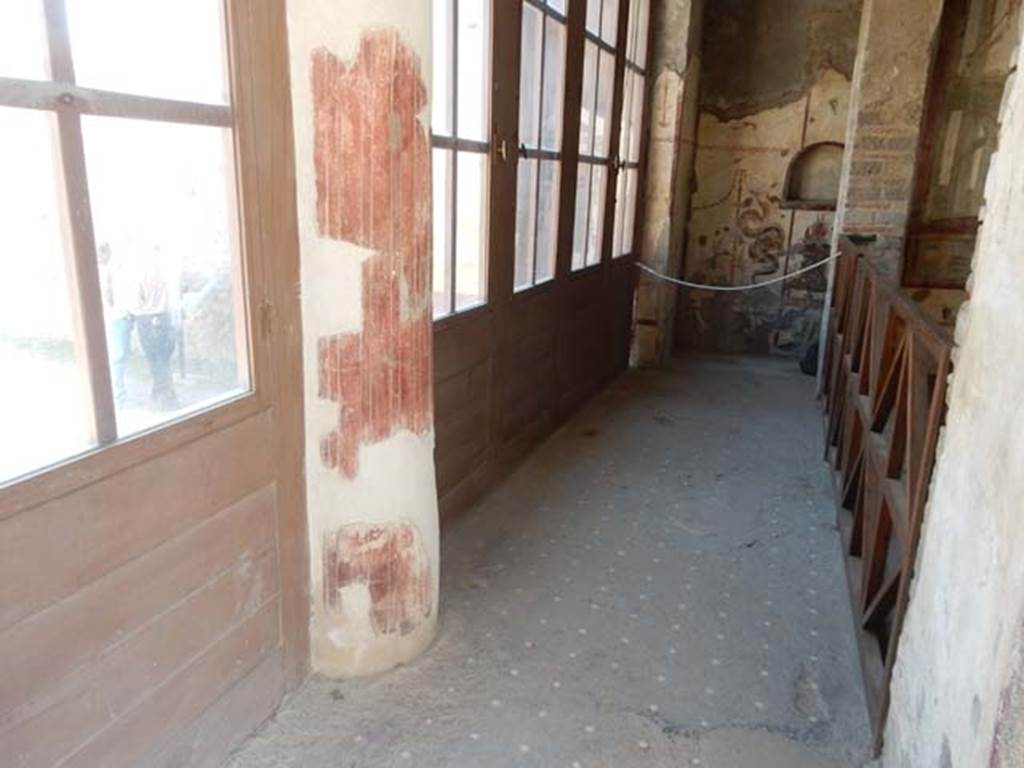
I.7.11 Pompeii. May 2017. Looking west, with triclinium on north (right). Photo courtesy of Buzz Ferebee.
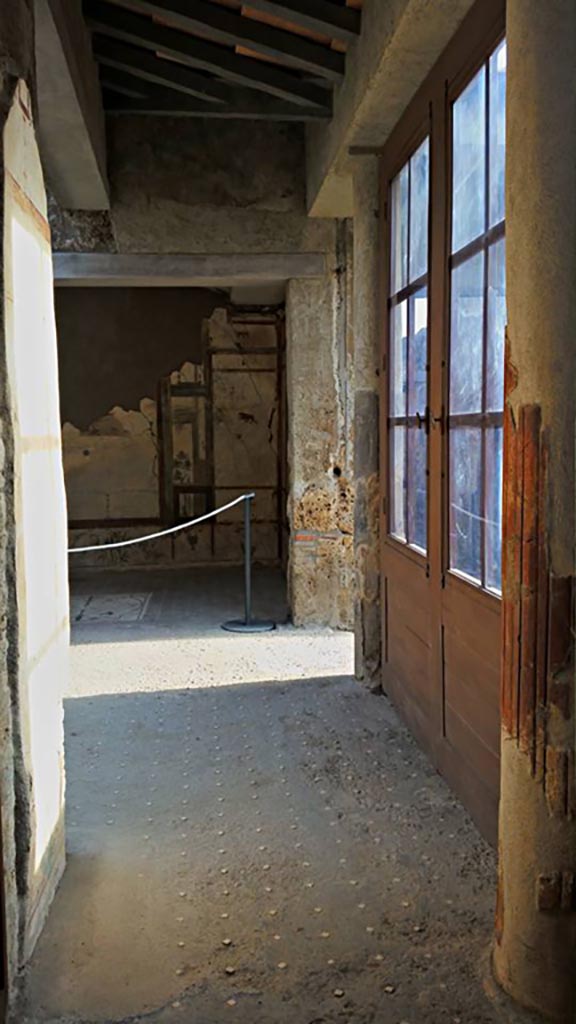
I.7.11 Pompeii. 2015/2016.
Looking east towards exedra. Photo
courtesy of Giuseppe Ciaramella.
Part 1 Part 2 Part 3
Part 4 Part 5 Part 6
Part 7 Part 8 Part 9