I.3.22 Pompeii. Thermopolium. Excavated 1868.
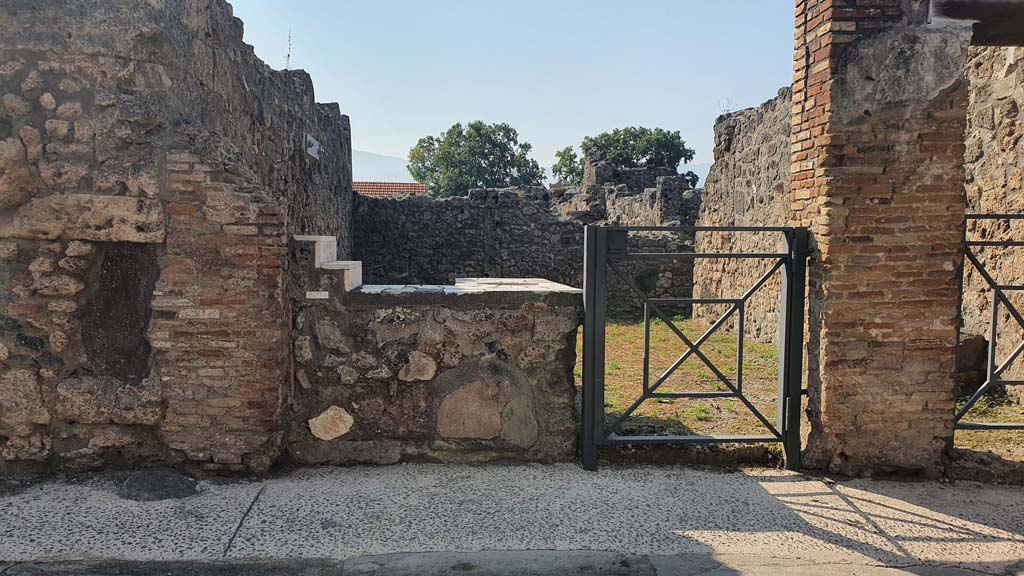
I.3.22 Pompeii. July 2021. Looking towards entrance doorway on south side of Vicolo del Menandro.
Foto Annette Haug, ERC Grant 681269 DÉCOR.
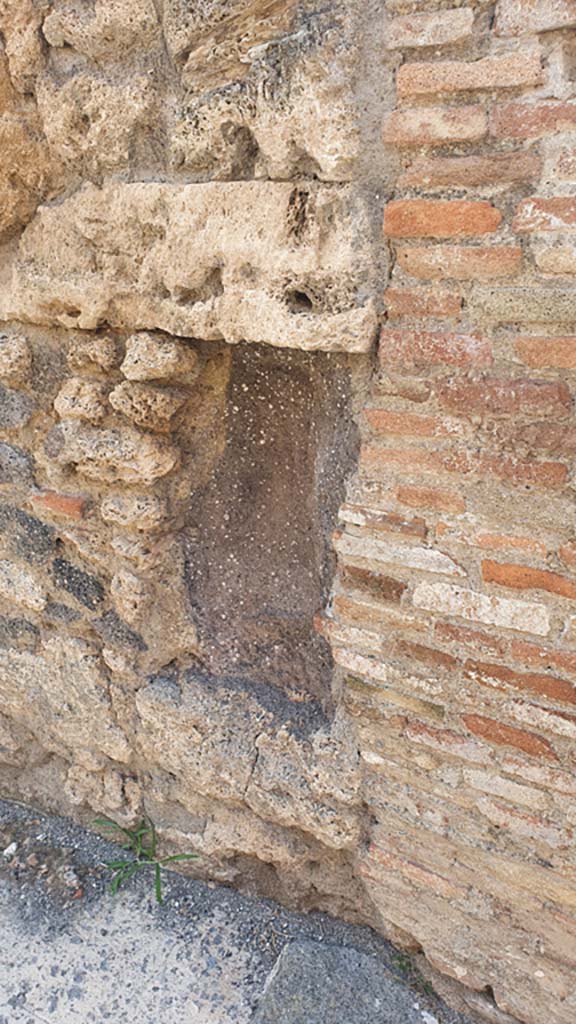
I.3.22 Pompeii. July 2021. Detail of wall on east side of entrance doorway.
Foto Annette Haug, ERC Grant 681269 DÉCOR.
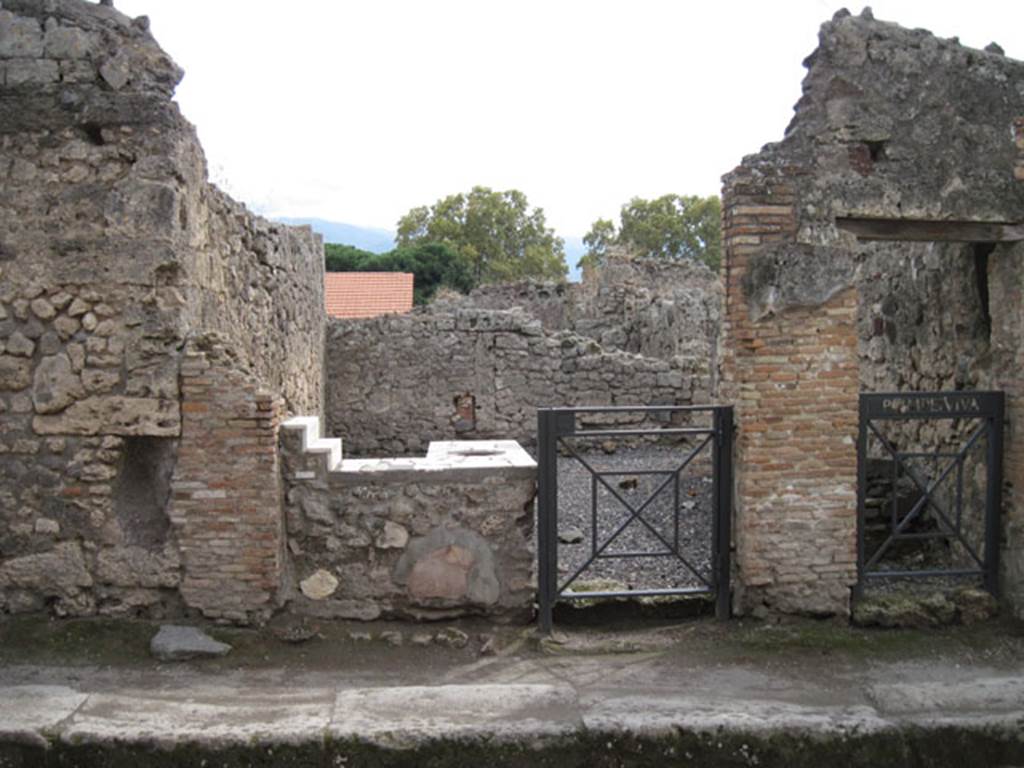
I.3.22 Pompeii. September 2010. Looking south to entrance doorway. Photo courtesy of Drew Baker.
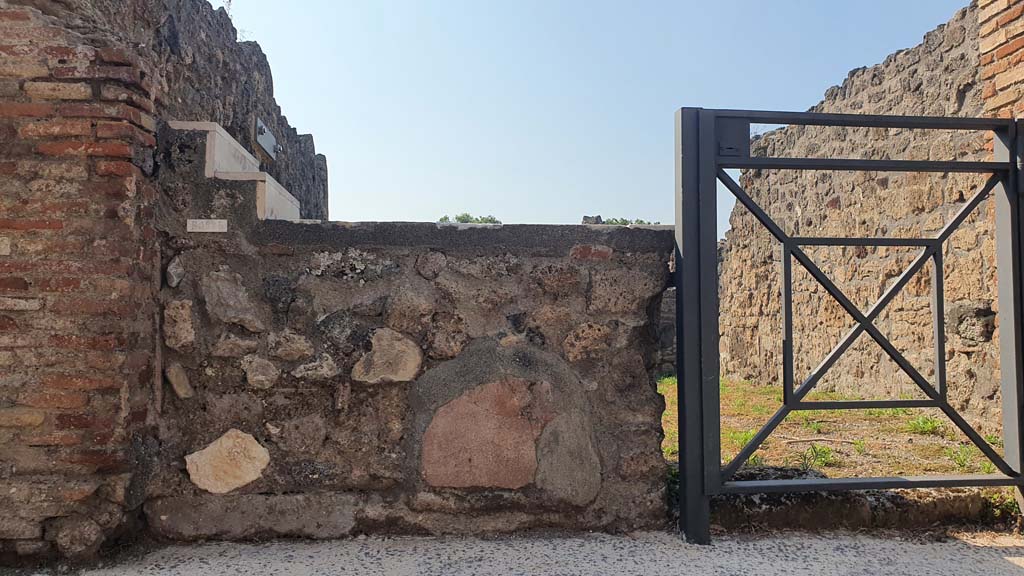
I.3.22 Pompeii. July 2021. Looking south to front of counter with remaining painted stucco.
Foto
Annette Haug, ERC Grant 681269 DÉCOR.
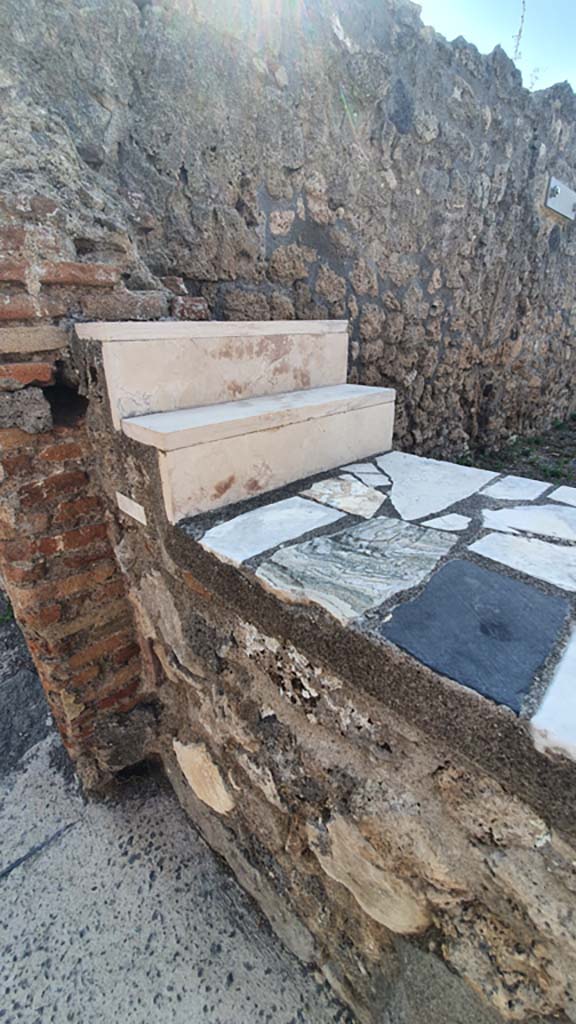
I.3.22 Pompeii. July 2021. Shelving on east side of top of counter.
Foto Annette Haug, ERC Grant 681269 DÉCOR.
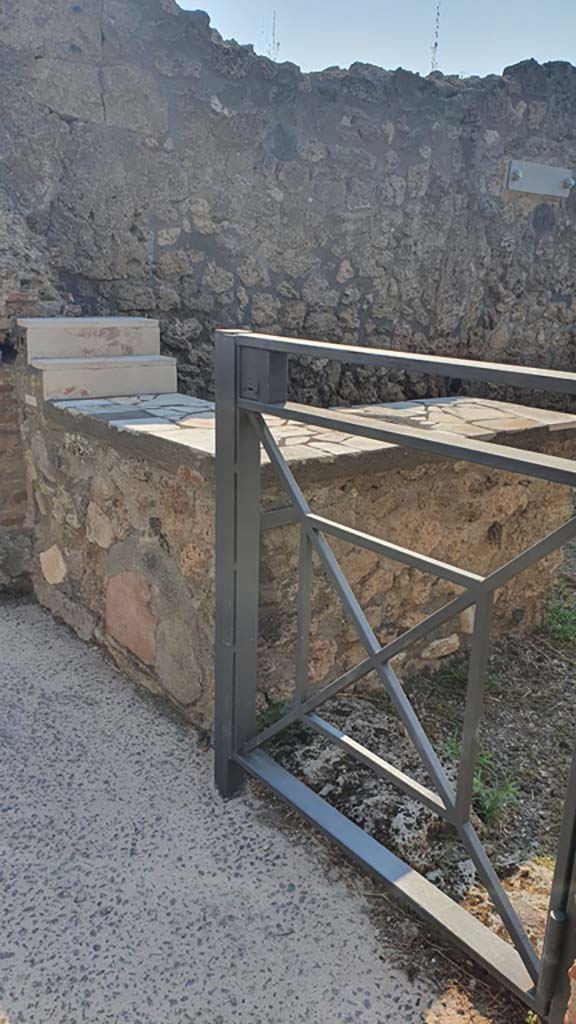
I.3.22 Pompeii. July 2021. Looking south-east towards entrance of bar-room.
Foto
Annette Haug, ERC Grant 681269 DÉCOR.
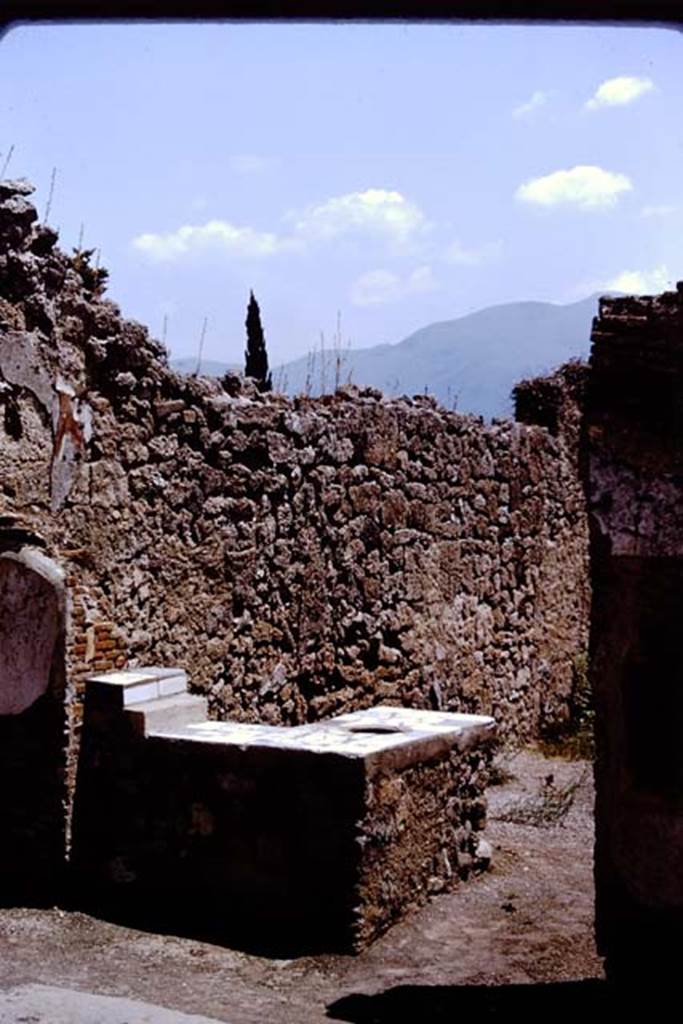
I.3.22 Pompeii. 1966. Looking south-east towards entrance of bar-room. Photo by Stanley A. Jashemski.
Source: The Wilhelmina and Stanley A. Jashemski archive in the University of Maryland Library, Special Collections (See collection page) and made available under the Creative Commons Attribution-Non Commercial License v.4. See Licence and use details.
J66f0218
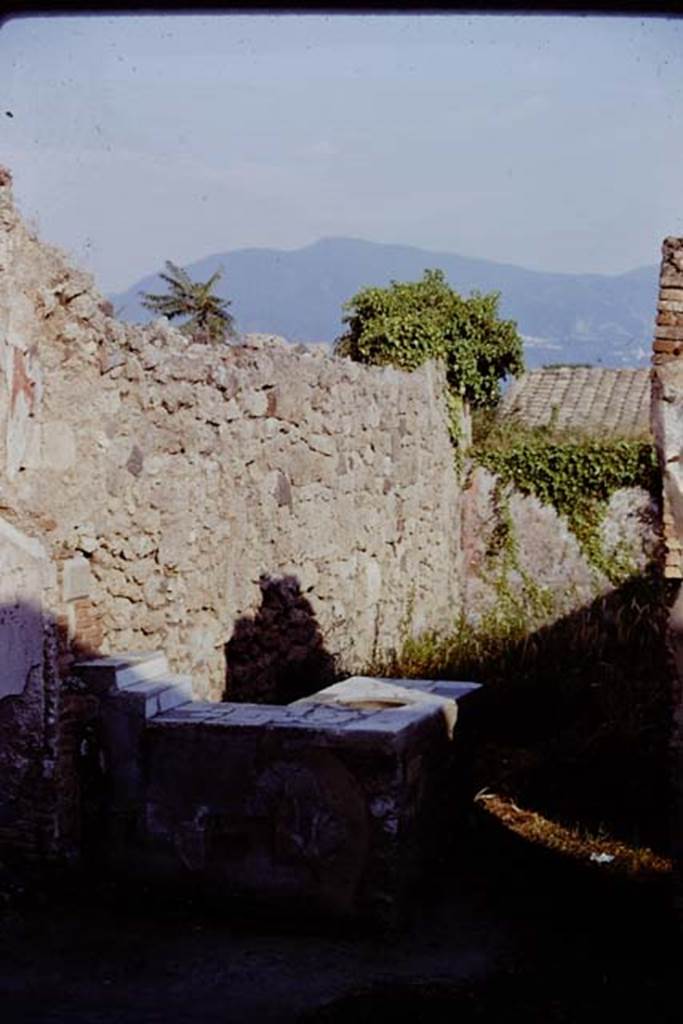
I.3.22 Pompeii. 1961. Looking south towards bar-counter. Photo by Stanley A. Jashemski.
Source: The Wilhelmina and Stanley A. Jashemski archive in the University of Maryland Library, Special Collections (See collection page) and made available under the Creative Commons Attribution-Non Commercial License v.4. See Licence and use details.
J61f0737
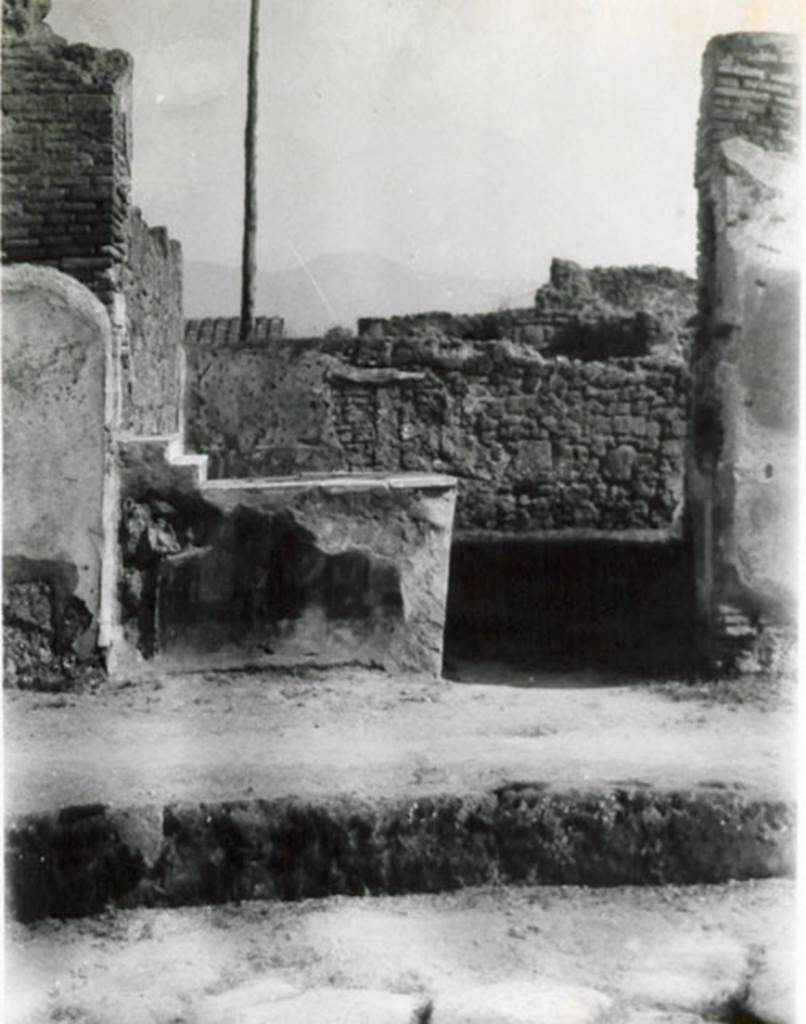
I.3.22 Pompeii. 1935 photograph taken by Tatiana Warscher. Looking south to entrance doorway.
See Warscher, T, 1935: Codex Topographicus Pompejanus, Regio I, 3: (no.38), Rome, DAIR, whose copyright it remains.
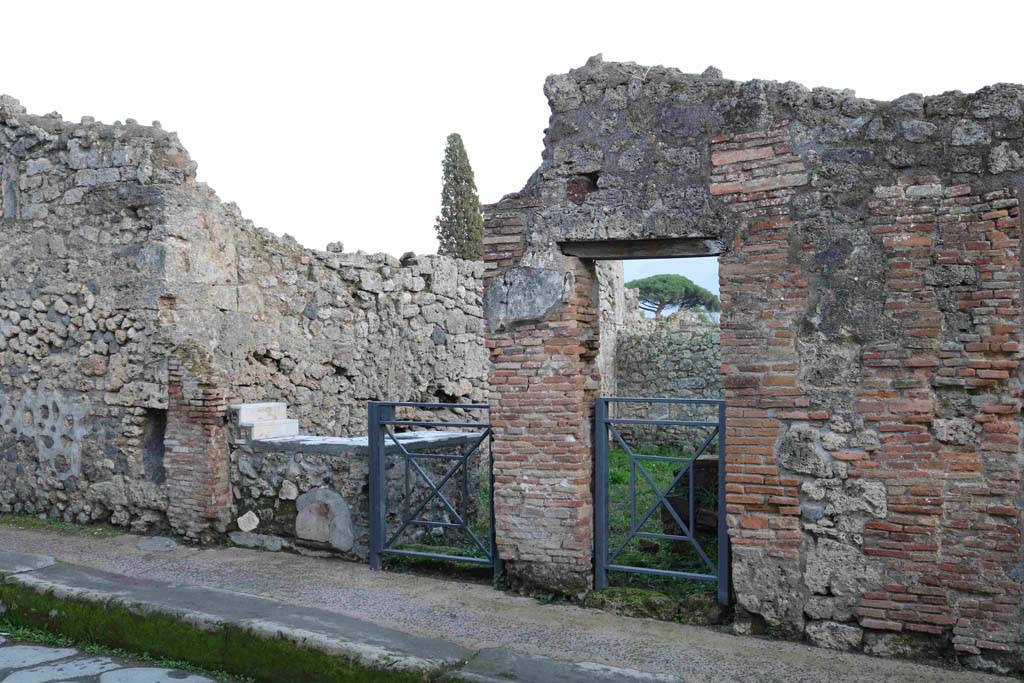
I.3.22 Pompeii. December 2018.
Looking towards entrance doorway of thermopolium on Vicolo del Menandro. On the right is the doorway to I.3.21. Photo courtesy of Aude Durand.
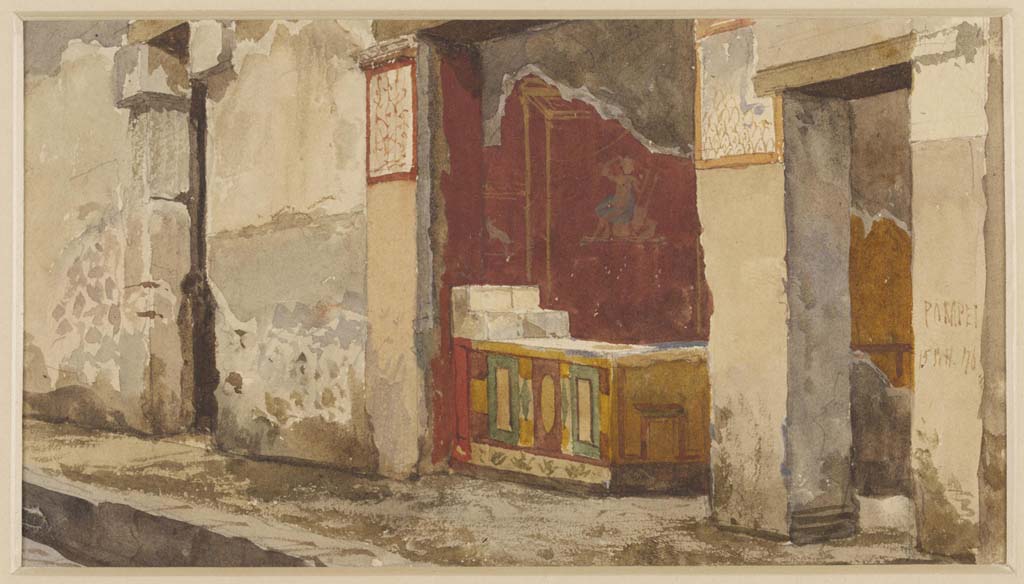
I.3.22 Pompeii. 15th September 1876. Watercolour by Luigi Bazzani “A shop in the Strada Stabiana, at Pompeii”.
Looking towards entrance doorway of thermopolium on Vicolo del Menandro, in centre.
On the left is the entrance doorway of I.3.23, with I.3.21, on the right.
Photo © Victoria and Albert
Museum. Inventory number 2059-1900.
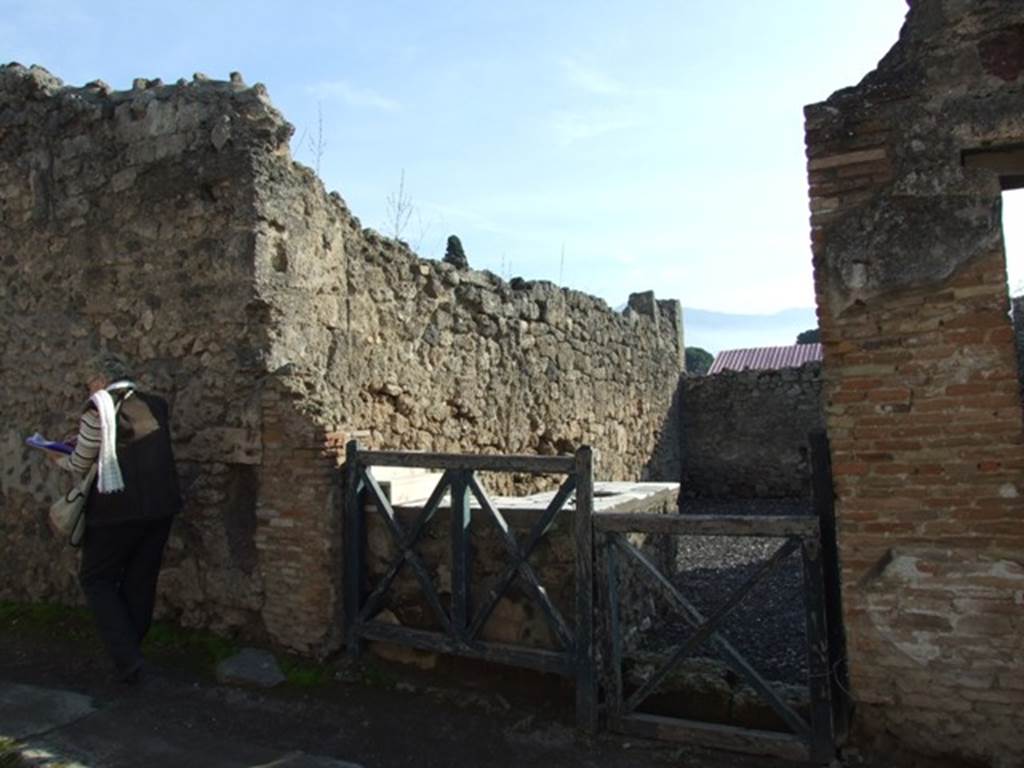
I.3.22 Pompeii. December 2007. Entrance.
Fiorelli described the two painted graffiti on the wall between I.3.23 and I.3.22.
These would have been on the left of the picture and are no longer visible.
Q . P . P . AED
ROGANT
and SEXTILIVM
See Pappalardo, U., 2001. La Descrizione di Pompei per Giuseppe Fiorelli (1875). Napoli: Massa Editore. (p. 39)
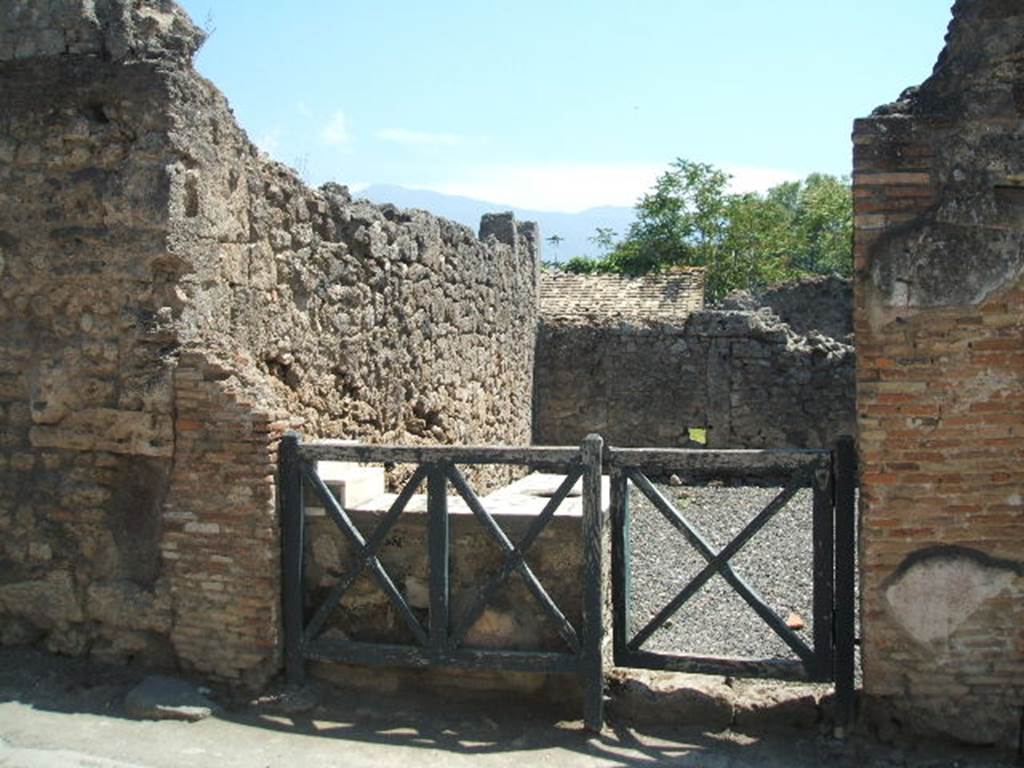
I.3.22 Pompeii. May 2005. Entrance doorway, looking south.
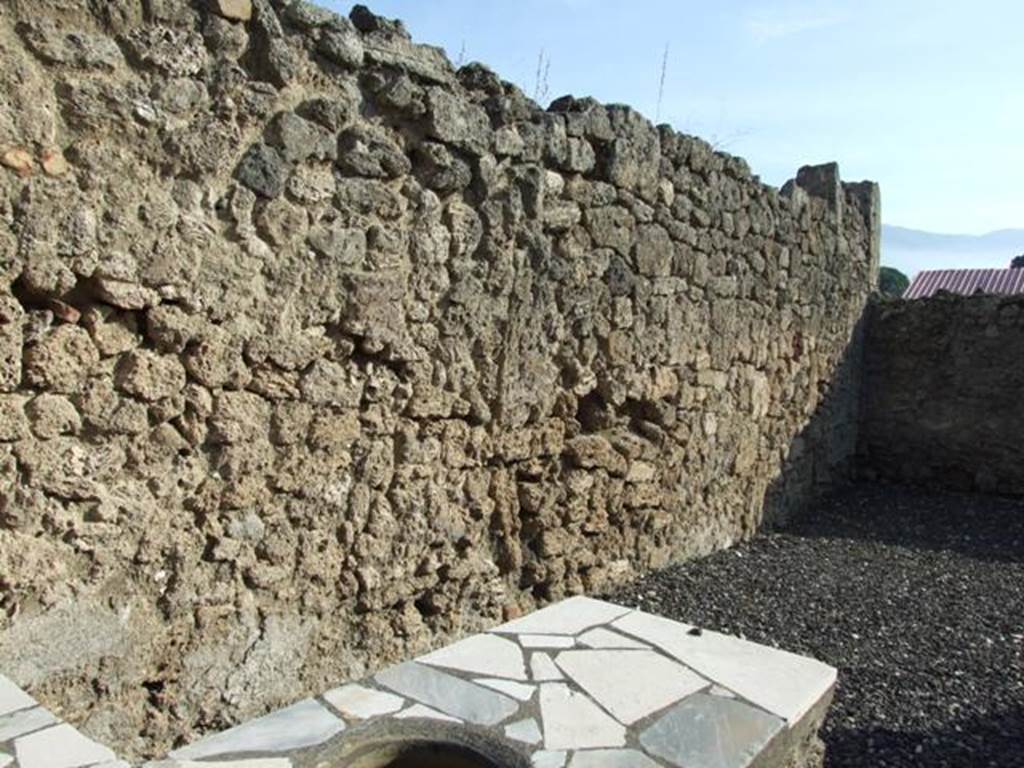
I.3.22 Pompeii. December 2007. East wall.
According to the watercolour by Bazzani (see above) –
this east wall was where the painting of Apollo was located, although Sogliano located it as being on the west wall.
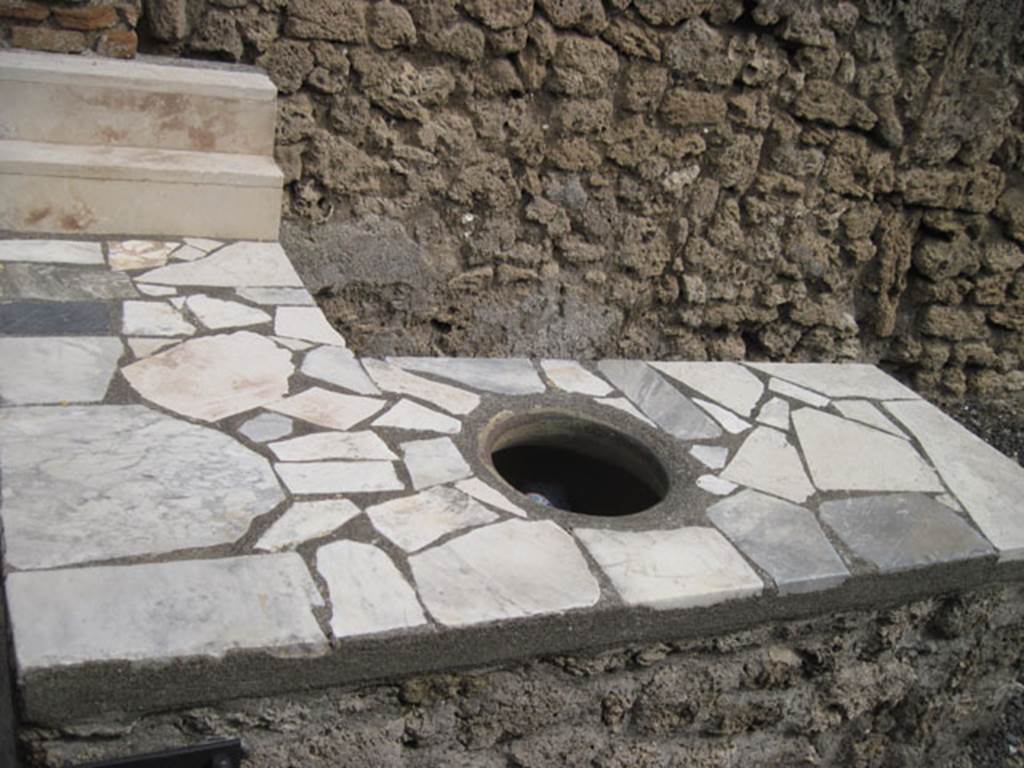
I.3.22 Pompeii. September 2010. Looking east across counter in north-east corner of bar-room. Photo courtesy of Drew Baker.
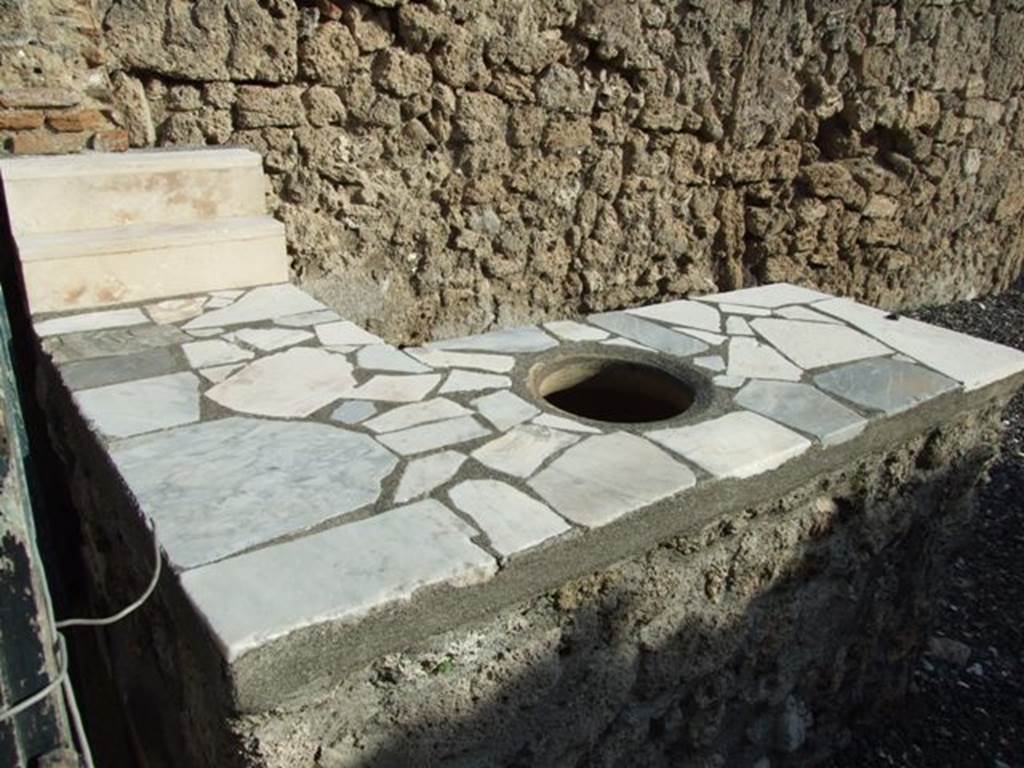
I.3.22 Pompeii. December 2007. Marble counter with two shelves for standing drinking vessels on and hole for a terracotta urn.
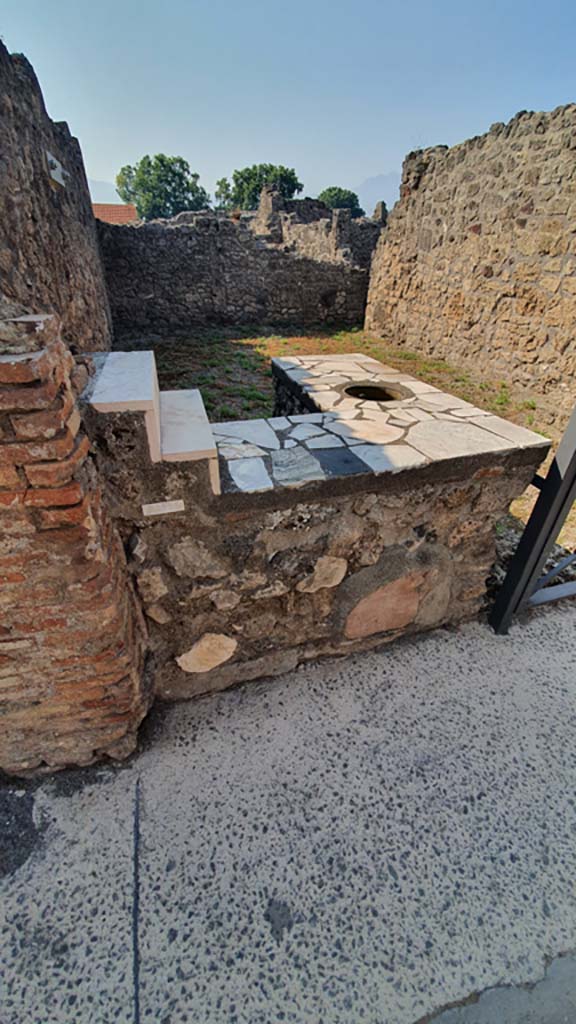
I.3.22 Pompeii. July 2021. Looking south across bar-room from entrance doorway.
Foto Annette Haug, ERC Grant 681269 DÉCOR.
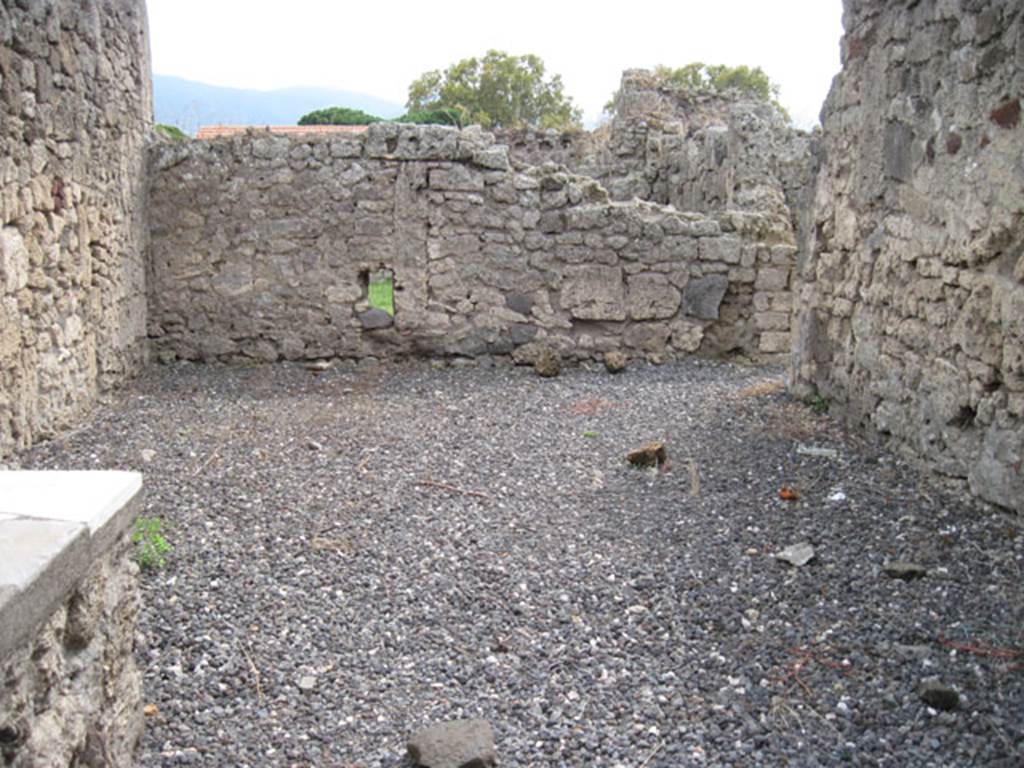
I.3.22 Pompeii. September 2010. Looking south across
bar-room from entrance doorway. Photo
courtesy of Drew Baker.
According to
Fiorelli,
“Una
dietrobottega, da cui si comunica con la casa no.20, era addossata a questo
primo compreso; ed in esse vedesi effigiato Apollo seduto in trono, con la
destra sul capo stringendo il pletro, e nella sinistra la cetra. Sulla stessa
parete era pure dipinto un cavallo con tintinnabulo sospeso al collo, e vi
stanno graffiti un morso, una strigile, una scure ed altri oggetti incerti”.
See Pappalardo, U., 2001. La Descrizione di Pompei per Giuseppe Fiorelli (1875). Napoli: Massa Editore. (p.39)
(translation: A rear room, joined with the bar-room, was linked with house No.20; and in this was seen a painting of Apollo sitting on his throne, with his right hand holding the plectrum, and the lyre in his left. Also painted on the same wall was a horse with “tintinnabulo” suspended around its neck, and there were also graffiti of a horse’s bit, a strigil, and other uncertain objects:”.)
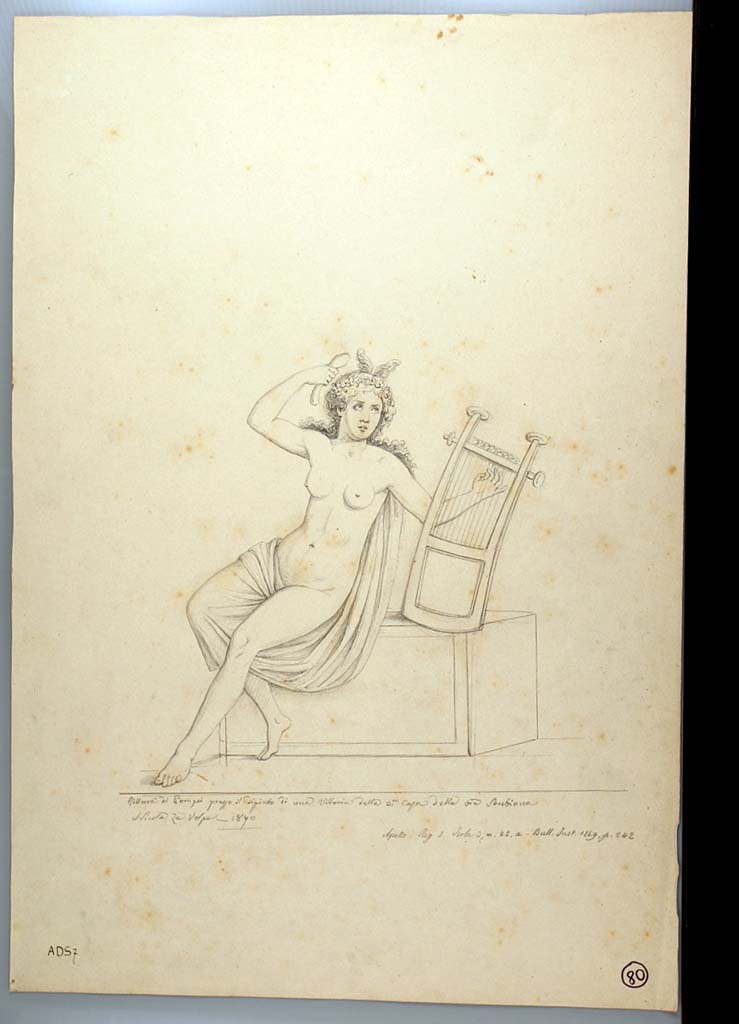
I.3.22 Pompeii. Drawing by Nicola La Volpe, 1870, of painting of Apollo, from west (?) wall found under the lararium painting.
See Sogliano, A., 1879. Le pitture murali campane scoverte negli anni 1867-79. Napoli: Giannini. (p.26, no.100).
Now in Naples Archaeological Museum. Inventory number ADS 7.
Photo © ICCD. https://www.catalogo.beniculturali.it
Utilizzabili alle condizioni della licenza Attribuzione
- Non commerciale - Condividi allo stesso modo 2.5 Italia (CC BY-NC-SA 2.5 IT)
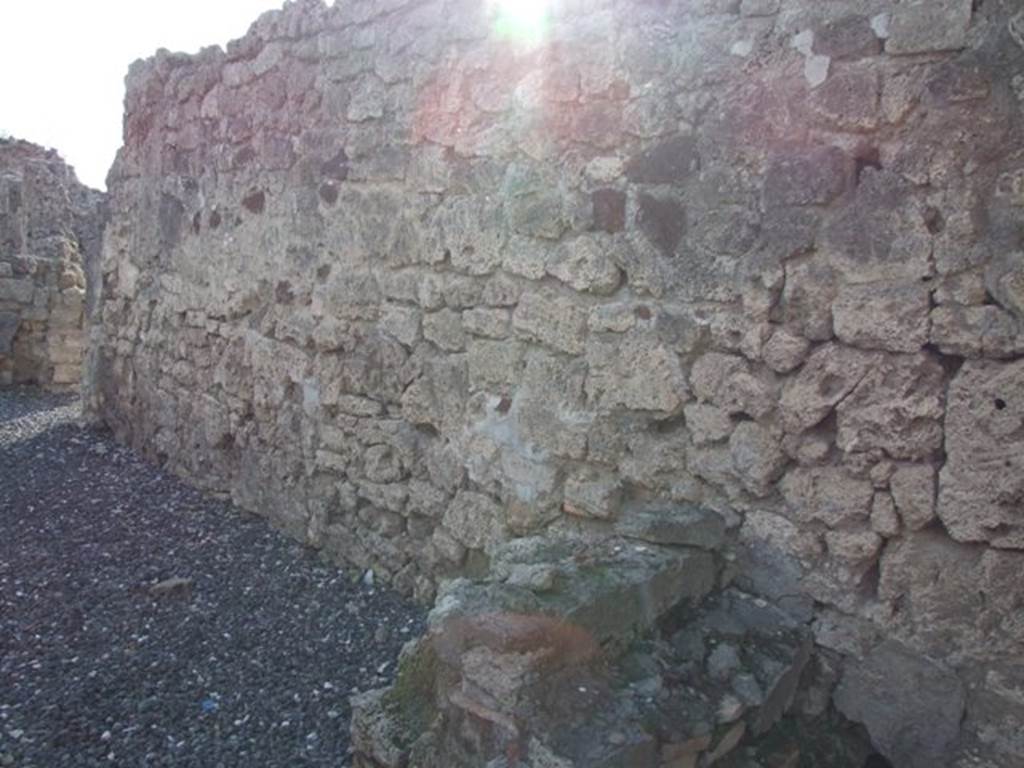
I.3.22 Pompeii. December 2007. West wall.
At the front, on the right, are the remains of the staircase at I.3.21 which led to the upper storey of I.3.22.
At the rear, on the left, is a doorway linking to I.3.20.
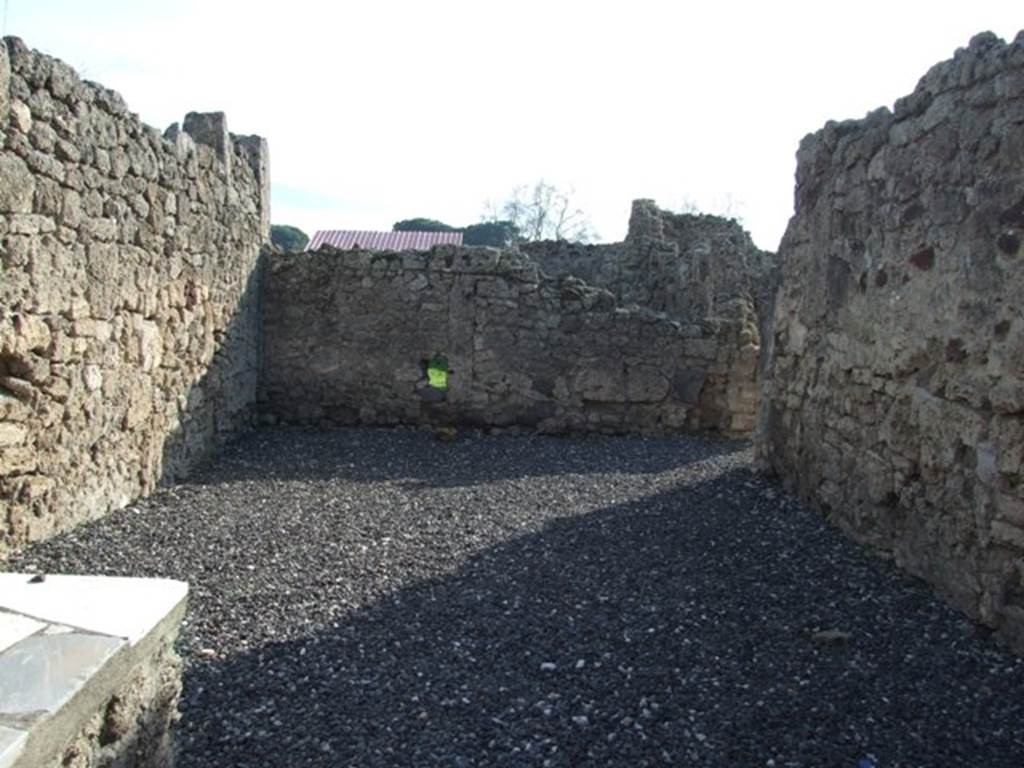
I.3.22 Pompeii. December 2007. Looking south, the doorway in south-west corner links to I.3.20.
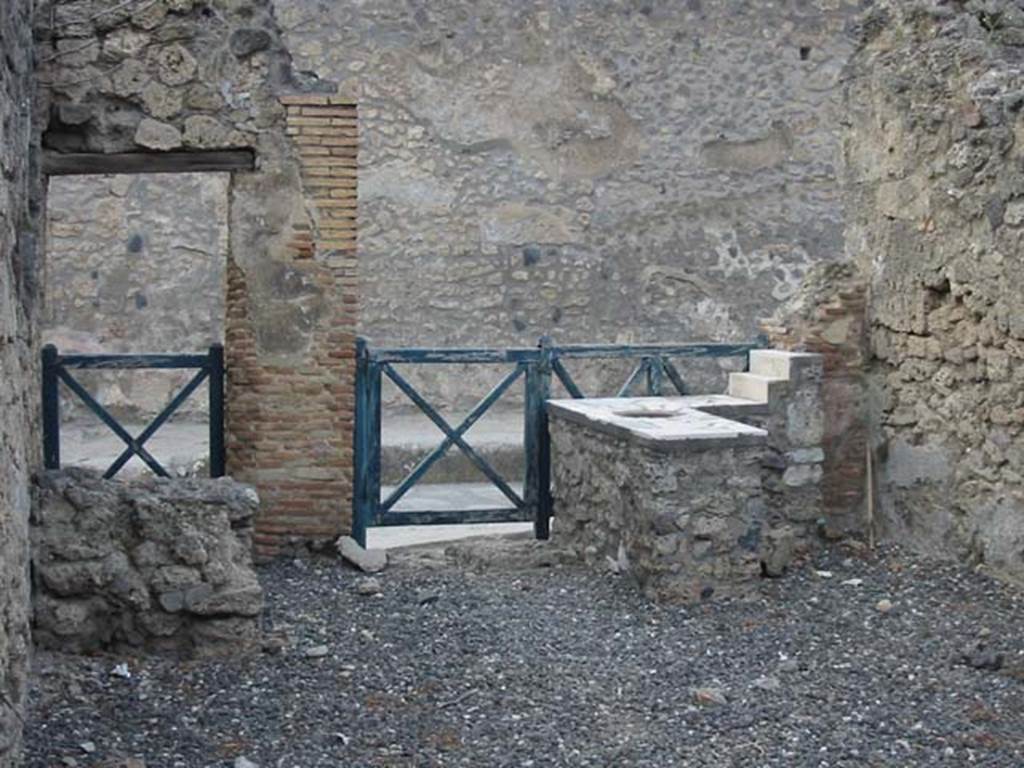
I.3.21 and I.3.22 Pompeii. May 2003. Looking north towards the rear of the entrances. Photo courtesy of Nicolas Monteix.
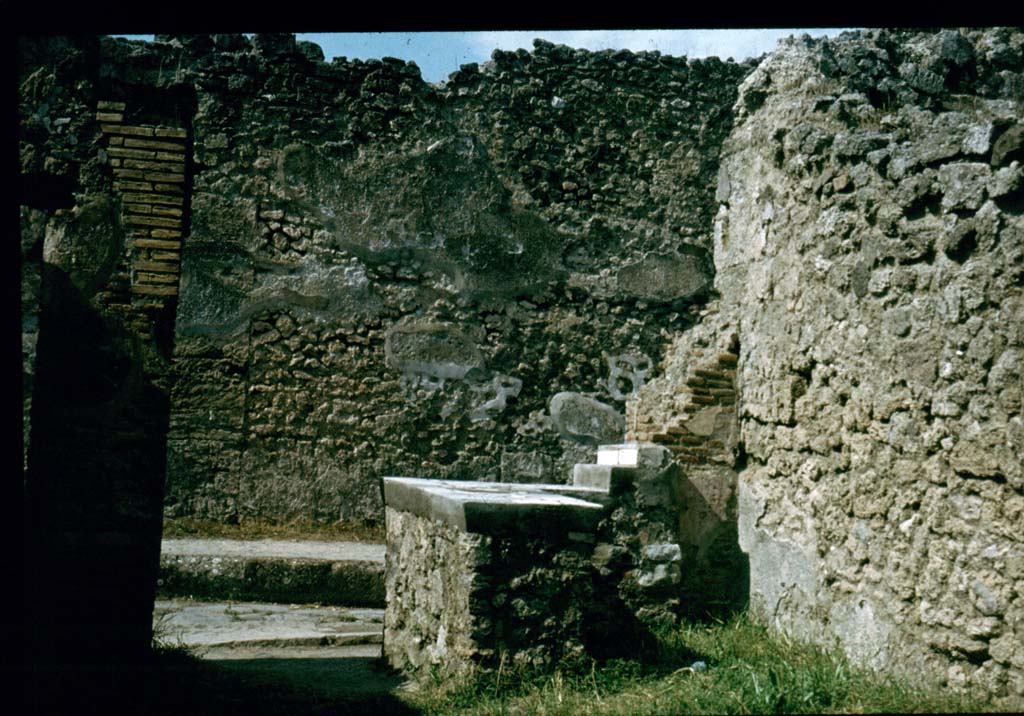
I.3.22 Pompeii. Looking north to entrance. Photographed 1970-79 by Günther Einhorn, picture courtesy of his son Ralf Einhorn.
In Codex Topographicus Pompeianus: Regio I.3, (the copy at DAIR), Warscher included a description of the insula.
This description is included at the end in all parts of I.3 on the website.
“L’isola 3 della
Regio I apparteneva ai quartieri piuttosto poveri, ad’ esenzione della casa no.
3 tutto le case sono di dimensioni non grandi.
La casa no. 3
presenta un interesse dal punto di vista della costruzione: il peristilio si
trova ad un livello più alto di quello dell’atrio:
questa
particolarità si riscontra solamente in questa casa.
Noi abbiamo un
esempio inverso nella casa dell’Ancora nera ove l’atrio si trova ad un livello
più alto di quello del peristilio.
Si sente bene
nell’isola in questione la vicinanza dell’anfiteatro da una parte e delle
caserme dei gladiatori dall’altra.
Non c’è dubbio
che le case nos 23, 25 siano state abitato da gladiatori.
(Translation: “Insula
3 of Region I belonged to a rather poor neighbourhood, with the exception of
house No. 3 all the houses were not large in size.
The house at no. 3 had
a special interest from the point of view of construction: the peristyle sits
at a level higher than that of the atrium: this particularity was found only in
this house. We have a contrary example in the House of the Black Anchor where
the atrium was located at a higher level than that of the peristyle.
The nearness of the
amphitheatre on one side and the gladiators' barracks on the other suited well
the inhabitants of the insula in question.
There was no doubt
that the houses numbered 23, 25 had been inhabited by gladiators.”).