I.3.3 Pompeii. Domus of Epidius Fortunatus.
Linked to I.3.4 and I.3.31. Excavated 1860.
West side.
Part 1 Part 2 Part 3 South side Subterranean Upper
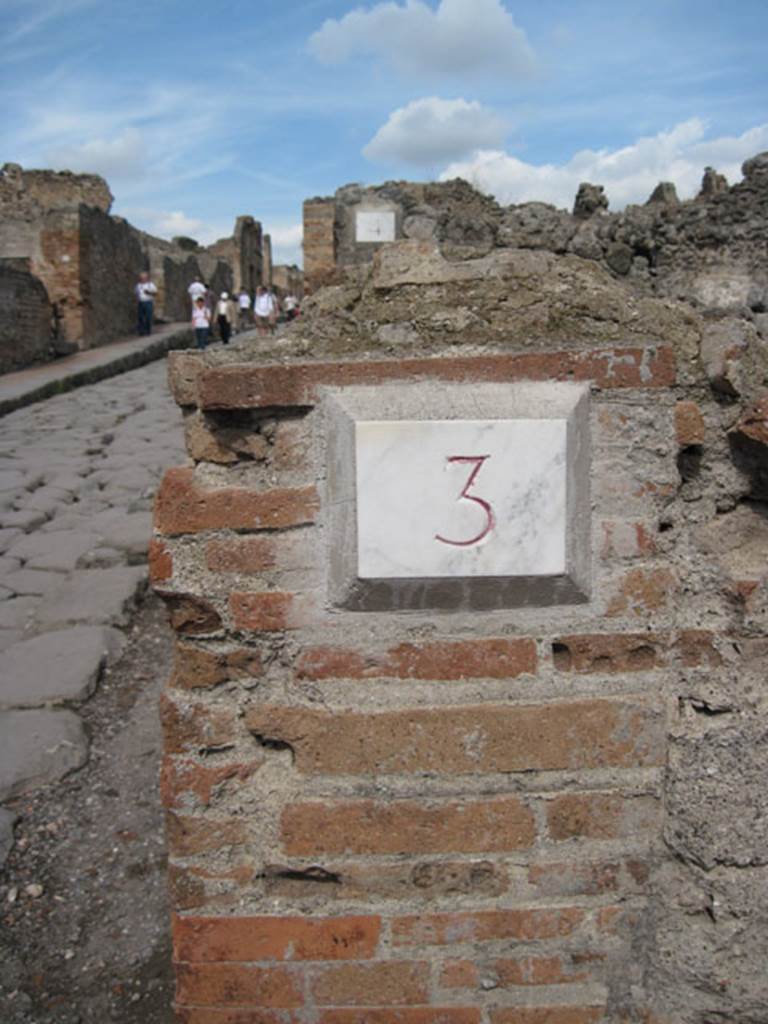
I.3.3 Pompeii. September 2010.
ID number plate, looking north along Via Stabiana. Photo courtesy of Drew Baker.
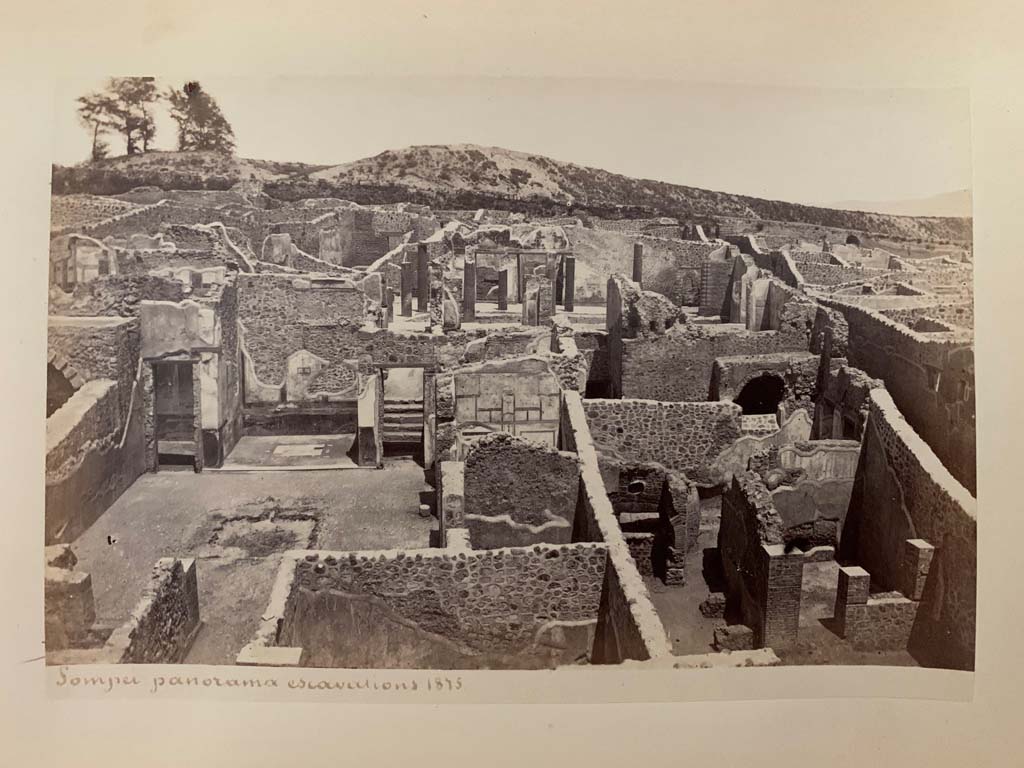
I.3.3 Pompeii. Photograph by M. Amodio, from an
album dated April 1878. Looking east across atrium, on left.
The upper peristyle can be seen, centre right. I.3.1
can be seen in lower right. Photo courtesy of Rick Bauer.
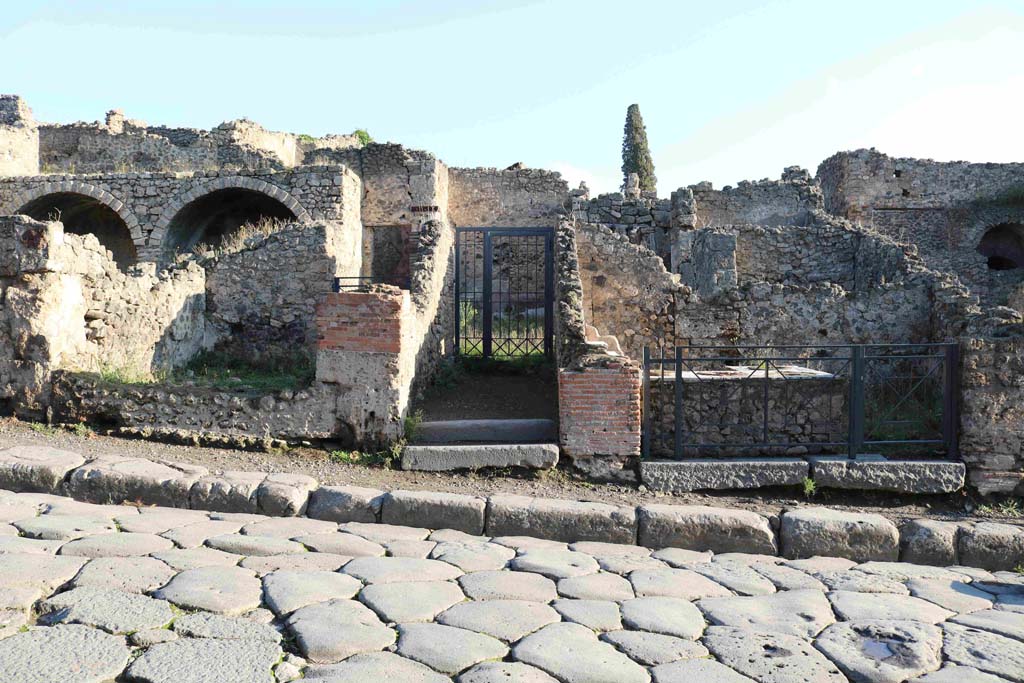
I.3.3 Pompeii, in centre. December
2018.
Looking east towards entrance doorway from across Via Stabiana. Photo courtesy of Aude Durand.
![I.3.3 Pompeii. September 2010. Looking east towards entrance doorway from across Via Stabiana. Photo courtesy of Drew Baker.
According to Della Corte, this house was spacious and beautifully decorated, with temple-lararium in the atrium and peristyle on a higher level than the atrium.
Della Corte believed the house was owned by Epidius Fortunatus, because an amphora was found here, still containing honey in it, addressed to -
Mel P() P() CXXXIII
dat XXXXXIX s(emissem)
Epidio Fortunato
/
T() P() XXVIII
[…]ens CIL IV 5740
See Della Corte, M., 1965. Case ed Abitanti di Pompei. Napoli: Fausto Fiorentino. (p.264)](1%2003%2003%20west%20p1_files/image007.jpg)
I.3.3 Pompeii. September 2010.
Looking east towards entrance doorway from across Via Stabiana. Photo courtesy of Drew Baker.
According to Della Corte, this house was spacious and beautifully decorated, with temple-lararium in the atrium and peristyle on a higher level than the atrium.
Della Corte believed the house was owned by Epidius Fortunatus, because an amphora was found here, still containing honey in it, addressed to -
Mel P() P()
CXXXIII
dat XXXXXIX
s(emissem)
Epidio Fortunato
/
T() P() XXVIII
[…]ens CIL IV 5740
See Della Corte, M., 1965. Case ed Abitanti di Pompei. Napoli: Fausto Fiorentino. (p.264)
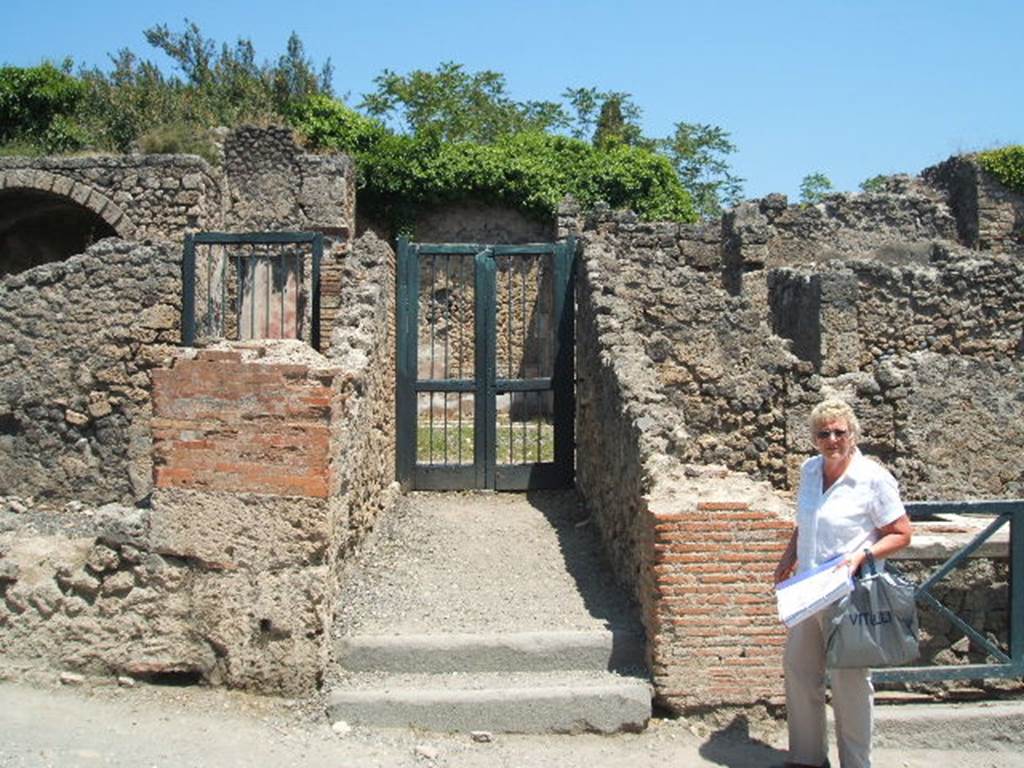
I.3.3 Pompeii.
May 2005. Entrance on Via Stabiana.
According to Warscher, quoting Bull. Inst, 1874, p. 183, she wrote –
“Quanto alla
pittura decorativa di questa casa, nella parte più bassa di essa tutte le
pitture mostrano lo stile degli ultimi tempi di Pompei, coll’eccezione della
camera a destra della scala.
Ed alla stessa
epoca di quella camera, la terza cioè fra quelle pompeiane, se non m’inganno,
appartiene tutto quello che sta intorno al peristilio.
Ho parlato appunto
di questa casa nel Giorn. d Sc. II, p.456.
Chiara è
l’identita delle stile riguardo la prima camera dal suo lato occidentale.
Il resto delle
camere è decorato in uno stile che può dirsi quello de’candelabri, perchè
divide la parete in tre parti mediante candelabri molto sottili e svelti.
E come accennai
nel luogo citato, appunto le pitture di queste camere mediante certe piccole
particularità non tanto facili a descriversi ci fanno riconoscere questo stile
come affine e probabilmente contemporaneo a quello delle due camere menzionate.
Ed allo stile di
queste pare appartenesse anche la decorazione del peristilio stesso, benchè
poco ne sia conservato.
Que’ cambiamenti
adunque che, come sopra accennai, subì la casa in discorso, si rileva dalla
stessa decorazione che non ebbero luogo negli ultimi tempi di Pompei, ma
probabilmente prima del terramoto dell’a. 63 d.C.”
See Warscher, T, 1935: Codex Topographicus Pompejanus, Regio I, 3: (dopo no. 11a), Rome, DAIR.
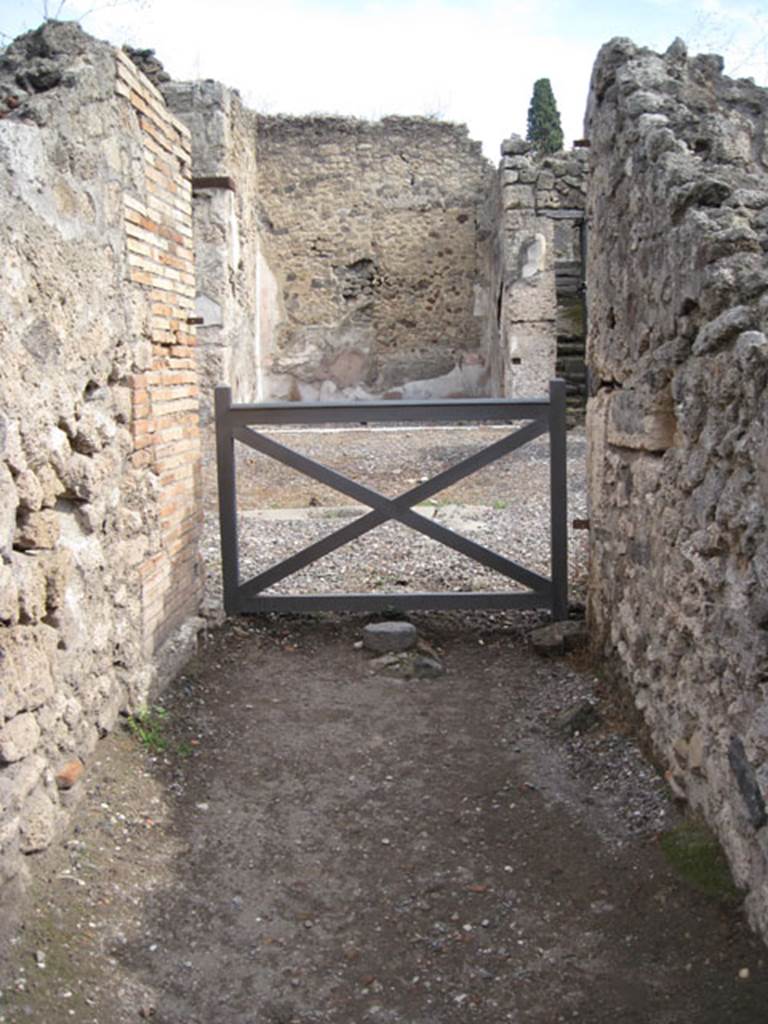
I.3.3 Pompeii. September 2010.
Looking east along narrow entrance fauces towards the atrium. Photo courtesy of Drew Baker.
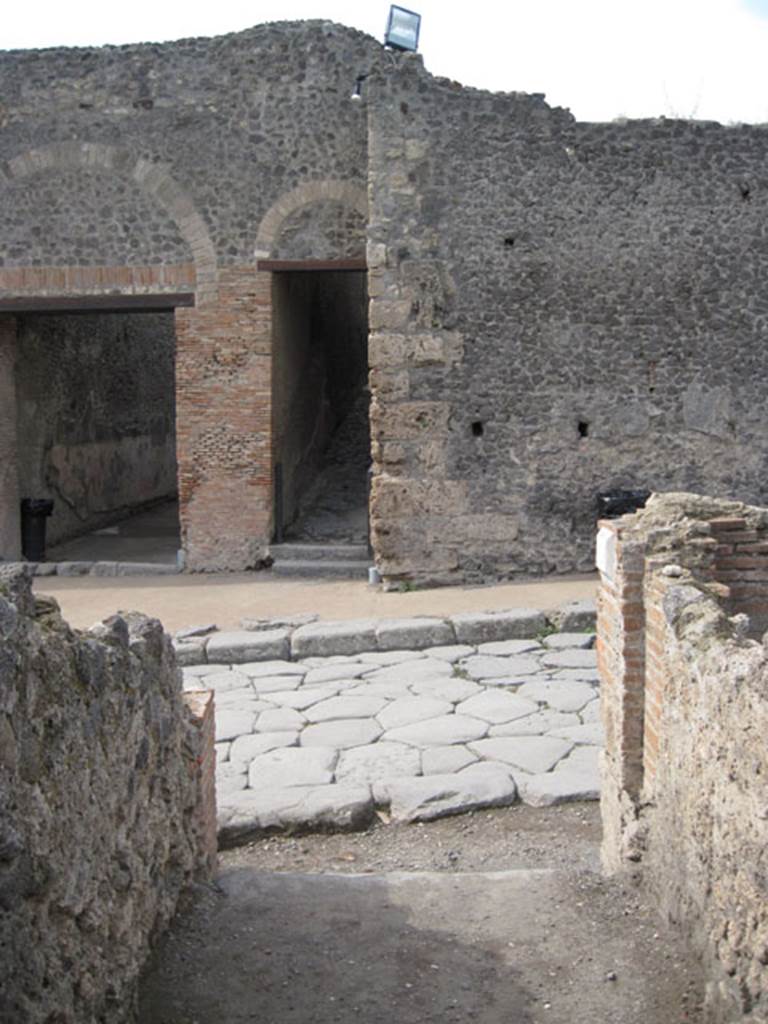
I.3.3 Pompeii. September 2010.
Looking west along entrance fauces towards Via Stabiana. Photo courtesy of Drew Baker.
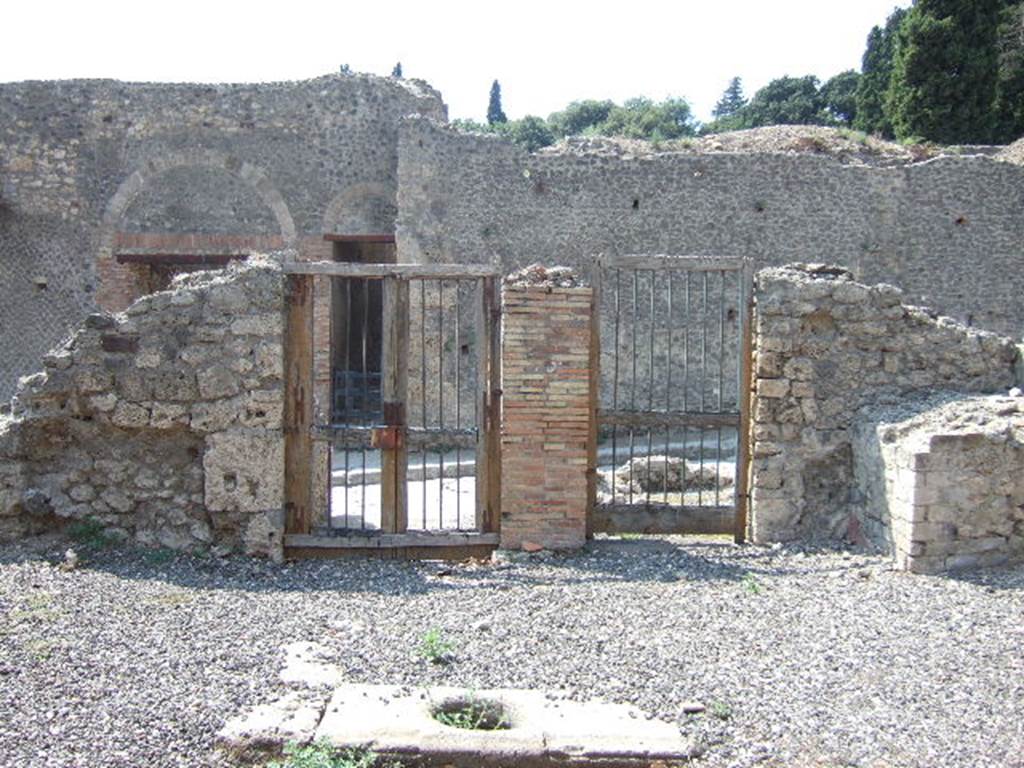
I.3.3 Pompeii. May 2005. Looking out onto Via Stabiana from inside the atrium.
The doorway on the left leads into the entrance corridor, the doorway on the right connected to the shop at I.3.4.
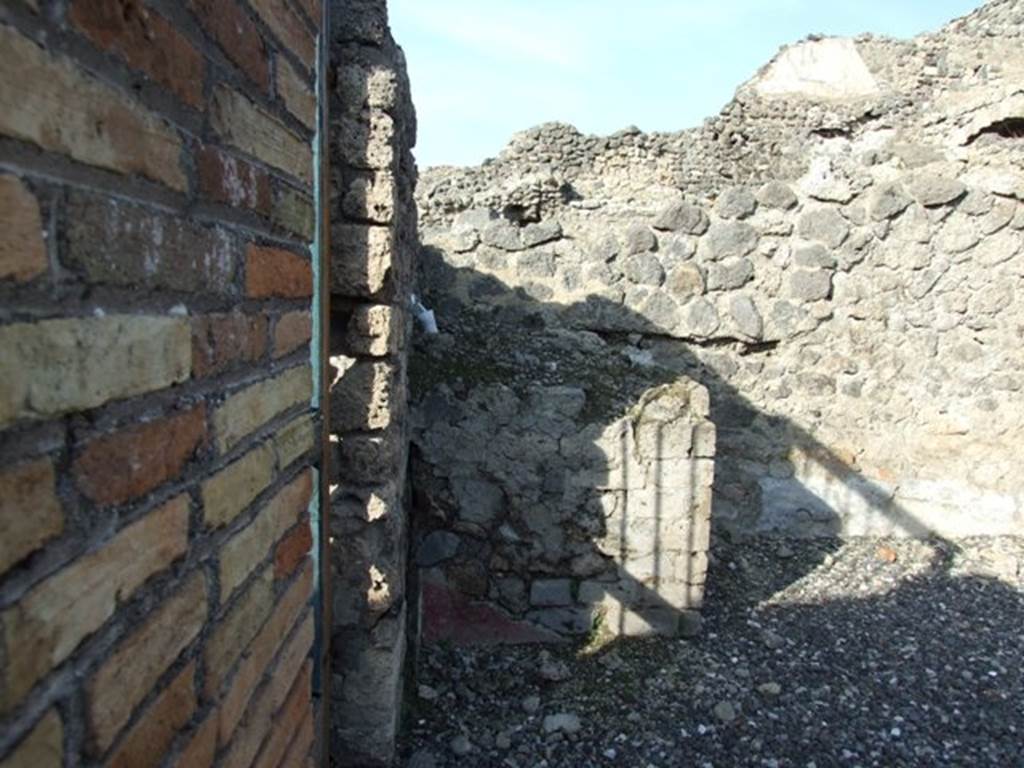
I.3.3 Pompeii. December 2007. Remains of altar to the household gods in the north-west corner of the atrium.
This large masonry podium looked like the base of an aedicula, according to Boyce.
See Boyce G. K., 1937. Corpus of the Lararia of Pompeii. Rome: MAAR 14. (p.24)
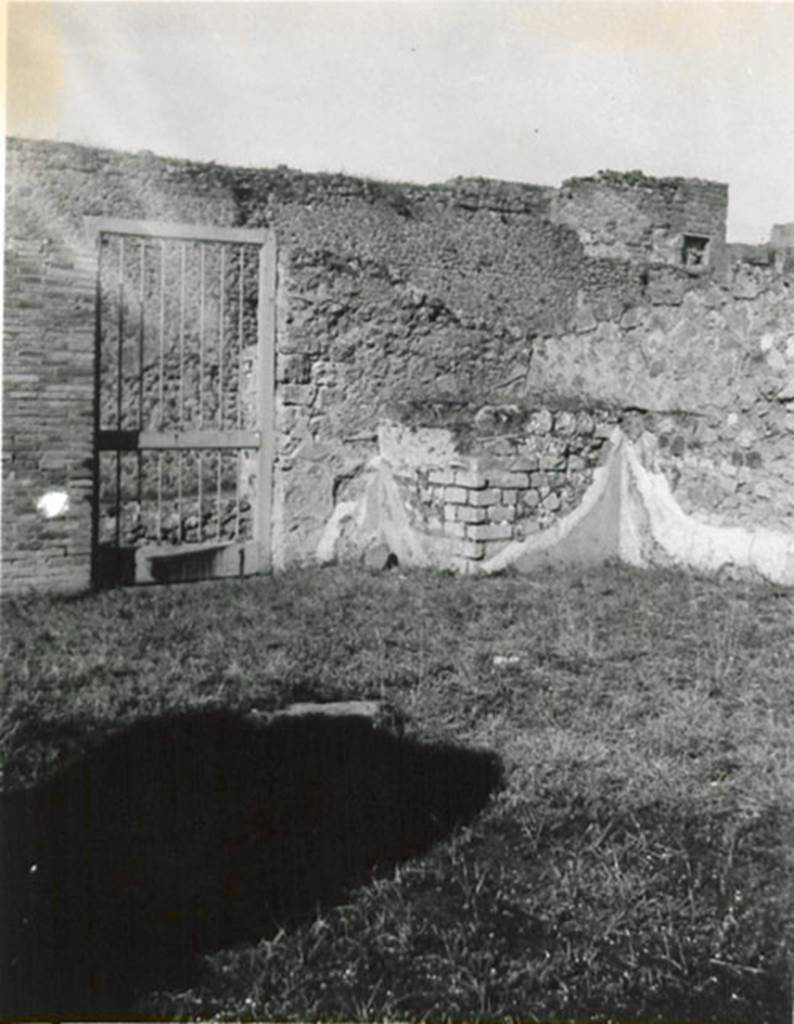
I.3.3 Pompeii. 1935 photograph by Tatiana Warscher. Looking towards the north-west corner of the atrium.
See Warscher, T, 1935: Codex Topographicus Pompejanus, Regio I, 3: (no. 5), Rome, DAIR, whose copyright it remains.
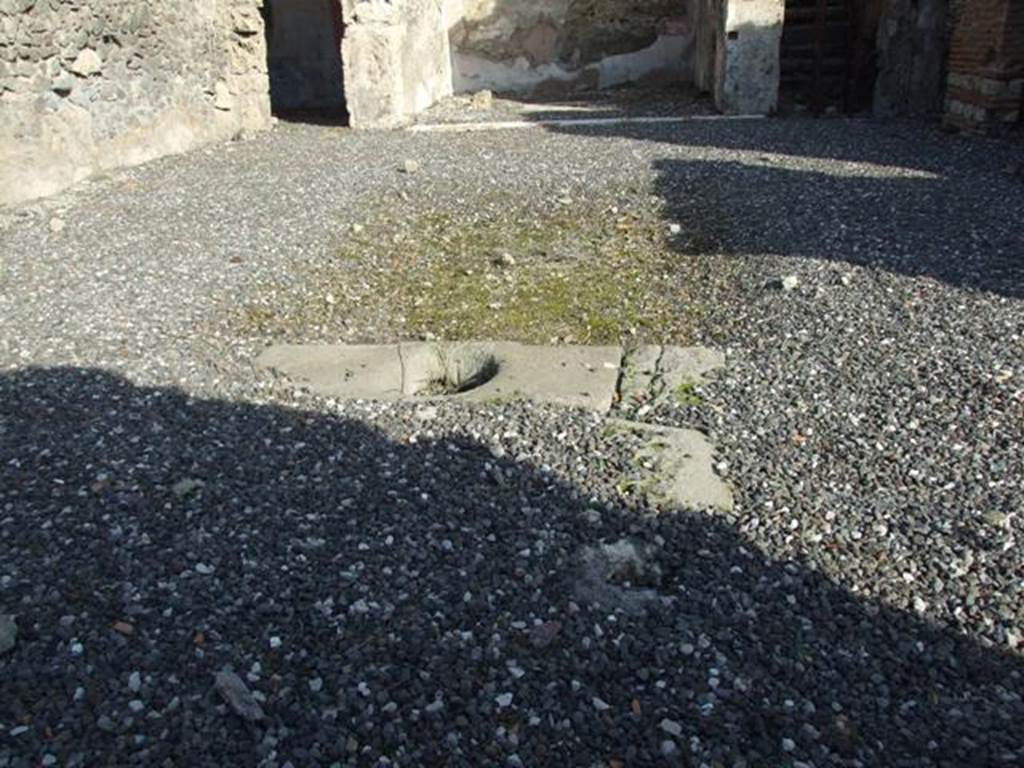
I.3.3 Pompeii. December 2007. Looking east across area of impluvium in atrium.
According to Warscher, quoting Mau, from Bull. Inst. 1874, p.177-179, she wrote –
“L’impluvio è
privo del suo rivestimento di pietra………a destra dell’atrio sono tre camere
senza interesse…”
(Translation: "The impluvium was devoid of its stone cladding ……… to the right of the atrium were three rooms without interest ..."
See Warscher, T, 1935: Codex Topographicus Pompejanus, Regio I, 3: Rome, DAIR.
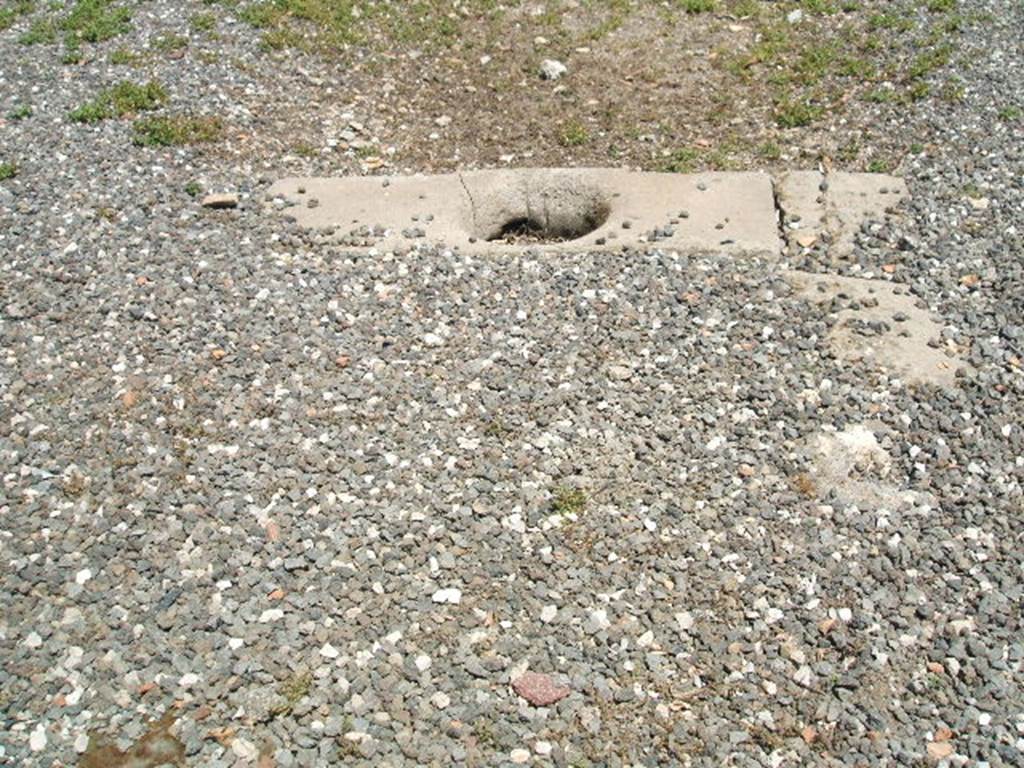
I.3.3 Pompeii. May 2005. Looking east across impluvium.
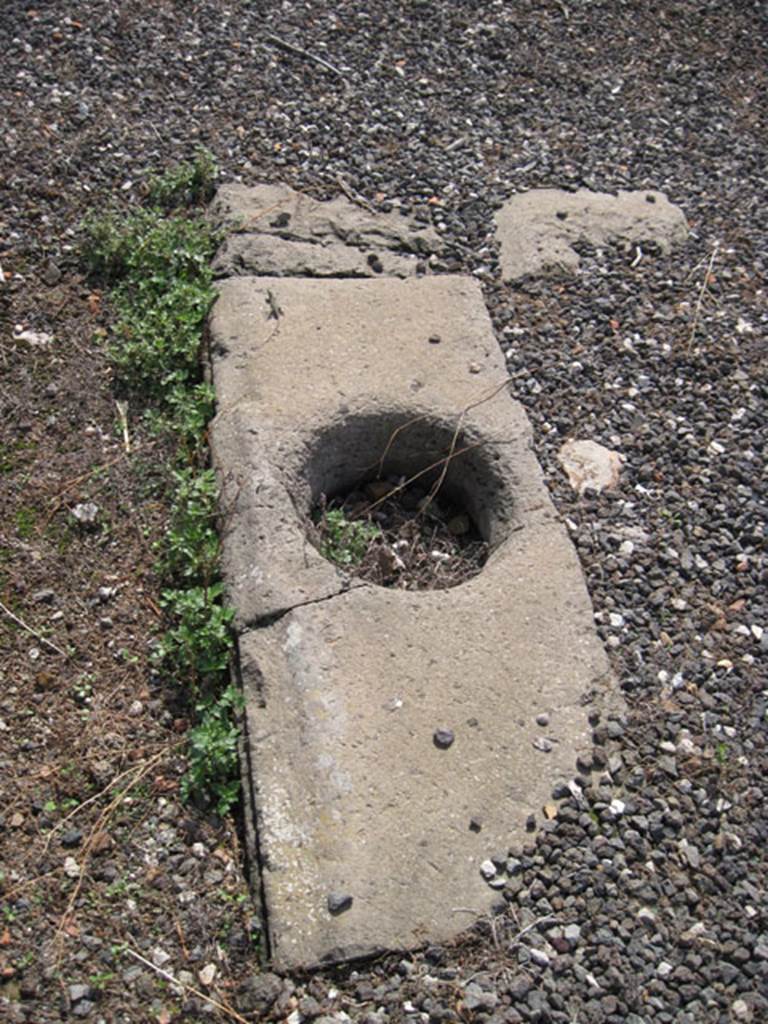
I.3.3 Pompeii. September 2010.
Looking south, showing detail of remains of impluvium cistern hole. Photo courtesy of Drew Baker.
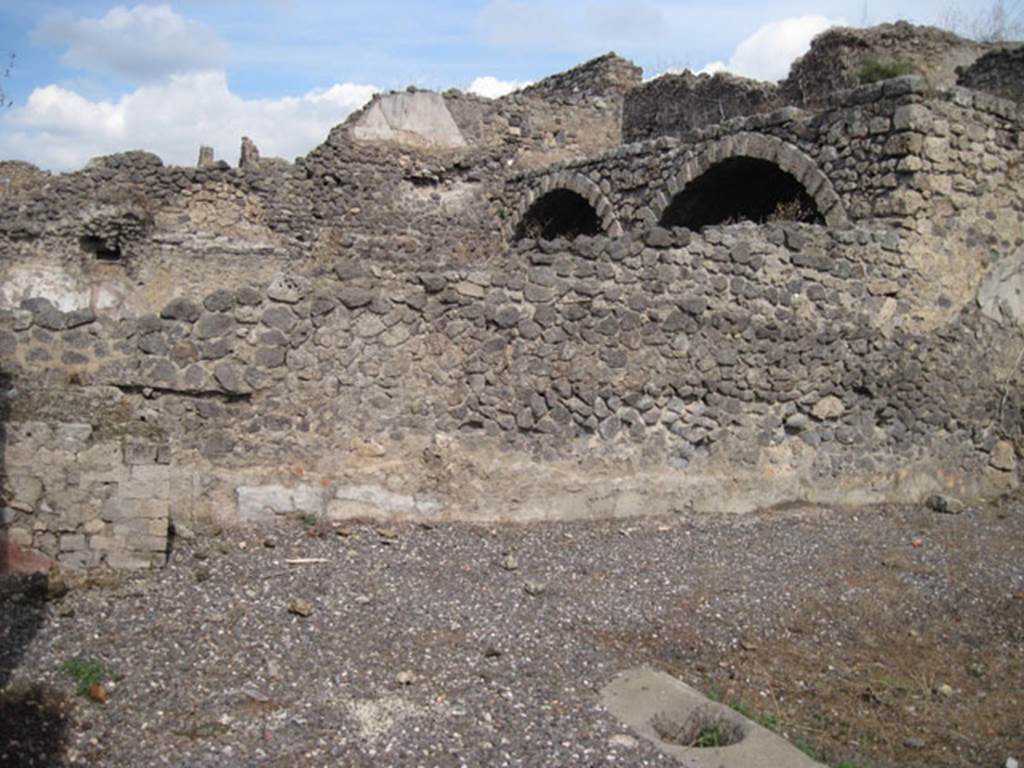
I.3.3 Pompeii. September 2010. Looking towards north wall of atrium. Photo courtesy of Drew Baker.
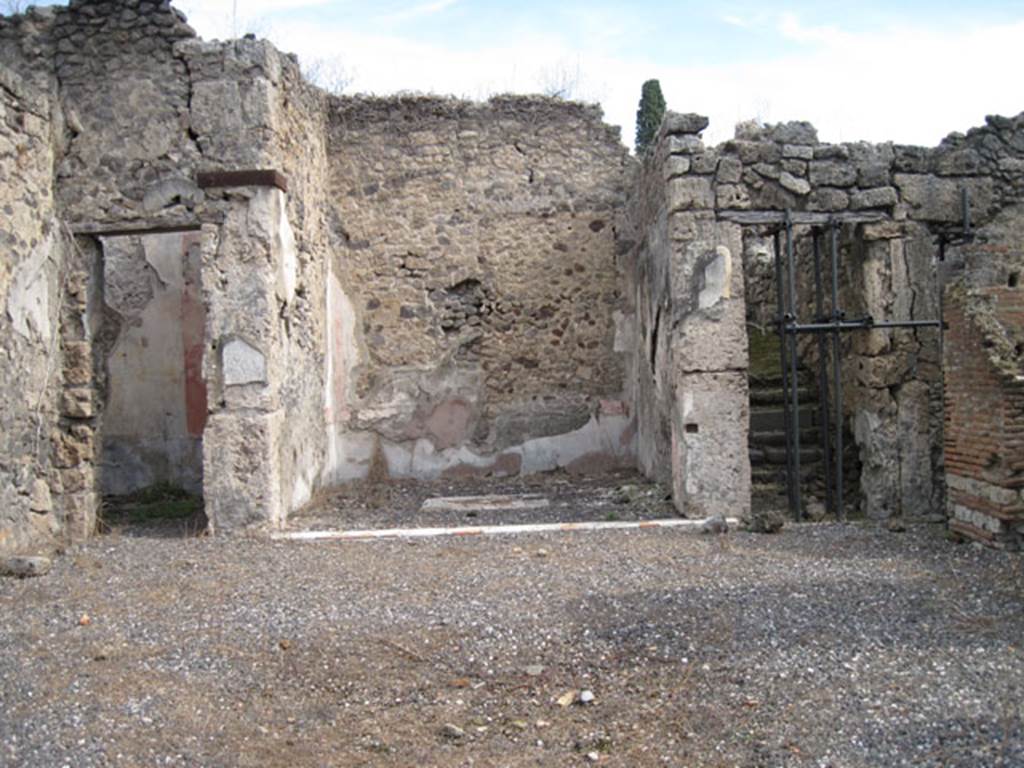
I.3.3 Pompeii. September 2010. Looking east across atrium towards tablinum, in centre. Photo courtesy of Drew Baker.
Originally the floor of the atrium was opus signinum containing irregular small pieces of marble.
See Mau, A: Bullettino dell’Instituto di Corrispondenza Archeologica (DAIR), 1874, p.177.
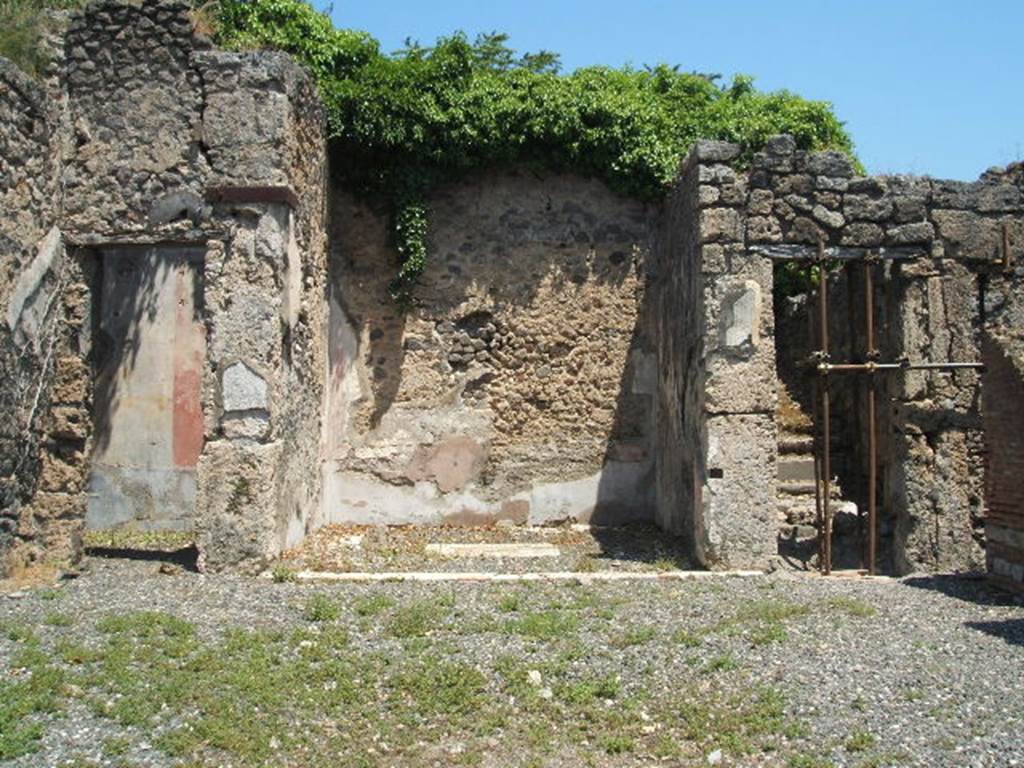
I.3.3 Pompeii. May 2005. Looking east across atrium.
Part 2 Part 3 South side Subterranean Upper