Pompeii. Porta del Vesuvio or
Vesuvian Gate.
Excavated 1811 and 1905.
Part 1 Part 2
According to Van der Graaff –
“Porta Vesuvio was known as porta campana (in Latin).”
See Van der Graaf, I. (2018). The Fortifications of Pompeii and Ancient Italy. Routledge, (p.107).
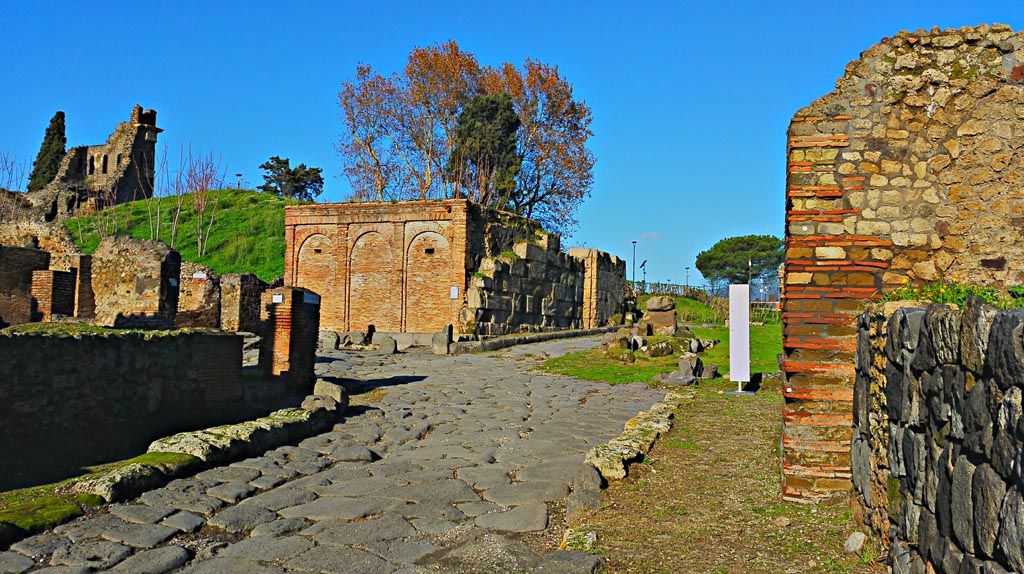
Pompeii Porta del Vesuvio and Castellum Aquae. December 2019.
Looking north from
Via del Vesuvio. Photo courtesy of Giuseppe Ciaramella.
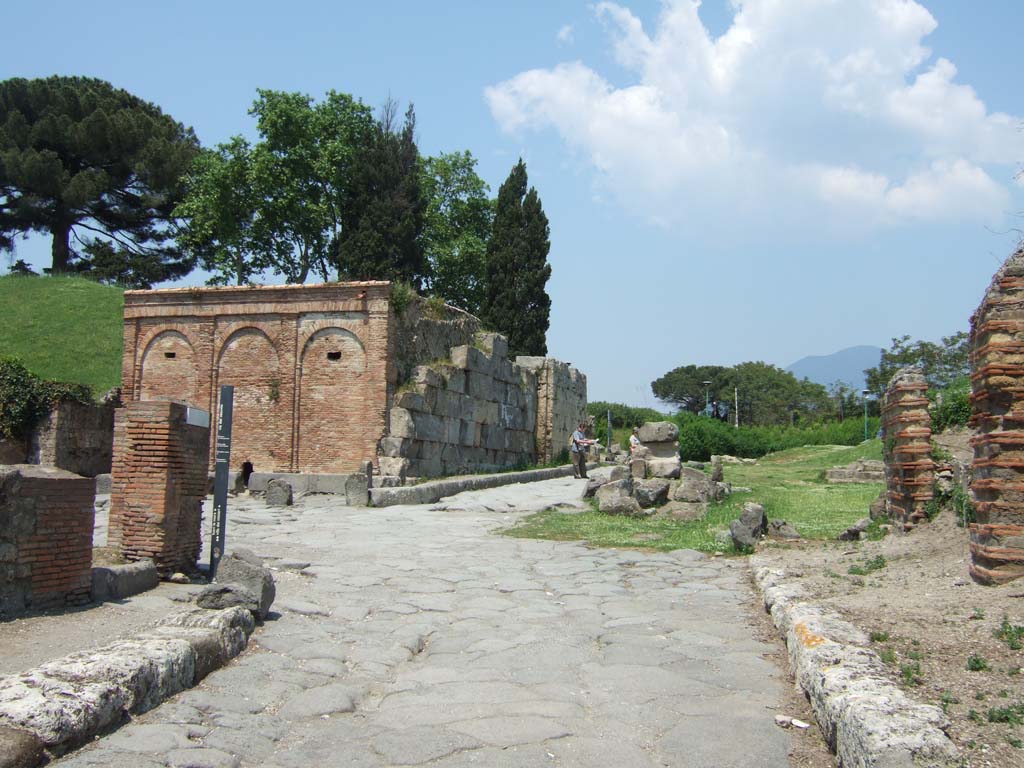
Pompeii Porta del Vesuvio and Castellum Aquae. May 2006. Looking north from Via del Vesuvio.
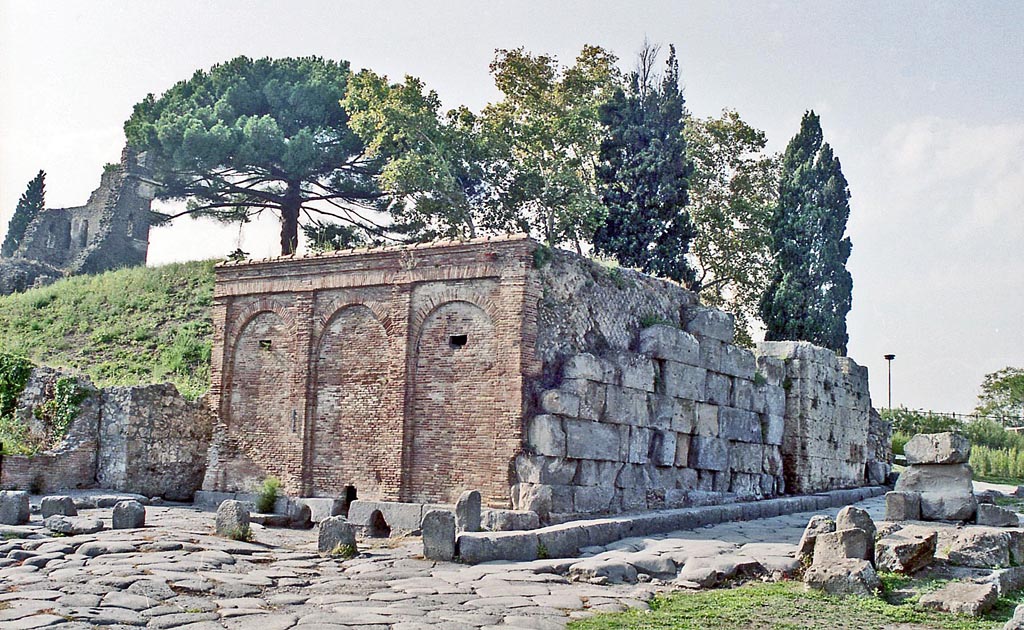
Pompeii Porta del Vesuvio and Castellum Aquae. October 2001. Looking north from Via del Vesuvio. Photo courtesy of Peter Woods.
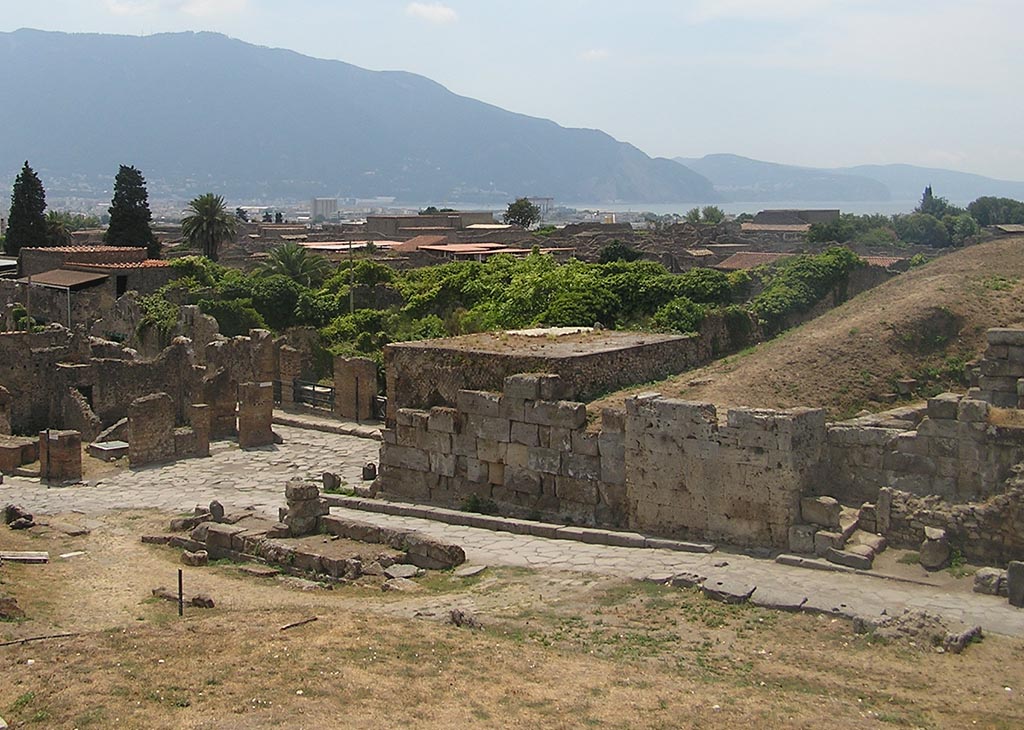
Pompeii Porta del Vesuvio. July 2003. Looking south-west across Porta Vesuvio towards Sorrentine peninsula.
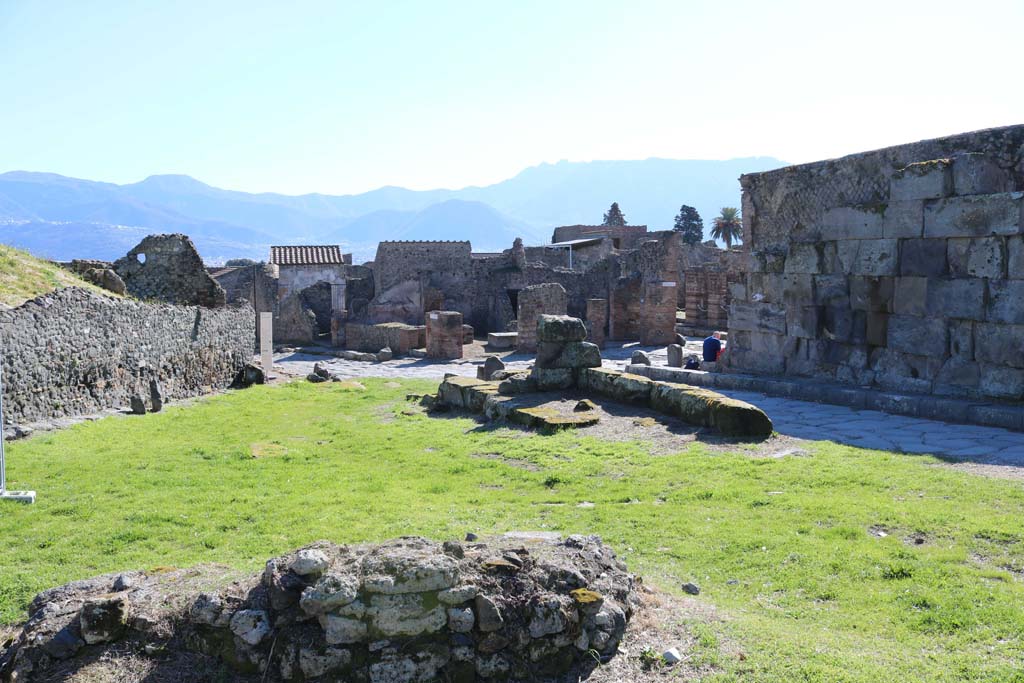
Pompeii Porta del
Vesuvio, on right. December
2018.
Looking south-west from north side of the
Vesuvian Gate, towards Via del Vesuvio, centre left. Photo courtesy of Aude
Durand.
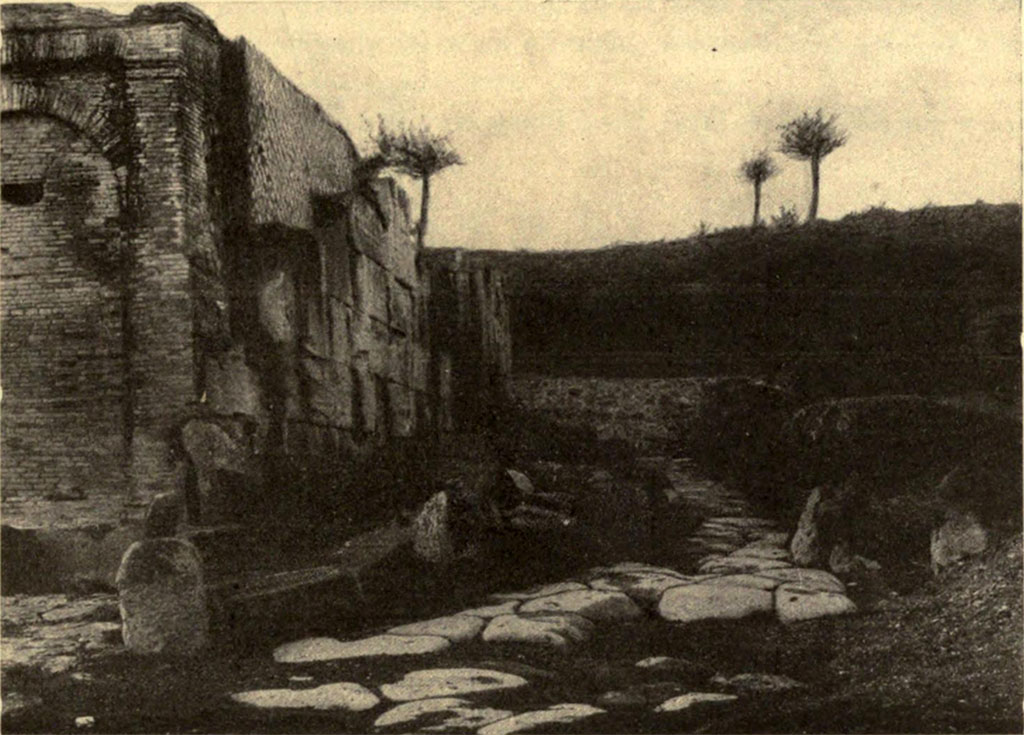
Vesuvian Gate Pompeii. 1906 photo, looking north through gate.
The gate is at the northern end of the road that runs through the city to the Porta Stabia.
See Notizie degli Scavi di Antichità, 1906,
p. 97, fig. 1.
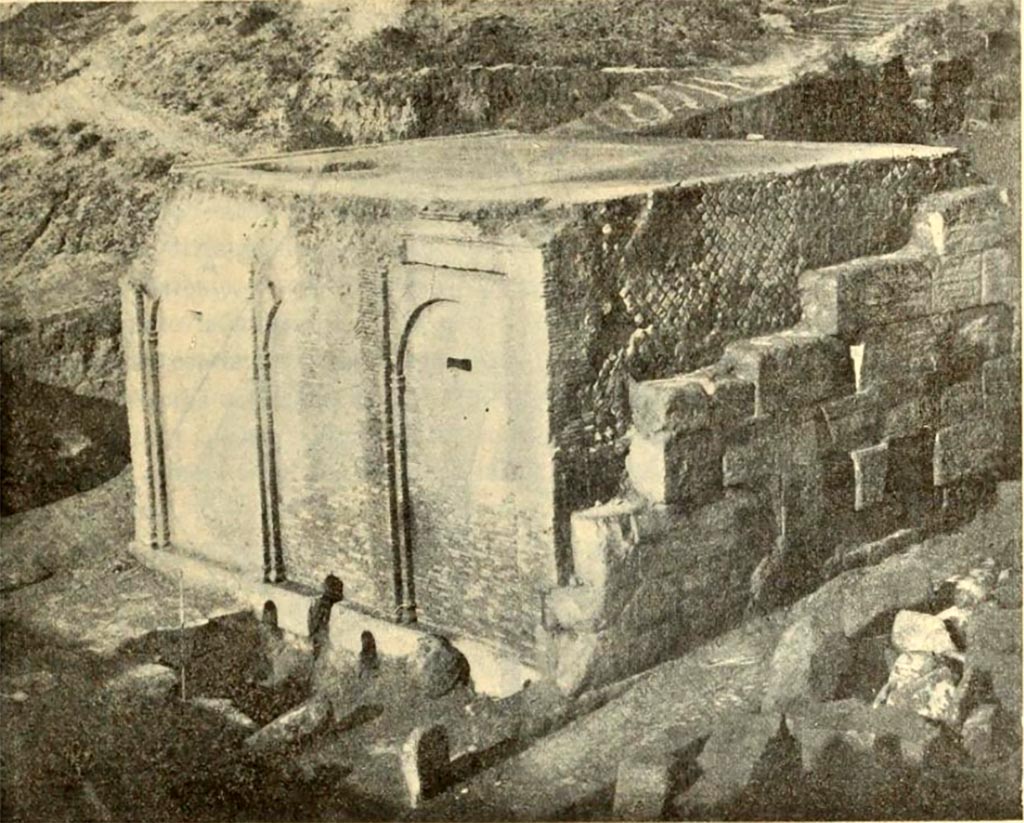
Pompeii Porta del Vesuvio and Castellum Aquae. 1903 photo of water tower and gate after excavation.
The walls of the gate are older than the Castellum Aquae which had been cut into them.
See Notizie degli Scavi di Antichità, 1903,
p. 28, fig. 3.
See Notizie degli
Scavi di Antichità, 1906, p. 97-100.
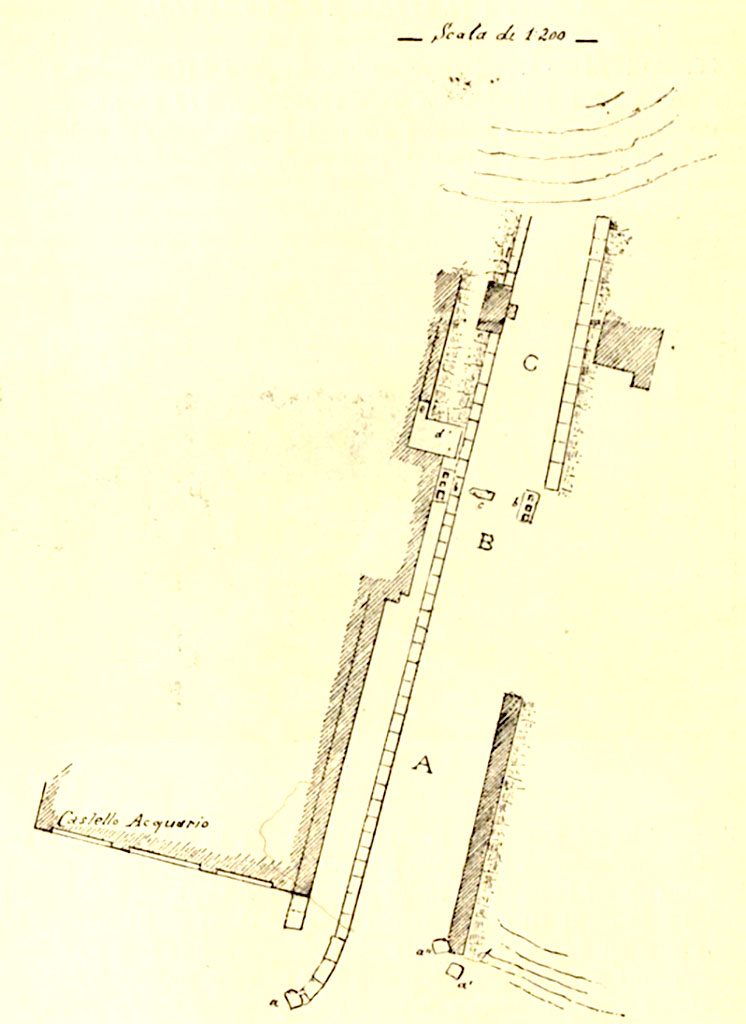
Vesuvian Gate Pompeii. 1906 plan.
According
to Sogliano, the gate, like the Porta Stabia consists of three parts.
The
passage A is 4.65m wide and 10.20m long.
It
consists of two rows of Nocera tufa stone of varying sizes, laid in horizontal
rows.
Foundations
are of Sarno limestone as can be seen in the west wall.
The east
wall only goes a short distance but its thickness of 1.40m can be clearly seen.
On the
outside of the west wall the curtain was demolished to make way for the
Castellum Aquae which leaned against it.
Along the
Western Wall runs a narrow sidewalk which finishes in an angle corner, like the
Porta Stabia.
At the
south end of the gate are three cippi of lava, as shown on the plan, apparently
acting as kerbstones.
A second
narrower passage B followed, measuring 3.65m wide by 5.15m long, with the
eastern side missing entirely.
The
Western Wall, well preserved, is composed of blocks of Sarno limestone, laid in
horizontal rows.
South edge
has a long vertical section recess almost at right angles.
These doors, turning on the hinges,
closed against a small block of lava [c on the plan], remaining somewhat raised
above the ground, allowed the free drainage of water, which ran down from the
heights of Mount Vesuvius.
In the top of the Western Wall
there is a square hole and there was undoubtedly another in the opposite wall.
These contained the security bar that kept the doors closed.
In the south-west corner there was
a masonry altar [d on the plan] with edges in relief and dressed entirely in
plaster and with a painted representation now completely unrecognizable.
Next to this altar there was
another [e on the plan], much smaller, also with an edge in relief.
They were
certainly devoted to worship of Lari Pubblici and to the guardian deity of the
gate, whose representations would have been painted on the walls, in which the
two altars are huddled.
At either end of the vestibule [C] are two strong pillars in blocks of limestone and masonry.
The West pillar, somewhat smaller than the other, is 0.90 m from the wall, while the another now missing was undoubtedly to the East wall.
Between the Western pillar and the wall there was a narrow side passage, as at Porta Marina and Herculaneum Gate.
An arch connected the Western pillar with the wall; a second, much larger, joined this same pillar with the Eastern one, and both making a large vault covering the Vestibulum C.
The narrow passage B, with the gate doors, was similarly covered.
Whether passage A was covered or uncovered is not known.
See Notizie degli Scavi di Antichità, 1906,
p. 97-100.
Vesuvian Gate Pompeii. 1906 drawing of masons’ marks.
According
to Sogliano, on blocks of Tufa were these stonemason’s marks.
See Notizie degli
Scavi di Antichità, 1906, p. 99.
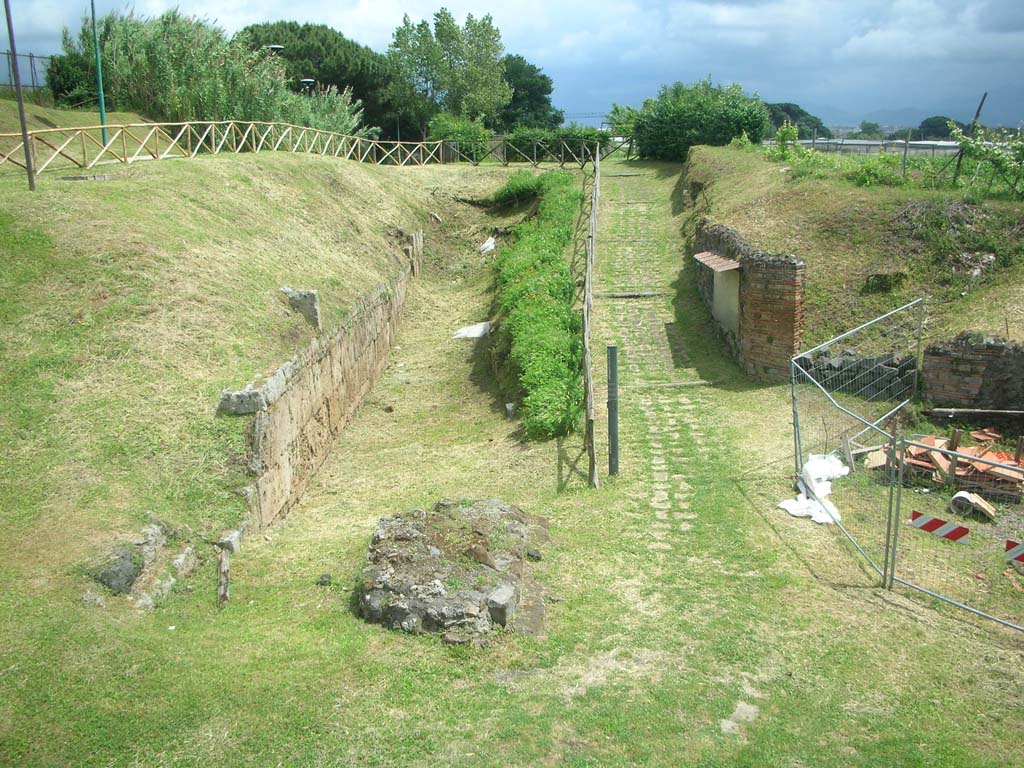
Vesuvian Gate Pompeii. May 2010. Looking east along site of city walls from north end of gate. Photo courtesy of Ivo van der Graaff.
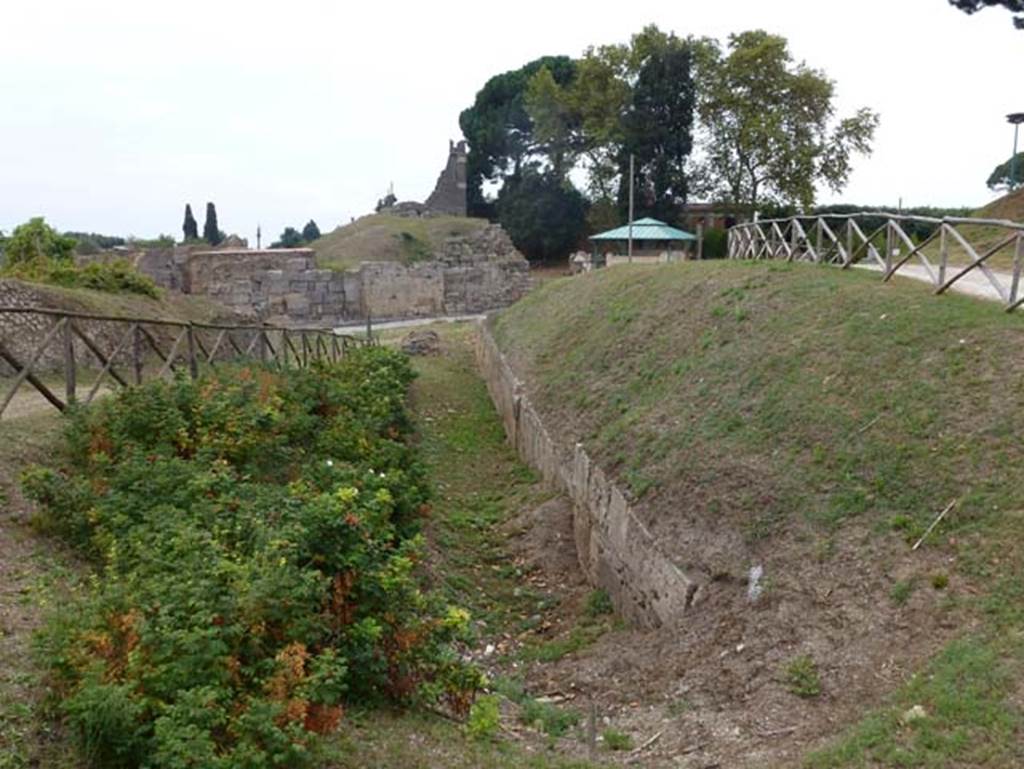
Vesuvian Gate Pompeii. September 2011. Looking west to Gate. Photo courtesy of Michael Binns.
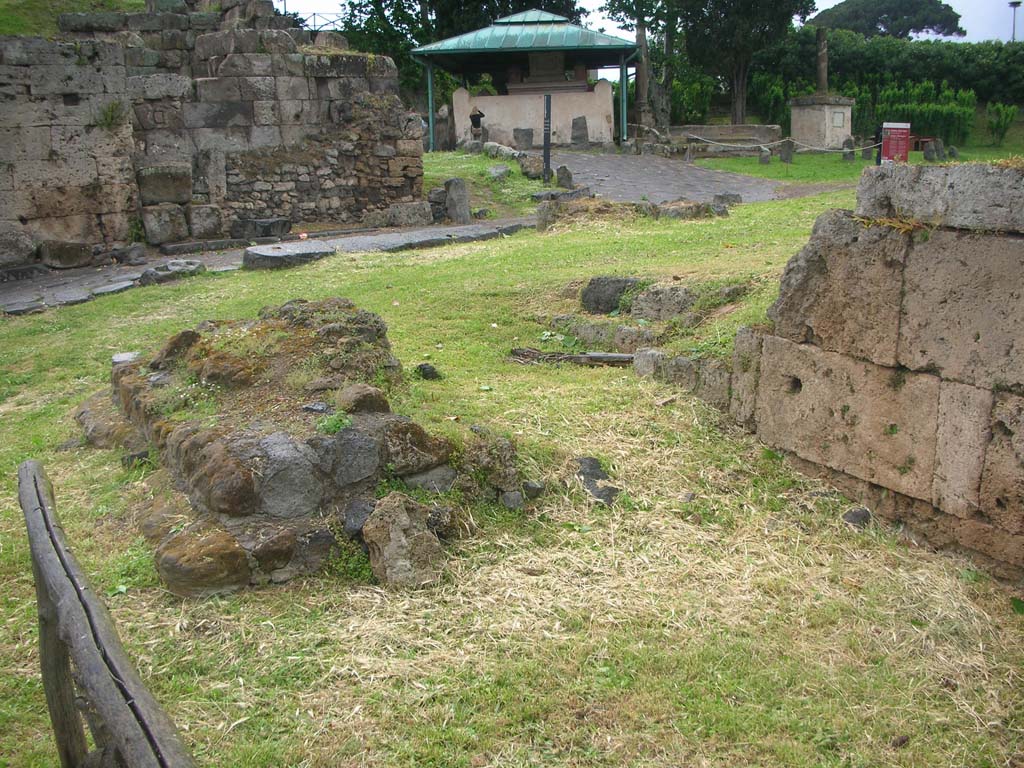
Vesuvian Gate Pompeii. May 2010.
Looking west from city walls on east side of gate towards north end of west wall of gate. Photo courtesy of Ivo van der Graaff.
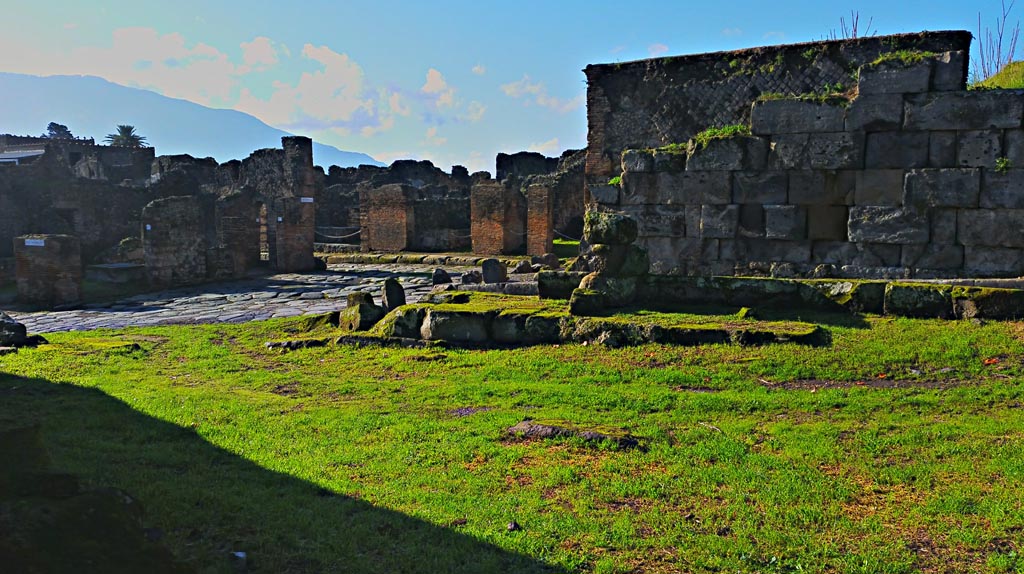
Vesuvian Gate, Pompeii. December 2019.
Looking towards south end of Gate and junction of Via del Vesuvio and Vicolo dei Vettii. Photo courtesy of Giuseppe Ciaramella.
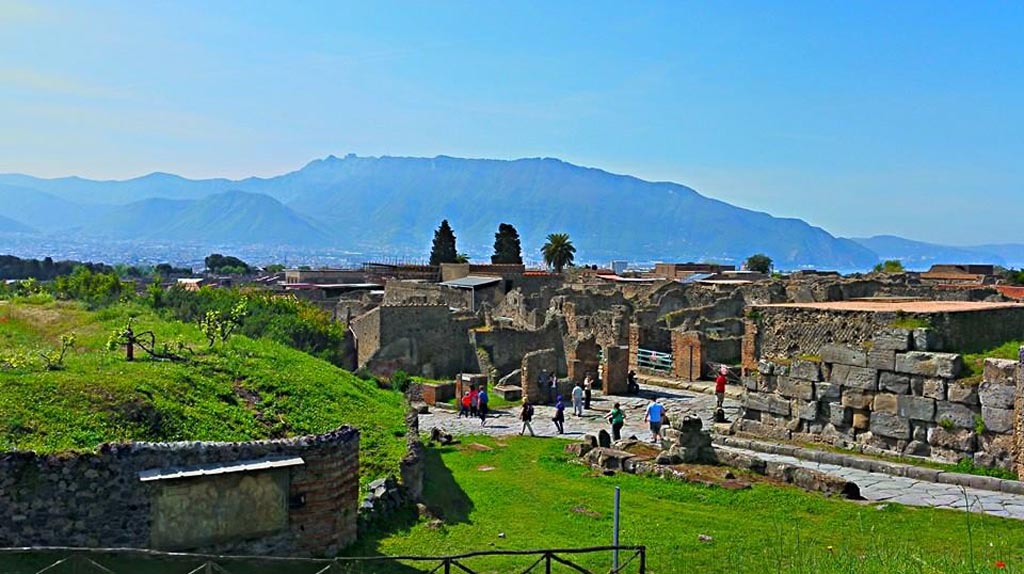
Near Vesuvian Gate,
Pompeii. 2015/2016. Looking south-west towards south side of Gate. Photo
courtesy of Giuseppe Ciaramella.
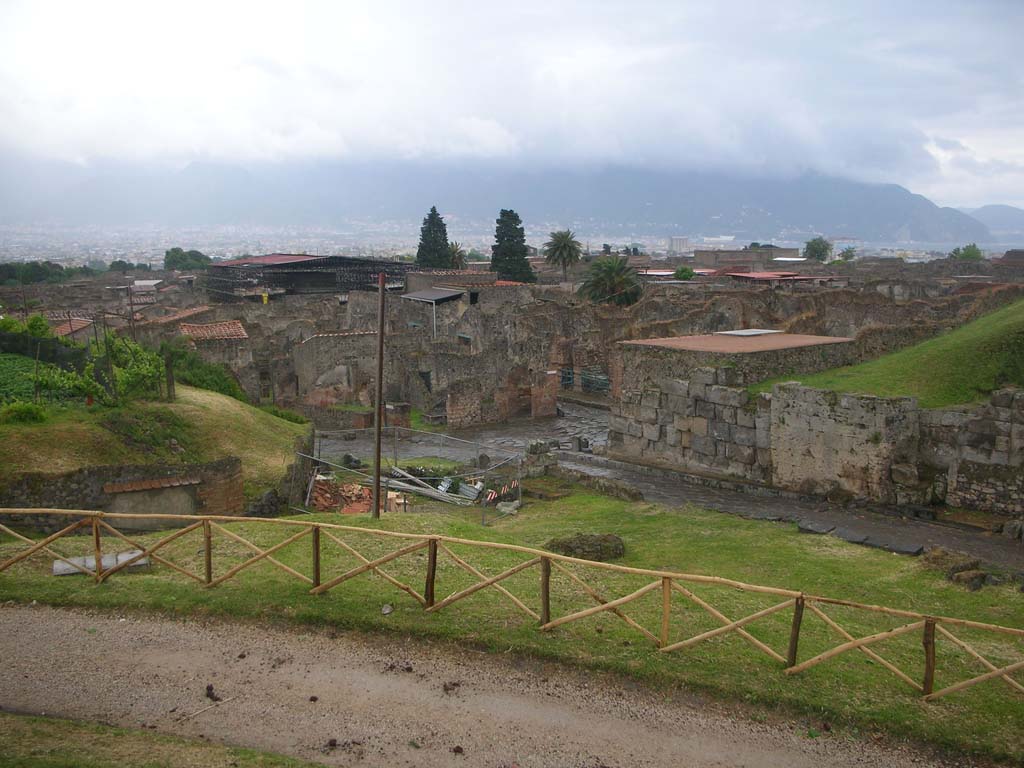
Near Vesuvian Gate, Pompeii. May 2010. Looking south-west towards south side of gate. Photo courtesy of Ivo van der Graaff.
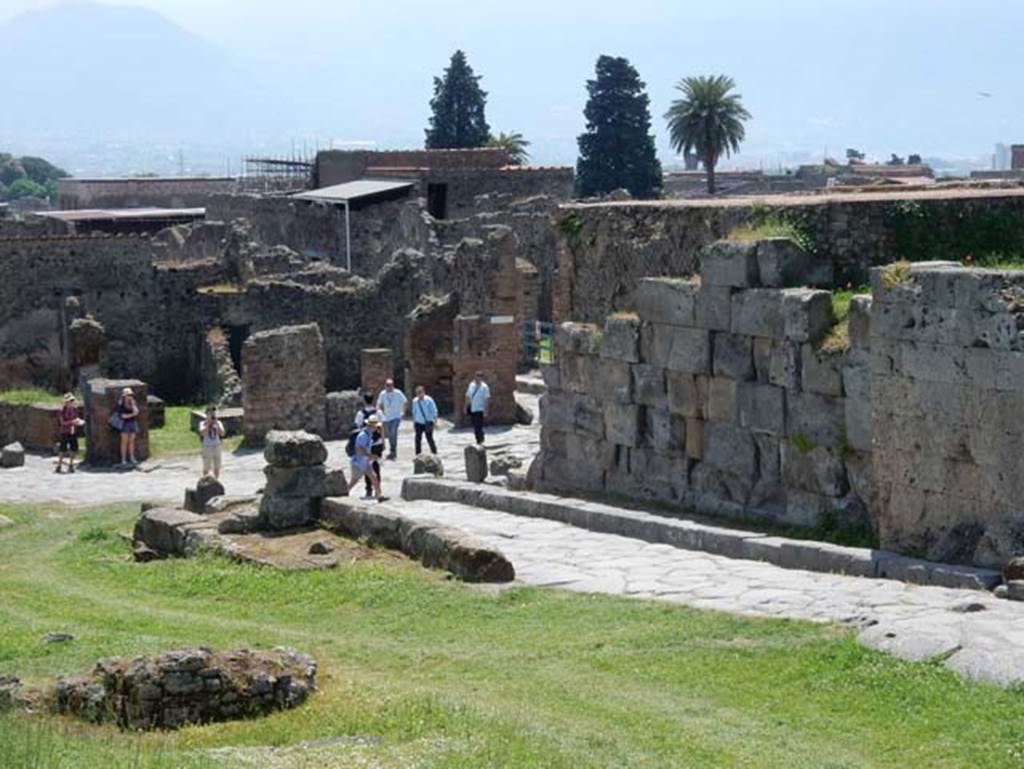
Vesuvian Gate Pompeii. May 2015. Looking south-west. Photo courtesy of Buzz Ferebee.
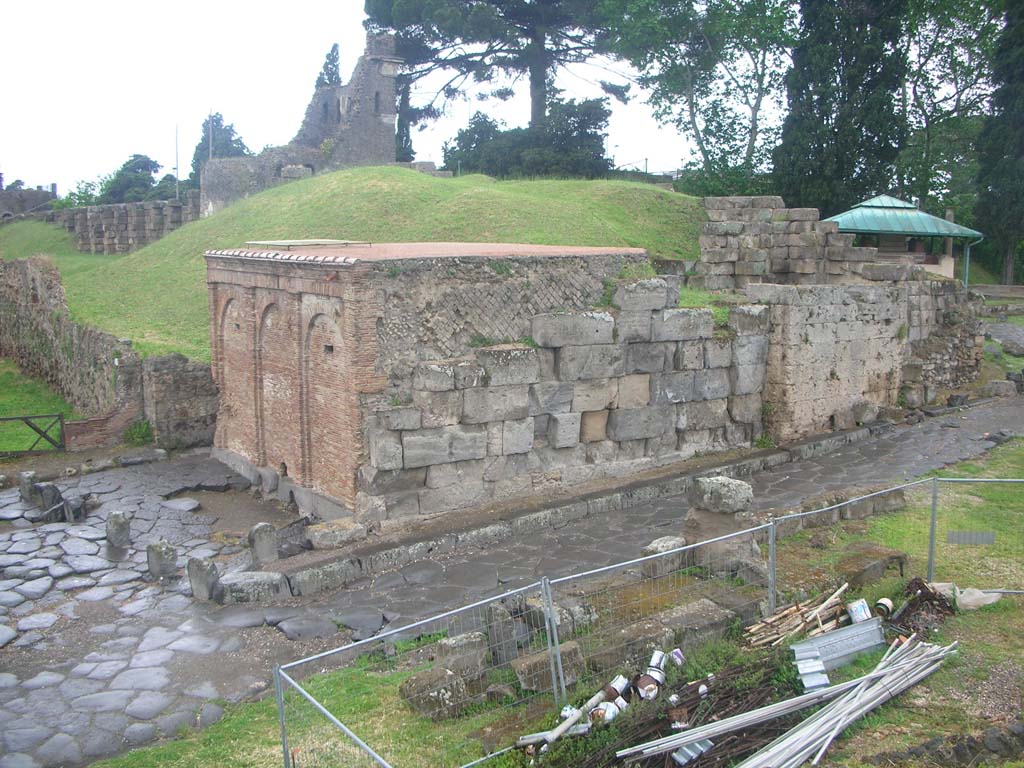
Vesuvian Gate, Pompeii. May 2010.
Looking north-west from south end, with Castellum Aquae leaning against west wall, in centre, with narrow sidewalk, and Tower X, in background.
On the left are lava cippi, as described by Sogliano, and apparently acting as kerbstones. Photo courtesy of Ivo van der Graaff.
![Vesuvian Gate Pompeii. December 2005. Looking north across the south part [A on plan]. On the left is the sidewalk or pavement.](Gate%20Vesuvio_files/image022.jpg)
Vesuvian Gate Pompeii. December 2005. Looking north across the south part [A on plan]. On the left is the sidewalk or pavement.
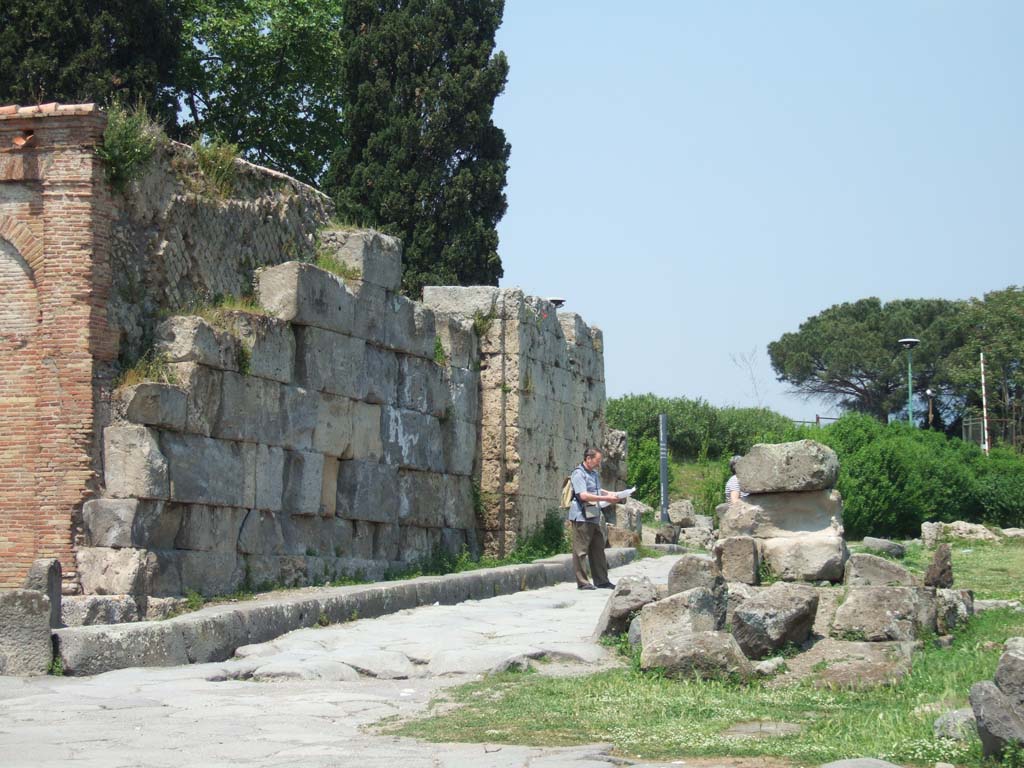
Vesuvian Gate Pompeii. May 2006. Looking north-west across area A.
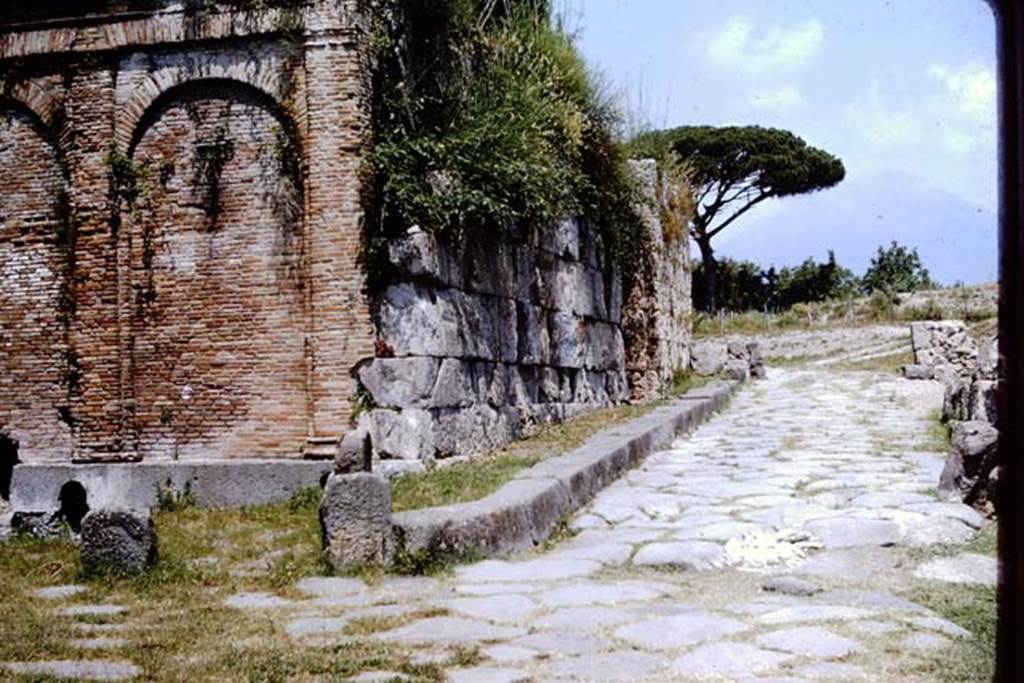
Vesuvian Gate, Pompeii. 1964. Looking north. Photo by Stanley A. Jashemski.
Source: The Wilhelmina and Stanley A. Jashemski archive in the University of Maryland Library, Special Collections (See collection page) and made available under the Creative Commons Attribution-Non-Commercial License v.4. See Licence and use details.
J64f1617
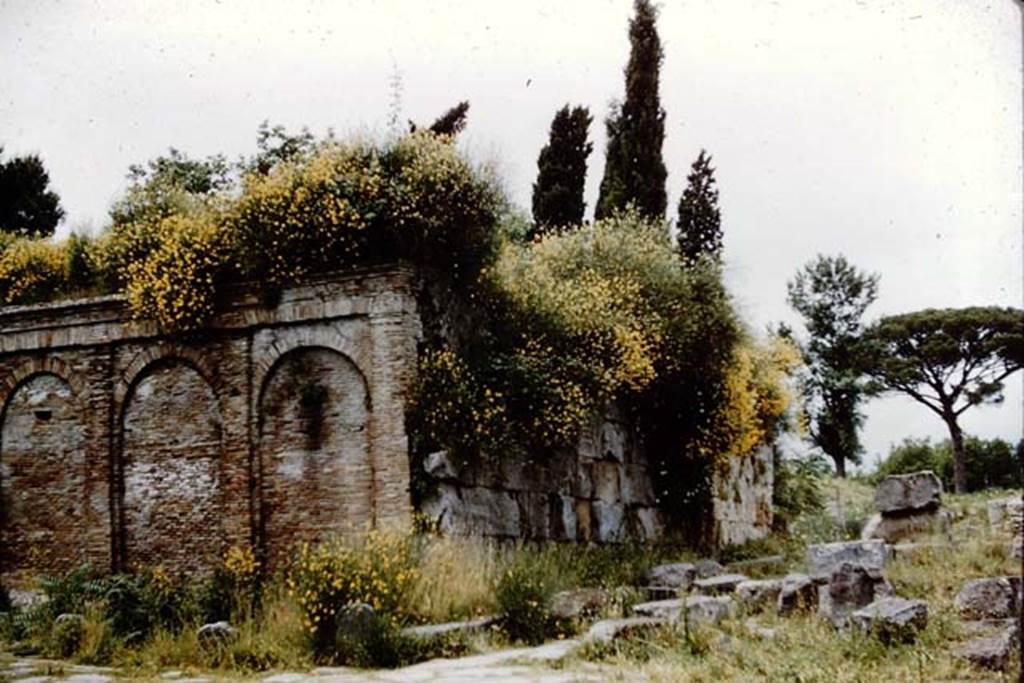
Castellum Acquae, on left, and Vesuvian Gate site, Pompeii. 1961. Looking north-west. Photo by Stanley A. Jashemski.
Source: The Wilhelmina and Stanley A. Jashemski archive in the University of Maryland Library, Special Collections (See collection page) and made available under the Creative Commons Attribution-Non-Commercial License v.4. See Licence and use details.
J61f0389
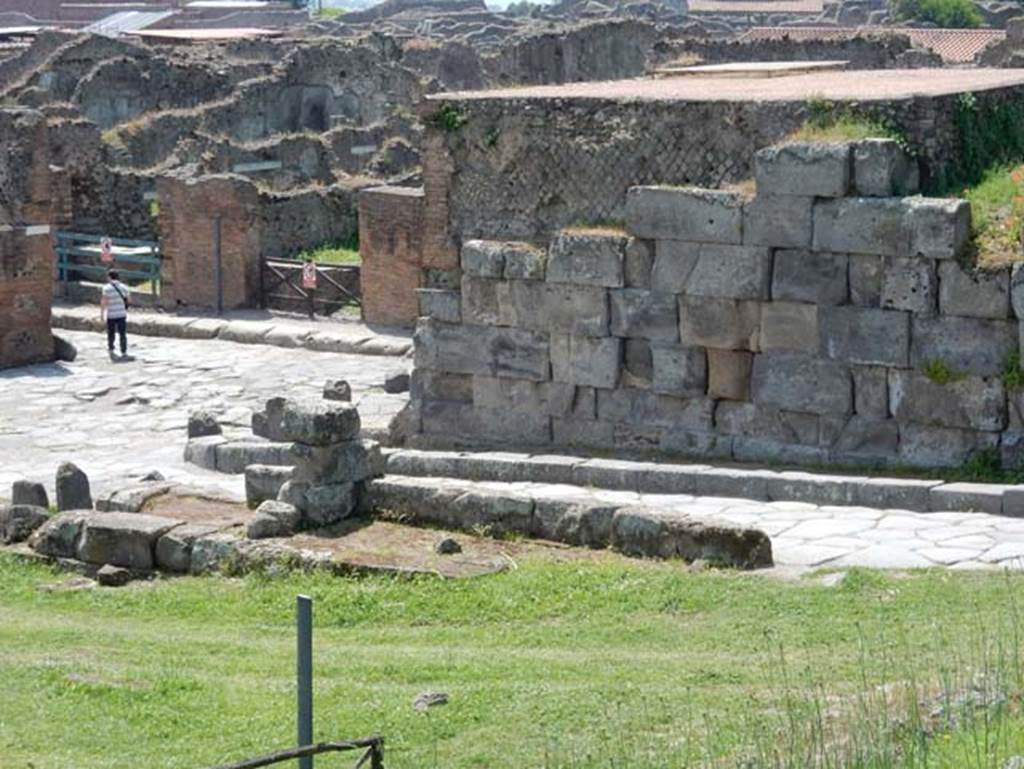
Vesuvian Gate Pompeii. May 2015. South end of west side of Vesuvian Gate, Looking west. Photo courtesy of Buzz Ferebee.
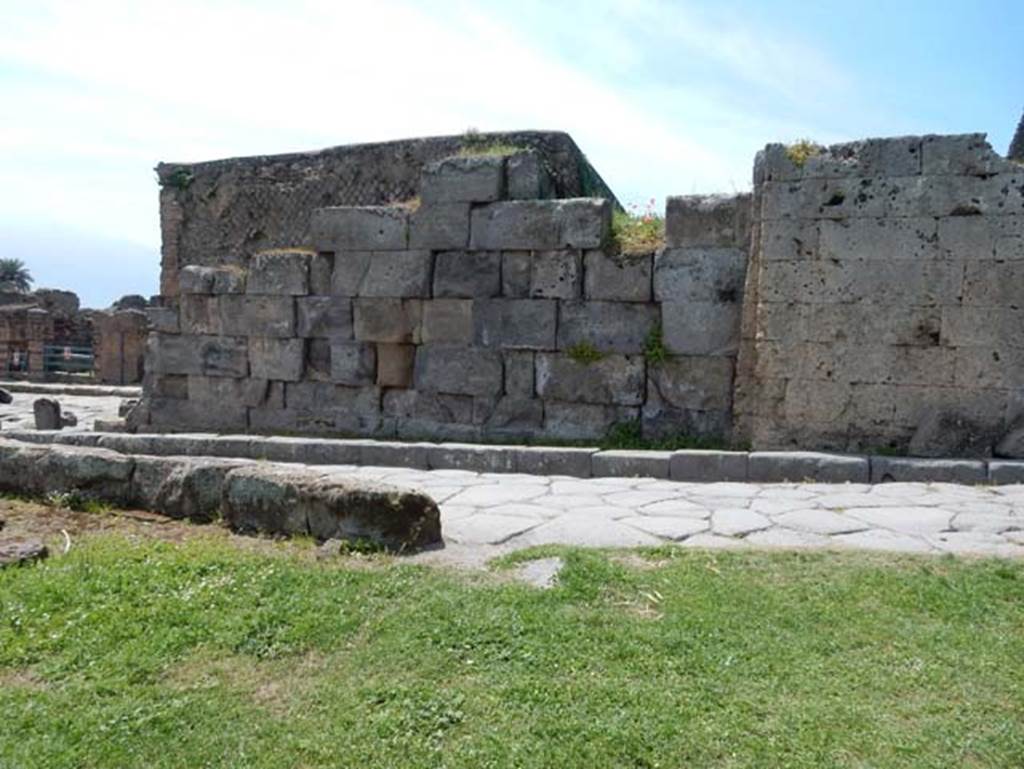
Vesuvian Gate Pompeii. May 2015. Detail of south end of west side of Vesuvian Gate, Looking west. Photo courtesy of Buzz Ferebee.
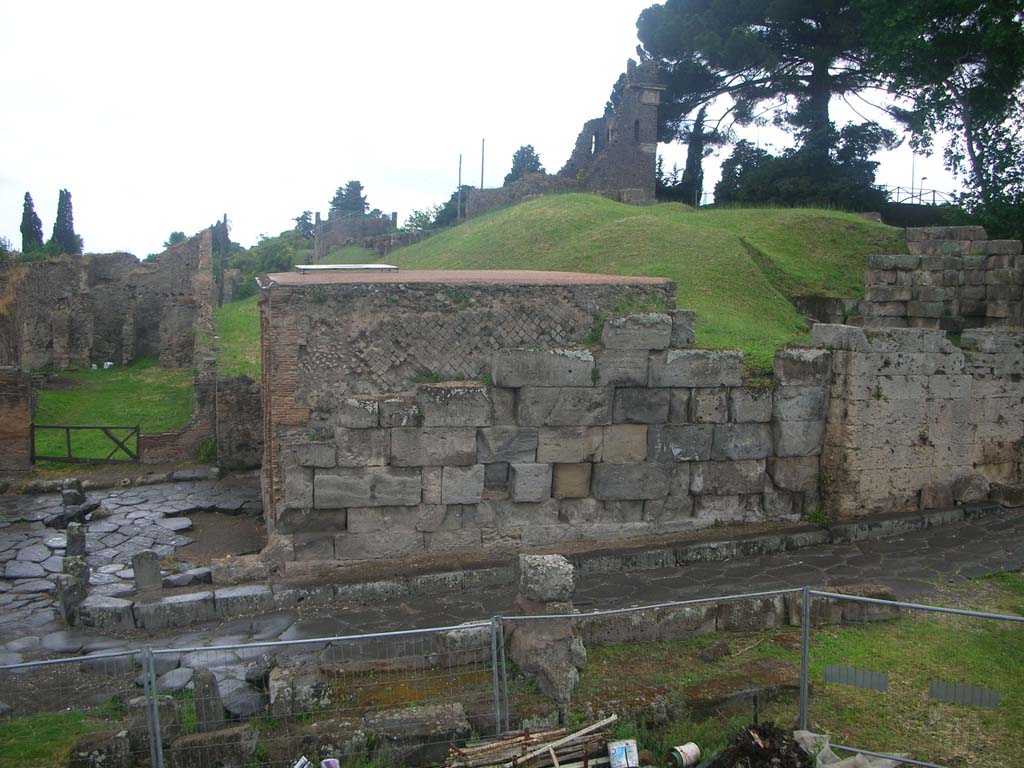
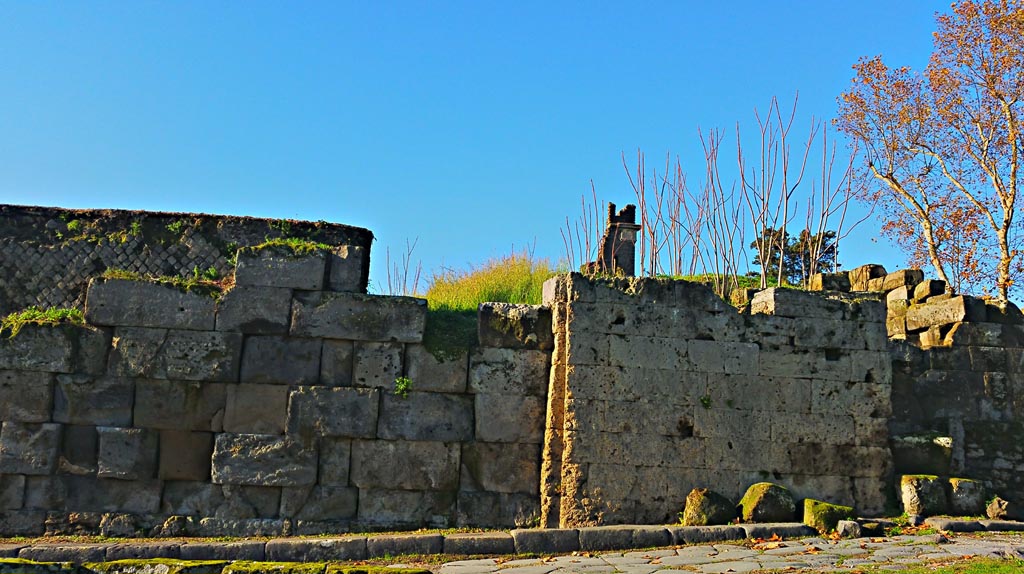
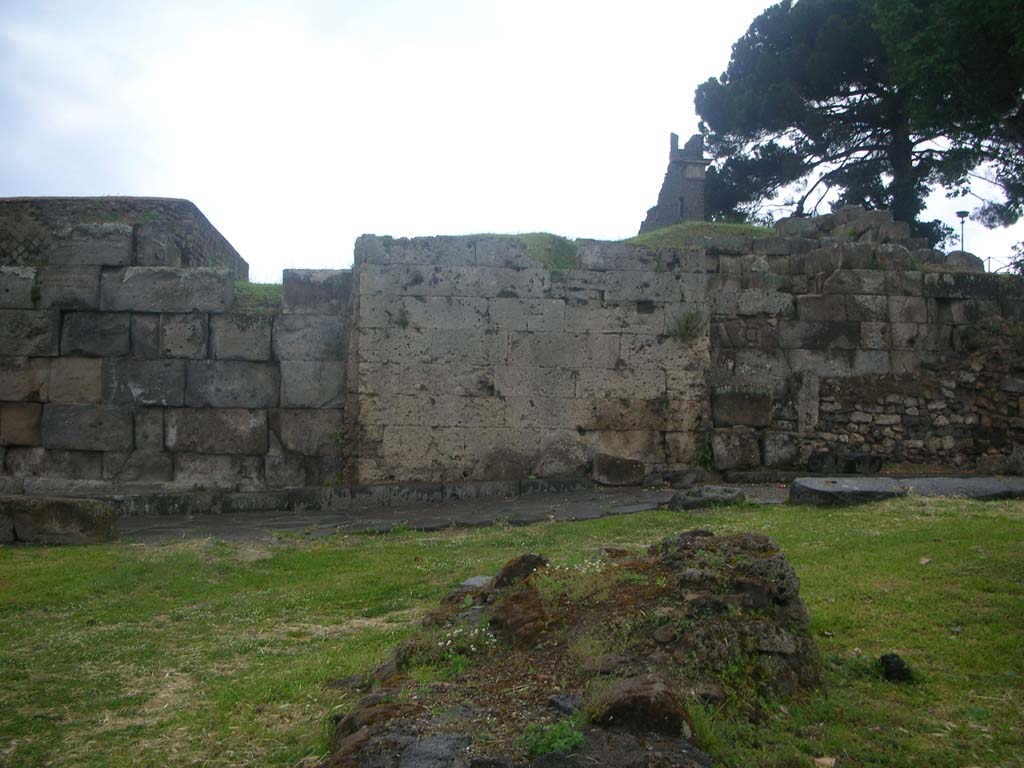
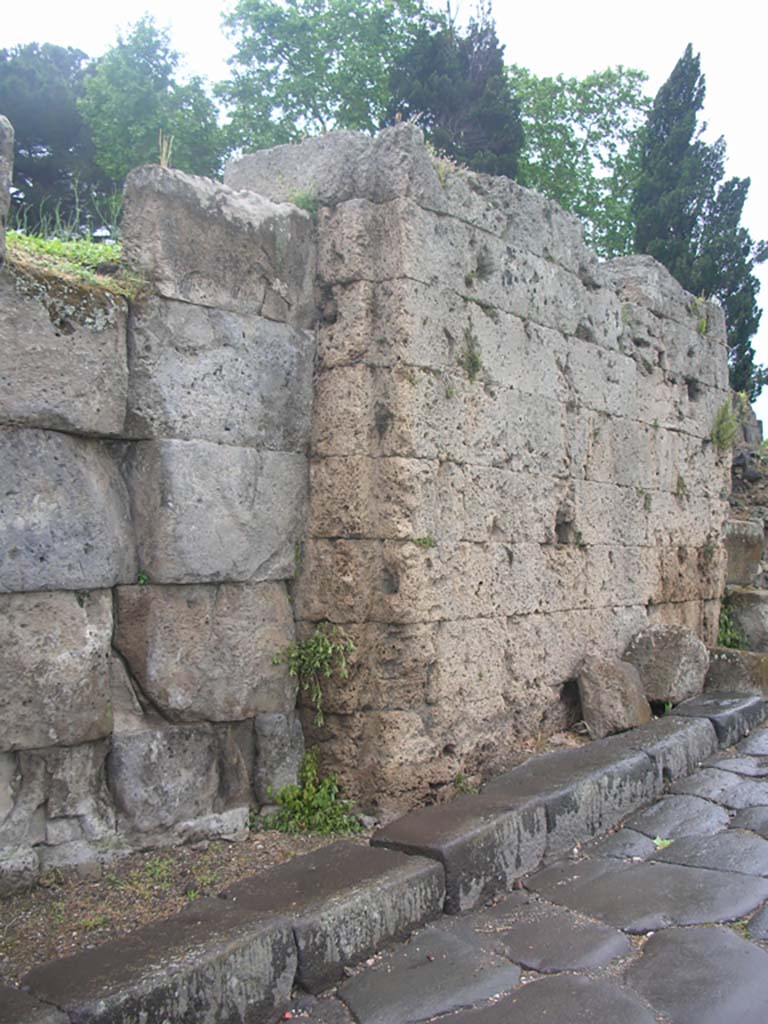
Vesuvian Gate Pompeii. May 2010. Detail of central section of west wall.
On the left is formed from Nocera tufa, on the right are blocks of Sarno limestone. Photo courtesy of Ivo van der Graaff.
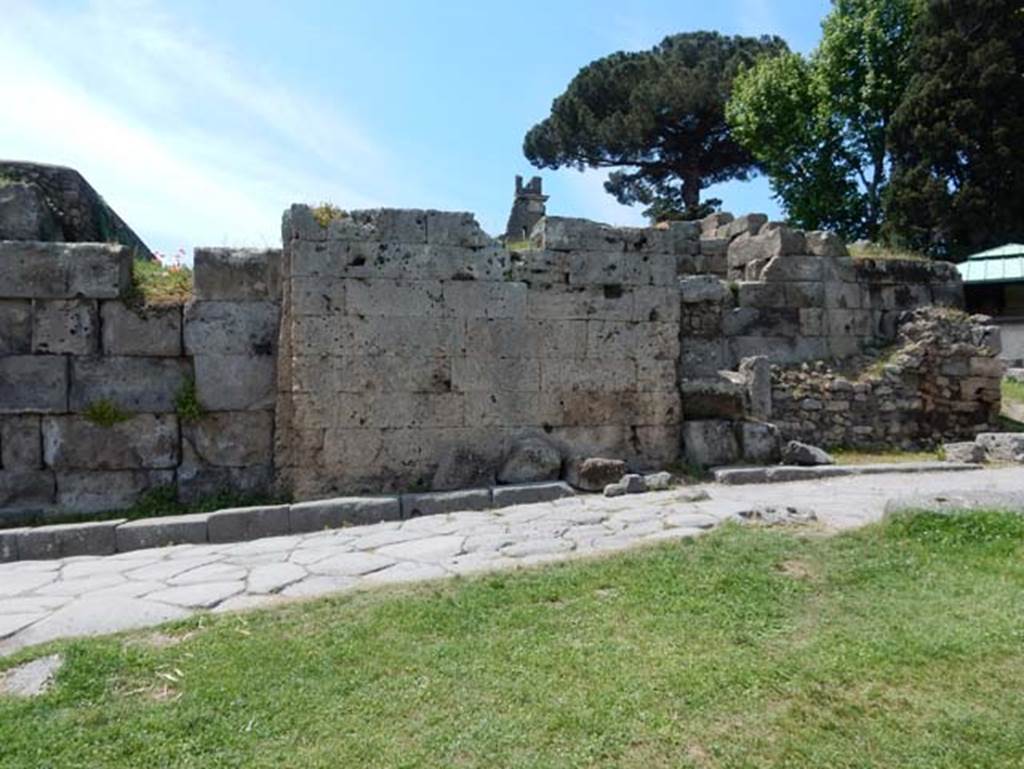
Vesuvian Gate Pompeii. May 2015. Looking west towards north end of gate. Photo courtesy of Buzz Ferebee.
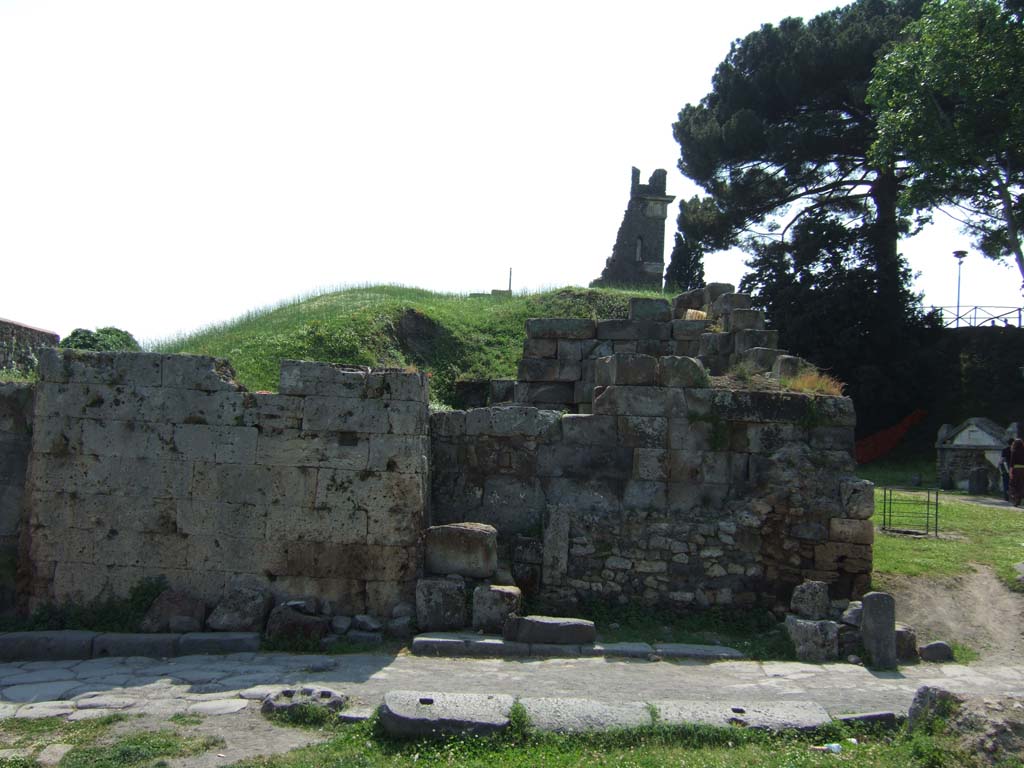
Vesuvian Gate Pompeii. May 2006. Looking west across areas B and C.
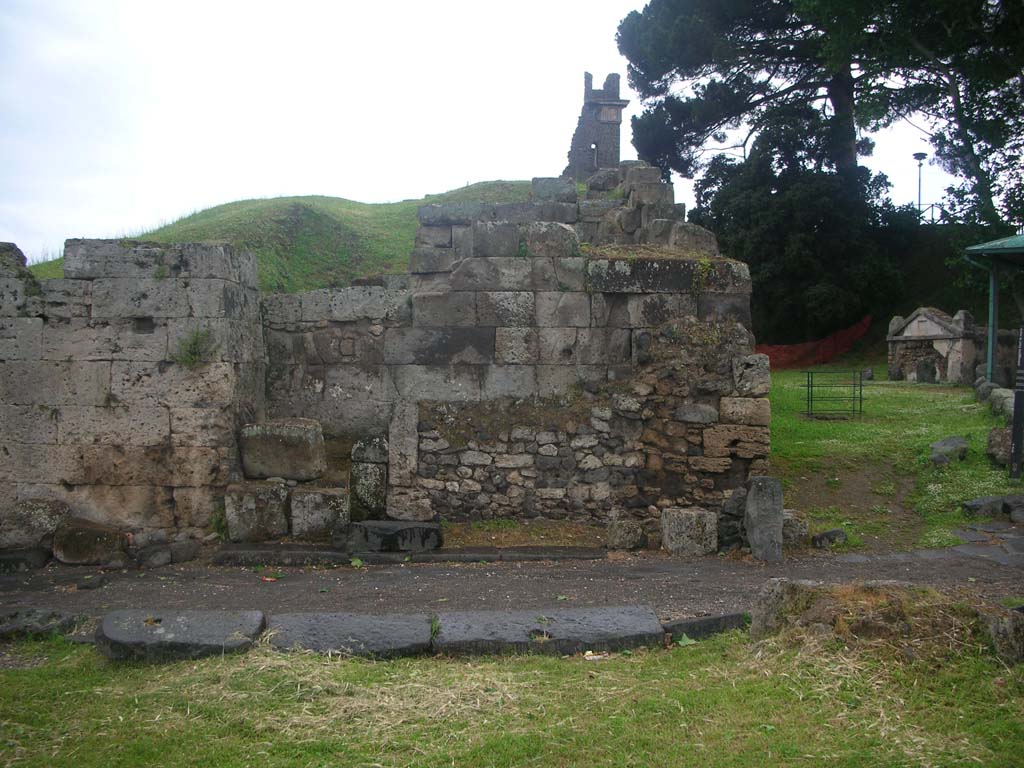
Vesuvian Gate Pompeii. May 2010. North end of west side of gate. Photo courtesy of Ivo van der Graaff.
According to Van der Graaff –
“Porta Vesuvio presents a unique variation of the basic plan (see Fig. 3.4).
The gate responded to its vulnerable position in the defences with its travertine bastions set back behind the curtain and the addition of a forward tower.
With the second upgrade of the agger, this layout remained essentially unchanged.
The added height of the embankment led to the construction of the tuff gate court somewhere between the late third and mid-second centuries BCE.
The resulting layout transformed the gate into a formidable defensive outpost with double tuff and travertine bastions that created a deadly cul-de-sac.
This strategic consideration explains why the Porta Vesuvio featured a closing mechanism on the exterior side of the travertine bastions; defenders could isolate attackers more effectively.
At a later stage, in a clear effort to monumentalize the gate, engineers built an arch using opus incertum on the exterior of the passageway.
Its placement on the exterior, as opposed to those on the city side on the other gates, is a natural continuation of the outward emphasis that engineers placed on the Vesuvian gate.
It is also the result of the smaller agger on the eastern side of the gate, which, in this area of the defences, was shorter than elsewhere.
Whether another vault once existed on the city side of the gate remains unclear due to the heavy damage it sustained during the earthquake (Note 76).”
See Van der Graaff, I. (2018). The Fortifications of Pompeii and Ancient Italy. Routledge, (p.65-66, Fig. 3.4 and Note 76).
![Vesuvian Gate Pompeii. May 2010. Looking west from east side of gate. Photo courtesy of Ivo van der Graaff.
Looking west across north end of the narrow passage, as described by Sogliano.
“At each of the two northern ends of this narrow passage are two lava blocks [b on the plan, seen earlier above], with inserts for the hinges and posts, for the doors which opened inward.
These doors, turning on the hinges, closed against a small block of lava [c on the plan, see above], remaining somewhat raised above the ground, allowed the free drainage of water, which ran down from the heights of Mount Vesuvius.
In the top of the Western Wall there is a square hole and there was undoubtedly another in the opposite wall. These contained the security bar that kept the doors closed.”
See Notizie degli Scavi di Antichità, 1906, p. 97-100.](Gate%20Vesuvio_files/image040.jpg)
Looking west across north end of the narrow passage, as described by Sogliano.
“At each
of the two northern ends of this narrow passage are two lava blocks [b on the
plan, seen earlier above], with inserts for the hinges and posts, for the doors
which opened inward.
These
doors, turning on the hinges, closed against a small block of lava [c on the
plan, see above], remaining somewhat raised above the ground, allowed the free
drainage of water, which ran down from the heights of Mount Vesuvius.
In the top
of the Western Wall there is a square hole and there was undoubtedly another in
the opposite wall. These contained the security bar that kept the doors closed.”
See Notizie degli
Scavi di Antichità, 1906, p. 97-100.
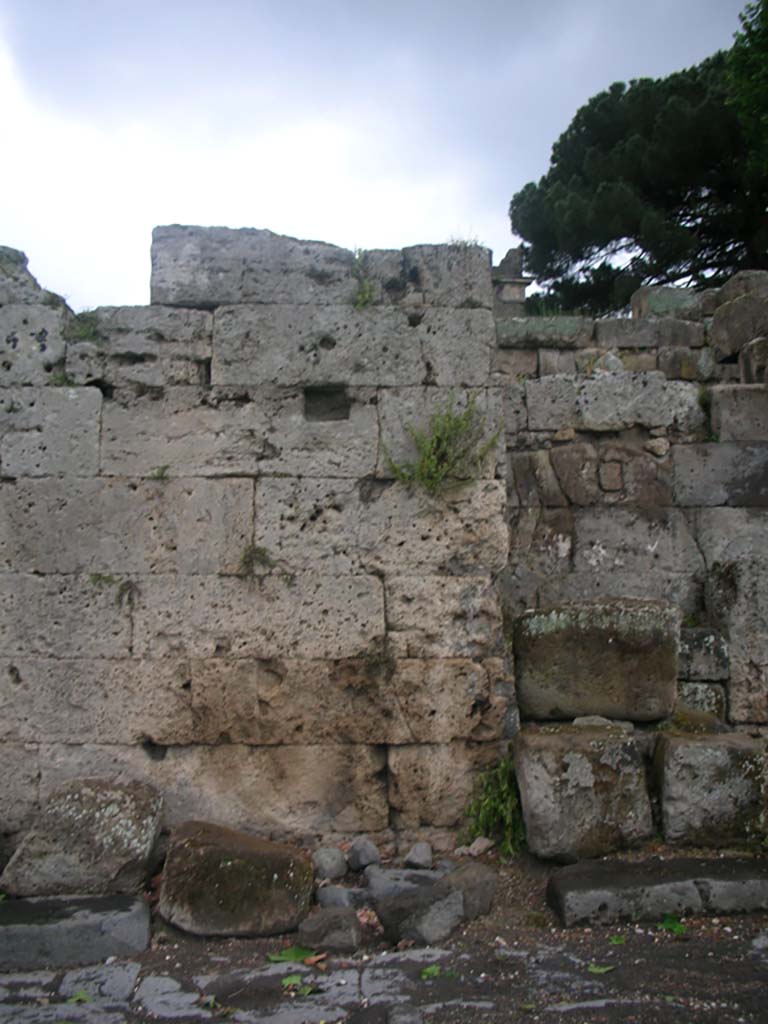
Vesuvian Gate Pompeii. May 2010. West wall at site of doorway. Photo courtesy of Ivo van der Graaff.
According to Sogliano –
“In the top of the Western Wall
there is a square hole and there was undoubtedly another in the opposite wall.
These contained the security bar
that kept the doors closed.”
See Notizie degli Scavi di Antichità, 1906,
p. 97-100.
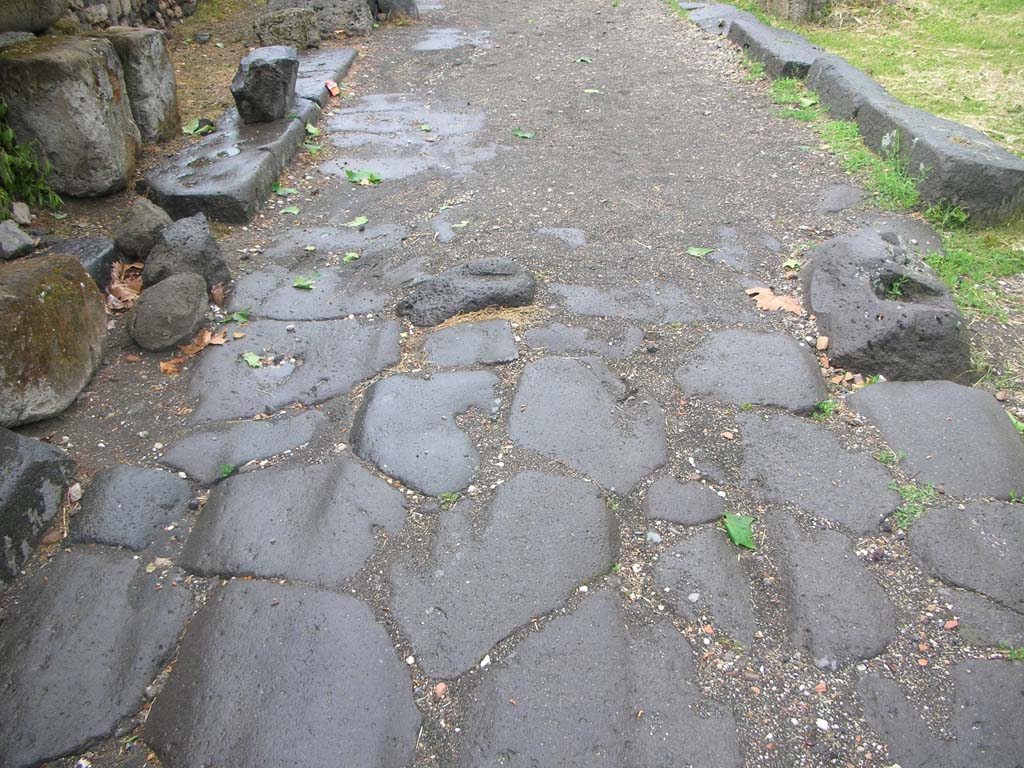
Vesuvian Gate Pompeii. May 2010.
Looking north along roadway towards site of doorway, with
small block of lava, in centre, for door to close against. Photo courtesy of Ivo van der Graaff.
See Notizie
degli Scavi di Antichità, 1906, p. 97-100.
![Vesuvian Gate Pompeii. May 2010. Detail from west wall at north end of gate. Photo courtesy of Ivo van der Graaff.
According to Sogliano –
“In the south-west corner [of area C, at the north end of the gate] there was a masonry altar [d on the plan, as mentioned above] with edges in relief and dressed entirely in plaster and with a painted representation now completely unrecognizable. Next to this altar there was another [e on the plan], much smaller, also with an edge in relief.”
See Notizie degli Scavi di Antichità, 1906, p. 97-100.](Gate%20Vesuvio_files/image043.jpg)
Vesuvian Gate Pompeii. May 2010. Detail from west wall at north end of gate. Photo courtesy of Ivo van der Graaff.
According to Sogliano –
“In the
south-west corner [of area C, at the north end of the gate] there was a masonry
altar [d on the plan, as mentioned above] with edges in relief and dressed
entirely in plaster and with a painted representation now completely
unrecognizable. Next to this altar there was another [e on the plan], much
smaller, also with an edge in relief.”
See Notizie degli
Scavi di Antichità, 1906, p. 97-100.
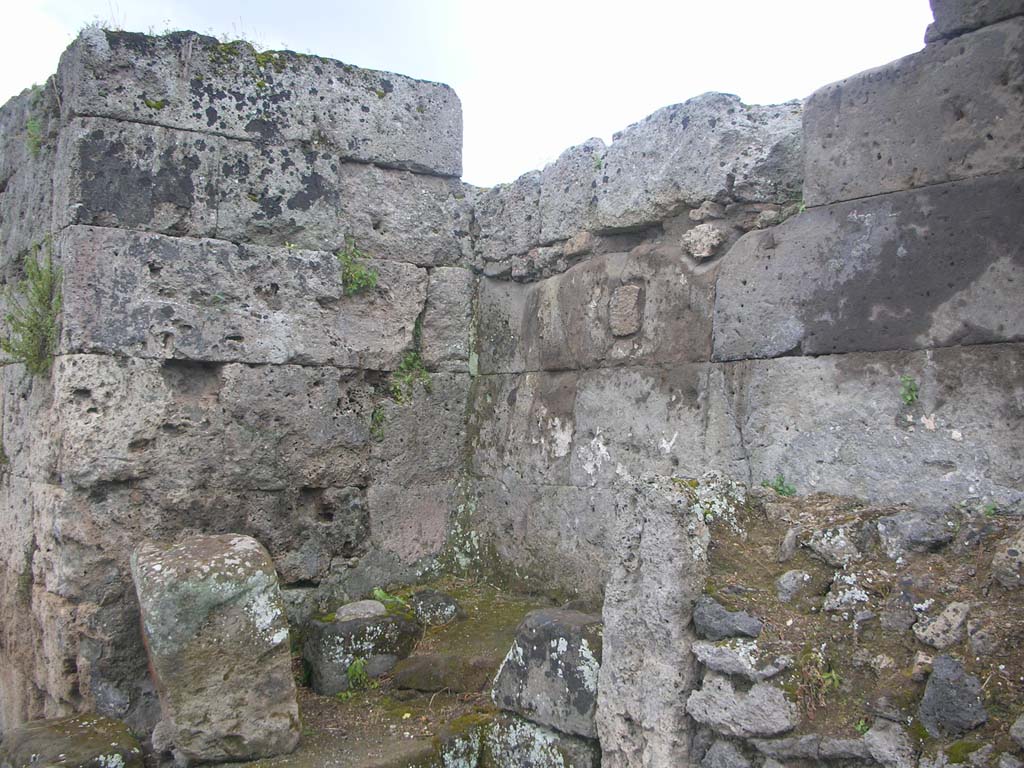
Vesuvian Gate Pompeii. May 2010. Looking south-west at north end of west wall. Photo courtesy of Ivo van der Graaff.
According to Van der Graaff –
“The Porta Vesuvio displays the remains of two altars in the cul-de-sac on the exterior north-west tip of the gate.
Upon excavation in the early twentieth century, it preserved the remains of a plaster coating and a fresco associated with the altars.
Any identifiable signs had already deteriorated beyond recognition and have now completely disappeared.
Antonio Sogliano identified the shrine as a lararium, and the fresco presumably depicted the public lares protecting the city (Note 18).
However, given the prevalence of Minerva on the other gates, it seems plausible to assume that she played a role here as well.”
See Van der Graaff, I. (2018). The Fortifications of Pompeii and Ancient Italy. Routledge, (p.211 and Note 18).
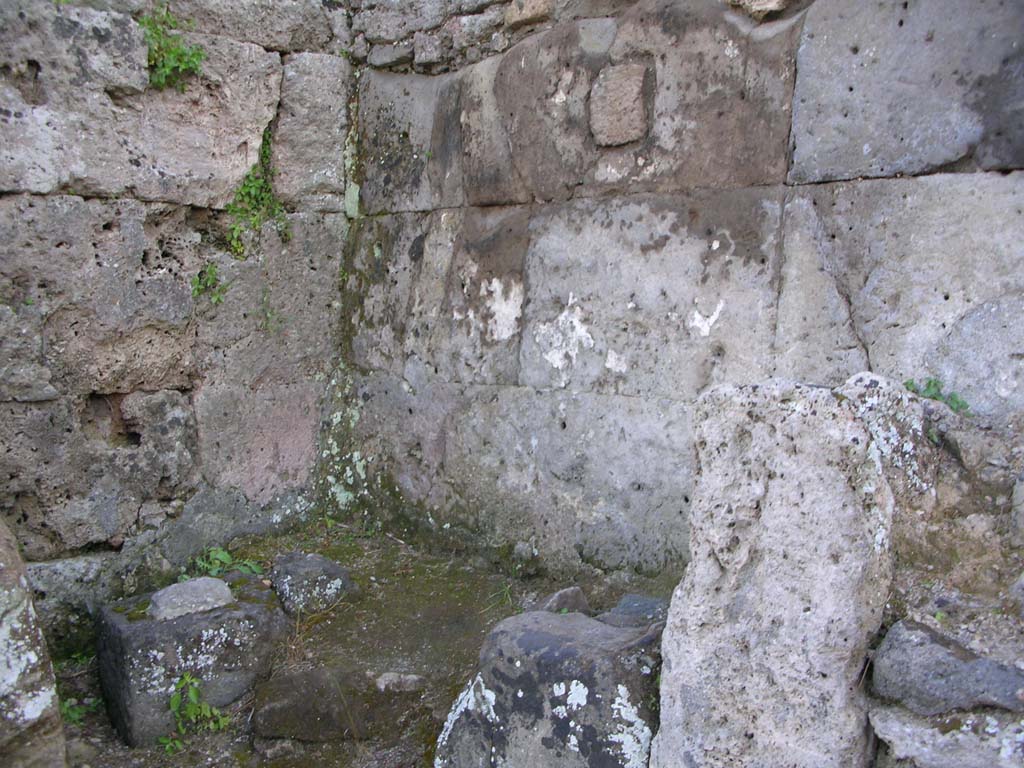
Vesuvian Gate, Pompeii. May 2010. Looking south-west at north end of west wall. Photo courtesy of Ivo van der Graaff.
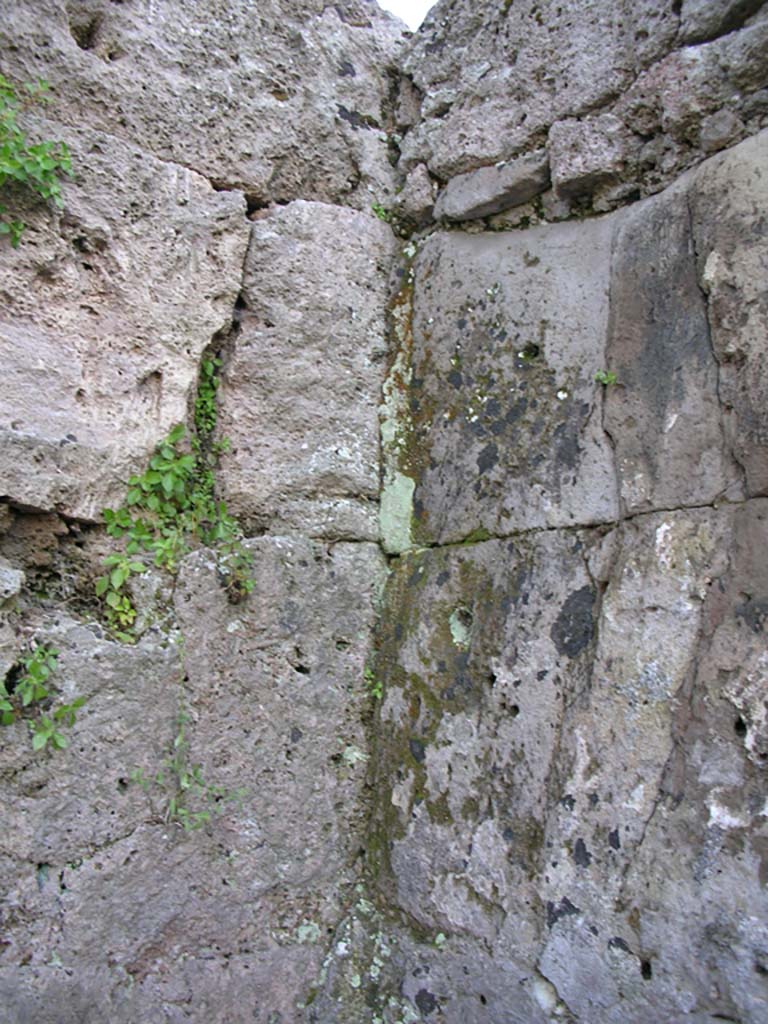
Vesuvian Gate, Pompeii. May 2010.
Detail from south-west corner of lararium area. Photo courtesy of Ivo van der Graaff.
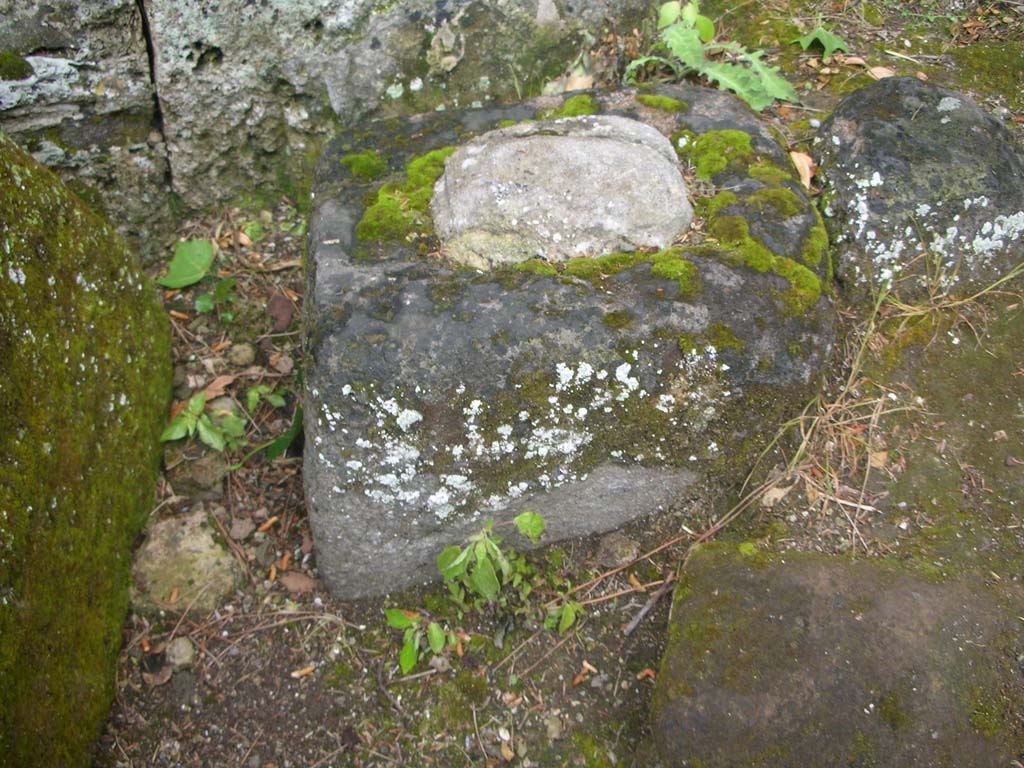
Vesuvian Gate Pompeii. May 2010. Detail from near south wall. Photo courtesy of Ivo van der Graaff.
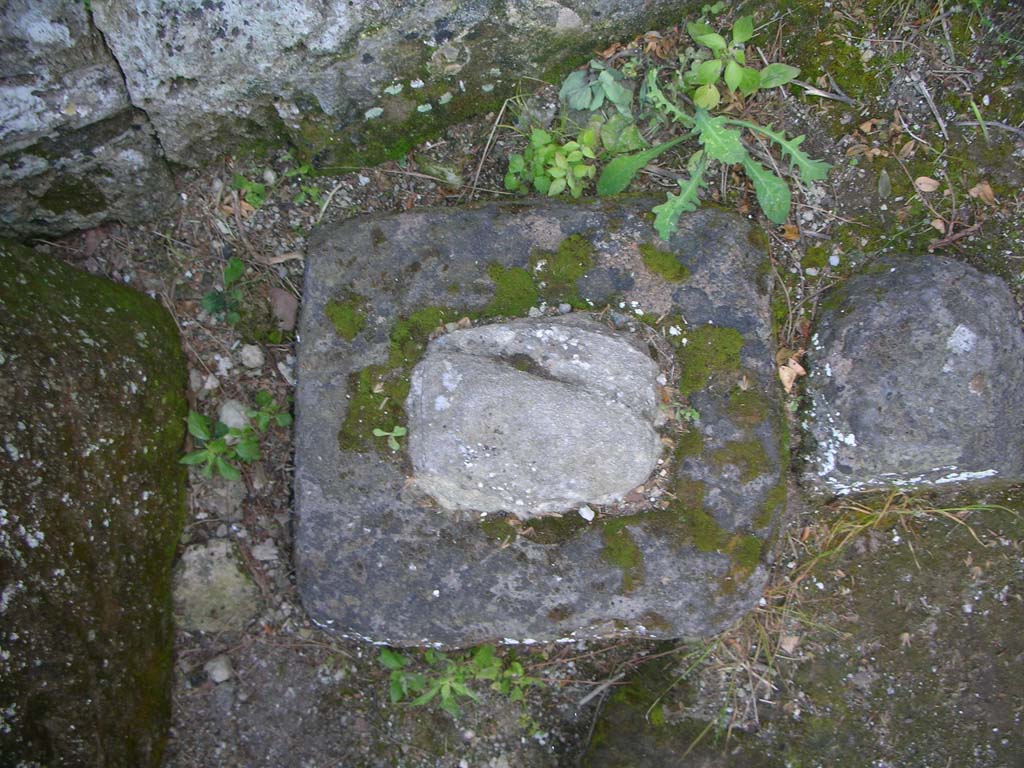
Vesuvian Gate Pompeii. May 2010. Detail from near south wall. Photo courtesy of Ivo van der Graaff.
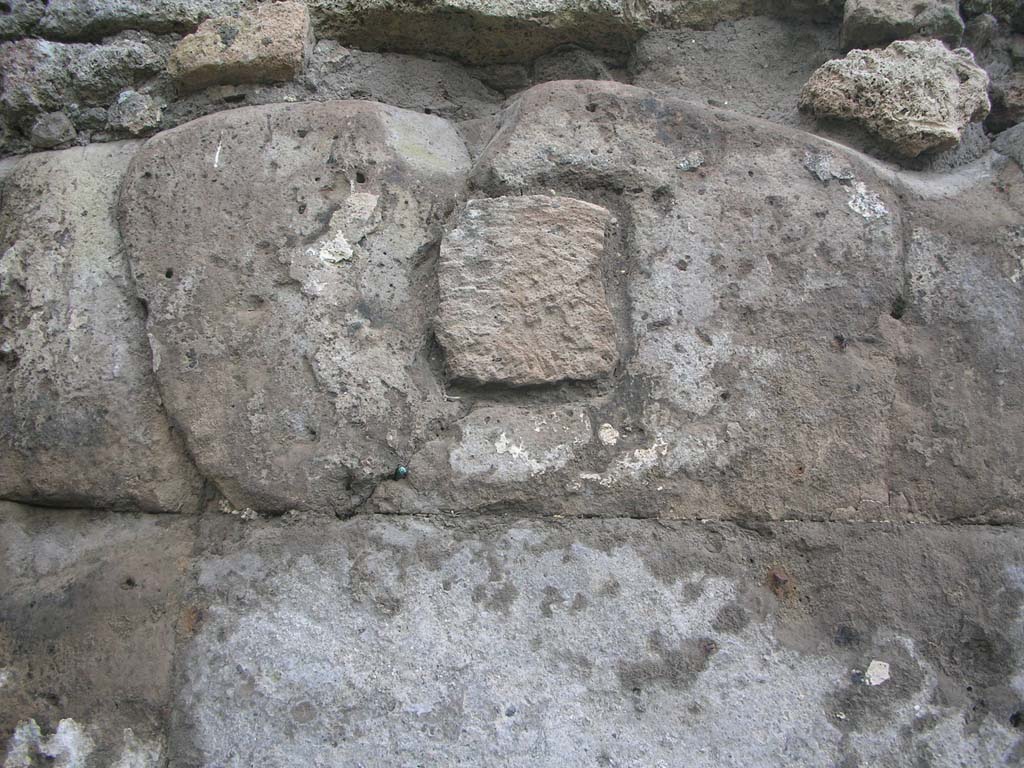
Vesuvian Gate Pompeii. May 2010. Detail from west wall at north end. Photo courtesy of Ivo van der Graaff.
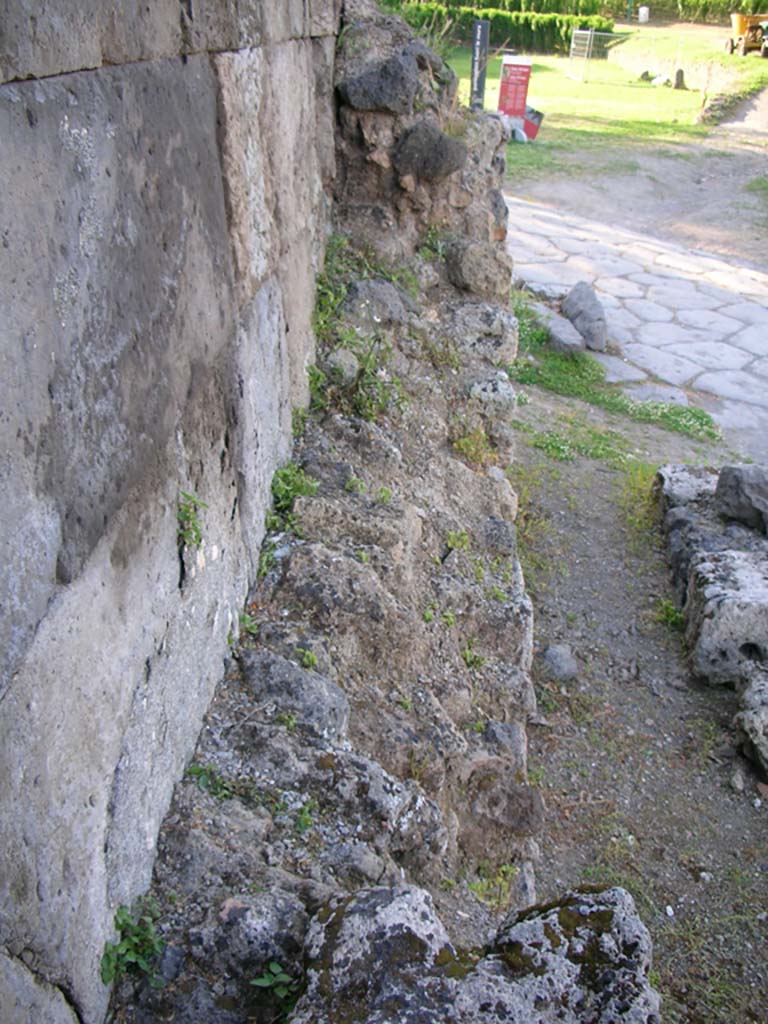
Vesuvian Gate, Pompeii. May 2010.
Looking north along west side at north end of gate. Photo courtesy of Ivo van der Graaff.
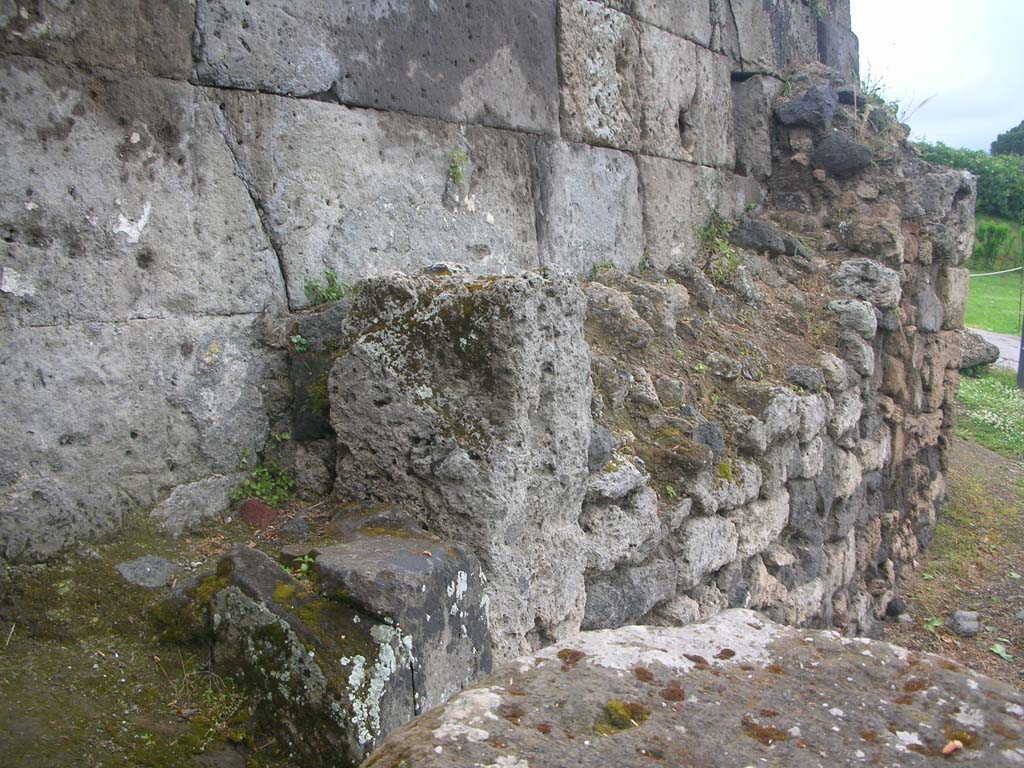
Vesuvian Gate Pompeii. May 2010. Looking north along west wall at north end. Photo courtesy of Ivo van der Graaff.
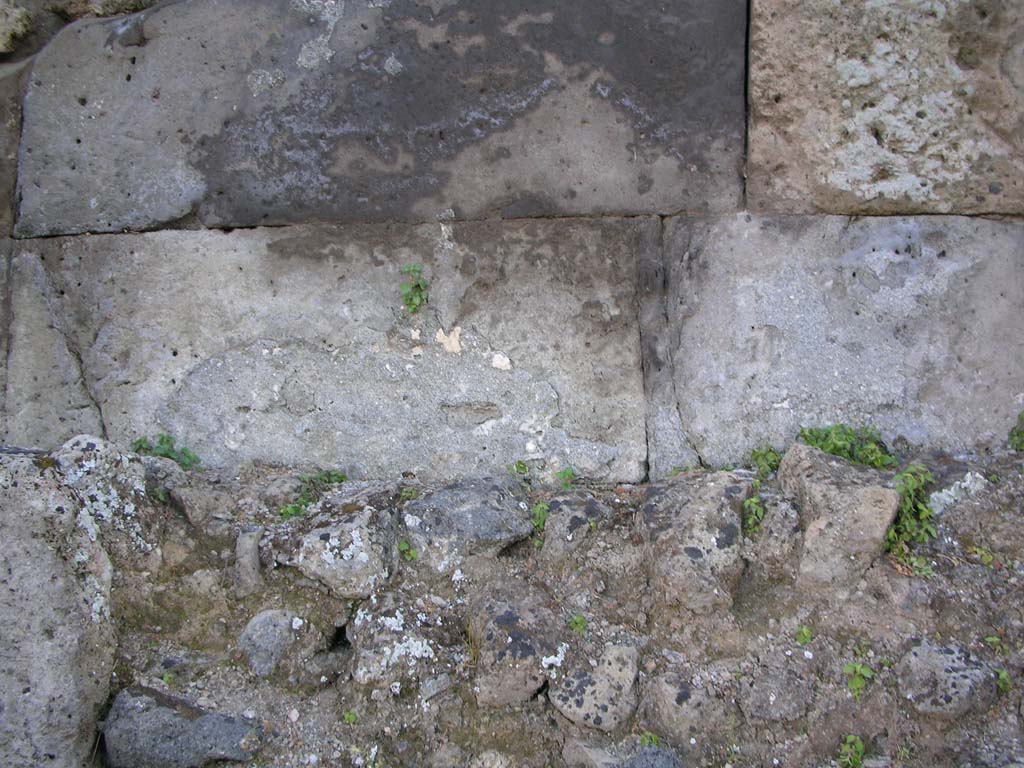
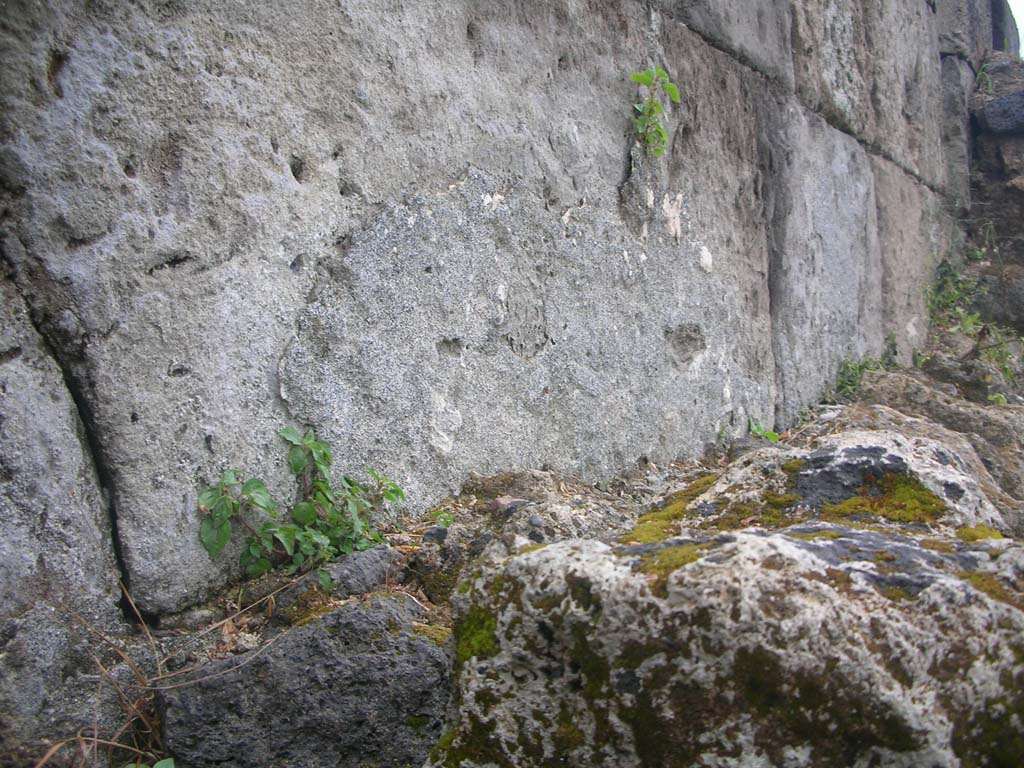
Vesuvian Gate Pompeii. May 2010. Detail from west wall at north end. Photo courtesy of Ivo van der Graaff.
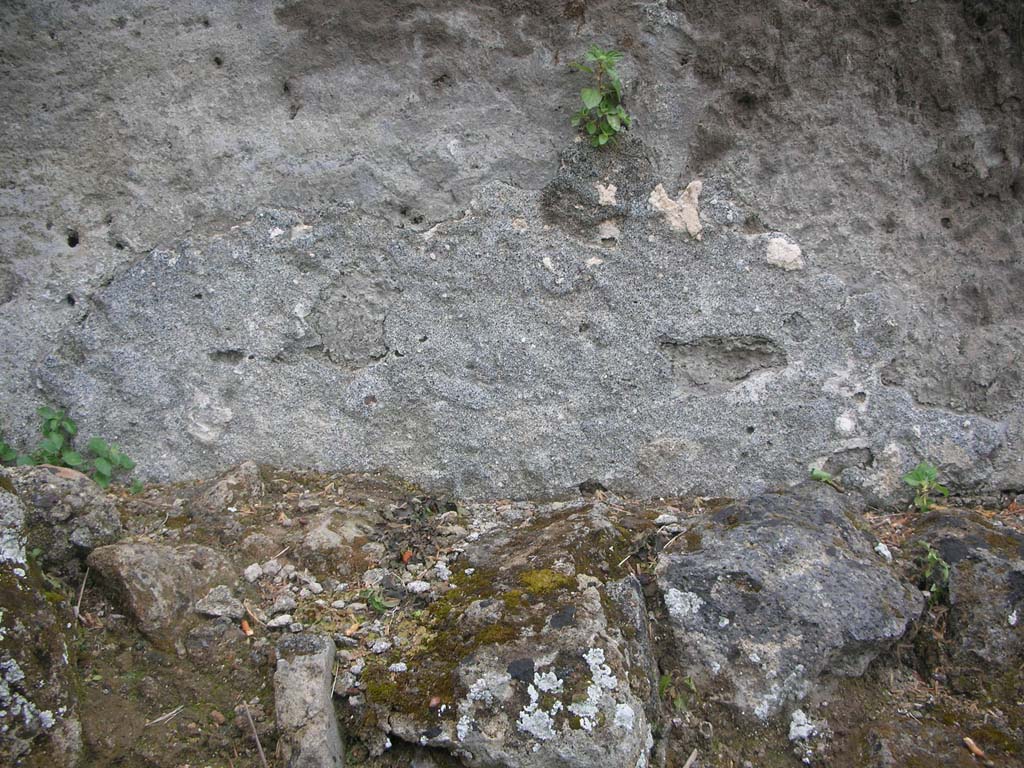
Vesuvian Gate Pompeii. May 2010. Detail from west wall at north end. Photo courtesy of Ivo van der Graaff.
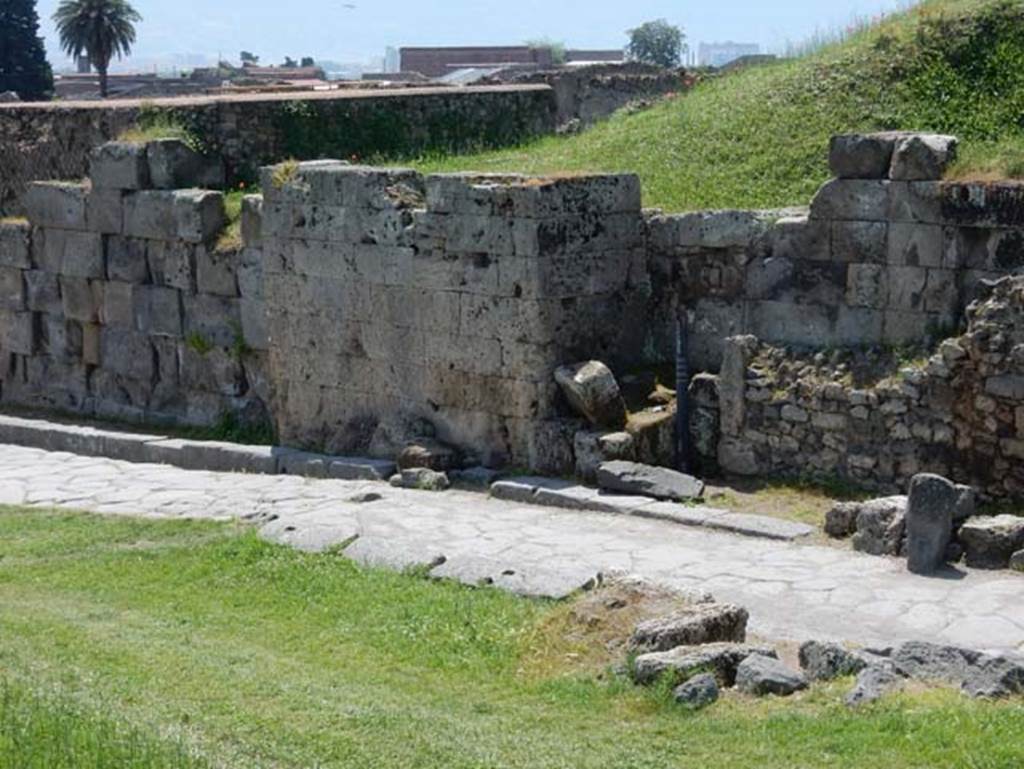
Vesuvian Gate Pompeii. May 2015. Looking south-west at north end. Photo courtesy of Buzz Ferebee.
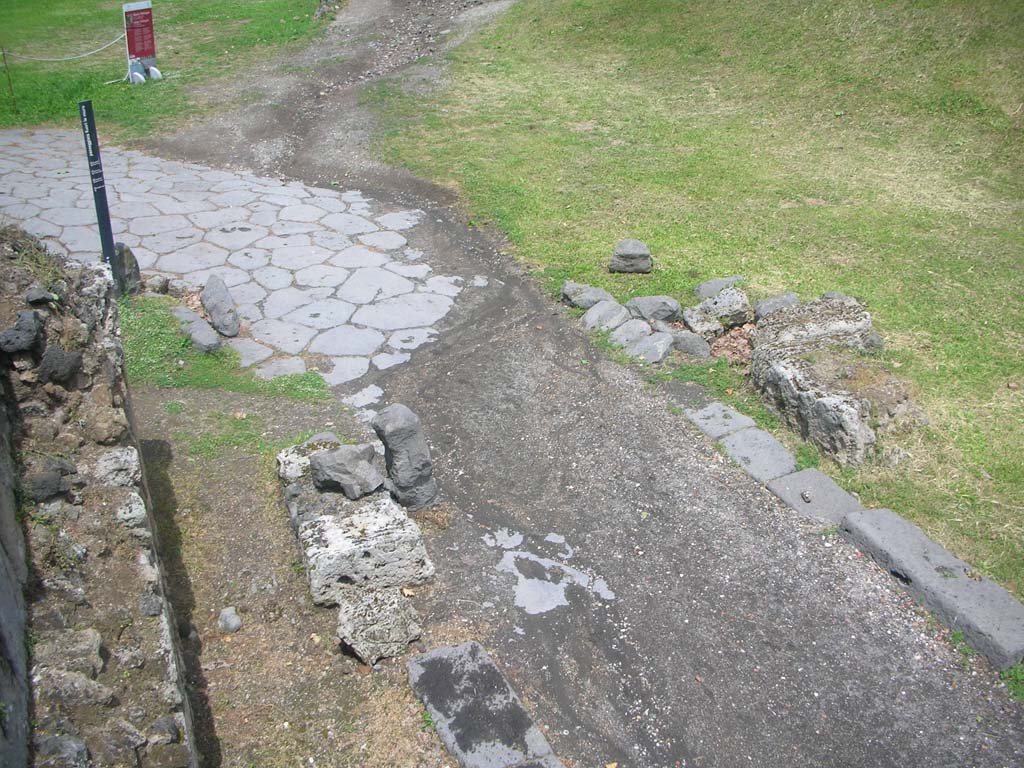
Vesuvian Gate, Pompeii. May 2010.
Looking from upper area of west side of gate onto area of north side of area C, with passageway for pedestrians, on left, and area of vault, in centre.
Photo courtesy of Ivo van der Graaff.
According to Van der Graaff –
“The vault of the Port Vesuvio is the only example built on the exterior side of the gate.
It can have found a place there only after the construction of Tower X father west, which made the earlier tower flanking the gate redundant.”
See Van der
Graaff, I. (2018). The Fortifications of Pompeii and Ancient Italy.
Routledge, (p.70).
![Vesuvian Gate Pompeii. May 2006. West side, north-west corner of area C, block of limestone.
According to Sogliano -
“At either end of the vestibule [C] are two strong pillars in blocks of limestone and masonry.
The West pillar, somewhat smaller than the other, is 0.90 m from the wall, while the another now missing was undoubtedly to the East wall.
Between the Western pillar and the wall there was a narrow side passage, as at Porta Marina and Herculaneum Gate.
An arch connected the Western pillar with the wall; a second, much larger, joined this same pillar with the Eastern one, and both making a large vault covering the Vestibulum C.
The narrow passage B, with the gate doors, was similarly covered.
Whether passage A was covered or uncovered is not known.
See Notizie degli Scavi di Antichità, 1906, p. 97-100.](Gate%20Vesuvio_files/image058.jpg)
Vesuvian Gate Pompeii. May 2006. West side, north-west corner of area C, block of limestone.
According to Sogliano -
“At either end of the vestibule [C] are two strong pillars in blocks of limestone and masonry.
The West pillar, somewhat smaller than the other, is 0.90 m from the wall, while the another now missing was undoubtedly to the East wall.
Between the Western pillar and the wall there was a narrow side passage, as at Porta Marina and Herculaneum Gate.
An arch connected the Western pillar with the wall; a second, much larger, joined this same pillar with the Eastern one, and both making a large vault covering the Vestibulum C.
The narrow passage B, with the gate doors, was similarly covered.
Whether passage A was covered or uncovered is not known.
See Notizie degli
Scavi di Antichità, 1906, p. 97-100.
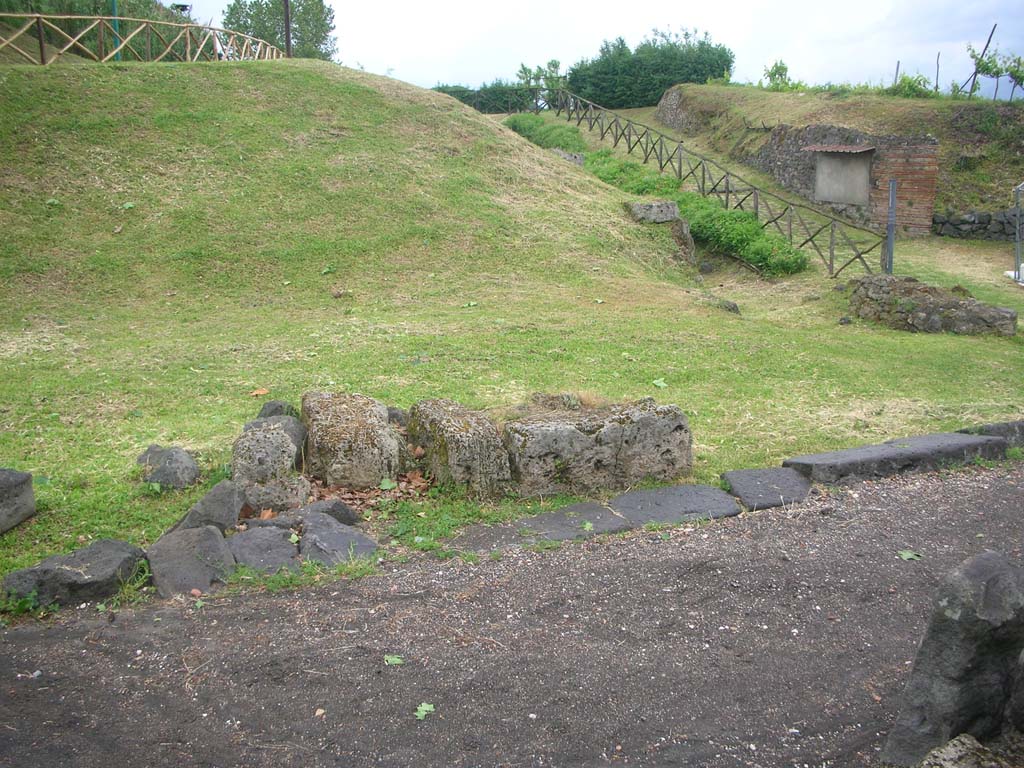
Vesuvian Gate Pompeii. May 2010. Looking towards east side of gate at north end. Photo courtesy of Ivo van der Graaff.
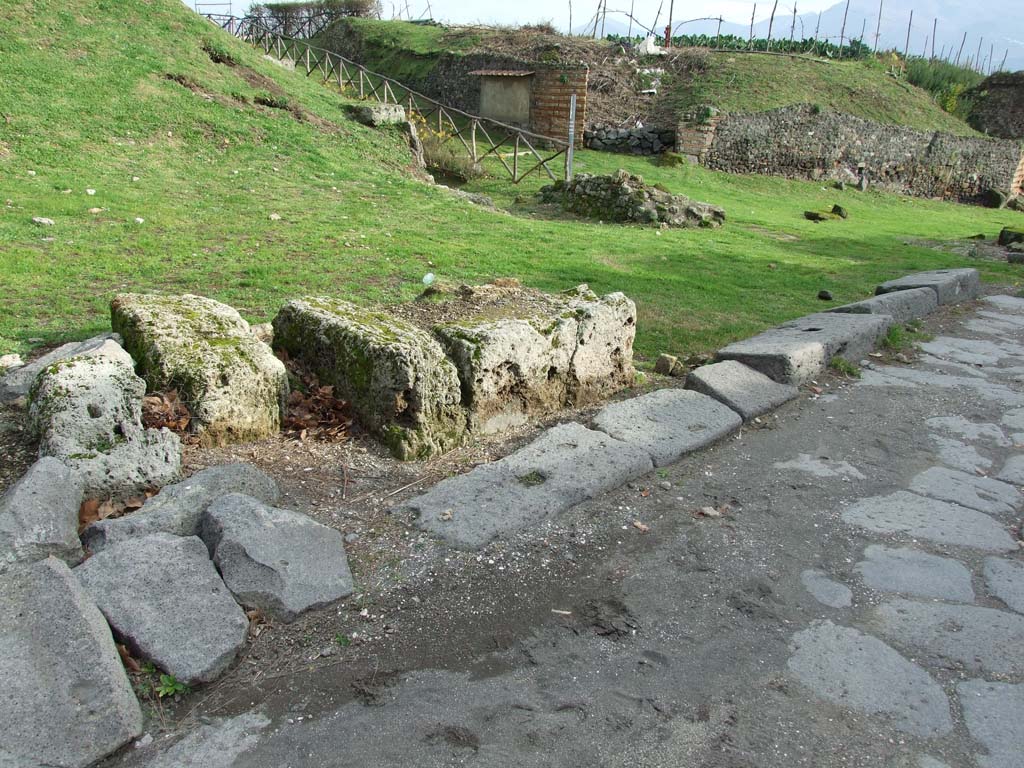
Vesuvian Gate Pompeii. December 2006. Detail of east side of area C.
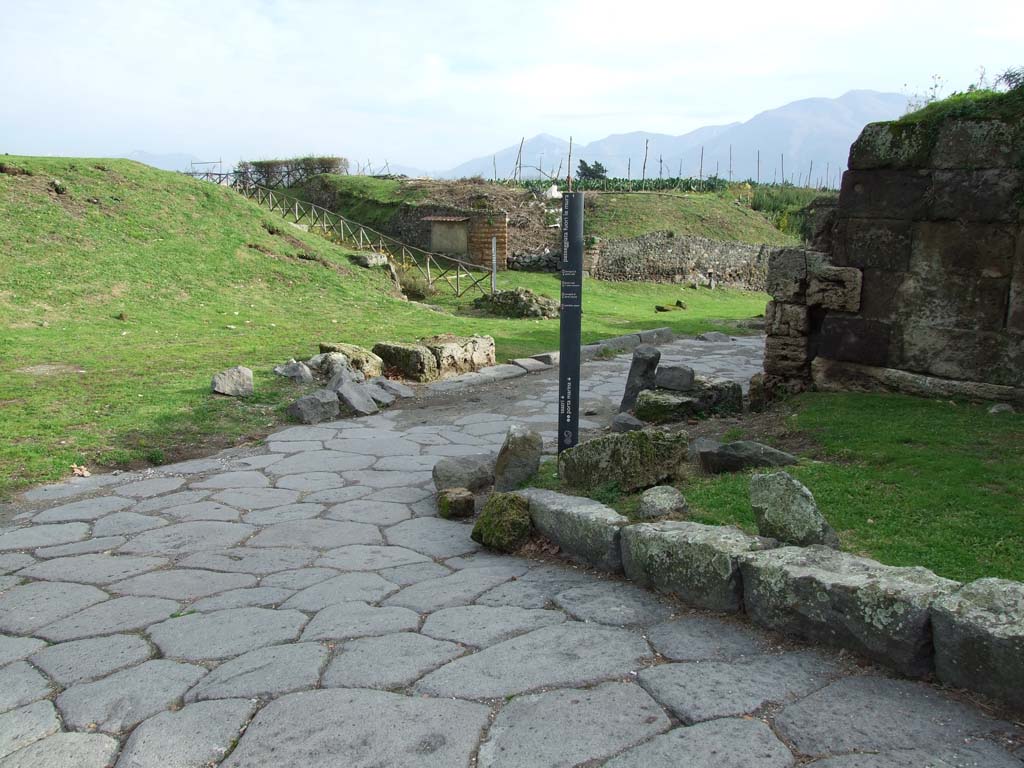
Vesuvian Gate Pompeii. December 2006. North end of gate, looking south-east across area C.
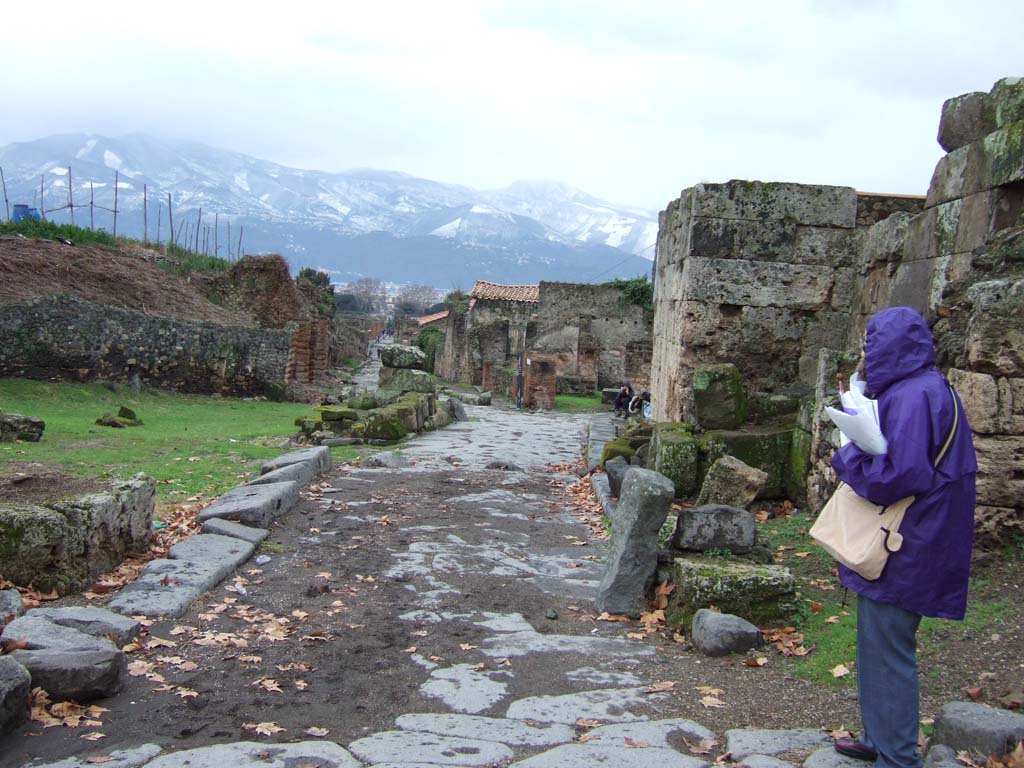
Vesuvian Gate Pompeii. December 2005. Looking south across area C and through gate.
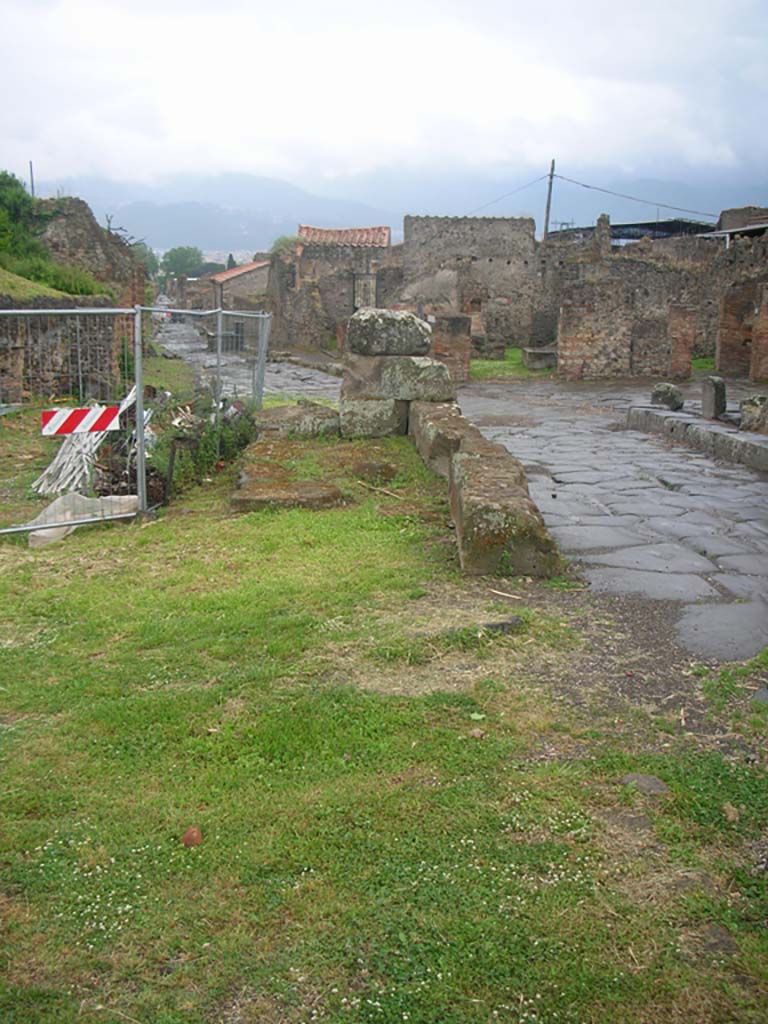
Vesuvian Gate Pompeii. May 2010.
Looking south along site of east side of gate. Photo courtesy of Ivo van der Graaff.
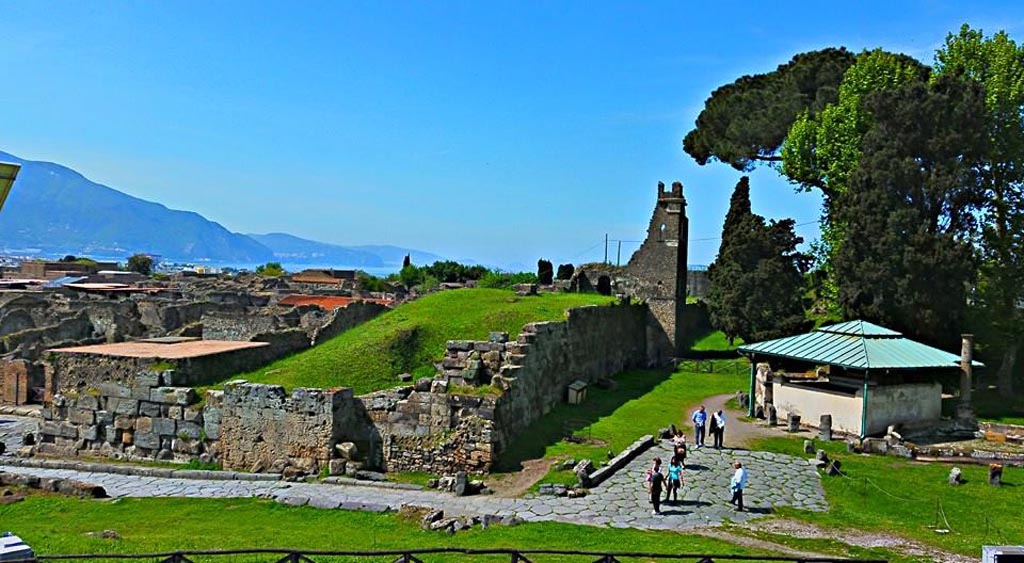
Vesuvian Gate Pompeii. 2015/2016.
Looking west towards
Vesuvian Gate and walls leading to Tower X. Photo courtesy of Giuseppe
Ciaramella.
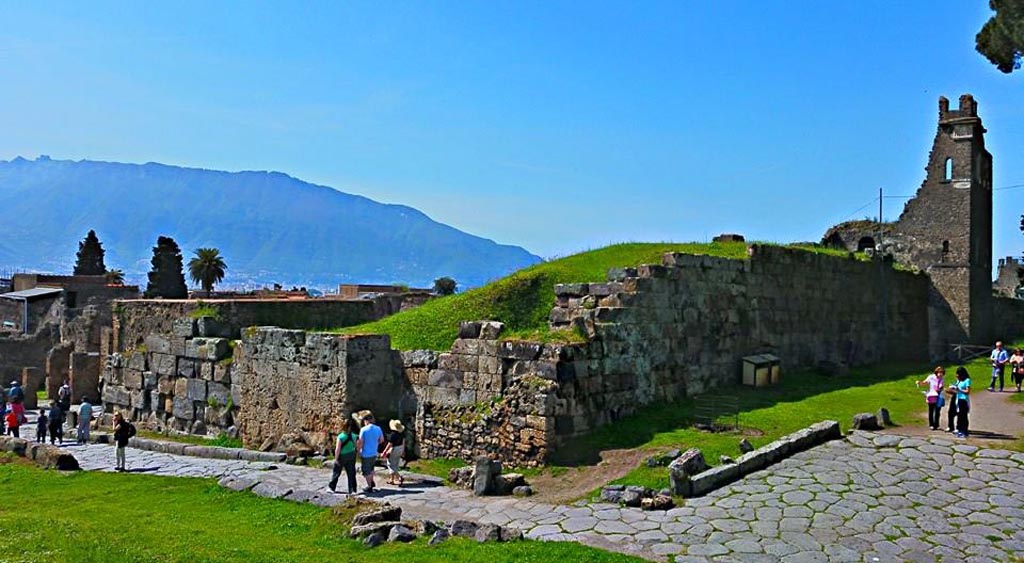
Vesuvian Gate, Pompeii. 2015/2016.
Looking west along
the City walls from remains of Vesuvian Gate, towards Tower X. Photo courtesy of Giuseppe Ciaramella.
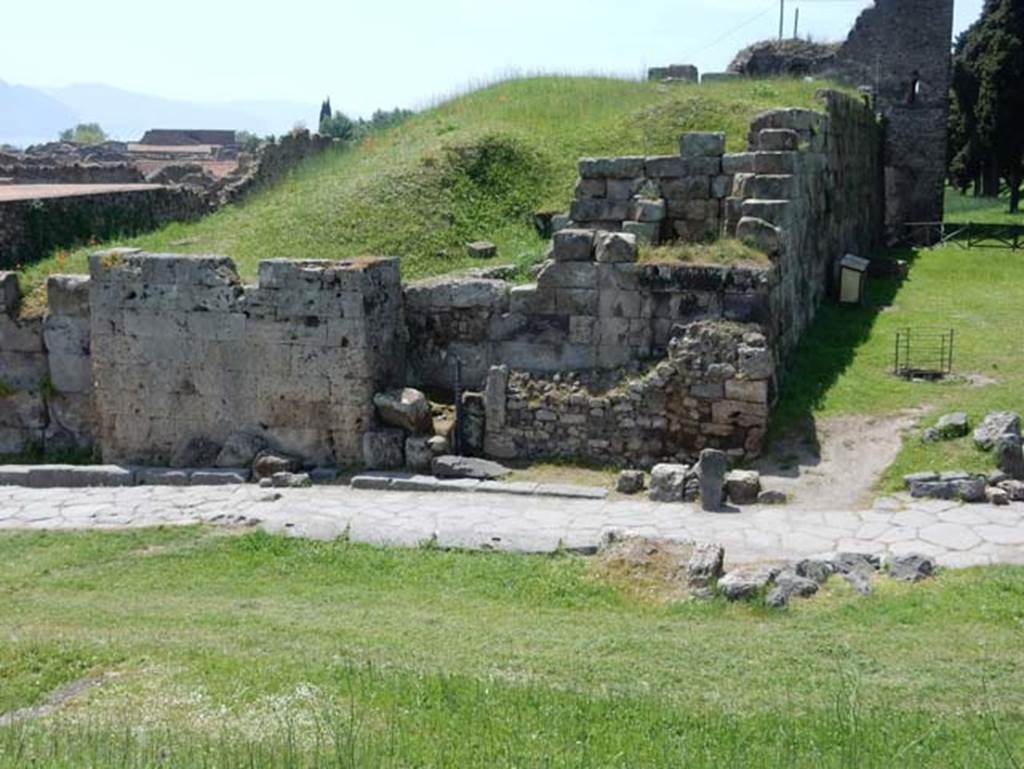
Vesuvian Gate Pompeii. May 2015. North end of Vesuvian Gate, Looking west. Photo courtesy of Buzz Ferebee.
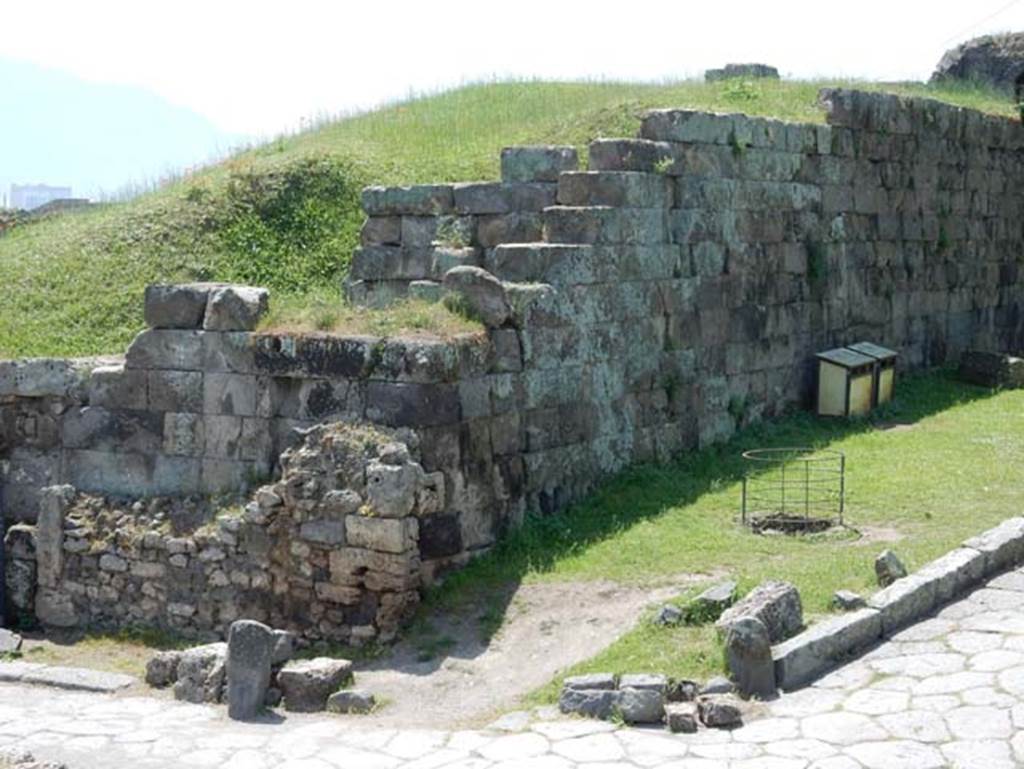
Vesuvian Gate Pompeii. May 2015. North end of Vesuvian Gate, looking south-west along city walls. Photo courtesy of Buzz Ferebee.
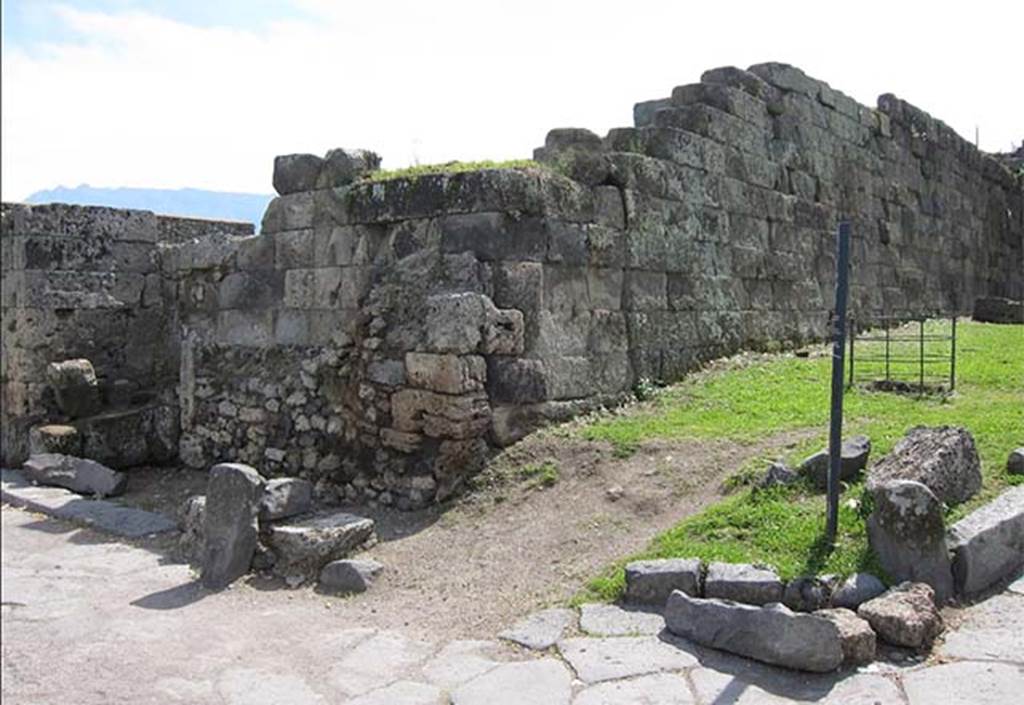
Vesuvian Gate Pompeii. June 2012. Area C at north-west corner of gate.
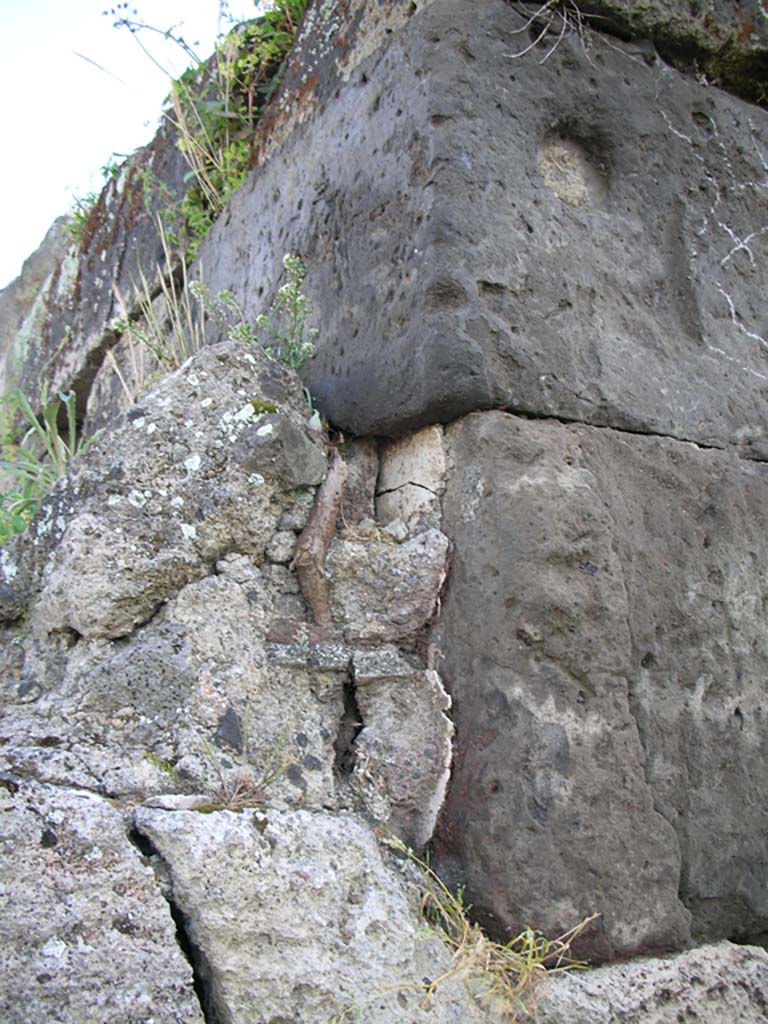
Vesuvian Gate, Pompeii. May 2010.
Detail of missile indentation from war machines of Sulla, on west side of Gate at north end.
Photo courtesy of Ivo van der Graaff.
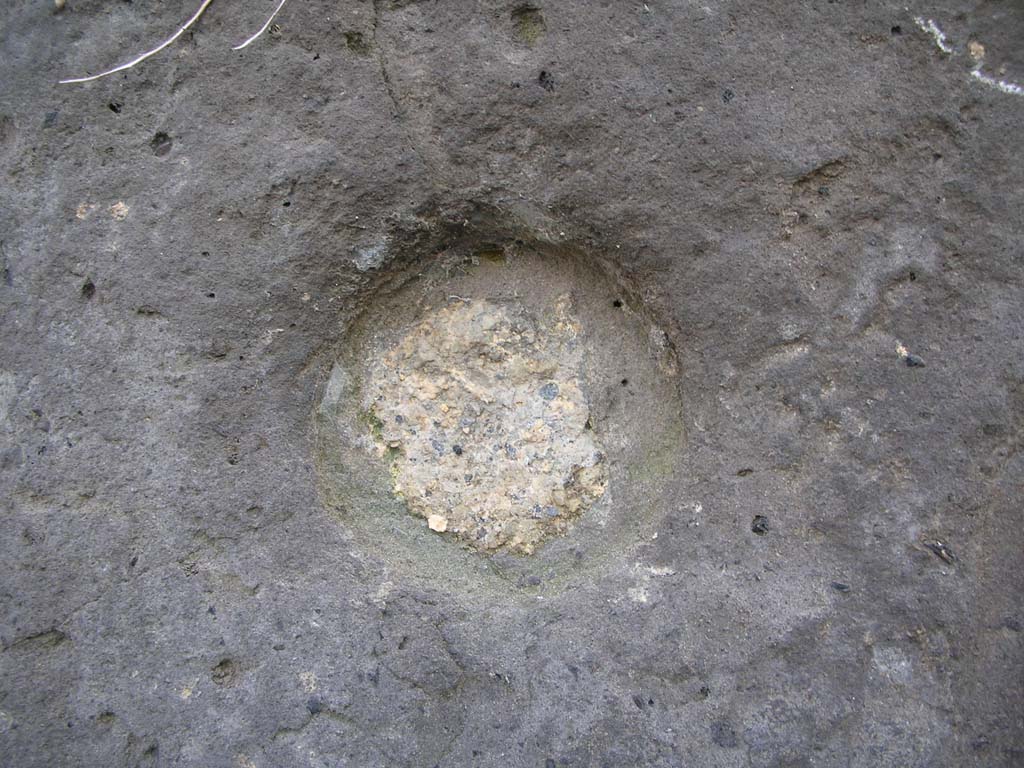
Vesuvian Gate, Pompeii. May 2010. Detail of missile indentation at north-west corner of gate. Photo courtesy of Ivo van der Graaff.
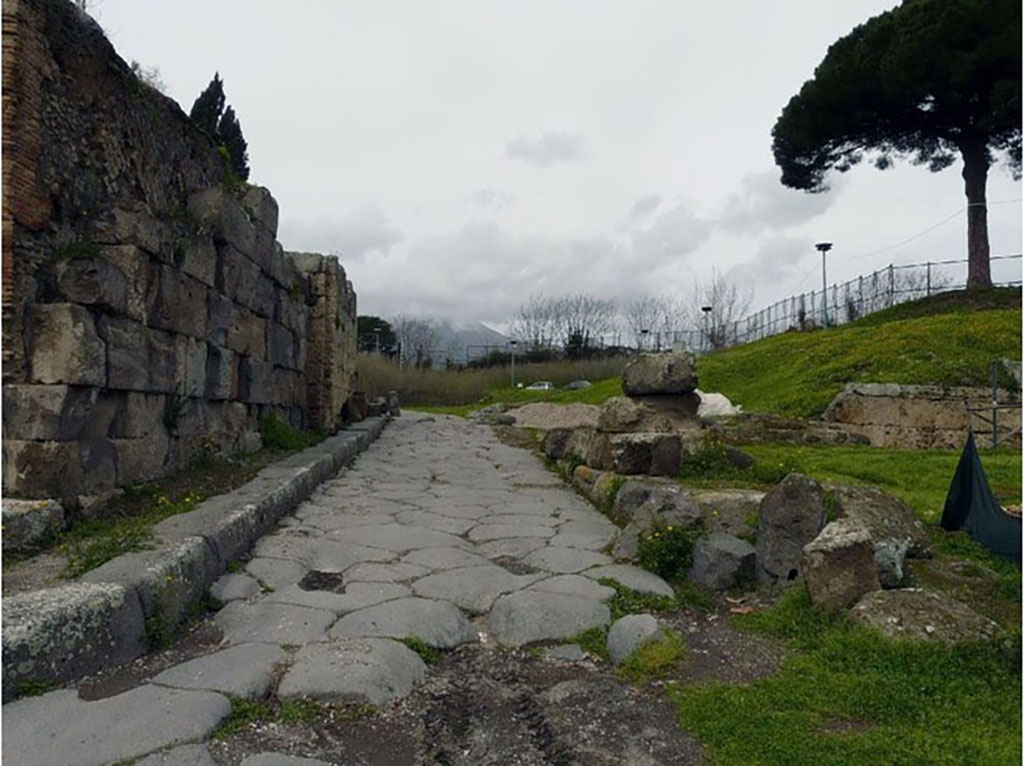
Pompeii Porta del Vesuvio. June 2012. Looking north through gate from south end.
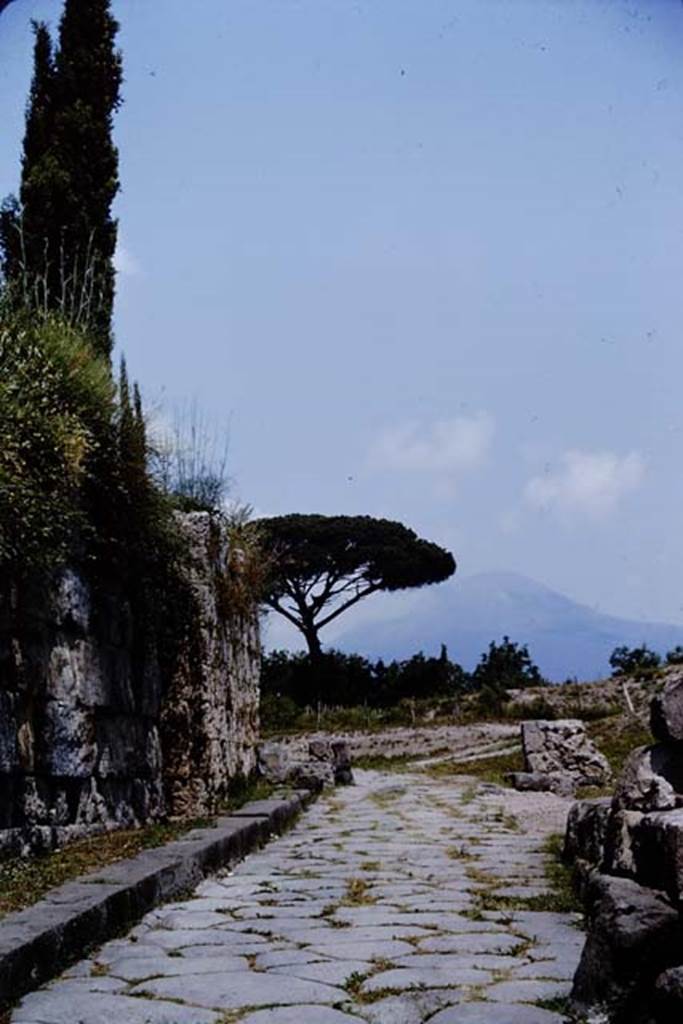
Vesuvian Gate, Pompeii. 1964. Looking north. Photo by Stanley A. Jashemski.
Source: The Wilhelmina and Stanley A. Jashemski archive in the University of Maryland Library, Special Collections (See collection page) and made available under the Creative Commons Attribution-Non-Commercial License v.4. See Licence and use details.
J64f1618
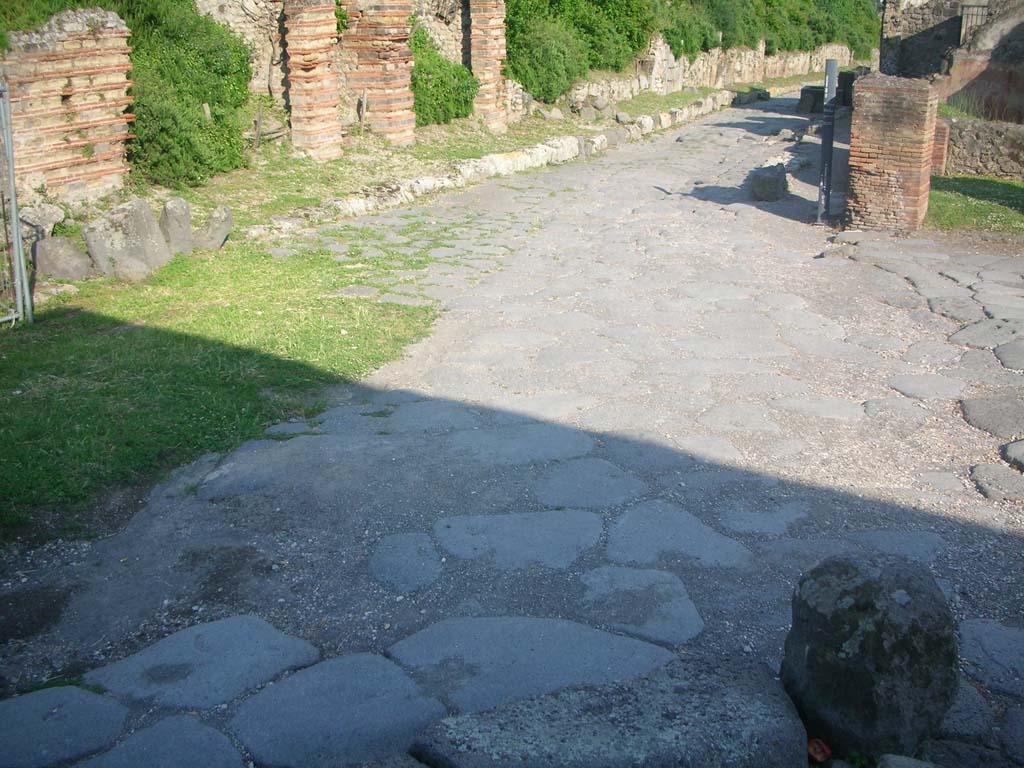
Vesuvian Gate, Pompeii. May 2010. Looking south towards Via del Vesuvio, from south side of gate. Photo courtesy of Ivo van der Graaff.
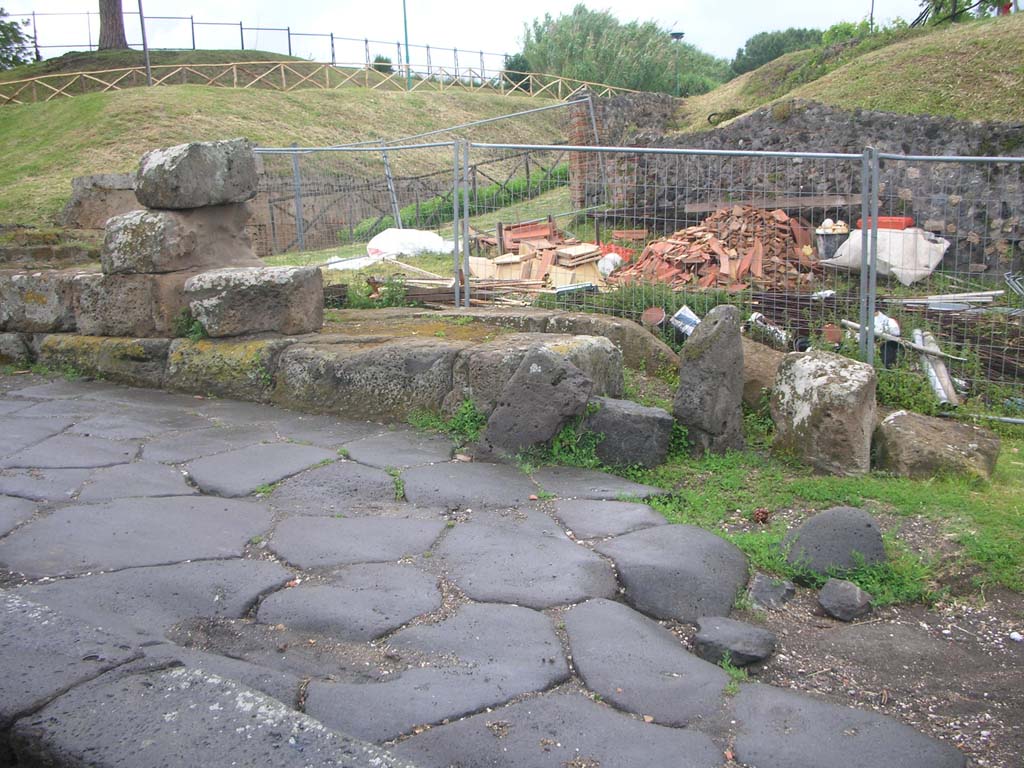
Vesuvian Gate, Pompeii. May 2010. Looking east across roadway at south end of gate. Photo courtesy of Ivo van der Graaff.
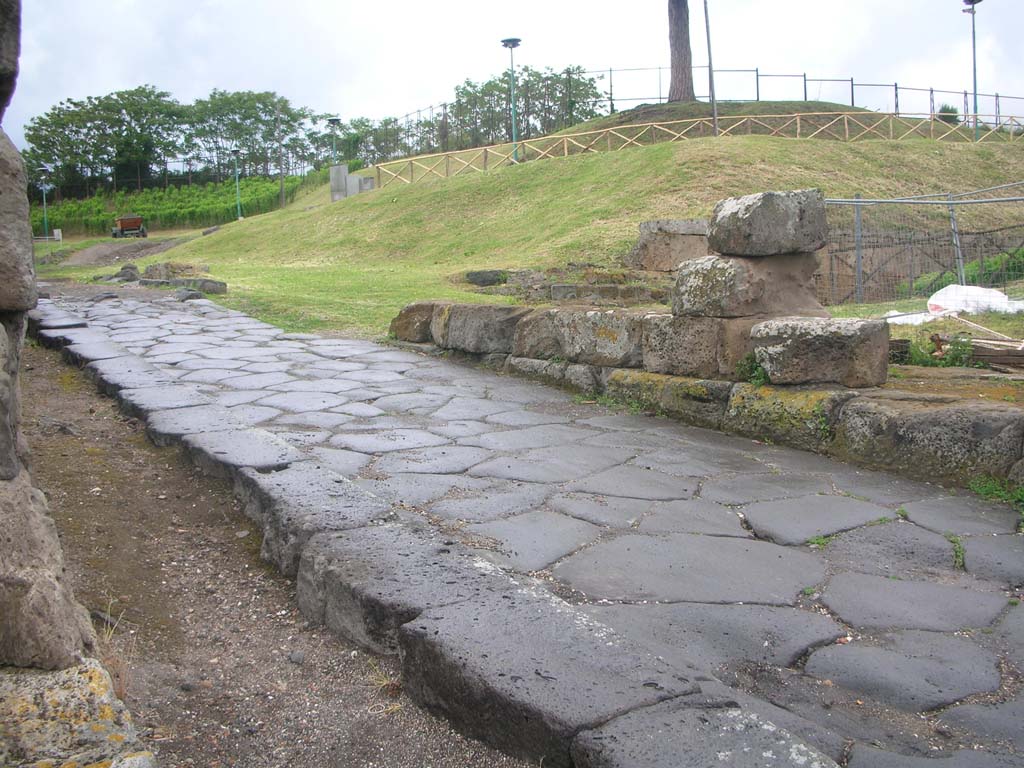
Vesuvian Gate, Pompeii. May 2010.
Looking north-east across roadway towards north end of gate on east side. Photo courtesy of Ivo van der Graaff.
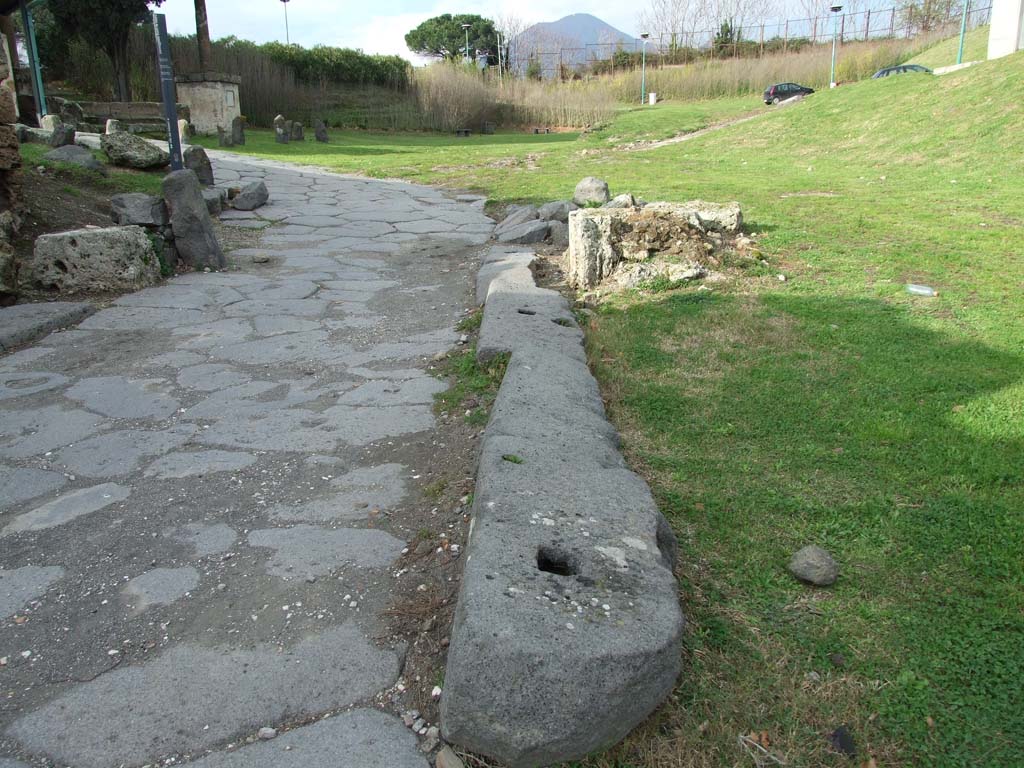
Vesuvian Gate Pompeii. May 2006. East side of gate at area C, looking north.