Pompeii. Tetrapylon Arch of Marcus Holconius Rufus.
Excavated 1853, 1855 and 1861.
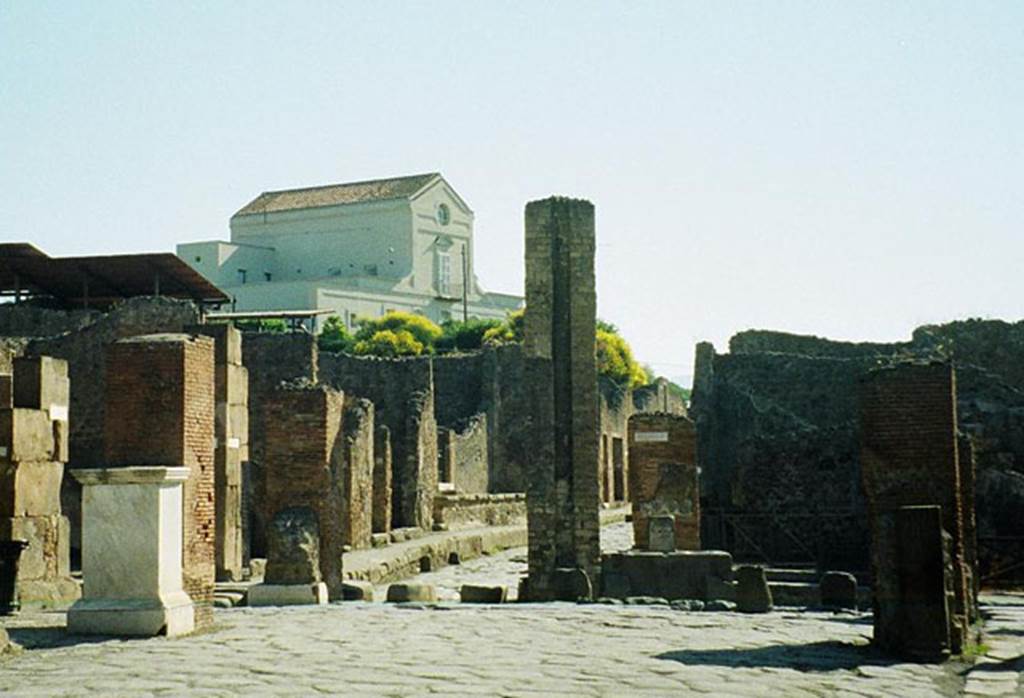
Arch of Marcus Holconius Rufus. June 2010. Site of arch at Holconius’ crossroads. Photo courtesy of Rick Bauer.
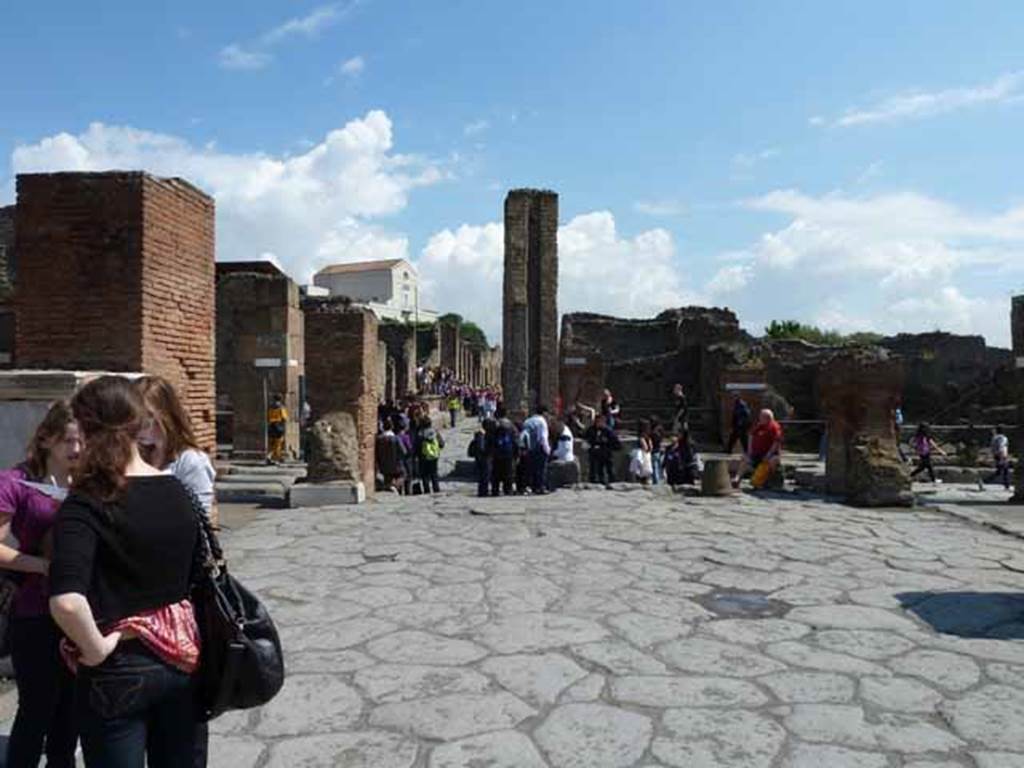
Arch of Marcus Holconius Rufus. May 2010. Site of arch at Holconius’ crossroads.
This was a large arch at the major crossroads of Via dell’Abbondanza and Via Stabiana
Looking east along Via dell’Abbondanza to junction with Via Stabiana.
According to Liselotte Eschebach this was a Tetrapylon.
See Eschebach, L., 1993. Gebäudeverzeichnis und Stadtplan der antiken Stadt Pompeji. Köln: Böhlau. (Pages 244-5).
According to Wikipedia, A tetrapylon (Greek: Τετράπυλον, "four gates") is an ancient type of Roman monument of cubic shape, with a gate on each of the four sides: generally it was built on a crossroads.
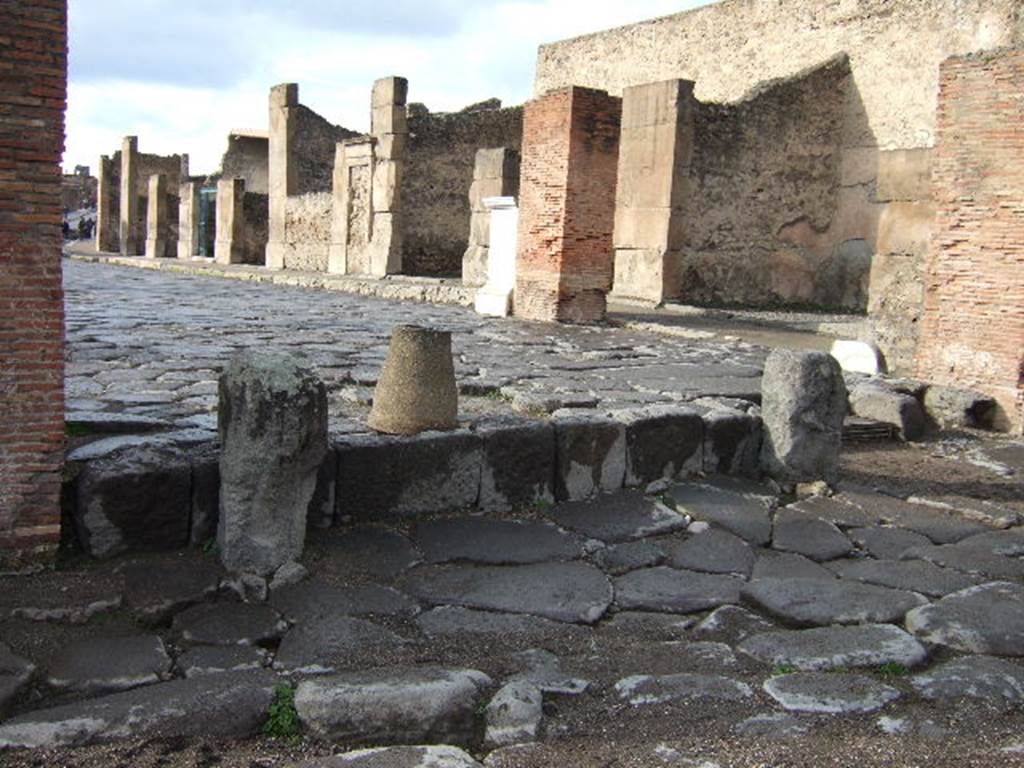
Arch of Marcus Holconius Rufus. December 2005. Remains of pillars of the north side of the arch, on right.
Looking west through arch along Via dell’ Abbondanza.
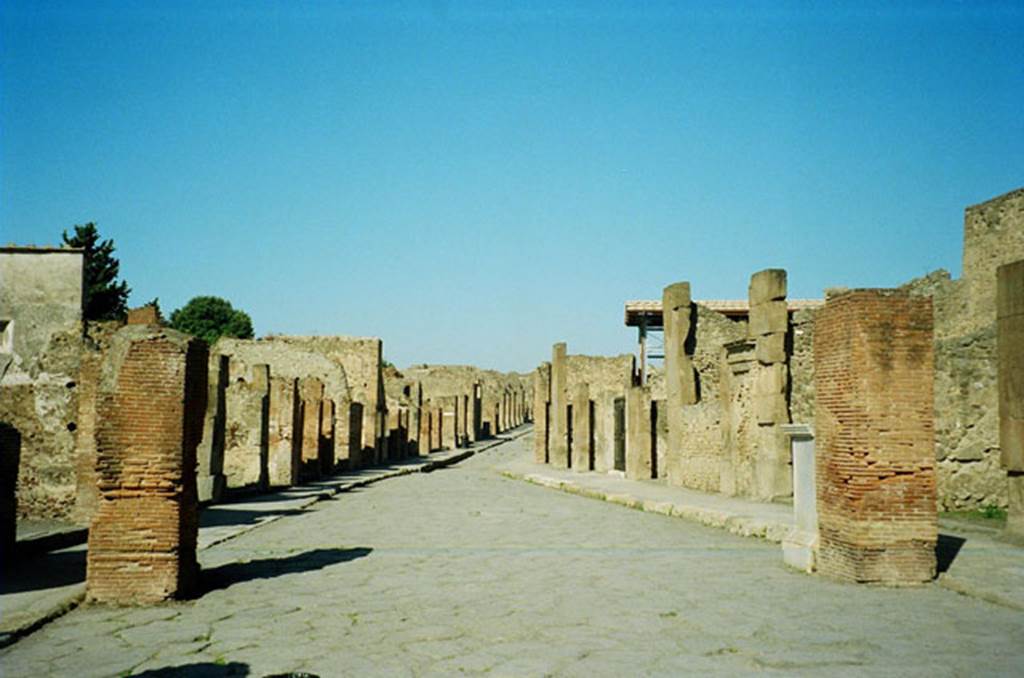
Arch of Marcus Holconius Rufus. June 2010. Looking west along Via dell’Abbondanza through arch. Photo courtesy of Rick Bauer.
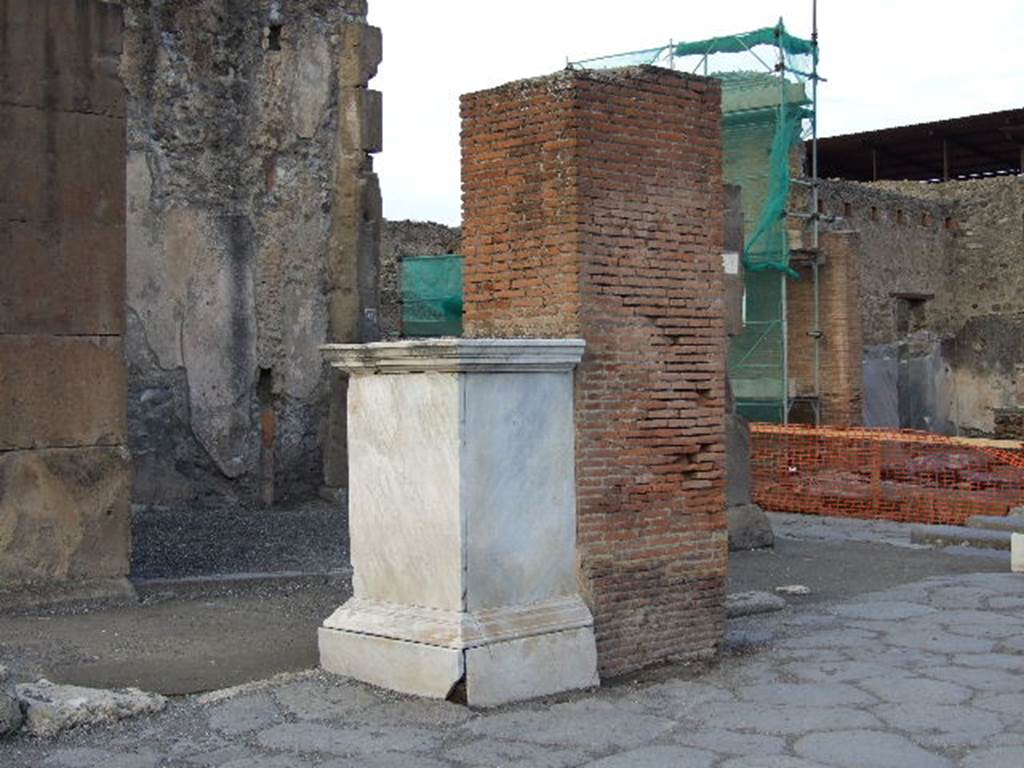
Arch of Marcus Holconius Rufus. December 2006. North-west pillar with marble statue base.
The brick pillar was one of the four pillars supporting the arch over Via dell’ Abbondanza.
The base when excavated in 1853 had a statue of Marcus Holconius Rufus.
The statue is now in Naples Archaeological Museum.
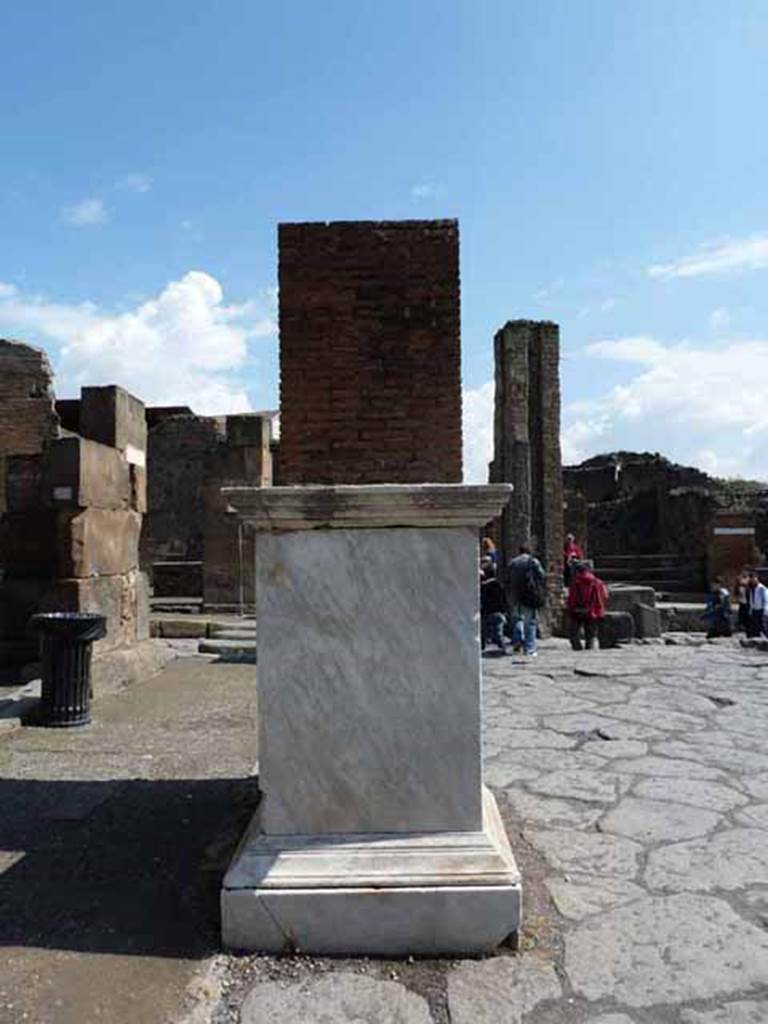
Arch of Marcus Holconius Rufus. May 2010. North-west pillar.
Marble statue base with inscription to Marcus Holconius Rufus.
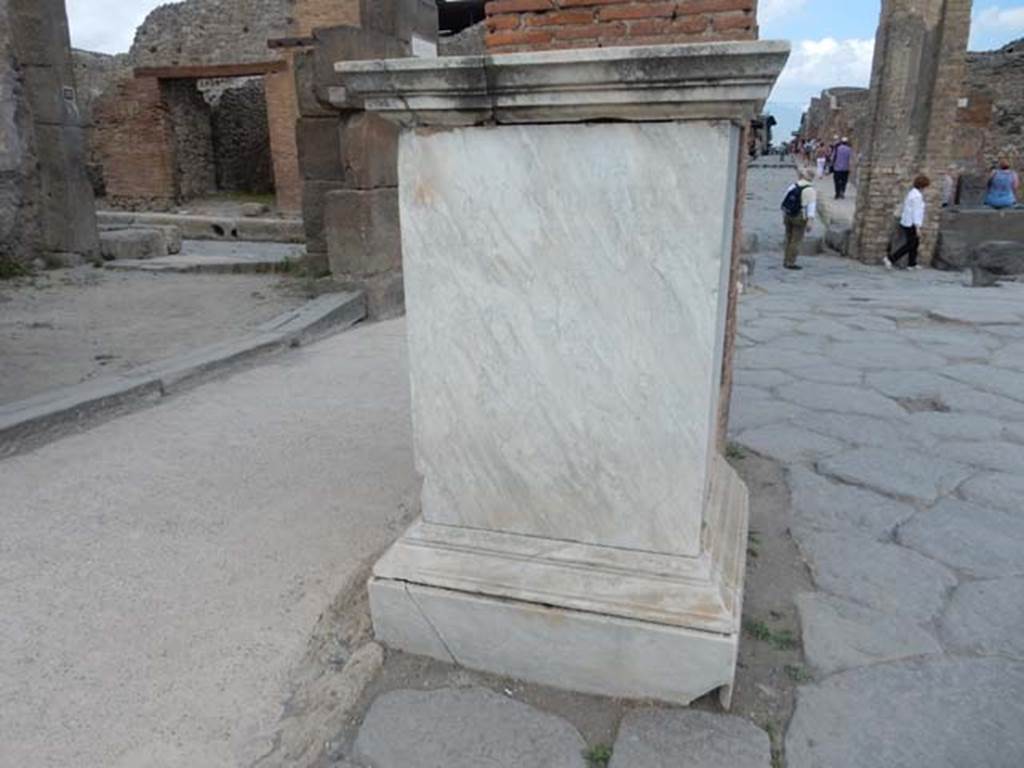
Arch of Marcus Holconius Rufus. May 2017. Marble statue base with inscription to Marcus Holconius Rufus. Photo courtesy of Buzz Ferebee.
![Arch of Marcus Holconius Rufus. December 2006. Latin inscription on base of statue of M. Holconius Rufus.
M. HOLCONIO M. F. RVFO
TRIB. MIL. A POPVL. II VIR. I. D. V.
QVINQ. ITER.
AVGVSTI CAESARIS SACERD.
PATRONO COLONIAE.
According to Epigraphik-Datenbank Clauss/Slaby (See www.manfredclauss.de) this reads
M(arco) Holconio M(arci) f(ilio) Rufo
trib(uno) mil(itum) a popul(o) IIvir(o) i(ure) d(icundo) V
quinq(uennali) iter(um)
Augusti Caesaris sacerd(oti)
patrono coloniae [CIL X 830]
According to Cooley this translates as
To Marcus Holconius Rufus, son of Marcus,
military tribune by popular demand, duumvir with judicial power five times,
quinquennial twice,
priest of Augustus Caesar,
and patron of the colony.
See Cooley, A. and M.G.L., 2004. Pompeii : A Sourcebook. London : Routledge. (Page 130, F89b).](Arch%20Holconius%20Rufus_files/image017.jpg)
Arch of Marcus Holconius Rufus. December 2006. Latin inscription on base of statue of M. Holconius Rufus.
M. HOLCONIO
M. F. RVFO
TRIB. MIL. A POPVL. II VIR. I. D. V.
QVINQ. ITER.
AVGVSTI CAESARIS SACERD.
PATRONO COLONIAE.
According to Epigraphik-Datenbank Clauss/Slaby (See www.manfredclauss.de) this reads
M(arco) Holconio
M(arci) f(ilio) Rufo
trib(uno)
mil(itum) a popul(o) IIvir(o) i(ure) d(icundo) V
quinq(uennali)
iter(um)
Augusti Caesaris
sacerd(oti)
patrono
coloniae [CIL X 830]
According to Cooley this translates as
To Marcus Holconius Rufus, son of Marcus,
military tribune by popular demand, duumvir with judicial power five times,
quinquennial twice,
priest of Augustus Caesar,
and patron of the colony.
See Cooley, A. and M.G.L., 2004. Pompeii: A Sourcebook. London: Routledge. (Page 130, F89b).
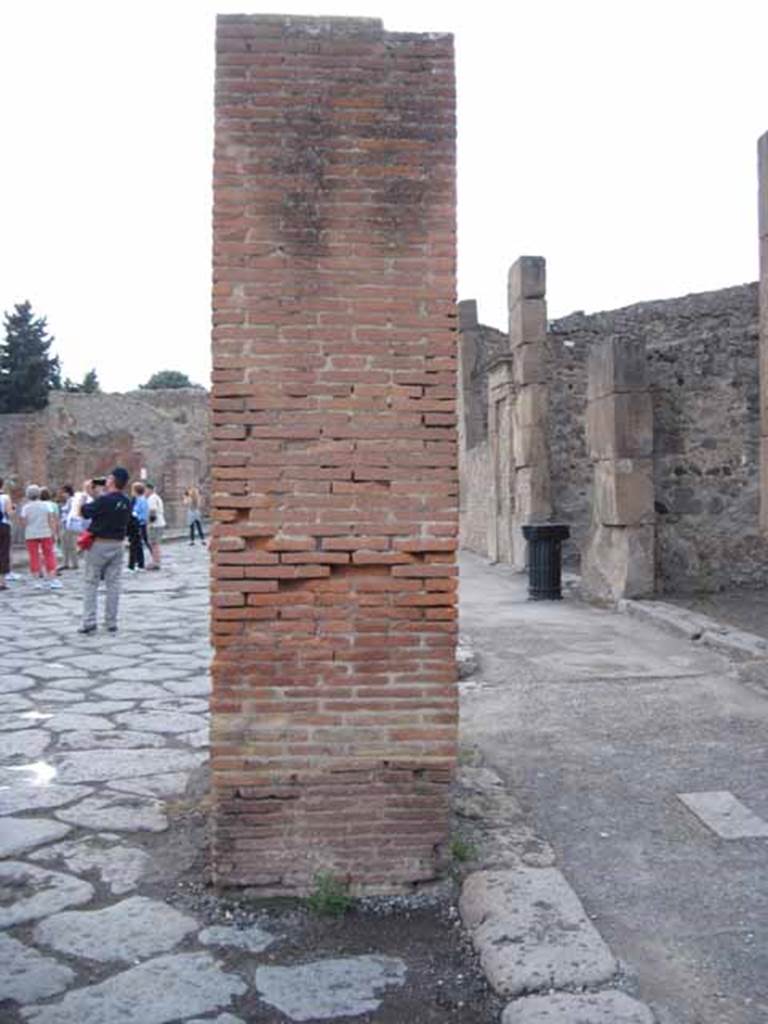
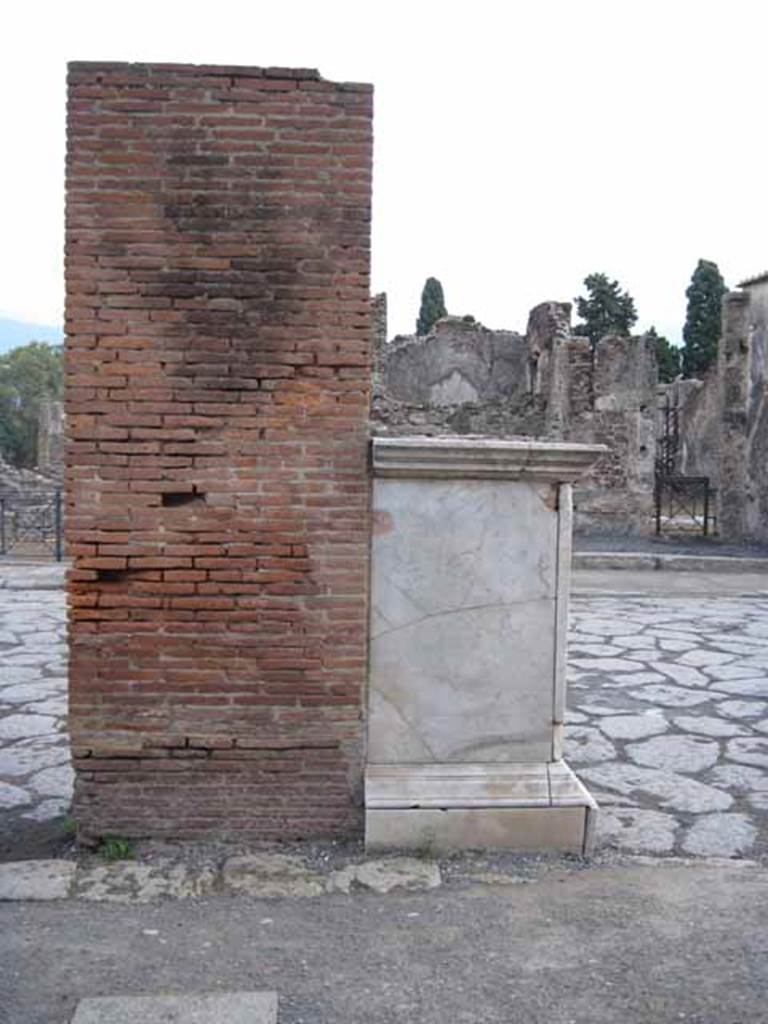
Arch of Marcus Holconius Rufus. September 2010.
North-west pillar looking west towards the Forum. Photo courtesy of Drew Baker.
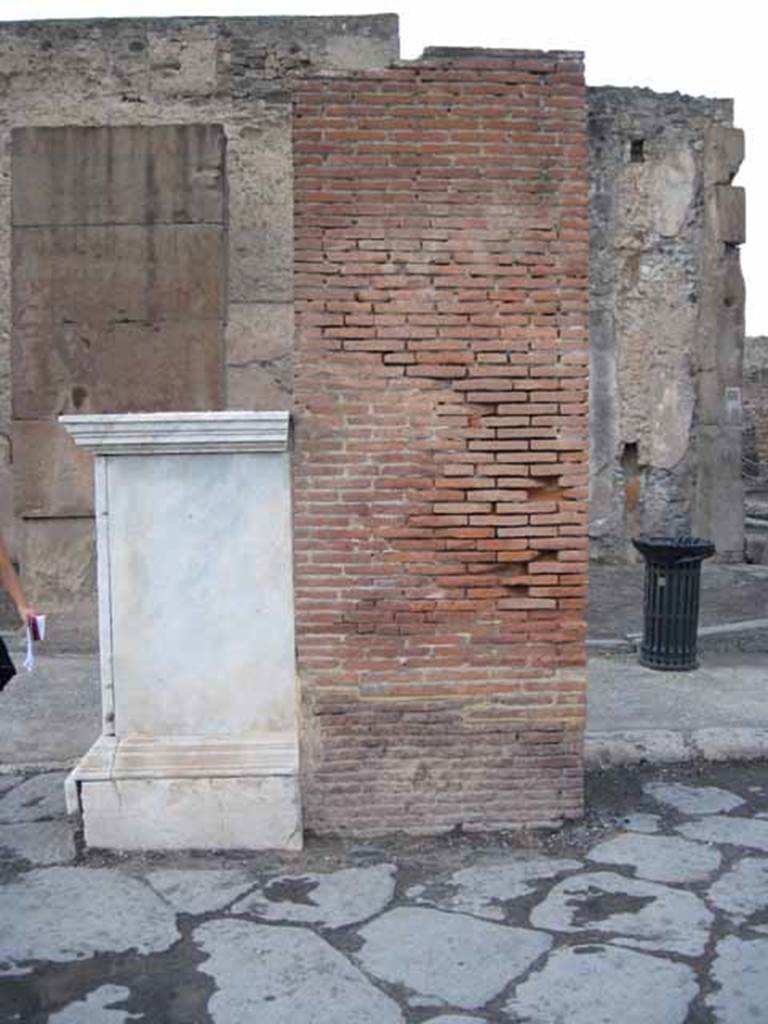
Arch of Marcus Holconius Rufus. September 2010.
North-west pillar, north side. Photo courtesy of Drew Baker.
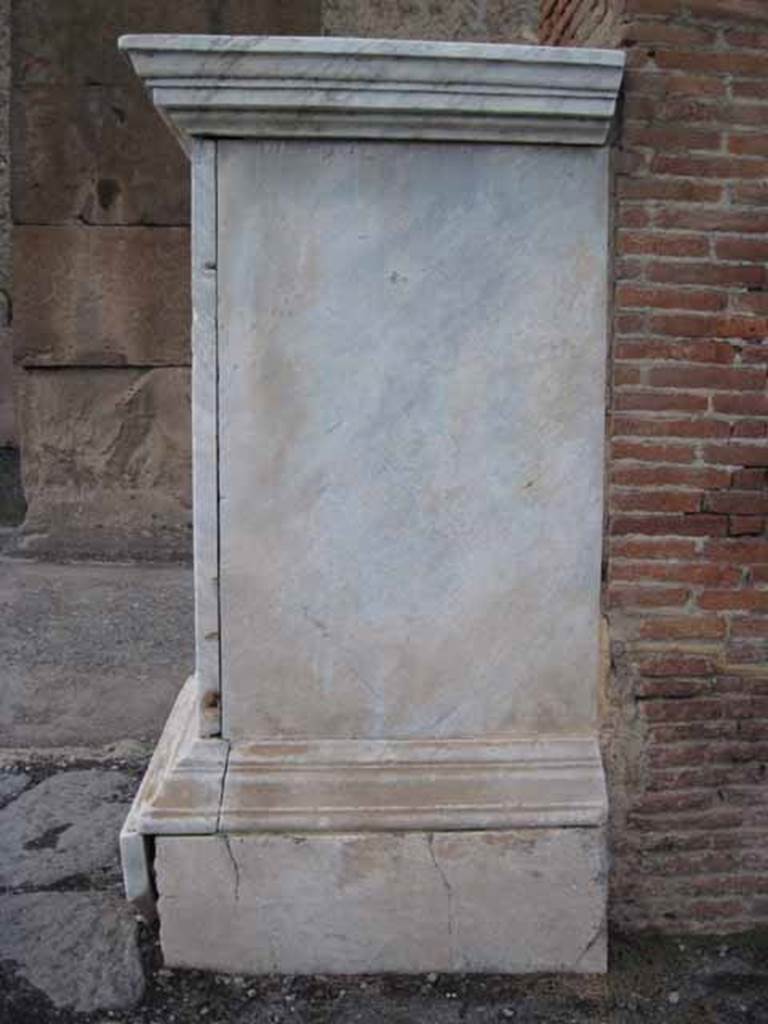
Arch of Marcus Holconius Rufus. September 2010.
North-west pillar, south side. Photo courtesy of Drew Baker.
Arch of Marcus Holconius Rufus. September 2010.
Detail of marble veneer on north-west pillar, south side. Photo courtesy of Drew Baker.
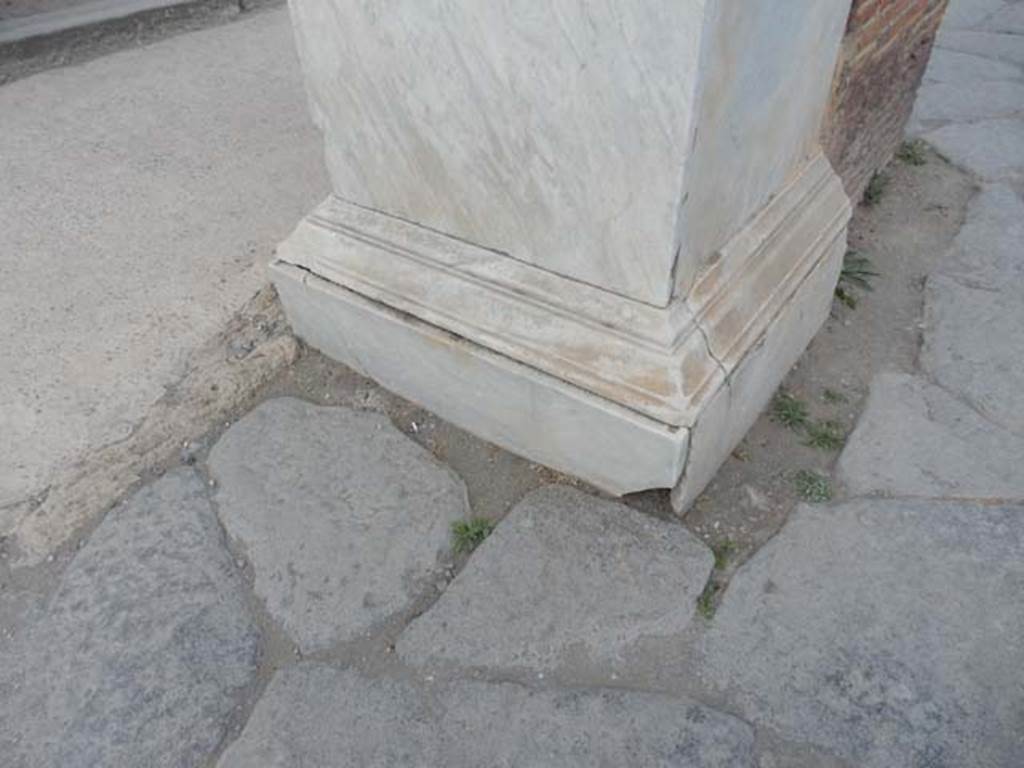
Arch of Marcus Holconius Rufus. May 2017.
Detail of marble veneer on north-west pillar, west and south side. Photo courtesy of Buzz Ferebee.
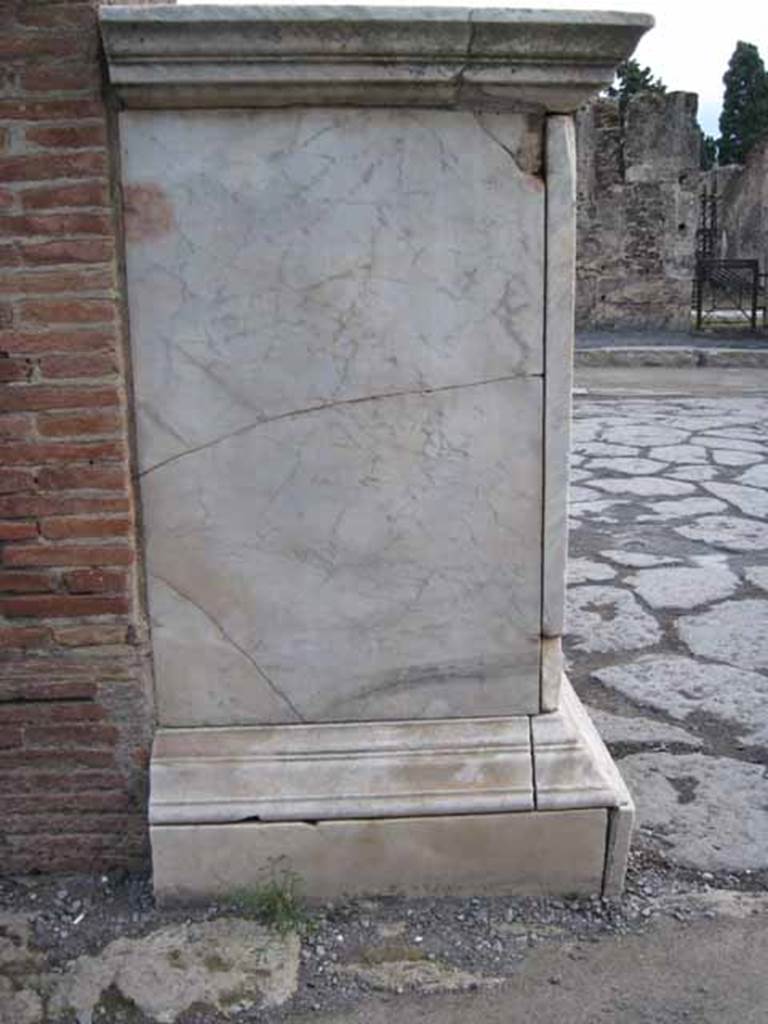
Arch of Marcus Holconius Rufus. September 2010.
Detail of marble veneer on north-west pillar, north side. Photo courtesy of Drew Baker.
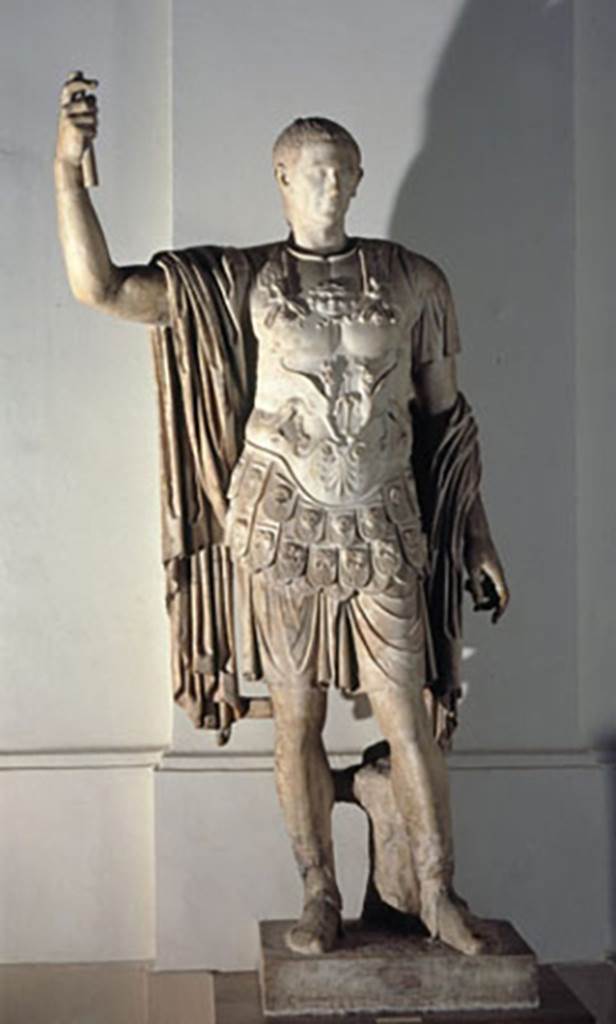
Arch of Marcus Holconius Rufus. Marble statue of Marcus Holconius Rufus.
Now in Naples Archaeological Museum. Inventory number 6233.
According to Cooley, Marcus Holconius Rufus was of equestrian rank, but his statue appropriated status symbols more correctly belonging to others.
He was in military dress even though he did not actually serve in the army in his role.
He was depicted wearing the sandals of a senator.
Colouring was visible when the statue was first found in 1853.
His tunic was white edged with yellow, his cloak red and his shoes black.
The tree trunk supporting the statue was green. His hair, eyes and eyebrows were also coloured.
See Cooley, A. and M.G.L., 2004. Pompeii: A Sourcebook. London: Routledge. (Page 128, F89).
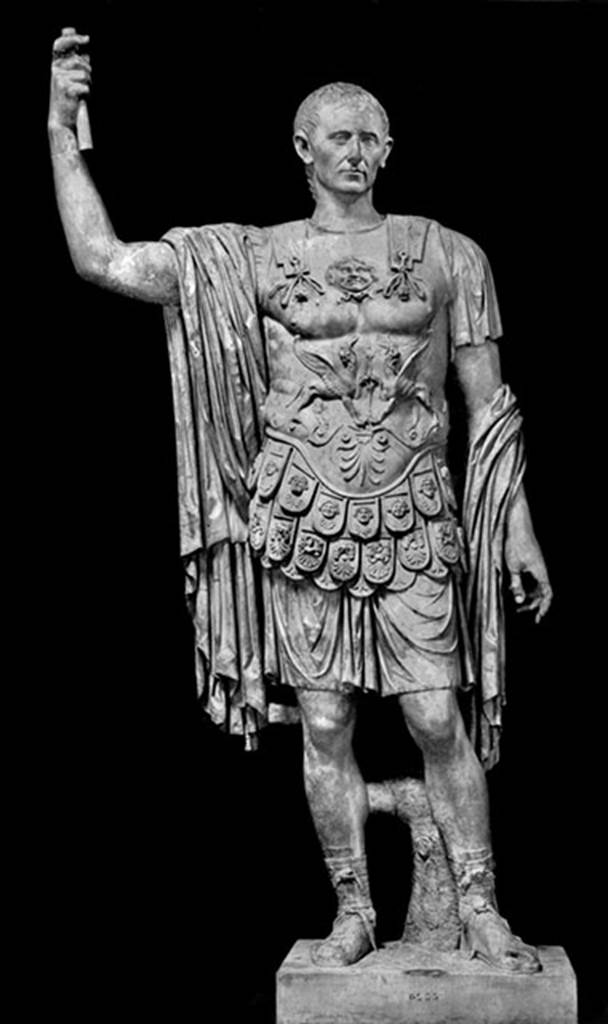
Arch of Marcus Holconius Rufus. Detail of marble statue of Marcus Holconius Rufus.
Now in Naples Archaeological Museum. Inventory number 6233.
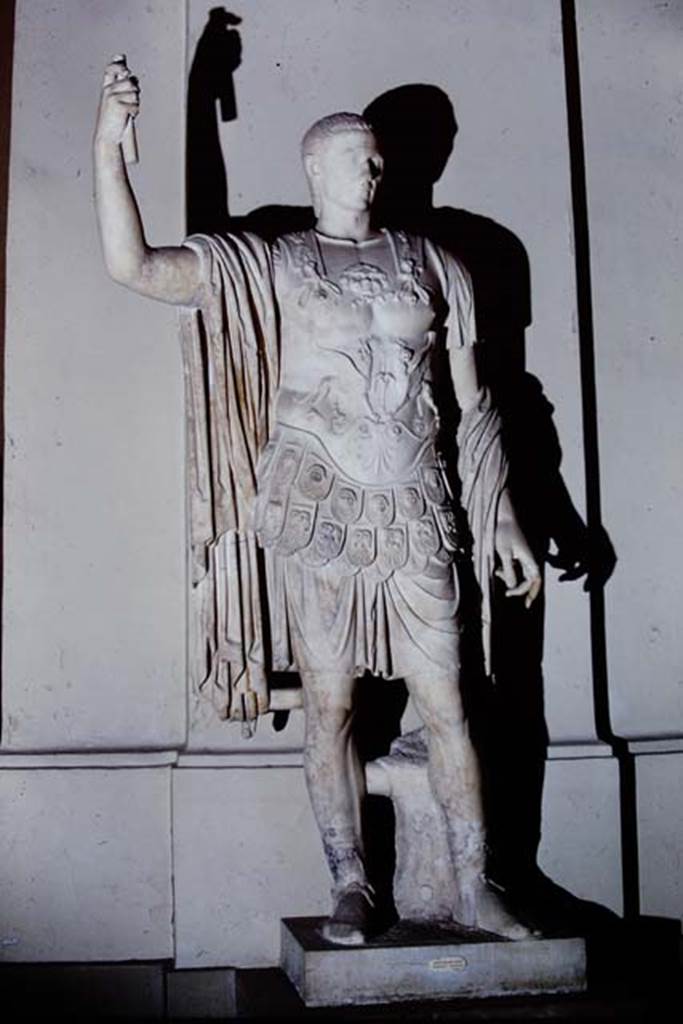
Arch of Marcus Holconius Rufus. 1968. Marble statue of Marcus Holconius Rufus.
Now in Naples Archaeological Museum. Inventory number 6233. Photo by Stanley A. Jashemski.
Source: The Wilhelmina and Stanley A. Jashemski archive in the University of Maryland Library, Special Collections (See collection page) and made available under the Creative Commons Attribution-Non Commercial License v.4. See Licence and use details.
J68f1412
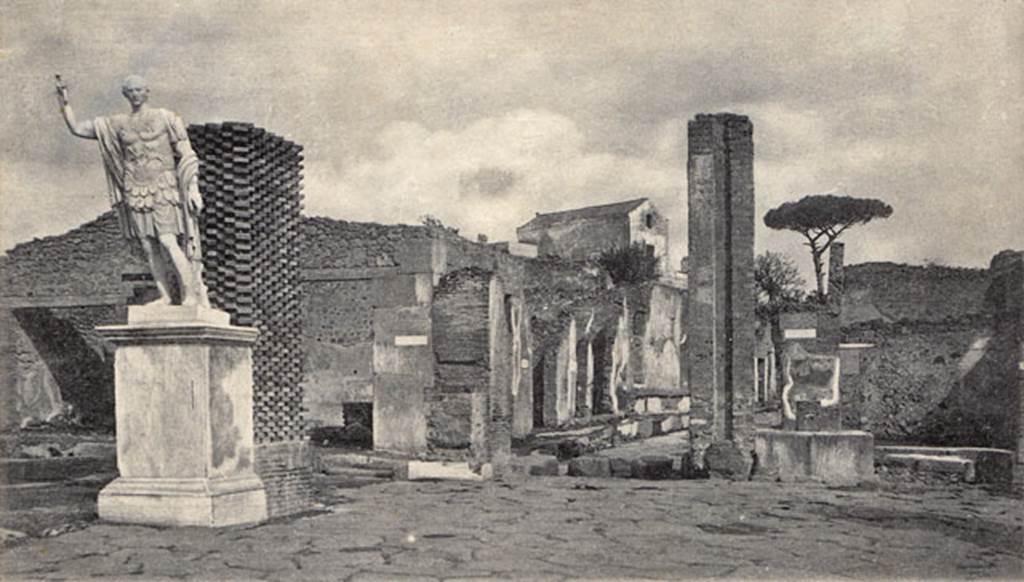
Arch of Marcus Holconius Rufus. About 1900.
Statue of Marcus Holconius Rufus in situ showing restoration work on pillar of arch behind. Photo courtesy of Drew Baker.
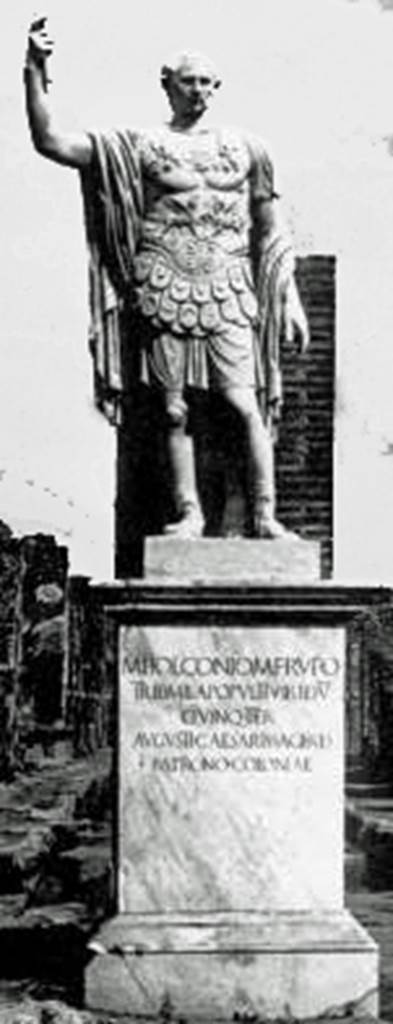
Arch of Marcus Holconius Rufus. About 1900.
Detail of statue of Marcus Holconius Rufus in situ.
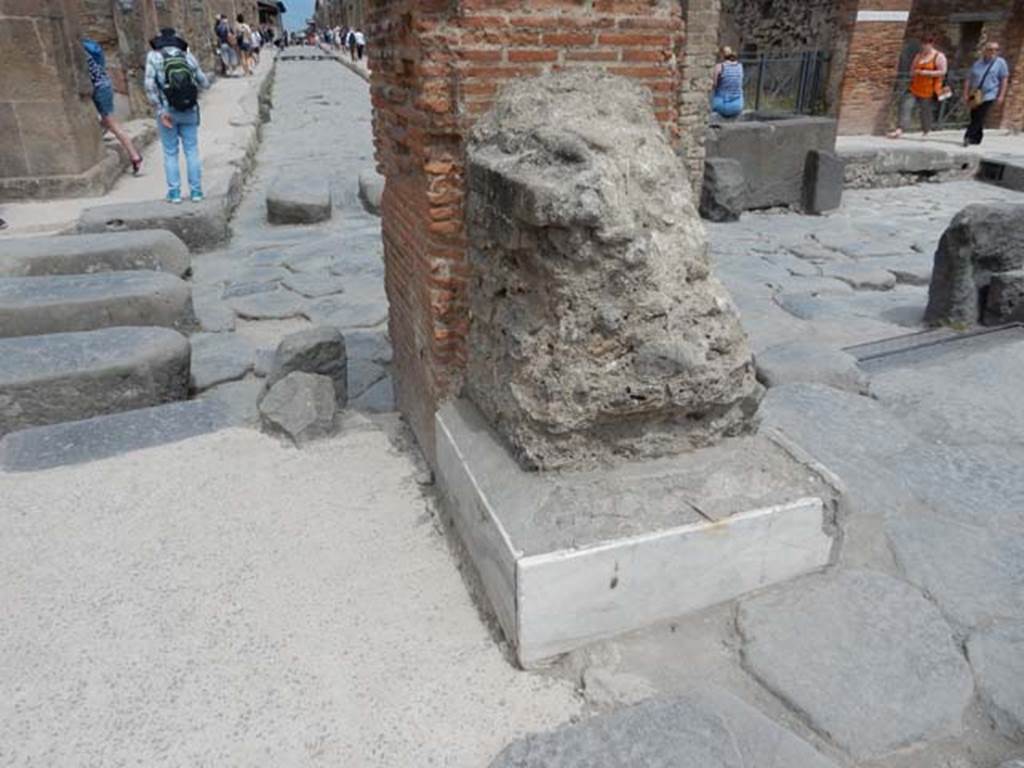
Arch of Marcus Holconius Rufus. May 2017. North-east pillar with remains of another statue base.
Looking east along Via dell’Abbondanza from junction with Via Stabiana. Photo courtesy of Buzz Ferebee.
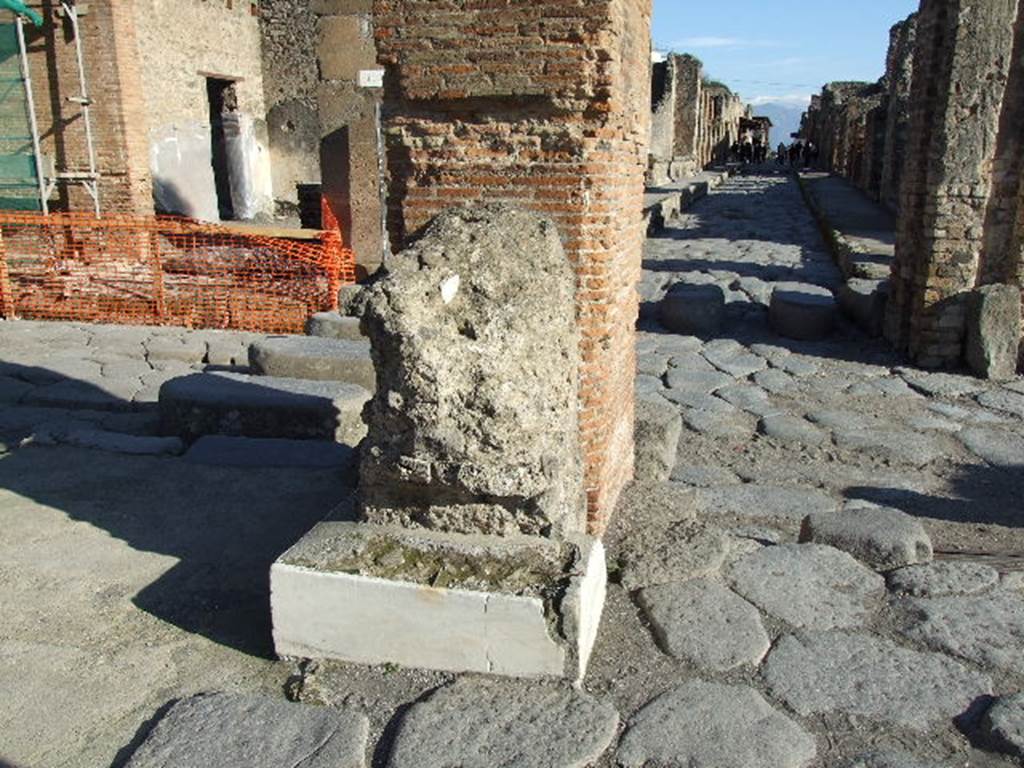
Arch of Marcus Holconius Rufus. December 2006.
North-east pillar with remains of another statue base. Looking east along Via dell’Abbondanza.
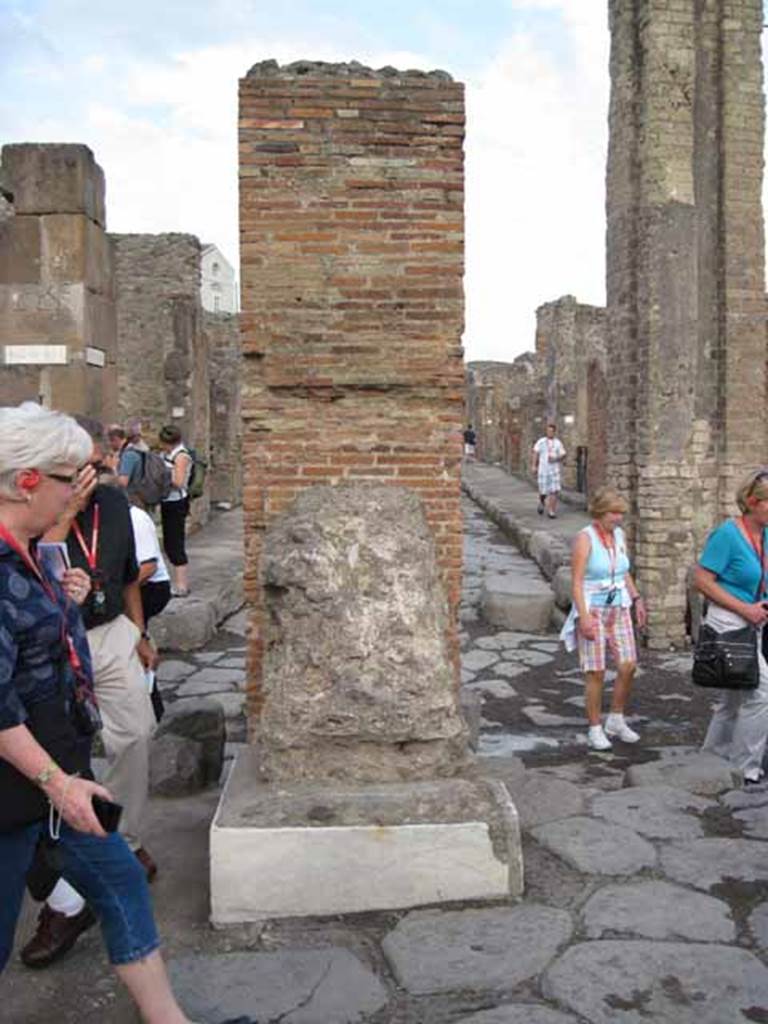
Arch of Marcus Holconius Rufus. September 2010. North-east pillar, west side.
One of the four pillars supporting the arch. Photo courtesy of Drew Baker.
According to Liselotte Eschebach, two statue bases had inscriptions. The second was to Holconia who was a priestess of Ceres.
See Eschebach, L., 1993. Gebäudeverzeichnis und Stadtplan der antiken Stadt Pompeji. Köln: Böhlau. (Pages 244-5).
According to Cooley, the inscription accompanied an honorific statue to Holconia, which was probably part of the arch honouring her family.
The inscription was “To Holconia, daughter of Marcus, public priestess”.
See Cooley, A. and M.G.L., 2004. Pompeii: A Sourcebook. London: Routledge. (Page 101, E48). CIL X 950/1.
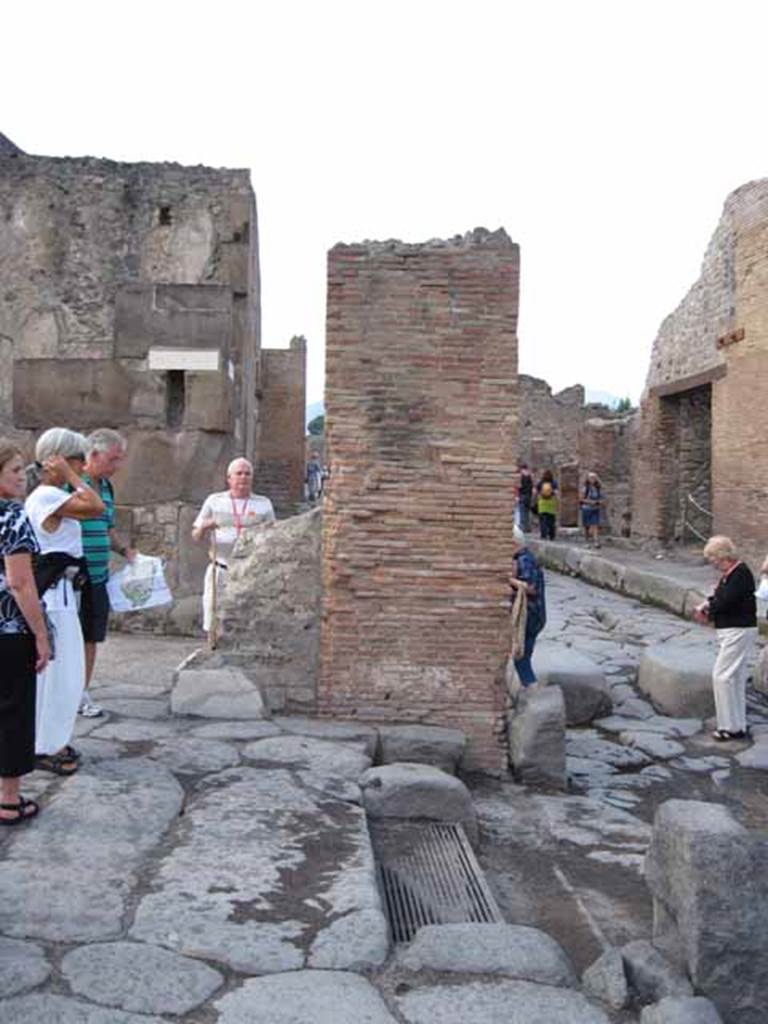
Arch of Marcus Holconius Rufus. September 2010.
North-east pillar, south side. Photo courtesy of Drew Baker.
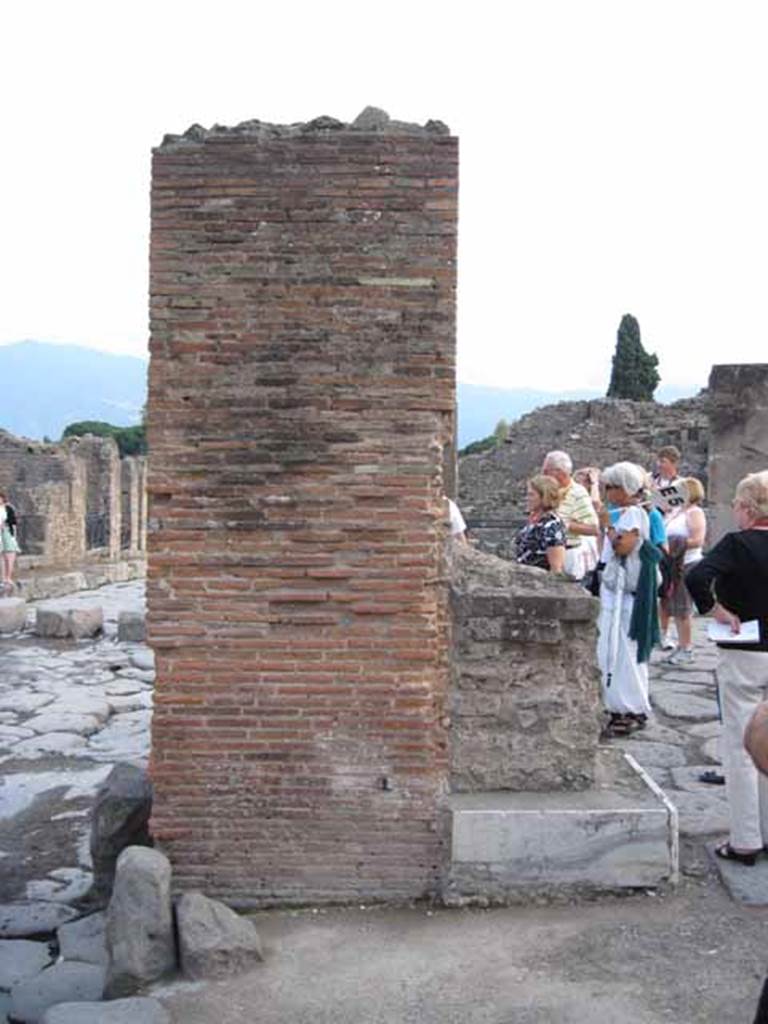
Arch of Marcus Holconius Rufus. September 2010.
North-east pillar, north side. Photo courtesy of Drew Baker.
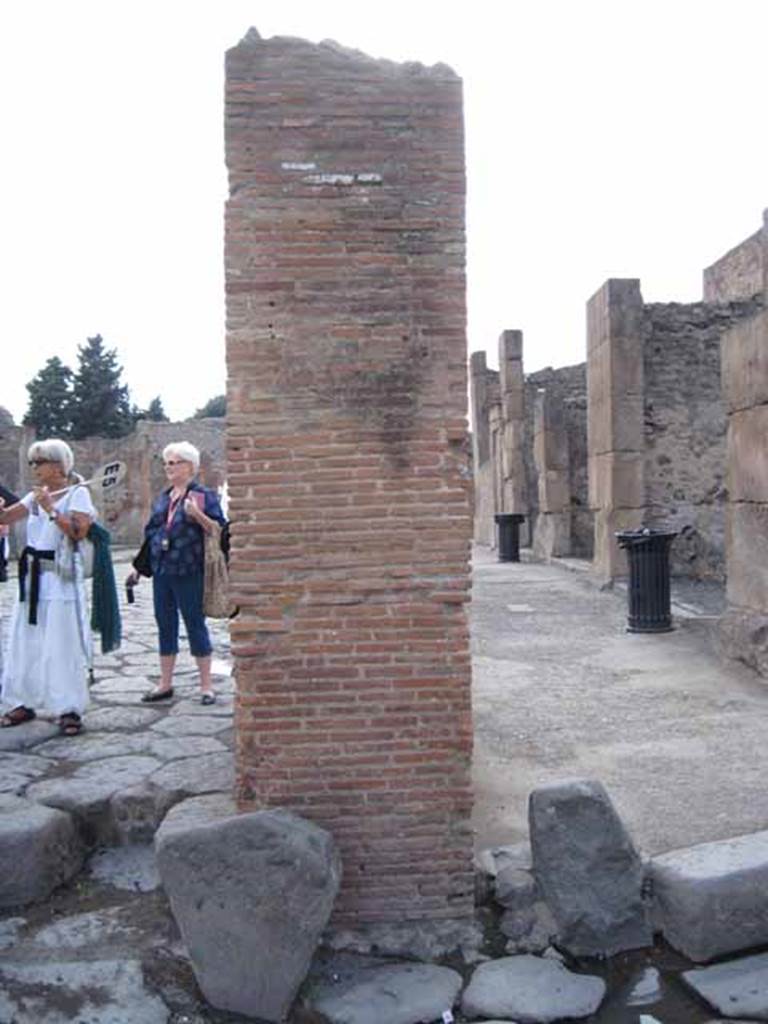
Arch of Marcus Holconius Rufus. September 2010.
North-east pillar, east side. Photo courtesy of Drew Baker.
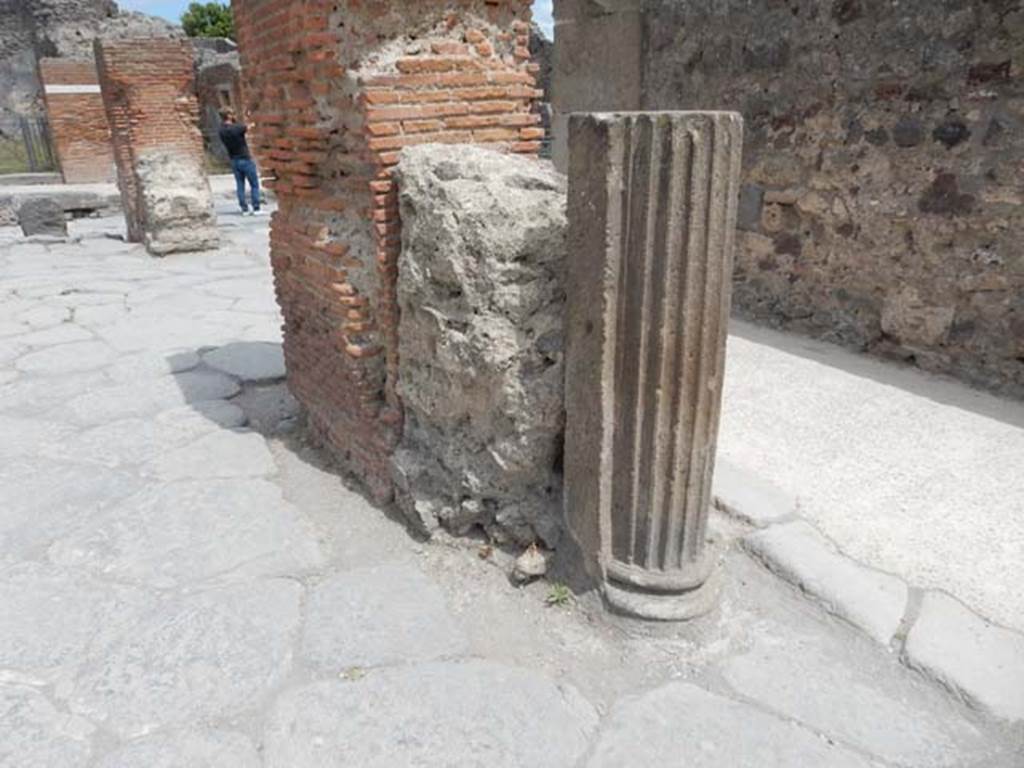
Arch of Marcus Holconius Rufus. May 2017. South-west pillar with remains of a statue base and a column.
One of the four pillars supporting the arch. Photo courtesy of Buzz Ferebee.
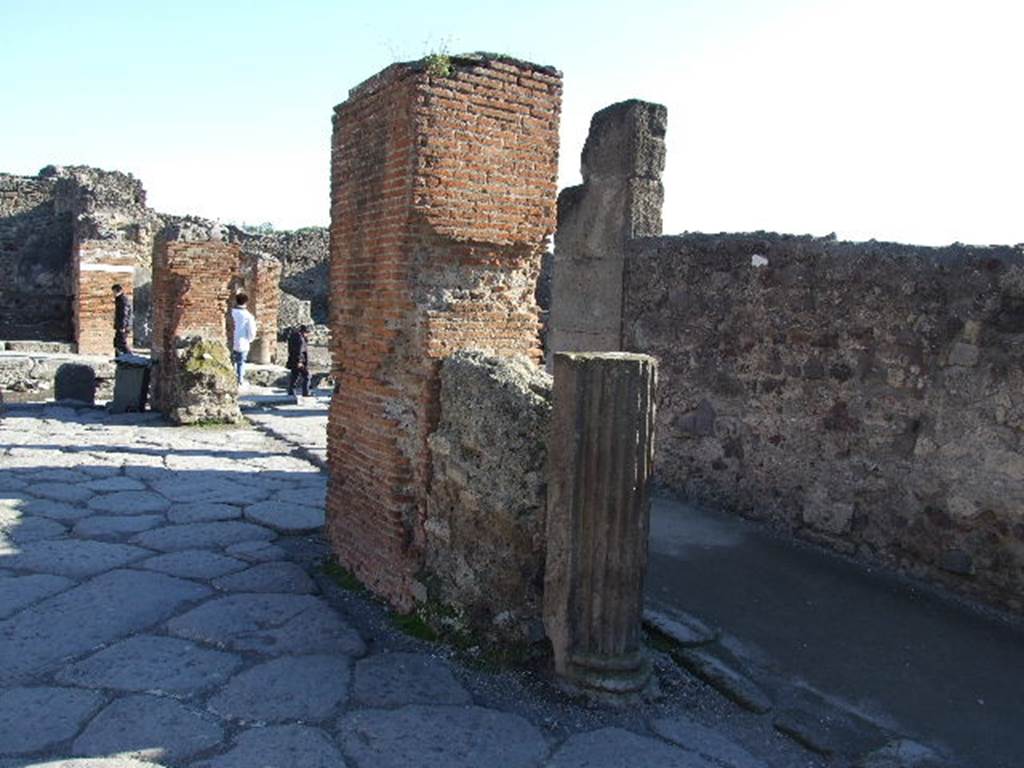
Arch of Marcus Holconius Rufus. December 2006.
South-west pillar with remains of a statue base and a column. One of the four pillars supporting the arch.
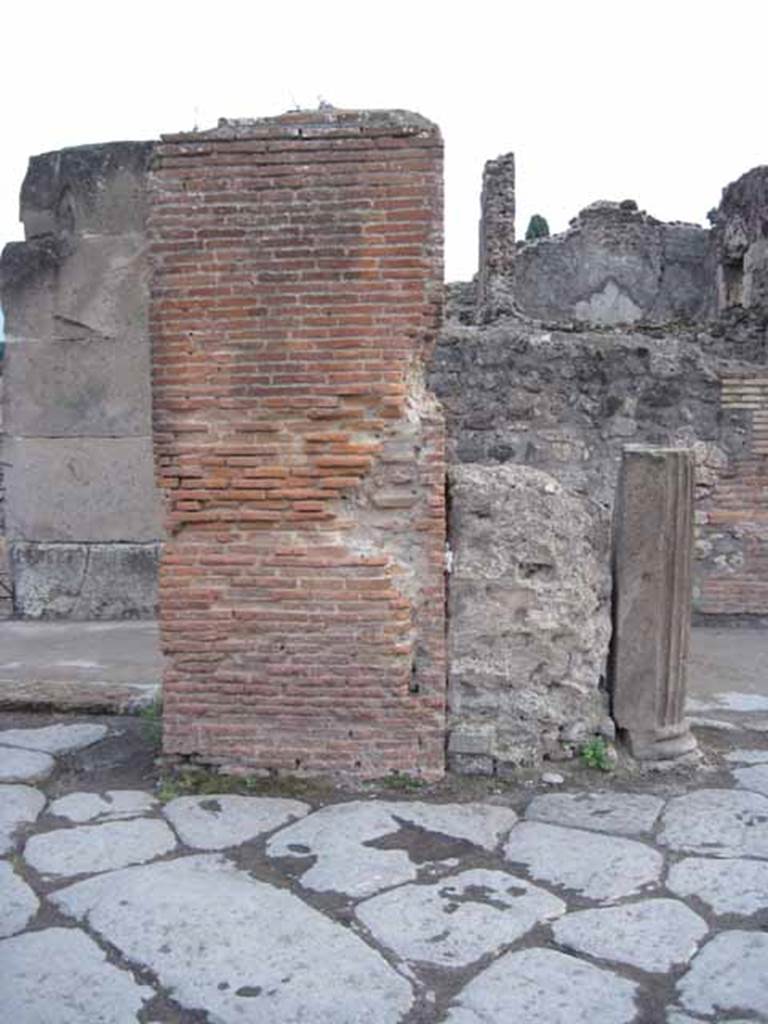
Arch of Marcus Holconius Rufus. September 2010.
South-west pillar, north side. Photo courtesy of Drew Baker.
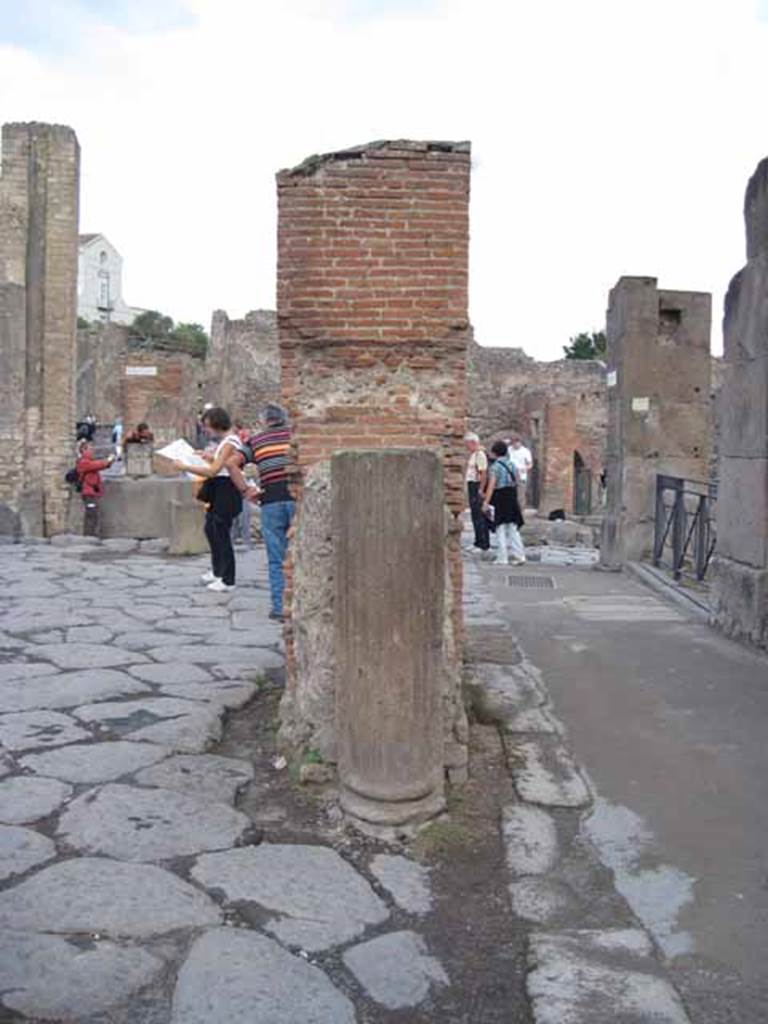
Arch of Marcus Holconius Rufus. September 2010.
South-west pillar, west side. Photo courtesy of Drew Baker.
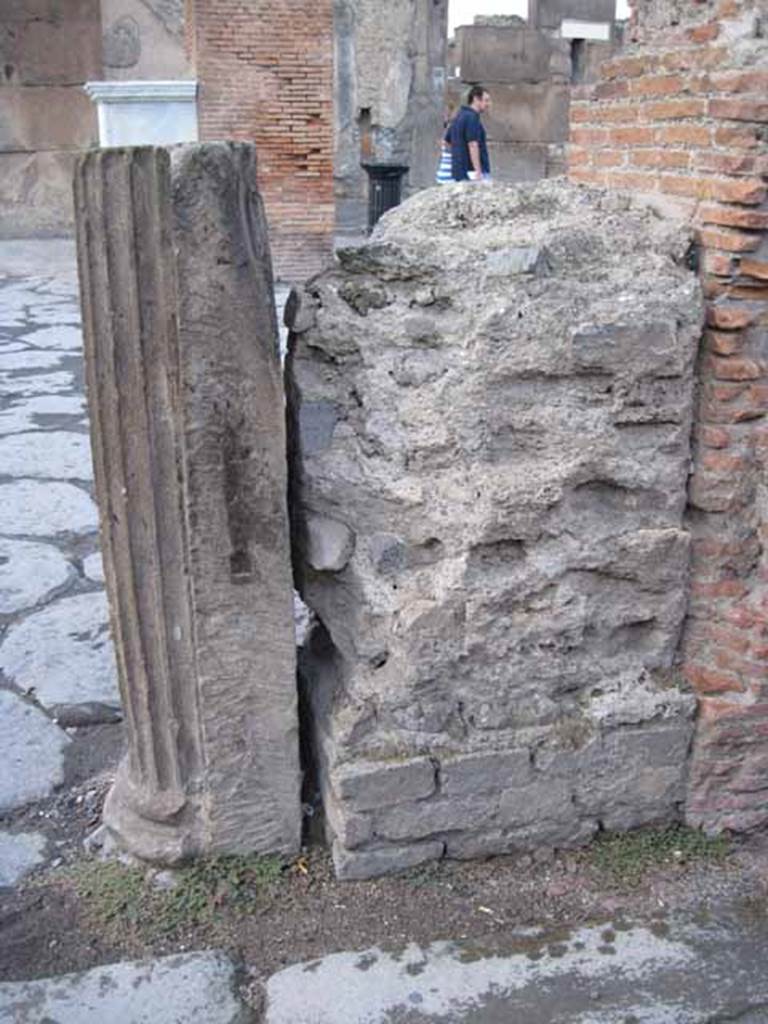
Arch of Marcus Holconius Rufus. September 2010.
South-west pillar, south side. Photo courtesy of Drew Baker.
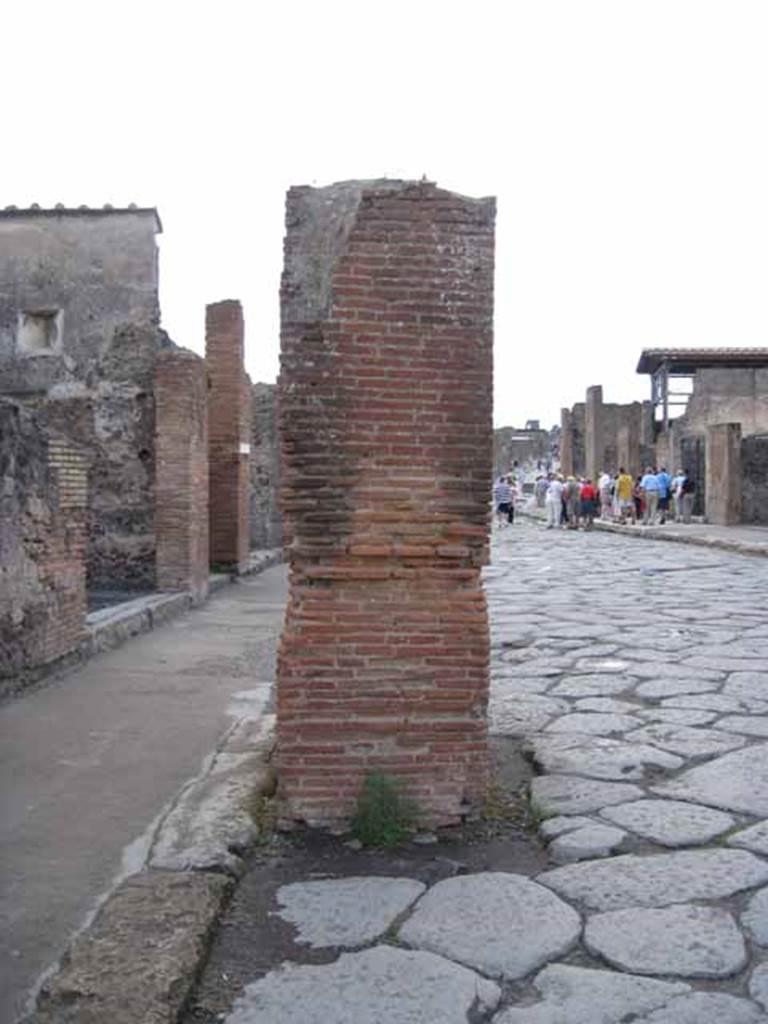
Arch of Marcus Holconius Rufus. September 2010.
South-west pillar, east side. Photo courtesy of Drew Baker.
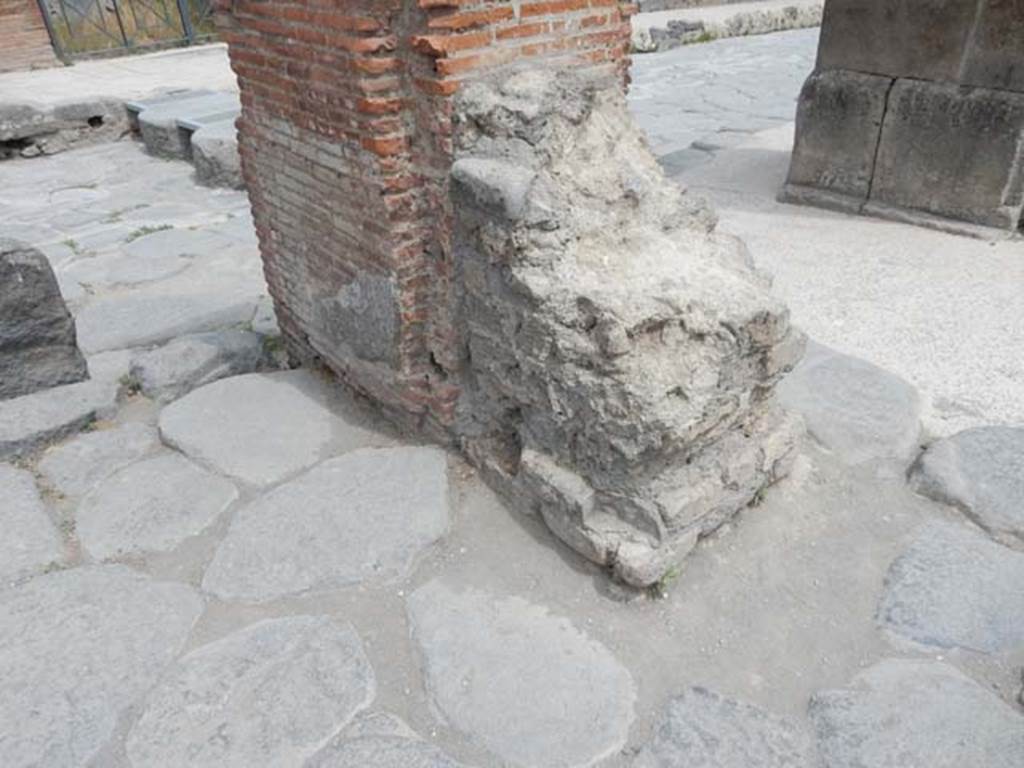
Arch of Marcus Holconius Rufus. May 2017.
South-east pillar with remains of a statue base. One of the four pillars supporting the arch. Photo courtesy of Buzz Ferebee.
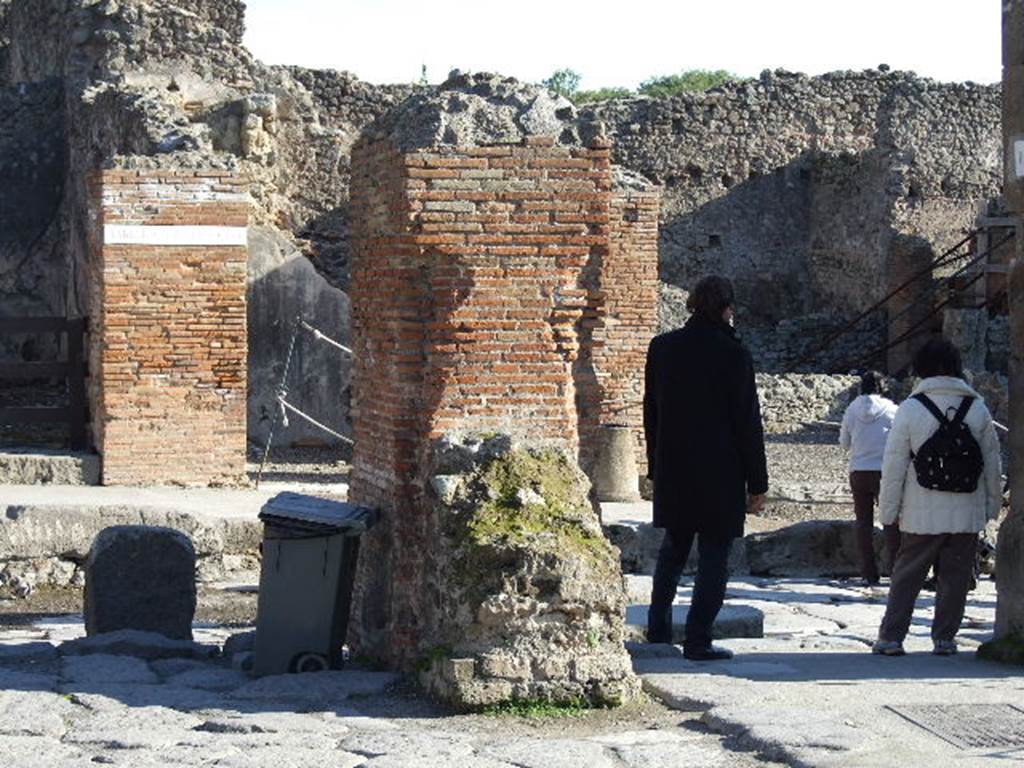
Arch of Marcus Holconius Rufus. December 2006.
South-east pillar with remains of a statue base. One of the four pillars supporting the arch.
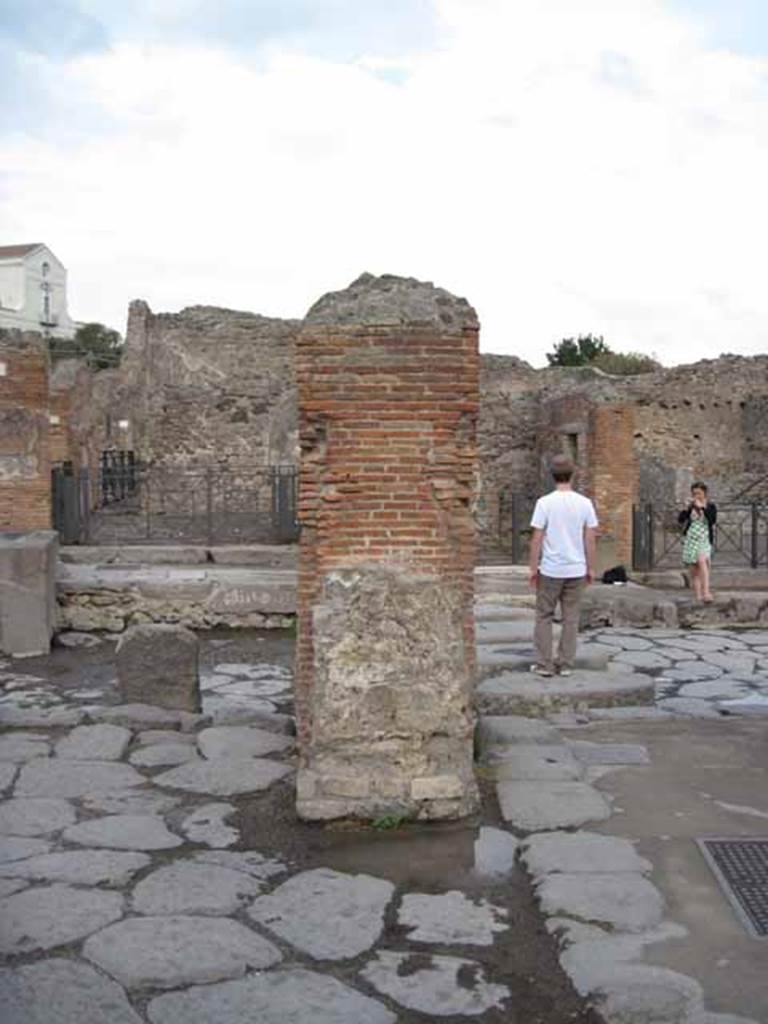
Arch of Marcus Holconius Rufus. September 2010.
South-east pillar, west side. Photo courtesy of Drew Baker.
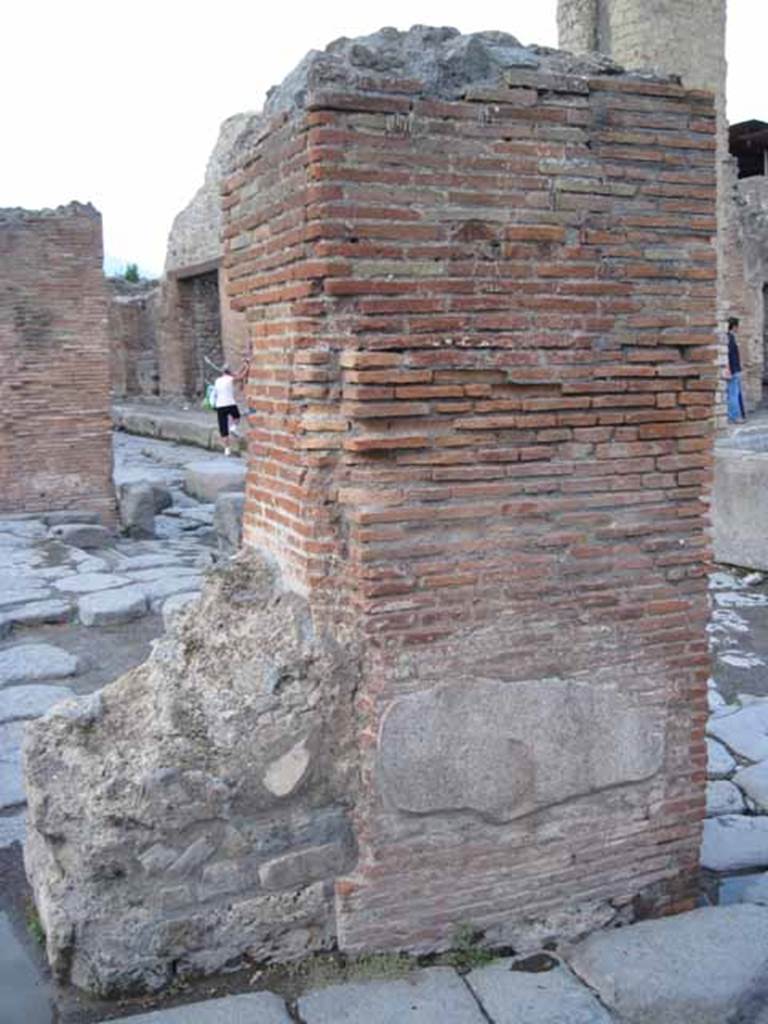
Arch of Marcus Holconius Rufus. September 2010.
South-east pillar, south side. Photo courtesy of Drew Baker.
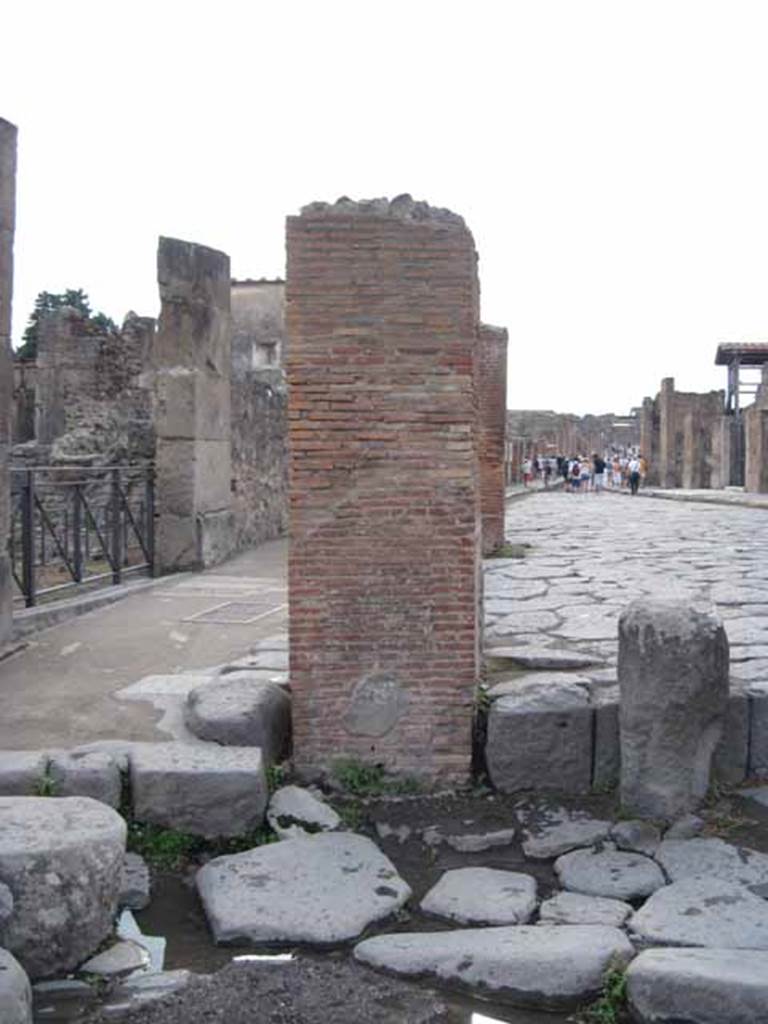
Arch of Marcus Holconius Rufus. September 2010.
South-east pillar, east side. Photo courtesy of Drew Baker.
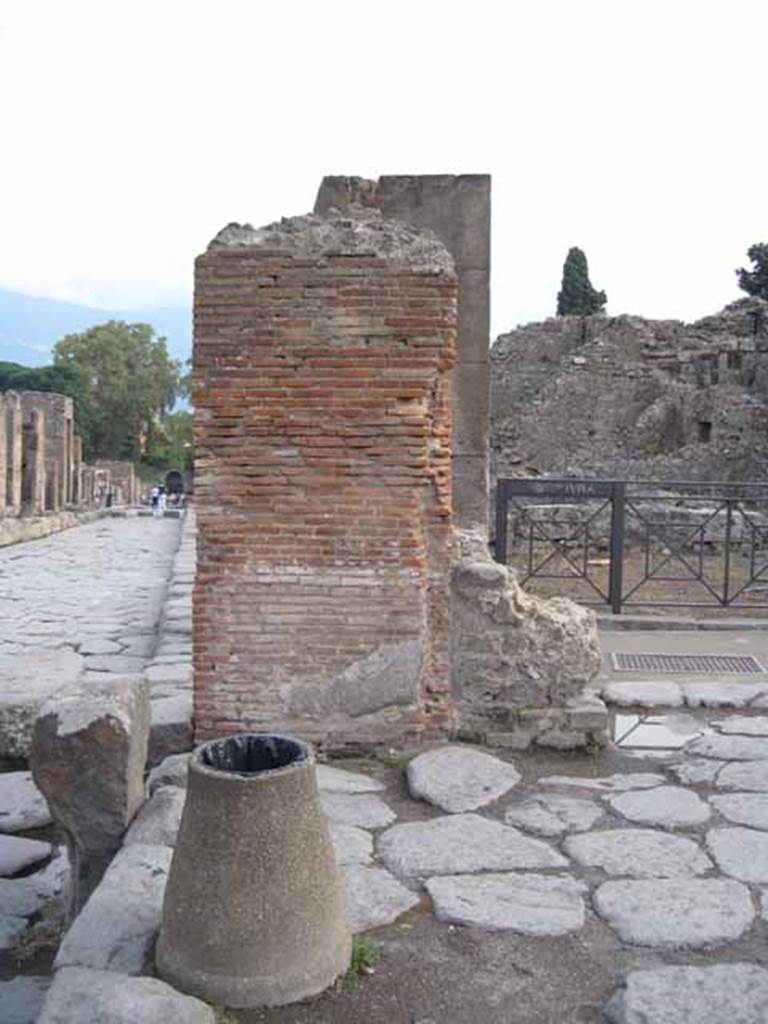
Arch of Marcus Holconius Rufus. September 2010.
South-east pillar, north side. Photo courtesy of Drew Baker.